Cultivating Entrepreneurial Grit in K-12 Education
Audio Summary
The global educational landscape is undergoing a profound transformation, driven by an urgent recognition that traditional pedagogies are no longer sufficient to prepare younger generations for an increasingly complex, uncertain, and innovation-driven future. At the forefront of this shift is the burgeoning emphasis on entrepreneurship education within K-12 schooling, moving beyond rudimentary business concepts to cultivate a holistic “entrepreneurial mindset” that prioritizes adaptability, problem-solving, and, crucially, resilience—often referred to as ‘grit.’ This comprehensive report synthesizes the current state of youth engagement in entrepreneurship, the global movement towards integrating these competencies into school curricula, and the evolution of teaching methodologies.
This report highlights the shift from simplistic ventures to real-world projects, the deliberate cultivation of ‘grit’ and resilience as foundational traits, and the existing outcomes, persistent gaps, and ongoing challenges in program access and teacher professional development. The findings paint a picture of accelerated global adoption, fueled by enthusiastic student interest and proactive policy, yet underscored by critical areas that require sustained attention to ensure equitable and effective implementation.
Key Takeaways
- Surging Youth Interest: 3 in 5 teens prefer starting a business, with high early ambition that declines without sustained engagement.
- Global Mainstreaming: Entrepreneurship education is rapidly integrating into K-12 curricula worldwide, driven by policy and economic imperatives.
- Beyond the Lemonade Stand: Pedagogies are evolving towards hands-on, real-world, project-based learning with prototyping and pitches.
- Cultivating Grit and Resilience: Modern programs emphasize perseverance, adaptability, and learning from failure, fostering a growth mindset.
- Positive Outcomes, Persistent Gaps: Students show boosted confidence and skills, but access to immersive learning and adequate teacher training remain uneven.
- Experiential Learning at Scale: Organizations like Junior Achievement reach millions globally, indicating a strong preference for applied learning.
- Mentorship is Crucial: Structured involvement of entrepreneurs and industry professionals is key to enriching the learning experience and building networks.
1. Executive Summary
The global educational landscape is undergoing a profound transformation, driven by an urgent recognition that traditional pedagogies are no longer sufficient to prepare younger generations for an increasingly complex, uncertain, and innovation-driven future. At the forefront of this shift is the burgeoning emphasis on entrepreneurship education within K-12 schooling, moving beyond rudimentary business concepts to cultivate a holistic “entrepreneurial mindset” that prioritizes adaptability, problem-solving, and, crucially, resilience—often referred to as ‘grit.’ This comprehensive overview synthesizes the current state of youth engagement in entrepreneurship, the global movement towards integrating these competencies into school curricula, the evolution of teaching methodologies from simplistic ventures to real-world projects, the deliberate cultivation of ‘grit’ and resilience as foundational traits, and the existing outcomes, persistent gaps, and ongoing challenges in program access and teacher professional development. The findings paint a picture of accelerated global adoption, fueled by enthusiastic student interest and proactive policy, yet underscored by critical areas that require sustained attention to ensure equitable and effective implementation.
1.1. Surging Youth Interest and the Global Mainstreaming of Entrepreneurship Education
A striking trend signals a tectonic shift in the career aspirations of today’s youth: a significant majority express a preference for entrepreneurial pursuits over conventional employment. Recent data from Junior Achievement USA reveals that 3 out of 5 American teens (60%) would rather start their own business than work in a traditional job role[1]. This marked inclination towards self-enterprise is further evidenced by nearly 37% of teens who explicitly desire entrepreneurship to be taught in schools, indicating a strong demand for formal K-12 entrepreneurial instruction[1]. Early ambitions are particularly pronounced within younger age groups, with over half of U.S. middle schoolers (55%) aspiring to launch a business. However, this promising early interest experiences a significant decline, dropping to just 27% by high school—a substantial 35% ambition gap that underscores a critical need for sustained engagement and relevant opportunities throughout the secondary education pipeline[2]. This decline suggests that without structured support and practical exposure, early entrepreneurial dreams may wane as students mature, possibly due to a lack of meaningful, hands-on learning experiences that bridge the gap between aspiration and practical application[2]. In response to this demonstrated appetite and the broader economic imperatives of an innovation-driven world, entrepreneurship education is rapidly moving from the periphery to the mainstream of K-12 schooling worldwide. Europe leads this charge, with all 38 reporting education systems now integrating entrepreneurship into their K-12 curricula[4]. This integration often manifests as cross-curricular modules or as competencies embedded within existing subjects such as economics, technology, and even humanities, rather than solely as standalone courses. Beyond Europe, major global initiatives reflect this pervasive push. India, for instance, has embarked on an ambitious program, establishing over 8,700 “Atal Tinkering Labs” (ATLs) in schools since 2017, with a target of 10,000 nationwide[6]. These innovation hubs, equipped with tools like 3D printers and robotics kits, aim to cultivate problem-solving skills and an innovative mindset among students in grades 6–12, covering 90% of India’s districts[6]. This global commitment signals a widespread recognition among policymakers and educators that preparing students for an uncertain, rapidly evolving economic future requires fostering not just academic knowledge, but also the entrepreneurial skills necessary for adaptation and creation.
1.2. The Evolution from Basic Ventures to Real-World, Hands-On Projects
The pedagogical approaches within entrepreneurship education are evolving dramatically, moving significantly “beyond the lemonade stand” to embrace more sophisticated, hands-on, and real-world project-based learning experiences. Simplistic, one-off ventures, while valuable for initial exposure, are increasingly being supplanted by comprehensive programs that challenge students to engage in ideation, prototyping, market validation, and business execution. **Key characteristics of this evolution include:**
- Experiential Learning at Scale: Students are now commonly prototyping products, developing marketing strategies, launching mini-companies, and pitching to real investors. Programs like Junior Achievement (JA) exemplify this shift; the organization reaches over 10 million young people annually across more than 100 countries, providing direct, real-world entrepreneurship experiences[7]. In the U.S. alone, JA programs engage approximately 2.5 million students each year in integrated lessons covering financial literacy, work readiness, and entrepreneurship[8]. The global reach of JA highlights the growing preference for applied learning that translates abstract business concepts into tangible skills.
- Programmatic Diversification: Examples of this hands-on approach are widespread. Lemonade Day, a program facilitating early entrepreneurial exposure, has seen over 800,000 children participate since its inception in 2007, guiding them through the process of planning and operating a lemonade stand business[9]. This program, initially focused on basic business operations, has expanded across 66 cities in the U.S. and Canada, providing foundational skills such as budgeting, customer service, and confidence-building[10]. A more advanced example is the Blue Valley CAPS (Center for Advanced Professional Studies) program in Kansas, where high school students mentor 5th graders in developing food-related business solutions, culminating in pitches to industry experts[5]. These initiatives demonstrate a clear move towards integrating multi-tiered, age-appropriate, and authentic business challenges.
- Integration of Modern Tools and Methodologies: Schools are establishing maker spaces, fabrication labs, and robotics workshops, which provide students with the physical and digital tools necessary for product development and innovation[11]. These spaces enable students to build and iterate on prototypes, mirroring contemporary startup culture. Furthermore, pedagogies like design thinking, agile development, and lean startup principles are being incorporated, teaching students iterative problem-solving and rapid experimentation. The use of “Shark Tank”-style pitch competitions, hackathons, and student-run enterprises allows students to engage in dynamic, demand-driven project execution.
- Mentorship and Community Engagement: A critical component of these evolving pedagogies is the structured involvement of external mentors—local entrepreneurs, industry professionals, and even older student mentors. These individuals provide invaluable, practical guidance, feedback, and networking opportunities. For example, in the Blue Valley CAPS program, high school students acting as mentors coached elementary students through developing, prototyping, and pitching their food products[5]. This real-world interaction not only enriches the learning experience but also builds vital connections between students and the entrepreneurial ecosystem. Surveys suggest that nearly 45% of teens find hearing directly from business owners the most helpful way to learn about starting a business, reinforcing the importance of mentorship[12].
This shift from theoretical lessons to practical application ensures that students are not merely learning about entrepreneurship but are actively practicing its core functions. It enables them to develop not only business acumen but also crucial meta-skills like adaptability, creative problem-solving, and teamwork in authentic, high-stakes (though low-risk) environments.
| Area | Past (Lemonade Stand Era) | Present (Real Ventures Era) | Future (Deep Integration Era) |
|---|---|---|---|
| Focus | Basic sales, profit/loss, simple product. | Product prototyping, market research, business plans, pitches to real investors, mini-companies. | Community problem-solving, social impact, tech ventures, ethical business, global collaboration. |
| Pedagogy | One-off events, ad-hoc projects, theoretical lessons. | Hands-on, project-based learning, simulations, design thinking, lean startup. | Immersive incubators, interdisciplinary modules, personalized learning pathways, blended online/offline. |
| Mentorship | Informal guidance from parents/teachers. | Structured mentorship from local entrepreneurs, older students. | Global network of industry experts, virtual mentors, alumni networks, peer coaching. |
| Skills Emphasized | Basic math, salesmanship. | Creativity, critical thinking, collaboration, communication (4Cs), financial literacy. | Resilience (grit), adaptability, ethical leadership, digital literacy, global competence. |
| Scale & Scope | Local, informal, limited reach. | National programs (e.g., JA, ATLs), curriculum integration across Europe. | Universal entrepreneurial literacy, micro-credentials, formal teacher specialization, systemic accountability. |
This table illustrates the progression of K-12 entrepreneurship education from simple ventures to integrated, sophisticated programs, highlighting how pedagogical approaches and skill development are evolving to meet future demands.
1.3. Cultivating “Grit” and Resilience in the Classroom
Recognizing that entrepreneurship is inherently fraught with setbacks and failures, current educational approaches place significant emphasis on cultivating non-cognitive skills such as “grit” and resilience. These traits are considered as fundamental as business knowledge itself, equipping young entrepreneurs to navigate challenges and persist despite adversity. **The strategic focus on grit and resilience involves several key dimensions:**
- The Imperative of Perseverance: Entrepreneurial journeys are rarely linear. Research consistently indicates high failure rates for startups; roughly 90% of new ventures ultimately do not succeed[13]. This stark reality underscores why traits like perseverance and adaptability are paramount for aspiring entrepreneurs. Without the capacity to rebound from product failures, funding shortfalls, or market rejections, even brilliant ideas can falter. K-12 programs are therefore designed to normalize failure as a learning opportunity, rather than a definitive endpoint.
- Integration of Growth Mindset Principles: Central to fostering grit is the concept of a “growth mindset,” popularized by Carol Dweck. This belief posits that intelligence and abilities are not fixed but can be developed through dedication and hard work[14]. Schools integrate growth mindset principles by encouraging students to embrace challenges, learn from mistakes, and understand that effort leads to improvement. The impact of a growth mindset is empirically supported: students who held a growth mindset scored an average of 32 points higher on the PISA reading assessment compared to their peers with fixed mindsets, even after controlling for socio-economic background. This difference is nearly equivalent to a full year of schooling[14]. Furthermore, students with a growth mindset exhibited higher motivation and a reduced fear of failure[15]—qualities directly transferable to entrepreneurial success. Educators facilitate this by praising effort and learning processes, using phrases like “you haven’t mastered it *yet*.”
- Pedagogies for Cultivating Grit:
- Challenge-Based Learning: Educators employ open-ended, complex challenges that require sustained effort and problem-solving, teaching students to tolerate ambiguity and persist through difficulties. Robotics competitions, for instance, demand months of iterative design, testing, and debugging, directly building perseverance through practical application.
- Productive Failure: Entrepreneurship projects are intentionally structured to allow for “productive failure,” where initial attempts may not succeed, prompting students to analyze why, adapt their strategies, and iterate. This hands-on experience, from a mini-company’s financial setback to a prototype’s failure to function, teaches students to view setbacks as valuable data for improvement, aligning with the “fail fast, learn faster” philosophy common in startup culture[16].
- Reflective Practices: Assignments often include reflective components, where students journal about obstacles encountered during a project, the strategies they employed to overcome them, and the lessons learned. This metacognitive practice builds self-awareness and reinforces the utility of perseverance. Some schools even incorporate “failure résumés,” where students document and analyze their setbacks to highlight learning curves.
- Role Models and Case Studies: Teachers normalize resilience by presenting stories of successful entrepreneurs who faced numerous failures before achieving success (e.g., Thomas Edison, Oprah Winfrey)[17]. These narratives demonstrate that setbacks are an inherent part of the innovation process, not a sign of personal inadequacy.
- Measuring and Reinforcing Grit: While directly grading grit can be controversial, schools are exploring various methods to acknowledge and encourage it. These include self-assessment rubrics, portfolios showcasing iterative development, and recognition programs (e.g., badges or showcases celebrating perseverance through challenging projects). The Network for Teaching Entrepreneurship (NFTE) utilizes an Entrepreneurial Mindset Index to measure student growth in domains like creativity, self-reliance, and comfort with risk, validating that hands-on programs can significantly shift student mindsets[18]. The emphasis is on reinforcing perseverance and learning from struggles rather than penalizing attempts that don’t yield immediate “success.”
- Balanced Perspective: Grit with Wellness: There’s an emerging understanding that promoting grit must be balanced with fostering student well-being. Unchecked pressure to “never give up” can lead to burnout. Therefore, modern pedagogies aim for “grit with grace,” teaching students when to strategically pivot, seek help, or even responsibly discontinue a non-viable project, rather than stubbornly clinging to a failing idea. This balanced approach ensures students develop resilience that is sustainable and healthy, preparing them for the long-term demands of any challenging endeavor.
By deliberately cultivating these intrinsic qualities, K-12 entrepreneurship education aims to equip students with not just business skills, but also the enduring mental fortitude required to thrive in a dynamically changing world, irrespective of their eventual career path.
1.4. Outcomes, Remaining Gaps, and Challenges in Access and Teacher Training
While the accelerating adoption of entrepreneurship education is yielding significant positive outcomes, persistent gaps in access and critical challenges in teacher training temper the global momentum. **Positive Outcomes and Engagement:** Students exposed to entrepreneurship education demonstrate a range of enhanced skills and increased engagement:
- Boosted Confidence and Creativity: Participation in entrepreneurial projects is strongly linked to increased self-confidence, particularly in presenting ideas and problem-solving. It also fosters creativity as students are tasked with identifying unmet needs and devising innovative solutions.
- Development of Real-Life Skills: Students gain measurable improvements in critical skills such as communication, collaboration, critical thinking, and financial literacy. These are often referred to as 21st-century skills or “power skills” essential for any modern career. Running a mini-business provides practical experience in budgeting, pricing, and managing revenues and expenditures, which conventional curricula often teach abstractly[19].
- Enhanced Engagement and Reduced Dropout Rates: The hands-on, relevant nature of entrepreneurial learning can significantly re-engage students who might otherwise be disenfranchised by traditional academic models. Reports from the European Commission suggest that entrepreneurship education can positively impact school engagement and even lower dropout rates among at-risk students, as it makes education feel more purposeful and connected to future opportunities[20].
- Tangible Success Stories: Individual and programmatic successes abound. For example, a teen startup program in Finland, Yrityskylä (Me & MyCity), involves approximately 85% of the country’s 6th and 9th graders in immersive simulations of running a city’s economy[21]. Such high participation rates underscore the program’s effectiveness in providing widespread exposure to economic and entrepreneurial concepts. NFTE alumni like Matthew H., who earned $25,000 from his streetwear business while still in high school, exemplify how early training can lead to real economic outcomes and build lasting entrepreneurial drive[22].
**Remaining Gaps and Uneven Access:** Despite these clear benefits, access to quality entrepreneurship education remains uneven:
- Experiential Opportunity Gap: While high school students’ ambition to start businesses is significant (60% of teens prefer it over traditional jobs)[1], the practical, immersive “real-world” learning opportunities are scarce for many. In some U.S. regions, only an estimated 10-15% of high schoolers gain access to such deeply experiential programs, which include internships or student-run businesses, indicating a significant “experience gap” between aspiration and opportunity[11]. Even in 2012, while 43% of students (grades 5–12) planned to start their own business, only 7% were interning in a business setting, and just 22% had worked any paid job in the prior week[3]. This highlights a persistent need for more practical exposure.
- Age-Related Disparity in Formal Education: Counterintuitively, while middle schoolers exhibit higher entrepreneurial ambitions than high schoolers (55% vs. 27%)[2], formal entrepreneurship education is more prevalent in high schools. For instance, in the U.S. in 2016, 60% of high school students reported their school offered business/entrepreneurship classes, compared to only 27% of middle school students[2]. This represents a missed opportunity to nurture entrepreneurial enthusiasm when interest is highest, potentially contributing to the ambition gap observed by high school.
- Geographic and Socioeconomic Disparities: Access to robust entrepreneurship programs often correlates with school resources and geographic location. Students in urban, well-funded districts may have more opportunities than those in rural or under-resourced areas. Initiatives like India’s Atal Tinkering Labs, 60% of which are in government-run schools, are actively trying to bridge this divide by extending reach across 90% of districts[6]. Increased focus on inclusive programming, such as those targeting girls, minority groups, or students in underserved communities (over 60% of JA’s global participants are from such communities), is critical for equitable access[8].
**Challenges in Teacher Training and Support:** The rapid integration of entrepreneurship into curricula has outpaced the preparation and support for educators:
- Inadequate Teacher Training: Teachers are pivotal to successful implementation, yet professional development often lags. In Europe, fewer than half (19 out of 38) education systems provide specific in-service training or support for teachers in entrepreneurship education, and only 15 systems have defined learning objectives for such training[13]. This means many educators lack the pedagogical expertise and confidence to effectively deliver experiential entrepreneurship content that often requires facilitating, mentoring, and embracing productive failure, rather than traditional lecturing.
- Lack of Specific Pedagogical Objectives: Beyond general curriculum integration, many countries have not clearly articulated specific learning objectives for entrepreneurship education, which can lead to varied and potentially inconsistent teaching quality. Some nations, like Estonia and Portugal, have begun to outline teacher competencies, but this remains a significant area for development across the globe[13].
- Resource Constraints: Implementing hands-on, project-based entrepreneurship programs often requires dedicated spaces (e.g., maker spaces), mentorship networks, and flexible budgets for materials or seed funding, which can strain school resources.
In summary, the landscape of K-12 entrepreneurship education is characterized by dynamic growth and high student demand, showcasing substantial benefits in skill development and engagement. However, to fulfill the promise of cultivating entrepreneurial grit universally, deliberate efforts are needed to address persistent inequities in program access and to significantly bolster the training and support provided to educators. This will ensure that the accelerating global movement translates into widespread and high-quality learning experiences for all students, preparing them truly for the workforce of tomorrow. This Executive Summary sets the stage for a deeper exploration of the evolving pedagogies, specific strategies for cultivating grit, the broader impact on life skills, and the future outlook of this critical educational movement. The subsequent sections will delve into these areas with greater granularity, examining the foundational shift in teaching methods, the deliberate techniques used to build resilience, the holistic benefits extending beyond business acumen, and the comprehensive vision for entrepreneurship education as a cornerstone of future-ready learning.

2. The Shifting Landscape of K-12 Entrepreneurship Education
The traditional image of entrepreneurial education in K-12, often conjuring quaint lemonade stands or car washes, has profoundly evolved. What was once seen as an extracurricular novelty or a niche offering has transformed into a globally recognized imperative, foundational for preparing students for an unpredictable, innovation-driven future. This section delves into the dramatic evolution of K-12 entrepreneurship education, tracing its trajectory from ad-hoc activities to comprehensive, integrated programs supported by policy and designed to cultivate not just business skills, but also the critical entrepreneurial mindset, particularly “grit.” This shift reflects a growing consensus among educators, policymakers, and industry leaders that entrepreneurial literacy is essential for all students, transcending aspiring business owners and extending to every citizen navigating the complexities of the 21st-century economy.
2.1 From Ad-Hoc Activities to Comprehensive Programs: A Global Movement
The landscape of K-12 entrepreneurship education has undergone a significant transformation, moving far beyond the simplistic and often sporadic activities of the past. Historically, youth exposure to business concepts was largely confined to one-off events such as school bake sales or the ubiquitous neighborhood lemonade stand. While valuable for rudimentary introductions to commerce, these activities rarely offered sustained learning or exposure to the complexities of real-world venture creation. Today, a sophisticated and multifaceted approach has emerged, integrating entrepreneurship into curricula globally and treating students as genuine innovators and problem-solvers. This evolution is characterized by several key aspects:
2.1.1 The Mainstreaming of Entrepreneurship Education
A primary indicator of this shift is the global integration of entrepreneurship into formal K-12 curricula. What was once considered fringe is now recognized as a core competency. The European education system exemplifies this trend, where all 38 education systems studied now integrate entrepreneurship into their K-12 curricula[4]. This integration often takes the form of cross-curricular modules, intertwining entrepreneurial themes with subjects like economics, technology, and even humanities. For instance, Finland embeds entrepreneurial projects across various disciplines, beginning in primary school[17]. Similarly, Spain’s updated curriculum mandates the development of entrepreneurial competencies alongside traditional academic subjects[20]. This approach signifies a profound change, viewing entrepreneurship not merely as a subject, but as a transversal life skill to be woven into the fabric of general education. The shift is further underscored by the growing interest among young people themselves. A 2022 survey revealed that a substantial 60% of American teens (ages 13–17) express a preference for starting their own business over pursuing a traditional job[1]. This burgeoning ambition is not merely theoretical; 37% of these teens explicitly wish for entrepreneurship programs to be offered in their schools, signaling a strong demand for formal K-12 entrepreneurial education[13]. This student-led demand, coupled with global policy mandates, is accelerating the mainstreaming of entrepreneurship education worldwide.
2.1.2 Policy Support and Scaling of Initiatives
Government and industry stakeholders are increasingly recognizing the strategic importance of cultivating entrepreneurial skills from an early age. This recognition has translated into robust policy support and large-scale initiatives designed to integrate entrepreneurship education into national development agendas. In Europe, 20 out of 38 education systems have embedded entrepreneurship goals into broader national strategies related to innovation, 21st-century skills, or youth policy[4]. Countries such as Sweden, Luxembourg, and Austria have even developed specific plans dedicated to fostering entrepreneurship in schools[22]. A striking example of this policy-driven scaling is India’s Atal Tinkering Labs (ATLs) initiative. Since 2017, over 8,700 ATLs have been established in Indian schools (grades 6–12), covering 90% of the country’s districts, with a national target of 10,000 labs[6]. These innovation hubs, 60% of which are in government-run schools, provide students with cutting-edge tools like 3D printers and robotics kits, along with mentorship, to develop problem-solving skills. This massive public investment reflects India’s aim to “cultivate one million children as innovators,” demonstrating a concerted effort to foster K-12 entrepreneurship and STEM creativity on a national scale[10]. Parallel to government efforts, non-profit organizations have significantly expanded their reach, becoming crucial partners in delivering entrepreneurship education. Junior Achievement (JA), the world’s largest youth entrepreneurship education NGO, now reaches over 10 million students annually across more than 100 countries[23]. In the U.S. alone, JA programs engage approximately 2.5 million students each year through volunteer-led lessons focused on financial literacy, work readiness, and entrepreneurship[8]. This growth, up from 6 million students a decade ago, highlights the increasing demand for practical business education and the vital role of public-private partnerships in scaling these experiences.
2.1.3 Early Exposure and Nurturing Entrepreneurial Ambition
The timing of entrepreneurial exposure has emerged as a critical factor. Research consistently indicates that early exposure to entrepreneurial concepts is vital for sustaining ambition. Gallup surveys show that middle schoolers (grades 5–8) exhibit the highest entrepreneurial aspirations, with over half (55%) planning to start a business[2]. However, this ambition starkly drops to just 27% by high school (grades 9–12)[14]. This decline suggests that if not nurtured, early enthusiasm can dissipate, possibly due to a lack of continued engagement or relevant real-world opportunities in subsequent educational stages. Recognizing this, many programs are now specifically designed for younger students. Lemonade Day, a program operating in over 60 cities across the U.S. and Canada, has engaged more than 800,000 children since its inception in 2007[7]. This initiative provides young participants with workbooks and mentorship to plan and operate their own lemonade stands, teaching fundamental business concepts like budgeting, customer service, and profit allocation. Its widespread success demonstrates the appeal of early-age entrepreneurship experiences and their potential to build foundational skills and confidence[9]. Finland’s Yrityskylä (Me & MyCity) program offers another compelling example of large-scale early exposure. This immersive, one-day simulation of running a city’s economy involves approximately 85% of all Finnish 6th graders and 9th graders nationwide[11]. Students take on roles such as bank managers, CEOs, or even mayors within a mini-city environment, learning about economic principles, entrepreneurship, and citizenship through direct experience[15], the limited exposure in earlier grades represents a missed opportunity to capitalize on peak interest. Introducing relevant and engaging entrepreneurial experiences in middle school and even elementary school could significantly help maintain and grow the early enthusiasm observed in pre-teen students.
2.1.4 The Trajectory Towards Universal Entrepreneurial Literacy
The overarching trend points towards entrepreneurship education becoming as universally integrated and critical as computer literacy in K-12 education. International organizations like the United Nations and the OECD advocate for entrepreneurship and innovation skills as indispensable for the future workforce, placing them alongside traditional literacies and numeracy[25]. This perspective is driven by the understanding that the future demands a workforce capable of adapting, innovating, and even creating opportunities in a rapidly changing world. The objective is not necessarily to turn every student into a startup founder, but rather to instill a universal entrepreneurial literacy. This means equipping all students with the ability to identify opportunities, solve problems creatively, manage resources, and engage proactively with their communities. The goal is for every student to have a meaningful entrepreneurial experience before graduating high school, which could involve developing a product, launching a mini-company, or tackling a social issue through an innovative project. This model prepares students to become adaptable, problem-solving, and engaged adults, regardless of their chosen career path, establishing an entrepreneurial mindset as a foundational element of modern education.
2.2 Hands-On Learning: Experiential Approaches Cultivate Real Entrepreneurial Skills
The evolution of K-12 entrepreneurship education is perhaps most vividly demonstrated in its pedagogical shift towards hands-on, experiential learning. Moving away from didactic instruction, contemporary programs immerse students in the practicalities of venture creation, mirroring the iterative and often challenging journey of real-world entrepreneurs.
2.2.1 Learning by Doing: Beyond Textbooks
Central to modern entrepreneurship education is the principle of “learning by doing.” Students are no longer merely absorbing theoretical business concepts from textbooks; they are actively prototyping, launching, and managing ventures. This pedagogical approach is exemplified by initiatives such as the Junior Achievement (JA) Company Program, where high school students form and operate their own student-run companies over a semester. Through this process, they engage in market research, product development, marketing, sales, and even company liquidation, gaining invaluable practical experience. This hands-on engagement fosters problem-solving, teamwork, and decision-making skills, often resulting in students generating real revenues and making tangible contributions to their ventures. The efficacy of experiential learning is supported by educational research, which consistently shows that applied, project-based learning significantly enhances student engagement and knowledge retention, particularly for complex and abstract concepts like economics. A U.S. study highlighted that students involved in “real-world learning” projects, such as internships or enterprise ventures, developed stronger collaboration and critical thinking abilities[12]. However, the study also indicated that only 10-15% of students currently access such immersive learning opportunities, pointing to a need for broader implementation.
2.2.2 Project Incubators and Maker Spaces in Schools
To facilitate this hands-on approach, schools are actively transforming their physical environments to resemble startup incubators and innovation labs. The proliferation of maker spaces, fabrication labs, and robotics workshops in middle and high schools provides students with the necessary tools, such as 3D printers and laser cutters, to conceptualize, build, and iterate on their ideas. These spaces serve as fertile ground for entrepreneurial projects, allowing students to develop product prototypes in a low-risk, supportive setting. Many high schools have gone a step further, establishing internal incubators or “innovation hubs” where student teams can develop business ideas with mentorship from teachers and local entrepreneurs. The Northland CAPS program in Kansas City stands out as a pioneering model. This consortium of high schools partners students with local businesses to solve real-world problems, frequently leading to the development of student-designed products or services. A remarkable outcome of this program is that 100% of Northland CAPS students graduate having completed an industry internship or a client project for academic credit[27]. Such immersive experiences emulate the startup environment, requiring students to meet deadlines, communicate effectively with stakeholders, and adapt to feedback, thereby honing essential entrepreneurial competencies. The growing prevalence of hackathons, pitch competitions, and school-based “Shark Tank” events further underscores the widespread adoption of experiential entrepreneurship education, turning classrooms into dynamic innovation platforms.
2.2.3 The Crucial Role of Mentorship and Community Involvement
A distinguishing feature of effective hands-on entrepreneurial programs is the integration of mentorship and strong community involvement. Connecting students with experienced business professionals, entrepreneurs, or even older student mentors provides invaluable practical advice, guidance, and moral support. For instance, in Overland Park, Kansas, a high school entrepreneurship class within the Blue Valley CAPS program collaborated with an elementary school, tasking high school students with mentoring 5th graders as they developed food products[28]. Guided by their teen mentors, the younger students identified food-related problems, prototyped solutions (e.g., fun-shaped veggie snacks or high-protein bars for young athletes), and ultimately pitched their products to a panel of food industry experts. This intergenerational mentoring not only benefited the elementary students, who gained confidence in public speaking and creative problem-solving, but also reinforced the high school mentors’ own entrepreneurial knowledge and leadership skills[29]. Global initiatives like Technovation and FIRST Robotics similarly connect youth teams with industry mentors, providing expert guidance for their entrepreneurial STEM projects. The involvement of community professionals lends authenticity to the learning experience and helps students build valuable professional networks. Pertinently, a Junior Achievement USA survey revealed that nearly 45% of teens consider hearing directly from business owners as the most helpful way to learn about starting a business, emphasizing the critical role of mentorship in fostering entrepreneurial aspirations[30].
2.2.4 Iterative Design and the Acceptance of Failure
Experiential pedagogy inherently encourages an iterative approach, where students are prompted to trial, reflect, and refine their efforts—a process that directly mirrors the lean startup methodology common in the entrepreneurial world. This is a deliberate shift from traditional educational models that often penalize errors. Instead, modern entrepreneurship programs frame setbacks as crucial learning opportunities. Design thinking courses and startup challenges common in schools now engage students in continuous cycles of ideation, prototyping, feedback, and refinement. When students launch mini-ventures, whether a simple lemonade stand or a more complex app, the inevitability of setbacks and failures is embraced as a design feature, not a flaw. The curriculum frames questions such as: “Why did the initial marketing strategy fail?” or “How can the product be improved based on customer feedback?” This teaches students to analyze problems, derive insights, and “pivot” their strategies. This pedagogical approach aligns with the concept of “productive failure,” where encountering and overcoming challenges leads to deeper conceptual understanding and skill development[5]. By normalizing failure as an integral part of the creative and entrepreneurial process, schools effectively cultivate resilience and agile problem-solving—essential qualities for any aspiring entrepreneur.
2.2.5 Measuring Real Outcomes Through Varied Metrics
As experiential programs proliferate, educators are developing more nuanced ways to assess student learning beyond conventional standardized tests. Instead, metrics often include performance in pitch competitions, the quality of business plans, and even the revenue generated by student ventures. The Network for Teaching Entrepreneurship (NFTE), for example, utilizes an Entrepreneurial Mindset Index to measure student growth across eight key domains (including creativity, self-reliance, and comfort with risk) both before and after program participation, demonstrating significant improvements in these areas[31]. Furthermore, individual success stories abound, with students launching viable companies while still in school. Matthew H., a NFTE alumnus, famously generated $25,000 in revenue from his streetwear business while in high school[32]. These tangible outcomes—profits, product launches, and even patents—not only motivate students but also concretely demonstrate how K-12 education can directly contribute to venture creation and economic activity. Moving forward, the focus will likely remain on refining metrics for entrepreneurial learning, incorporating portfolio assessments and micro-credentials like Europe’s Entrepreneurial Skills Pass (earned by over 5,600 students in one recent year[33]), to ensure a continuous emphasis on practical skill development rather than abstract knowledge.
2.3 Grit and Resilience: Building the Entrepreneurial Mindset in Students
Beyond technical business skills, a core objective of evolving K-12 entrepreneurship education is the deliberate cultivation of “grit” and resilience. These non-cognitive skills are increasingly recognized as indispensable for navigating the inherent uncertainties and frequent setbacks associated with entrepreneurial endeavors.
2.3.1 The Imperative of Grit for Entrepreneurs
Entrepreneurship is intrinsically linked to perseverance. The journey from idea to successful venture is rarely linear, often marked by product flops, funding shortages, market rejection, and operational challenges. The stark reality that approximately 90% of startups ultimately fail underscores the critical need for resilience among aspiring entrepreneurs[9]. Without the capacity for sustained effort and the ability to learn from adversity, young innovators risk abandoning projects at the first significant hurdle. Recognizing this, K-12 programs now explicitly integrate the teaching of grit, resilience, and a growth mindset. Psychologist Angela Duckworth’s influential research defines grit as “passion and perseverance for long-term goals” and has linked it to various success outcomes, including educational attainment and military training completion[34]. In an entrepreneurial context, grit equips students to view setbacks not as definitive failures but as valuable data points, fueling an adaptive, “fail fast, learn faster” mindset. This is evident in classroom scenarios where students are required to pivot their business ideas based on market feedback, teaching them that persistence combined with adaptability yields stronger results than rigid adherence to a flawed plan.
2.3.2 Incorporating Growth Mindset Principles
Underpinning the teaching of grit is the concept of a growth mindset, popularized by Carol Dweck. A growth mindset is the belief that one’s abilities and intelligence can be developed through dedication and hard work, rather than being fixed traits[35]. Educators facilitate this by encouraging students to append “yet” to self-assessments – “I can’t solve this problem…yet” – reinforcing the idea that skills are developed over time. The impact of a growth mindset in academic achievement is significant. Data from PISA 2018 revealed that students who held a growth mindset (i.e., rejected a fixed view of intelligence) scored, on average, 32 points higher in reading than their peers with a fixed mindset, even after controlling for socio-economic background[5]. These students also exhibited greater motivation and a reduced fear of failure[36] – qualities highly pertinent to entrepreneurship. K-12 entrepreneurship curricula capitalize on these findings by integrating growth mindset principles, often as part of broader social-emotional learning initiatives. Teachers are trained to provide feedback that celebrates effort and improvement, framing each prototype iteration or sales attempt as a practice session that refines skills. This iterative process helps students internalize that sustained progress is born out of perseverance, a lesson with profound implications far beyond any single project.
2.3.3 Pedagogies Designed to Foster Grit
Educators are employing diverse pedagogical strategies to deliberately cultivate perseverance and resilience. * **Challenge-Based Learning:** Students are presented with complex, open-ended problems that lack easy solutions. This forces them to tolerate ambiguity, explore multiple avenues, and persist until viable solutions are found. * **Competitions and Game-Based Learning:** Structured challenges, such as robotics competitions, demand months of iterative building, troubleshooting, and refinement. These environments simulate real-world pressures, teaching students to debug failures and persist until functionality is achieved. * **Study of Failure:** Classes examine the journeys of renowned innovators and entrepreneurs (e.g., Thomas Edison, Oprah Winfrey) who faced numerous setbacks before achieving success. This normalizes failure as an inherent part of ambitious endeavors. * **”Failure Résumé” Exercises:** Some schools incorporate reflective exercises where students document and analyze their biggest failures or mistakes, focusing on the lessons learned. This practice aids metacognitive development and reframes failure as a learning opportunity. * **”Productive Struggle”:** Educationalists like Tom Vander Ark advocate for “big projects” that foster productive struggle, intentionally pushing students out of their comfort zones to develop an entrepreneurial mindset[37]. These pedagogies empower students by giving them ownership over their learning, requiring sustained effort, and integrating continuous, iterative feedback loops, thereby strengthening their “grit muscles.”
2.3.4 Tracking and Reinforcing Perseverance
While valuing grit, schools approach its assessment and encouragement with caution, balancing motivation with ethical considerations about grading personal qualities. The current trend leans towards recognition rather than formal grading. * **Self-Assessment and Reflection:** Students engage in journaling about obstacles encountered during projects and how they were overcome, fostering metacognitive awareness of their own resilience. * **Badges and Awards:** Programs recognize and celebrate perseverance through non-graded mechanisms such as badges or awards, often showcased during public presentations where students share their journey through challenges. * **Purpose-Driven Projects:** Projects often begin by having students identify problems they genuinely care about (community issues, personal interests). This alignment of tasks with student passions naturally fuels perseverance, as Duckworth articulated, “passion for one’s goals fuels the perseverance”[38]. The aim is to cultivate a classroom culture that celebrates effort, resilience, and creative risk-taking, reinforcing that these qualities are as vital as achieving the “right” answer.
2.3.5 Balanced Perspective: Grit with Wellness
An evolving aspect of grit pedagogy acknowledges the importance of integrating wellness. While perseverance is crucial, an unyielding pursuit of goals without self-awareness can lead to burnout and anxiety – issues prevalent even among adult entrepreneurs[39]. Therefore, modern K-12 programs strive for “grit with grace.” Teachers guide students through failures, helping them discern when to pivot or seek support, rather than simply pushing through alone. This balanced approach, combining determination with thoughtful strategy, teamwork, and self-care lessons, aims to produce resilient entrepreneurs who can navigate adversity effectively without compromising their well-being. This ensures students are prepared not only to face entrepreneurial challenges but also to maintain balance and health in their pursuits.
2.4 Beyond Business Skills: Entrepreneurship Education as a Driver of Broader Life Skills
The contemporary approach to K-12 entrepreneurship education extends far beyond its traditional scope of teaching business fundamentals. It has increasingly become a powerful vehicle for nurturing a broad spectrum of indispensable life skills, often referred to as 21st-century competencies. Engaging in entrepreneurial projects inherently fosters critical attributes that are transferable to any career path or personal endeavor, making graduates “future-ready.”
2.4.1 Holistic Skill Development: The “4 Cs” and More
Modern entrepreneurship pedagogy is not just about profit-and-loss statements; it’s a dynamic training ground for the “4 Cs”: communication, collaboration, creativity, and critical thinking. When student teams embark on projects, such as launching a school-based cafe, they naturally engage these skills: * **Communication:** Pitching ideas for approval, marketing to peers, presenting financial projections. * **Collaboration:** Dividing roles, working interdependently, resolving team conflicts, embodying roles like CEO or marketing director. * **Creativity:** Innovating product offerings, developing unique selling propositions, designing branding, solving unexpected supply chain problems. * **Critical Thinking:** Analyzing market data, responding to customer feedback, recalculating budgets, pivoting strategies based on challenges. These experiences directly address a recognized gap in foundational professional skills identified by employers. A regional survey by the Kauffman Foundation indicated that high school graduates often lack core professional competencies such as teamwork, initiative, and adaptability[40] – precisely the skills that entrepreneurship projects cultivate by pushing students out of conventional academic comfort zones. Thus, for many schools, entrepreneurship programs are designed to produce well-rounded, adaptable individuals, not exclusively future CEOs. The mindset and skills acquired, such as financial literacy, design thinking, and problem-solving, are profoundly transferrable, benefiting students irrespective of their ultimate career choices.
2.4.2 Enhancing Financial Literacy and Economic Understanding
One of the most concrete outcomes of youth entrepreneurship programs is a tangible improvement in financial literacy. By running a miniature enterprise, students gain direct, hands-on experience with fundamental financial concepts that are often taught abstractly in traditional curricula: budgeting for resources, setting prices, managing costs, calculating profit margins, and understanding cash flow. Junior Achievement’s programs, for instance, explicitly integrate entrepreneurship with personal finance education. Teachers observe that participants develop a more responsible approach to money management, comprehending the distinction between revenue and profit, the importance of savings, and the implications of debt through direct engagement. JA survey data corroborates this, showing that alumni of its high school programs are more likely to create and adhere to personal budgets and exhibit significantly higher confidence in managing their finances, reflected in higher financial literacy quiz scores post-program completion[41]. Beyond personal finance, entrepreneurship education fosters a deeper understanding of economic systems. Finland’s Yrityskylä (Me & MyCity) program effectively illustrates this at a macro level, where 6th graders assume varied roles within a simulated city economy, balancing municipal budgets as city officials or managing company finances as business leaders[42]. This empowerment aspect makes entrepreneurship a potentially life-changing experience for many students, granting them ownership over meaningful endeavors.
2.4.4 Boosting Engagement and Preventing Dropout
Entrepreneurship education also serves as a potent tool for increasing student engagement and, consequently, reducing dropout rates. The project-based, experiential nature of entrepreneurial learning is inherently active, relevant, and intrinsically motivating for students, often tapping into their personal interests and passions. Schools that integrate entrepreneurship or enterprise programs frequently report improvements in student attendance and reductions in behavioral issues, as students are motivated by the tangible outcomes of their work. A report by the European Commission noted the positive impact of entrepreneurship education on school engagement, particularly its role in lowering dropout rates among at-risk students by making education feel more practical and directly relevant to future opportunities[43], [44]. For instance, a high school in Spain that implemented an entrepreneurship project observed a measurable increase in student attendance during the project period and enhanced positive attitudes towards school, especially among students who had previously considered dropping out[45]. Moreover, entrepreneurship modules often serve as effective interdisciplinary tools. Students quickly grasp the practical relevance of subjects like mathematics (for calculating break-even points), writing (for business plans and marketing copy), or digital skills (for developing e-commerce sites). This real-world application boosts overall academic engagement by providing a compelling “why” for learning.
2.4.5 Promoting Ethics and Social Entrepreneurship
Crucially, K-12 entrepreneurship education is not solely focused on commercial gain; it increasingly integrates values of ethics, social responsibility, and community impact. The rise of social entrepreneurship projects, where students develop ventures aimed at addressing social or environmental problems, is a significant trend in schools worldwide. These initiatives teach compassion and ethical decision-making alongside business acumen. Students might design a business to recycle plastic into school supplies, create a service to assist seniors with technology, or develop campaigns to promote sustainable practices – all while navigating the complexities of business operations. Programs like the Youth Social Entrepreneurship program in South Africa or community-focused challenges in the U.K. encourage young people to view entrepreneurship as a powerful tool for positive change, extending beyond personal profit[46], [47]. This focus resonates strongly with Gen Z’s high interest in social issues, proving an effective way to engage them authentically. It also addresses historical concerns that promoting entrepreneurship might inadvertently foster individualism or ruthless business tactics. By emphasizing ethical considerations (such as fair trade, inclusivity, and sustainability) and encouraging reflection on a venture’s broader societal impact, modern entrepreneurship education cultivates not only future innovators but also responsible citizens and leaders capable of balancing profit motives with empathy and social responsibility.
2.5 The Global Movement and Future Outlook: Entrepreneurial Grit as a Foundation for the Workforce of Tomorrow
The expansive growth and evolving nature of K-12 entrepreneurial education signal a global movement with profound implications for the future workforce. This widespread adoption is driven by a deep understanding that the next generation will operate in an economic landscape vastly different from the past, requiring a distinct set of skills and a resilient mindset.
2.5.1 Preparing for a Radically Changing Future of Work
A primary catalyst for the widespread integration of entrepreneurship education is the profound uncertainty surrounding the future of work. Rapid technological advancements mean that many of the jobs current K-12 students will hold in 2030 either do not yet exist or will be radically transformed[25]. The linear career paths of previous generations are giving way to more dynamic, often portfolio-based, professional journeys. In this context, the entrepreneurial mindset—characterized by creativity, initiative, adaptability, and resilience—is deemed not just beneficial, but essential for navigating incessant change. A Dell Technologies report predicted that by 2030, the ability to “configure and reconfigure” one’s career will be a vital skill, directly aligning with the adaptable nature fostered by entrepreneurial education[49], [50]. The burgeoning gig economy, which saw 43% of U.S. workers projected to be in freelance or contract roles by 2020[51], provides a tangible glimpse into this future, where individuals often need to create their own opportunities. Consequently, K-12 education systems globally are embedding entrepreneurial competencies—such as opportunity spotting, resourcefulness, and a proactive problem-solving approach—as baseline outcomes for all students, ensuring they are prepared not merely to find jobs, but potentially to create them.
2.5.2 Worldwide Exchange of Best Practices
Entrepreneurship education has become a truly global movement, fostering an international exchange of best practices and proven models. International platforms like OECD and UNESCO forums facilitate the sharing of successful pedagogical approaches. For instance, Junior Achievement’s Company Program model has been adopted by educators across Asia, while U.S. schools have drawn inspiration from Europe’s well-established “mini-company” curricula, prevalent in countries like Norway and Estonia. Crucially, significant cross-pollination is occurring between the education sector and the ed-tech/startup ecosystem. Many education ministries are partnering with incubators and technology firms to bring cutting-edge entrepreneurial experiences into classrooms. Examples include Microsoft’s support for STEM labs in Africa and Google’s collaborations on app development courses for teens. This collaborative environment is driving a convergence towards effective practices: team-based venture creation (to build collaboration), focusing on local community issues (to enhance engagement and social awareness), and integrating mentorship from industry professionals. From hackathons for high schoolers observed from Brazil to Vietnam, to national entrepreneurship competitions for youth spanning every continent, this global exchange elevates the quality and consistency of entrepreneurial pedagogy. Europe’s 2025 education report explicitly champions this knowledge sharing, noting that most European countries have reformed their curricula in the last five years to enhance entrepreneurial learning[52], [53]. As more international success stories emerge, the momentum for all nations, developed and developing, to embed entrepreneurship in education as a pathway to economic growth and youth empowerment continues to build.
2.5.3 Inclusion and Diversification for Equitable Access
A critical future direction for entrepreneurship education is ensuring universal inclusivity, extending access to students from all socioeconomic and cultural backgrounds, not just those in specialized programs or elite institutions. Historically, youth entrepreneurship initiatives sometimes inadvertently favored already-advantaged students with access to capital and networks. This trend is actively being reversed. Many programs now strategically target underrepresented groups: * **Girls in Tech Entrepreneurship:** Initiatives to close the gender gap in STEM and business leadership, such as “Girls Who Venture,” encourage teenage girls to develop startups. * **Rural Entrepreneurship:** Programs are developed to reach students in remote areas, providing opportunities often concentrated in urban centers. * **Adapted Curricula:** Efforts are underway to tailor entrepreneurial content for differently-abled students and integrate culturally relevant entrepreneurship into indigenous schools. Governments and NGOs acknowledge the transformative potential of entrepreneurial skills for upward mobility. For example, the U.S. Minority Business Development Agency has supported high school entrepreneurship camps in inner cities. Promoting data supports these targeted efforts: participation by young women and students of color in school-based entrepreneurship competitions has been steadily rising, with some events achieving near gender parity among finalists in recent years. Furthermore, over 60% of Junior Achievement’s worldwide participants now come from “underserved communities”[54], signaling a successful expansion of opportunities beyond traditional elite demographics. The future will likely see further diversification of curricula and delivery methods—such as mobile entrepreneurship labs for remote regions—to ensure that no talented youth misses out on entrepreneurial learning due to their geography or socioeconomic status.
2.5.4 Institutionalizing Entrepreneurial Learning
For entrepreneurial grit pedagogy to achieve its full potential and permanence, it must become more deeply embedded within formal educational structures, moving beyond isolated initiatives. This institutionalization involves key areas: * **Formal Credentials:** High school programs are increasingly offering certificates or credits in entrepreneurship that count towards graduation or technical/vocational qualifications. Europe’s Entrepreneurial Skills Pass (ESP) is a pioneering example: a standardized micro-credential awarded to students who complete a mini-company program and pass an examination[55], [56]. Thousands of students have earned the ESP, which is recognized by some employers and universities, lending legitimacy akin to traditional academic or vocational certifications. * **Teacher Training:** The professional development of educators is paramount. Universities in countries such as China, Canada, and the UK are beginning to offer specialized courses or endorsements in entrepreneurship education for pre-service teachers. Networks of “master teachers” are also emerging to mentor and train their peers. While half of European countries still lack specific in-service training for entrepreneurship education[57]. Such systemic changes are essential to solidify entrepreneurship education as a foundational element of schooling.
2.5.5 Long-Term Impact and Continuous Improvement
The long-term impact of K-12 entrepreneurship education is a central subject of ongoing research. Early indicators are promising: a Junior Achievement alumni survey suggested that those with JA high school experience were more likely to start businesses in adulthood and reported higher average incomes[58], [59]. This understanding drives a culture of continuous improvement: teachers iteratively refine programs, ed-tech tools are developed to simulate markets and provide feedback, and alumni are regularly surveyed to assess the enduring value of their experiences. The ultimate vision is to nurture a generation that is not only entrepreneurially literate but also inherently resilient. These individuals, whether they become startup founders, community leaders, or “intrapreneurs” within larger organizations, will possess the mindset and skills to proactively drive innovation and navigate disruption. With robust foundations being established in K-12 education today, there is widespread optimism that tomorrow’s workforce will be exceptionally well-equipped to thrive in a dynamically changing world, empowered by the grit and entrepreneurial acumen cultivated long before they enter the professional sphere. The next section will delve deeper into the specific pedagogies employed to instill this entrepreneurial grit, examining how educators foster traits beyond mere business knowledge.
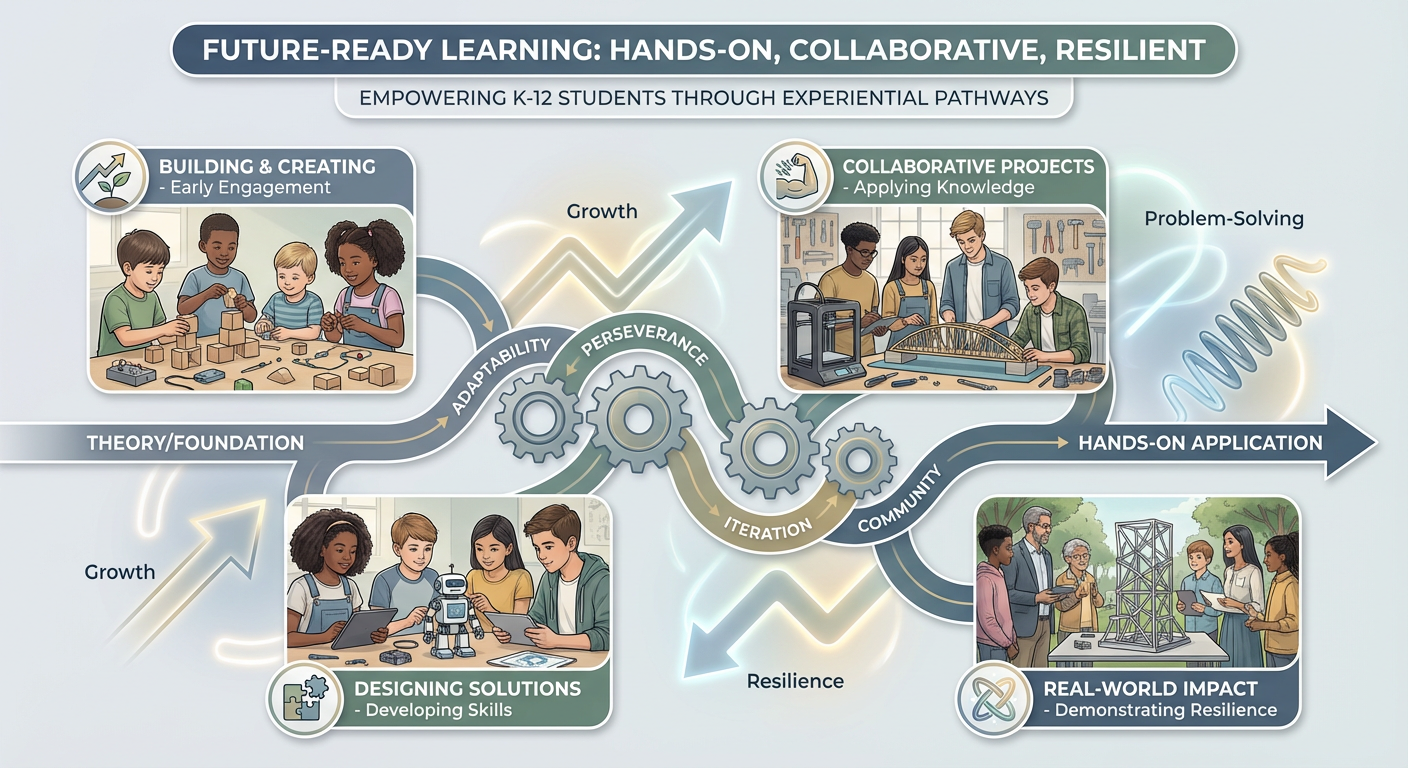
3. Experiential Learning: Cultivating Entrepreneurial Skills Through Hands-On Approaches
The landscape of K-12 education is undergoing a profound transformation, moving beyond traditional textbook-centric instruction to embrace pedagogies that emphasize practical, applied learning. At the forefront of this shift is experiential learning, a powerful approach particularly well-suited for cultivating entrepreneurial skills. This pedagogical model recognizes that true learning in entrepreneurship—or any complex domain—is best achieved through “doing” rather than merely observing or memorizing. The core of entrepreneurial grit, characterized by perseverance, adaptability, and the ability to learn from failure, cannot be taught theoretically; it must be forged through direct engagement with real-world challenges and iterative problem-solving. As early entrepreneurial ambition among youth is high—with over half of U.S. middle schoolers (55%) planning to start a business, a figure that unfortunately drops to 27% by high school—there is a critical need to sustain and nurture this enthusiasm through engaging, hands-on experiences[2]. This section delves into the evolving application of experiential learning in K-12 entrepreneurship education, exploring how methods such as project-based learning, in-school incubators, and maker spaces are delivering tangible outcomes, the crucial role of mentorship and community involvement, the embrace of iterative design and productive failure, and innovative methods for measuring real-world impact beyond conventional academic metrics.
3.1 The Pedagogical Shift Towards “Learning by Doing”
The evolution of entrepreneurship education reflects a broader educational paradigm shift towards active, student-centered learning. No longer confined to abstract concepts or the romanticized notion of a “lemonade stand” business, K-12 entrepreneurship now features comprehensive programs that immerse students directly in the entrepreneurial process[4].
Traditionally, exposure to business in school was often limited to rudimentary activities, such as bake sales or theoretical discussions, failing to capture the dynamic and challenging nature of entrepreneurship. However, as of 2016, 60% of high school students in the U.S. reported their schools offering classes on how to start and run a business, a significant indicator of this shift[3]. This move is driven by a recognition that entrepreneurial skills are essential for the 21st-century workforce, where adaptability and innovation are paramount.
- Project-Based Learning (PBL) in Entrepreneurship: Project-based learning forms the bedrock of modern entrepreneurial education. Instead of lectures on business concepts, students are tasked with identifying problems, developing solutions, prototyping products or services, and even launching mini-companies. Programs like the **Junior Achievement (JA) Company Program** exemplify this approach, allowing high schoolers to form and operate student-run companies over a semester. Through such experiences, students engage in practical activities such as market research, product prototyping, marketing campaigns, managing sales, and understanding basic financial operations, including the potential for liquidation of a venture[4]. This direct engagement fosters higher problem-solving and teamwork skills, and in many cases, students generate real revenues, which they may retain or reinvest. This applied learning significantly boosts engagement and knowledge retention, particularly for complex topics like economics, surpassing the effectiveness of abstract, theoretical lessons. Despite the clear benefits, only an estimated 10-15% of students currently get these immersive “real-world” learning opportunities, highlighting a substantial area for expansion[11].
- In-School Incubators and Maker Spaces: To further facilitate hands-on learning, schools are increasingly establishing environments that mimic real-world startup incubators and innovation labs.
- Maker Spaces and Fabrication Labs: These dedicated spaces, equipped with tools like 3D printers, robotics kits, and various craft supplies, provide students with the resources to design, build, and iterate on their ideas[10]. These spaces are invaluable for supporting entrepreneurial projects, enabling students to rapidly prototype products in a low-risk setting. The government of India, for instance, has demonstrated a significant commitment to this model, establishing **8,706 Atal Tinkering Labs (ATLs)** in schools across the country as of mid-2021, with a goal of 10,000. These labs, covering 90% of India’s districts, aim to cultivate one million child innovators, reflecting a massive public investment in K-12 entrepreneurship and STEM creativity[10].
- Innovation Hubs and Student-Led Businesses: Beyond physical tools, some high schools cultivate internal incubators or “innovation hubs” where student teams can develop business ideas with guidance from teachers and local entrepreneurs. The **Northland CAPS program in Kansas City** is a prime example: a consortium of high schools where students collaborate with businesses to solve real-world problems, often resulting in student-designed products or services. Remarkably, 100% of Northland CAPS students graduate having completed an industry internship or client project for credit[11]. This level of immersion replicates the startup experience, requiring students to meet deadlines, communicate with stakeholders, and adapt to feedback, thus fostering crucial entrepreneurial competencies.
3.2 Mentorship and Community Involvement: Bridging the Classroom and the Real World
A cornerstone of effective experiential entrepreneurship education is the integration of external mentorship and community involvement. These elements provide students with authentic connections, practical advice, and real-world perspectives that cannot be replicated within the confines of a classroom.
- The Power of Mentorship: Bringing in business volunteers, experienced entrepreneurs, or even older student mentors offers invaluable guidance. These mentors provide practical advice, share personal experiences, and offer moral support, helping students navigate the complexities of their projects. For example, in **Overland Park, Kansas, the Blue Valley CAPS high school program** facilitated a partnership between high school entrepreneurship students and 5th graders. The high schoolers mentored the younger students as they developed and prototyped food products, such as fun-shaped veggie snacks or high-protein snack bars[6]. This near-peer mentorship benefited both groups: the 5th graders gained confidence in presenting their ideas to adults, while the high school students solidified their own entrepreneurial knowledge by teaching and leading. Surveys indicate that nearly 45% of teens find direct interaction with business owners the most helpful way to learn about starting a business, underscoring the critical role of mentorship[6].
- Community Engagement: Inviting community professionals and local businesses into the educational process not only lends authenticity to student projects but also helps build valuable networks. Global programs like Technovation or FIRST Robotics connect youth teams with industry mentors, enriching their entrepreneurial STEM projects. These collaborations expose students to diverse perspectives and potential future opportunities. The success of programs like **Lemonade Day**, which by 2017 had involved over 800,000 children across 66 cities in the U.S. and Canada, heavily relies on community support, including local businesses and city officials, recognizing its power to foster an “I can do it” entrepreneurial spirit[9].
- Partnerships with Real Companies: In immersive simulations, such as **JA Finland’s Yrityskylä (Me & MyCity)**, students directly interact with models of real companies and public institutions. In this program, approximately 85% of Finnish 6th and 9th graders participate in a full-day simulation of a city economy, taking on roles like CEO, finance manager, or even mayor within recreated companies and public services[10]. These partnerships provide a realistic context for learning about economic understanding, entrepreneurship, and citizenship, demonstrating how integral community and corporate involvement can be to large-scale experiential learning initiatives.
3.3 Embracing Failure and Iterative Design: The Path to Entrepreneurial Grit
A distinctive characteristic of experiential entrepreneurship education is its deliberate cultivation of resilience and acceptance of failure as an integral part of the learning process. This approach directly mirrors the iterative nature of real-world entrepreneurship, where setbacks are not only common but also crucial for growth and innovation.
- Iterative Design Process: Experiential pedagogies encourage students to engage in cycles of ideation, prototyping, feedback, and refinement. This iterative loop, often seen in design thinking courses and startup challenges, ensures that students continuously test their assumptions and improve their solutions. When students launch mini-ventures, such as designing an app or creating handmade products, they inevitably encounter challenges and setbacks. These are not viewed as failures but as valuable learning opportunities. For instance, if a marketing strategy fails, students are prompted to analyze why and adjust their approach. This methodology is deeply rooted in the “lean startup” principle, which emphasizes rapid experimentation and validated learning[4].
- Productive Failure and Learning from Setbacks: The concept of “productive failure,” where initial unsuccessful attempts lead to deeper understanding and improved performance, is central to this approach. According to educational author Tom Vander Ark, “big projects… are a great way to promote productive struggle” and foster an entrepreneurial mindset by pushing students out of their comfort zones[4]. Coding and maker programs, for example, inherently involve frequent debugging and iteration, teaching students to troubleshoot and persist until their creations function as intended[4].
- Normalizing Failure for Resilience: The entrepreneurial world is characterized by high failure rates; approximately 90% of startups ultimately fail[12]. This stark reality underscores the importance of teaching students to persist through adversity and adapt their strategies. By normalizing failure as a stepping stone to success, these programs help students develop the resilience and problem-solving agility that are critical entrepreneurial competencies. Educators often discuss historical examples of innovators like Thomas Edison or Oprah Winfrey, who faced numerous setbacks before achieving success, thereby framing failures as natural components of any significant endeavor. Some schools even adopt a “failure résumé” exercise, adapted from Silicon Valley practices, where students reflect on what they learned from their mistakes throughout the year. This practice reinforces the notion that true learning often stems from analyzing and overcoming challenges rather than avoiding them.
- Cultivating a Growth Mindset: This acceptance of failure is closely linked to Carol Dweck’s concept of a growth mindset—the belief that abilities can be developed through dedication and hard work[5]. Students are encouraged to use phrases like “I can’t solve this… yet,” emphasizing that skills are not fixed but evolve over time. Research from PISA 2018 indicates that students who embrace a growth mindset scored an average of 32 points higher in reading than those with a fixed mindset, even after accounting for socioeconomic factors[5]. These students also reported higher motivation and a lower fear of failure, traits highly relevant to entrepreneurship[5]. By encouraging students to see challenges as opportunities for growth, experiential learning embeds a fundamental characteristic of entrepreneurial grit.
3.4 Measuring Real Outcomes Beyond Traditional Metrics
The shift towards experiential learning in entrepreneurship necessitates a re-evaluation of how student success is measured. Traditional academic metrics often fall short in capturing the holistic development fostered by these hands-on programs. Consequently, educators are adopting diverse methods to assess authentic, real-world outcomes.
- Tangible Outputs and Performance-Based Assessments:
- Pitch Competitions and Business Plans: Many programs culminate in students presenting their business ideas in “Shark Tank”-style pitch competitions or through comprehensive business plans. These events serve as dynamic assessments, evaluating not only the viability of the idea but also students’ communication, persuasion, and critical thinking skills. The presentations often involve real entrepreneurs and investors, providing invaluable feedback and even potential seed funding. For example, Matthew H., a Network for Teaching Entrepreneurship (NFTE) alumnus, secured a $1,500 seed grant for his streetwear business, Urban Empire, after winning a regional pitch competition, allowing him to further develop his venture and earn approximately $25,000 in revenue by graduation[16].
- Venture Revenue and Profitability: For student-run businesses, actual revenue and profitability can be direct measures of success. While not every school venture is expected to become a multi-million-dollar enterprise, generating income and managing finances provide concrete learning experiences in financial literacy and market validation. Programs like Lemonade Day, which saw children collectively earn millions of dollars, allow participants to decide on allocating profits to spending, saving, or charity, reinforcing practical financial management and civic responsibility[9].
- Product Launches and Prototyping: The creation and iteration of physical or digital products are also key indicators. Maker spaces and innovation labs enable students to build prototypes, and the successful development and refinement of these prototypes demonstrate problem-solving and technical skills.
- Assessing Mindset and Soft Skills:
- Entrepreneurial Mindset Index: Organizations like NFTE utilize specialized assessments, such as their Entrepreneurial Mindset Index, to measure growth in eight specific domains: creativity, self-reliance, comfort with risk, future orientation, critical thinking, problem-solving, communications, and collaboration[7]. NFTE’s research has shown significant improvements in these areas after program participation, validating the impact of hands-on learning on mindset development.
- Portfolio Assessments and Micro-credentials: Instead of single exams, portfolio assessments can capture the breadth of student work, including business plans, prototypes, reflections on challenges, and marketing materials. Micro-credentials, such as the European **Entrepreneurial Skills Pass (ESP)**, offer standardized recognition for students who complete mini-company programs and pass an exam. In one recent year, over 5,600 students in Europe earned this credential, which is increasingly recognized by employers and universities, lending formal legitimacy to entrepreneurial education outcomes[8].
- Reflective Practices and Self-Assessment: Students are encouraged to reflect on their learning journey, documenting challenges faced, solutions implemented, and personal growth achieved. This metacognitive practice helps them internalize the lessons learned and understand the development of their own grit and resilience.
- Long-Term Impact and Broader Life Skills:
- Boosting Confidence and Agency: Beyond specific business skills, these programs significantly enhance students’ confidence, creativity, leadership abilities, and sense of agency. Students who were once shy or disengaged often find their voice and leadership potential when working on projects they are passionate about. Programs targeting underserved youth, such as NFTE in low-income communities, consistently report substantial boosts in participants’ self-confidence and leadership scores[15].
- Enhanced Engagement and Reduced Dropout Rates: Experiential entrepreneurial learning can re-engage students who are disaffected by traditional schooling. Its active, real-world relevance motivates students, often leading to increased attendance and reduced behavioral issues. The European Commission has noted that entrepreneurship education positively impacts school engagement and can lower dropout rates, particularly for at-risk students, by making education feel more practical and relevant to future opportunities[14].
- Financial Literacy and Economic Understanding: Direct involvement in running a business provides students with hands-on experience in budgeting, pricing, cost management, and profit calculation. This practical application significantly improves financial literacy, as seen in Junior Achievement programs which combine entrepreneurship with personal finance education, leading to higher confidence in money management and better budgeting habits among alumni. The Yrityskylä simulation in Finland provides 6th graders with practical civic-economic exposure, helping them understand how an economy functions and the roles of various actors within it[10].
- Development of 21st-Century Skills: Through enterprise projects, students naturally develop communication, collaboration, creativity, and critical thinking – often referred to as the “4 Cs.” These are precisely the skills that employers seek but often find lacking in high school graduates[13].
3.5 Notable Examples of Experiential Entrepreneurship Education
The global acceleration of entrepreneurial education is best understood through illustrative examples of programs that embody these hands-on pedagogies and deliver demonstrable results.
- Lemonade Day (North America): Launched in Houston in 2007, Lemonade Day has become a widespread initiative, engaging over 800,000 children across more than 80 cities in the U.S. and Canada by 2017[9]. This program provides elementary-aged children with workbooks and adult mentors to guide them through establishing and operating a lemonade stand. Participants learn fundamental business principles such as budgeting, goal-setting, marketing, and customer service. A key outcome is that participants choose how to allocate their earnings, reinforcing lessons in financial literacy, savings, and charitable giving. This program demonstrates that accessible, low-cost experiential learning can effectively introduce entrepreneurship at a young age, fostering grit by requiring participants to plan, interact with customers, and adapt to real-world challenges[9].
- Blue Valley CAPS – High Schoolers Mentoring 5th Graders (United States): The Blue Valley Center for Advanced Professional Studies (CAPS) in Overland Park, Kansas, has pioneered an innovative cross-age mentorship model. High school students in their “Future of Food” entrepreneurship class mentored 5th graders to identify food-related problems and develop business solutions. The younger students prototyped products like healthy veggie snacks, receiving guidance from their older mentors on iterative design and problem-solving[6]. The project culminated in a “shark tank”-style pitch day to food industry professionals, where 5th graders, coached by their high school counterparts, impressively presented their business plans and even secured commercial interest for their products. This initiative brilliantly showcases the multiplier effect of mentorship, enhancing entrepreneurial knowledge for both mentors and mentees, and cultivating confidence and problem-solving skills in young learners[6].
- JA Finland’s Yrityskylä (Me & MyCity) – A National Entrepreneurship Simulation (Finland): This award-winning program from Junior Achievement Finland offers a full-day immersive simulation of a city economy for sixth and ninth graders. Approximately 85% of Finnish students in these grades participate in Yrityskylä, a meticulously designed “mini-city” where each student assumes a specific job role within real companies and public services, from CEOs to civil servants[10]. Students earn salaries, manage bank accounts, pay taxes, and make consumer decisions. This extensive simulation provides concrete learning in economic understanding, entrepreneurship, and citizenship, helping students grasp how an economy functions and fostering a sense of initiative and responsibility. The success of Yrityskylä, replicated in other countries, underscores the impact of large-scale experiential learning integrated into national curricula and supported by strong public-private partnerships[10].
- NFTE Alumni Success – From High School Startup to Ongoing Enterprise (United States): The Network for Teaching Entrepreneurship (NFTE) cultivates entrepreneurial skills in students from underserved communities. Matthew H., an alumnus from New York City, launched Urban Empire, a streetwear business, as a 16-year-old high school student in his NFTE course. He learned ideation, market research, and business planning, and secured a $1,500 seed grant through a pitch competition. Despite challenges like finding suppliers and dealing with trademark issues, Matthew persisted, mentored by business professionals, and adapted his designs based on feedback. By graduation, he had generated approximately $25,000 in revenue from Urban Empire[16]. Matthew’s journey exemplifies how early entrepreneurial training, coupled with real-market experience and mentorship, can lead to tangible economic success and significantly boost a student’s confidence and resilience, providing invaluable life skills that extend beyond the classroom.
These examples, among many others, highlight a clear trend: experiential learning is not just an effective pedagogical tool but a powerful catalyst for cultivating entrepreneurial grit and a broader set of life skills in K-12 students. By actively engaging students in the process of creation, problem-solving, and managing real-world challenges, these programs prepare them not only for potential roles as entrepreneurs but as adaptable, resilient, and proactive individuals ready to navigate an uncertain future. Looking ahead, the evidence strongly suggests that the integration of experiential learning into K-12 entrepreneurship education will only deepen. The continued expansion of project-based learning, the proliferation of maker spaces and in-school incubators, and the strategic involvement of mentors and community partners are all vital steps in ensuring that every student has the opportunity to develop the entrepreneurial mindset required for success in the 21st century.
The next section will delve into “Measuring the Mindset: Assessing Entrepreneurial Competencies and Grit,” exploring the specific metrics and methodologies being developed to evaluate the impact of these evolving pedagogies on students’ entrepreneurial mindset, resilience, and skills.

4. Developing Grit and Resilience: The Core of the Entrepreneurial Mindset
In the dynamic world of entrepreneurship, success is rarely a linear path. It is often characterized by uncertainty, setbacks, and moments of profound challenge. For aspiring entrepreneurs, particularly those still navigating their foundational education, the ability to persevere through adversity, learn from failures, and adapt to evolving circumstances is paramount. This suite of psychological traits, broadly encapsulated by terms like “grit,” “resilience,” and a “growth mindset,” forms the bedrock of the entrepreneurial spirit. Modern K-12 entrepreneurship education has increasingly recognized that mere business acumen, without these underlying character strengths, is insufficient to prepare students for the realities of venture creation and innovation. As such, fostering these non-cognitive skills has become a central pedagogical objective, moving beyond traditional instruction to incorporate experiential learning methods that actively challenge students to develop their tenacity and adaptability. This section will delve into why grit and a growth mindset are indispensable for entrepreneurial success, explore how K-12 education systems are intentionally integrating these principles, and examine the diverse pedagogies—from challenge-based learning to competitions and mentorship—employed to cultivate perseverance. Furthermore, it will address the importance of monitoring and reinforcing these attributes while advocating for a balanced perspective to prevent potential pitfalls like burnout.
4.1 The Indispensable Role of Grit and Growth Mindset in Entrepreneurship
The entrepreneurial journey is inherently fraught with risks and obstacles. From conceiving an innovative idea to navigating market fluctuations, securing funding, and managing a team, entrepreneurs constantly encounter situations that test their resolve. This reality underscores why psychological attributes like grit and a growth mindset are not merely beneficial but are, in fact, core components of the entrepreneurial mindset.
4.1.1 Grit: Passion and Perseverance in the Face of Adversity
Psychologist Angela Duckworth defines “grit” as the sustained passion and perseverance towards long-term goals, even in the absence of immediate positive feedback or during periods of significant challenge[16]. This definition perfectly mirrors the demands placed upon entrepreneurs. Consider the staggering statistic that approximately 90% of startups ultimately fail[9]. This harsh reality means that most entrepreneurs will experience multiple setbacks—product flops, funding shortfalls, market rejections, and team conflicts—before potentially achieving success. Without an ingrained capacity for grit, these initial failures could easily lead to abandonment of their ventures. The relevance of grit is not merely theoretical; it has quantifiable impacts. Duckworth’s research across various domains, including education and professional settings, suggests that grit can account for about 4% of the variance in success outcomes[12]. While this might seem a moderate effect, in educational contexts, it signifies a meaningful contribution to long-term achievement, such as graduation rates or project completion. For students engaged in entrepreneurial projects, this translates to the ability to persist with a business idea even when early market feedback is negative, or to continue refining a prototype despite repeated technical difficulties. The curriculum consciously frames these setbacks not as conclusive defeats but as invaluable learning steps, echoing the Silicon Valley adage “fail fast, learn faster.” For instance, an entrepreneurship capstone might compel student teams to fundamentally alter their business model mid-semester based on discouraging primary research, thereby teaching them that persistence, coupled with necessary adaptability, is more effective than an unyielding commitment to a flawed initial plan. This process cultivates a deeper understanding: true entrepreneurial success often stems not from avoiding failure, but from iterating through it.
4.1.2 Growth Mindset: The Belief in Malleable Abilities
Complementing grit is the concept of a “growth mindset,” popularized by Carol Dweck. A growth mindset is the belief that one’s intelligence, abilities, and talents are not fixed traits but can be developed and enhanced through dedication, hard work, and effective strategies[17]. In direct contrast to a “fixed mindset,” which views abilities as static, a growth mindset empowers individuals to embrace challenges, learn from criticism, and see effort as a path to mastery. The K-12 entrepreneurial curriculum actively integrates growth mindset principles. Educators often encourage students to append “yet” to their self-assessments – transforming statements like “I can’t solve this” into “I can’t solve this…yet.” This subtle linguistic shift reinforces the idea that current limitations are not permanent but temporary states awaiting future development. The impact of fostering a growth mindset in students is demonstrably significant. The PISA 2018 results, for example, highlighted that students who held a growth mindset (i.e., believed their intelligence could improve) scored, on average, 32 points higher in reading than their peers with a fixed mindset, even after accounting for socioeconomic background factors[5]. This difference is equivalent to nearly a full grade level. Moreover, these growth-oriented students exhibited higher motivation and a reduced fear of failure[5], both of which are critical dispositions for tackling the uncertainties inherent in entrepreneurship. Schools are translating these findings into practice by incorporating growth mindset training, often within social-emotional learning frameworks. Teachers are coached to provide feedback that emphasizes effort, process, and improvement rather than solely focusing on correct outcomes. In entrepreneurial projects, every attempt to refine a product, every sales pitch—successful or not—becomes an opportunity to illustrate how persistent effort leads to skill development. Over time, students internalize the understanding that progress is a direct result of their perseverance, a lesson that transcends the boundaries of any single project and prepares them for lifelong learning and adaptation.
4.2 Pedagogical Strategies for Cultivating Perseverance
To actively nurture grit and resilience, K-12 entrepreneurship education has adopted a range of innovative pedagogical approaches that move beyond theoretical instruction. These strategies are designed to immerse students in authentic, challenging experiences that demand sustained effort and adaptive problem-solving.
4.2.1 Challenge-Based Learning and Open-Ended Problems
One highly effective strategy is challenge-based learning. This involves presenting students with complex, open-ended problems that do not have straightforward solutions. This pedagogical approach forces students to confront ambiguity, think critically, and develop their own pathways to solutions. Such challenges might involve identifying a real-world problem within their community and then tasking students to design, prototype, and potentially launch a business solution. For example, the Blue Valley CAPS program in Overland Park, Kansas, partnered high school students with 5th graders to identify food-related problems and develop entrepreneurial solutions[63]. One team of 10- and 11-year-olds, noting children’s dislike for vegetables, conceptualized and prototyped fun-shaped veggie snacks. Another team developed a high-protein snack for young athletes needing convenient nutrition[65]. These projects inherently demand perseverance as students iterate on recipes, refine packaging, and deal with the inevitable “failures” in taste or design. The process teaches them that setbacks are part of the journey and that improvisation and adaptation are essential. Education authors like Tom Vander Ark advocate for “big projects… [as] a great way to promote productive struggle” that can frame an entrepreneurial mindset, pushing students beyond their comfort zones[36].
4.2.2 Competitions, Games, and Maker Projects
Another powerful pedagogical tool is the use of competitions and game-based learning. These structured challenges provide stakes and motivation, compelling students to exert sustained effort. Robotics competitions, for instance, often require months of iterative design, building, programming, and troubleshooting. Teams learn to diagnose and fix mechanical issues, debug code, and refine their robot’s performance under pressure—all direct exercises in perseverance and problem-solving. Similarly, “maker projects” in designated maker spaces or innovation labs, equipped with tools like 3D printers and robotics kits, allow students to physically build and iterate on product ideas, fostering creative problem-solving and grit in a hands-on environment. India’s initiative to establish over 8,700 Atal Tinkering Labs in schools since 2017 underscores this global trend of providing students with tools and platforms for innovation and problem-solving[4]. Beyond tangible products, pitch competitions and “Shark Tank”-style events simulate real-world entrepreneurial environments. Students must refine their ideas, articulate their value proposition, and defend their plans, often facing critical questions from judges. The preparation and execution of these events demand significant grit, as students learn to handle pressure and constructive feedback.
4.2.3 Learning from Failure: Iterative Design and Reflection
A core tenet of entrepreneurial pedagogy is normalizing failure as a vital component of the learning process. Instead of one-off assignments, students engage in iterative cycles of ideation, prototyping, collection of feedback, and refinement. This mirrors the “lean startup” methodology prevalent in the business world. For instance, when students launch mini-ventures, some ideas might “flop” or face significant setbacks. The curriculum intentionally reframes these experiences as learning opportunities: “What went wrong with the marketing strategy?” “How can the product be improved based on customer feedback?” This process helps students analyze problems, identify root causes, and pivot their ideas if necessary[3]. Some schools have even adapted exercises like the “failure résumé,” where students document and reflect on their mistakes and what they learned from them. This exercise, borrowed from Silicon Valley, teaches students to view failures not as marks of inadequacy but as essential data points for growth. The ultimate aim is to cultivate resilience and agility—the capacity to recover from setbacks and adapt quickly—which are crucial entrepreneurial competencies.
4.2.4 Mentorship and Community Involvement
Mentorship plays a critical role in fostering grit and resilience. Connecting students with experienced entrepreneurs, business owners, or even older student mentors provides practical guidance, emotional support, and a model for perseverance. These mentors can share their own stories of overcoming challenges, offering real-world context for the importance of tenacity. The Blue Valley CAPS program exemplifies the power of mentorship. High schoolers mentor elementary students, guiding them through the product development and pitching process. This near-peer mentorship benefits both age groups: younger students gain practical skills and confidence, while older students solidify their own entrepreneurial understanding by teaching and leading[64]. The interaction also helps younger students learn to navigate frustrations and disappointments with the guidance of a more experienced peer. Surveys indicate that nearly 45% of teens believe hearing directly from business owners is the most helpful way to learn about entrepreneurship[1]. This highlights that authentic role models can profoundly influence a student’s commitment to their entrepreneurial endeavors, lending credibility and tangible advice that strengthens their grit.
4.3 Tracking, Reinforcing, and Balancing Grit
While crucial, cultivating grit requires careful consideration of how it is tracked and reinforced, ensuring a balanced approach that prevents burnout.
4.3.1 Tracking and Reinforcing Perseverance
Measuring such abstract qualities as grit and perseverance in an educational setting is challenging. Many schools avoid formal grading of these traits due to the potential for controversy and the difficulty of technical assessment. Instead, the focus shifts to internal reflection and recognition. Students might engage in self-assessment and reflective journaling, documenting their goals, the obstacles they encountered, and their strategies for overcoming them. This metacognitive process helps them develop an awareness of their own resilience. Some entrepreneurial education programs, such as the Network for Teaching Entrepreneurship (NFTE), utilize more structured assessments. NFTE employs an “Entrepreneurial Mindset Index” to measure growth in eight key domains, including creativity, self-reliance, and comfort with risk, both before and after program participation[44]. Such assessments provide valuable data about changes in students’ mindsets, validating the effectiveness of experiential learning. Beyond assessment, reinforcement often comes through recognition. This can take the form of badges, awards for perseverance, or public showcases where students share not just their successful outcomes, but also the journey of overcoming challenges. The emphasis is on celebrating effort, resilience, and creative risk-taking, fostering a classroom culture where these qualities are highly valued. Furthermore, aligning projects with students’ genuine passions is critical. As Duckworth pointed out, passion for one’s goals fuels perseverance[37]. K-12 entrepreneurship projects often begin by asking students to identify problems they genuinely care about, whether community issues or personal interests. Working on meaningful projects naturally increases intrinsic motivation, making students more likely to persist despite hurdles.
4.3.2 Balanced Perspective: Grit with Wellness to Prevent Burnout
An important emerging consideration in fostering grit is the need for a balanced approach that prioritizes student well-being and avoids promoting unhealthy levels of stress or relentless pursuit without reflection. The entrepreneurial world itself grapples with issues of burnout, and educators must be mindful that pushing students to “never give up” indiscriminately can lead to anxiety and exhaustion. Recent discussions in entrepreneurship circles suggest that resilience—the capacity to bounce back effectively and maintain well-being—might be more crucial than blind grit, which if misapplied, can indeed lead to burnout[38]. In K-12 settings, this translates to supporting students through their failures and helping them understand when to pivot, when to seek external help, and when to disengage from a failing idea, rather than simply pushing through alone. The goal is “grit with grace”: teaching determination while also fostering adaptability, self-awareness, and problem-solving. This balanced approach integrates lessons on teamwork, time management, and self-care alongside entrepreneurial skills. Students learn that persistence is valuable, but so is knowing when to strategically adjust course based on new information or when a particular path is no longer sustainable. This prepares them for the real-world complexities of entrepreneurship, where success often involves multiple pivots and the wisdom to know when to gracefully conclude a project.
4.4 Global Examples of Grit-Building Pedagogies in Action
Across the globe, K-12 educators are implementing innovative programs that concretely build grit and resilience, providing tangible examples of these pedagogies in practice.
4.4.1 Lemonade Day (North America)
Lemonade Day, initiated in Houston in 2007, is a prime example of a program that teaches fundamental entrepreneurial skills and resilience at a very young age. By 2017, over 800,000 children across more than 80 cities in the U.S. and Canada had participated[61]. Each child receives a kit with lessons on budgeting, goal-setting, marketing, and customer service, all leading to the eventual operation of their own lemonade stand[62]. This program inherently fosters grit and resilience in several ways:
- Planning and Execution: Children must plan every aspect of their stand, from recipe and pricing to location and marketing. This process requires foresight and problem-solving.
- Dealing with Public: Operating a stand means interacting with real customers, including handling unexpected questions, complaints, or even outright rejection. Learning to maintain enthusiasm and professionalism in such moments builds character.
- Adapting to Challenges: Imagine a child who prepares for days only to have it rain on Lemonade Day. The program encourages them to think creatively about alternative solutions, like delivering lemonade or moving indoors, providing immediate lessons in adaptability.
- Financial Management: Deciding how to allocate profits—to spend, save, or donate—teaches financial responsibility and reinforces the value of their hard work[64].
Many Lemonade Day alumni go on to launch more complex ventures, often attributing their foundational confidence and perseverance to this initial experience. The program’s blend of practical experience and real-world stakes makes it an excellent incubator for entrepreneurial grit.
4.4.2 Blue Valley CAPS (United States)
As previously mentioned, the Blue Valley CAPS in Overland Park, Kansas, demonstrates how cross-age mentorship can instill grit. High school students guiding 5th graders through developing a food product business solution required the elementary students to iterate on recipes, packaging, and marketing strategies[66]. This project was a continuous lesson in perseverance:
- Trial and Error: Students learned that some initial ideas or flavors might not work, necessitating continuous improvement. The high school mentors guided them through these moments of “failure,” reframing them as learning opportunities.
- Pitching Under Pressure: The project culminated in a “shark tank” style pitch to real food industry professionals. This experience taught the 5th graders to present their ideas confidently, respond to challenging questions, and manage nerves—core components of entrepreneurial resilience[67].
The success of this collaboration lies in its integration of real-world challenges, iterative design, and supportive mentorship, all contributing to the students’ capacity for sustained effort and adaptive problem-solving.
4.4.3 JA Finland’s *Yrityskylä* (Me & MyCity) Simulation (Finland)
Finland’s *Yrityskylä*, or Me & MyCity, is an exemplary national program that offers sixth-graders an immersive, full-day simulation of running a city’s economy. This “mini-city” environment, comprising real businesses and public institutions, assigns each student a specific job from CEO to mayor[69]. As of recent years, it has reached approximately 85% of all Finnish sixth and ninth graders[10]. The program fosters grit and resilience through:
- Active Problem-Solving: Students must perform job tasks, earn a salary, manage finances, and make consumer decisions, often encountering unexpected challenges within the simulated economy. For instance, a “bank manager” might face a budget deficit, requiring creative solutions and teamwork.
- Responsibility and Initiative: Each role demands a degree of responsibility, pushing students to take initiative and fulfill their duties accurately and efficiently, often under time constraints.
- Learning from Consequences: Just as in real life, decisions have consequences. A student who mismanages their salary might be unable to purchase goods in the mini-city, providing a direct, tangible lesson in financial planning and the importance of careful decision-making.
- Collaboration Under Pressure: Working within “companies” and “institutions” means students must collaborate to achieve collective goals, negotiating differences and overcoming internal challenges.
*Yrityskylä* transforms economic and civic concepts from abstract ideas into concrete experiences, building not only financial literacy but also the practical resilience needed to navigate complex systems. Its national scale ensures that these critical skills are developed across an entire generation of students.
4.5 Conclusion: A Foundation for Tomorrow’s Workforce
The intentional development of grit and resilience within K-12 entrepreneurship education represents a crucial evolution in preparing students for an uncertain and rapidly changing future. As the global economy continues to shift, characterized by rapid technological advancement and a less linear career landscape, the entrepreneurial mindset—defined by creativity, initiative, adaptability, and especially perseverance—becomes indispensable[8]. The statistic that an estimated 85% of future jobs do not yet exist emphasizes the need for a workforce that can “configure and reconfigure” their careers, a skill intrinsically linked to entrepreneurial competencies[40][41]. K-12 programs are moving beyond simply teaching business fundamentals to actively cultivating these deeper character strengths through highly experiential and project-based pedagogies. Whether through the early business lessons of Lemonade Day, the iterative challenges of design thinking and maker projects, or the immersive simulations of *Yrityskylä*, students are consistently placed in situations that demand sustained effort, adaptive problem-solving, and a healthy approach to failure. The integration of a growth mindset further empowers students, reinforcing the belief that their abilities are malleable and can be improved through persistent effort. While tracking and reinforcing these non-cognitive skills require careful consideration, the emphasis on self-reflection and recognition over punitive grading ensures a positive developmental environment. Crucially, educators are adopting a balanced perspective, fostering “grit with grace” to build resilience without pushing students towards burnout, understanding that well-being is integral to long-term success. This strategic focus on grit and resilience is not merely about producing more startup founders; it is about cultivating future-ready individuals who possess the tenacity, adaptability, and problem-solving skills to thrive in any chosen path, be it as innovative employees, community leaders, or indeed, successful entrepreneurs. By embedding these core elements within entrepreneurship education, schools are equipping the next generation with the profound capacity to not only cope with future disruptions but to actively drive innovation and shape their own destinies. The next section will further explore the growing global adoption and policy frameworks that undergird this evolution, examining how governments and international bodies are institutionalizing entrepreneurship education within national curricula, expanding access, and addressing challenges such as teacher training.

5. Entrepreneurship Education as a Catalyst for Broader Life Skills
Entrepreneurship education in K-12 settings has transcended its initial scope of merely teaching business fundamentals, evolving into a potent force for holistic skill development and a critical component of preparing students for a rapidly changing world. Far from being solely about fostering future startup founders, these programs are now recognized as powerful catalysts for cultivating a wide array of life skills that are universally applicable and highly valued in any career path or personal endeavor. The emphasis has shifted from the simplistic “lemonade stand” model to sophisticated, project-based pedagogies that immerse students in real-world challenges, thereby nurturing not only economic understanding but also essential socio-emotional and cognitive competencies [8]. This section delves into how entrepreneurship education equips students with the “4 Cs” – communication, collaboration, creativity, and critical thinking – alongside boosting financial literacy, economic understanding, leadership, and a sense of agency. Furthermore, it explores the positive impact on student engagement and dropout prevention, and the growing importance of integrating ethics and social entrepreneurship into these programs.
5.1. Holistic Skill Development: The “4 Cs” and Beyond
Modern entrepreneurship pedagogy distinguishes itself by its capacity to organically foster a comprehensive suite of skills, often referred to as the “4 Cs” critical for success in the 21st century: Communication, Collaboration, Creativity, and Critical Thinking. These competencies are not taught in isolation but are intricately woven into the fabric of experiential learning, emerging naturally as students navigate the complexities of launching and managing a venture, however small.
5.1.1. Cultivating Communication Skills
Effective communication is paramount in any entrepreneurial endeavor, from pitching an idea to a potential investor to articulating a product’s value proposition to customers. K-12 entrepreneurship programs inherently demand and develop these skills. For instance, student teams tasked with launching a school-based enterprise, such as a cafe, are required to articulate their vision, seek approvals, and market their offerings. This process involves persuasive writing (e.g., preparing business proposals), clear verbal presentation (e.g., pitching to school administrators or a panel of judges), and active listening (e.g., gathering customer feedback for product iteration) [29]. The act of pitching a business idea, a staple in many entrepreneurship curricula, forces students to condense complex information, speak clearly and confidently, and respond to challenging questions on the spot. Lemonade Day participants, for example, learn to interact with real customers, articulate their pricing, and manage transactions, thereby honing their interpersonal communication skills from a young age [7]. The Blue Valley CAPS program, where high school students mentor 5th graders, further demonstrates how even peer-to-peer interactions in an entrepreneurial context enhance communication. The younger students are guided to present their food product ideas to industry professionals, significantly boosting their public speaking and presentation abilities [34]. This real-world application of communication far surpasses theoretical classroom exercises, empowering students with confidence and practical experience.
5.1.2. Fostering Collaboration
Entrepreneurship, particularly in its contemporary form, is rarely a solitary pursuit. Most successful ventures are the product of collaborative teams. K-12 entrepreneurship programs mirror this reality by emphasizing teamwork and shared responsibility. Students typically work in groups to develop business ideas, allocate roles, delegate tasks, and collectively address challenges. This collaborative environment naturally develops skills in negotiation, conflict resolution, and understanding diverse perspectives. Programs like the JA Company Program require high schoolers to form and operate student-run companies, necessitating seamless collaboration among team members who adopt various roles (e.g., CEO, marketing lead, finance manager) [8]. Similarly, the *Yrityskylä* (Me & MyCity) simulation in Finland places 6th graders in a mini-city where they assume specific public and private sector roles, requiring them to collaborate to ensure the city’s economy functions smoothly. Teachers involved in *Yrityskylä* consistently report significant increases in students’ collaborative skills [37]. This hands-on experience of working towards a common entrepreneurial goal underscores the vital role of collaboration, transforming abstract concepts into tangible group achievements.
5.1.3. Igniting Creativity and Innovation
At the heart of entrepreneurship lies creativity – the ability to generate novel ideas and solutions to problems. Entrepreneurship education cultivates this by encouraging students to identify unmet needs, brainstorm innovative products or services, and devise unique strategies to stand out in a market. Programs actively promote divergent thinking and experimentation. India’s widespread establishment of over 8,700 Atal Tinkering Labs (ATLs) across schools since 2017 exemplifies a national commitment to fostering innovation and creativity [6]. These labs provide students with access to tools like 3D printers and robotics kits, enabling them to build prototypes and experiment with solutions to real-world problems. The Indian government’s explicit goal to “cultivate one million children as innovators” highlights the direct link between such initiatives and national goals for creativity [6]. Similarly, the Blue Valley CAPS program saw 5th graders creatively solving food-related problems, such as developing fun-shaped vegetable snacks for picky eaters [33]. These projects move beyond rote learning, challenging students to think outside the box and transform abstract ideas into concrete products or services. The iterative design process, where students prototype, test, and refine their ideas, further fuels creative problem-solving [35].
5.1.4. Sharpening Critical Thinking
Entrepreneurial ventures are fraught with uncertainty and require constant evaluation and decision-making. Entrepreneurship education provides a fertile ground for developing critical thinking skills. Students are compelled to analyze market data, assess risks, identify problems, evaluate potential solutions, and make strategic choices. For instance, determining pricing for a product or service requires critical evaluation of costs, competitor strategies, and perceived customer value. When a marketing strategy falls short, students must critically analyze the reasons behind its failure and devise new approaches [35]. The “fail fast, learn faster” ethos prevalent in modern entrepreneurship programs directly encourages critical reflection on setbacks, viewing them as valuable data points for future improvement [9]. This analytical approach to challenges helps students develop robust problem-solving frameworks that extend far beyond the business context.
5.2. Impact on Financial Literacy and Economic Understanding
One of the most tangible and universally beneficial outcomes of K-12 entrepreneurship education is the significant boost in students’ financial literacy and their understanding of economic principles. Traditional curricula often struggle to make financial concepts relevant, but entrepreneurship programs provide an immersive, hands-on experience that demystifies money management. Students running a small business are directly exposed to:
- Budgeting: They must allocate initial capital, track expenses, and plan for future investments.
- Pricing Strategy: They learn to balance production costs, market demand, and desired profit margins.
- Revenue and Profit Calculation: The distinction between money earned and actual profit becomes clear through direct experience.
- Risk Assessment: Understanding that not all investments pay off and that business involves financial risk is a core lesson.
- Saving and Investment: Many programs encourage students to save a portion of their earnings or reinvest in their business [7].
Junior Achievement (JA) programs explicitly integrate financial literacy with entrepreneurship education. JA reports that alumni of their high school programs are more likely to create and adhere to personal budgets and exhibit higher confidence in managing their finances [43]. Lemonade Day, despite its simplicity, teaches participants valuable lessons in handling money, including how to allocate profits among spending, saving, and charitable giving, thereby instilling early financial responsibility [37]. This experiential learning helps cultivate economically literate citizens who understand the dynamics of commerce and the importance of financial stewardship.
5.3. Developing Leadership and Agency
Entrepreneurship education is a powerful vehicle for nurturing leadership qualities and instilling a profound sense of agency in students. By empowering students to conceive, plan, and execute their own projects, these programs shift them from passive recipients of knowledge to active creators and decision-makers.
5.3.1. Fostering Agency
Agency, defined as the belief in one’s ability to effect change and influence outcomes, is a critical life skill. When students embark on an entrepreneurial venture, they are placed in the “driver’s seat,” making key decisions and bearing responsibility for the results. This direct ownership fosters a sense of empowerment. Many educators observe that previously disengaged or quiet students often “come alive” when engaged in a business project they are passionate about. They discover that their ideas have value, and their efforts can lead to tangible results.
5.3.2. Building Leadership Skills
Leadership naturally emerges within these project-based environments. Student teams need individuals to take initiative, motivate peers, organize tasks, and guide decision-making. Programs like NFTE (Network for Teaching Entrepreneurship), which often serve underserved youth, have reported significant increases in participants’ self-confidence and leadership skills, specifically noting improvements in “initiative & self-direction” scores [44]. The anecdotal evidence is compelling: students who may have struggled academically often discover innate talents for sales, marketing, or team motivation through entrepreneurial projects, fundamentally altering their self-perception and future aspirations. The Blue Valley CAPS program’s high school mentors, by guiding younger elementary students through their product development, not only reinforced their own entrepreneurial knowledge but also developed valuable mentoring and leadership skills [34]. This near-peer leadership model is highly effective, as younger students often relate more easily to slightly older peers than to adult authority figures. Such experiences teach students not just to lead, but to inspire and guide others through the entrepreneurial process.
5.4. Enhancing Student Engagement and Preventing Dropout
Entrepreneurship education has proven to be a highly effective strategy for boosting student engagement and, in some cases, preventing school dropout. Its project-based, real-world relevant nature stands in stark contrast to traditional academic models, offering a compelling reason for students to invest in their learning.
5.4.1. Increased Engagement
The intrinsic motivation derived from working on a project with tangible outcomes—such as creating a product, launching a service, or earning real revenue—is a powerful driver of engagement. This active learning approach captures students’ interest in ways that passive instruction often cannot. Educators report that entrepreneurial programs can lead to improved attendance, reduced behavioral issues, and a more positive school climate overall. Students recognize the direct applicability of their learning, understanding “why” core academic subjects like math, writing, and even science are essential for their entrepreneurial ventures (e.g., calculating break-even points, writing compelling marketing copy, or understanding product design principles). This contextualization of academic content makes learning more meaningful and enjoyable. The European Commission highlighted that entrepreneurship education positively impacts school engagement and contributes to lowering dropout rates, particularly for at-risk students [45]. An integrated entrepreneurship project in a Spanish high school, for example, observed a measurable uptick in student attendance during the project period and significantly improved student attitudes towards school, especially among those who had previously considered leaving [46].
5.4.2. Dropout Prevention
For students who feel disconnected from traditional academic pathways, entrepreneurship offers an alternative context for success and relevance. It demonstrates that education can directly lead to future opportunities, whether through self-employment or by developing highly sought-after skills for the workforce. By offering a different kind of challenge and a different measure of success, these programs can re-engage students who might otherwise become disaffected. The ability to identify opportunities, solve problems, and take initiative empowers students and helps them visualize a viable future for themselves. This direct link between learning and life prospects makes education feel less abstract and more pragmatic, thereby reducing the likelihood of disengagement leading to dropout.
5.5. The Growing Emphasis on Ethics and Social Entrepreneurship
Crucially, modern K-12 entrepreneurship education extends beyond the singular pursuit of profit, progressively integrating ethical considerations and promoting social impact. This ensures that students develop not only business acumen but also a strong sense of social responsibility.
5.5.1. Instilling Ethical Decision-Making
Entrepreneurial activities, particularly when involving real-world interactions, present numerous opportunities to discuss and practice ethical behavior. This includes fair pricing, honest advertising, responsible sourcing, and treating employees and customers with respect. Discussing case studies of ethical dilemmas in business or requiring students to justify their decisions from an ethical standpoint are common pedagogical approaches. This emphasis ensures that future entrepreneurs are equipped to build ventures that are not only profitable but also principled.
5.5.2. Promoting Social Entrepreneurship
Social entrepreneurship, where ventures are designed to address social or environmental problems, is a rapidly growing area within K-12 programs. This approach teaches students that business can be a powerful tool for positive change. Projects might involve creating sustainable products, developing services for underserved communities, or innovating solutions for environmental concerns. For example, students might design a business that recycles plastic into school supplies or a service assisting the elderly with technology [47]. This focus resonates strongly with Gen Z students, who often express a high degree of social consciousness. By linking entrepreneurial endeavors to purpose-driven outcomes, educators can deepen student engagement and instill values of compassion, community responsibility, and ethical leadership [48]. It reframes entrepreneurship as a means to make a difference, thereby addressing any concerns that promoting business skills might inadvertently lead to a focus solely on personal gain. Programs and competitions focused on social innovation encourage youth to see themselves as agents of positive change, balancing the profit motive with empathy and a commitment to societal well-being.
5.6. Conclusion: A Foundation for Lifelong Success
The evolution of entrepreneurship education in K-12 has solidified its position as a dynamic catalyst for comprehensive life skill development. By emphasizing hands-on, project-based learning, these programs move beyond theoretical knowledge to cultivate practical competencies essential for success in any future pathway. The intrinsic nature of entrepreneurial challenges fosters the “4 Cs” – communication, collaboration, creativity, and critical thinking – not as abstract ideas but as tools for overcoming real-world obstacles. Furthermore, these programs directly address critical needs such as financial literacy, equipping students with practical money management skills that have lasting personal and economic benefits. The cultivation of leadership and agency empowers students, fostering a belief in their own capabilities and inspiring them to take initiative. Beyond individual skill development, entrepreneurship education has a proven track record of boosting student engagement and acting as a tool for dropout prevention by making learning relevant and connecting it to tangible future opportunities. Finally, the growing integration of ethics and social entrepreneurship ensures that the next generation of innovators is not only enterprising but also socially conscious and responsible. As the global economy continues to evolve with unprecedented speed, the holistic life skills nurtured through K-12 entrepreneurship education will be indispensable for preparing flexible, resilient, and resourceful individuals ready to navigate and shape the world of tomorrow. The subsequent section will delve deeper into the specific pedagogical approaches and strategies that educators are employing to cultivate these critical skills effectively.
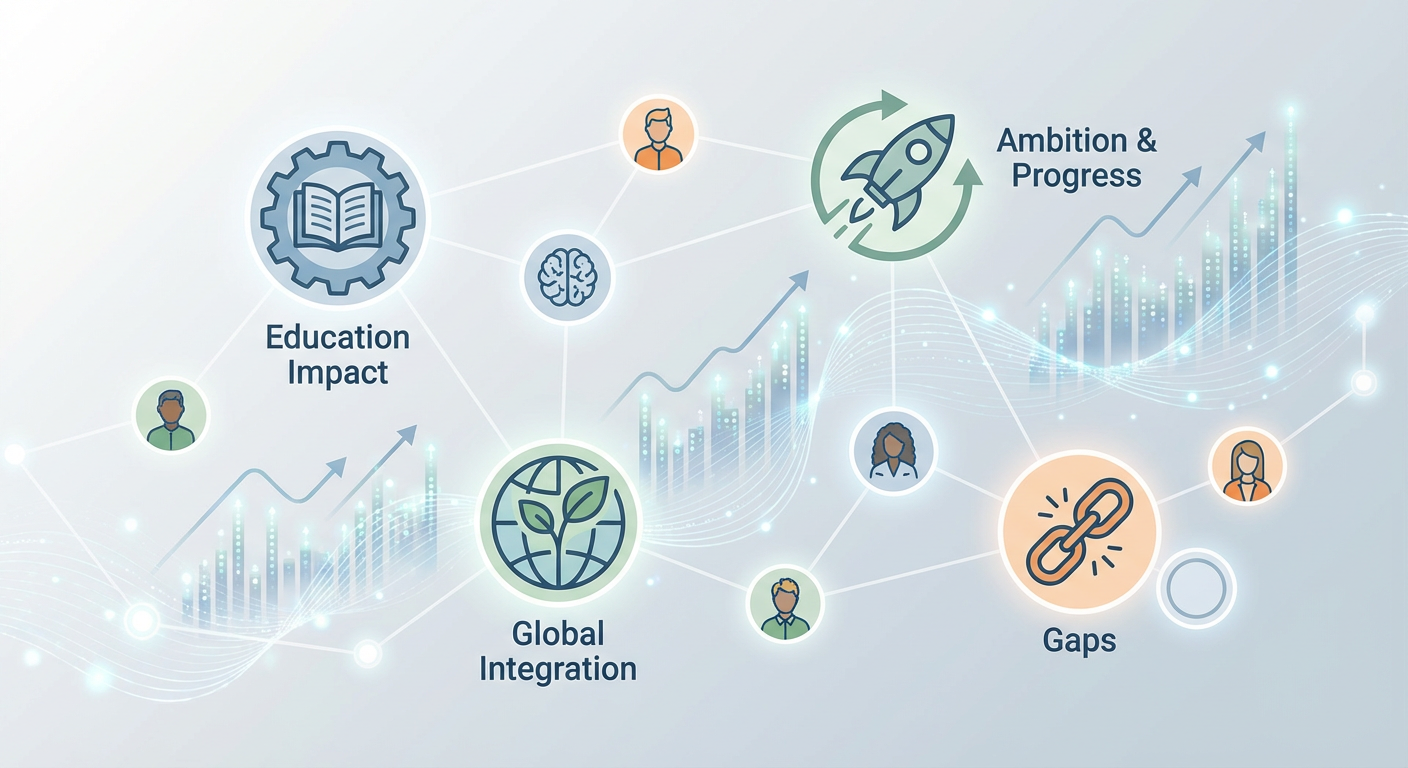
6. Statistical Insights: Key Facts and Data Driving the Trends
The burgeoning global interest in cultivating entrepreneurial grit within K-12 education is not merely anecdotal; it is profoundly underpinned by a rich tapestry of quantitative data and observable trends. From burgeoning youth aspirations to systemic curriculum reforms and the widespread adoption of experiential learning models, statistical insights reveal a clear paradigm shift. This section synthesizes key numerical facts and robust data points that illuminate the landscape of K-12 entrepreneurship education, highlighting both significant progress and persistent gaps. It explores the ambition of young people, the educational offerings designed to meet that ambition, the global integration of entrepreneurial competencies, the challenges in teacher preparedness, and the measurable impact of grit on long-term success.
The Youth Entrepreneurial Ambition: High Hopes and a Fading Spark
A striking statistic reveals the potent entrepreneurial spirit among today’s youth: 3 out of 5 teens (60%) in the U.S. express a preference for starting their own business over pursuing a traditional job, according to a 2022 Junior Achievement USA survey[1]. This sentiment is particularly strong among Gen Z, often attributed to the influence of celebrity entrepreneurs and the pervasive “side-hustle” culture that glorifies self-employment and innovation. Further underscoring this demand, nearly 37% of teens explicitly wish for K-12 schools to offer entrepreneurship programs, indicating a clear desire for formal education in this domain[1].
However, this initial surge of enthusiasm encounters a critical roadblock as students progress through their educational journey. While over half of U.S. middle schoolers (55%) in grades 5-8 report plans to start a business, this ambition experiences a significant decline by the time they reach high school. A 2017 Gallup-HOPE Index report highlighted that only 27% of U.S. high schoolers (grades 9-12) intend to start a business, a notable drop from earlier years when the figure hovered around 33-35%[2]. This represents a substantial 35% ambition gap between middle and high school, suggesting that the educational system may be failing to sustain or adequately nurture this early entrepreneurial drive. The stark contrast between the high aspiration of younger students and the reduced ambition of older students points to a crucial missed opportunity, emphasizing the urgent need for consistent and engaging entrepreneurship education across all K-12 levels.
Table 6.1: U.S. Teen Entrepreneurial Ambition Trends
| Demographic / Age Group | Year of Data | Ambition Metric | Percentage | Source |
|---|---|---|---|---|
| U.S. Teens (13-17) | 2022 | Prefer starting own business over traditional job | 60% | JA USA[1] |
| U.S. Teens (13-17) | 2022 | Want entrepreneurship taught in school | 37% | JA USA[1] |
| U.S. Middle Schoolers (5-8) | 2016 | Plan to start a business | 55% | Gallup-HOPE Index[2] |
| U.S. High Schoolers (9-12) | 2016 | Plan to start a business | 27% | Gallup-HOPE Index[2] |
The Experience Gap: A Chasm Between Aspiration and Opportunity
The decline in entrepreneurial ambition from middle to high school can be partly attributed to a significant “experience gap” where youth, despite their high interest, receive limited practical exposure to entrepreneurial activities. A 2012 Gallup report highlighted that while 43% of students in grades 5-12 planned to start their own business, a mere 7% were actively interning in a business setting[3]. Furthermore, while 59% reported their school offered some business or entrepreneurship lessons, only 22% had worked in any paid job in the week prior to the survey[3]. This data underscores a critical disconnect: a majority of students harbor entrepreneurial aspirations, but a strikingly low percentage are engaged in the kind of hands-on, real-world experiences necessary to cultivate and sustain that interest.
Paradoxically, formal entrepreneurship education is more prevalent in later educational stages. As of 2016, 60% of U.S. high school students reported that their schools offered classes on how to start and run a business, which contrasts sharply with only 27% of middle school students reporting similar access[4]. This distribution represents a missed opportunity; while high schools are more equipped with formal programs, the earlier grades, where ambition is highest, often lack sufficient exposure. Integrating entrepreneurship courses and experiential learning opportunities into middle school curricula could be instrumental in bridging this ambition gap and nurturing young talent when their interest is at its peak.
Global Integration: Entrepreneurship Education Goes Mainstream
The push for entrepreneurship education is a global phenomenon, moving beyond isolated initiatives to become an integrated component of national educational strategies. Europe stands at the forefront of this movement: a 2025 Eurydice Report by the European Commission indicates that an impressive 100% of the 38 European education systems studied now incorporate entrepreneurship education into their K-12 curricula[5]. This integration often manifests through cross-curricular modules or explicit embedding into subjects such as economics and technology, reflecting a broader view of entrepreneurship as a core competency rather than a niche subject[6]. This widespread adoption signals that entrepreneurship is increasingly viewed as an essential 21st-century skill, critical for navigating an uncertain, innovation-driven economy.
Beyond Europe, major initiatives are springing up across the globe. India, for instance, has demonstrated a massive public investment in fostering innovation among its youth. As of mid-2021, over 8,700 Atal Tinkering Labs (ATLs) had been established in Indian schools for grades 6-12, covering 90% of the country’s districts, with a national goal of 10,000 labs[7]. These ATLs provide students with modern tools like 3D printers and robotics kits, along with mentorship, to develop problem-solving skills and an innovative mindset, reflecting a governmental aim to “cultivate one million children as innovators”[7].
Furthermore, nonprofit organizations play a pivotal role in scaling entrepreneurial experiences. Junior Achievement (JA), the world’s largest youth entrepreneurship education NGO, annually reaches over 10 million young people in more than 100 countries[8]. In the U.S. alone, JA programs engage approximately 2.5 million students each year through volunteer-led lessons in financial literacy, work readiness, and entrepreneurship[9]. This significant global reach illustrates the growing demand for practical business education and the effectiveness of large-scale experiential learning models.
Table 6.2: Global Entrepreneurship Education Initiatives
| Initiative / Region | Scope / Reach | Key Data Point | Source |
|---|---|---|---|
| European Education Systems | 38 systems (K-12) | 100% integrate entrepreneurship into curricula | Eurydice Report[5] |
| India Atal Tinkering Labs | Schools (grades 6-12) | 8,706 labs established (mid-2021) | The Economic Times[7] |
| Junior Achievement (Global) | 100+ countries | 10 million students reached annually | JA USA[8] |
| Lemonade Day (North America) | 66 cities (U.S., Canada) | >800,000 child participants since 2007 | Babson College[10] |
The Teacher Training Deficit: A Bottleneck to Progress
Despite the widespread integration of entrepreneurship into curricula, a critical bottleneck exists in teacher preparedness. The 2025 Eurydice Report highlighted that only 19 out of 38 European education systems provide some form of in-service training or support for teachers in entrepreneurship education[11]. Furthermore, a smaller subset, only 15 systems, have clearly defined learning objectives for teaching entrepreneurial skills[11]. This gap is significant because teachers are instrumental in cultivating an entrepreneurial mindset and facilitating hands-on learning experiences.
Without adequate training, educators may lack the pedagogical tools and confidence to effectively deliver entrepreneurship content, especially when it involves moving beyond traditional lecture-based instruction to project-based and experiential learning. While countries like Estonia and Portugal are actively working to outline teacher competencies for entrepreneurship, many systems still leave teachers underprepared for this evolving educational mandate. Addressing this deficit through comprehensive professional development programs is crucial to ensure that the ambition demonstrated in policy documents translates into effective classroom practice.
The Realities of Risk: Startup Failure Rates and the Imperative of Grit
The entrepreneurial journey is inherently fraught with risks and setbacks. A widely cited statistic in business research indicates that approximately 90% of startups ultimately fail[12]. This sobering reality underscores the critical importance of cultivating “grit” and resilience in nascent entrepreneurs. Founders frequently encounter product failures, funding shortfalls, market rejections, and intense competition. Without the ability to persevere through these challenges, young innovators are likely to abandon their ventures at the first sign of adversity.
This statistic serves as a crucial data point informing the shift in entrepreneurship pedagogy within K-12 education. The emphasis is moving beyond simply teaching business plans and market analysis to actively fostering an entrepreneurial mindset that embraces failure as a learning opportunity. Educational programs now intentionally design activities and challenges that require students to iterate, adapt, and learn from mistakes, preparing them for the inevitable setbacks that characterize real-world entrepreneurship. By doing so, educators aim to equip future founders with the mental fortitude necessary to belong to the successful 10% of businesses.
The Measurable Impact of Grit: PISA Scores and Success Outcomes
Research consistently highlights the substantial impact of non-cognitive factors like “grit” on various success outcomes. Psychologist Angela Duckworth’s seminal work defined grit as sustained passion and perseverance for long-term goals. Her studies have shown that grit accounts for approximately 4% of the variance in success outcomes across various contexts[13]. While this might appear a moderate effect, in educational settings, it translates into meaningful differences in student achievement, project completion, and graduation rates.
A particularly compelling piece of evidence comes from the Programme for International Student Assessment (PISA) 2018. The study revealed that students who hold a “growth mindset”—the belief that their abilities can improve through dedication and hard work—outperformed their peers with a fixed mindset. Specifically, students with a growth mindset scored an average of 32 points higher in PISA reading (equivalent to nearly a full grade level) than those who believed intelligence was static, even after controlling for socio-economic background[14]. These students also reported higher motivation levels and a lower fear of failure, traits indispensable for entrepreneurial success[15].
These statistical insights have profound implications for K-12 entrepreneurship education. They provide a strong empirical basis for designing pedagogies that actively cultivate grit through challenge-based learning, reflective practices, and growth mindset interventions. By focusing on these critical skills, schools aim to improve students’ long-term success not just in entrepreneurial ventures but across all aspects of life.
Conclusion: An Accelerating Global Imperative
The quantitative data presented demonstrates that entrepreneurial grit is not merely a desirable trait but an increasingly essential component of K-12 education globally. From the raw ambition of middle schoolers to the systematic integration of entrepreneurial competencies in European curricula and massive national initiatives like India’s Atal Tinkering Labs, diverse trends converge on a common understanding: preparing students for an unpredictable future demands more than academic knowledge. While challenges remain, particularly in providing consistent, hands-on experiences and adequate teacher training, the statistical trajectory points towards an accelerating global movement. The measurable impact of grit on academic achievement and startup survival rates further validates the profound shift towards pedagogies that prioritize perseverance, adaptability, and resilience. This foundation of data underscores the critical importance of continuing to evolve and expand K-12 entrepreneurship education to meet the demands of tomorrow’s workforce.
7. Challenges and Opportunities in K-12 Entrepreneurship Education
The burgeoning interest in entrepreneurship among K-12 students, coupled with the global recognition of entrepreneurial skills as essential for navigating an uncertain future, presents both significant opportunities and persistent challenges for educational systems worldwide. While the pedagogical landscape is rapidly evolving beyond traditional “lemonade stand” models to embrace immersive, project-based learning, disparities in access, inadequate teacher training, and complexities in curriculum integration continue to impede the equitable and effective cultivation of entrepreneurial grit in all students. This section delves into these critical areas, examining the current gaps in provision, the deficit in specialized teacher development, and the intricate process of weaving entrepreneurial competencies into diverse educational frameworks, while acknowledging the ongoing efforts and emergent best practices aiming to overcome these hurdles.
7.1 Gaps in Equitable Access to Immersive Learning Opportunities
Despite a widespread and growing enthusiasm for entrepreneurship among young people, translating this interest into tangible, immersive learning experiences remains a significant challenge. The data clearly indicates a disparity between student ambition and the practical opportunities available to them, particularly as they progress through their K-12 education.
7.1.1 The Ambition Gap: Sustaining Engagement from Middle to High School
A striking observation from recent research is the “ambition gap” that emerges between middle and high school. According to a 2016 Gallup poll, over half of U.S. middle schoolers (55%) state an intention to start a business [2]. This figure, however, drops significantly to just 27% by high school [2]. This decline, representing a 35% ambition gap [2], suggests that the early, innate curiosity and drive to pursue entrepreneurial ventures often wanes as students mature. This erosion of interest may be attributed to a lack of sustained engagement, insufficient real-world opportunities, or an educational system that fails to adequately nurture these aspirations beyond the initial spark. Furthermore, a 2012 Gallup report highlighted an even broader “experience gap,” noting that while 43% of students in grades 5–12 planned to start their own business, only a mere 7% were actively interning in a business setting [3]. Although 59% reported their schools offered some business or entrepreneurship lessons, only 22% had engaged in any paid work in the preceding week [3]. These statistics underscore a critical disconnect: a significant number of young people envision themselves as entrepreneurs, yet a considerably smaller fraction receive the practical, experiential exposure necessary to translate these aspirations into tangible skills and enduring motivation.
7.1.2 Uneven Distribution of Experiential Programs
While the pedagogical shift towards hands-on, project-based learning is gaining momentum, access to these immersive experiences is far from universal. For instance, in one U.S. region, only an estimated 10-15% of high schoolers currently receive “real-world” immersive learning opportunities [8]. This suggests that despite the recognition of their efficacy, such programs remain confined to a minority of students, creating an inequitable landscape where innovative learning is often a privilege rather than a standard offering. The disparity in formal instruction also contributes to this access gap. In 2016, 60% of high school students reported their school offered classes on starting and running a business [2]. In contrast, only 27% of middle school students reported similar access [2]. This imbalance represents a missed opportunity, as middle school is precisely when entrepreneurial ambition is at its peak [2]. Introducing dedicated courses or integrated entrepreneurial modules at earlier stages could be crucial in sustaining that initial enthusiasm and preventing the ambition gap from widening.
7.1.3 The Need for Broadened Reach and Inclusivity
The challenge of equitable access extends beyond mere program availability; it also encompasses ensuring these opportunities reach diverse student populations. Historically, youth entrepreneurship initiatives have sometimes been criticized for catering predominantly to already-advantaged students who possess existing social capital, mentorship networks, or financial resources. However, there is a growing recognition within the field of the importance of inclusion and diversification. Many contemporary programs are actively focusing on underrepresented groups. This includes initiatives for girls in tech entrepreneurship to address the gender gap, rural entrepreneurship programs designed for students outside major urban centers, and adapted programs for differently-abled students. Governments and non-governmental organizations alike are increasingly aware that entrepreneurial skills can be a powerful engine for upward mobility. Examples include the U.S. Minority Business Development Agency’s support for high school entrepreneurship camps in urban communities and “Girls Who Venture” programs aimed at encouraging teenage girls to develop startups. Promisingly, organizations like Junior Achievement (JA) report significant progress in broadening their reach: over 60% of JA’s worldwide participants now come from what they define as “underserved communities” [1]. This indicates a positive trend towards making entrepreneurial education available to a wider spectrum of youth, breaking down barriers of geography and socioeconomic status. The future demands more tailored curricula that incorporate culturally relevant content and mobile learning labs to ensure that no student is excluded from entrepreneurial learning due to location or income.
7.2 Deficit in Specific Teacher Training for Entrepreneurship
The successful integration of entrepreneurial education heavily relies on the capabilities and confidence of educators. However, a significant challenge lies in the current deficit of specific teacher training for entrepreneurship, leaving many teachers ill-equipped to effectively deliver these specialized pedagogies.
7.2.1 Insufficient In-Service Training and Learning Objectives
Despite entrepreneurship education becoming a mainstream component of K-12 curricula worldwide, the support offered to teachers often lags behind. The European Commission’s 2025 Eurydice Report on entrepreneurship education across 38 European systems reveals a concerning gap: only 19 of these systems provide some form of in-service training or support for teachers in entrepreneurship education [4]. Furthermore, a mere 15 systems have explicitly defined learning objectives for this area [4]. This means that in roughly half of European countries, teachers are expected to cultivate an entrepreneurial mindset in their students without receiving formal training on how to do so. While some nations, such as Estonia and Portugal, have begun to outline specific teacher competencies for entrepreneurship, many educators globally still lack the necessary preparation. This creates a bottleneck, as teachers are pivotal to fostering entrepreneurial mindsets and skills, yet they frequently operate without adequate pedagogical guidance or subject-specific knowledge in this evolving domain.
7.2.2 The Unique Demands of Entrepreneurship Pedagogy
Teaching entrepreneurship effectively goes beyond conventional classroom methods. It requires a shift from didactic instruction to facilitating experiential learning, project-based approaches, and cultivating soft skills like resilience and adaptability. As noted by Tom Vander Ark of Getting Smart, “big projects…are a great way to promote productive struggle” and foster an entrepreneurial mindset [16]. Teachers must not only understand business concepts but also how to guide students through iterative design processes, manage “productive failure” [15], and integrate mentorship opportunities. Unlike traditional subjects where a teacher might have deep academic expertise, entrepreneurship education often necessitates an understanding of real-world business dynamics, market fluctuations, and the iterative nature of startup development. Without specific training, teachers may struggle to:
- Design effective hands-on projects that authentically simulate entrepreneurial challenges.
- Provide relevant and actionable feedback on prototypes, business models, and pitches.
- Foster a classroom culture that embraces failure as a learning opportunity rather than a setback.
- Connect students with external mentors and community resources.
- Integrate entrepreneurial competencies organically across various subject areas, moving beyond isolated business classes.
This “knowledge and skills gap” among educators is a critical impediment to scaling high-quality entrepreneurship education universally.
7.2.3 Emerging Solutions: Pre-Service and In-Service Development
Recognizing this challenge, efforts are underway to bolster teacher preparedness. Universities in countries like China, Canada, and the UK are beginning to offer courses or endorsements in entrepreneurship education for pre-service teachers, ensuring that new educators enter the profession with foundational understanding. Additionally, networks of “master teachers” in entrepreneurship are forming to provide peer-to-peer mentoring and professional development. These initiatives are crucial for building the capacity of the teaching workforce. However, they need to be expanded and institutionalized to address the majority of in-service teachers who currently lack specialized training. Effective solutions will likely involve:
- Dedicated professional development workshops on experiential learning methodologies.
- Curriculum resources and toolkits specifically designed for non-business teachers to integrate entrepreneurial thinking.
- Opportunities for teachers to engage with local entrepreneurs and understand industry practices.
- Development of clear learning objectives and assessment frameworks tailored to entrepreneurial competencies.
Only through such comprehensive and sustained professional development can educators confidently and competently deliver the rich, immersive entrepreneurial learning experiences that students deserve.
7.3 Complexities of Effectively Integrating Entrepreneurial Competencies Across Diverse Curricula
The global trend towards integrating entrepreneurship education into K-12 curricula signifies a fundamental shift from viewing it as a niche subject to a core competency. However, achieving effective integration across diverse subjects and educational levels presents its own set of complexities, demanding careful strategic planning and pedagogical innovation.
7.3.1 Moving Beyond Standalone Business Courses
While a growing number of high schools offer dedicated entrepreneurship classes (60% in the U.S. by 2016) [2], the ultimate vision for comprehensive entrepreneurial education often extends beyond isolated courses. The European model, where all 38 European education systems now integrate entrepreneurship into K-12 curricula [4], often positions it as a cross-curricular module or embed it within broader skills or economic strategies [4]. This cross-curricular approach is vital but challenging to implement. It requires educators across disciplines – from science and history to arts and English – to identify opportunities to cultivate entrepreneurial mindset skills such as problem-solving, creativity, opportunity recognition, and adaptability within their subject matter. For example, a science project could involve designing an innovative solution to an environmental problem and then developing a pitch for it. A history class could examine the entrepreneurial spirit of historical figures or the economic forces that drove particular movements. This interdisciplinary integration mandates a fundamental rethinking of curriculum design and teaching practices.
7.3.2 Defining and Assessing Entrepreneurial Competencies
One of the core complexities in integration is the precise definition and subsequent assessment of “entrepreneurial competencies.” While there’s broad agreement that skills like creativity, critical thinking, collaboration, and communication (the “4 Cs”) are important, measuring the development of an “entrepreneurial mindset” – which includes attributes like perseverance, adaptability, and comfort with risk – is more nuanced than grading traditional academic subjects. The OECD’s PISA 2018 results, for instance, highlight the tangible impact of a growth mindset, showing students with such a mindset scored 32 points higher in reading than their fixed-mindset peers [5]. However, translating such insights into rubrics and evaluation methods that resonate across varied curricula is difficult. Efforts like NFTE’s Entrepreneurial Mindset Index [20] or Europe’s Entrepreneurial Skills Pass (ESP) [21] represent significant steps towards standardizing the assessment of these skills. The ESP, for instance, awards a micro-credential to students completing mini-company programs and passing an exam, providing a concrete measure of entrepreneurial learning [21]. These kinds of robust assessment tools are crucial for validating the impact of integrated entrepreneurial education and ensuring its perceived value among students, parents, and higher education institutions.
7.3.3 Policy Frameworks and National Strategies
Effective curriculum integration is often supported, or hindered, by national policy frameworks. While all 38 European systems integrate entrepreneurship into curricula, only 5 have dedicated K-12 entrepreneurship education strategies [4]. A further 20 systems embed entrepreneurship goals into broader national strategies related to innovation, 21st-century skills, or youth policy [4]. This varied approach highlights a tension: is entrepreneurship a standalone educational priority requiring its own strategy, or is it an overarching skill best woven into existing educational reforms? Countries like India have demonstrated massive public investment through initiatives like the Atal Tinkering Labs, with over 8,700 labs established by mid-2021 within government-run schools [6]. This bold approach, aimed at cultivating “one million children as innovators” [6], demonstrates a commitment to embed creativity and problem-solving through concrete infrastructure. However, even with policy support, challenges remain in implementation at the school level. This includes providing schools with the necessary resources (e.g., funding for maker spaces, access to technology, robust curriculum guides, and teacher training) and creating accountability systems that reward the development of entrepreneurial competencies alongside traditional academic metrics. The Diploma+ initiative in Kansas City, for example, seeks to address this by ensuring students graduate with something “extra”—college credit, industry certification, or entrepreneurial experience [44]—signaling a shift in valuing broader outcomes.
7.3.4 Overcoming Resistance and Resource Constraints
Integrating entrepreneurial competencies can also face resistance within established educational structures. This might come from teachers who feel unqualified, crowded curricula that leave little room for new initiatives, or a lack of understanding among stakeholders about the long-term benefits beyond traditional economic outcomes. Resource constraints, particularly in underfunded schools, can also limit the ability to create experiential learning environments, procure necessary materials, or fund teacher professional development. Addressing these complexities requires a multifaceted approach:
- Advocacy: Continuing to make a compelling case for entrepreneurship education’s relevance to all students, regardless of their future career path.
- Curriculum Development: Providing clear, adaptable frameworks and resources that empower teachers to integrate entrepreneurial themes without feeling overwhelmed.
- Partnerships: Fostering stronger collaborations between schools, businesses, and non-profits to leverage external expertise, mentorship, and resources.
- Policy Alignment: Ensuring national and regional educational policies provide a supportive environment, including funding and accountability measures that value entrepreneurial learning.
By strategically addressing these challenges, K-12 education can progressively move towards a future where entrepreneurial competencies are organically integrated, equitably accessible, and effectively cultivated in every student, preparing them for an innovation-driven world. Next, we will explore the evolving nature of entrepreneurial development, examining how these foundational elements contribute to creating adaptable and resilient individuals ready for the challenges of work and life.
8. Future Directions and Recommendations
The landscape of K-12 education is undergoing a fundamental transformation, driven by an urgent need to equip students with the skills and mindset necessary to thrive in an unpredictable, innovation-driven global economy. While significant progress has been made in integrating entrepreneurial education and cultivating grit within school systems worldwide, the journey is far from complete. This section outlines critical future directions and offers comprehensive recommendations for policymakers, educators, and community partners to further enhance the quality, expand access, improve teacher preparedness, and solidify entrepreneurship education as a foundational element of contemporary schooling. The overarching goal is not merely to produce more entrepreneurs, but to cultivate a generation of resilient, adaptable, and purpose-driven individuals capable of navigating complex challenges and creating value in any chosen path. The current enthusiasm among youth for entrepreneurship provides a potent foundation. Surveys indicate that a remarkable 60% of American teens (ages 13–17) express a preference for starting their own business over pursuing a traditional job1. Concurrently, 37% of teens desire entrepreneurship to be taught within the formal school curriculum, signaling a strong demand for more structured entrepreneurial learning opportunities1. This burgeoning interest, however, faces a notable challenge: while over half of U.S. middle schoolers (55%) plan to start a business, this ambition dramatically declines to 27% by high school2. This “ambition gap” underscores a crucial need to sustain engagement and provide meaningful, age-appropriate experiences throughout K-12 education. Moreover, while entrepreneurship education is increasingly integrated globally—with all 38 European education systems now embedding it in K-12 curricula5—access and quality remain uneven. For instance, in one U.S. region, only 10-15% of high schoolers receive immersive “real-world” learning opportunities42, and fewer than half of European countries offer specific in-service training for entrepreneurship educators17. Addressing these disparities and strengthening the pedagogical framework will be vital for future success.
8.1. Enhancing Program Quality and Pedagogical Innovation
The evolution from “lemonade stands to real ventures” signifies a positive shift toward more authentic and impactful entrepreneurial learning experiences. To further elevate program quality, a sustained focus on pedagogical innovation is essential.
8.1.1. Deepening Experiential and Project-Based Learning
The data consistently highlights the efficacy of hands-on methods. Junior Achievement alone reaches over 10 million young people annually across 100+ countries through real-world entrepreneurship experiences, testifying to the scalability and impact of experiential learning8. More than 800,000 children have participated in Lemonade Day since its 2007 inception, demonstrating the appeal and educational value of early-age micro-enterprises9. Building on this, future programs should:
- Integrate full-cycle venture creation: Move beyond single-project simulations to offer students opportunities to conceive, plan, launch, operate, and even liquidate mini-companies over extended periods. This mirrors the iterative reality of entrepreneurship and allows for deeper learning from success and failure. Programs like the JA Company Program are exemplary, where high schoolers form student-run companies, engage in market research, prototyping, marketing, and liquidating their ventures, often generating real revenues. The impact on problem-solving and teamwork skills is well-documented42.
- Expand access to maker spaces and incubators: The proliferation of “tinkering labs,” such as India’s 8,706 Atal Tinkering Labs established across schools since 201710, demonstrates the power of dedicated spaces for innovation. Every school or district should strive to establish either physical maker spaces or virtual innovation hubs where students can prototype products, develop services, and iterate on their ideas in a supportive, low-risk environment.
- Leverage design thinking methodologies: Explicitly teach design thinking as a framework for problem-solving, product development, and customer validation. This human-centered approach encourages empathy, ideation, prototyping, and testing, aligning perfectly with entrepreneurial practices.
8.1.2. Fostering a Culture of “Productive Struggle” and Iteration
The stark reality that approximately 90% of startups ultimately fail11 underscores the critical importance of cultivating grit and resilience. Pedagogies must normalize failure as an indispensable part of the learning process.
- Implement “fail fast, learn faster” practices: Design curricula that allow for multiple iterations and encourage students to view setbacks not as endpoints but as opportunities for learning and adaptation. This includes hackathons, pitch challenges, and project-based assignments where pivoting is expected if initial ideas don’t gain traction. As Tom Vander Ark notes, “big projects…are a great way to promote productive struggle” and build an entrepreneurial mindset30.
- Integrate growth mindset reinforcement: Teachers should be trained to explicitly teach and reinforce Carol Dweck’s growth mindset principles, where abilities are seen as developing through effort27. Research shows that students with a growth mindset score 32 points higher on PISA reading tests (nearly a full grade level) than those with fixed mindsets28, demonstrating the academic and personal benefits of this perspective.
- Encourage reflective practices: Students should regularly reflect on their entrepreneurial journeys, analyzing challenges, documenting solutions, and articulating lessons learned. This could involve “failure résumés,” reflective journals, or peer feedback sessions that destigmatize setbacks and highlight perseverance.
8.2. Expanding Equitable Access and Early Engagement
Despite increasing integration globally, access to high-quality entrepreneurship education remains uneven. Addressing this “experience gap”—where 43% of students want to start a business but only 7% are interning4—is paramount.
8.2.1. Prioritizing Early Childhood Entrepreneurship Experiences
The enthusiasm for entrepreneurship is highest in middle school (55% intend to start a business), but this ambition drops significantly by high school (27%)2. This 35% ambition gap highlights a lost opportunity.
- Introduce entrepreneurship in elementary and middle school: Formal programs, even if brief, in earlier grades can sustain interest. While 60% of high schools offer entrepreneurship classes, only 27% of middle schools do15. This gap must be filled. Simple, fun activities like Lemonade Day, which engaged 800,000 children9, or comprehensive simulations like Finland’s Yrityskylä (Me & MyCity), which reaches 85% of 6th graders16, prove that early engagement is effective.
- Develop age-appropriate curricula: Tailor entrepreneurial concepts to cognitive development. For younger students, this might involve discovering needs, crafting solutions, and understanding simple economics. For middle schoolers, it could involve team-based projects addressing community problems. The Blue Valley CAPS program, where high schoolers mentor 5th graders in creating food products, demonstrates the power of guided, age-appropriate ventures65.
8.2.2. Ensuring Inclusivity and Addressing Disparities
Entrepreneurship education must actively seek to include all student populations, particularly those historically underrepresented.
- Target underserved communities: Initiatives like NFTE in low-income U.S. communities or JA’s out-of-school programs in Africa are crucial. Over 60% of JA’s worldwide participants now come from “underserved communities”46, signifying positive progress. Policymakers should allocate resources to support such programs.
- Promote gender equity in STEM entrepreneurship: Actively encourage girls to participate in tech and innovation-focused entrepreneurial programs to bridge the gender gap in these sectors.
- Integrate culturally relevant examples: Ensure entrepreneurial case studies and projects reflect the diversity of student backgrounds and contexts. This can make the learning more relatable and inspiring.
8.3. Professional Development and Teacher Preparedness
Teachers are the linchpin of effective entrepreneurship education, yet a significant training gap persists. Only 19 out of 38 European education systems offer in-service training for entrepreneurship education, and only 15 have defined learning objectives for it17. This deficiency must be urgently addressed.
8.3.1. Prioritizing Comprehensive Teacher Training
- Mandate pre-service training: Universities offering education degrees should include mandatory courses on entrepreneurial pedagogies, covering experiential learning, design thinking, and fostering mindset skills.
- Expand in-service professional development: Provide ongoing training for current educators, focusing on practical implementation, access to resources, and peer-to-peer learning. This training should enable teachers to transition from traditional lecture-based instruction to facilitation of student-led projects.
- Develop clear teaching competencies: As some nations like Estonia and Portugal have done, clearly outline the pedagogical competencies required for teaching entrepreneurship, offering a roadmap for teacher development.
8.3.2. Building a Network of Entrepreneurial Educators
- Create communities of practice: Facilitate networks for entrepreneurship educators to share best practices, resources, and challenges. Online platforms, regional workshops, and national conferences can support these communities.
- Leverage private sector expertise: Partner with local businesses and entrepreneurs to provide teachers with practical insights and mentorship on current business practices. This can include externships for teachers in local startups or innovation hubs.
8.4. Strengthening Partnerships and Ecosystem Integration
Entrepreneurship thrives in supportive ecosystems. K-12 education must be deeply integrated into broader community, industry, and governmental structures to deliver authentic and impactful learning.
8.4.1. Fostering Robust Community and Business Partnerships
The success of programs like Blue Valley CAPS, which links students with businesses to solve real problems and provides industry internships to 100% of participants23, demonstrates the power of collaboration.
- Expand mentorship programs: Systematize the involvement of local entrepreneurs and business professionals as mentors for student projects. Nearly 45% of teens indicate that hearing directly from business owners is the most helpful way to learn about starting a business24.
- Create advisory boards: Establish school-level or district-level advisory boards composed of local business leaders, parents, and educators to guide the development and improvement of entrepreneurship programs.
- Facilitate real-world client projects: Actively seek opportunities for students to work on real problems for local businesses, non-profits, or government agencies, providing authentic contexts for entrepreneurial skill application.
8.4.2. Advocating for Supportive Policy and Funding
Political will and consistent funding are crucial for sustaining and scaling entrepreneurship education. Twenty of 38 European education systems now embed entrepreneurship goals into broader national strategies6, reflecting this growing recognition.
- Develop national and regional strategies: Policymakers should articulate clear visions and strategies for K-12 entrepreneurship education, outlining learning objectives, resource allocation, and accountability mechanisms.
- Allocate dedicated funding: Ensure stable funding streams for curriculum development, teacher training, experiential program implementation, and the creation of innovation infrastructure within schools. India’s investment in Atal Tinkering Labs is a strong example of government commitment10.
- Incentivize local innovation: Grant programs and recognition initiatives can encourage schools and districts to experiment with innovative entrepreneurial pedagogies.
8.5. Institutionalizing and Measuring Impact
For entrepreneurship education to become a foundational element, its outcomes must be recognized, valued, and integrated into broader educational accountability frameworks.
8.5.1. Developing Robust Assessment and Credentialing
- Beyond traditional grades: Shift assessment paradigms to measure entrepreneurial competencies (creativity, problem-solving, collaboration, grit) through portfolios, project-based evaluations, and peer assessments. NFTE’s Entrepreneurial Mindset Index is an example of an attempt to measure growth in such domains34.
- Implement standardized micro-credentials: Develop widely recognized certifications or “skills passports” that validate students’ entrepreneurial competencies. The Entrepreneurial Skills Pass (ESP) in Europe, earned by over 5,600 students in one recent year36, provides a compelling model for signaling these skills to future employers and higher education institutions.
- Integrate into graduation requirements: Consider offering entrepreneurial experiences (e.g., student venture launch, community project, internship) as alternatives or additions to traditional graduation pathways, as with the Diploma+ initiative in Kansas City51.
8.5.2. Conducting Longitudinal Research and Best Practice Dissemination
- Longitudinal impact studies: Invest in long-term research to track the career and life outcomes of students exposed to entrepreneurship education, beyond immediate confidence boosts. This will provide empirical evidence for policy advocacy and program refinement.
- International knowledge exchange: Continue to facilitate international collaborations and platforms for sharing effective pedagogies and policy models, building on the global momentum demonstrated by Europe’s extensive curriculum integration efforts5.
The future of K-12 entrepreneurship education is bright, but its full potential can only be realized through concerted, multi-stakeholder efforts. By prioritizing pedagogical excellence, expanding equitable access, empowering educators, fostering strong partnerships, and rigorously measuring impact, we can ensure that every student graduates with the entrepreneurial grit and mindset critical for personal fulfillment and societal prosperity in the 21st century. The ambition is not to turn every student into a business founder, but to instill a lifelong capacity for innovation, resilience, and conscious value creation. As the next section will delve into the critical role of teacher professional development, it becomes clear that investing in educators is not just a recommendation but an imperative for shaping the entrepreneurial landscapes of tomorrow.
9. Frequently Asked Questions
The integration of entrepreneurship education into K-12 curricula represents a profound shift in how societies prepare their youth for the future. As this movement gains global momentum, it naturally sparks numerous questions from parents, educators, policymakers, and students themselves. These questions often revolve around the fundamental purpose of entrepreneurship education, its tangible benefits, the practicalities of its implementation, and its broader impact on student development and future readiness. This section addresses some of the most frequently asked questions, drawing upon the latest research and successful case studies to provide comprehensive and informed answers. It aims to clarify misconceptions, highlight key findings, and offer a clear understanding of why cultivating entrepreneurial grit is becoming a cornerstone of modern educational philosophy.
9.1. What is the primary purpose of K-12 entrepreneurship education? Is it only about creating future business owners?
The primary purpose of K-12 entrepreneurship education extends far beyond merely cultivating future business owners; it is about equipping all students with a versatile “entrepreneurial mindset” and a specific set of critical life skills that are invaluable in any career path and in navigating an increasingly complex world. While it is true that one outcome might be inspiring some students to launch their own ventures, the overarching goal is much broader. Firstly, K-12 entrepreneurship education aims to foster a suite of transferable skills often referred to as 21st-century competencies. These include critical thinking, problem-solving, creativity, collaboration, communication, and adaptability. Through project-based learning and real-world challenges inherent in entrepreneurial activities, students develop these skills organically. For instance, a student team tasked with launching a school-based café will not only learn about financial models but also engage in persuasive writing to secure administrative approval, collaborate effectively within their team, creatively differentiate their product, and critically assess customer feedback to iterate their offerings. These experiences directly address gaps identified by employers; a regional survey by the Kauffman Foundation noted that local businesses perceived high school graduates as lacking foundational professional skills such as teamwork, initiative, and adaptability [43]. Entrepreneurship programs provide an ideal context to bridge these gaps. Secondly, a significant purpose is to cultivate “grit” and resilience. Entrepreneurship is inherently challenging, often involving setbacks, iterative processes, and the need to learn from failure. Research indicates that approximately 90% of startups ultimately fail [12], underscoring the critical importance of perseverance and adaptability. K-12 programs explicitly teach students to view failures not as terminal defeats but as valuable learning steps, embodying the “fail fast, learn faster” mantra common in the startup world [25]. This focus on building a growth mindset—the belief that abilities can be developed through dedication and hard work—is crucial. Students with a growth mindset scored an average of 32 points higher in PISA reading than their peers with fixed mindsets, demonstrating greater motivation and a reduced fear of failure [29]. By teaching students to embrace challenges and persist through obstacles, entrepreneurship education prepares them for the real-world demands of any profession. Thirdly, it promotes financial literacy and economic understanding in a highly practical manner. Running a mini-business provides hands-on experience with budgeting, pricing strategies, cost management, and profit calculation, making abstract economic concepts tangible and relatable [45]. Programs like Junior Achievement explicitly integrate personal finance education with entrepreneurial activities, helping students develop more responsible money management habits. The Yrityskylä (Me & MyCity) program in Finland, for example, puts 6th graders in a simulated mini-city where they perform jobs, earn salaries, pay taxes, and make consumer decisions, providing a concrete understanding of how an economy functions [66]. Finally, entrepreneurial education instills a sense of agency and leadership. Students learn that they can identify problems, conceptualize solutions, and take initiative to create impact. This empowers them, often transforming previously quiet or disengaged students into confident leaders who advocate for their ideas [46]. The process of conceiving and executing their own projects fosters a belief in their ability to effect change, which is a powerful life outcome. This empowerment can also significantly boost student engagement and act as a tool for dropout prevention, making education feel more relevant to future opportunities, especially for at-risk youth [48]. In essence, while some students undoubtedly will become entrepreneurs, the primary mission is to cultivate “future-ready” graduates who possess the flexible, adaptive, and resilient mindset necessary to thrive in an ever-changing world, regardless of their chosen career path.
9.2. How is entrepreneurship education implemented in K-12 settings? Does it replace traditional subjects?
Entrepreneurship education in K-12 settings is implemented through a variety of pedagogical approaches, and it rarely replaces traditional subjects. Instead, it is increasingly integrated into existing curricula, often as cross-curricular modules, extracurricular activities, or dedicated courses, enriching the educational experience. One dominant approach is **cross-curricular integration**, where entrepreneurial concepts are woven into existing subjects. For instance, in European education systems, entrepreneurship is widely integrated into K-12 curricula, often through subjects like economics, technology, and even humanities [3]. Finland’s national curriculum, for example, embeds entrepreneurial thinking within interdisciplinary projects starting in primary school [19]. This means students might develop a marketing campaign for a historical event in a social studies class, or design and prototype a solution to an environmental problem in a science class, applying entrepreneurial principles without needing a separate “entrepreneurship” course. This method ensures that all students, not just those electing business-focused tracks, are exposed to entrepreneurial competencies. Another common method is through **hands-on, project-based learning**. This moves beyond theoretical discussions to practical application.
- Mini-companies and student ventures: Organizations like Junior Achievement (JA) run programs where students form and operate real businesses for a defined period (e.g., a semester). The JA Company Program allows high schoolers to prototype products, develop marketing strategies, manage finances, and even liquidate their venture [6]. Junior Achievement alone reaches over 10 million young people in 100+ countries with these real-world experiences annually [8].
- Simulations: Finland’s *Yrityskylä* (Me & MyCity) program is a highly successful model where 6th graders spend a day in a simulated mini-city, taking on jobs, earning salaries, and making economic decisions [9]. This provides an immersive, practical understanding of economics and entrepreneurship without it being a standalone course.
- Maker spaces and labs: Many schools are establishing maker spaces, fabrication labs, and robotics workshops equipped with tools like 3D printers and robotics kits. India has impressively set up over 8,700 Atal Tinkering Labs in schools since 2017 to foster innovation and problem-solving among students [4]. These environments allow students to prototype product ideas collaboratively in a low-risk setting.
- Competitions and pitch events: Hackathons, “Shark Tank”-style pitch competitions, and entrepreneurship challenges encourage students to develop and present business ideas to real judges and sometimes even investors.
**Dedicated entrepreneurship courses or electives** are another implementation method, particularly in middle and high schools. While 27% of middle schoolers reported access to such classes in 2016, 60% of high school students confirmed their school offered classes on starting and running a business [2]. These tend to be more formal and structured, often culminating in detailed business plans or prototype development. Crucially, **mentorship and community involvement** are integral to many successful programs. Bringing in local entrepreneurs, business owners, or even older student mentors provides students with real-world guidance and networking opportunities [24]. The Blue Valley CAPS program in Kansas City, for instance, pairs high school entrepreneurship students as mentors for elementary schoolers developing food product businesses [5]. In summary, entrepreneurship education is implemented through a blend of cross-curricular integration, experiential learning models, dedicated courses, and strong community partnerships. Its aim is to complement and enhance traditional subjects, rather than replace them, by providing practical contexts for academic learning and fostering skills vital for future success.
9.3. Why is there a focus on “grit” and resilience in entrepreneurship education?
The emphasis on “grit” and resilience in entrepreneurship education stems from the inherent nature of entrepreneurial endeavors and the broader demands of the 21st-century world. It’s explicitly recognized that success in any field, particularly entrepreneurship, requires more than just intelligence or creativity; it demands profound perseverance through setbacks and failures. Firstly, the **harsh reality of startup failure rates** makes grit essential. By some estimates, roughly 90% of startups ultimately fail [12]. Entrepreneurs frequently face numerous obstacles, including product design flaws, market rejections, funding challenges, and intense competition. Without a deep well of resilience, young innovators are likely to abandon their projects at the first significant hurdle. K-12 entrepreneurship programs deliberately expose students to iterative design processes where initial ideas often need significant refinement or even complete pivots. This experience helps students understand that failure isn’t an endpoint but a necessary part of the learning curve—a philosophy often termed “productive failure” [25]. For example, during a project like prototype development, students learn that a design that doesn’t work perfectly the first time provides valuable data for improvement. Secondly, fostering a **growth mindset** is central to building grit. Coined by Carol Dweck, a growth mindset is the belief that one’s abilities and intelligence can be developed through dedication and hard work [28]. In contrast, a fixed mindset views abilities as static. The PISA 2018 study demonstrated a clear link between a growth mindset and academic achievement: students who embraced a growth mindset scored 32 points higher in reading, on average, than those with a fixed mindset [29]. These students also exhibited greater motivation and less fear of failure, traits highly conducive to entrepreneurial success [30]. Educators integrate growth mindset principles by encouraging students to append “yet” to their self-assessments (e.g., “I can’t solve this problem… *yet*”), thereby reinforcing the idea that progress comes through sustained effort. Entrepreneurial projects offer frequent opportunities for students to experience this firsthand, as they encounter challenges and, through persistence, eventually achieve breakthroughs. Thirdly, pedagogies that promote grit often involve **challenge-based learning**. This includes presenting students with complex, open-ended problems that do not have immediate or obvious solutions, thereby cultivating tolerance for ambiguity and the need to persevere. Robotics competitions, for instance, demand months of trial and error, debugging, and iterative refinement, teaching students to troubleshoot and persist until their robot performs as intended. Such environments simulate the high-pressure, real-world scenarios faced by entrepreneurs in a supportive educational context. Schools also utilize examples of famous innovators—like Thomas Edison or Oprah Winfrey—who faced numerous failures before achieving success, thereby normalizing setbacks as an inherent part of significant accomplishments. Some schools even incorporate a “failure résumé” exercise, encouraging students to reflect on their mistakes and the lessons learned from them [32]. As education author Tom Vander Ark notes, “big projects…are a great way to promote productive struggle” and are instrumental in developing an entrepreneurial mindset [31]. Finally, while grit is lauded, current pedagogy also emphasizes **”grit with wellness,”** ensuring that students are encouraged to be persistent without facing undue stress or burnout [33]. This balanced approach involves teaching students not only to push through difficulties but also to recognize when to pivot, seek help, or prioritize self-care. The ultimate goal is to nurture resilient individuals who can navigate the demanding world of entrepreneurship—or any challenging career—with both tenacity and thoughtful strategy.
9.4. What role do “real-world” experiences play, and how are they provided in K-12?
“Real-world” experiences are considered fundamental to effective K-12 entrepreneurship education, acting as the bridge between theoretical knowledge and practical application. They immerse students directly in authentic business scenarios, cultivating a deeper understanding of entrepreneurial processes and essential skills than traditional classroom methods alone. These experiences are provided in several compelling ways: Firstly, **hands-on ventures and mini-companies** are a cornerstone. Rather than simply discussing business principles, students actually create and operate ventures. For example, Junior Achievement (JA) programs involve students forming and managing student-run companies over a semester, where they conceive product ideas, conduct market research, develop marketing strategies, manage finances, make sales, and even liquidate their businesses [6]. The impact is significant: participants acquire direct experience in problem-solving, teamwork, and decision-making, often generating real revenue which they manage transparently. This “learning by doing” approach is proven to increase engagement and knowledge retention [22]. Secondly, **project-based learning in partnership with external organizations** brings external stakeholders into the classroom. Initiatives like the Northland CAPS program in Kansas City connect high school students with local businesses to solve actual problems for clients [23]. This enables students to work on real-world projects, meet client deadlines, communicate with stakeholders, and adapt to genuine feedback, mirroring the demands of a professional environment. A substantial outcome is that 100% of students in Northland CAPS complete an industry internship or client project for credit before graduating [23]. These immersive experiences are critical, yet only an estimated 10-15% of high schoolers currently receive such deep “real-world” learning opportunities, highlighting a significant area for growth [10]. Thirdly, **mentorship from real-world professionals** is a vital component. Connecting students with local entrepreneurs, business owners, or industry experts provides invaluable practical advice, feedback, and role models. These mentors guide students through challenges, share their experiences, and sometimes help them navigate setbacks. For instance, in Overland Park, Kansas, high school students enrolled in a Blue Valley CAPS entrepreneurship class mentored 5th graders as they invented, prototyped, and pitched food products to a panel of food industry professionals [5]. This near-peer mentorship benefits both sets of students, reinforcing entrepreneurial knowledge in the older students while building confidence and skills in the younger ones [24]. Surveys show that nearly 45% of teens find hearing directly from business owners the most helpful way to learn about starting a business [24], validating the importance of direct engagement with mentors. Fourthly, **simulations and highly realistic models** create controlled yet authentic learning environments. The Yrityskylä (Me & MyCity) program in Finland stands out, where 6th graders spend a full day in a miniature city managing jobs, finances, and contributing to the economy [9]. These simulations, though not identical to starting a real business, provide a safe space for students to experience complex economic interactions and decision-making that are highly reflective of real life. Finally, programs like **Lemonade Day** engage elementary school-aged children in running micro-businesses, providing kits and mentors to help them plan, operate, and manage a lemonade stand [7]. Over 800,000 children have participated, learning basics such as budgeting, goal-setting, marketing, and customer service by engaging with real customers and managing actual profits [7]. Such experiences, from simple lemonade stands to complex product pitches, equip students with practical skills, boost their confidence, and help them translate a high interest in entrepreneurship into tangible abilities. The large **experience gap**—where many youth express entrepreneurial aspirations but few get practical exposure [4]—underscores the urgent need for more such real-world, experiential programs.
9.5. How does entrepreneurship education contribute to life skills beyond just business acumen?
Entrepreneurship education serves as an exceptionally powerful vehicle for cultivating a wide array of life skills that extend far beyond traditional business acumen. By design, the process of conceiving, developing, and launching a venture—even a small-scale one—requires students to engage deeply with themselves, their teams, and their communities, fostering capabilities essential for success in any sphere of life. One of the most significant contributions is to **holistic skill development**, particularly the “4 Cs” of 21st-century learning: communication, collaboration, creativity, and critical thinking. When students embark on an entrepreneurial project, they instinctively tap into these skills:
- Communication: Students must articulate their ideas compellingly in pitches, marketing materials, and team discussions [24]. They learn to listen to feedback, negotiate with team members or suppliers, and present persuasively to audiences, including potential customers or investors.
- Collaboration: Entrepreneurial projects are frequently team-based, requiring students to work together, delegate tasks, manage conflicts, and leverage diverse strengths to achieve a common goal. This mirrors real-world professional environments where teamwork is paramount.
- Creativity: From identifying unmet needs to designing innovative solutions and unique marketing strategies, entrepreneurship demands constant creative problem-solving. It encourages students to think outside the box and generate novel approaches.
- Critical Thinking: Students must analyze market data, evaluate risks, solve unexpected problems (e.g., supply chain issues, customer complaints), and make informed decisions, all of which hone their critical thinking abilities.
These skills are highly valued by employers who report that high school graduates often lack core professional skills like teamwork, initiative, and adaptability [43]. Beyond the 4 Cs, entrepreneurship education fosters a profound sense of **leadership and agency**. Students are placed in the “driver’s seat,” making decisions and being accountable for outcomes. This empowerment builds confidence, particularly in students who might not excel in traditional academic subjects. Teachers often observe quiet students finding their voice and leading teams when working on a project they are passionate about. Programs like NFTE, which target underserved youth, consistently report significant increases in participants’ self-confidence, initiative, and self-direction [46]. This transformation gives students a potent sense of self-belief—the agency to believe they can impact their world. It also significantly enhances **financial literacy and economic understanding**. Directly managing budgets, calculating costs and profits, setting prices, and understanding revenue streams through actual or simulated business operations provides a tangible grasp of financial concepts that abstract lessons often cannot [45]. Students learn the practical implications of savings, debt, and investment, which translates into more responsible personal money management in adulthood. Furthermore, entrepreneurship education can be a powerful driver of **engagement and dropout prevention**. The hands-on, relevant, and frequently exciting nature of entrepreneurial learning can re-engage students who are otherwise disinterested or at risk of dropping out. When students see a direct connection between their learning and tangible outcomes—like launching a product or service—their motivation increases, often leading to improved attendance and positive behavioral changes [48]. This practical relevancy makes education come alive, underscoring why subjects like math, writing, or coding are essential. Finally, modern entrepreneurship education increasingly emphasizes **ethics and social responsibility** through social entrepreneurship. Students are encouraged to develop ventures that address societal or environmental problems, aligning their entrepreneurial drive with a purpose beyond profit. This cultivates empathy, ethical decision-making, and an understanding of how business can be a force for positive change, teaching students to balance commercial success with community impact and sustainability [49]. In doing so, it shapes not just future innovators, but responsible citizens and leaders.
9.6. What are the global trends and future outlook for entrepreneurship education in K-12?
The global landscape of K-12 entrepreneurship education is characterized by robust growth, widespread integration, and an increasingly forward-looking vision aimed at preparing students for an uncertain and innovation-driven future. The trends indicate that this form of education is rapidly transitioning from a niche offering to a foundational pillar of modern schooling worldwide. One prominent trend is the **universal curriculum integration**, particularly evident in Europe where 100% of the 38 education systems studied now incorporate entrepreneurship into K-12 curricula [5]. This is largely driven by its inclusion as a core “lifelong learning” competency by the EU. This integration often happens through cross-curricular themes rather than standalone courses, weaving entrepreneurial thinking into various subjects like economics, technology, and even language arts. Beyond Europe, countries like India, with its more than 8,700 Atal Tinkering Labs [4], or Finland, involving 85% of its 6th graders in national entrepreneurship simulations [9], illustrate a global commitment to fostering innovation from an early age. The **preparation for a changing future of work** is a critical driver. Experts predict that a significant majority of future jobs (an estimated 85%) do not yet exist [51], and careers will be less linear and more protean. This necessitates a workforce that is adaptable, creative, and resilient—qualities inherently cultivated by an entrepreneurial mindset [53]. The rise of the gig economy further underscores the need for individuals to be pro-active in creating their own opportunities. Entrepreneurship education is seen as a crucial tool to equip students with the flexibility to “configure and reconfigure” their careers throughout their lives. A strong trend towards **global exchange of best practices** is shaping the field. International bodies like the OECD and UNESCO advocate for entrepreneurial skills as central to education, facilitating the sharing of successful models across continents. For instance, the “mini-company” model prevalent in Nordic countries is studied and adapted by schools globally, while the success of organizations like Junior Achievement (reaching 10 million students globally) demonstrates the cross-cultural effectiveness of experiential programs [6]. This continuous learning fosters a convergence towards a set of common, effective pedagogical practices that prioritize hands-on, team-based learning with mentorship from industry. **Inclusion and diversification** are also key aspects of the future outlook. There’s a growing recognition that entrepreneurial skills should be accessible to all students, irrespective of their socio-economic background, gender, or location. Programs are increasingly targeting underserved groups, such as girls in tech entrepreneurship clubs to address gender gaps, or initiatives for students in rural and inner-city communities. Notably, over 60% of JA’s worldwide participants now come from “underserved communities” [55], indicating a successful expansion of access. The focus is on ensuring entrepreneurship education acts as an equalizer, providing upward mobility and empowerment to a broader demographic. Finally, the trend is towards **institutionalizing entrepreneurial learning** within formal education systems. This involves not just offering classes but integrating entrepreneurship into assessment frameworks, teacher training, and accountability measures. The Entrepreneurial Skills Pass (ESP) in Europe exemplifies this, providing a standardized micro-credential for students completing mini-company programs, which is recognized by employers and universities [57]. Teacher training is being enhanced, with universities offering specialized courses for educators. Accountability systems are beginning to value experiential outcomes, such as student-run ventures or internships, as part of graduation requirements, as seen in initiatives like the Diploma+ in Kansas City [58]. The future outlook suggests that entrepreneurial grit will become a fundamental literacy, as critical as digital literacy, for the next generation. The long-term impact is being continuously researched, with early studies indicating that students with entrepreneurial education are more likely to start businesses in adulthood and achieve higher incomes. This continuous improvement, driven by the evolving needs of the workforce and global collaboration, ensures that K-12 entrepreneurship education will continue to develop, nurturing generations of resilient, innovative, and adaptable individuals prepared to thrive in the 21st-century economy.
This comprehensive exploration of frequently asked questions underscores the transformative potential of K-12 entrepreneurship education. From its profound impact on holistic skill development and the cultivation of grit, to its practical implementation strategies and its global trajectory towards universal integration, it is clear that this pedagogical shift is not a passing fad but a necessary evolution. As we move forward, the next section will delve deeper into the **Challenges and Opportunities** in expanding and refining these crucial programs.
References
- Survey: 60% of Teens Would Prefer to Start a Business Over Having a Traditional Job | Junior Achievement USA
- U.S. High School Students’ Entrepreneurial Ambition at New Low
- Entrepreneurship education at schools in Europe 2025 | European School Education Platform
- atal tinkering labs: Over 8,700 Atal Tinkering Labs set up in schools across the country: Govt – The Economic Times
- Beyond The Lemonade Stand: Teaching the Entrepreneurial Mindset to Elementary & Middle Schoolers – CAPS Network
- 3 Initiatives Introducing Entrepreneurial Skills To Preteens · Babson Thought & Action
- Survey: 60% of Teens Would Prefer to Start a Business Over Having a Traditional Job | Junior Achievement USA
- Growth mindset: PISA 2018 Results (Volume III) | OECD
- Building an Entrepreneurial Mindset | Getting Smart
- Yrityskylä – JA Finland
- Deeds: What an ‘Entrepreneurial Mindset’ Means for K-12 Education and the Skills Students Must Learn Before Entering the World of Work – The 74
- Entrepreneurship education at schools in Europe 2025 | European School Education Platform
- Survey: 60% of Teens Would Prefer to Start a Business Over Having a Traditional Job | Junior Achievement USA
- Survey: 60% of Teens Would Prefer to Start a Business Over Having a Traditional Job | Junior Achievement USA
- U.S. High School Students’ Entrepreneurial Ambition at New Low
- U.S. High School Students’ Entrepreneurial Ambition at New Low
- U.S. High School Students’ Entrepreneurial Ambition at New Low
- U.S. High School Students’ Entrepreneurial Ambition at New Low
- U.S. Students’ Entrepreneurial Aspirations Still Undeveloped
- U.S. Students’ Entrepreneurial Aspirations Still Undeveloped
- U.S. Students’ Entrepreneurial Aspirations Still Undeveloped
- U.S. Students’ Entrepreneurial Aspirations Still Undeveloped
- Entrepreneurship education at schools in Europe 2025 | European School Education Platform
- Entrepreneurship education at schools in Europe 2025 | European School Education Platform
- Entrepreneurship education in European schools, 2025 report
- Entrepreneurship education at schools in Europe 2025 | European School Education Platform
- Entrepreneurship education in European schools, 2025 report
- Entrepreneurship education at schools in Europe 2025 | European School Education Platform
- Survey: 60% of Teens Would Prefer to Start a Business Over Having a Traditional Job | Junior Achievement USA
- Survey: 60% of Teens Would Prefer to Start a Business Over Having a Traditional Job | Junior Achievement USA
- 3 Initiatives Introducing Entrepreneurial Skills To Preteens · Babson Thought & Action
- 3 Initiatives Introducing Entrepreneurial Skills To Preteens · Babson Thought & Action
- atal tinkering labs: Over 8,700 Atal Tinkering Labs set up in schools across the country: Govt – The Economic Times
- atal tinkering labs: Over 8,700 Atal Tinkering Labs set up in schools across the country: Govt – The Economic Times
- 90% Of Startups Fail: Here’s What You Need To Know About The 10%
- 90% Of Startups Fail: Here’s What You Need To Know About The 10%
- Grit as a Predictor and Outcome of Educational, Professional, and Personal Success: A Systematic Review | Revista de psicología
- U.S. High School Students’ Entrepreneurial Ambition at New Low
- Entrepreneurship education at schools in Europe 2025 | European School Education Platform
- Global Perspectives on Integrating Entrepreneurship into School Curricula | DiYES International School
- Entrepreneurship education at schools in Europe 2025 | European School Education Platform
- Entrepreneurship education in European schools, 2025 report
- atal tinkering labs: Over 8,700 Atal Tinkering Labs set up in schools across the country: Govt – The Economic Times
- Survey: 60% of Teens Would Prefer to Start a Business Over Having a Traditional Job | Junior Achievement USA
- U.S. High School Students’ Entrepreneurial Ambition at New Low
- U.S. High School Students’ Entrepreneurial Ambition at New Low
- 3 Initiatives Introducing Entrepreneurial Skills To Preteens · Babson Thought & Action
- Yrityskylä – JA Finland
- Deeds: What an ‘Entrepreneurial Mindset’ Means for K-12 Education and the Skills Students Must Learn Before Entering the World of Work – The 74
- Deeds: What an ‘Entrepreneurial Mindset’ Means for K-12 Education and the Skills Students Must Learn Before Entering the World of Work – The 74
- https://www.jaeuropeyearinreview.org/#:~:text=marginalised%2C%20lacking%20resources%20and%20opportunities,entrepreneurial%20experience%20before%20leaving%20school
- Deeds: What an ‘Entrepreneurial Mindset’ Means for K-12 Education and the Skills Students Must Learn Before Entering the World of Work – The 74
- Deeds: What an ‘Entrepreneurial Mindset’ Means for K-12 Education and the Skills Students Must Learn Before Entering the World of Work – The 74
- Beyond The Lemonade Stand: Teaching the Entrepreneurial Mindset to Elementary & Middle Schoolers – CAPS Network
- Beyond The Lemonade Stand: Teaching the Entrepreneurial Mindset to Elementary & Middle Schoolers – CAPS Network
- Survey: 60% of Teens Would Prefer to Start a Business Over Having a Traditional Job | Junior Achievement USA
- Building an Entrepreneurial Mindset | Getting Smart
- Building an Entrepreneurial Mindset | Getting Smart
- Entrepreneurial Mindset – NFTE
- Our Impact – NFTE
- https://www.jaeuropeyearinreview.org/#:~:text=In%20the%20school%20year%202020,677%20gained%20the%20certificate
- Grit as a Predictor and Outcome of Educational, Professional, and Personal Success: A Systematic Review | Revista de psicología
- 90% Of Startups Fail: Here’s What You Need To Know About The 10%
- Growth mindset: PISA 2018 Results (Volume III) | OECD
- Growth mindset: PISA 2018 Results (Volume III) | OECD
- Growth mindset: PISA 2018 Results (Volume III) | OECD
- Building an Entrepreneurial Mindset | Getting Smart
- Building an Entrepreneurial Mindset | Getting Smart
- Resilience Matters More Than Grit In Entrepreneurs’ Success
- Deeds: What an ‘Entrepreneurial Mindset’ Means for K-12 Education and the Skills Students Must Learn Before Entering the World of Work – The 74
- Survey: 60% of Teens Would Prefer to Start a Business Over Having a Traditional Job | Junior Achievement USA
- 3 Initiatives Introducing Entrepreneurial Skills To Preteens · Babson Thought & Action
- Entrepreneurial Mindset – NFTE
- Entrepreneurship education in European schools, 2025 report
- Entrepreneurship education in European schools, 2025 report
- Beyond The Lemonade Stand: Teaching the Entrepreneurial Mindset to Elementary & Middle Schoolers – CAPS Network
- Global Perspectives on Integrating Entrepreneurship into School Curricula | DiYES International School
- Global Perspectives on Integrating Entrepreneurship into School Curricula | DiYES International School
- Deeds: What an ‘Entrepreneurial Mindset’ Means for K-12 Education and the Skills Students Must Learn Before Entering the World of Work – The 74
- Deeds: What an ‘Entrepreneurial Mindset’ Means for K-12 Education and the Skills Students Must Learn Before Entering the World of Work – The 74
- Deeds: What an ‘Entrepreneurial Mindset’ Means for K-12 Education and the Skills Students Must Learn Before Entering the World of Work – The 74
- Deeds: What an ‘Entrepreneurial Mindset’ Means for K-12 Education and the Skills Students Must Learn Before Entering the World of Work – The 74
- Entrepreneurship education in European schools, 2025 report
- Entrepreneurship education in European schools, 2025 report
- Survey: 60% of Teens Would Prefer to Start a Business Over Having a Traditional Job | Junior Achievement USA
- https://www.jaeuropeyearinreview.org/#:~:text=,to%20over%2060%20countries%20globally
- https://www.jaeuropeyearinreview.org/#:~:text=In%20the%20school%20year%202020,677%20gained%20the%20certificate
- Deeds: What an ‘Entrepreneurial Mindset’ Means for K-12 Education and the Skills Students Must Learn Before Entering the World of Work – The 74
- U.S. Students’ Entrepreneurial Aspirations Still Undeveloped
- Deeds: What an ‘Entrepreneurial Mindset’ Means for K-12 Education and the Skills Students Must Learn Before Entering the World of Work – The 74
- 3 Initiatives Introducing Entrepreneurial Skills To Preteens · Babson Thought & Action
- 3 Initiatives Introducing Entrepreneurial Skills To Preteens · Babson Thought & Action
- 3 Initiatives Introducing Entrepreneurial Skills To Preteens · Babson Thought & Action
- 3 Initiatives Introducing Entrepreneurial Skills To Preteens · Babson Thought & Action
- 3 Initiatives Introducing Entrepreneurial Skills To Preteens · Babson Thought & Action
- Beyond The Lemonade Stand: Teaching the Entrepreneurial Mindset to Elementary & Middle Schoolers – CAPS Network
- Beyond The Lemonade Stand: Teaching the Entrepreneurial Mindset to Elementary & Middle Schoolers – CAPS Network
- Beyond The Lemonade Stand: Teaching the Entrepreneurial Mindset to Elementary & Middle Schoolers – CAPS Network
- Beyond The Lemonade Stand: Teaching the Entrepreneurial Mindset to Elementary & Middle Schoolers – CAPS Network
- Beyond The Lemonade Stand: Teaching the Entrepreneurial Mindset to Elementary & Middle Schoolers – CAPS Network
- Beyond The Lemonade Stand: Teaching the Entrepreneurial Mindset to Elementary & Middle Schoolers – CAPS Network
- Yrityskylä – JA Finland
- Today’s sixth grade students are the future of UPM | A material solutions company
- Today’s sixth grade students are the future of UPM | A material solutions company
- Yrityskylä – JA Finland
- Our Impact – NFTE
- Our Impact – NFTE
- Survey: 60% of Teens Would Prefer to Start a Business Over Having a Traditional Job | Junior Achievement USA
- Survey: 60% of Teens Would Prefer to Start a Business Over Having a Traditional Job | Junior Achievement USA
- U.S. High School Students’ Entrepreneurial Ambition at New Low
- U.S. High School Students’ Entrepreneurial Ambition at New Low
- U.S. Students’ Entrepreneurial Aspirations Still Undeveloped
- U.S. Students’ Entrepreneurial Aspirations Still Undeveloped
- Entrepreneurship education at schools in Europe 2025 | European School Education Platform
- Entrepreneurship education at schools in Europe 2025 | European School Education Platform
- Growth mindset: PISA 2018 Results (Volume III) | OECD
- Growth mindset: PISA 2018 Results (Volume III) | OECD
- atal tinkering labs: Over 8,700 Atal Tinkering Labs set up in schools across the country: Govt – The Economic Times
- atal tinkering labs: Over 8,700 Atal Tinkering Labs set up in schools across the country: Govt – The Economic Times
- 3 Initiatives Introducing Entrepreneurial Skills To Preteens · Babson Thought & Action
- 3 Initiatives Introducing Entrepreneurial Skills To Preteens · Babson Thought & Action
- Deeds: What an ‘Entrepreneurial Mindset’ Means for K-12 Education and the Skills Students Must Learn Before Entering the World of Work – The 74
- Deeds: What an ‘Entrepreneurial Mindset’ Means for K-12 Education and the Skills Students Must Learn Before Entering the World of Work – The 74
- 90% Of Startups Fail: Here’s What You Need To Know About The 10%
- Yrityskylä – JA Finland
- Yrityskylä – JA Finland