Family-Led Entrepreneurial Development for Lifelong Success
Play the audio summary of this article.
The landscape of entrepreneurship is undergoing a profound transformation, significantly influenced by the evolving role of family in nurturing the next generation of business leaders. This research report, “The Parent Advantage: Unlocking Family-Led Entrepreneurial Development for Lifelong Success,” meticulously examines the multifaceted impact of family involvement – ranging from early exposure and active encouragement to financial backing and the cultivation of critical skills – on an individual’s entrepreneurial trajectory and overall life success. Our findings reveal a compelling narrative: while historical norms demonstrated a scarcity of direct parental encouragement for aspiring entrepreneurs, a powerful generational shift is now underway, with contemporary parents actively promoting and facilitating entrepreneurial development from childhood. This paradigm shift holds immense promise, not only for individuals but also for the broader economic and social fabric.
This report delves into how parental role models and intrinsic family exposure significantly boost the likelihood of starting a business, quantifies the critical role of family wealth and support networks in startup success, and highlights the surging, yet delicate, entrepreneurial ambitions of Gen Z. Furthermore, it underscores the lifelong benefits of an early entrepreneurial mindset, fostering adaptability, problem-solving, and resilience that extend far beyond business ventures. Through detailed analysis and compelling case studies, we demonstrate that family-led entrepreneurial development is not merely an optional extra but a powerful, often indispensable, accelerator for individuals embarking on innovative paths.
Key Takeaways
- Nearly half of entrepreneurs (48%) grew up in a family business, highlighting the profound impact of early exposure.
- Having entrepreneurial parents boosts a child’s likelihood of becoming an entrepreneur by ~60%, emphasizing the power of role models.
- While historically low, a significant generational shift sees 82% of entrepreneurial parents actively encouraging their children in entrepreneurship today.
- Parental income is the single biggest predictor of a 25-35 year old’s startup success, with family funds often outpacing traditional capital sources.
- Youth interest in entrepreneurship is surging (60% of teens prefer starting a business), but aspirations can fade without sustained support.
- Early family-supported entrepreneurial experiences, like a lemonade stand, significantly increase the likelihood of future business ventures and cultivate lifelong skills.
1. Executive Summary
The landscape of entrepreneurship is undergoing a profound transformation, significantly influenced by the evolving role of family in nurturing the next generation of business leaders. This research report, “The Parent Advantage: Unlocking Family-Led Entrepreneurial Development for Lifelong Success,” meticulously examines the multifaceted impact of family involvement – ranging from early exposure and active encouragement to financial backing and the cultivation of critical skills – on an individual’s entrepreneurial trajectory and overall life success. Our findings reveal a compelling narrative: while historical norms demonstrated a scarcity of direct parental encouragement for aspiring entrepreneurs, a powerful generational shift is now underway, with contemporary parents actively promoting and facilitating entrepreneurial development from childhood. This paradigm shift holds immense promise, not only for individuals but also for the broader economic and social fabric. This executive summary provides a high-level overview of the key findings, illuminating the pervasive “parent advantage” in entrepreneurial development. It delves into how parental role models and intrinsic family exposure significantly boost the likelihood of starting a business, quantifies the critical role of family wealth and support networks in startup success, and highlights the surging, yet delicate, entrepreneurial ambitions of Gen Z. Furthermore, it underscores the lifelong benefits of an early entrepreneurial mindset, fostering adaptability, problem-solving, and resilience that extend far beyond business ventures. Through detailed analysis and compelling case studies, we demonstrate that family-led entrepreneurial development is not merely an optional extra but a powerful, often indispensable, accelerator for individuals embarking on innovative paths.
The Intergenerational Link: Parental Influence on Entrepreneurial Ambition
Research overwhelmingly indicates a profound connection between parental background and a child’s likelihood of pursuing entrepreneurship. It appears that the entrepreneurial spirit is, to a significant degree, nurtured rather than solely inherited. A striking **48% of entrepreneurs worldwide** report having grown up in a family business, pointing to the undeniable impact of early exposure within the home environment on shaping future founders[14]. This statistic alone suggests that familiarity with business operations from a young age can normalize and demystify the entrepreneurial path, making it a more accessible and less daunting prospect for children. This phenomenon is further reinforced by quantitative studies. A longitudinal study of Swedish adoptees conducted by the Journal of Labor Economics, for instance, found that the presence of an entrepreneurial parent **boosts a child’s probability of becoming an entrepreneur by approximately 60%**[3]. Crucially, this study isolated the “nurture” effect, demonstrating that the influence of adoptive entrepreneurial parents was roughly twice as strong as any potential genetic predispositions[3]. This powerfully underscores the indelible role of the home environment, parental role modeling, and upbringing in fostering an entrepreneurial mindset. Similarly, official data from Estonia indicates that “young people’s likelihood of being involved in entrepreneurship is higher if their parents are entrepreneurs,” emphasizing the critical influence of the family context[5]. Witnessing a parent navigate the challenges and rewards of self-employment provides invaluable, practical insight into the realities of running a business, far beyond what any textbook can convey. Discussion at the dinner table about business challenges, involvement in simple tasks like bookkeeping, or observing customer interactions all contribute to an innate understanding of enterprise. This “intergenerational transmission” of entrepreneurship creates a fertile ground where initiative, risk-taking, and problem-solving are seen as normal, desirable traits. However, the historical context reveals a less direct and often unintentional transmission of this entrepreneurial drive. A 2019 global survey involving nearly 1,900 founders highlighted a surprising fact: only **28% of current entrepreneurs** were actively encouraged by their parents to start a business when they were young[15]. This figure breaks down further, showing encouragement for only 21% of female and 31% of male entrepreneurs[1]. This suggests that for many successful founders, their entrepreneurial journey was pursued despite, rather than because of, explicit parental guidance towards self-employment. Traditional societal norms often prioritized stable careers and steady salaries over the perceived risks of entrepreneurship. The contemporary landscape, however, signifies a remarkable shift in parental attitudes. Today’s entrepreneurial parents are actively “flipping the script.” A substantial **82% of business owners with children** now report that they are actively encouraging their kids to pursue entrepreneurship[2]. Furthermore, only 2% stated they would actively discourage their children from starting a business[16]. This dramatic change reflects a societal re-evaluation of entrepreneurship as a viable, attractive, and even desirable career path. Modern parents, many of whom are entrepreneurs themselves, are leveraging their experiences and insights to positively influence their children, recognizing that families can act as crucial incubators for future innovators and business leaders. This generational shift suggests a more proactive, intentional approach to entrepreneurial development within the family unit, moving from passive observation to active cultivation of key skills and mindsets.
The Role of Family Resources: Financial and Network Advantages
Beyond role modeling and encouragement, concrete family resources play an indispensable role in fostering entrepreneurial success, often providing a significant “parent advantage.” This extends primarily to financial capital and invaluable support networks. An Israeli Ministry of Finance study in 2020 revealed a striking correlation: **parental income was identified as the single biggest predictor** of a 25–35-year-old’s chances of successfully launching a startup[4]. This finding underscores a critical reality: those from financially strong backgrounds often possess a distinct advantage, as family wealth provides not only direct capital but also a safety net that mitigates the inherent risks of entrepreneurship. Such foundational security allows aspiring founders to pursue innovative ideas without the immediate pressure of financial ruin, enabling iterative learning and resilience in the face of setbacks. The Guardian further noted that family funds often outpace traditional sources like bank loans and venture capital as a primary source of startup capital[4]. Iconic examples abound: Mark Zuckerberg received a $100,000 loan from his father to kickstart Facebook, and Jeff Bezos’s parents invested approximately $250,000 in Amazon during its nascent stages[6]. These instances highlight how early family financing can provide critical runway and validation, allowing ventures to gain initial traction and grow before seeking external institutional investors. However, the “parent advantage” transcends mere financial contributions. Family support networks often provide an intangible yet powerful blend of emotional, logistical, and intellectual capital. Parents, siblings, and extended family members can offer: * **Pro-bono labor:** Assisting with administrative tasks, marketing, or even product development in the crucial early stages of a business. * **Network access:** Introducing young entrepreneurs to key contacts, potential clients, mentors, or suppliers within their established professional and social circles. Bill Gates’s mother, for example, famously leveraged her community ties to connect him with IBM’s CEO in the nascent days of Microsoft[6]. * **Knowledge transfer:** Sharing tacit business knowledge, industry insights, and practical problem-solving strategies learned over years of experience. This intellectual mentorship is particularly potent when parents themselves have entrepreneurial backgrounds. * **Emotional resilience:** Acting as a crucial support system, offering encouragement during failures and celebrating successes. The entrepreneurial journey is rife with uncertainty, and family understanding can significantly bolster a founder’s psychological fortitude. Indeed, a study from Statistics Estonia found a direct correlation between **higher parental education levels and a child’s increased likelihood of becoming an entrepreneur**[5]. This suggests that parents’ intellectual capital, refined over years of education and professional engagement, translates into a richer knowledge base and mentorship capacity that benefits their entrepreneurial children. The family, in essence, becomes a built-in advisory board and early-stage accelerator, providing young entrepreneurs with a distinct competitive edge. The profound impact of early exposure to business within a familial context is also illustrated by the fact that nearly half of entrepreneurs worldwide grew up in a family business[14]. This environment serves as a practical training ground, offering hands-on learning experiences and exposure to various facets of business operations from a young age. Whether it’s helping with bookkeeping, observing customer service, or simply hearing discussions about market dynamics at the dinner table, these experiences demystify business and cultivate an innate understanding of its complexities. This effectively provides a head start that formal education alone might not replicate, instilling a practical skillset and confidence that distinguishes these founders from their peers.
The Shifting Sands of Youth Ambition: Nurturing the Spark
There is a palpable and significant shift in entrepreneurial ambition among younger generations, particularly Gen Z. Whereas entrepreneurship was historically seen as a niche or risky career choice, it is progressively becoming a mainstream aspiration. A 2022 survey revealed that a remarkable **60% of U.S. teens (ages 13-17)** expressed a preference for starting their own business over pursuing a traditional job[7]. This statistic fundamentally redefines the career aspirations of today’s youth, showcasing an unprecedented inclination towards self-determination and innovation. Further solidifying this trend, a Junior Achievement survey in late 2022 indicated that **75% of teens** would consider becoming entrepreneurs in the future[8]. This widespread openness to entrepreneurship is a powerful indicator of a cultural movement towards proactive wealth creation and impact-driven careers. Interestingly, this surge in interest is not solely driven by financial gain. The same Junior Achievement survey found that **58% of teens** would likely launch a business to address a social or environmental issue, even if it meant earning less money[8]. This highlights a values-driven approach among Gen Z, where purpose and societal impact are as important, if not more important, than pure profit — a characteristic that bodes well for the future of sustainable and responsible enterprise. However, this burgeoning interest is also fragile and requires sustained support to translate into tangible outcomes. Data from the Gallup-HOPE index, covering U.S. students in grades 5-12, showed a concerning dip in entrepreneurial intent between 2011 and 2016, falling from **45% to 41%**[9]. More critically, the index revealed that interest peaks in middle school, with over half of students in grades 5-8 wanting to start a business, but **drops significantly by high school**[10]. This decline underscores a critical “window of opportunity” in early adolescence where parental and educational encouragement is paramount. Without proper guidance and opportunities, youthful aspirations can dwindle under academic pressure, fear of failure, and a lack of practical knowledge. Indeed, **55% of teenagers** admit they “would need more information on how to be successful” before starting a business, and **27% cite fear of failure/financial risk** as a significant concern[8]. These barriers highlight the necessity for structured support and experiential learning to sustain and channel young people’s entrepreneurial drive. The potential consequences of not nurturing this early spark are evident in the previous generation. Millennials, contrary to popular perception, started fewer businesses by age 30 than their predecessors. Only **3.6% of U.S. millennials** were primarily self-employed at this age, compared to 5.4% of Gen X and 6.7% of baby boomers[11]. This decline has been attributed to various factors, including increased student debt, economic uncertainty, and a lack of early entrepreneurial exposure. This historical precedent serves as a cautionary tale, emphasizing the urgent need to actively cultivate an entrepreneurial mindset in Gen Z and subsequent generations to prevent a similar erosion of startup activity.
Experiential Learning and Lifelong Skill Development
The efficacy of hands-on, family-supported entrepreneurial experiences in translating ambition into action is well-documented. Programs like Lemonade Day, which encourage children to run their own micro-businesses, demonstrate a powerful impact. An internal study of the Lemonade Day program found that **72% of participants** (children in grades K-8) planned to launch their own business after running a lemonade stand, dramatically higher than the approximately 41% of students nationally[12]. Even more impressively, **nearly one in three participants** actually started an ongoing business within a year, a stark contrast to just 4% of all students[12]. The simple act of managing a lemonade stand, earning an average of $168 in profit per child, taught invaluable lessons in budgeting, sales, and responsibility[12]. These empirical results underscore how tangible, low-stakes ventures, guided by parents, can build lasting entrepreneurial drive and confidence. Beyond immediate business formation, an entrepreneurial upbringing cultivates a suite of lifelong, transferable skills that are beneficial regardless of whether an individual ultimately becomes a career entrepreneur. Children engaged in business activities with family guidance develop: * **Stronger financial literacy:** Understanding income, expenses, profit, and loss from a young age. * **Enhanced problem-solving abilities:** Learning to identify needs, brainstorm solutions, and overcome challenges. * **Increased resilience:** Developing the capacity to cope with setbacks, learn from failures, and persevere. * **Boosted creativity and innovation:** Cultivating an imaginative approach to product development, marketing, and operational efficiency. * **Greater self-efficacy:** Building confidence in their own abilities to initiate and execute projects. These traits are not confined to the business world but translate powerfully into academic success, career advancement in traditional roles, and effective navigation of personal life challenges. As experts emphasize, entrepreneurial education, often facilitated by families, excels at nurturing skills “not noticed and nurtured in the classroom,” such as critical thinking, collaboration, and adaptability[13]. It empowers individuals to be proactive, opportunity-seeking, and comfortable with ambiguity – qualities increasingly essential in a rapidly evolving global economy. The lifelong benefits extend to stronger family bonds, as joint projects foster communication and teamwork, and can even contribute to a powerful intergenerational legacy of innovation and self-reliance within families themselves.
Illustrative Examples of Family-Led Entrepreneurial Success
The impact of family-led entrepreneurial development is vividly illustrated by numerous successful young entrepreneurs: * **Mikaila Ulmer (Me & the Bees Lemonade):** Starting at age 4 with her great-grandmother’s recipe and her parents’ strategic guidance, Mikaila transformed a simple lemonade stand into a social enterprise. Her parents’ business acumen and support helped her secure a $60,000 investment on *Shark Tank* by age 11 and later an additional $810,000 in funding, leading to multi-million-dollar revenues and national distribution[37][38]. This demonstrates how early family support can scale a child’s idea into a significant venture. * **Moziah “Mo” Bridges (Mo’s Bows):** At age 9, Mo learned to sew bow ties from his grandmother, while his mother managed the business operations. This family collaboration led to Mo’s Bows selling $200,000 in products by the time Mo was 13, and ultimately securing a licensing deal with the NBA under the mentorship of Daymond John[39][40][42][43]. His story highlights how combining family skills (grandma’s sewing) with parental project management fosters remarkable success. * **Farrhad Acidwalla (Rockstah Media):** At 13, Farrhad’s father lent him a modest Rs. 1,200 ($20) to build a website. This small, trust-based investment ignited Farrhad’s entrepreneurial journey, leading him to launch a successful web development and marketing company, Rockstah Media, by age 17[45][46][48]. This case exemplifies how minimal financial backing, coupled with parental belief, can be catalytic. * **Fraser Doherty (SuperJam):** Fraser, at 14, started making jams using his grandmother’s recipe, selling them with his family’s help. His parents’ encouragement led to him pitching to major retailers, becoming the youngest-ever supplier to Waitrose (a major UK supermarket) at 18, and achieving over $1.2 million in annual sales by his early 20s[49][50][51][52]. The active role of his family allowed him to transition from a home kitchen project to widespread distribution.
| Category | Key Statistic/Finding | Source |
|---|---|---|
| Early Exposure | 48% of entrepreneurs grew up in a family business. | Conversational.com[0] |
| Parental Encouragement Shift | Only 28% of current entrepreneurs were encouraged by parents as children. | PRNewswire (2019 survey)[15] |
| 82% of entrepreneurial parents now actively encourage their children. | PRNewswire (2019 survey)[2] | |
| Impact of Parental Role Models | Having an entrepreneur parent boosts a child’s likelihood by ~60%. | IZA.org (Swedish adoptee study)[3] |
| Financial Support | Parental income is the single biggest predictor of startup launch likelihood (Israeli study). | The Guardian (citing Jerusalem Post)[4] |
| Family funds are a primary source of startup capital, often outpacing V.C. and bank loans. | The Guardian[4] | |
| Youth Ambition (Gen Z) | 60% of U.S. teens prefer starting a business over a traditional job. | PRNewswire (2022 survey)[7] |
| 75% of teens would consider entrepreneurship in the future. | Junior Achievement (2022 survey)[8] | |
| Peak interest in middle school, declines by high school. | Edweek.org (Gallup-HOPE Index)[10] | |
| Experiential Learning | 72% of children running a supervised lemonade stand planned to start a business. | Edweek.org (Lemonade Day study)[12] |
| Nearly 1 in 3 Lemonade Day participants launched a business within a year. | Edweek.org (Lemonade Day study)[12] |
In conclusion, this comprehensive overview highlights that family-led entrepreneurial development is a powerful, evolving force shaping the next generation of innovators. The shift in parental attitudes from historical passive roles to active encouragement and direct support has profound implications for fostering entrepreneurial talent from an early age. This, coupled with the inherent advantages of family resources, networks, and the potent impact of experiential learning, suggests that unlocking the “parent advantage” is critical for cultivating lifelong success, both for individuals and for broader societal prosperity. The subsequent sections will delve deeper into each of these facets, exploring the mechanisms, challenges, and opportunities within this compelling field.

2. The Foundational Role of Parental Role Models and Early Exposure
The journey into entrepreneurship is rarely a singular, spontaneous decision. Instead, it is often a path shaped by a complex interplay of formative experiences, influential figures, and the environment in which an individual is raised. Among these many factors, the role of parents and the family home stands out as profoundly significant. Research consistently indicates that growing up in an entrepreneurial household or with entrepreneurial parents dramatically increases the likelihood of a child pursuing similar ventures later in life. This phenomenon, often referred to as the ‘intergenerational transmission’ of entrepreneurial values and skills, is not merely about genetic predisposition. It’s a powerful testament to the impact of early exposure to business operations, mentorship, and the cultivation of an entrepreneurial mindset from a young age [4].
Indeed, the statistics are striking. A substantial 48% of entrepreneurs worldwide report having grown up in a family business [1], illustrating a clear pattern where the home serves as an unsung incubator for future founders. This early immersion demystifies the world of business, transforming abstract concepts into tangible, everyday realities. Children witness the challenges, successes, decision-making processes, and sustained effort required to run an enterprise. This direct observation and, often, active participation, cultivate a unique understanding and comfort with the entrepreneurial lifestyle that is difficult to replicate through traditional education alone.
This section delves deeply into how parental role models and early exposure lay the groundwork for entrepreneurial development. We will explore the mechanisms through which parents transmit entrepreneurial traits, the tangible and intangible support systems they provide, and the notable generational shift in parental attitudes towards encouraging their children’s business ambitions. Furthermore, we will examine the critical window for fostering entrepreneurial interest in youth and how real-world experiences, even as simple as a lemonade stand, can build lasting drive and foundational skills for lifelong success.
Parental Role Models Spark Entrepreneurial Ambition
The presence of an entrepreneurial parent acts as a powerful catalyst, significantly enhancing a child’s propensity to embrace entrepreneurship. This influence extends beyond mere suggestion; it imprints an entire worldview and set of behaviors. The evidence supporting this “intergenerational transmission” is compelling and multifaceted.
Family Entrepreneurs Beget Entrepreneurs
The most direct impact of entrepreneurial parents is observed in the increased likelihood of their children following suit. A German study[18] found that parental role models significantly increased a child’s probability of choosing self-employment as a career path. This finding is further bolstered by a longitudinal study of Swedish adoptees, which quantified the effect: having an entrepreneur parent boosts a child’s probability of becoming an entrepreneur by approximately 60% [4]. The reasoning behind this substantial increase is rooted in complex psychological and environmental factors.
- Observational Learning: Children growing up with entrepreneurial parents are constantly exposed to various facets of business. They observe resilience in the face of setbacks, creativity in problem-solving, the negotiation of deals, and the satisfaction of building something from the ground up. These observations normalize entrepreneurship, making it appear less daunting and more achievable.
- Value Transmission: Entrepreneurial parents often implicitly or explicitly teach values such as initiative, independence, calculated risk-taking, perseverance, and goal orientation. These values become integrated into the child’s own belief system, shaping their approach to career and life choices.
- Familiarity and Comfort: The exposure demystifies business. Dinner-table conversations might revolve around supply chain issues, marketing strategies, or customer feedback. This early familiarity reduces the perceived risk and uncertainty associated with entrepreneurship, creating a “normative environment” where operating a business is seen as a legitimate and desirable career option [18].
Statistics Estonia, a government analysis of youth entrepreneurship, likewise concluded that “young people’s likelihood of being involved in entrepreneurship is higher if their parents are entrepreneurs,” underscoring the critical role of the family context in shaping future entrepreneurial careers [5].
Intergenerational Influence: Nature vs. Nurture
The question of whether entrepreneurial drive is an innate trait or a learned behavior is often debated. Research leans heavily towards the latter, highlighting the profound impact of the upbringing environment. The Swedish adoptee study, for instance, offered a crucial insight: the environmental (nurture) effect of entrepreneurial adoptive parents was approximately twice as strong as any biological (nature) influence[4]. This suggests that while there might be some genetic predispositions, the hands-on learning, mentorship, and cultural environment provided by parents are far more significant in fostering entrepreneurial inclinations.
This “nurture” aspect manifests in several ways:
- Direct Involvement: Many children of entrepreneurs are directly involved in the family business from a young age, performing tasks, observing operations, and internalizing business processes.
- Informal Education: Beyond formal work, children frequently gain informal education through discussions, problem-solving scenarios, and witnessing their parents manage various aspects of a business, from finance to human resources.
- Early Responsibility: Entrepreneurial families often instill a sense of responsibility and autonomy in their children, encouraging them to take ownership of projects and learn from their mistakes within a supportive framework.
Early Exposure Builds Entrepreneurial Mindset
The concept of the “intergenerational transmission” of entrepreneurship gains further credence when considering the widespread phenomenon of early exposure. Nearly half of all founders globally report having grown up in a family business or being closely involved in a parent’s enterprise [1]. This isn’t merely about observing; it’s about immersion. From helping out after school at a family store, assisting with administrative tasks, or accompanying a parent to client meetings, these experiences build a practical understanding of business operations. Such engagement:
- Demystifies Business: It transforms the abstract world of commerce into tangible, manageable tasks.
- Cultivates Work Ethic: Children learn the value of hard work, persistence, and dedication by witnessing or participating in their parents’ efforts.
- Fosters Industry Knowledge: Direct exposure often provides invaluable industry-specific knowledge and networks, giving young entrepreneurs a head start.
These childhood experiences, often recounted by successful entrepreneurs, are pivotal in shaping their comfort level with and eventual pursuit of entrepreneurial endeavors. They inculcate a “comfort with entrepreneurial life,” making the path appear less foreign and more attainable.
Caveat: Not All Influences Are Positive
While the role of parental modeling is predominantly positive, it is important to acknowledge that its nature significantly impacts the outcome. Entrepreneurship is inherently challenging, and children who witness extreme parental stress, financial strain, or business failures without adequate coping mechanisms might be deterred from pursuing similar paths. In some cases, entrepreneurial parents might even actively discourage their children from following in their footsteps due to the perceived risks and sacrifices involved. A revealing statistic shows that only 28% of current entrepreneurs were actively encouraged by their parents to start a business during their formative years [2] (21% of women and 31% of men) [2]. This highlights a historical lack of direct parental encouragement, suggesting that many current founders embarked on their journeys despite, rather than because of, parental prompting.
This underlines the importance of positive role modeling, where parents demonstrate passion, resilience, and ethical conduct alongside the inevitable challenges. Open discussions about both the rewards and difficulties of entrepreneurship are crucial. Families that successfully frame entrepreneurship as an exciting opportunity, rather than an unbearable burden, are more likely to nurture future entrepreneurs who are both ambitious and realistic.
Family Support and Resources Give Entrepreneurs an Edge
Beyond being essential role models, entrepreneurial parents and the broader family unit often provide tangible and intangible resources that are critical for an aspiring entrepreneur’s success. These resources can range from financial capital to invaluable networks and emotional fortitude.
Financial Backing from Family Can Jumpstart Startups
One of the most immediate and impactful forms of family support is financial assistance. Parents frequently serve as the initial “investors” for their children’s ventures, providing seed money, startup capital, or covering living expenses during the lean early stages. This family capital often outpaces traditional funding sources.
In many economies, money from family and friends represents one of the largest sources of startup capital, often exceeding bank loans and venture capital. Consider well-known examples:
- Mark Zuckerberg: His father provided a $100,000 loan to help launch Facebook [6].
- Jeff Bezos: His parents famously invested approximately $250,000 in Amazon during its first year [6].
These substantial early investments highlight the profound advantage of family financial support. A 2020 Israeli Ministry of Finance study reinforced this by identifying parental income as the single most significant predictor of a 25-35-year-old’s likelihood of launching a startup [6]. Individuals from financially stable backgrounds benefit from a built-in safety net, enabling them to take calculated risks, learn from failures, and innovate without the immediate pressure of financial destitution. Conversely, aspiring entrepreneurs from less privileged backgrounds may be constrained by the necessity of securing traditional employment to meet basic needs, effectively stifling their entrepreneurial ambitions. This disparity underscores a significant “parent advantage” in access to capital.
Beyond Money – Emotional and Logistical Support
While financial capital is undeniably important, family support extends far beyond monetary contributions. The in-kind contributions are often just as critical:
- Logistical Assistance: This can include providing free office space (e.g., a garage or spare room), assisting with administrative tasks, or even contributing labor to the nascent business. The parents of Moziah Bridges, founder of Mo’s Bows, handled the significant business and logistical aspects, allowing Moziah to focus on his creative passion [34].
- Network Leverage: Parents and relatives often open doors by introducing their entrepreneurial children to key contacts, potential mentors, or even first customers. Bill Gates’s mother, for instance, used her connections to introduce him to IBM’s CEO during Microsoft’s early days [6].
- Emotional Resilience: Entrepreneurship is a rollercoaster of highs and lows. The unwavering emotional support from parents, spouses, or other family members can be a crucial factor in helping founders navigate stress, overcome setbacks, and persevere through difficult periods. Knowing that family members believe in the venture provides a vital psychological boost. Conversely, a lack of family support can be a significant obstacle, subjecting entrepreneurs to additional pressure and doubt.
This comprehensive network of support essentially transforms the family into an integral component of the startup’s foundation, fostering an environment where innovation and risk-taking are encouraged.
Access to Networks and Know-How
Family forms a critical incubator for knowledge and networks, often providing young entrepreneurs with an invaluable head start. Parents with business acumen or educational backgrounds can guide their children through complex challenges that would otherwise require extensive learning or expensive consultation. Statistics Estonia identified a positive correlation between higher parental education levels and an increased likelihood of a child becoming an entrepreneur [5]. This highlights how parents’ intellectual capital translates directly into entrepreneurial confidence and capability for the next generation.
Such “social capital” provided by family includes:
- Mentorship: Direct guidance on business strategy, operational challenges, and market dynamics.
- Credibility: Leveraging existing family reputation or business relationships to gain early traction.
- Practical Skills: Imparting knowledge on financial management, sales, marketing, and legal compliance.
The family effectively functions as a built-in advisory board, offering mentorship, resources, and credibility that would typically take years to cultivate independently.
Family Businesses as Training Grounds
For nearly half of all entrepreneurs—specifically, 48.1% of founders—their first exposure to the business world came from growing up in a family business [1]. These experiences offer a unique training ground, providing practical skills and industry insights that are often superior to formal education alone. Individuals who enter the family business learn:
- Operational Mechanics: From inventory management to supply chain logistics and customer service, these hands-on lessons are invaluable.
- Industry Nuances: They gain an inherent understanding of market dynamics, competitive landscapes, and customer behavior within a specific sector.
- Entrepreneurial Qualities: The day-to-day challenges of running a business instill resilience, problem-solving abilities, and adaptability.
This background often leads to entrepreneurs launching ventures in related industries, leveraging their deeply embedded knowledge, existing networks, and sometimes even inherited infrastructure. The foundational skills acquired in a family business can significantly streamline the startup process and contribute to higher success rates.
Risks of Over-Reliance on Family
While family support offers distinct advantages, it is not without potential drawbacks. Over-reliance on family funding, for instance, might inadvertently hinder an entrepreneur’s ability to develop the rigorous business plans and pitches required to attract external investors. Furthermore, the intertwining of family dynamics with business operations can lead to interpersonal conflicts, where disagreements about strategy or finances can strain familial relationships.
The “parent advantage” also raises questions of equity and social mobility. If entrepreneurial success is too closely tied to familial wealth or connections, it can create barriers for talented individuals without such privileged backgrounds. Policymakers and experts advocate for complementary support systems, such as government grants, micro-loans, incubators, and mentorship programs, to ensure that entrepreneurship remains accessible to all, irrespective of their family’s socioeconomic status [6]. This approach aims to level the playing field, fostering a more inclusive entrepreneurial ecosystem.
Encouraging Entrepreneurship Early: A Generational Shift
Attitudes towards entrepreneurship have undergone a significant transformation within families over the past few decades. What was once seen as a risky and perhaps unconventional career choice is now increasingly positioned as a viable and even desirable path for young people.
Historically, Entrepreneurship Wasn’t Encouraged as a Career
For previous generations, particularly those of today’s middle-aged founders, stability was often prioritized over risk-taking. Traditional careers in established corporations or professions were promoted as the safer, more reputable options. A 2019 global survey revealed that a mere 28% of entrepreneurs reported receiving parental encouragement to start a business in their youth [2]. This figure suggests that many founders pursued their dreams either against parental expectations or without direct familial backing. This historical skepticism towards entrepreneurial ventures may have contributed to lower youth startup rates in past decades; for example, only 3.6% of U.S. millennials were primarily self-employed by age 30, significantly fewer than their Gen X (5.4%) and Baby Boomer (6.7%) predecessors at the same age [11]. Such trends signaled a potential decline in entrepreneurial activity if not addressed.
Parents Today See Entrepreneurship as a Viable Path for Their Kids
Today, a noticeable cultural shift is underway. Propelled by the visibility of successful startups and tech innovators, entrepreneurship has become a more aspirational career. This is reflected in parents’ evolving attitudes: a striking 82% of founder-parents now actively encourage their children to pursue entrepreneurship [3]. Only a small fraction (2%) would discourage it [3]. This dramatic reversal indicates a generational change where entrepreneurial parents harness their own experiences to guide their children’s ambitions.
This shift is not just passive acceptance; it involves active promotion and nurturing of entrepreneurial traits such as creativity, independence, and resilience. Parents are becoming more proactive in:
- Exposure: Bringing children to workplaces, involving them in family business discussions, or attending startup events.
- Structured Programs: Enrolling children in youth entrepreneurship programs like Junior Achievement or Lemonade Day, which explicitly require parental involvement [12].
- Role Modeling: Sharing insights from their entrepreneurial journeys, both successes and failures, as teachable moments.
Entrepreneurship is increasingly being viewed as an essential component of 21st-century skills, aligning with parents’ desires to personalize their children’s education and prepare them for a dynamic future.
Peak Interest in Middle School – Timing Matters
Understanding the developmental trajectory of entrepreneurial interest is crucial. Research consistently shows that interest in entrepreneurship is remarkably high during early adolescence, particularly in middle school, but often wanes by high school [8]. For instance, in the mid-2010s, over half of students in grades 5-8 expressed a desire to start a business, yet this interest significantly declined among 11th and 12th graders [9] [8]. This decline often correlates with increasing academic pressure, societal expectations for traditional career paths, and a growing fear of failure and financial risk, cited by 27% of teens [9].
This trend highlights a critical “window of opportunity” during middle school for parents to intervene and sustain this innate spark. Proactive parental involvement can include:
- Creating “Practice” Opportunities: Facilitating mini-businesses like lemonade stands, craft sales, or online resale ventures.
- Encouraging Calculated Risk-Taking: Supporting children in pursuing small-scale projects where they can experience both success and failure in a safe environment.
- Mentorship and Inspiration: Connecting children with relevant mentors or sharing stories of successful entrepreneurs.
The goal is to reinforce youthful optimism and provide the practical scaffolding necessary to prevent aspirations from fading, thereby carrying the entrepreneurial spirit forward into adulthood.
Changing Norms in Education and Society
The increasing parental encouragement for entrepreneurship is mirrored by evolving trends in education and society at large. Educational institutions are slowly integrating entrepreneurial studies into their curricula, moving beyond theoretical concepts to practical, project-based learning. High school entrepreneurship clubs, startup pitch competitions, and dedicated courses are becoming more common. Many countries are even incorporating entrepreneurship into national education standards, often driven by parental and community advocacy [12].
Culturally, the image of an entrepreneur has been reformed. Successful young founders gain media attention, and social media platforms amplify entrepreneurial content, making the path seem more accessible and desirable for Gen Z teens. This pervasive cultural shift creates a more favorable ecosystem where familial encouragement is reinforced by broader societal validation, fostering a conducive environment for aspiring young entrepreneurs.
Developing Entrepreneurial Skills at Home
The family home is more than just a place of residence; it can serve as a dynamic, hands-on business incubator where children acquire fundamental entrepreneurial skills long before formal education delves into such concepts.
The Family Home as a Business Incubator
Many entrepreneurs can trace their foundational business acumen back to experiences within their family home. Parents, particularly those who operate their own businesses, instinctively leverage household activities or minor tasks within their enterprise to teach their children key skills:
- Practical Business Skills: Children might learn about inventory by helping stock shelves in a family store, understand budgeting by managing their allowance, or grasp customer service principles by interacting with clients. Mikaila Ulmer’s journey, from a lemonade stand at age 4 to a multi-million-dollar company, was guided by her parents who helped with logistics and mentorship, effectively turning their home into an early operational base [33].
- Financial Literacy: Concepts like revenue, costs, profit, and loss become tangible through activities like selling unused toys, crafts, or “helping” with family finances.
- Problem-Solving: Everyday challenges (e.g., “How do we make our cookies sell better?”) are framed as opportunities to brainstorm and implement solutions.
A recent Junior Achievement study indicated that 55% of teens feel they “would need more information on how to be successful” before starting a business [9]. Proactive parents can address this knowledge gap by providing guided, experiential learning at home, turning the family domain into a “mini-innovation lab.”
Encouraging Problem-Solving and Creativity
At the heart of entrepreneurship lies the ability to identify problems and develop creative, viable solutions. Families can foster this critical skill by promoting curiosity and engaging in project-based learning. Instead of simply providing answers, parents can:
- Pose Open-Ended Challenges: Ask questions like, “How could you earn money for that new item you want?”
- Support Passion Projects: If a child has a hobby like baking, parents can help them structure it into a small venture, considering product development (recipes), pricing, and marketing. Jamie, a 7th-grade Lemonade Day participant, learned about profit margins when his mother helped him calculate the cost of sugar for his lemonade ingredients [12].
- Encourage Experimentation: Allow children to try out ideas, and learn from what works and what doesn’t, fostering resourcefulness and adaptability.
Education Week notes that extracurricular entrepreneurship programs excel at nurturing traits like creativity and resilience, which are often “not noticed and nurtured in the classroom” [12]. Parents play a crucial role in bringing these out at home, reframing “problems” as “opportunities.”
Learning by Doing: The Lemonade Stand Effect
The iconic lemonade stand is far from a simplistic childhood pastime; it is a powerful microcosm of entrepreneurship. Programs like Lemonade Day, which often involve significant parental guidance, demonstrate its profound impact. An internal study of the Lemonade Day program found that 72% of participating children (grades K-8) planned to launch their own business after running a stand, a stark contrast to approximately 41% of students nationally [10]. Furthermore, nearly one-third of these participants went on to start actual businesses within a year [10].
The lessons embedded in a lemonade stand are comprehensive:
- Financial Acumen: Calculating costs, setting prices, and understanding profit margins. Jamie, a seventh-grader, remarked, “Before we did it, I thought it would be easy. Then my mom told me how much sugar costs. It’s much harder – there’s a lot of math involved” [12].
- Marketing and Sales: Choosing a location, designing signage, and interacting with customers.
- Resilience: Dealing with competition or rejection.
- Value Creation: Understanding how to deliver a product and satisfy a customer. Each stand, on average, yielded $168 in profit, providing tangible lessons in financial management [10].
These real-world experiences, guided by parents, equip children with practical business acumen and grit far more effectively than theoretical instruction.
Tech and Teamwork in the Family Context
Modern family-led entrepreneurial development has evolved beyond traditional craft sales. In the digital age, parents and children are collaborating on tech-driven ventures, from launching YouTube channels to developing simple apps or running online stores. These joint efforts foster cutting-edge skills:
- Digital Literacy: Web design, social media marketing, content creation.
- Collaborative Learning: Parents might advise on business models while children handle the technical execution. Moziah Bridges’ mother handled the logistical and business management aspects of Mo’s Bows, allowing him to focus on creative design and production [34].
- Intergenerational Teamwork: Older generations learn from younger ones about new technologies, while younger generations benefit from parental guidance on business strategy.
With 79% of teens believing the ideal time to start a business is before age 30 [29], parents who embrace these modern entrepreneurial partnerships can significantly accelerate their children’s learning. The key is to treat the child’s initiative with seriousness and respect, fostering accountability and allowing them to lead in areas where their skills shine.
Lifelong Benefits of a Family-Fostered Entrepreneurial Mindset
Instilling an entrepreneurial mindset in children delivers significant benefits that extend far beyond the immediate goal of starting a business. These advantages manifest as crucial life skills, stronger family relationships, and a contribution to broader societal well-being.
Transferable Life Skills
Even if an individual does not ultimately pursue full-time entrepreneurship, an upbringing that encourages entrepreneurial thinking cultivates a suite of highly transferable skills valuable in any career or life context. Parents who foster this mindset essentially equip their children with adaptability and leadership qualities:
- Problem-Solving and Creativity: Constantly seeking solutions and innovative approaches to challenges, whether personal, academic, or professional.
- Financial Literacy: Early understanding of budgeting, investment, and value creation, which translates into responsible personal finance management.
- Resilience and Persistency: Learning to navigate setbacks, pivot strategies, and persist through difficulties, a common attribute honed by business endeavors.
- Self-Efficacy: A strong belief in one’s own capability to achieve goals, developed through successfully executing projects.
One entrepreneurship educator emphasized the importance of “creating a mindset capable of attributing the correct value to the entrepreneurial mind” for both individual development and societal progress [18]. This empowerment and confidence, built through family-led projects, translates into enhanced academic performance, career advancement, and effective decision-making throughout life.
Stronger Family Bonds and Communication
Engaging in entrepreneurial activities as a family can significantly strengthen parent-child relationships. The collaborative nature of building a project or a small business fosters communication, teamwork, and mutual trust. Parents gain a deeper appreciation for their child’s creativity, work ethic, and unique talents, seeing them as proactive contributors rather than just dependents. Children, in turn, experience their parents as supportive mentors and partners, rather than solely as authority figures. The story of Moziah Bridges, whose successful bow tie business, Mo’s Bows, involved his mother and grandmother from its inception, exemplifies how such ventures can deepen family connections and create shared legacies [34].
This dynamic creates lasting memories and cultivates mutual respect. When children face future challenges, this foundation of collaborative effort can make them more receptive to parental guidance, now perceived as valuable business mentorship rather than prescriptive instruction.
Creating a Legacy of Entrepreneurship
For families that consistently foster entrepreneurship, a virtuous cycle can emerge, spanning multiple generations. This “family entrepreneurial legacy” means that each successive generation builds upon the knowledge, networks, and experiences of the last. A small business started by one generation might be expanded or diversified by the next, while subsequent generations, raised in an even more entrepreneurial household, may aim for even greater innovations.
This accumulation of business knowledge, established networks, and a reputable family name provides a significant competitive advantage. While not every family seeks to build an empire, even the modest transmission of self-reliance and innovative thinking contributes to a broader culture of entrepreneurship. Economists recognize that clusters of entrepreneurial families are vital for local economic dynamism, forming the backbone of small business communities [6].
Societal Impact: More Entrepreneurs, Better Outcomes
From a macro perspective, fostering family-led entrepreneurial development addresses critical societal needs. Many economies are concerned about declining rates of new business formation and the need for innovation. By encouraging parents to nurture entrepreneurial traits at home, a robust pipeline of future job creators and innovators is cultivated. These individuals are more likely to launch businesses that:
- Drive Economic Growth: Create new jobs, stimulate markets, and introduce new products and services.
- Address Social Problems: A significant 58% of teens are interested in starting businesses that solve social or environmental issues [7], indicating a values-driven approach to entrepreneurship that can lead to positive societal change.
Furthermore, an entrepreneurial mindset prepares the next generation for a future of work characterized by rapid change, technological disruption, and an increasing demand for creativity and initiative. Individuals equipped with entrepreneurial skills are better positioned to invent their own opportunities rather than passively awaiting employment. The “parent advantage” thus extends beyond individual success, contributing to a more resilient, innovative, and opportunity-seeking citizenry. It’s a lifelong gift that empowers individuals to see possibility where others perceive roadblocks, shaping not only their career trajectories and financial independence but also their capacity to contribute meaningfully to society.
Notable Examples
The compelling impact of parental role models and early exposure is vividly illustrated by the success stories of young entrepreneurs who, with robust family support, transformed childhood inclinations into thriving businesses.
- Mikaila Ulmer (United States) At the tender age of four, Mikaila Ulmer, with the guiding hand of her parents, launched a lemonade stand using her great-grandmother’s flaxseed lemonade recipe [33]. What began as a simple childhood endeavor blossomed into “Me & the Bees Lemonade,” a social enterprise dedicated to bee conservation. Her family played an instrumental role, not only in managing logistics but also in fostering her curiosity. When Mikaila was stung by a bee, her parents encouraged her to research bees, which fundamentally inspired her product’s mission-driven aspect [33]. By eleven, she had secured a $60,000 investment on ABC’s Shark Tank, and by thirteen, raised an additional $810,000 [33]. Her products were soon widely distributed in stores like Whole Foods, and her company has since achieved multi-million-dollar revenues. Mikaila’s story exemplifies how direct, early family involvement can transform a nascent idea into a scalable business, creating lifelong entrepreneurial success by providing mentorship, nurturing curiosity, and managing the business scaffolding.
- Moziah “Mo” Bridges (United States) Moziah Bridges, from Memphis, Tennessee, transformed his passion for bow ties into “Mo’s Bows” at just nine years old. His grandmother, a retired seamstress, taught him to sew. His mother, Tramica, took on the critical role of “CEO of Mo,” handling the business operations, while Mo focused on design and production [34]. This division of labor allowed Mo’s creative spark to flourish. By thirteen, his company had sold approximately $200,000 worth of products and employed seven people, including his mother and grandmother [34]. After appearing on Shark Tank, he gained Daymond John as a mentor, leading to a significant licensing deal with the NBA in 2017 [34]. Mo’s success underscores how a family’s collective skills and support can convert a child’s hobby into a legitimate, thriving enterprise, providing both technical know-how and crucial management oversight.
- Farrhad Acidwalla (India) Farrhad Acidwalla highlights the impact of even modest parental financial support combined with trust. At thirteen, he secured a loan of about $20 from his father to build an online community website [35]. A further small loan of $500 enabled him to buy a domain name and expand the platform [35]. He sold this initial venture for $350, using the proceeds to establish Rockstah Media, a web development and marketing company, at seventeen. Within a year, Rockstah Media had global clients and a full team, launching Farrhad as one of India’s youngest successful digital entrepreneurs [35]. His story demonstrates that parental belief, even with minimal capital, can be catalytic, empowering a teenager to gain real-world business experience and learn by doing.
- Fraser Doherty (Scotland) Fraser Doherty turned his grandmother’s jam recipes into an international brand, “SuperJam,” starting at fourteen while still in his parents’ kitchen [36]. His family supported him in selling at farmers’ markets and encouraged him to approach larger retailers. At sixteen, he famously pitched to Waitrose, a major UK supermarket, and by eighteen, became their youngest-ever nationwide supplier [36]. His parents played crucial roles: his father drove him to meetings, and both helped manage the scaling of production. By his early twenties, SuperJam generated over $1.2 million in annual sales [36]. Fraser’s journey illustrates how dedicated family mentorship, logistical aid, and moral support can propel a young entrepreneur from a home-based venture to national and international success.
These examples collectively demonstrate that family-led entrepreneurial development is not a theoretical concept but a practical pathway, consistently proving to be a powerful determinant of lifelong success in entrepreneurship. The combined effect of role modeling, exposure, and tangible support creates a nurturing ecosystem within the family unit that is unparalleled.
Having established the profound and multifaceted impact of parental role models and early exposure, the next section will delve into the critical dimensions of parental support and mentorship, examining how proactive guidance, educational opportunities, and financial resources from families further cultivate entrepreneurial talent and accelerate business growth.
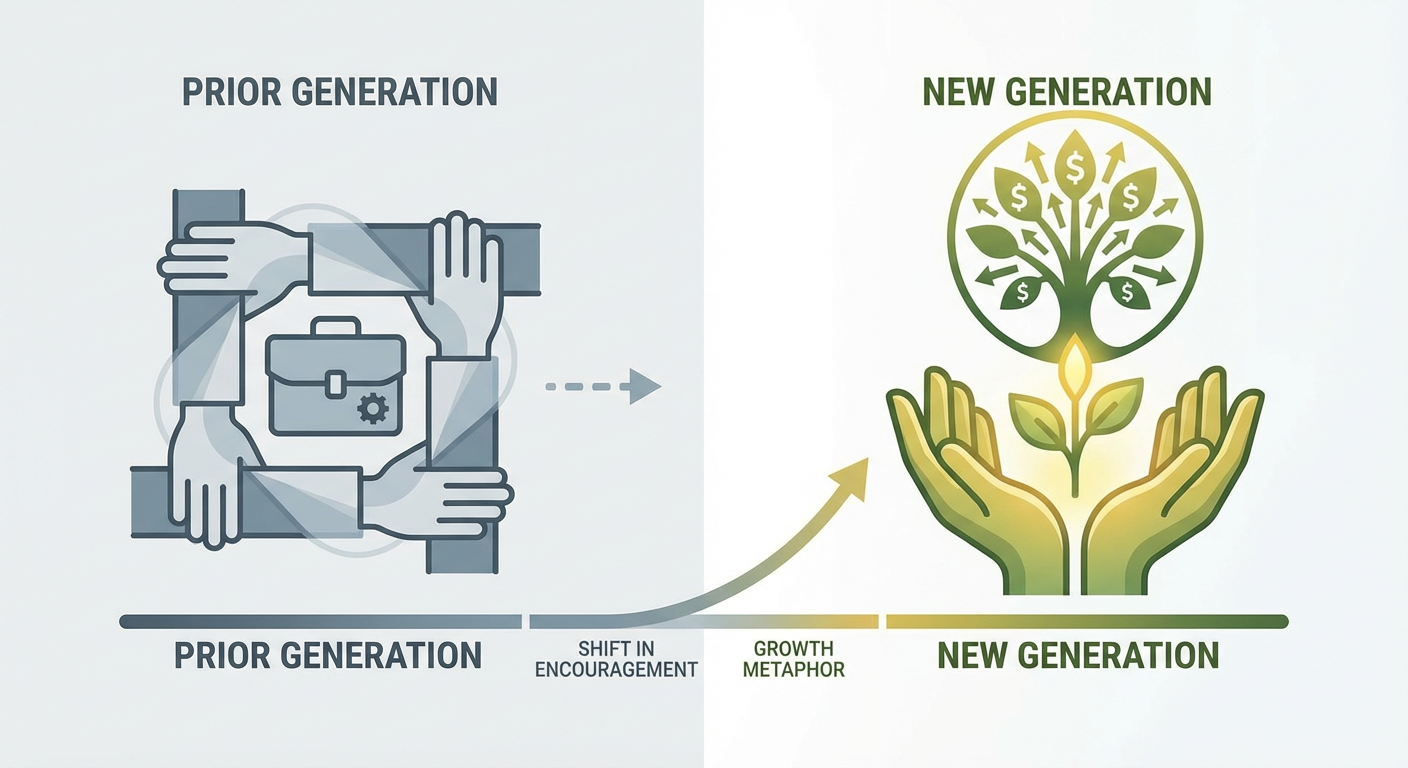
4. A Generational Shift in Entrepreneurial Encouragement
Entrepreneurship has long been lauded as a cornerstone of economic vitality, driving innovation, creating jobs, and fostering societal progress. Yet, for past generations, the counsel from parents often leaned towards stability and predictability – a steady job, a reliable career path, rather than the inherent risks and uncertainties of starting one’s own venture. Historically, parental encouragement for entrepreneurship was markedly low, with only a small fraction of founders reporting childhood support for their business ambitions. However, recent data illuminates a profound and encouraging shift: today’s entrepreneurial parents are actively “flipping the script,” recognizing the immense value in cultivating an entrepreneurial mindset in their children from a young age. This section delves into this pivotal generational shift, contrasting historical trends with the burgeoning enthusiasm among modern parents to foster business acumen in their offspring. It also identifies early adolescence as a crucial window for nurturing this interest, exploring the mechanisms through which family-led initiatives are laying the groundwork for lifelong success, not just in business, but in all facets of life. The narrative around entrepreneurial development has largely been shaped by individuals who, despite a lack of direct parental urging, forged their own paths. A 2019 global survey involving nearly 1,900 founders revealed that a mere 21% of female entrepreneurs and 31% of male entrepreneurs received encouragement from their parents to start a business when they were young, averaging out to only 28% across both genders[15]. This statistic underscores a historical reality where entrepreneurship was often perceived as a risky, unstable career choice, an outlier compared to more conventional professions that offered perceived security and social status. Parents, perhaps driven by a desire for their children’s financial stability and well-being, commonly steered them toward established careers in fields such as medicine, law, or engineering. The limited encouragement meant that many successful entrepreneurs arrived at their vocation through independent exploration, often against prevailing family or societal expectations. However, the landscape is rapidly evolving. The perception of entrepreneurship has undergone a significant transformation, fueled by high-profile success stories in technology and other innovative sectors, as well as a growing appreciation for the flexibility and impact that self-employment can offer. This cultural shift is strikingly reflected in the attitudes of contemporary entrepreneurial parents. A compelling data point reveals that 82% of business owners with children now actively encourage their kids to pursue entrepreneurship[3]. Furthermore, only a negligible 2% stated they would discourage such a path[17]. This represents a monumental generational reversal, positioning families as increasingly vital incubators for future entrepreneurs. This section will explore the multifaceted drivers behind this shift, the profound impact of parental role modeling and support, and the critical importance of early engagement in fostering entrepreneurial spirit and skills.
The Historical Context: A Lack of Parental Encouragement
For many decades, the prevailing societal narrative placed a premium on traditional employment paths. The industrial age and subsequent corporate expansion cemented the ideal of climbing the corporate ladder, securing a stable job with benefits, and working for a large, established entity. Within this framework, entrepreneurship was often seen as an unconventional, high-risk endeavor, fraught with uncertainty and potential failure. Parents, perhaps having experienced economic hardships or simply seeking the best for their progeny, frequently advised against what they considered speculative careers. The data from the 2019 survey of current entrepreneurs powerfully illustrates this historical lack of direct parental encouragement. With only 28% of founders reporting childhood encouragement for business pursuits (21% for women, 31% for men)[2], it’s evident that the majority of today’s established entrepreneurs charted their course independently. This often meant navigating societal pressures, and sometimes even family skepticism, to pursue their visions. The entrepreneurial spirit, in these cases, was more self-cultivated than parentally nurtured. For these trailblazers, the journey into business was less about following a pre-approved family plan and more about breaking new ground. Factors contributing to this historical trend included:
- Perceived Risk and Instability: Entrepreneurship was often associated with financial precarity, long hours, and a high likelihood of failure, contrasting sharply with the security offered by government jobs or large corporations.
- Lack of Role Models: While nearly half (48%) of entrepreneurs worldwide grew up in a family business, suggesting early exposure[1], this exposure didn’t always translate into direct encouragement for the child to run their own business in the same way. The expectation might have been to join the family business, not necessarily to start a new, unrelated venture. Many parents in traditional salaried roles may not have seen entrepreneurship as a viable option for their children due to their own limited experience or familiarity with the path.
- Emphasis on Formal Education: A strong emphasis was placed on obtaining higher education and professional qualifications, often seen as direct pathways to secure employment. Entrepreneurship, in many contexts, was not explicitly taught or endorsed within academic institutions until more recently.
- Gender Norms: Historically, entrepreneurial roles, particularly in areas requiring significant capital or public exposure, were often less encouraged for women, contributing to the lower encouragement rate reported by female entrepreneurs[2].
This historical context is crucial for understanding the magnitude of the current generational shift. It highlights that the prevailing cultural narrative around entrepreneurship was, for a long time, one of caution rather than active promotion within the family unit.
The Generational Shift: Parents as Proactive Entrepreneurial Coaches
The current generation of parents, particularly those who are themselves entrepreneurs, are spearheading a radical change in how business ambitions are perceived and supported within the family. This shift is characterized by active encouragement, hands-on mentorship, and an intentional effort to integrate entrepreneurial principles into their children’s upbringing. The statistic that 82% of business owners with children actively encourage their offspring to pursue entrepreneurship is a testament to this profound change[3]. This positive stance contrasts sharply with the earlier figures and indicates a systemic rethinking of what constitutes a “good” or “successful” career path. Several factors are fueling this generational shift:
- Entrepreneurial Role Models at Home: The rise of successful entrepreneurs, especially in the digital age, has transformed the perception of entrepreneurship. Parents who have navigated the entrepreneurial journey themselves are uniquely positioned to mentor their children. They can demystify the process, share practical knowledge, and demonstrate resilience in the face of challenges. This hands-on, lived example is highly influential; research confirms that having an entrepreneurial parent significantly boosts a child’s likelihood of becoming an entrepreneur by about 60%[4]. A longitudinal study of Swedish adoptees reinforced this, showing that the “nurture” effect (adoptive parent influence) was roughly twice as strong as genetic factors, underscoring the immense impact of the home environment and parental role modeling[18].
- Changing Economic Landscape: The traditional job market has become less predictable, with rapid technological advancements and global competition. The idea of “lifetime employment” with one company is largely a relic. In this Fluid economic environment, entrepreneurial skills such as adaptability, problem-solving, and self-reliance are increasingly seen as essential for success, regardless of one’s chosen career. Parents recognize that fostering these skills enhances their children’s future prospects.
- Access to Information and Resources: The internet has democratized access to entrepreneurial knowledge and tools. Children today can learn about coding, digital marketing, and e-commerce from an early age. Parents can easily find educational resources, youth entrepreneurship programs, and online platforms to support their children’s interests, making the path to entrepreneurship more accessible than ever before.
- Desire for Purpose and Impact: Modern youth, particularly Gen Z, are increasingly driven by a desire to make a positive societal impact. A 2022 Junior Achievement survey found that 58% of teens would be likely to launch a business to address a social or environmental issue, even if it meant earning less money[13]. Entrepreneurial parents often share these values and see business as a powerful vehicle for creating positive change, encouraging their children to pursue ventures aligned with their passions and values.
This active parental encouragement manifests in various forms. It can range from deliberate conversations about business concepts at the dinner table to providing initial capital, offering advisory support, connecting children with mentors, or even involving them in the family business. These parents aren’t just giving tacit approval; they are becoming active facilitators and coaches in their children’s entrepreneurial journeys. A crucial aspect of this proactive approach is the recognition of entrepreneurship as a skill set, not just a career choice. Even if a child ultimately chooses a non-entrepreneurial path, the skills developed – creativity, resilience, problem-solving, financial literacy, and initiative – are universally valuable[10]. As such, parental encouragement is not merely about pushing children to start businesses, but about equipping them with a robust toolkit for navigating an uncertain future.
Early Adolescence: A Critical Window for Nurturing Entrepreneurial Interest
While the overall youth interest in entrepreneurship is surging, with 60% of American teens (ages 13-17) indicating a preference to start a business over a traditional job in 2022[7], this ambition is not uniformly sustained throughout adolescence. Research indicates that entrepreneurial interest often peaks in middle school but can significantly decline by high school[9]. This phenomenon highlights early adolescence as a uniquely critical window for nurturing and sustaining entrepreneurial ambition. The “Gallup-HOPE index” reported that the percentage of U.S. students (grades 5–12) planning to start a business dipped from 45% in 2011 to 41% in 2016[10]. While the current 60% figure for teens shows a positive rebound, the earlier dip underscores the vulnerability of nascent entrepreneurial interests. The allure of starting a business can be high in early youth when perceived obstacles are few. However, as children transition into high school, the realities of academic pressures, career choices, and the perceived risks of entrepreneurship can lead to a decline in interest. This is when the fear of failure and financial risk, cited by 27% of teens as a concern, can start to override ambition[14]. This suggests that without sustained encouragement and tangible experiences, the entrepreneurial spark ignited in middle school might fade under the weight of growing awareness of challenges and a lack of clear guidance. Approximately 55% of teenagers acknowledge that they “would need more information on how to be successful” before starting a business[14]. This gap represents a significant opportunity for parents, educators, and community programs to intervene and provide the necessary knowledge, tools, and support. Parents, recognizing this critical developmental phase, are increasingly stepping in to fill this gap. By creating opportunities for “practice” entrepreneurship during early adolescence, they help solidify interest and build confidence. Examples include encouraging participation in:
- Lemonade Stands and Micro-Businesses: Programs like Lemonade Day, which saw 72% of K-8 participants planning to launch their own business compared to 41% nationally, demonstrate the power of hands-on learning[11]. These experiences teach fundamental business principles like cost calculation, customer service, and profit generation in a low-risk environment. Nearly one-third of participants in such programs went on to launch actual ventures within a year, earning an average profit of $168 per stand[12].
- Selling Crafts or Services: Helping children set up an Etsy shop for handmade items, offering lawn care services, or teaching music lessons provides real-world experience in product development, marketing, and client management.
- Involvement in Family Business: For those with family enterprises, early exposure to operations, however basic, can be tremendously insightful. Nearly half of entrepreneurs worldwide (48.1%) grew up in a family business, highlighting the powerful intergenerational link[16].
These early, family-supported entrepreneurial projects don’t just build skills; they build lasting entrepreneurial drive and resilience. They allow children to experience successes and failures in a supportive environment, learning valuable lessons that solidify their interest and prepare them for future endeavors. The development of skills such as financial literacy, problem-solving, resilience, and creativity through such activities are invaluable, translating into success across various career paths, even if the child does not ultimately become a dedicated entrepreneur[10].
The Role of Parental Role Models and Family Support Systems
The influence of entrepreneurial parents extends far beyond mere encouragement; it encompasses critical role modeling, financial assistance, and robust support networks.
Parental Role Models Spark Entrepreneurial Ambition
The adage “the apple doesn’t fall far from the tree” holds significant truth in the realm of entrepreneurship. Children who observe their parents running a business gain invaluable insights into the daily realities, challenges, and rewards of entrepreneurship. This constant exposure creates a “normative environment” where owning a business is seen not as an extraordinary feat, but as an achievable and normal career path[15]. A German study noted that parental role models significantly increased the likelihood of a child choosing self-employment[15]. The Swedish adoptee study quantified this further, showing a ~60% higher entrepreneurship rate for children of business owners, with the environmental influence of adoptive parents being twice as strong as genetic factors alone[4]. Similarly, official data from Estonia indicates that young people’s involvement in entrepreneurship is higher if their parents are entrepreneurs[19]. This “intergenerational transmission” of entrepreneurship is a powerful phenomenon. Children growing up in such households often gain a comfort with business concepts by observing their parents navigate issues like sales, marketing, human resources, and financial management. They learn work ethic, initiative, and problem-solving through osmosis. While not every child of an entrepreneur will choose the same path, the familiarity and normalization of entrepreneurship significantly increase the probability. However, it is crucial to note that the nature of role modeling matters. Parents who demonstrate passion and resilience, while being honest about the challenges, tend to foster a positive view of entrepreneurship. Conversely, children who witness prolonged parental struggles or high stress without the redeeming aspects of passion and fulfillment might be deterred. Indeed, as noted earlier, a significant portion of current entrepreneurs were *not* encouraged by their parents to start businesses[2], suggesting that some parents, perhaps aware of the difficulties, might even discourage their children. The key lies in presenting entrepreneurship as an exciting opportunity, balanced with a realistic understanding of its demands.
Family Support and Resources Give Entrepreneurs an Edge
Beyond role modeling, the tangible and intangible support from family provides a significant “parent advantage.”
- Financial Backing: Family funds frequently serve as vital startup capital. Parents, or close relatives, are often the first “investors,” providing loans or direct investments that can be crucial in the nascent stages of a business. This is notably true in many economies where family and friends collectively provide the largest source of startup capital, often surpassing formal venture capital or bank loans[6]. Iconic examples include Mark Zuckerberg receiving a $100,000 loan from his father for Facebook, and Jeff Bezos’s parents investing a significant sum in Amazon early on[6]. An Israeli study found parental income to be the single biggest predictor of a 25–35-year-old’s chances of launching a startup, indicating that a solid financial background can provide the necessary capital, education, and safety net to mitigate risks[5].
- Emotional and Logistical Support: Entrepreneurship is a demanding journey, and emotional support from family can be a crucial buffer against stress and setbacks. Knowing that loved ones believe in the venture provides a psychological safety net. Logistically, family members often contribute “sweat equity” – offering free labor, office space, or leveraging personal networks to find early customers or mentors. This in-kind support is invaluable, reducing overheads and accelerating early growth.
- Access to Networks and Know-How: Parental networks can open doors to critical contacts, mentors, and collaborations. Bill Gates’s mother, for instance, used her connections to introduce him to IBM’s CEO in Microsoft’s early days[6]. Moreover, parents with business experience or higher educational attainment can provide practical guidance on business planning, legal procedures, or operational challenges. Statistics Estonia found a direct correlation between higher parental education levels and a child’s likelihood of becoming an entrepreneur, highlighting the transfer of intellectual capital[20].
- Family Businesses as Training Grounds: For children raised within a family business, the entire enterprise serves as a living, breathing case study and training ground. Around 48% of entrepreneurs report growing up in a family business[16]. This early, immersive experience provides hands-on learning of various business functions, fostering industry-specific knowledge and practical skills that can be leveraged for future ventures.
Despite these substantial benefits, it is important to acknowledge potential pitfalls. Over-reliance on family funding might hinder the development of skills necessary to attract external investments. Furthermore, the conflation of family and business can lead to conflicts that strain relationships. Concerns have also been raised that if entrepreneurship becomes too dependent on family wealth and connections, it could exacerbate social inequalities, limiting opportunities for talented individuals from less privileged backgrounds[21]. This underscores the need for broader ecosystem support (e.g., public incubators, grants) to complement family initiatives.
Developing Entrepreneurial Skills at Home
The home environment is increasingly becoming a strategic space for cultivating entrepreneurial skills. Parents are consciously designing experiences that foster an entrepreneurial mindset long before formal education might address it.
The Family Home as a Business Incubator
Many future entrepreneurs receive their earliest vocational training through casual participation in family activities. This could involve helping out with a parent’s small business – whether it is managing finances for a local shop, aiding in customer service, or observing sales techniques. These early hands-on opportunities demystify business operations and build foundational understanding. Even without a formal family business, parents can create a fertile ground for entrepreneurial learning. For example, assigning chores with correlating earnings can instill financial literacy and understanding of effort-reward dynamics. Encouraging children to sell items they no longer use, or crafts they create, teaches basic principles of supply, demand, pricing, and customer interaction. This informal “incubation” helps address the knowledge gap many teens identify; 55% stated they need more information on how to be successful in business[14]. By turning everyday household activities into mini-business projects, parents provide a safe, iterative learning environment. Children experiment with ideas, encounter challenges, and learn problem-solving techniques under the guidance of trusted mentors (their parents).
Encouraging Problem-Solving and Creativity
A hallmark of entrepreneurial talent is the ability to identify problems and creatively devise solutions. Parents can foster this by:
- Project-Based Learning: Supporting children’s passions, like baking, by helping them set up a small cookie stand. This involves brainstorming recipes, calculating costs, setting prices, and marketing – fundamental business processes.
- Open-Ended Challenges: Asking questions like, “How can you earn money for that new toy you want?” instead of simply buying it. This prompts children to think innovatively, whether it’s through car washing, dog walking, or creating digital content.
This approach aligns with the findings that entrepreneurial education excels at nurturing skills like creativity and resilience, often missed or underdeveloped in traditional classroom settings[10].
Learning by Doing: The Lemonade Stand Effect
The ubiquitous lemonade stand remains a classic and highly effective tool for early entrepreneurial development. It provides a compressed, real-world experience of running a business. Organizations like Lemonade Day facilitate these experiences on a broader scale, showing that 72% of participating children in grades K-8 reported intentions to start their own businesses subsequently, significantly higher than the national average of ~41% for students in similar age brackets[11]. An impressive nearly one-third of these young participants went on to launch actual businesses within a year[12]. These projects teach tangible skills:
- Financial literacy: Calculating costs of ingredients, setting prices, managing change, and tracking profits.
- Sales and marketing: Attracting customers, pitching their product, and understanding location-based traffic.
- Problem-solving: Dealing with unexpected rain, finding the best spot, or managing multiple customers.
- Resilience: Handling rejection and learning from mistakes.
The practical lessons gained from these micro-enterprises, however small their scope, build confidence and a deeper understanding of business dynamics in a way that theoretical teaching alone cannot. As one 12-year-old Lemonade Day participant observed, “I thought it would be easy… It’s much harder – there’s a lot of math involved”[11]. Such realizations are pivotal for building a realistic and actionable entrepreneurial drive.
Tech and Teamwork in the Family Context
In the digital age, family-led entrepreneurial endeavors are becoming more sophisticated. Parents and children collaboratively launch YouTube channels, Etsy stores for digital art, or even simple mobile applications. These projects integrate modern skills – digital marketing, coding basics, graphic design – within a collaborative family dynamic. This approach not only imparts future-focused skills but also strengthens family bonds through shared goals and teamwork. Surveys show that 79% of teens believe the ideal age to start a business is before 30, with many eager to begin in their teenage years[22]. Parents, whether tech-savvy themselves or willing to learn alongside their children, can act as indispensable coaches, fostering accountability and innovation. This involves treating the child’s venture seriously as a “family startup,” allowing the child to lead in their areas of strength while providing guidance and support.
Lifelong Benefits of a Family-Fostered Entrepreneurial Mindset
The nurturing of an entrepreneurial mindset within the family unit yields benefits that extend far beyond simply producing future business owners. It cultivates an array of transferable life skills, strengthens family dynamics, contributes to a generational legacy, and ultimately has a positive societal impact.
Transferable Life Skills
Regardless of whether a child ultimately pursues entrepreneurship as a career, an entrepreneurial upbringing equips them with a powerful suite of skills invaluable in any field:
- Problem-Solving and Critical Thinking: Children are encouraged to identify challenges and devise creative solutions, fostering a proactive rather than reactive approach.
- Resilience and Adaptability: Experiencing small failures and learning to pivot in early ventures builds a tolerance for ambiguity and the ability to bounce back from setbacks.
- Financial Literacy: Early exposure to budgeting, pricing, and profit/loss concepts translates into better personal finance management and project oversight later in life.
- Creativity and Innovation: Being encouraged to think outside the box and develop novel ideas fosters a mindset of continuous improvement and originality.
- Self-Efficacy and Initiative: Successfully navigating projects, however small, builds confidence in one’s abilities and encourages self-starter behavior.
- Communication and Negotiation: Selling a product or service requires articulating value, listening to feedback, and negotiating terms.
These traits foster a “mindset capable of attributing the correct value to the entrepreneurial mind” that enables personal development and benefits society at large[23]. This holistic skill development prepares individuals to thrive in a rapidly changing world where adaptability and innovation are increasingly paramount.
Stronger Family Bonds and Communication
Collaborating on entrepreneurial projects can profoundly enhance parent-child relationships. Working together towards a common business goal necessitates teamwork, open communication, and mutual trust. Parents observe their children’s emerging talents and work ethic, while children see their parents in a mentoring, supportive role, fostering a different dynamic than traditional authority structures. Case studies often highlight how such shared ventures create lasting memories and deeper respect. For instance, the young founder of Mo’s Bows frequently credits working with his mother and grandmother for not only his business skills but also the strengthened family connection[24]. This foundation of collaboration can pay dividends later, fostering an environment where children are more receptive to parental advice because it’s perceived as experienced mentorship rather than mere instruction.
Creating a Legacy of Entrepreneurship
Families that prioritize entrepreneurial development can initiate a multi-generational cycle of innovation and self-reliance. This “family entrepreneurial legacy” allows each generation to build upon the knowledge, networks, and reputation accumulated by the previous one. A parent’s initial venture might inspire a child to expand it or launch an entirely new, complementary business. Over time, this creates a rich inheritance of business acumen and a sustained culture of innovation. Many successful multi-generational enterprises began with the enterprising spirit of a single parent. Economists recognize that such clusters of entrepreneurial families contribute significantly to local and national economic dynamism, forming a backbone for robust business communities[21]. This means the investment in developing entrepreneurial skills in children is not just for individual benefit but has the potential to contribute to broader economic prosperity.
Societal Impact: More Entrepreneurs, Better Outcomes
From a societal perspective, a surge in family-led entrepreneurial development is a positive trend addressing the need for sustained new business formation. By fostering entrepreneurs at home, societies cultivate a continuous pipeline of future job creators and innovators. These individuals are crucial for economic growth, fostering competition, and driving progress. Given that a significant percentage of young people are interested in mission-driven entrepreneurship (58% of teens want to start a business addressing social or environmental issues[13]), supporting these ambitions early can lead to businesses that tackle pressing global challenges. In a future world of work that will increasingly demand creativity and initiative, equipping the next generation with an entrepreneurial mindset is vital for their ability to invent their own opportunities rather than solely relying on existing structures. The “parent advantage” thus transcends individual success, contributing to a more resilient, innovative, and opportunity-rich society. It instills the lifelong gift of seeing potential where others might only perceive risk. This comprehensive shift, from historical parental caution to today’s active support, is reshaping the ecosystem of entrepreneurial development. It underscores the profound influence of the family unit as the primary mechanism for instilling the values, skills, and confidence necessary for lifelong success in the entrepreneurial age.
As we have seen, the transformation in parental attitudes and actions towards fostering entrepreneurship is a powerful societal force. This growing emphasis on family-led entrepreneurial development organically leads to the next critical aspect of this research: how these burgeoning ambitions are translated into tangible skills through structured and unstructured learning within the family. The next section will delve deeper into the specific ways parents are actively cultivating entrepreneurial education, covering methodologies from informal lessons to structured projects, and how these efforts shape a child’s business acumen.

5. Cultivating Entrepreneurial Skills in the Home Environment
The traditional image of an entrepreneur often involves a solitary genius toiling in a garage, but mounting evidence suggests that the most fertile ground for entrepreneurial development might actually be the family home. Families are increasingly being recognized as powerful incubators for cultivating the essential skills and mindset required for lifelong success in entrepreneurship and beyond. This section delves into how the home environment, through intentional and organic means, can foster critical entrepreneurial traits like problem-solving, creativity, resilience, and financial literacy, translating into a significant “parent advantage” for future generations. At its core, this family-led entrepreneurial development is a generational paradigm shift. Historically, direct parental encouragement for entrepreneurship was rare, with only 28% of current entrepreneurs reporting such support in their youth, comprising 21% of women and 31% of men15. However, the current generation of business owners is actively reversing this trend, with a striking 82% of entrepreneurial parents purposefully encouraging their children to pursue an entrepreneurial path16. This profound change underscores a growing recognition that the home can provide a practical, low-stakes laboratory for developing entrepreneurial acumen. By integrating business concepts into daily life, facilitating hands-on projects, and offering emotional and financial support, families are equipping their children with a unique toolkit for navigating an increasingly complex and opportunity-rich economic landscape.
5.1 The Family Home as a Micro-Incubator: Foundational Role and Intergenerational Transmission
The concept of the family home serving as a “micro-incubator” for entrepreneurial talent is deeply rooted in empirical observation and research. This environment provides the earliest and most consistent exposure to mindsets, behaviors, and practical experiences that significantly shape a child’s future inclinations toward business creation. A compelling statistic reveals the pervasive influence of family business on future founders: nearly half of entrepreneurs worldwide (48%; 48.1% specifically according to an OnStartups survey from 2024) grew up in a family business014. This figure is a cornerstone of understanding the family’s role. It suggests that early and consistent exposure to the inner workings of a business demystifies the entrepreneurial journey and imbues children with an inherent understanding of concepts that others might only grasp later in formal education or professional settings. These children often don’t just “see” the business; they “absorb” it, participating in various capacities, from observing customer interactions to helping with inventory or even basic financial tasks. This “intergenerational transmission” of entrepreneurial spirit creates a “normative environment” where entrepreneurship is perceived as a natural, achievable, and even desirable career path rather than a distant, intimidating aspiration29. Further reinforcing this point, a longitudinal study of Swedish adoptees demonstrated that having an entrepreneur parent boosts a child’s likelihood of becoming an entrepreneur by approximately 60%317. Significantly, this research highlighted that the “nurture” effect (environmental influence of adoptive parents) was roughly twice as strong as genetic factors, underscoring the profound impact of the home environment and parental role modeling over innate predispositions30. Similarly, official data from Estonia indicates that young people’s involvement in entrepreneurship is higher if their parents are entrepreneurs, reinforcing the importance of family context31. The kind of early exposure children receive in such households builds a foundational entrepreneurial mindset. They witness their parents confronting challenges, adapting strategies, and managing resources firsthand. This informal apprenticeship teaches crucial entrepreneurial values like initiative, resilience, problem-solving, and a pragmatic approach to risk-taking. For many successful entrepreneurs, childhood experiences of “helping out” in a parent’s company—whether it was managing books for a local store, observing customer service dynamics in a family restaurant, or attending client meetings—were formative. These experiences, often credited by adult entrepreneurs, lay the groundwork for a strong work ethic and industry knowledge long before formal career choices are made. However, it is crucial to acknowledge that not all parental influences are inherently positive or lead to entrepreneurship. Children observing a parent grappling with extreme stress or the failure of a business might be deterred from similar ventures. Indeed, a significant proportion of today’s entrepreneurs (72%) did not receive direct encouragement from their parents to start a business when young1. This suggests that while family exposure is powerful, the nature of that exposure, including parental attitudes towards their own entrepreneurial journey, plays a critical role. Families that frame entrepreneurship as an exciting opportunity, replete with challenges but also immense rewards, tend to inspire more future founders. Conversely, overly cautious or negative perspectives from parents (“get a stable job”) might unintentionally dampen a child’s entrepreneurial ambitions. A nuanced approach, combining positive role modeling with realistic discussions about the challenges of business, is key to fostering a resilient entrepreneurial spirit.
5.2 The “Parent Advantage”: Support Networks and Resources
Beyond simple exposure, the “parent advantage” extends to invaluable support networks and resources that significantly aid aspiring entrepreneurs. This can manifest in various forms, from financial capital to emotional resilience and networking opportunities.
5.2.1 Financial and Logistical Support
One of the most tangible advantages is financial backing. Parents frequently serve as the initial “investors” in a child’s entrepreneurial journey. This support can be direct, such as providing startup capital or loans, or indirect, through covering living expenses, thus freeing the entrepreneur to focus on their venture without immediate financial pressure. Statistics highlight this phenomenon: family and friends often constitute the largest source of startup capital, frequently surpassing traditional avenues like bank loans or venture capital533. Illustrative examples abound, such as Mark Zuckerberg receiving a $100,000 loan from his father to launch Facebook, and Jeff Bezos’s parents investing approximately $250,000 in Amazon during its nascent stage34. An Israeli Ministry of Finance study in 2020 found that parental income was the single biggest predictor of a young adult’s likelihood of launching a startup435. This correlation indicates that those from higher financial backgrounds often possess a substantial advantage, benefiting from a parental safety net that allows for greater risk-taking and resilience in the face of failure. Conversely, aspiring entrepreneurs from less affluent backgrounds may be compelled to prioritize stable employment over entrepreneurial ventures due to a lack of such a safety net. However, family support transcends mere financial contributions. It encompasses emotional and logistical assistance critically important for overcoming the challenges inherent in starting a business. Parents might offer pro-bono office or garage space, contribute their own labor, or leverage personal networks to help secure initial clients. This “sweat equity” from family members is often indispensable in the early, resource-constrained stages of a startup. The emotional encouragement from parents and spouses is also vital, helping founders navigate stress and setbacks. A family’s belief in a venture can significantly bolster a founder’s resilience. Conversely, a lack of familial support can exacerbate the already arduous path of entrepreneurship, making it even more challenging. Families that exhibit patience, understanding, and encouragement, even when faced with long hours and uncertain income, effectively integrate themselves into the venture’s foundational support system.
5.2.2 Access to Networks and Know-How
Beyond financial resources, family connections frequently unlock doors for nascent entrepreneurs. Many individuals gain their first significant break through a parent’s introduction to a crucial contact, mentor, or investor. A notable instance is Bill Gates’ mother, who utilized her community ties to connect him with IBM’s CEO during Microsoft’s formative years36. Moreover, if parents possess higher education or business experience, they can provide invaluable guidance through complex processes such as business plan development, legal documentation, or strategic decision-making. Statistics Estonia observed a correlation between higher parental education levels and an increased likelihood of a child becoming an entrepreneur, demonstrating how parental knowledge translates into enhanced entrepreneurial confidence for the succeeding generation37. In essence, families act as a pre-existing support network, furnishing young entrepreneurs with foundational mentorship, credibility, and social capital that would otherwise necessitate years to cultivate independently.
5.2.3 Family Businesses as Experiential Training Grounds
Growing up within a family business often equates to receiving an advanced, hands-on entrepreneurship education far beyond what traditional academic institutions can offer. Entrepreneurs frequently initiate ventures within the same industry or domain as their family’s business, capitalizing on inherent insider knowledge. This practical training might include various aspects of business operations, from inventory management and financial tracking to complex customer service scenarios. For instance, an individual who inherits a small manufacturing firm benefits from an established supply chain, existing relationships, and a recognized brand, which can serve as a springboard for launching new product lines or technologically enhanced spin-offs. This kind of experiential learning instills practical skills and a pragmatic understanding of market dynamics, providing a significant head start. Studies highlight the prevalence of this phenomenon, with nearly half of entrepreneurs having worked in a family business during their youth14. These early lessons contribute to smoother startup execution and often correlate with higher rates of business success.
5.2.4 Potential Pitfalls of Over-Reliance
While family support is undeniably advantageous, it is not without potential drawbacks. Over-reliance on family funding, for example, might deter an entrepreneur from developing the rigorous pitch and validation skills necessary to attract external investors. Furthermore, the intertwining of family dynamics with business operations can lead to complex conflicts, where disagreements over finances or strategy strain personal relationships. The inherent inequality in access to such resources also raises concerns about social mobility. If entrepreneurship becomes unduly dependent on “being born into the right family,” it could restrict opportunities for talented individuals from less privileged backgrounds39. Therefore, policymakers advocate for supplementary initiatives—such as incubators, micro-loan programs, and mentorship schemes—to ensure a more level playing field for all aspiring entrepreneurs, irrespective of their familial support structures.
| Cohort | Encouraged by Parents to Start Business (%) | Active Parental Encouragement Today (%) | Likelihood Boost from Entrepreneur Parent (%) |
|---|---|---|---|
| Current Entrepreneurs (looking back at their youth)1 | 28% (21% female, 31% male) | N/A | N/A |
| Parents who are business owners (for their own children)2 | N/A | 82% | N/A |
| Children of Entrepreneur Parents (Swedish Study)3 | N/A | N/A | ~60% |
5.3 The Generational Shift: Proactive Parental Encouragement
The landscape of parental attitudes towards entrepreneurship has undergone a significant transformation, marking a clear generational shift. What was once viewed with skepticism is now increasingly embraced as a valuable and aspirational career path.
5.3.1 From Discouragement to Active Promotion
Historically, many individuals who are now middle-aged entrepreneurs recount growing up in households where stable, traditional professions were prioritized over the perceived risks of business ventures. A 2019 global survey revealed that a mere 28% of current entrepreneurs reminisce about actively being encouraged by their parents to launch a business in their formative years1. This lack of early endorsement, influenced by prevailing cultural norms that often equated self-employment with instability, likely contributed to lower youth startup rates in previous decades, as evidenced by the fact that only 3.6% of U.S. millennials were primarily self-employed by age 30, significantly less than Gen X (5.4%) or baby boomers (6.7%) at the same age911. However, the widespread success stories within technology and media sectors have rebranded entrepreneurship, making it a more mainstream and compelling career choice. Consequently, contemporary parents demonstrate considerably greater support for their children’s entrepreneurial aspirations. A stark contrast to previous generations, 82% of entrepreneurial parents today indicate their willingness to encourage their children to pursue entrepreneurship2. This positive shift is driven by parents actively fostering entrepreneurial traits such as creativity, independence, and grit within the home environment. They are proactively exposing their children to startup culture, involving them in family business discussions, and enrolling them in youth entrepreneurship programs, recognizing that these experiences cultivate vital 21st-century skills.
5.3.2 The Critical Window: Middle School Enthusiasm
Research indicates that children’s interest in entrepreneurship peaks during their pre-teen years, often diminishing as they progress through high school8. While over half of students in grades 5-8 express an interest in starting a business, this enthusiasm recedes significantly by the time they reach 11th or 12th grade, as the perceived realities and fear of failure become more pronounced8. This observation highlights early adolescence as a crucial period for nurturing entrepreneurial drive, before the increasing societal pressure for career certainty sets in. Parents who grasp this critical window are pivotal in sustaining this early interest. They achieve this by creating supervised opportunities for children to “practice” entrepreneurship, ranging from a simple lemonade stand to more complex digital ventures like an eBay resale business. These hands-on experiences during formative years build confidence and practical knowledge. Parents also play a vital role in normalizing entrepreneurship, sharing inspiring success stories, facilitating mentorship connections, and encouraging calculated risk-taking before adult responsibilities accumulate. The objective is to preserve that youthful optimism, preventing its erosion by the time adulthood arrives.
5.3.3 Evolving Societal and Educational Norms
The transformation in parental attitudes is part of a broader societal and educational evolution. Entrepreneurship education, once a rarity, is now increasingly prevalent, manifest in high school entrepreneurship clubs, startup pitch competitions for teenagers, and specialized courses within academic curricula. Some nations have even integrated entrepreneurship into their national educational standards, frequently spurred by parental advocacy. Culturally, young entrepreneurs are celebrated, with media attention showcasing teen CEOs and young inventors, thereby normalizing the concept for other families. The ubiquitous influence of social media further exposes teenagers to entrepreneurial content creators and “startup culture,” which parents are increasingly acknowledging and leveraging. This confluence of support from family, educational institutions, and broader society is forging a more conducive ecosystem for nurturing entrepreneurial talent than in previous generations.
5.4 Practical Cultivation: Hands-On Learning in the Home
The true power of the home environment as an entrepreneurial incubator lies in the practical, hands-on learning experiences it can provide. These experiences, ranging from the classic lemonade stand to digital ventures, build tangible business acumen and essential life skills.
5.4.1 The Home as a Laboratory for Business Concepts
Parents who operate their own businesses often involve their children in rudimentary tasks, such as managing stock, calculating sales figures, or assisting with website updates. These activities serve as an informal apprenticeship, introducing children to fundamental business processes from a young age. Even in households without formal businesses, parents can employ daily activities to impart entrepreneurial lessons. For instance, chore assignments linked to an allowance can instill a work-for-pay ethic, while encouraging children to sell unused items or handmade crafts online teaches them about revenue generation, customer service, and market demand in a low-risk setting. Such experiences introduce children to core business concepts like budgeting, negotiation, and profit/loss. A Junior Achievement study indicated that 55% of teenagers feel they lack sufficient knowledge to succeed in starting a business23; proactive parents can directly address this gap through structured, family-guided projects. By conceptualizing the home as a “mini-innovation lab,” parents cultivate an entrepreneurial mindset from an early age, prompting children to identify problems and devise creative solutions.
5.4.2 Fostering Problem-Solving and Creativity
Central to entrepreneurship is the capacity to identify opportunities and craft innovative solutions. Families can cultivate these skills by promoting curiosity and project-based learning. For example, if a child demonstrates an interest in baking, parents might assist them in organizing a weekend cookie stall. This collaborative effort involves brainstorming recipes (product development), establishing pricing strategies, and designing promotional materials (marketing). Such creative projects enhance confidence and resourcefulness. According to *Education Week*, extracurricular entrepreneurship programs are effective because they cultivate traits “not noticed and nurtured in the classroom,” such as creativity and resilience1042. Parents can replicate this by presenting children with open-ended challenges, like devising methods to earn money for desired purchases. The process itself – whether it involves car washing, app development, or crafting – teaches children to approach challenges with an entrepreneurial perspective, reframing problems as opportunities.
5.4.3 The Enduring “Lemonade Stand Effect”
The iconic lemonade stand, while seemingly simple, functions as a child’s inaugural micro-business, offering invaluable learning experiences. Programs like Lemonade Day, often facilitated by community groups and parental involvement, capitalize on this concept. The impact is quantifiable: an internal study of the Lemonade Day program revealed that 72% of participating children (K-8) expressed an intent to launch their own business after this experience, significantly higher than the national average of approximately 41% for their peers1012. Furthermore, nearly one-third of participants successfully launched an ongoing business within a year, a stark contrast to just 4% of all students1013. Each child’s stand typically generated an average profit of $16810. These early entrepreneurial experiences encapsulate numerous learning moments: * **Financial Literacy:** Calculating the cost of ingredients, understanding pricing, and managing earnings. * **Marketing and Sales:** Identifying optimal locations for customer traffic, engaging potential buyers, and handling transactions. * **Problem-Solving:** Adapting to unforeseen challenges, such as weather conditions or competitor strategies. * **Resilience:** Learning to cope with rejection and persevere. As a 12-year-old Lemonade Day participant articulated, “I thought it would be easy… It’s much harder – there’s a lot of math involved”44. Such realizations, guided by supportive parents, prepare children for the complexities of real-world entrepreneurship in a manner that no theoretical instruction can match.
5.4.4 Modern Ventures: Tech and Teamwork
Family-led entrepreneurial development has evolved beyond traditional crafts and lemonade stands to embrace the digital age. Parents and children are increasingly collaborating on sophisticated projects, such as creating YouTube channels, developing simple mobile applications, or establishing e-commerce stores on platforms like Etsy. These joint ventures facilitate the acquisition of cutting-edge skills, including digital marketing, coding, and graphic design, within a collaborative familial framework. For instance, a teenager might handle the technical aspects of website development, while a parent offers guidance on business models and quality assurance. This approach not only imparts valuable skills but also reinforces family bonds through shared objectives and teamwork. Surveys indicate that 79% of teenagers believe the optimal age to initiate a business is before 3045, with many eager to commence during their teenage years. Parents who are proficient in digital technologies, or willing to learn alongside their children, can serve as effective mentors. Even parents less conversant with technology can support by identifying external mentors or resources. The fundamental principle is to treat a child’s entrepreneurial endeavor with serious consideration, viewing it as a “family startup.” This approach empowers the child with accountability and fosters innovation, while parents learn to delegate and trust their child’s expertise in specific domains.
5.5 Lifelong Benefits: Beyond Business Success
The cultivation of entrepreneurial skills within the home environment yields advantages that extend far beyond the immediate goal of starting a business, imparting enduring life skills and fostering stronger family relationships.
5.5.1 Transferable Life Skills and Personal Development
Regardless of whether a child ultimately pursues a career in entrepreneurship, an entrepreneurial upbringing equips them with a robust set of transferable life skills and habits beneficial in any field. Parents who instill entrepreneurial thinking are effectively teaching leadership, adaptability, and self-reliance. For example, a child accustomed to budgeting a small business’s earnings will likely find personal finance management, project planning, and resource allocation more intuitive later in life. Empirical observations suggest that young individuals with early entrepreneurial experiences tend to exhibit heightened problem-solving abilities, enhanced creativity, and a stronger sense of self-efficacy—a belief in one’s capacity to succeed. They often demonstrate greater comfort with ambiguity and resilience in the face of setbacks, having likely navigated and overcome minor business challenges early on. A parent’s simple act of encouraging a child to brainstorm solutions rather than providing immediate answers can cultivate an entrepreneurial approach to academic, professional, and personal challenges. As one entrepreneurship educator noted, it’s about “creating a mindset capable of attributing the correct value to the entrepreneurial mind” for both individual growth and societal benefit46. Ultimately, the confidence, grit, and innovative thinking gained through family-led entrepreneurial projects contribute significantly to academic achievement, career progression, and effective navigation of daily life.
5.5.2 Enhanced Family Bonds and Communication
An often-overlooked benefit of engaging in entrepreneurial development is the potential for strengthened parent-child relationships. Collaborative projects, whether a small venture or a mini-company, necessitate enhanced communication, teamwork, and mutual trust within the family unit. Parents gain insight into their child’s creativity, work ethic, and emerging talents, while children perceive their parents in a supportive, collaborative role rather than solely as authority figures. Numerous case studies demonstrate that family entrepreneurship initiatives foster lasting memories and mutual respect. For instance, the young founders of Mo’s Bows frequently highlight how collaborating with his mother and grandmother not only imparted business skills but also deepened their family connection4748. The child learns to value ancestral knowledge, and adults gain an appreciation for the child’s innovative perspectives. This dynamic can be particularly beneficial during adolescence, as a foundation of collaboration on past ventures can make teenagers more receptive to parental advice, which is then viewed as experienced business mentorship.
5.5.3 Establishing an Entrepreneurial Legacy
Families that actively foster entrepreneurship can initiate a powerful intergenerational cycle, establishing a “family entrepreneurial legacy.” In this model, each successive generation builds upon the achievements and lessons of the preceding one. A parent might establish a modest company; their child, having absorbed entrepreneurial drive from an early age, might expand the existing business or launch a new, complementary venture. Subsequent generations then grow up in an even more entrepreneurial household, setting higher aspirations. Over time, the family accumulates a rich repository of business knowledge, expanded networks, and a reputable brand—tangible and intangible assets that are passed down. While not every family aims to build a global empire, even small family businesses can instill a powerful legacy of self-reliance, innovation, and community contribution. Economists point out that such legacies contribute to broader economic dynamism, with clusters of entrepreneurial families often forming the backbone of thriving local business communities3940.
5.5.4 Societal Impact: Fostering Future Innovators
On a broader societal scale, promoting family-led entrepreneurial development addresses a critical need. Many economies face concerns regarding diminished rates of new business formation among younger demographics. By empowering parents to nurture entrepreneurial traits at home, a pipeline of future job creators and innovators is cultivated. These individuals are more inclined to establish businesses that stimulate economic growth and are increasingly focused on addressing social and environmental challenges, with 58% of teenagers expressing interest in mission-driven entrepreneurship2451. Furthermore, an entrepreneurial mindset prepares the next generation for the evolving nature of work, which increasingly values creativity, initiative, and adaptability. In a rapidly changing global economy, those who can actively identify and seize opportunities—rather than passively await job availability—are poised to thrive. Thus, the “parent advantage” extends beyond individual success to cultivate a generation of resilient, opportunity-seeking citizens. It represents a profound, lifelong gift that parents can bestow: the ability to perceive possibility where others see only risk, ultimately shaping career trajectories, fostering financial independence, and contributing to society through innovative solutions.
5.6 Notable Examples of Family-Led Entrepreneurial Development
The impact of family-led entrepreneurial development is vividly illustrated by numerous success stories of young founders who transformed childhood interests into thriving businesses with crucial parental guidance. * **Mikaila Ulmer (United States): Me & the Bees Lemonade** At just four years old, Mikaila Ulmer, with the guidance of her parents, launched a lemonade stand using her great-grandmother’s unique flaxseed lemonade recipe52. Her family’s support was pivotal in transforming this simple childhood project into **Me & the Bees Lemonade**, a social enterprise dedicated to honeybee conservation. By age 11, Mikaila appeared on *Shark Tank*, securing a $60,000 investment from Daymond John53. By 13, she had attracted an additional $810,000 in funding and her bottled lemonade was sold nationwide in major retailers like Whole Foods. Mikaila’s parents, both with business backgrounds, nurtured her curiosity. When she developed a fear of bees after a sting, they encouraged her to research them, which ultimately inspired her company’s mission-driven approach54. They also managed logistics and provided mentorship during the critical early years. Her success demonstrates how early family support can scale a child’s idea into a multi-million-dollar enterprise. * **Moziah “Mo” Bridges (United States): Mo’s Bows** Moziah Bridges, at nine years old in Memphis, Tennessee, learned to sew bow ties from his grandmother, a retired seamstress55. Recognizing a market for unique, handcrafted bow ties for children, he launched **Mo’s Bows** in 2011. His mother, Tramica, took on the responsibility for the business operations, famously stating, “Mo is CEO of the company, but I’m CEO of Mo”56. By the time Mo was 13, Mo’s Bows had achieved sales of $200,000 and grown to seven employees, including his mother and grandmother57. After appearing on *Shark Tank* in 2013, Daymond John was so impressed that he became Mo’s mentor58. With this combination of family support and high-profile mentorship, Mo secured a licensing deal with the NBA in 2017 to produce team-themed bow ties, significantly expanding his brand’s national reach5960. This case exemplifies how a family’s collective skills and connections can transform a child’s passion into a legitimate, successful enterprise. * **Farrhad Acidwalla (India): Rockstah Media** Farrhad Acidwalla’s journey highlights the catalytic power of even modest parental financial support. At 13, in 2008, he secured a loan of Rs. 1,200 (approximately $20) from his father to develop an online community website61. By 16, a further Rs. 500 family loan allowed him to purchase a domain name and expand his platform62. Farrhad subsequently sold this initial website for Rs. 25,000 (~$350), using the proceeds to establish **Rockstah Media**, a web development and marketing company, at age 1763. Within a year, Rockstah Media evolved into a company with a global client base, making Farrhad one of India’s youngest digital entrepreneurs64. His parents’ small, yet significant, investments and implicit trust signaled belief in his ideas, allowing him to rapidly gain practical experience and iterate through ventures. Farrhad’s story underscores that treating a teenager’s initiative seriously can lead to substantial business experience and rapid entrepreneurial growth65. * **Fraser Doherty (Scotland): SuperJam** Fraser Doherty transformed a family recipe into an international brand with the mentorship of his grandmother and the unwavering support of his parents. At 14, he began making jams in his parents’ kitchen in Edinburgh, utilizing his grandmother’s cherished recipes66. With his family’s help, he sold “SuperJam” at farmers’ markets and local shops. Recognizing his potential, and despite initial rejections, his parents encouraged him to pitch to larger retailers. At 16, Fraser, wearing an oversized suit belonging to his father, famously pitched to Waitrose, a major UK supermarket, eventually becoming their youngest-ever national supplier at 186768. By his early twenties, SuperJam achieved over $1.2 million in annual sales and was available across Britain and internationally6970. Fraser’s parents provided transportation to meetings, offered credibility during negotiations, and supported the scaling of production. This example illustrates how a supportive family environment can guide a teenage entrepreneur from a home-based endeavor to global distribution. These examples collectively demonstrate that family-led entrepreneurship is not a theoretical concept but a tangible pathway to success, providing young individuals with invaluable skills, support, and opportunities that shape their lifelong entrepreneurial journeys. The profound influence of the home environment in shaping entrepreneurial talent is clear. From imparting a foundational mindset and offering critical resources to proactively encouraging ventures and facilitating hands-on learning, families are demonstrably pivotal in cultivating the next generation of innovators and business leaders. However, the dynamics of this family influence extend beyond the direct parental unit to the broader family structure and the surrounding community. The next section will explore the role of “The Extended Family and Community Ecosystem,” examining how grandparents, relatives, and local initiatives further amplify the parent advantage in entrepreneurial development.

6. Lifelong Benefits of an Entrepreneurial Mindset
The journey of entrepreneurial development, especially when nurtured within the family unit, extends far beyond the mere creation of a business or the pursuit of self-employment. It is a profound process that cultivates a rich tapestry of transferable life skills and an enduring mindset that benefits individuals across all facets of their personal and professional lives, irrespective of their ultimate career trajectory. This section delves into the multifaceted, sustained advantages derived from family-led entrepreneurial exposure, examining how crucial traits such as financial literacy, resilience, problem-solving capabilities, and creativity are forged in these formative experiences. It further explores how these skills contribute to success in any chosen path and, perhaps most importantly, strengthen the foundational bonds within the family itself. The statistics underscore the pervasive influence of family in shaping entrepreneurial inclinations: nearly half of all entrepreneurs globally (48.1%) report growing up in a family business environment[14]. This figure suggests that early exposure to the dynamics of business within the home is a common pathway into entrepreneurship. Yet, historically, direct encouragement for an entrepreneurial path from parents was surprisingly low. In a 2019 global survey of approximately 1,900 founders, only a modest 28% of current entrepreneurs recalled being actively encouraged by their parents to start a business during their youth, with a notable gender gap (21% of women versus 31% of men)[15]. This indicates that many of today’s established founders carved their own paths with limited explicit parental support. However, a significant generational shift is currently underway. Today, a striking 82% of business owners with children articulate their active encouragement for their kids to pursue entrepreneurial endeavors[16]. This dramatic reversal signifies a growing recognition among contemporary parents, particularly those who are entrepreneurs themselves, that their homes can serve as vital incubators for future innovators and leaders. This shift is not merely about fostering future business founders; it’s about imparting a durable “entrepreneurial mindset” – a collection of attitudes, skills, and approaches that are invaluable in an increasingly complex and rapidly changing world. These include critical thinking, adaptability, self-reliance, and the capacity to identify and seize opportunities, all of which are cultivated through hands-on, family-supported entrepreneurial activities. The subsequent subsections will thoroughly explore these benefits and their profound impact.
6.1. Cultivating Transferable Life Skills for Universal Success
An entrepreneurial upbringing, especially one facilitated by family, is a powerful crucible for developing a wide array of transferable life skills that extend far beyond the confines of business ownership. These skills are not merely supplementary but are foundational to success and well-being in any career, academic pursuit, or personal challenge an individual may encounter throughout their life.
6.1.1. Financial Literacy and Prudence
One of the most immediate and tangible benefits of family-led entrepreneurial development is the instillation of robust financial literacy. Children who engage in business activities, under the guidance of their parents, transition from abstract concepts of money to practical application. Whether it’s managing the initial capital for a lemonade stand, calculating the cost of materials for a craft sale, or tracking profits and losses, these hands-on experiences demystify financial principles. For instance, a 12-year-old Lemonade Day participant famously noted, “I thought it would be easy… It’s much harder – there’s a lot of math involved”[34]. This direct engagement teaches budgeting, pricing strategies, revenue generation, and profit margins in a real-world, low-stakes environment. This early financial education is invaluable. It helps individuals understand the value of money, the importance of saving and investment, and the consequences of financial decisions. These lessons are not confined to business. A child who learns to budget a mini-business’s earnings is more likely to handle personal finances judiciously as an adult. They develop an intuitive understanding of the interplay between income, expenses, and investment, which can lead to greater long-term financial stability and reduced susceptibility to debt. Studies consistently show that individuals with stronger financial literacy skills make better financial decisions, manage their assets more effectively, and are better prepared for economic uncertainties. Even a child participating in youth entrepreneurship programs, such as Lemonade Day, learns practical skills like figuring out costs and managing earnings, with the average stand earning $168 in profit[13].
6.1.2. Resilience and Grit in the Face of Adversity
Entrepreneurship is inherently fraught with challenges, setbacks, and failures. From a lemonade stand that sees no customers to a sophisticated online venture that struggles to gain traction, an entrepreneurial journey inevitably involves moments of disappointment. It is precisely in navigating these trials, with the supportive guidance of family, that children cultivate resilience and grit – the perseverance to overcome obstacles and the ability to bounce back from failure. When parents encourage their children to identify problems and brainstorm solutions, they are fostering an entrepreneurial approach to life’s ubiquitous challenges. This process teaches children not to shy away from difficulties but to view them as opportunities for learning and adaptation. A child who experiences low sales for a product is guided by parents to analyze why, brainstorm alternative strategies (e.g., changing location, improving marketing, adjusting pricing), and then implement those changes. This iterative process of trying, failing, learning, and trying again builds an inner fortitude. Such experiences demonstrate that failure is not an end but a step in the learning process. This resilience is a critical trait for success in any field, enabling individuals to endure professional rejections, recover from career setbacks, and adapt to unforeseen life circumstances with greater strength and optimism.
6.1.3. Problem-Solving and Critical Thinking
At its core, entrepreneurship is about identifying problems and creating solutions. Family-led entrepreneurial development provides a natural setting for honing sophisticated problem-solving and critical thinking skills. When a child decides to start a small business, they are immediately confronted with a series of real-world challenges: What product or service will they offer? Who is their target customer? How will they reach them? What pricing strategy makes sense? How will they differentiate from competitors? Parents can facilitate this learning by asking probing questions, encouraging independent thought, and guiding the child through the decision-making process rather than providing ready-made answers. This approach fosters analytical thinking and creativity. As children work through these challenges – from designing a marketing flyer to managing inventory – they are developing the ability to break down complex problems into manageable parts, evaluate various options, anticipate potential pitfalls, and make informed decisions. These cognitive skills are highly valued in virtually all professions, from scientific research and engineering to healthcare and law, where the ability to critically assess situations and devise effective solutions is paramount.
6.1.4. Creativity and Innovation
Entrepreneurial ventures, even at a nascent stage, demand creativity. This might involve inventing a new product, finding an innovative way to deliver a service, or developing a unique marketing campaign. Family environments that encourage experimentation and unconventional thinking are breeding grounds for creativity. For instance, parents helping a child set up a cookie stall collaborate on recipe development (product innovation), pricing strategies, and designing eye-catching promotional materials (marketing creativity). This creative process, nurtured within a supportive family context, allows children to think outside the box, challenge conventional wisdom, and transform abstract ideas into tangible outcomes. These same creative faculties are essential in arts, design, research and development, and any role requiring fresh perspectives and pioneering solutions. Moreover, the freedom to create and innovate without fear of judgment, often provided by a parent, builds confidence in one’s imaginative abilities, a skill that remains invaluable throughout life.
6.1.5. Communication and Negotiation Skills
Running a business, even a small one, requires effective communication and negotiation. Children learn to articulate their product’s value proposition to potential customers, manage customer feedback, and interact with suppliers or collaborators. They also learn to negotiate, whether it’s with a sibling over resource allocation for a project or with a customer over a price. These interactions, guided by parental supervision, teach valuable interpersonal skills. Developing these skills early on contributes to better personal relationships, more effective teamwork in academic and professional settings, and enhanced leadership capabilities. Strong communication fosters clarity, trust, and persuasion, all of which are desirable traits in any career.
6.2. The Intergenerational Transmission of Entrepreneurship and Family Bonds
The influence of entrepreneurial parents extends beyond specific skills, shaping a child’s fundamental view of work, risk, and achievement. This “intergenerational transmission” not only makes children more likely to pursue entrepreneurship themselves but also profoundly strengthens family bonds through shared endeavor and mutual support.
6.2.1. The Power of Parental Role Models
Research consistently demonstrates the profound impact of parental role models on a child’s entrepreneurial inclination. A longitudinal study of Swedish adoptees found that children with entrepreneurial parents were approximately 60% more likely to become entrepreneurs themselves[17]. Crucially, this study highlighted that the “nurture” effect – the influence of adoptive parents – was roughly twice as strong as genetic factors, emphasizing the environmental and experiential learning within the household[17]. Similarly, official data from Estonia indicates that “young people’s likelihood of being involved in entrepreneurship is higher if their parents are entrepreneurs,” underscoring the importance of the family context[20]. Children of entrepreneurs often gain early familiarity with business concepts through dinner-table conversations about work, exposure to business challenges, and sometimes direct involvement in the family enterprise from a young age. This hands-on observation demystifies business operations and teaches lessons about initiative, risk-taking, and problem-solving. This creates a “normative environment” where entrepreneurship is perceived as an achievable and normal career path, rather than an intimidating or exceptional one. Nearly half (48.1%) of entrepreneurs worldwide have grown up in a family business, directly benefiting from this early exposure[14]. This pattern of growing up “helping out” in a parent’s business, from keeping books to observing customer service, provides an invaluable head start on entrepreneurial thinking. However, it is important to acknowledge that not all influences are uniformly positive. While role modeling is powerful, its quality matters. Children who witness severe parental stress, financial instability, or overwhelming demands might be deterred from entrepreneurship. In fact, some successful entrepreneurs deliberately chose their path despite, rather than because of, parental expectations for a stable career. Only 28% of current entrepreneurs report receiving active parental encouragement for entrepreneurship during their youth[15]. This suggests that positive role modeling, coupled with transparent discussions about both the rewards and challenges of business, is critical. Families that present entrepreneurship as an exciting opportunity, balanced with a realistic understanding of its demands, are more likely to foster positive entrepreneurial intent.
6.2.2. Strengthening Family Bonds Through Shared Endeavor
Family-led entrepreneurial development is not only about business skills; it’s also a powerful catalyst for enhancing parent-child relationships and strengthening family bonds. Collaborating on a project or a mini-company necessitates teamwork, open communication, and mutual trust. Parents gain an intimate view of their child’s creativity, work ethic, and problem-solving abilities, fostering admiration and respect. Conversely, children experience their parents as supportive collaborators and mentors rather than just authority figures. Consider the example of Mikaila Ulmer, who launched Me & the Bees Lemonade with her great-grandmother’s recipe at just four years old. Her family’s sustained guidance transformed a childhood curiosity into a multi-million-dollar social enterprise[42]. Mikaila’s family not only managed logistics and secured investments but also leveraged her fear of bees (after a sting) to encourage research, which subsequently inspired her mission-driven product[41]. Similarly, Moziah “Mo” Bridges started Mo’s Bows at age nine, learning to sew from his grandmother, while his mother managed the business side, famously stating, “Mo is CEO of the company, but I’m CEO of Mo”[44]. By age 13, Mo’s Bows had achieved $200,000 in sales, involving his mother and grandmother as employees[45]. These examples illustrate how creating something together generates lasting memories, deepens understanding, and builds mutual reliance. This collaborative dynamic can significantly benefit family communication. When teenagers face difficult decisions later in life, a history of working together on ventures can make them more receptive to parental advice, now framed as experienced mentorship rather than mere instruction. Such shared experiences instill a sense of common purpose and collective achievement, reinforcing the family unit as a supportive team.
6.2.3. Financial and Network Support as a “Parent Advantage”
Family support often provides a crucial springboard for aspiring entrepreneurs, manifesting in both financial backing and valuable networks. Parents frequently serve as the initial “investors,” either through direct loans or by covering living expenses, allowing their children to focus on their ventures. Indeed, family and friends collectively constitute the largest source of startup capital in many economies, often surpassing formal avenues like bank loans and venture capital[21]. Remarkable instances include Mark Zuckerberg receiving a $100,000 loan from his father for Facebook’s launch and Jeff Bezos’s parents famously investing approximately $250,000 in Amazon during its first year[22]. An Israeli Ministry of Finance study even identified parental income as the single most important predictor of a young adult’s likelihood of launching a startup, underscoring the advantage afforded by a parental safety net and available capital[18]. Beyond capital, families offer invaluable non-financial support. This can include providing free office space, contributing labor, or leveraging personal networks to secure early customers or mentors. Bill Gates’s mother, for example, utilized her community ties to connect him with IBM’s CEO in Microsoft’s nascent stages[23]. Furthermore, educated or business-savvy parents can guide their children through complex tasks like business plan development or legal procedures. Statistics Estonia found a correlation between higher parental education levels and a child’s increased likelihood of becoming an entrepreneur, highlighting the role of parental knowledge transfer[24]. Such built-in support systems provide young entrepreneurs with mentorship, credibility, and social capital that would otherwise take years to acquire. It is vital to acknowledge the potential downsides of excessive reliance on family support. Over-dependence on family funding may not adequately prepare entrepreneurs for the rigorous demands of external investment. Furthermore, issues regarding conflict of interest or strategy disagreements can strain family relationships. The disparity in access to such financial and network resources also raises concerns about equity; policymakers note that if entrepreneurship becomes too reliant on familial privilege, it could impede social mobility[25]. Therefore, while family support is a powerful asset, it often needs to be complemented by ecosystem support mechanisms like incubators and micro-loans to ensure a more inclusive entrepreneurial landscape.
6.3. The Evolving Landscape: A Generational Shift in Encouragement
The perception of entrepreneurship as a viable and desirable career path has dramatically evolved over generations, leading to a profound shift in how parents encourage their children.
6.3.1. From Stability to Aspiration: Changing Parental Views
Historically, particularly among older generations, parents often prioritized stable careers over the inherent risks of entrepreneurship. A 2019 global survey revealed that only 28% of current entrepreneurs remember being encouraged by their parents to start a business when they were young[26]. This cultural lean towards job security meant that many founders pursued entrepreneurship despite, rather than because of, parental expectations. The relatively low self-employment rates among U.S. millennials (3.6% by age 30, compared to 5.4% of Gen X and 6.7% of Baby Boomers at the same age) by the mid-2010s indicated that for many, stable employment was the default, influenced by factors like economic uncertainty and student debt[27]. However, the tide has turned dramatically. The widespread visibility of successful entrepreneurs, particularly in the tech sector, has elevated entrepreneurship to an aspirational status. Today, 82% of business-owning parents actively encourage their children to pursue an entrepreneurial path if inclined[28]. This marks a significant generational shift, wherein parents are not just passively accepting but actively fostering traits like creativity, independence, and resilience within their children. Entrepreneurship is increasingly viewed as an extension of vital 21st-century skills, leading parents to expose their children to startup culture, involve them in family business discussions, and enroll them in youth entrepreneurship programs.
6.3.2. Strategic Timing: Catching the Spark in Adolescence
Research highlights a critical window for nurturing entrepreneurial interest: adolescence. While over half of middle school students (grades 5-8) express a desire to start a business, this interest often wanes significantly by high school[29]. The Gallup-HOPE index, for instance, showed a dip in entrepreneurial intent among U.S. students (grades 5–12) from 45% in 2011 to 41% in 2016, with interest dropping sharply between middle and high school years[10]. This decline is often attributed to mounting societal pressures for career certainty and the fear of failure. Parents who recognize this can strategically intervene during early adolescence to sustain the entrepreneurial spark. This involves creating “practice” opportunities, such as guided lemonade stands or online resale ventures, that build confidence and normalize risk-taking before the onset of greater adult responsibilities. By sharing success stories, arranging mentorships, and framing entrepreneurship as an attainable and exciting career, parents can help children carry their youthful optimism into adulthood.
6.3.3. Evolving Ecosystems of Support
The increased parental emphasis on entrepreneurship is mirrored by broader societal changes. Educational institutions and communities are gradually adapting, with entrepreneurship clubs, startup pitch competitions for teenagers, and curricular integrations becoming more common. Culturally, young entrepreneurs are increasingly celebrated, gaining media attention that further normalizes the pursuit for aspiring youth and their families. Social media also plays a significant role, exposing teenagers to entrepreneurial content creators and “startup culture” that informs their aspirations. This convergence of family, educational, and societal encouragement creates a more fertile ground for cultivating future entrepreneurs than ever before, ensuring that the “parent advantage” is increasingly recognized and leveraged.
6.4. The Sustained Impact: Success in Any Walk of Life
The skills and mindset cultivated through family-led entrepreneurial development provide advantages that extend beyond the choice of becoming an entrepreneur. They equip individuals for success and fulfillment in diverse career paths and personal endeavors.
6.4.1. Versatile Leadership and Adaptability
An entrepreneurial upbringing intrinsically fosters qualities of leadership and adaptability. Children who are encouraged to take initiative, make decisions, and manage projects (even small ones) develop a strong sense of ownership and responsibility. They learn to lead peer projects in school, take charge in community initiatives, and become valuable contributors in team settings in more traditional employment. The exposure to iterative problem-solving and the acceptance of failure as a learning opportunity breed adaptability, enabling individuals to navigate change, embrace new technologies, and pivot strategies when necessary—skills critical in any modern professional landscape.
6.4.2. Enhanced Career Trajectories
Individuals with an entrepreneurial mindset, regardless of their employment status, tend to exhibit higher levels of motivation, proactivity, and innovation within their chosen professions. They are often the employees who identify inefficiencies, propose new solutions, and drive growth from within an organization. Their developed problem-solving skills, creativity, and resilience make them highly valuable assets, often leading to faster career progression and leadership roles. The self-efficacy and confidence gained from early ventures empower them to pursue ambitious goals and navigate complex corporate structures more effectively. This was succinctly captured by an entrepreneurship educator who spoke about “creating a mindset capable of attributing the correct value to the entrepreneurial mind” for both personal development and societal benefit[37]. This table summarizes key transferable skills and their broader applicability:
| Entrepreneurial Skill Developed | Lifelong Benefit / Transferability | Example in Non-Entrepreneurial Career |
|---|---|---|
| Financial Literacy (Budgeting, P&L) | Personal financial management, strategic resource allocation, investment decisions | Managing departmental budget, understanding business unit’s financial health, personal wealth building |
| Resilience & Grit (Overcoming setbacks) | Stress management, persistence in complex projects, emotional intelligence, adapting to change | Recovering from a failed project, handling job loss, navigating difficult client relationships |
| Problem-Solving (Identifying needs, devising solutions) | Analytical thinking, critical evaluation, strategic planning, continuous improvement | Troubleshooting technical issues, optimizing operational processes, developing marketing strategies |
| Creativity & Innovation (New products/services, unique marketing) | “Out-of-the-box” thinking, design thinking, process improvement, idea generation | Developing novel research approaches, designing user interfaces, creating artistic works |
| Communication & Negotiation (Selling, customer relations, collaboration) | Effective presentation, conflict resolution, team collaboration, leadership, client management | Leading team meetings, mediating workplace disputes, negotiating salaries or contracts |
| Self-Efficacy & Confidence (Belief in own capabilities) | Proactiveness, assertiveness, intellectual curiosity, comfort with calculated risk | Taking on new challenges, public speaking, advocating for a cause, driving career advancement |
6.4.3. Societal Contribution and Economic Dynamism
On a macro level, fostering an entrepreneurial mindset within families contributes significantly to broader societal outcomes. Economies consistently seek new business formation to drive innovation, create jobs, and stimulate growth. By nurturing a pipeline of future entrepreneurs and “intrapreneurs” (those who apply entrepreneurial thinking within existing organizations), families contribute to a more dynamic and adaptable workforce. Moreover, the increasing interest among Gen Z teens in mission-driven entrepreneurship (58% would start a business to address a societal need even if it meant less money) suggests that an entrepreneurial upbringing can also yield more socially conscious and impactful ventures[30]. These individuals are better equipped to identify and solve complex social and environmental problems through innovative business models. The “parent advantage” thus transcends individual gain, promoting a culture of self-reliance, opportunity-seeking, and innovation. This creates citizens who are not merely reactive to market conditions but actively shape them, contributing to the overall resilience and prosperity of their communities and nations. Ultimately, the lifelong benefits of an entrepreneurial mindset, rigorously cultivated through family-led development, represent a priceless inheritance that empowers individuals to thrive and contribute meaningfully throughout their entire lives. The profound influence of family in shaping entrepreneurial inclinations and life skills underscores a critical yet often overlooked aspect of human development. The next section will delve deeper into the methodologies and approaches families can adopt to actively nurture these vital entrepreneurial qualities in their children, focusing on practical strategies and frameworks.

7. Notable Examples of Family-Led Entrepreneurial Success
The journey from childhood curiosity to entrepreneurial triumph is often paved not only with individual talent and perseverance but also, crucially, with strong parental guidance, unwavering support, and the provision of essential resources. While a significant portion of today’s established entrepreneurs, approximately 48% globally, report having grown up in family businesses showcasing early exposure to commercial operationsT1, historically, direct parental encouragement for an entrepreneurial path was less common. A 2019 global survey revealed that only 21% of female and 31% of male entrepreneurs received such encouragement during their youthT2. However, a significant generational shift is now in full swing: an overwhelming 82% of current business owners with children actively encourage their offspring to pursue entrepreneurshipT3. This positive shift is transformative, turning families into vital incubators for future innovators and business leaders. Research underscores the profound impact of this familial influence, showing that having entrepreneurial parents can boost a child’s likelihood of starting a business by about 60%T4.
This section delves into inspiring case studies of young entrepreneurs who, despite their tender ages, have built successful ventures, vividly illustrating how the “parent advantage” translates into tangible outcomes. These narratives highlight diverse forms of parental support, ranging from providing initial capital or practical skills to serving as dedicated mentors and operational partners. By examining the journeys of individuals like Mikaila Ulmer, Moziah Bridges, Farrhad Acidwalla, and Fraser Doherty, this section aims to demonstrate the multifaceted ways in which family involvement can transform nascent interests into flourishing enterprises, fostering not just business acumen but also crucial life skills and a lasting entrepreneurial mindset.
The Foundational Role of Family in Early Entrepreneurial Development
The anecdotes of exceptionally young entrepreneurs forging successful businesses are often viewed as outlier achievements. However, a closer examination frequently reveals a common thread: proactive parental and familial involvement that nurtures innate talents, provides structure, and mitigates early-stage challenges. This family-led development goes beyond mere encouragement; it involves active participation, resource allocation, and mentorship. The statistical backing for this phenomenon is robust. Nearly half of all entrepreneurs (48.1%) worldwide report growing up in a household where a family business was operatedT1. This early, often immersive, exposure to the mechanics of business, from managing finances to interacting with customers, engrains an entrepreneurial mindset from a formative age. The Swedish adoptee study from 2015 provides a particularly compelling insight, demonstrating that the “nurture” effect of entrepreneurial adoptive parents on a child’s likelihood of becoming an entrepreneur was roughly twice as strong as genetic factors, boosting the probability by approximately 60%T4. Similarly, in Estonia, official data confirms that young people’s involvement in entrepreneurship is significantly higher if their parents are entrepreneursT8.
The shift in how parents perceive entrepreneurship as a career path is critical. While only 28% of current entrepreneurs were encouraged by their parents when youngT2, the landscape has dramatically evolved. Today, 82% of business owners with children are actively encouraging their kids towards an entrepreneurial path, and only a minuscule 2% would discourage themT10. This generational reversal in attitude acknowledges entrepreneurship not just as a risky endeavor, but as a viable and rewarding career, fostering an environment where young people feel empowered to pursue their ideas. Such positive reinforcement is vital, especially considering that over half of teenagers (55%) express a need for more information on how to be successful before starting a business, and 27% cite fear of failure/financial risk as a primary concernT9.
The power of early, hands-on experience cannot be underestimated. Programs like “Lemonade Day,” which encourage children to set up and run small businesses with parental supervision, vividly illustrate this. An internal study of Lemonade Day found that 72% of participant children (K-8) planned to launch their own business after the experience, a stark contrast to the approximate 41% of students nationallyT12. Furthermore, nearly one-third of these participants went on to launch actual ongoing ventures within a year, demonstrating how family-supported projects build lasting entrepreneurial driveT13. These small but meaningful projects, which generated an average profit of $168 per standT14, teach invaluable lessons in budgeting, sales, and responsibility – skills that are transferable across any career path and contribute to stronger financial literacy, problem-solving, resilience, and creativityT15.
Case Study 1: Mikaila Ulmer – Me & the Bees Lemonade
Mikaila Ulmer’s journey from a curious child to the CEO of a multi-million-dollar social enterprise perfectly exemplifies the profound impact of dedicated parental support in transforming a simple idea into a global brand. Mikaila, a resident of Austin, Texas, started her venture, Me & the Bees Lemonade, at the tender age of four. The genesis of her idea was twin events: being stung by two bees within a week and subsequently receiving a cookbook from her great-grandmother, Helen, which included a beloved flaxseed lemonade recipeT17. Her parents leveraged these experiences to ignite an entrepreneurial spark rather than just comforting her. Instead of letting her fear of bees fester, they encouraged her to research them, leading to her discovery of the critical role bees play in the ecosystem and the threats they faceT17. This pivotal moment imbued her lemonade concept with a powerful mission: to save the honeybees.
Her family played an instrumental role in every stage of Me & the Bees Lemonade’s early development. Both her parents, with their business backgrounds, provided the essential infrastructure and mentorship required for a scalable business. They helped her refine her great-grandmother’s traditional recipe, substituting traditional sugar with local honey, aligning with her newfound mission. This subtle but impactful product development decision demonstrated an early understanding of market differentiation and purpose-driven branding.
The early stages involved setting up lemonade stands at local community events, a classic entrepreneurial proving ground. These initial forays, guided by her parents, allowed Mikaila to gain hands-on experience in sales, customer interaction, and the practicalities of running a small business. As demand grew, her parents helped navigate the complexities of scaling up production, packaging, and distribution.
A significant milestone in Mikaila’s entrepreneurial path came when she appeared on ABC’s hit show, *Shark Tank*. At just 11 years old, with her parents’ preparation and unwavering presence, she successfully pitched her business and secured a $60,000 investment from Daymond JohnT18. This investment provided crucial capital but, perhaps more valuably, also brought an experienced mentor into her corner. The momentum continued, and by age 13, Mikaila attracted an additional $810,000 in funding from NFL players, further solidifying her venture’s financial foundation. Her products quickly expanded their reach, becoming available in Whole Foods and other stores nationwideT19. Today, Me & the Bees Lemonade boasts multi-million-dollar revenues, a testament to its compelling product and mission, and the strategic guidance it received.
Table 1: Key Milestones in Mikaila Ulmer’s Entrepreneurial Journey
| Age | Year | Milestone | Parental Role |
|---|---|---|---|
| 4 | ~2009 | Launched lemonade stand with great-grandmother’s recipe. | Encouraged curiosity about bees, helped with initial setup. |
| 11 | ~2009 | Secured $60,000 investment from Daymond John on *Shark Tank*. | Prepared Mikaila for the pitch, managed logistics of the deal. |
| 13 | 2017 | Secured $810,000 in funding from NFL players. | Assisted with fundraising, strategic partnerships. |
| Late Teens | Present | Multi-million dollar revenues; national distribution (e.g., Whole Foods). | Continued mentorship, operational management, and brand development. |
Mikaila’s parents were instrumental in every facet: they transformed a childhood fear into a mission, provided the essential business acumen to operationalize her vision, facilitated access to mentorship and capital, and ensured she navigated the pressures of being a young CEO. This case vividly illustrates how early family support, coupled with business savvy and purpose, can transform a child’s simple idea into a successful, impactful enterprise, laying the groundwork for lifelong entrepreneurial engagement.
Case Study 2: Moziah “Mo” Bridges – Mo’s Bows
Moziah Bridges, affectionately known as Mo, created a fashion empire out of a desire for stylish bow ties, brilliantly leveraging family skills and support. At just nine years old, growing up in Memphis, Tennessee, Mo found traditional clip-on bow ties uninspiring. This simple observation, combined with a fortuitous opportunity, became the catalyst for Mo’s Bows. His grandmother, a retired seamstress, taught him the intricate skill of sewing, passing on a valuable trade that became the technical foundation of his businessT21.
Mo’s mother, Tramica Morris, recognized the potential in her son’s handmade bow ties and understood the importance of structuring his creative passion into a viable business. She became the crucial operational backbone of Mo’s Bows, famously stating, “Mo is CEO of the company, but I’m CEO of Mo”T22. This delineation of roles—Mo as the creative visionary and product designer, and Tramica as the business manager and strategist—proved incredibly effective. His grandmother continued to contribute her sewing expertise, making it a truly intergenerational family endeavor.
Tramica’s active management included handling the business side, from marketing and sales to financial management, while ensuring Mo remained focused on his creative and public-facing roles. By the time Mo was 13, Mo’s Bows had already generated approximately $200,000 in sales of bow ties and accessories and employed seven individuals, including his mother and grandmotherT22.
In 2013, Mo and Tramica appeared on *Shark Tank*. Although they ultimately did not accept an investment from any of the sharks, Daymond John was so impressed by Mo’s entrepreneurial spirit and product that he volunteered to mentor himT23. This mentorship, facilitated by his mother, opened doors to invaluable industry insights and connections. The guidance from both his family and Daymond John culminated in a landmark licensing deal with the NBA in 2017 to produce team-themed bow ties, significantly elevating the brand’s national profile and reachT24.
Key Lessons from Mo’s Bows:
- Skill Transfer: The grandmother’s expertise in sewing provided Mo with a unique craft and validated product.
- Defined Roles: Mo’s mother strategically managed the business operations (marketing, finance, logistics) allowing Mo to focus on product development and brand ambassador duties. This structured approach prevented the child from being overwhelmed while building hands-on experience.
- Strategic Mentorship: Recognizing the need for external expertise, the family sought and secured a high-profile mentor, Daymond John, who further accelerated the business’s growth and legitimacy.
- Family Teamwork: The success of Mo’s Bows is a direct reflection of a cohesive family unit working towards a shared entrepreneurial goal, where each member contributed their unique strengths.
Moziah Bridges, now in his early 20s, often attributes his confidence and business knowledge to starting young under his family’s wing. His story powerfully demonstrates how leveraging inherent family skills and establishing clear roles can transform a child’s passion into a robust business, providing invaluable experience for future ventures and cementing lifelong entrepreneurial success.
Case Study 3: Farrhad Acidwalla – Rockstah Media
Farrhad Acidwalla’s entrepreneurial journey from Mumbai, India, stands as a compelling testament to the power of paternal belief and minimal financial support in sparking a highly successful career. Unlike businesses built on tangible products, Farrhad’s venture was rooted in the digital realm, a complex space for many adults, let alone a teenager.
At 13 years old in 2008, Farrhad approached his father with an ambitious idea: to create an online community website. His father’s response, though cautious, was ultimately supportive, providing a loan of just Rs. 1,200 (approximately $20 USD)T26. This seemingly small sum was significant, signaling trust and enabling Farrhad to take his first tangible step into the world of online business. It taught him the value of capital, the responsibility of debt, and the necessity of making wise investments.
Farrhad’s initial website, an online community platform, thrived. By age 16, he sought another small family loan, Rs. 500 (~$7 USD), to purchase a domain name, further solidifying his online presenceT27. This incremental investment not only allowed him to expand but also reinforced the principle of reinvestment and growth. The success of this platform attracted an admirer who purchased the website for Rs. 25,000 (~$350 USD). This first successful exit provided him with critical capital and, more importantly, validated his business acumen and creativity.
At 17, Farrhad channeled these profits into his next venture: Rockstah Media, a web development and marketing companyT28. Within a year, Rockstah Media had grown into a formidable agency with a full team and a global client base, establishing Farrhad as one of India’s youngest and most successful digital entrepreneursT29. His achievements quickly garnered international attention, leading to invitations to speak at TEDx events and features on CNN while he was still a teenager.
Farrhad’s Story Highlights:
- Trust over Wealth: Farrhad’s family did not provide a large financial endowment but rather crucial seed capital coupled with an implicit trust in his capabilities and a willingness to back his ideas, even when they seemed unconventional for his age.
- Learning by Doing: The small loans fostered a lean startup mentality, forcing Farrhad to be resourceful and learn about cost management, pricing, and generating revenue from the outset.
- Iterative Entrepreneurship: His journey involved building, selling, and reinvesting, demonstrating a natural progression of entrepreneurial learning and risk management.
- Encouragement of Initiative: While financial contributions were modest, the parental willingness to take his proposals seriously was the true catalyst, granting him freedom to experiment and learn from practical experience.
Farrhad Acidwalla’s narrative underscores that the “parent advantage” is not solely about substantial financial backing but rather about fostering an environment of trust, providing initial validation, and enabling early hands-on experimentation. This approach instilled in him critical skills and confidence, which he now pays forward by mentoring young foundersT30. His success is a powerful illustration of how modest family investment and robust emotional support can ignite a lifelong entrepreneurial career, especially in the fast-evolving digital landscape.
Case Study 4: Fraser Doherty – SuperJam
Fraser Doherty’s journey from making jam in his parents’ kitchen to becoming the youngest-ever supplier to a major UK supermarket chain, Waitrose, is a vivid illustration of how traditional family wisdom, combined with modern parental support, can create a successful food enterprise. Fraser, at just 14 years old, inherited a valuable asset from his grandmother: her secret jam recipesT31. This intergenerational transfer of culinary skill and a tested product provided the initial foundation for what would become SuperJam.
With his grandmother’s mentorship, Fraser began making jams in his parents’ kitchen in Edinburgh. The family quickly recognized the quality and potential of his products. His parents actively supported him in selling these homemade jams at local farmers’ markets and to small, independent shops. These early sales not only provided crucial feedback and revenue but also laid the groundwork for understanding market demand and customer preferences.
Encouraged by his parents, Fraser set his sights higher, aiming for larger retailers. This ambition required a significant leap from local markets to formal corporate pitches. The famous story involves Fraser, at 16, borrowing his father’s oversized suit to appear more professional for a meeting with Waitrose, a prominent UK supermarket chainT32. While his initial pitches might have been challenging, the continuous support and belief from his family enabled him to persevere through rejections. With their input, he refined his branding and presentation.
His persistence paid off: at 18, Fraser achieved a remarkable feat, becoming the youngest supplier in Waitrose’s history to have his products stocked nationwideT33. SuperJam’s ascent continued rapidly, and by his early 20s, the company was distributed across Britain and internationally, boasting over $1.2 million in annual salesT34.
Elements of Family Support in Fraser Doherty’s Success:
- Skill and Recipe Transfer: His grandmother provided the core product – the recipes and the know-how to make quality jam.
- Operational and Logistical Assistance: His parents supported the home-based production, helped transport products to markets, and facilitated crucial meetings. His father often drove him to appointments, providing a practical link between his teenage ambition and the adult business world.
- Emotional and Strategic Encouragement: Through initial rejections and the rebranding process, his parents offered the moral support and guidance necessary to refine his business strategy and presentation.
- Credibility and Advocacy: By standing by his side in pitches and negotiations with large retailers, his parents lent credibility to a very young entrepreneur, helping bridge the gap between his age and the scale of his ambitions.
Fraser’s journey highlights that the “parent advantage” is a blend of practical assistance, inherited knowledge, and unwavering emotional support. His family empowered him to scale his home-based business into a national brand, underscoring how early family involvement can significantly accelerate a young entrepreneur’s trajectory. Fraser has since inspired many others by sharing his experiences through books and speaking engagements, emphasizing the critical role family played in his early success.
Synthesis and Broader Implications for Family-Led Development
The remarkable stories of Mikaila Ulmer, Moziah Bridges, Farrhad Acidwalla, and Fraser Doherty are not isolated phenomena but rather illustrative examples of a growing global trend in family-led entrepreneurial development. These young innovators, emerging from diverse backgrounds and focusing on varied industries, share a common thread: their breakthroughs were significantly amplified, if not directly enabled, by the strategic and sustained involvement of their families. These case studies collectively highlight several critical facets of the “parent advantage”:
- Catalytic Role of Parental Belief and Encouragement: In each instance, a parent or grandparent did more than just passively observe a child’s hobby. They actively encouraged exploration, provided initial resources (however modest, like Farrhad’s $20 loanT26), and believed in the child’s potential against typical societal expectations for young people. This foundational belief is crucial, especially given that many past entrepreneurs reported a lack of parental encouragement in their youthT2. The modern trend of 82% of entrepreneurial parents actively encouraging their children is a radical shift that directly correlates with such successesT3.
- Leveraging Intergenerational Skills and Knowledge: Mo Bridges learned sewing from his grandmotherT21, Mikaila Ulmer used her great-grandmother’s recipeT17, and Fraser Doherty adapted his grandmother’s jam recipesT31. These examples showcase the invaluable transfer of practical skills and proven product concepts within the family unit. This intergenerational knowledge transfer often provides a unique competitive advantage and a solid starting point that reduces initial R&D efforts.
- Active Business Management and Operational Support: For these young entrepreneurs, parents often stepped into crucial operational roles, managing logistics, finances, legal aspects, and strategic planning. Mo’s mother, Tramica, explicitly handled all business operationsT22, allowing Mo to focus on design and brand identity. Mikaila’s parents provided the structure to scale her lemonade from local sales to national distributionT19. This division of labor allows the child to thrive creatively without being overwhelmed by the complexities of running a full-fledged business.
- Facilitation of Mentorship and Networking: Parental involvement extended to connecting their children with external mentors and crucial industry contacts. Daymond John’s mentorship for Mo Bridges, for instance, came after his mother’s strategic appearance on *Shark Tank*T23. These connections are often difficult for young individuals to forge independently and can significantly accelerate growth and open new markets.
- Nurturing Resilience and Problem-Solving: Entrepreneurship is fraught with challenges and setbacks. The continuous support from family, seen in Fraser Doherty’s perseverance after initial rejections from retailersT32 or Farrhad Acidwalla’s iterative approach by selling one company to fund anotherT28, helps instill resilience. The family environment often acts as a safe space for learning from failures and adapting strategies.
The implications of such family-led development are far-reaching. Beyond the individual success of these entrepreneurs, this approach cultivates a broader entrepreneurial ecosystem. It demonstrates that the family unit can effectively fill gaps left by traditional education, nurturing talents and skills like financial literacy, problem-solving, and creativity that are essential for future success in any fieldT15. As the interest in entrepreneurship among teens surges (60% of U.S. teens in 2022 preferred to start a business over a traditional job)T11, and as 75% of teens consider becoming entrepreneurs in the futureT9, parental guidance becomes increasingly vital to convert this ambition into actionable ventures.
These inspiring narratives underscore that while innate talent and a compelling idea are important, it is often the unwavering support, practical assistance, and strategic guidance from family members that truly unlock a young entrepreneur’s potential for lifelong success. This collective effort not only builds successful businesses but also fosters strong family bonds and creates a legacy of innovation and resilience for future generations.
8. Challenges and Considerations in Family-Led Entrepreneurship
While family-led entrepreneurial development offers undeniable advantages, fostering an entrepreneurial mindset and providing tangible support for nascent ventures, it is crucial to address the inherent challenges and critical considerations that may arise within this ecosystem. The “parent advantage” is not a uniform or universally accessible phenomenon; its benefits can be unevenly distributed, and its processes risk complications that may undermine both family harmony and business success. This section delves into the potential downsides, including the perils of over-reliance on familial funding, the delicate balance required to mitigate family conflict, and the pervasive issue of unequal access to resources, ultimately making a case for robust, complementary support systems to level the playing field for all aspiring entrepreneurs. Understanding these complexities is vital for both families seeking to nurture entrepreneurial talent and policymakers aiming to cultivate a more inclusive and dynamic entrepreneurial landscape.
Over-Reliance on Family Funding and Support Networks
One of the most significant advantages identified in family-led entrepreneurial development is the ready access to financial and social capital from parents and relatives. Indeed, family and friends collectively represent a primary source of startup capital, often surpassing traditional funding avenues like bank loans or venture capital in many countries[25]. Iconic examples abound: Mark Zuckerberg received a $100,000 loan from his father to kickstart Facebook, and Jeff Bezos’s parents famously invested roughly $250,000 in Amazon during its nascent stages[26]. An Israeli Ministry of Finance study in 2020 further underscored this point, identifying parental income as the *single biggest predictor* of a 25-35-year-old’s likelihood of launching a startup[24]. Entrepreneurs from higher-income families demonstrably possess a substantial advantage, encompassing not only direct financial injections but also the crucial safety net that allows for calculated risk-taking, experimentation, and even failure without catastrophic personal consequences. This financial cushion can alleviate the immediate pressures of self-sufficiency, enabling founders to focus on product development, market validation, and business scaling rather than solely on survival. However, this inherent advantage carries its own set of critical drawbacks, primarily the risk of over-reliance. When entrepreneurs depend excessively on family funding, it can potentially hinder their development of crucial skills necessary for attracting external investment and navigating the broader financial landscape. The rigor and scrutiny involved in pitching to professional investors, securing bank loans, or raising venture capital often demand a level of financial discipline, detailed business planning, and strategic foresight that might be underdeveloped if the primary capital source is unconditionally available from family. Entrepreneurs who find it too easy to secure funds internally may not face the same pressures to meticulously refine their business model, validate their market assumptions, or articulate a compelling value proposition to external stakeholders. This can lead to a less robust business plan that struggles when faced with the demands of external capital markets. Beyond direct financial contributions, family support networks extend to emotional, logistical, and even reputational capital. Parents and relatives often contribute their “sweat equity” through unpaid labor, offering free office space, leveraging personal networks to secure initial customers, or providing invaluable advice based on their own professional experiences. Bill Gates’s mother, for example, utilized her community ties to connect him with IBM’s CEO during Microsoft’s early days, a pivotal introduction that dramatically impacted the company’s trajectory[27]. Such assistance, while incredibly beneficial, can also breed a dependency that prevents the young entrepreneur from building their own independent support systems and networks. Developing a personal network of mentors, advisors, and industry contacts outside the immediate family circle is crucial for long-term entrepreneurial resilience and growth. An over-reliance on family networks might limit the diversity of perspectives and expertise available to the entrepreneur, potentially leading to “groupthink” or missed opportunities that a broader network might uncover. Furthermore, the very nature of family financial support can create an artificial security blanket that shields the entrepreneur from the harsh realities of the market. While a safety net is beneficial, an overly comfortable one might reduce the urgency and financial prudence often necessary for startup survival. Entrepreneurs might take less calculated risks, spend money less judiciously, or delay difficult decisions if they know that family funds are readily available to mitigate immediate financial distress. This can lead to inefficient resource allocation and a less resilient business model in the long run. The table below summarizes the dual nature of family financial and network support:
| Aspect of Family Support | Advantage (Upside) | Potential Challenge (Downside) |
|---|---|---|
| Direct Financial Injection | Quick access to capital; no equity dilution; seed funding for early stages; safety net for risk-taking. | Over-reliance can hinder external funding skills; less rigorous financial planning; potential for family conflict over money. |
| Emotional Support/Safety Net | Reduced stress; increased resilience; encouragement during setbacks; psychological comfort. | May reduce urgency for profitability; can make it harder to separate personal and business emotional burdens. |
| Practical/Logistical Assistance | Free labor, office space, initial customer connections; lower operating costs. | Dependency on family for operational tasks; limited exposure to external professional services; potential for blurring boundaries. |
| Access to Networks/Mentorship | Leveraging parental credibility; early introductions to key contacts; experienced advice. | Restricted to family’s network; potentially biased advice; reduced impetus to build own professional relationships. |
Critically, for entrepreneurs without affluent or business-savvy parents, the lack of such familial support creates a significant disadvantage from the outset. This disparity raises important questions about equity and access in the entrepreneurial ecosystem. Policymakers and ecosystem builders must consider if entrepreneurship inadvertently becomes an exclusive domain for those born into the “right family”[24]. This underscores the necessity for complementary support systems to help level the playing field, ensuring talented individuals from all backgrounds have viable pathways to entrepreneurial success, even without a built-in familial advantage. These complementary systems will be discussed further under the “Need for Complementary Support Systems” subsection.
Risk of Family Conflict and Strain on Relationships
While family-led entrepreneurial development can profoundly strengthen familial bonds through shared purpose and collaborative effort, it also inherently introduces a significant risk factor: the potential for family conflict. The intertwining of personal and professional relationships can be a double-edged sword, magnifying disputes and creating strains that might otherwise remain separate. When business decisions directly impact family members’ finances, time, reputation, or deeply held values, disagreements can quickly escalate beyond typical professional debates. Disputes often arise from several sources:
- Financial Stress: Money is a common trigger for conflict. If family members invest their personal savings in a child’s venture, the pressure for financial returns intensifies. Failed ventures, delayed profitability, or disagreements over spending can lead to resentment, accusations of impropriety, or a sense of betrayal. The blurring of lines between a loan and a gift, for example, can become a source of contention if repayment terms are not clearly established and met.
- Differing Vision and Strategy: Parents, especially those with entrepreneurial experience, may have strong opinions on the direction of the business, marketing strategies, or operational methodologies. While their wisdom can be invaluable, it can also stifle the young entrepreneur’s autonomy and creative vision. The child may feel micromanaged or that their ideas are not truly their own, leading to clashes over leadership and decision-making authority.
- Unrealistic Expectations: Family members, particularly those providing significant support, may harbor unrealistic expectations about the business’s success, the entrepreneurial journey’s timeline, or the return on their investment (whether financial or emotional). When actual outcomes fail to meet these expectations, disappointment can morph into criticism and erode trust.
- Work-Life Balance and Time Commitment: Entrepreneurship demands immense time and energy. When extended family is involved or heavily supportive, there can be family tension over the entrepreneur’s perceived lack of availability for family events or obligations. Conversely, the entrepreneur might feel the need to constantly prove their commitment to avoid accusations of slacking.
- Succession Planning (or lack thereof): In cases where the child is expected to eventually take over a family business, issues around roles, responsibilities, and the timing of transition can become highly contentious, especially if other siblings are involved or if the child has different aspirations.
- Favoritism and Jealousy: If one child receives significant family support for their entrepreneurial venture, it can create feelings of jealousy or unfairness among siblings who may not have received similar backing, or who feel their own ventures were valued less.
An anecdotal but illustrative example of how deeply business and family can intertwine is the case of Jeff Bezos. While his parents’ early investment in Amazon was crucial, it’s not hard to imagine the significant pressure and potential for conflict that such a substantial familial bet could have created, particularly in the uncertain initial years of the venture. Transparent communication, clear boundaries, and professional agreements become paramount, even within family structures. Research highlights that while parental role models boost entrepreneurship odds by approximately 60%[20], the nature of that influence matters. The caveat in entrepreneurial role modeling states that “Not all influences are positive.” If a child observes a parent struggling intensely with a failing business, or witnesses high levels of stress and family sacrifice, they might be *deterred* from entrepreneurship themselves. Some successful entrepreneurs actively describe pursuing their path *despite* parental expectations for a more stable career, often due to this observed parental struggle. Furthermore, it is documented that only 28% of current entrepreneurs received active encouragement from parents to start a business when they were young[19]. In some instances, entrepreneurial parents might actively *discourage* their children from following in their footsteps due to their firsthand experience with the inherent risks and demanding nature of the entrepreneurial path. This suggests that the quality and framing of the entrepreneurial experience within the family are as important as its mere presence. Families must present entrepreneurship not merely as a burden or a source of stress, but as an opportunity for growth, innovation, and problem-solving, framed with honesty about challenges but emphasizing resilience and passion. To mitigate these risks, families engaged in entrepreneurial development should consider:
- Establishing Clear Boundaries: Distinguish between family time and business time. Avoid constant “shop talk” during family gatherings.
- Formalizing Agreements: If family members are investing money or providing substantial services, treat it as a professional arrangement. Draft clear contracts, define repayment schedules, outline equity stakes, and specify roles and responsibilities. This removes ambiguity and provides a framework for addressing disputes.
- Independent Advisors: Encourage the young entrepreneur to seek advice from neutral, external mentors, business coaches, or legal/financial advisors. This can provide objective perspectives and a sounding board outside the family circle.
- Regular, Structured Communication: Implement regular business meetings with clear agendas and minutes, even among family members, to discuss business progress, challenges, and decisions. This helps prevent misunderstandings and ensures everyone is on the same page.
- Conflict Resolution Strategies: Agree on mechanisms for resolving disagreements, perhaps involving a neutral third party if internal discussions fail to yield a resolution.
- Emotional Intelligence: Family members should be encouraged to practice empathy and understanding, recognizing the inherent stresses of entrepreneurship and the unique dynamics of family business.
Without proactive measures to address these potential conflicts, the very support intended to foster entrepreneurial success could instead lead to irreparable damage to invaluable family relationships.
Unequal Access to Resources and the Need for Complementary Support Systems
The “parent advantage” in entrepreneurial development, though powerful, inherently creates and perpetuates an uneven playing field. Data unequivocally shows that familial wealth and networks significantly boost an individual’s chances of startup success. The Israeli study, which found parental income to be the top predictor for startup potential among young adults, strikingly illustrates this point[24]. Those born into affluent families often benefit from superior educational opportunities, a financial cushion that reduces the risk of pursuing entrepreneurial ventures, and extensive personal and professional networks that open doors to mentorship, partnerships, and initial funding. This advantage is not merely about receiving a direct capital injection; it’s about a foundational economic security and social capital that is largely inherited. Consider the following factors contributing to this unequal access:
- Capital Availability: As noted, family funds are a primary source of startup capital[25]. Individuals from less affluent backgrounds lack this immediate source, forcing them to rely on personal savings (which may be minimal), high-interest loans, or the often highly competitive and exclusionary venture capital landscape. This financial barrier disproportionately affects aspiring entrepreneurs from low-income communities or those with significant student loan debt, which was cited as a factor in the lower self-employment rates among millennials[14].
- Educational Disparities: Parental wealth often correlates with access to better primary and secondary education, as well as higher education institutions. This educational advantage provides not only foundational knowledge but also networking opportunities and exposure to entrepreneurial concepts and role models that might be absent in under-resourced schools. Statistics Estonia highlighted that higher parental education levels correlate with a greater likelihood of a child becoming an entrepreneur, suggesting the transmission of knowledge and confidence plays a significant role[28].
- Social Capital and Networks: “It’s not what you know, but who you know” often holds true in the business world. Parents with established business careers or extensive professional networks can provide invaluable introductions, advice, and mentorship. For those without such connections, building a network from scratch can be a long and arduous process, placing them at a significant disadvantage in accessing market insights, potential co-founders, or early customers.
- Role Models and Exposure: While family role models significantly influence entrepreneurial ambition (boosting likelihood by approximately 60%[20]), nearly half of entrepreneurs worldwide grew up in family businesses[18]. This means a substantial segment of aspiring entrepreneurs fundamentally lack this early exposure and the normalized view of entrepreneurship that it fosters. A child growing up in a professional household might perceive starting a business as an outlier career choice, rather than a viable and common path.
- Risk Tolerance and Safety Net: The presence of a family safety net allows entrepreneurs to take greater, more calculated risks without fear of destitution. For those without such a net, the perceived cost of failure is much higher, leading to greater risk aversion and potentially discouraging innovative or disruptive ventures.
This structural inequality raises a crucial societal question: if entrepreneurial success becomes too dependent on inherited advantages, it risks stifling innovation from diverse perspectives and limiting social mobility. To counteract this, a concerted effort is needed to develop and strengthen complementary support systems that can provide equitable opportunities for all aspiring entrepreneurs, regardless of their family background. These complementary support systems should encompass several key areas:
- Accessible Entrepreneurship Education and Mentorship:
- School-Based Programs: Integrate practical entrepreneurship education into school curricula, starting from middle school where interest is highest but tends to wane by high school[4], [5]. Programs like Junior Achievement and Lemonade Day are critical here, offering hands-on experiences even without direct parental entrepreneurial experience[9], [11]. An internal study of Lemonade Day, for example, found that 72% of participants planned to launch their own business afterward, compared to just 41% nationally[11].
- Community Incubators and Accelerators: These provide structured programs, networking opportunities, and often initial seed funding for startups, acting as a surrogate “family network” for entrepreneurs without one. They should actively recruit from diverse backgrounds.
- Mentorship Networks: Establish robust mentorship programs that connect experienced entrepreneurs with aspiring ones, particularly targeting individuals from underrepresented backgrounds. Mentors can offer guidance, introduce mentees to their professional networks, and help navigate challenges.
- Accessible Funding Mechanisms:
- Micro-lending Programs: Provide small, accessible loans specifically tailored for new entrepreneurs who may not qualify for traditional bank loans or have family capital.
- Government Grants and Subsidies: Offer non-dilutive funding for innovative startups, particularly those addressing social or environmental needs, reflecting the interest of 58% of teens in mission-driven entrepreneurship[7].
- Angel Investor and Venture Capital Outreach: Broaden the reach of investor networks to actively seek out and fund entrepreneurs from diverse backgrounds and geographies, moving beyond traditional “echo chambers.”
- Skill Development and Experiential Learning:
- Experiential Programs: Support and expand initiatives that offer practical, hands-on business experience, much like the successful lemonade stand model, which nurtures financial literacy, problem-solving, resilience, and creativity[10]. Nearly one-third of Lemonade Day participants launched actual ventures within a year[11].
- Digital Literacy and Technical Training: Provide access to training in essential modern entrepreneurial skills such as digital marketing, coding, e-commerce platform management, and data analytics, especially for those who may not gain these skills organically through family businesses.
- Support for Social and Mission-Driven Entrepreneurship:
- Cultivate programs specifically designed to support social enterprises, particularly given that 58% of teens would pursue a business to address social or environmental issues even if it meant less money[7]. These programs often require different metrics of success and support structures than purely profit-driven ventures.
By establishing these robust, inclusive support systems alongside family-led initiatives, societies can ensure that entrepreneurial talent is recognized and nurtured irrespective of socioeconomic standing. This not only fosters greater equity and social mobility but also strengthens the overall entrepreneurial ecosystem by tapping into a wider pool of diverse ideas and perspectives. For instance, the case studies of Mikaila Ulmer and Moziah Bridges, both young entrepreneurs of color, highlight how family support, when augmented by external mentorship (like from Daymond John in both cases), can significantly amplify impact and reach[34], [37]. These examples underscore the power of a combined approach – parental guidance layered with institutional or individual mentorship from outside the immediate family unit. In conclusion, while the “parent advantage” provides a powerful impetus for entrepreneurial development and offers significant benefits in terms of early exposure, role modeling, and resource provision, its uneven distribution necessitates a critical examination of equity and access. Addressing the risks of over-reliance on family support and mitigating potential family conflicts through clear professionalization of business dealings are crucial internal considerations. However, the broader societal challenge lies in ensuring that young talent, regardless of their family’s entrepreneurial background or financial standing, has the opportunity to explore and excel in entrepreneurship. By advocating for and implementing diverse, comprehensive, and accessible complementary support systems, the entrepreneurial ecosystem can become more inclusive, dynamic, and truly reflective of the full spectrum of societal potential.
This discussion on challenges and considerations naturally leads to an exploration of the policy implications and recommendations for fostering family-led entrepreneurial development, aiming to create a more equitable and effective environment for future generations of business leaders.
9. Frequently Asked Questions
The concept of family-led entrepreneurial development is gaining significant traction globally, as evidenced by a growing body of research demonstrating its profound impact on individuals and economies. This section aims to address common queries surrounding this vital educational approach, clarifying its definition, exploring its benefits, outlining pathways for engagement, and examining its long-term societal contributions. Drawing upon recent studies, expert insights, and inspiring real-world examples, we delve into the nuances of how parental influence, support, and early exposure can cultivate the next generation of innovators and business leaders. From the foundational role of parental role models to the tangible benefits of family wealth and networks, this FAQ section provides a comprehensive overview for parents, educators, and policymakers interested in fostering entrepreneurial spirit within the family unit.
What exactly is Family-Led Entrepreneurial Development?
Family-led entrepreneurial development refers to the deliberate or incidental processes through which family members, particularly parents, foster entrepreneurial attitudes, skills, and opportunities within children and adolescents. It encompasses a wide range of activities, from informal discussions at the dinner table about business challenges to direct involvement in family enterprises, and even active encouragement and financial support for a child’s own ventures. This form of development recognizes the home environment as a primary incubator for entrepreneurial talent, often complementing or filling gaps left by formal education systems.
Historically, a significant proportion of entrepreneurs emerged from family business backgrounds. Nearly half of entrepreneurs globally (48%) report growing up in a family business, suggesting that early exposure at home is a common pathway for founders1. This figure, derived from a 2024 OnStartups survey, underscores the inherent link between family environment and entrepreneurial inclination. Children in such settings often observe their parents navigating market demands, managing finances, and taking calculated risks, thereby internalizing key entrepreneurial behaviors and mindsets. This “intergenerational transmission” of entrepreneurship is not merely genetic; research on Swedish adoptees found that the “nurture” effect of entrepreneurial adoptive parents was roughly twice as strong as genetic factors, boosting a child’s likelihood of becoming an entrepreneur by about 60%419. This highlights the powerful influence of the home environment and parental role models in shaping future entrepreneurial paths.
The scope of family-led entrepreneurial development has evolved. While in the past, direct parental encouragement for entrepreneurship was less common, with only 21% of female and 31% of male entrepreneurs reporting such encouragement when they were young216, there’s been a dramatic shift. Today, 82% of business owners with children actively encourage their kids to pursue entrepreneurship317. This generational shift reflects a growing awareness among entrepreneurial parents of the benefits of instilling such a mindset early on. They are now actively “flipping the script,” leveraging their own experiences to guide their children’s entrepreneurial journeys, transforming families into key incubators for future entrepreneurs.
Moreover, family-led entrepreneurial development is not exclusively about creating business owners. It is fundamentally about nurturing a set of transferable skills and mindsets critical for success in any career path. Children who engage in business activities with family guidance develop stronger financial literacy, problem-solving abilities, resilience, and creativity11. These characteristics are hallmarks of an entrepreneurial mindset, equipping individuals to adapt, innovate, and lead in a rapidly changing world.
Why is family context so important for entrepreneurial development?
The family context provides a unique and powerful environment for entrepreneurial development due to several interconnected factors, including role modeling, direct encouragement, access to resources, skill-building opportunities, and invaluable support networks.
Parental Role Models and Early Exposure
One of the most significant aspects is the presence of parental role models. When children witness a parent operating a business, they gain firsthand exposure to the realities, challenges, and rewards of entrepreneurship. This exposure demystifies the process and makes entrepreneurship seem like an achievable and normal career path, rather than an intimidating one15. Nearly half of all entrepreneurs worldwide (48.1%) grew up in households where family ran a business115. This suggests that early, often unconscious, absorption of business concepts and work ethic from parents creates a strong foundation. Children learn about initiative, risk-taking, perseverance, and problem-solving through observation and dinner-table discussions about daily business operations.
Research consistently highlights this “nurture” effect. A longitudinal study of Swedish adoptees found that having an entrepreneurial parent increases a child’s probability of becoming an entrepreneur by approximately 60%419. The study underscored that the environmental influence (adoptive parent’s entrepreneurship) was twice as strong as genetic factors, emphasizing the profound impact of the home environment. Similarly, official data from Statistics Estonia indicates that “young people’s likelihood of being involved in entrepreneurship is higher if their parents are entrepreneurs,” further solidifying the role of parental embeddedness in entrepreneurial activity19.
This early exposure also builds an entrepreneurial mindset by providing practical experience. Many successful founders recall “helping out” in a parent’s business, whether it was sorting inventory in a store, assisting with customer service, or observing financial transactions. These hands-on experiences, while seemingly minor, offer crucial insights into business mechanics, fostering comfort and familiarity with the entrepreneurial lifestyle.
Direct Encouragement and Shifting Norms
While historically, direct parental encouragement for entrepreneurship was low (only 28% of current entrepreneurs received it in childhood)216, there’s a significant and positive shift occurring. Today, 82% of business founder-parents actively encourage their children to pursue an entrepreneurial path317. This generational shift reflects a more favorable view of entrepreneurship as a viable and desirable career, partly fueled by the high-profile success stories of recent decades. Entrepreneurial parents are now proactively nurturing traits like creativity, independence, and grit, often seeking out programs and opportunities to support their children’s ambitions. This conscious encouragement helps validate a child’s interest and provides a crucial emotional scaffold for exploring entrepreneurial ideas.
Access to Financial and Network Resources
Family support often extends to tangible resources that provide a significant advantage for aspiring entrepreneurs. Financial backing from parents and relatives can be the crucial start-up capital that jumpstarts a venture, often preceding traditional bank loans or venture capital. Indeed, family and friends are often cited as the largest collective source of startup funding621. Iconic founders like Mark Zuckerberg received a $100,000 loan from his father for Facebook’s inception, and Jeff Bezos’s parents invested approximately $250,000 in Amazon’s early days622. An Israeli study found that parental income was the single biggest predictor of a young adult’s chances of launching a startup, indicating that family wealth provides a vital safety net, allowing for greater risk-taking and resilience in the face of failure52023.
Beyond money, families provide invaluable social capital through their networks. Parental connections can open doors to mentorship, initial clients, or crucial industry insights. Bill Gates’s mother, for instance, used her community ties to connect him with IBM’s CEO in Microsoft’s early stages22. Higher parental education levels also correlate with a child’s increased likelihood of becoming an entrepreneur, suggesting that parental knowledge and guidance contribute significantly to a child’s entrepreneurial confidence24.
Finally, family often provides essential logistical and emotional support. This can range from providing free office space (e.g., a garage) and unpaid labor to offering emotional resilience during the stressful and uncertain early stages of a business. This robust support system minimizes the emotional and financial burden, allowing the nascent entrepreneur to focus more on the venture itself.
What are the primary benefits of fostering entrepreneurship in children and young adults?
Fostering entrepreneurship in children and young adults yields a multitude of benefits that extend far beyond simply creating future business owners. These advantages span individual skill development, enhanced personal characteristics, stronger family relationships, and broader societal contributions.
Development of Lifelong, Transferable Skills
Perhaps the most significant benefit is the cultivation of a robust skill set applicable to any career or life path. Children engaged in entrepreneurial activities develop:
- Problem-Solving Abilities: From calculating costs for a lemonade stand to brainstorming creative solutions for customer complaints, children learn to identify challenges and devise practical solutions.
- Financial Literacy: Managing budgets, understanding profit and loss, pricing products, and handling money instill early financial acumen. A Lemonade Day study found participants earned an average of $168 in profit, teaching budgeting and responsibility10.
- Critical Thinking & Creativity: Entrepreneurs must constantly innovate and adapt. Early ventures encourage creative thinking, whether it’s designing a unique product or finding new ways to market it.
- Resilience and Adaptability: Business involves setbacks and failures. Experiencing these early, in a supportive environment, builds the grit and perseverance needed to navigate future challenges.
- Communication & Networking: Selling a product, negotiating with suppliers, or pitching an idea all refine communication skills.
- Leadership & Initiative: Taking ownership of a project from conception to completion fosters leadership qualities and the ability to self-start.
As noted, even if a child doesn’t pursue entrepreneurship, these traits are invaluable for success in academia, traditional employment, and navigating complex personal decisions. They learn to be proactive, opportunity-seeking individuals rather than passively waiting for instructions. Entrepreneurship education cultivates “skills not noticed and nurtured in the classroom,” such as creativity and resilience11.
Increased Entrepreneurship Aspirations and Action
Early positive experiences significantly boost a child’s likelihood of pursuing entrepreneurship later in life. An internal impact study of the Lemonade Day program, for instance, found that 72% of K-8 participants planned to launch their own business after running a lemonade stand, significantly higher than the national average of ~41% of students91037. Moreover, nearly one-third of these participants went on to start an actual business within a year, compared to just 4% of all students nationally10. This demonstrates a clear causal link between early, hands-on entrepreneurial experiences and sustained entrepreneurial drive.
This is particularly crucial given the historical dip in youth entrepreneurial intent. The Gallup-HOPE index showed a decline in U.S. students (grades 5-12) planning to start a business, from 45% in 2011 to 41% in 2016713. Furthermore, millennials demonstrated lower rates of self-employment by age 30 (3.6%) compared to Gen X (5.4%) and Baby Boomers (6.7%) at the same age1430. By actively engaging in family-led entrepreneurial development, parents can counter these trends and re-ignite the entrepreneurial spark in younger generations like Gen Z, 60% of whom prefer starting a business over a traditional job727.
Stronger Family Bonds and Communication
Working on a shared entrepreneurial project can be a powerful catalyst for strengthening family relationships. It necessitates collaboration, open communication, and mutual trust. Parents and children become teammates, learning to leverage each other’s strengths and appreciate different perspectives. This shared endeavor creates lasting memories and fosters mutual respect. For instance, Moziah “Mo” Bridges’ successful bow tie business, Mo’s Bows, involved his mother managing the business side and his grandmother teaching him to sew, creating a strong family enterprise built on collaboration4041. Such experiences can transform parental guidance into mentorship, making children more receptive to advice as they grow older.
Creation of a Legacy and Societal Impact
Family-led entrepreneurial development can establish a virtuous cycle that spans generations, building a “family entrepreneurial legacy.” Each generation can build upon the accumulated knowledge, networks, and reputation of the family. This intergenerational continuity contributes to economic dynamism and innovation within communities and nations. The long-term societal impact is substantial: a robust pipeline of future entrepreneurs leads to new job creation, economic growth, and innovative solutions to societal challenges. Given that 58% of teens are interested in launching businesses to address social or environmental issues828, fostering entrepreneurship early can directly contribute to a more purpose-driven economy. This approach helps produce resilient, opportunity-seeking citizens capable of thriving in a complex, evolving world.
How can parents effectively support their child’s entrepreneurial journey?
Parents are uniquely positioned to be catalysts in their children’s entrepreneurial journeys, offering a blend of encouragement, practical guidance, and resource provision. Effective support goes beyond passive approval and involves active participation and strategic nurturing.
Provide Practical Learning Opportunities at Home
The family home can serve as a potent “business incubator” where entrepreneurial skills are learned through hands-on experience. Parents can involve children in pseudo-business activities or allow them to actively participate in small aspects of a family business. This might include:
- Involving them in household budgeting: Discussing family finances, utility costs, or grocery shopping helps build a rudimentary understanding of financial management.
- Encouraging small-scale ventures: Support traditional activities like lemonade stands (e.g., Lemonade Day programs)12 or guide them in selling unused toys, crafts, or digital products online. These provide practical lessons in pricing, marketing, sales, and customer service.
- Delegating “business” tasks from a family enterprise: If parents own a business, even assigning simple yet meaningful tasks like helping with inventory, organizing paperwork, or developing a simple social media post can introduce operational realities. Mikaila Ulmer’s parents, both with business backgrounds, provided guidance that allowed her lemonade stand to scale into a multi-million-dollar company, Me & the Bees Lemonade3334.
These experiences teach concepts like budgeting, negotiation, and profit/loss in a low-stakes environment. Junior Achievement research shows that 55% of teens “would need more information on how to be successful” before starting a business929, underscoring the value of parental education through practical projects.
Foster a Problem-Solving and Creative Mindset
Entrepreneurship thrives on the ability to identify problems and devise creative solutions. Parents can nurture this by:
- Encouraging curiosity and exploration: Instead of immediately providing answers, ask “How could we solve this?” or “What are some different ways to approach this?”
- Supporting passion projects: If a child loves baking, help them explore selling their creations. If they’re tech-savvy, encourage them to develop a simple app or website. Farrhad Acidwalla, for instance, convinced his father to lend him a small amount ($20) at age 13 to build an online community, which eventually led to his successful web development company, Rockstah Media4445.
- Normalizing failure as a learning opportunity: Help children analyze what went wrong in a failed venture or project and brainstorm ways to improve, fostering resilience.
The goal is to cultivate an entrepreneurial mindset where children see challenges as opportunities and feel empowered to innovate.
Provide Direct Encouragement and Emotional Support
The attitudinal shift among parents is critical. Today, 82% of entrepreneurial parents actively encourage their children’s entrepreneurial pursuits317. This positive reinforcement validates a child’s ambitions and provides the emotional foundation needed to pursue risky ventures. This support involves:
- Believing in their ideas: Even if an idea seems outlandish, showing genuine interest and asking guiding questions can boost confidence.
- Offering moral support during setbacks: Entrepreneurship is replete with challenges. Supporting children through disappointments teaches them resilience without discouraging future attempts.
- Celebrating small wins: Acknowledge efforts and achievements, however small, to build momentum and enthusiasm.
Access to Resources and Networks
Parents can leverage their own resources and networks to provide a significant advantage for their budding entrepreneurs:
- Modest Financial Seed Capital: While not every parent has millions, even small loans or investments can be catalytic, as seen in Farrhad Acidwalla’s case4445. Family funds are often a primary source of startup capital621.
- Mentorship and Connections: Introducing children to knowledgeable contacts within their industry or profession can provide invaluable advice and open doors. Fraser Doherty’s parents provided crucial support, including driving him to meetings and helping him pitch to major supermarkets, transforming his homemade jam into an international brand, SuperJam4748.
- Logistical Support: Providing transportation to markets, helping set up a booth, or dedicating space in the home for their venture can remove practical barriers.
It’s important to guide without taking over, allowing the child to learn from their own decisions and experiences while providing a safety net.
What challenges might families face in fostering entrepreneurship, and how can they be mitigated?
While the benefits of family-led entrepreneurial development are clear, several challenges can arise. Understanding and proactively addressing these can help families navigate the journey more smoothly.
Challenge 1: Lack of Parental Entrepreneurial Experience or Knowledge
Not all parents are entrepreneurs, and many may feel ill-equipped to guide their children in this domain. Historically, only 28% of entrepreneurs received parental encouragement to start a business when young216, indicating a historical gap in direct parental exposure to this path.
- Mitigation:
- Utilize external resources: Programs like Junior Achievement and Lemonade Day are designed to provide structured entrepreneurial education and often involve parental participation12.
- Co-learn with your child: Embrace the opportunity to learn alongside your child. Many online courses, books, and podcasts offer accessible information on business fundamentals.
- Seek mentors: Connect your children (and yourselves) with experienced entrepreneurs through community organizations, personal networks, or online platforms.
Challenge 2: Financial Constraints
The “parent advantage” often correlates with family wealth, as higher parental income significantly predicts a child’s likelihood of launching a startup52023. Families without substantial disposable income or established networks may worry about their ability to provide this support.
- Mitigation:
- Emphasize bootstrapped ventures: Encourage low-cost, service-based, or product-based businesses that require minimal initial investment. Farrhad Acidwalla’s first venture, which grew into Rockstah Media, started with a minimal loan of $20 from his father4445.
- Focus on skill-building not just capital: The development of problem-solving, resilience, and creativity is free and invaluable. Financial literacy can be taught through household budgeting games or small-scale lemonade stands9.
- Explore micro-grants and youth programs: Many organizations offer small grants or seed funding for young entrepreneurs, as well as educational programs that focus on business planning and seeking capital.
Challenge 3: Managing Risk and Fear of Failure
Entrepreneurship inherently involves risk, and parents naturally want to protect their children from failure. This can lead to discouraging ambitious ideas or emphasizing stability over independent ventures. 27% of teens cite fear of failure/financial risk as a concern in starting a company9.
- Mitigation:
- Frame failure as learning: Teach children that setbacks are opportunities for growth and improvement, a fundamental entrepreneurial trait.
- Start small and iterate: Encourage low-stakes experiments where the financial or emotional impact of failure is minimal. The lemonade stand model is perfect for this, allowing children to learn core business principles without significant risk9.
- Provide a safety net: Reassure children that parental support is always available, regardless of the venture’s outcome.
Challenge 4: Balancing Guidance with Autonomy
Parents may struggle with finding the right balance between offering guidance and allowing their children the autonomy to make their own decisions and learn from their mistakes. Over-involvement can stifle creativity and initiative, while too little guidance can lead to frustration and abandonment.
- Mitigation:
- Act as coaches, not commanders: Offer advice and ask probing questions rather than dictating solutions. Let the child take the lead on decision-making.
- Define roles: In joint projects, clearly establish who is responsible for what. For Mo’s Bows, Mo’s mother handled the business side while Mo focused on design and vision, creating an effective partnership41.
- Encourage self-reflection: After projects, prompt children to reflect on what worked, what didn’t, and what they learned.
Challenge 5: Sustaining Interest Beyond Early Adolescence
Children’s interest in entrepreneurship tends to be highest in middle school, often dipping by high school as academic pressures and career uncertainties grow713. Without sustained support, entrepreneurial aspirations can fade.
- Mitigation:
- Continual engagement: Find new, age-appropriate entrepreneurial projects that align with evolving interests and skills.
- Connect to real-world impact: Highlight how entrepreneurship can solve problems and create positive change, appealing to the 58% of teens interested in social entrepreneurship828.
- Exposure to role models: Introduce children to successful young entrepreneurs or arrange informational interviews to keep the vision alive.
By proactively addressing these challenges, families can create a nurturing and empowering environment that prepares children not just for business success, but for a lifetime of adaptability, innovation, and leadership.
What is the long-term impact of family-led entrepreneurial development on children and society?
The long-term impact of family-led entrepreneurial development is profound, shaping individual lives, strengthening family units, and contributing significantly to the fabric of society.
For Children (as Individuals)
The skills and mindset cultivated through parental guidance and early entrepreneurial opportunities have lasting personal benefits.
- Enhanced Employability and Career Advancement: Even if a child does not become a traditional entrepreneur, the skills gained—such as problem-solving, critical thinking, creativity, communication, and resilience—are highly valued in any professional setting. They become more adaptable, proactive, and effective employees or leaders.
- Greater Self-Efficacy and Confidence: Successfully navigating small business challenges, even if only at a lemonade stand, builds a strong sense of self-belief and competence. This self-efficacy translates into greater confidence in academic pursuits, social interactions, and future vocational choices.
- Improved Financial Literacy and Responsibility: Early exposure to managing money, understanding profit/loss, and budgeting instills practical financial habits that lead to better personal finance management in adulthood.
- Increased Resilience and Comfort with Risk: Learning to navigate setbacks and failures in a supportive, low-stakes environment helps children develop grit. They become more comfortable with calculated risk-taking and view challenges as learning opportunities rather than insurmountable obstacles.
- Life-long Learning and Adaptability: The entrepreneurial mindset fosters a natural curiosity and a drive for continuous learning, crucial traits in a rapidly evolving global economy.
As experts highlight, it’s about “creating a mindset capable of attributing the correct value to the entrepreneurial mind” for personal development35. This comprehensive skill set prepares children to thrive in an uncertain future, regardless of their chosen path.
For Families
Family-led entrepreneurial development has a transformative effect on family dynamics:
- Stronger Bonds and Communication: Collaborative entrepreneurial projects necessitate teamwork, open dialogue, and shared problem-solving. This shared endeavor strengthens parent-child relationships, fostering mutual respect and understanding. Children see their parents as mentors and partners, while parents witness their child’s capabilities and drive firsthand.
- Creation of a Family Legacy: Families that successfully foster entrepreneurship often create an enduring legacy of innovation and self-reliance. Information, networks, and even capital can be passed down through generations, building upon one another. This can lead to multi-generational entrepreneurial households or family businesses that contribute significantly to the local economy.
- Shared Values: The process often reinforces core family values such as hard work, integrity, responsibility, and community engagement, especially if ventures are aligned with social causes, which 58% of teens are interested in pursuing828.
For Society
The societal impact of widespread family-led entrepreneurial development is substantial and far-reaching:
- Economic Growth and Job Creation: A stronger pipeline of entrepreneurs translates directly into more new business formations, which are critical drivers of economic growth, innovation, and job creation. By nurturing future founders, society ensures a dynamic and competitive economy.
- Addressing Societal Challenges: A significant portion of young people (75% of teens would consider becoming entrepreneurs, and 58% are interested in mission-driven businesses) are keen to use entrepreneurship to solve social and environmental problems828. Fostering this early can lead to innovative solutions for a wide array of societal issues, from sustainability to healthcare.
- Increased Social Mobility: While initial family wealth can provide an advantage, a strong emphasis on entrepreneurial education for all can help level the playing field, providing individuals from diverse backgrounds with the skills to create their own economic opportunities and improve their socio-economic status. However, policymakers also note that over-reliance on family-based support could limit social mobility if not complemented by broader support systems26.
- Development of a Future-Ready Workforce: In an era of rapid technological change and automation, the traditional job market is evolving. An entrepreneurial mindset equips the next generation with the adaptability, creativity, and initiative needed to thrive in roles that may not even exist yet. It shifts individuals from being passive job-seekers to active opportunity-creators.
- Strengthened Local Communities: Entrepreneurial families often contribute to the vibrancy of local communities, creating local jobs, supporting local suppliers, and potentially engaging in community development initiatives.
In essence, family-led entrepreneurial development is an investment in human capital that yields dividends across generations and creates a more innovative, prosperous, and resilient society. It provides children with the ultimate gift: the ability to see possibilities, create value, and shape their own destinies.
Key Takeaways About Family-Led Entrepreneurial Development
To summarize the overarching themes and critical data points discussed in this section, the following table provides a succinct overview of the “Parent Advantage” in fostering entrepreneurship:
| Aspect of Family-Led Development | Key Findings & Data | Implication for Children/Society |
|---|---|---|
| Parental Role Models & Exposure | 48% of entrepreneurs grew up in family businesses1. Parental entrepreneurship boosts children’s likelihood of becoming entrepreneurs by ~60%4. Nurture (environment) is twice as strong as genetics4. | Demystifies entrepreneurship, normalizes risk-taking, provides early business familiarity. Cultivates an entrepreneurial mindset by observation. |
| Direct Parental Encouragement | Historically, only 28% of entrepreneurs were encouraged by parents to start a business when young2. Today, 82% of founder-parents actively encourage their children towards entrepreneurship3. | Signals a generational shift towards valuing entrepreneurship; provides crucial emotional support and validation for ambitious children. |
| Financial & Network Support | Parental income is the biggest predictor of startup launch likelihood among 25-35 year olds5. Family funds are often the primary source of startup capital6. Parental education level correlates with child’s entrepreneurship24. | Offers a vital safety net, reduces initial risk, provides seed capital, and facilitates access to valuable connections and mentorship. |
| Skill Development through Practice | 72% of Lemonade Day participants planned to start a business after hands-on experience, vs. ~41% nationally9. Nearly 1 in 3 participants started a real venture within a year10. | Builds practical skills (financial literacy, problem-solving, sales, budgeting) and resilience. Converts aspiration into action. |
| Youth Entrepreneurial Interest | 60% of U.S. teens prefer to start a business over a traditional job7. Interest is highest in middle school but declines by high school without support7. 58% of teens are interested in social entrepreneurship8. | Highlights a critical window for intervention and support in early adolescence. Taps into a generation keen on purpose-driven ventures. |
| Long-term Impact | Develops lifelong skills (problem-solving, creativity, resilience) transferable to any career11. Strengthens family bonds. Contributes to economic growth by fostering a pipeline of innovators. | Creates adaptable, confident individuals; builds stronger family units; drives economic prosperity and leads to innovative solutions for societal challenges. |
The evidence overwhelmingly supports the immense value of integrating entrepreneurial development into the family unit. From fostering essential life skills to inspiring the next generation of innovators, the “parent advantage” is a powerful force for personal and societal betterment. As we consider the future of work and the economy, recognizing and actively leveraging the family as a core incubator for entrepreneurial talent will be paramount.
The subsequent section will delve into the policy implications and recommendations necessary to scale these family-led efforts, ensuring equitable access and maximizing collective impact.
References
- Forty Eight Percent of Entrepreneurs Grew Up in a Family Business – Conversational LLC
- Parenthood and Entrepreneurship in 2019: Study Reveals Gender Gap in Funding and Childcare Responsibilities Among Male and Female Founders with Kids
- Parenthood and Entrepreneurship in 2019: Study Reveals Gender Gap in Funding and Childcare Responsibilities Among Male and Female Founders with Kids
- Why Do Entrepreneurial Parents Have Entrepreneurial Children? | IZA – Institute of Labor Economics
- Entrepreneurs are great, but it’s mom and dad who gave them their start | Gene Marks | The Guardian
- Entrepreneurs are great, but it’s mom and dad who gave them their start | Gene Marks | The Guardian
- Survey: 60% of Teens Would Prefer to Start a Business Over Having a Traditional Job
- How the Humble Lemonade Stand Is Becoming a Pipeline for Young Entrepreneurs
- How the Humble Lemonade Stand Is Becoming a Pipeline for Young Entrepreneurs
- How the Humble Lemonade Stand Is Becoming a Pipeline for Young Entrepreneurs
- How the Humble Lemonade Stand Is Becoming a Pipeline for Young Entrepreneurs
- How the Humble Lemonade Stand Is Becoming a Pipeline for Young Entrepreneurs
- How the Humble Lemonade Stand Is Becoming a Pipeline for Young Entrepreneurs
- How the Humble Lemonade Stand Is Becoming a Pipeline for Young Entrepreneurs
- Forty Eight Percent of Entrepreneurs Grew Up in a Family Business – Conversational LLC
- Parenthood and Entrepreneurship in 2019: Study Reveals Gender Gap in Funding and Childcare Responsibilities Among Male and Female Founders with Kids
- Parenthood and Entrepreneurship in 2019: Study Reveals Gender Gap in Funding and Childcare Responsibilities Among Male and Female Founders with Kids
- Only 28% of Entrepreneurs Were Encouraged to Start Businesses When Young – Addify
- Why Do Entrepreneurial Parents Have Entrepreneurial Children? | IZA – Institute of Labor Economics
- Why Do Entrepreneurial Parents Have Entrepreneurial Children? | IZA – Institute of Labor Economics
- Entrepreneurs are great, but it’s mom and dad who gave them their start | Gene Marks | The Guardian
- Entrepreneurs are great, but it’s mom and dad who gave them their start | Gene Marks | The Guardian
- Entrepreneurs are great, but it’s mom and dad who gave them their start | Gene Marks | The Guardian
- Entrepreneurs are great, but it’s mom and dad who gave them their start | Gene Marks | The Guardian
- Survey: 60% of Teens Would Prefer to Start a Business Over Having a Traditional Job
- Survey: 58 Percent of Teens Would Start a Business to Address a Societal Need, even if it Meant Making Less Money | Junior Achievement USA
- Survey: 58 Percent of Teens Would Start a Business to Address a Societal Need, even if it Meant Making Less Money | Junior Achievement USA
- Survey: 58 Percent of Teens Would Start a Business to Address a Societal Need, even if it Meant Making Less Money | Junior Achievement USA
- Survey: 58 Percent of Teens Would Start a Business to Address a Societal Need, even if it Meant Making Less Money | Junior Achievement USA
- How the Humble Lemonade Stand Is Becoming a Pipeline for Young Entrepreneurs
- How the Humble Lemonade Stand Is Becoming a Pipeline for Young Entrepreneurs
- How the Humble Lemonade Stand Is Becoming a Pipeline for Young Entrepreneurs
- How the Humble Lemonade Stand Is Becoming a Pipeline for Young Entrepreneurs
- How the Humble Lemonade Stand Is Becoming a Pipeline for Young Entrepreneurs
- How the Humble Lemonade Stand Is Becoming a Pipeline for Young Entrepreneurs
- How the Humble Lemonade Stand Is Becoming a Pipeline for Young Entrepreneurs
- Entrepreneurship and Family Role: A Systematic Review of a Growing Research – PMC
- Why Do Entrepreneurial Parents Have Entrepreneurial Children? | IZA – Institute of Labor Economics
- Why Do Entrepreneurial Parents Have Entrepreneurial Children? | IZA – Institute of Labor Economics
- What influences youth towards entrepreneurship? | Statistikaamet
- Forty Eight Percent of Entrepreneurs Grew Up in a Family Business – Conversational LLC
- Parenthood and Entrepreneurship in 2019: Study Reveals Gender Gap in Funding and Childcare Responsibilities Among Male and Female Founders with Kids
- Entrepreneurs are great, but it’s mom and dad who gave them their start | Gene Marks | The Guardian
- Entrepreneurs are great, but it’s mom and dad who gave them their start | Gene Marks | The Guardian
- Entrepreneurs are great, but it’s mom and dad who gave them their start | Gene Marks | The Guardian
- Entrepreneurs are great, but it’s mom and dad who gave them their start | Gene Marks | The Guardian
- What influences youth towards entrepreneurship? | Statistikaamet
- Forty Eight Percent of Entrepreneurs Grew Up in a Family Business – Conversational LLC
- Entrepreneurs are great, but it’s mom and dad who gave them their start | Gene Marks | The Guardian
- Parenthood and Entrepreneurship in 2019: Study Reveals Gender Gap in Funding and Childcare Responsibilities Among Male and Female Founders with Kids
- How the Humble Lemonade Stand Is Becoming a Pipeline for Young Entrepreneurs
- Parenthood and Entrepreneurship in 2019: Study Reveals Gender Gap in Funding and Childcare Responsibilities Among Male and Female Founders with Kids
- How the Humble Lemonade Stand Is Becoming a Pipeline for Young Entrepreneurs
- How the Humble Lemonade Stand Is Becoming a Pipeline for Young Entrepreneurs
- Survey: 58 Percent of Teens Would Start a Business to Address a Societal Need, even if it Meant Making Less Money | Junior Achievement USA
- How the Humble Lemonade Stand Is Becoming a Pipeline for Young Entrepreneurs
- How the Humble Lemonade Stand Is Becoming a Pipeline for Young Entrepreneurs
- How the Humble Lemonade Stand Is Becoming a Pipeline for Young Entrepreneurs
- Survey: 58 Percent of Teens Would Start a Business to Address a Societal Need, even if it Meant Making Less Money | Junior Achievement USA
- Entrepreneurship and Family Role: A Systematic Review of a Growing Research – PMC
- Meet the 13-Year-Old CEO Who Built a $200,000 Business and Is Mentored by Daymond John
- Meet the 13-Year-Old CEO Who Built a $200,000 Business and Is Mentored by Daymond John
- Entrepreneurs are great, but it’s mom and dad who gave them their start | Gene Marks | The Guardian
- Entrepreneurs are great, but it’s mom and dad who gave them their start | Gene Marks | The Guardian
- Survey: 58 Percent of Teens Would Start a Business to Address a Societal Need, even if it Meant Making Less Money | Junior Achievement USA
- Mikaila Ulmer: Young Social Entrepreneur
- Get Your Lemonade, Here! And Business Tips from Mikaila Ulmer – Wharton Global Youth Program
- Mikaila Ulmer: Young Social Entrepreneur
- Meet the 13-Year-Old CEO Who Built a $200,000 Business and Is Mentored by Daymond John
- Meet the 13-Year-Old CEO Who Built a $200,000 Business and Is Mentored by Daymond John
- Meet the 13-Year-Old CEO Who Built a $200,000 Business and Is Mentored by Daymond John
- Meet the 13-Year-Old CEO Who Built a $200,000 Business and Is Mentored by Daymond John
- Moziah Bridges of Mo’s Bows Talks About Building A Business: Interview
- Moziah Bridges of Mo’s Bows Talks About Building A Business: Interview
- Success Story: These Start-up Youngsters Really Made it BIG
- Success Story: These Start-up Youngsters Really Made it BIG
- Success Story: These Start-up Youngsters Really Made it BIG
- Success Story: These Start-up Youngsters Really Made it BIG
- Success Story: These Start-up Youngsters Really Made it BIG
- Fraser Doherty’s SuperJam of the Supermarkets – GenZ Entrepreneurship
- Fraser Doherty’s SuperJam of the Supermarkets – GenZ Entrepreneurship
- Fraser Doherty’s SuperJam of the Supermarkets – GenZ Entrepreneurship
- The First Million: Fraser Doherty
- Fraser Doherty’s SuperJam of the Supermarkets – GenZ Entrepreneurship
- Parenthood and Entrepreneurship in 2019: Study Reveals Gender Gap in Funding and Childcare Responsibilities Among Male and Female Founders with Kids
- Parenthood and Entrepreneurship in 2019: Study Reveals Gender Gap in Funding and Childcare Responsibilities Among Male and Female Founders with Kids
- Forty Eight Percent of Entrepreneurs Grew Up in a Family Business – Conversational LLC
- Entrepreneurs are great, but it’s mom and dad who gave them their start | Gene Marks | The Guardian
- Entrepreneurs are great, but it’s mom and dad who gave them their start | Gene Marks | The Guardian
- Why Do Entrepreneurial Parents Have Entrepreneurial Children? | IZA – Institute of Labor Economics
- What influences youth towards entrepreneurship? | Statistikaamet
- How Your Upbringing Can Make You an Entrepreneur
- How Your Upbringing Can Make You an Entrepreneur
- Survey: 60% of Teens Would Prefer to Start a Business Over Having a Traditional Job
- Survey: 58 Percent of Teens Would Start a Business to Address a Societal Need, even if it Meant Making Less Money | Junior Achievement USA
- Survey: 58 Percent of Teens Would Start a Business to Address a Societal Need, even if it Meant Making Less Money | Junior Achievement USA
- How the Humble Lemonade Stand Is Becoming a Pipeline for Young Entrepreneurs
- How the Humble Lemonade Stand Is Becoming a Pipeline for Young Entrepreneurs
- How the Humble Lemonade Stand Is Becoming a Pipeline for Young Entrepreneurs
- Meet the 13-Year-Old CEO Who Built a $200,000 Business and Is Mentored by Daymond John
- Meet the 13-Year-Old CEO Who Built a $200,000 Business and Is Mentored by Daymond John
- Get Your Lemonade, Here! And Business Tips from Mikaila Ulmer – Wharton Global Youth Program
- Mikaila Ulmer: Young Social Entrepreneur
- Success Story: These Start-up Youngsters Really Made it BIG
- Success Story: These Start-up Youngsters Really Made it BIG
- Fraser Doherty’s SuperJam of the Supermarkets – GenZ Entrepreneurship
- Fraser Doherty’s SuperJam of the Supermarkets – GenZ Entrepreneurship