Real-world skills kids learn from micro-businesses
Research Report
This comprehensive report examines Real-world skills kids learn from micro-businesses through extensive research and analysis.
Key Research Takeaways
- Comprehensive Analysis: This report covers all major aspects of Real-world skills kids learn from micro-businesses
1. Executive Summary
The landscape of youth development is undergoing a significant transformation, driven by an accelerating interest in entrepreneurship among younger generations. This executive summary provides a high-level overview of the profound impact of micro-businesses on children’s real-world skill development, their burgeoning entrepreneurial aspirations, and the long-term benefits derived from early engagement in business ventures. Our research indicates a clear and compelling narrative: engaging in micro-businesses equips children with an indispensable toolkit of practical skills, fostering not only financial acumen but also critical thinking, communication, resilience, and leadership qualities essential for success in an ever-evolving global economy. This section synthesizes key findings, data points, and notable examples to underscore the strategic importance of nurturing youth entrepreneurship.
A striking majority of young people globally, and particularly in the U.S., harbor aspirations of business ownership. Nearly 4 in 10 U.S. students in grades 5-12 (43%) express a desire to start their own business[1]. More recent data from a 2022 survey reveals that an even higher percentage, 75% of teenagers, would consider becoming entrepreneurs, though a significant proportion (55%) acknowledge a need for more guidance and information to succeed[2]. This ambition extends across demographic lines, with girls (46%) slightly more inclined than boys (40%) to envision a path of entrepreneurship[18]. The rising “startup generation” moniker for Gen Z (ages 16-25) is particularly apt, as half of this demographic (50%) prefers to run their own business over a traditional corporate job[3]. This represents a notable generational shift towards self-employment, contrasting with 40% of millennials and 37% of Gen X in similar prior surveys. The COVID-19 pandemic further catalyzed this trend, with a 19% surge in teenage entrepreneurs in the UK between 2020 and 2021, and one in four UK teenagers (25%) currently considering launching a business[4]. Such statistics illuminate a fertile ground of youthful ambition, yet simultaneously highlight a critical gap in experiential learning and mentorship that micro-businesses can effectively bridge.
The benefits derived from operating micro-businesses extend far beyond financial gain, encompassing a holistic development of “real-world” skills often overlooked in conventional educational settings. These include enhanced financial literacy, sharpened communication and customer service abilities, sophisticated creative problem-solving, profound resilience and adaptability, and robust leadership and responsibility. Furthermore, early entrepreneurial experiences often instill a strong sense of social impact awareness, with over half of teens (58%) indicating a willingness to start a business to solve societal needs, even if it meant earning less[5]. This burgeoning desire to leverage business for social good points to a future generation of purpose-driven entrepreneurs. The long-term success trajectory of individuals like Warren Buffett, who started selling soda at age six[6], and Mark Cuban, who sold trash bags at 12[25], attests to the foundational impact of childhood entrepreneurship on fostering a lifelong entrepreneurial mindset, equipping youth with self-reliance, innovation, and career readiness[7].
Despite this high interest, there remains a tangible gap in practical experience and accessible entrepreneurship education within formal schooling. Only 22% of U.S. students in grades 5-12 held a paying job in 2012, and a mere 7% were involved in an internship[21]. While 59% of students reported access to business classes in school, this leaves two in five students without such opportunities[23]. This discrepancy underscores the vital role micro-businesses play in providing hands-on, experiential learning opportunities that classroom settings may not offer. Programs like “Lemonade Day,” which has engaged over 100,000 youths across 80+ communities in the U.S. and Canada, demonstrate not only the feasibility but also the measurable success of structured youth entrepreneurship initiatives[26]. Such programs report that 88% of participants improve their ability to apply math in a real business context[8], illustrating the direct translation of entrepreneurial efforts into enhanced financial literacy and practical numeracy.
Early Entrepreneurship Boosts Financial Literacy and Money Management
The bedrock of any successful enterprise is sound financial management, and micro-businesses provide children with an unparalleled, hands-on education in this critical area. Unlike theoretical classroom learning, running a small business forces immediate engagement with budgeting, pricing, revenue, expenses, and profit/loss. This experiential learning instills financial literacy that often bypasses traditional curricula.
Hands-on Money Lessons
Youth entrepreneurs are quickly immersed in the practicalities of money. They learn to calculate the cost of goods sold, set appropriate prices for their products or services, handle cash transactions, make change accurately, and track their earnings and expenditures. This direct engagement fosters a deep understanding of financial concepts. For instance, studies on the “Lemonade Day” program revealed that an impressive 88% of participants demonstrated an improved ability to connect classroom mathematics with real-world scenarios, such specifically as applying math to calculate costs, revenues, and profits[8]. This concrete practice demystifies abstract financial terms and principles, making concepts like profit margins, budgeting, and return on investment tangible and relevant to young minds.
Addressing a Financial Literacy Gap
A significant challenge in youth development is the widespread lack of practical financial experience. In 2012, a U.S. poll revealed that only 22% of middle and high school students had worked a paying job in the preceding week, and a mere 7% had participated in any form of internship or work-based learning scenario[21][22]. This gap means many adolescents reach adulthood without fundamental money management skills. Micro-businesses serve as a crucial bridge, filling this void by empowering children to earn and manage their own money. Through their ventures, kids grapple with decisions like allocating funds between supplies and savings, learning the consequences of overspending, and even navigating basic investment decisions (often involving “seed money” from parents). These early encounters with real-world financial dynamics are instrumental in cultivating financially competent individuals.
Building Saving and Investing Habits
The entrepreneurial journey naturally teaches children the value of saving and delayed gratification. Many young business owners set specific financial goals, whether it’s saving for a desired item or accumulating capital to expand their business. Programs like “Lemonade Day” have shown that 87% of participants developed a better understanding of saving money and the concept of philanthropy (donating a portion of their profits to a cause)[28]. By managing their profits, children learn about reinvestment—the principle of channeling earnings back into the business for growth—and begin to appreciate how savings can unlock future opportunities. These are not merely theoretical lessons but actual behavioral patterns that, once ingrained, contribute to lifelong financial prudence.
Confidence in Math and Economics
Transforming abstract classroom math into a tool for personal enterprise significantly enhances a child’s engagement and confidence. When math is directly applied to a child’s own business, its relevance becomes immediately apparent. Children running micro-businesses intuitively grasp economic principles related to supply and demand, cost, and revenue. Educators consistently observe that entrepreneurial projects boost enthusiasm for mathematics, as students become intrinsically motivated to master calculations that directly impact their profits. Indeed, youth with entrepreneurial experiences are significantly more likely to perceive school math as useful in real life[8]. This newfound confidence in using numbers and “balancing the books” of their small ventures can positively influence academic performance and facilitate a smoother transition into personal financial management in adulthood.
Lifelong Financial Responsibility
Perhaps the most enduring benefit is the cultivation of personal accountability for financial decisions. Children quickly learn that excessive spending on supplies directly impacts their profit margins, providing an undeniable lesson in cost control. Parents frequently report that their children develop a heightened awareness of value and become more careful with personal spending after experiencing the effort required to earn money. This internalized sense of financial responsibility is invaluable, regardless of future career paths, as it fosters prudent decision-making and a deep respect for the true value of money.
Customer Interaction Sharpens Communication and Social Skills
Engaging directly with customers is a cornerstone of micro-business operation, providing young entrepreneurs with rich opportunities to develop and refine essential communication and social skills. These interpersonal aptitudes are critical for success in all aspects of life, from academic pursuits to professional careers.
Selling Builds Communication Skills
The act of selling requires children to step outside their comfort zones and articulate their ideas clearly and persuasively. Whether it’s a 10-year-old explaining the unique qualities of her homemade cookies or a teenager pitching an app concept, young entrepreneurs learn to make eye contact, listen actively to customer inquiries, and tailor their message effectively. This iterative process hones verbal communication skills, confidence, and the ability to engage with diverse individuals. A compelling example is Asia Newson, also known as “Super Business Girl,” who began selling candles at age 5. As she matured, she learned to evolve her sales pitch beyond childhood charm, focusing on product quality and value proposition, demonstrating an advanced understanding of professional communication tactics well beyond her years[9].
Negotiation and Persuasion
Micro-businesses inherently provide a training ground for negotiation and persuasion. Children quickly learn to address customer objections (e.g., “Why does it cost so much?”) and engage in basic negotiations, such as offering discounts for repeat customers or bartering. This process teaches resilience in the face of rejection and encourages persistence. Mark Cuban, a renowned entrepreneur, embarked on his business journey at age 12 selling garbage bags door-to-door. He credits this early experience with teaching him how to counter objections and refine his persuasive communication—skills he later leveraged to become a billionaire investor and successful entrepreneur[24]. Similarly, children who present their business ideas in competitions or to mentors develop the ability to concisely and convincingly articulate their vision, significantly boosting their public speaking confidence.
Customer Service and Empathy
Direct interaction with customers cultivates empathy and professional conduct. Young entrepreneurs learn the importance of politeness, actively listening to feedback, and resolving issues to ensure customer satisfaction. For instance, a child selling slime might learn to address a customer’s complaint about a faulty product by offering a replacement or refund, thereby practicing problem-solving and nurturing emotional intelligence. Junior Achievement research highlights that entrepreneurial exposure enhances students’ comfort in working with others and improves their “people skills” within team environments[10]. Serving customers, regardless of the product or service, allows youths to practice patience, clarity, and trust-building—all vital elements of effective communication.
Networking and Relationship-Building
Youth micro-businesses often connect children with adults and peers outside their usual social circles, thereby expanding their social competencies. A teenager operating a lawn care service, for example, interacts with neighbors, schedules appointments, and builds a client network, learning professionalism and client management. Young entrepreneurs also engage with suppliers, mentors, and local media, developing skills in professional introductions, relationship cultivation, and effective collaboration. This early mastery of networking can be a significant advantage later in life, as many alumni of youth enterprise programs attest to feeling more confident approaching professors, employers, or investors due to their foundational business interactions.
Improved Verbal and Presentation Skills
Many entrepreneurial programs incorporate “pitch competitions” where young participants present their business plans to judges. Such experiences are invaluable for refining public speaking abilities and fostering the capacity to think critically under pressure during Q&A sessions. Even informal interactions, where a child explains their product to a curious customer, serve as mini-pitch practices. Consequently, children often become more articulate and self-assured communicators. Educators frequently observe that students with small business experience are more vocal in class and express their ideas more lucidly. Communication is consistently ranked as a top 21st-century skill by employers, and these young entrepreneurs are building this crucial competence early, one transaction at a time.
Creativity and Problem-Solving Through Entrepreneurial Challenges
Micro-businesses are powerful catalysts for developing creativity and problem-solving skills in children. They present real-world challenges that demand innovative thinking and agile adaptation, fostering an entrepreneurial mindset from a young age.
Turning Problems into Opportunities
A distinctive feature of youth-run micro-businesses is their capacity to transform obstacles into opportunities. Children, unencumbered by traditional thinking, often devise ingenious solutions to real-world problems. Consider Mikaila Ulmer, who, after being stung by bees at age 4, channeled her fear into curiosity, learning about the crucial role of bees in ecosystems. This inspired her to create “Me & the Bees” Lemonade, incorporating honey into her great-grandmother’s traditional recipe and donating a portion of profits to bee conservation. By age 11, her idea had blossomed into an $11 million distribution deal with Whole Foods[11][12]. Her story exemplifies how personal challenges can be creatively reframed into successful business ventures with a positive social impact, fostering outside-the-box thinking.
Innovation on a Shoestring
Operating with limited resources is a common constraint for young entrepreneurs, which paradoxically fuels creativity. Without substantial budgets, kids learn to innovate cost-effectively. They might employ inventive marketing strategies (e.g., hand-drawn flyers, social media campaigns, word-of-mouth), or repurpose everyday materials to create new products. An exemplary case is Tilak Mehta, a 13-year-old from Mumbai, who recognized the inefficiency of same-day courier services in his city. Instead of building a new infrastructure, he ingeniously partnered with Mumbai’s renowned dabbawalas (lunchbox delivery men), utilizing their existing network after their morning rounds to launch “Papers & Parcels.” This micro-business, PnP, rapidly scaled to employ 200 staff and 300 dabbawalas, handling 1,200 deliveries daily, demonstrating how children can innovate by leveraging existing resources to solve modern problems[13]. Such experiences teach design thinking and resourceful problem-solving.
Learning Through Experimentation
A micro-business functions as a dynamic laboratory for trial and error. Children test various strategies—e.g., modifying a product, changing a location, or adjusting prices if sales are slow. They observe immediate results, leading to an iterative process of problem-solving and refinement. This hands-on experimentation fosters flexibility and analytical thinking. In fact, 87% of youth business participants report becoming more adept at creative problem-solving after their experience[10]. They learn to analyze challenges, brainstorm solutions, and implement changes, thereby applying a practical form of the scientific method to business. These cultivated problem-solving skills naturally extend to academic endeavors and personal challenges, empowering them to approach issues with a solution-oriented mindset.
Tech and Digital Creativity
Modern youth entrepreneurs often leverage technology, adding a new dimension to their creative problem-solving. From engaging in e-commerce with hand-crafted jewelry to developing and selling educational games, digital natives use their technological fluency inventively. Samaira Mehta, for example, at age 8, developed “CoderBunnyz,” a board game designed to teach children programming logic. By age 10, she had sold over 1,000 units, generating $35,000 in sales, and received recognition from tech giants like Google for her innovative approach[14]. Such ventures merge technical creativity with entrepreneurship, allowing children to acquire digital literacy alongside business acumen, solving problems (like making coding accessible) while developing cutting-edge skills.
Adaptability and Pivoting
A crucial creative skill nurtured by entrepreneurship is the ability to pivot—to change strategy when an initial approach proves ineffective. Young entrepreneurs learn that failure is not an endpoint but an opportunity for iteration. For example, a child selling a specific craft might switch to a different product if the first proves unpopular. This capacity to adapt rapidly is a complex skill, even for adult startups, but kidpreneurs often do it instinctively, viewing the entire endeavor as a learning game. This adaptability fosters a growth mindset, where setbacks are perceived as feedback, prompting innovative new solutions. Such mental agility and resilience in problem-solving prepare them to confidently navigate larger challenges in the future.
Building Resilience, Grit and Adaptability from Setbacks
One of the most invaluable life skills children acquire through operating micro-businesses is resilience – the capacity to navigate and recover from difficulties. Entrepreneurial ventures, by their very nature, are rife with unexpected challenges, providing a dynamic environment for developing grit and adaptability.
Embracing Failure as Learning
In the world of micro-businesses, things rarely go perfectly. A lemonade stand might face poor sales due to inclement weather, or a batch of homemade goods might not meet customer expectations. These mini-failures are inevitable, yet within a supportive framework, they become profound learning opportunities. Junior Achievement, for instance, highlights “learning through failure” as a core tenet of its youth entrepreneurship education, precisely because it cultivates grit. Rather than being shielded from setbacks, children directly experience the consequences of their decisions, adapt their strategies, and try again. This iterative process teaches that a failed attempt is not an end but a chance to improve. Such lessons build mental fortitude and reduce the fear of failure later in life. As one research insight notes, early exposure to obstacles helps youth “not to fear the unknown and frame disruption positively”[15], fostering a mindset that embraces challenges as opportunities for growth.
Real-time Adaptation
Operating a micro-business amidst unpredictable circumstances, such as a global pandemic or local market shifts, can significantly enhance a child’s adaptability. The COVID-19 pandemic, for example, prompted many young entrepreneurs to swiftly pivot their business models. Children whose in-person ventures were disrupted transitioned to online sales, contactless delivery, or redirected their efforts toward virtual services. This flexibility demonstrates how young minds can react creatively to external shocks. The 19% increase in teen businesses in the UK during 2020-2021 notably stemmed from young people identifying and capitalizing on new opportunities during adversity[16]. Such experiences instill the crucial ability to remain composed and adapt creatively when conditions change—an indispensable life skill in a rapidly evolving world.
Persistence and Grit
Sustaining a venture through its inevitable ups and downs is a powerful builder of persistence and grit. Young entrepreneurs learn to handle rejection, whether it’s a closed door during a sales pitch or low engagement with an online listing. Instead of abandoning their efforts, driven by passion or aspirational goals, they explore alternative tactics. This perseverance translates directly into academic and personal domains. Educators often observe that students with entrepreneurial experience exhibit greater persistence in their schoolwork, having learned the value of consistent effort. Data suggests that young individuals engaged in entrepreneurship demonstrate higher “grit” scores, a measure of perseverance, than their peers. A study in Ghana, for example, found that entrepreneurship and life-skills training significantly increased youths’ persistence in overcoming challenges[30]. This process teaches them to rebound from setbacks with renewed determination.
Confidence to Face New Challenges
Successfully navigating business setbacks at a young age instills a profound sense of confidence that extends into adulthood. Children learn that they possess the agency to overcome inventory issues, difficult customers, or marketing missteps. Consequently, when confronted with academic hurdles, personal disappointments, or workplace challenges, these individuals are less likely to be overwhelmed. They have a mental blueprint, derived from their entrepreneurial experiences, that affirms their capacity to problem-solve and endure. Many adult entrepreneurs attribute their self-belief to childhood ventures where they learned autonomous problem-solving. This fosters a proactive attitude: if Plan A fails, they instinctively move to Plan B or C, rather than succumbing to helplessness. This form of resilience is increasingly recognized as a key ingredient for success across all career paths and life endeavors.
Emotional Resilience and Maturity
Running a business exposes children to a spectrum of emotions—excitement during success, frustration during failures. Learning to manage these emotions is integral to developing resilience. A child might feel disheartened by a day of meagre sales, only to experience elation when a large group of customers arrives the next day. Supportive mentorship during these fluctuations helps children develop emotional regulation. Over time, they gain a balanced perspective: that neither success nor failure is permanent, and consistent effort is key. Parents of young entrepreneurs often report that their children exhibit greater patience and handle disappointment more effectively after experiencing the minor failures inherent in business. This emotional resilience can alleviate anxiety and reduce the fear of future failures, equipping them with the psychological fortitude to navigate life’s larger challenges with composure and tenacity.
Leadership, Responsibility and Initiative in Kid-Run Enterprises
Micro-businesses are fertile ground for cultivating leadership, personal responsibility, and initiative in children. By taking ownership of their ventures, young entrepreneurs step into roles typically reserved for adults, developing crucial management and self-starting capabilities.
Entrepreneurial Ownership = Early Leadership
When a child establishes a micro-business, they inherently assume a leadership mantle. They are responsible for making key decisions—from product selection and pricing to marketing strategies and resource allocation—and are accountable for the outcomes. This direct ownership fosters a powerful sense of responsibility and nascent leadership. Even if the “company” comprises only one child, they function as the CEO, CFO, and COO, a uniquely comprehensive hands-on experience. Children often rise to this challenge, developing skills in planning, coordinating efforts (e.g., enlisting family or friends), and directing their operations. Such experiences can either reveal or cultivate natural leadership qualities. Surveys show that 87% of youth who led a small business reported a stronger sense of personal responsibility and capability to “lead” something[28]. They begin to perceive themselves as individuals capable of setting goals and guiding projects to successful completion, enhancing their leadership confidence in academic, extracurricular, and future professional contexts.
Time Management and Reliability
Being one’s own boss at a young age instills the critical importance of reliability. If an entrepreneur fails to show up, the business grinds to a halt. Young micro-entrepreneurs learn effective time management and the necessity of honoring commitments. A 12-year-old selling baked goods, for example, quickly understands the discipline required to wake early for market days, ensuring fresh products are ready. Those balancing business with school obligations learn to prioritize tasks and avoid procrastination (e.g., completing homework to free up time for marketing design). These self-management skills are foundational to leadership. Parents frequently observe that entrepreneurial children become more organized and proficient in scheduling, as the business necessitates planning for supply procurement, production, and sales. Mastering these habits early establishes a strong work ethic, often propelling former kidpreneurs to high-achieving leadership roles in their chosen fields.
Teamwork and People Management
Some micro-businesses involve small teams—siblings, friends, or even hired help—providing children with early exposure to managing others. This is a rare and valuable skill for a child to develop. Moziah Bridges, for instance, launched his bow-tie business at age 9 and, by age 13, employed seven individuals, including his mother and grandmother, to assist with production and sales[17]. Moziah learned to delegate tasks, motivate his team, and resolve internal issues. Similarly, many teenage startups involve co-founders or partners, requiring collaborative effort, division of labor, and conflict resolution. Through these experiences, young entrepreneurs practice various leadership styles, learn to provide constructive feedback, and appreciate team members’ contributions. While the scale is small, the leadership lessons are profound, fostering “people skills” that transfer to school projects, future managerial roles, and effective collaboration.
Initiative and Self-Starting Attitude
One of the most defining characteristics fostered by micro-businesses is initiative. It requires considerable gumption for a child to conceive and execute a business idea, and this proactive mindset often becomes ingrained. Entrepreneurial children learn that they possess the power to create opportunities rather than passively waiting for them. Mark Cuban recounts that his parents challenged him to earn money for desired items, leading 12-year-old Mark to take the initiative to sell trash bags door-to-door[29]. Many kidpreneurs share similar origin stories: identifying a need or desire and taking direct action to fulfill it. This problem-solving initiative develops into a lifelong habit. As these children mature, they are more likely to spearhead new clubs, pursue innovative projects, or launch startups when they identify market gaps. This highly valued “self-starter” quality, nurtured through early business experience, empowers youth to trust their own capabilities to innovate and achieve, rather than solely relying on external guidance.
Ethics and Leadership Character
Managing even a small business provides critical lessons in ethics and integrity, fundamental components of responsible leadership. Young entrepreneurs learn the importance of honesty with customers (recognizing that fairness builds repeat business), accountability for mistakes, and respectful treatment of all stakeholders. These experiences contribute significantly to their moral development. A child deciding how to fairly distribute profits with a helping friend grapples with principles of equity and empathy. Many youth entrepreneurship programs explicitly integrate lessons on fair play and responsibility, reinforcing that effective leadership encompasses more than just financial gain; it demands honorable conduct. When young entrepreneurs donate profits or prioritize eco-friendly practices, they engage in ethical decision-making. Over time, these young business owners build a reputation within their community, further reinforcing the importance of keeping one’s word and maintaining trust. This blend of confidence, responsibility, and ethical grounding prepares children to assume larger leadership roles with humility and competence.
Notable Examples
The following case studies illustrate the diverse range of skills and impacts derived from childhood micro-businesses, showcasing real-world application of entrepreneurial principles across various sectors and geographies.
- Mikaila Ulmer – Me & the Bees Lemonade (USA): Mikaila Ulmer began her lemonade business at the remarkable age of 4 in Austin, Texas, leveraging her Great Granny’s flaxseed lemonade recipe. A pivotal moment occurred when she overcame a fear of bees after being stung, transforming it into a passion for bee conservation. This led her to sweeten her lemonade with local honey and commit to donating a portion of her proceeds to organizations dedicated to saving bees[34]. Her micro-venture flourished through local markets and contests, catching significant attention. At age 9, she secured a $60,000 investment from Daymond John on TV’s Shark Tank[32]. By 11, Mikaila achieved a monumental distribution contract with Whole Foods, valued at an estimated $11 million, to stock “Me & the Bees” lemonade nationwide[33]. Now a teenager, Mikaila has sold millions of bottles, raising substantial awareness for pollinators and speaking at national conferences. Her journey highlights how early product development, branding, and social entrepreneurship, fueled by passion and strategic growth, can scale a child’s idea into a multi-million-dollar enterprise. Mikaila’s story underscores that even a grade-schooler’s inspired concept, coupled with tenacity, can evolve into a significant brand with profound impact[33][34].
- Moziah Bridges – Mo’s Bows (USA): In 2011, at just 9 years old, Moziah “Mo” Bridges from Memphis initiated his micro-business by hand-sewing stylish bow ties using scrap fabric from his grandmother. His motivation stemmed from a personal desire for dapper accessories that were unavailable for children. Mo began selling his creations on Etsy and at local stores, often modeling the bow ties himself. His unique flair and compelling narrative garnered national attention, leading to an appearance on Shark Tank at age 11. Although he ultimately declined an investment offer, he secured mentorship from Daymond John. “Mo’s Bows” rapidly evolved from a kitchen-table operation into a thriving enterprise. By 2015, at 13 years old, Moziah had sold over $200,000 worth of bow ties and accessories[35]. Remarkably, he employed 7 individuals, including his mother and grandmother, to assist with production and shipping[36]. In 2017, at 15, Mo secured a licensing deal with the NBA to design bow ties for all 30 teams. Moziah’s experience vividly demonstrates how a child’s hobby, born from personal style and creativity, can mature into a sophisticated business. His journey involved learning manufacturing, inventory management, and high-stakes negotiation with major retailers, all while navigating middle and high school[37].
- Samaira Mehta – CoderBunnyz (USA): Samaira Mehta, hailing from Silicon Valley, exemplifies a contemporary micro-business that fuses STEM and entrepreneurship. At age 8, driven by a passion for coding, Samaira created **CoderBunnyz**, a board game designed to demystify computer programming logic for other children. With parental support, she orchestrated the manufacturing of 1,000 units. Samaira actively promoted CoderBunnyz through demonstrations at libraries and schools, swiftly attracting media attention as an innovative educational tool. By age 10, CoderBunnyz had generated $35,000 in sales, selling over 1,000 games through Amazon and her website[38]. Her achievements extended to winning pitching contests in the Bay Area and capturing the interest of tech giants like Google and Microsoft. Not content to rest on her laurels, at 11, she developed a follow-up game focused on artificial intelligence, CoderMindz. Samaira’s narrative illustrates how a child’s micro-business can emerge from intellectual passion to address a market need. She gained invaluable experience in product design, patenting (her game concept is patented), and marketing, all before completing elementary school. Her success underscores the potential for young entrepreneurs in the digital age to innovate in complex fields and gain recognition from industry leaders[39].
- Tilak Mehta – Papers & Parcels (India): Tilak Mehta, a 13-year-old from Mumbai, identified a significant urban problem: the inefficiency and cost of same-day courier services in a sprawling metropolis. In 2018, he conceptualized **”Papers & Parcels” (PnP)** as his micro-business. His ingenious solution involved partnering with Mumbai’s renowned **dabbawalas**, the established lunchbox delivery men, to utilize their transit routes after their core lunch duties. With family backing, Tilak developed a mobile application to coordinate pickups and deliveries efficiently. Upon its launch, PnP remarkably employed 200 staff and integrated 300 dabbawalas, achieving 1,200 deliveries daily—an extraordinary scale for a venture led by a 13-year-old[40]. Tilak also attracted investors and mentors from Mumbai’s tech community. His case demonstrates that a teenager’s “micro” startup, fueled by insightful strategy and boldness, can effectively address macro-level problems, leveraging local infrastructure for social and economic impact. Tilak learned market research, team management, and corporate presentation skills, essentially functioning as a CEO while still attending school[41].
- Asia Newson – Super Business Girl (USA): Asia Newson from Detroit began her entrepreneurial journey at age 5, selling candles hand-poured by her father. By age 10, she had successfully branded herself as “Super Business Girl,” becoming recognized as Detroit’s youngest entrepreneur, selling her vibrant homemade candles at various events with an infectious enthusiasm. Asia gained local and national recognition for her confident sales pitches. She judiciously used her profits to support community projects and took the initiative to launch workshops aimed at teaching other children entrepreneurial skills, thus extending her leadership beyond her immediate venture[42]. By age 13, Asia was reportedly generating approximately $100,000 in revenue and had mentored dozens of Detroit youth in sales through her program[43][44]. Asia’s example powerfully illustrates how a micro-business can serve as a springboard for broader youth empowerment. Beyond developing skills in sales, marketing, and product creation, she also cultivated public speaking and mentorship abilities. Her story highlights that a seemingly simple product, combined with passion and purpose, can ignite a movement and transform a child into a formidable community leader.
These diverse case studies, spanning various industries and regions, consistently demonstrate the real-world skills cultivated through micro-businesses: from Mikaila’s financial and social marketing savvy, to Mo’s operational and design expertise, Samaira’s tech entrepreneurship, Tilak’s strategic thinking, and Asia’s leadership development. They serve as compelling evidence of the profound and multifaceted impact that early entrepreneurial experiences can have on young individuals, providing inspiration and practical lessons for aspiring young entrepreneurs and their supporters.
The subsequent sections of this report will delve deeper into each of these skill categories, exploring the mechanisms through which micro-businesses facilitate their development and providing further evidence of their long-term benefits.
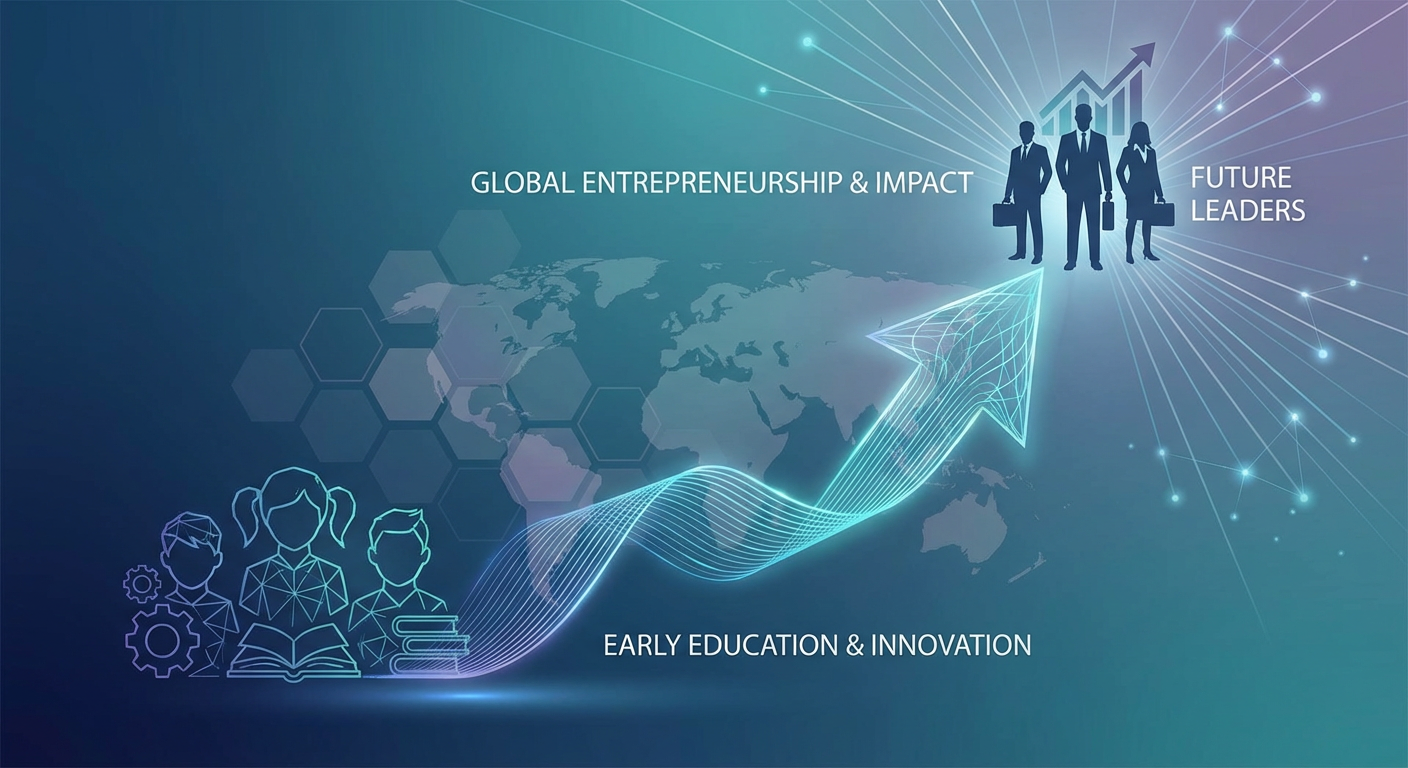
2. The Rise of Youth Entrepreneurship
The entrepreneurial spirit, traditionally admired in adults, is increasingly taking root in younger generations, creating a global phenomenon known as youth entrepreneurship. This section delves into the burgeoning interest among young people in starting and running their own micro-businesses, examines the unique characteristics of Gen Z as the ‘startup generation,’ and explores how recent global events, particularly the COVID-19 pandemic, have catalyzed this movement. Once an informal pastime, youth entrepreneurship is now recognized as a powerful avenue for developing critical real-world skills, fostering economic independence, and even driving societal change. The data clearly indicates a significant and growing inclination among children and teenagers worldwide to pursue entrepreneurial ventures, signaling a fundamental shift in career aspirations and skill development from previous generations.
The Budding Entrepreneurial Spirit Among Youth
A striking trend in recent years has been the significant and growing interest in entrepreneurship among young people. This is not merely a passing fad but a sustained aspiration evident across different age groups and geographies. In the United States, a 2012 Gallup-HOPE Index revealed that approximately 43% of students in grades 5–12 expressed a desire to start their own business[17]. Interestingly, this aspiration showed a slight gender disparity, with 46% of girls indicating this ambition compared to 40% of boys[18], defying traditional stereotypes about entrepreneurship. This foundational data underscores a substantial pipeline of potential young entrepreneurs, even if not all will ultimately translate this interest into action.
However, the sustained nature of this interest through the teenage years presents a challenge. While elementary and middle school students often harbor strong entrepreneurial dreams, there has been a noticeable dip in this ambition as they progress into high school. By 2016, only 27% of U.S. high school students (grades 9–12) stated an intention to start a business, marking a five-year low[19]. This figure dropped from previous levels of approximately 33–35% recorded between 2011 and 2015[20]. This decline suggests a potential disconnect where initial enthusiasm may wane due to a lack of sustained guidance, mentorship, or perceived career viability as students mature[21]. It highlights a critical need for educational systems and youth programs to provide consistent support and pathways for entrepreneurial development throughout adolescence.
Despite this drop-off in explicit intention during later high school years, the broader appeal of entrepreneurship remains high among teens. A more recent 2022 survey conducted by Junior Achievement (JA) and EY found that a compelling 75% of teenagers would “consider” becoming an entrepreneur[22]. This high level of consideration indicates a strong underlying curiosity and openness to entrepreneurial paths, even if specific intentions may fluctuate. Crucially, the same survey identified a significant demand for support: 55% of teens reported needing more information on how to succeed as an entrepreneur, and 32% emphasized the importance of having a role model who is a business owner[23]. This collective data suggests that while entrepreneurial ambition is widespread, it is often accompanied by a recognition of significant knowledge and mentorship gaps that, if addressed, could unlock even greater youth participation in micro-businesses.
| Age Group/Demographic | Aspiration to Start Own Business | Year | Source |
|---|---|---|---|
| Students (Grades 5-12) | 43% | 2012 | Gallup-HOPE Index[17] |
| Girls (Grades 5-12) | 46% | 2012 | Gallup-HOPE Index[18] |
| Boys (Grades 5-12) | 40% | 2012 | Gallup-HOPE Index[18] |
| High School Students (Grades 9-12) | 27% (low) | 2016 | Gallup-HOPE Index[19] |
| Teenagers (general) | 75% (would consider) | 2022 | JA/EY Survey[22] |
Gen Z: The “Startup Generation”
Among the various generations, Generation Z (typically defined as individuals born between the mid-1990s and early 2010s) stands out for its particularly strong entrepreneurial leanings, earning them the moniker ‘the startup generation.’ Recent research underscores a noticeable shift in career preferences compared to their predecessors. A 2023 global report highlighted that a significant 50% of Gen Z, predominantly aged 16–25, aspire to run their own business rather than opting for a traditional corporate job[24]. This aspiration marks a substantial deviation from earlier generations, where similar surveys indicated that approximately 40% of millennials and 37% of Gen X harbored the same ambition. This near 50/50 split between entrepreneurship and conventional employment reflects a generational desire for increased flexibility, autonomy, and purpose in their professional lives.
Several factors are believed to contribute to Gen Z’s entrepreneurial drive. They are digital natives, comfortable with technology and adept at leveraging online platforms to create, market, and sell. The rise of e-commerce, social media, and digital tools has lowered the barriers to entry for starting a micro-business, making it more accessible than ever before. Furthermore, Gen Z has grown up in an era marked by economic instability and rapid change, which may foster a desire for self-reliance and control over their financial futures. They are also highly value-driven, often seeking to align their work with social causes. The 2022 JA/EY survey found that 58% of teens would consider starting a business to address a societal or environmental need, even if it meant earning less money[23]. This commitment to social entrepreneurship is a defining characteristic that influences the types of ventures they pursue.
The Pandemic’s Impact: A Catalyst for Youth Ventures
The COVID-19 pandemic, while challenging, inadvertently served as a powerful catalyst for youth entrepreneurship globally. Lockdowns, school closures, and reduced opportunities for traditional part-time employment led many young people to seek alternative ways to occupy their time, earn money, and connect with their communities. This period of disruption fostered an environment where innovation and self-reliance became particularly valuable.
In the United Kingdom, for instance, the number of teenage entrepreneurs experienced a remarkable surge, jumping by 19% between 2020 and 2021[25]. This increase was driven by the emergence of new micro-businesses, many of which were concentrated in sectors directly influenced by the pandemic’s shifts in consumer behavior. Young entrepreneurs often found opportunities in technology, online retail, creative services, and wellness, utilizing their digital skills to establish ventures from their homes. This significant spike highlights how periods of adversity can paradoxically spark entrepreneurial activity, as young people are compelled to identify unmet needs and devise creative solutions.
The pandemic’s lasting influence on youth entrepreneurial sentiment is evident in subsequent surveys. One in four UK teenagers (25%) now state that they are actively considering launching a business in the future[26]. This represents a notable and sustained uptick in entrepreneurial interest directly attributable to the experiences and lessons learned during the pandemic. The remote learning environment and increased digital interaction during this period likely normalized online business operations and reinforced the appeal of flexible,自主, and purpose-driven work—all characteristics that align strongly with entrepreneurial endeavors.
The global context also reveals substantial youth entrepreneurial activity, albeit with an acknowledged “entrepreneurship gap.” Across OECD countries, approximately 12% of young adults (aged 18–30) were engaged in early-stage entrepreneurship between 2018 and 2022[27]. In the European Union specifically, 8% of youth were actively attempting to start a business, while another 4% were running new businesses less than 3.5 years old[28]. Despite these figures, youth startup activity still lags behind that of the core working-age population. The OECD estimates that if youth entrepreneurship matched adult rates, there would be an additional 800,000-plus young founders in the EU, indicating a significant untapped potential that could be unlocked through targeted support and educational initiatives[29].
The Gap Between Aspiration and Experience
Despite the high levels of entrepreneurial interest among young people, there remains a notable disparity between aspiration and practical, hands-on experience. Many teens express a desire to start a business, but relatively few have the direct, real-world opportunities to do so or access to formal entrepreneurship education within traditional schooling. For instance, a 2012 U.S. poll indicated that only 22% of students in grades 5–12 had worked a paying job in the preceding week, and a mere 7% were currently in an internship or work-based learning position[30][31]. This lack of early professional experience creates a void in skill development that micro-businesses can effectively fill.
The education system, while improving, still struggles to universally integrate entrepreneurship instruction. The same 2012 poll found that 59% of students reported their school offered classes on starting or running a business, meaning a substantial 41% of students had no access to formal entrepreneurship education in school[32]. This highlights that for a significant portion of young people, the experiential learning provided by a micro-business might be their primary or only avenue for developing entrepreneurial competencies.
Parental influence also plays a considerable role in shaping entrepreneurial pathways. Roughly one-third of students (32%) have a parent or guardian who has started a business, and these students are more likely to harbor entrepreneurial ambitions themselves (49% compared to 40% of students whose parents are not entrepreneurs)[33]. This suggests that early exposure to a family business environment, even indirectly, can normalize the idea of business ownership and provide foundational understanding and confidence.
Programs like “Lemonade Day” exemplify how to bridge this gap between interest and experience. This annual program guides children through the process of creating their own lemonade stand micro-business, covering everything from concept to execution. As of the late 2010s, over 100,000 youths across more than 80 communities in the U.S. and Canada had participated in Lemonade Day[34]. The program’s success demonstrates a clear demand for structured, experiential learning opportunities in entrepreneurship, and its broad reach underscores the potential for developing a new generation of business-savvy individuals through practical engagement.
Micro-Businesses as Foundational Training Grounds
The experiences gained from running a micro-business, even something as simple as a lemonade stand, are invaluable for developing a diverse set of real-world skills. These skills often go beyond what traditional academic curricula offer, preparing young individuals for a dynamic future.
Financial Literacy and Money Management
Perhaps one of the most immediate and tangible benefits of youth entrepreneurship is the hands-on education in financial literacy. Managing a micro-business forces children to confront real-world financial decisions, far removed from theoretical classroom exercises. They learn to budget for supplies, set competitive prices, calculate profits, manage cash flow, and track expenses. This experiential learning significantly boosts financial numeracy: a testament to this, impact studies from Lemonade Day reported that 88% of participants improved their ability to connect classroom math concepts with real-world scenarios, such as calculating costs, revenues, and profits[35].
Such practical application of math demystifies economic principles at an early age. Moreover, these ventures teach children the value of saving and even philanthropy. The Lemonade Day program further noted that 87% of participants developed a better understanding of saving money and the concept of donating a portion of their profits to charitable causes[36]. This instills a sense of financial responsibility and encourages responsible money management habits, addressing a critical gap in traditional youth education where only a small percentage of students gain early work experience[37][38].
Customer Interaction, Communication, and Social Skills
Engaging directly with customers is a powerful way for young entrepreneurs to develop essential communication and social skills. Whether it’s a child selling handmade crafts at a local fair or a teenager offering tech support, they learn to articulate their value proposition, listen to feedback, and respond to inquiries. This builds confidence in speaking with diverse individuals and adapting their communication style.
A prime example is Asia Newson, known as “Super Business Girl,” who began selling candles at age 5. As she matured, she had to evolve her sales pitch beyond simply being a “cute kid,” learning to highlight product quality and adjust pricing strategies[7]. This demonstrates the dynamic development of persuasive communication. Additionally, interacting with customers teaches empathy, patience, and problem-solving in real-time scenarios, such as addressing complaints or handling difficult situations. These experiences are crucial for developing emotional intelligence and interpersonal abilities, which are highly valued in any professional setting.
Creative Problem-Solving and Innovation
Starting and sustaining a micro-business inherently involves navigating unforeseen challenges, which in turn fosters creative problem-solving and innovation. Young entrepreneurs are constantly forced to think on their feet—whether it’s adjusting a lemonade recipe to stand out, pivoting a product line due to low demand, or finding cost-effective ways to market their business. Without the resources of large corporations, they learn to innovate “on a shoestring.”
The story of Mikaila Ulmer, who created “Me & the Bees Lemonade,” perfectly illustrates this. After being stung by bees, she turned her fear into an impactful venture by sweetening her lemonade with honey and donating to bee conservation, eventually securing an $11 million distribution deal with Whole Foods[12][44][45]. Her journey from a simple idea to a national brand originated from creative solutions to a personal problem and a market need. Entrepreneurship programs emphasize that young participants become adept at finding creative solutions to real-world challenges[8]. The process of continuous experimentation and adaptation instills a dynamic mindset conducive to innovation.
Resilience, Grit, and Adaptability
Micro-businesses offer a safe environment for young individuals to encounter and overcome setbacks, thereby building resilience and grit. Slow sales, product failures, or negative feedback become opportunities for learning rather than reasons to quit. This capacity to bounce back and maintain persistence in the face of obstacles is a hallmark of successful entrepreneurs. Research on successful entrepreneurs suggests that early exposure to and overcoming such obstacles helps youth “not to fear the unknown” and to view disruption as an opportunity[9].
The COVID-19 pandemic provided a stark lesson in adaptability, as many young entrepreneurs had to rapidly shift to online sales, develop new products, or find alternative distribution channels[25]. This real-time adaptation experience in a challenging environment further solidified their ability to pivot and persevere—a crucial skill in an ever-changing world.
Leadership, Responsibility, and Initiative
Even the smallest micro-business casts a child in a leadership role, making them the CEO of their own venture. This ownership fosters a strong sense of personal responsibility and accountability. Participants in programs like Lemonade Day report a significant boost in their sense of personal responsibility (87%), indicating that taking charge of a business enhances their initiative[39]. Moziah Bridges, who started his bow-tie business “Mo’s Bows” at age 9, is a compelling example. By 13, he had already hired and was managing seven employees, including adults, demonstrating remarkable leadership and management capabilities at a young age[10][46][47]. Such experiences cultivate the ability to plan, delegate, motivate, and make executive decisions, laying a powerful foundation for future leadership endeavors.
| Skill Area | Impact/Outcome | Program/Source |
|---|---|---|
| Financial Literacy (Math) | 88% improved ability to apply math in real business context | Lemonade Day[35] |
| Saving & Philanthropy | 87% better understanding of saving/donating profits | Lemonade Day[36] |
| Personal Responsibility | 87% reported improved sense of personal responsibility | Lemonade Day[39] |
| Problem-Solving Creativity | Increased adeptness at finding creative solutions | NFTE Programs[8] |
| Interpersonal/Communication | Increased comfort working with others; improved “people skills” | JA Survey, per NFTE[41] |
Entrepreneurial Impact Beyond Profit
Beyond individual skill development, youth entrepreneurship fosters a strong sense of social and environmental responsibility. Many young entrepreneurs are driven by a desire to create a positive impact, viewing business as a tool for change rather than solely for profit generation. A 2022 Junior Achievement/Youth Survey revealed that 58% of teens would be willing to start a business to address a societal or environmental need, even if it meant earning less money[11]. This demonstrates a deep-seated values-driven approach among the younger generation, often manifesting in ventures focused on sustainability, community service, or charitable causes.
These early experiences also have a profound long-term impact on success trajectories. Many renowned entrepreneurs, such as Warren Buffett (who began selling soda at age 6)[13] and Mark Cuban (who sold trash bags at 12)[14], attribute their foundational work ethic and business acumen to childhood ventures. Cultivating an “entrepreneurial mindset” in youth is consistently linked to lifelong benefits in career readiness, innovation, and self-reliance[14]. Furthermore, these micro-businesses can even contribute to job creation. In the EU, approximately 4% of self-employed young entrepreneurs had at least one employee in 2022, collectively generating an estimated 350,000 jobs[42]. This demonstrates that youth entrepreneurship, while often small in scale initially, has the potential for significant economic and social contributions.
The rise of youth entrepreneurship is therefore more than just a trend; it is a fundamental shift in how young people are preparing for the future. It is a proactive response to a rapidly changing world, equipping them with a holistic set of skills that transcend traditional academic learning and directly contribute to their personal growth, societal well-being, and future economic landscapes.
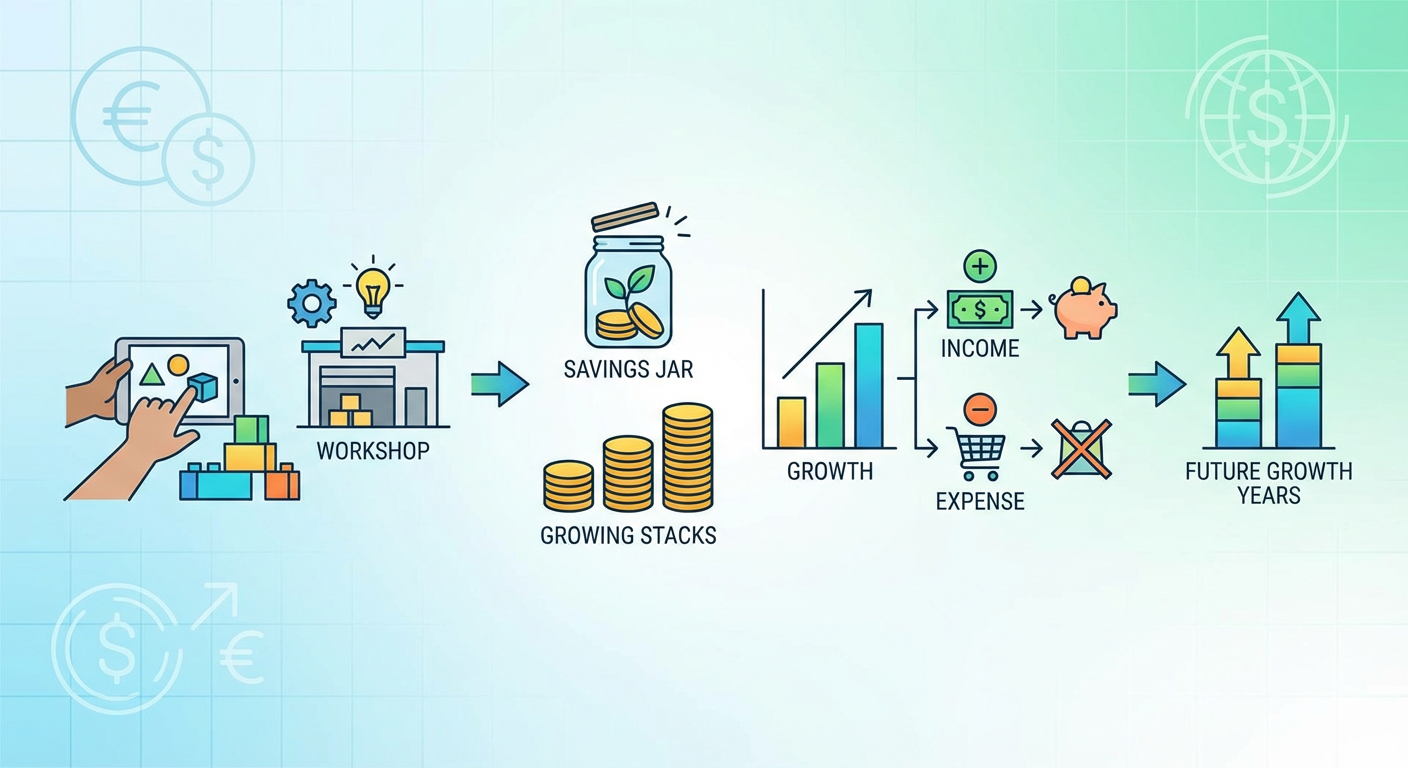
3. Financial Literacy and Money Management
In an increasingly complex global economy, financial literacy is no longer merely an advantageous skill but a fundamental necessity. Yet, traditional educational systems often fall short in providing practical, hands-on financial education that truly prepares young people for the fiscal realities of adulthood. It is within this critical gap that the experience of running a micro-business emerges as a powerful, experiential learning platform. For children and teenagers, engaging in a micro-enterprise—whether it’s a lemonade stand, a handmade craft shop on Etsy, or a local service venture—offers a unique opportunity to gain real-world financial literacy and master essential money management skills that are rarely acquired in a classroom setting. This section delves into how micro-businesses provide a profound, practical education in budgeting, pricing, profit tracking, saving, and the practical application of mathematical concepts, thereby addressing significant shortcomings in conventional youth education.
The journey of a young entrepreneur, from conceptualizing a product or service to managing its finances, is replete with direct lessons in economics and personal finance. These lessons are not abstract theories but tangible experiences that demand immediate comprehension and application. The very act of operating a micro-business transforms abstract mathematical concepts into concrete tools for decision-making. Programs like Lemonade Day, which guide children through the process of setting up and running a business, explicitly report significant improvements in financial understanding. Specifically, 88% of participants in such programs have shown an improved ability to connect classroom math with real-world scenarios, encompassing the calculation of costs, revenues, and profits[10]. This stands in stark contrast to the often theoretical nature of math education in schools, where the practical relevance of equations and formulas may remain opaque to students.
The appeal of entrepreneurship among youth is undeniable and growing. Nearly half of U.S. students (43%) in grades 5–12 express a desire to start their own business, with girls showing slightly higher ambition (46% versus 40% for boys)[1]. A 2022 survey revealed that three-quarters of teenagers (75%) would consider becoming entrepreneurs, although a significant majority (55%) acknowledge needing more guidance to succeed[3]. This prevailing interest, especially among Gen Z, which sees 50% of its members aspiring to run their own businesses rather than traditional corporate jobs, highlights a generational shift towards self-reliance and flexible careers[4]. However, despite this high interest, concrete opportunities for hands-on business experience remain scarce. A 2012 U.S. poll indicated that only 22% of students in grades 5–12 had worked a paying job in the past week, and a mere 7% were engaged in an internship or work-based learning position[20][21]. Furthermore, 41% of students reported no access to entrepreneurship education within their schools[22]. Micro-businesses serve as a vital bridge over this experience gap, offering a direct pathway to financial acumen and practical money management.
Budgeting, Pricing, and Cost Control: Foundations of Financial Prudence
The genesis of any successful micro-business lies in its financial planning, which intrinsically involves critical decisions about budgeting, pricing, and cost control. For a young entrepreneur, this is often their first tangible encounter with these concepts, moving beyond abstract definitions to real-world implications.
- Understanding Start-up Costs: Before a single product is sold or a service rendered, the young business owner must confront start-up costs. For a lemonade stand, this might involve the price of lemons, sugar, cups, and the materials for a sign. For a budding artisan, it’s the cost of craft supplies. This initial outlay teaches kids about investment and the concept that money must be spent to make money. It forces them to consider initial capital and how to acquire it, often by saving their own allowance or seeking a loan from parents, which introduces the idea of debt and repayment.
- Strategic Pricing: Setting a price for a product or service is a multifaceted exercise in basic market economics. It requires balancing the cost of production (ingredients, materials, labor) with competitive market rates and what customers are willing to pay. A child selling cookies might initially price them too high, leading to no sales, or too low, leading to losses. Through trial and error, often guided by parents or mentors, they learn to adjust prices strategically. They grasp the concepts of supply and demand, perceived value, and competitor analysis. This direct feedback loop – seeing how pricing affects sales volume and profitability – is a far more impactful lesson than any textbook definition. For instance, the case of Asia Newson, the “Super Business Girl,” exemplifies this. As she grew older, her initial advantage of being a “cute kid” faded, forcing her to refine her sales pitch and pricing strategy for her candles to remain competitive and successful[7]. This adaptation speaks volumes about understanding value propositions and customer segments.
- Expense Tracking and Cost Control: Running a micro-business necessitates meticulous tracking of expenses. Every ingredient, every mile driven for delivery, every marketing flyer printed, represents a deduction from potential profit. Children learn to categorize expenses, distinguishing between fixed costs (like the construction of a permanent stand) and variable costs (like the cost of each lemon). This exercise inherently teaches the value of money and the impact of waste. If they spend too much on fancy decorations for their stand, they quickly realize it eats into their profit margin. This direct cause-and-effect relationship instills a strong sense of cost consciousness and efficient resource allocation.
This early engagement with financial planning is crucial. Instead of being passive recipients of an allowance, children become active managers of their own economic ventures. They learn that every financial decision carries consequences, and good planning leads to greater rewards. This foundational understanding sets the stage for more complex financial decisions in adulthood, from managing household budgets to making investment choices.
Profit Tracking and Income Generation: The Essence of Enterprise
Beyond simply earning money, a micro-business teaches children the fundamental difference between revenue and profit, a distinction often lost in early financial education. It demystifies the process of how businesses generate income and achieve financial viability.
Revenue vs. Profit: The first sale brings in revenue, but the true measure of success is profit. Young entrepreneurs learn to calculate:
Revenue – Expenses = Profit
This simple equation becomes a powerful learning tool. They understand that high sales don’t necessarily equate to high profits if expenses are uncontrolled. This drives home the importance of both sales volume and efficient management.
Methods of Tracking:
- Simple Ledgers: Even for a basic lemonade stand, recording sales and expenses in a notebook forms the basis of bookkeeping. This introduces organizational skills and the importance of accurate record-keeping.
- Understanding Profit Margins: As their business matures, kids might begin to grasp the concept of profit margins – the percentage of revenue that becomes profit. This leads to questions like, “Can I increase my profit margin by sourcing cheaper ingredients or by making my process more efficient?”
- Income Streams: Young business owners often diversify their offerings or adapt their business model based on customer feedback and observed demand. This teaches them about different income streams and how to mitigate risk by not relying on a single product or service.
The experience of tracking profits instills a sense of accountability and direct correlation between effort and financial reward. It moves money from an abstract concept to a tangible outcome of their hard work and strategic decisions. When a child sees their profit grow, it’s a powerful affirmation of their efforts and economic understanding.
| Financial Concept | Traditional Learning Approach | Micro-Business Learning Approach | Observed Outcome |
|---|---|---|---|
| Budgeting & Expenses | Lectures on household budgets, theoretical examples. | Directly incurring costs for supplies (lemons, sugar), tracking every outlay. | Strong understanding of cost control and resource allocation. |
| Pricing Strategy | Economic models, supply/demand curves in textbooks. | Setting prices, observing sales response, adjusting prices based on customer feedback and competition. | Grasp of market dynamics and value perception. |
| Revenue vs. Profit | Definitions and formulas in math class. | Calculating total sales (revenue) then subtracting all costs to see actual earnings (profit). | Clear differentiation and appreciation for profitability drivers. |
| Saving & Reinvestment | Discussions about savings accounts and interest. | Deciding whether to spend profits, save for a goal, or reinvest in inventory/equipment. | Development of delayed gratification and strategic financial planning for growth. |
| Applied Mathematics | Abstract problems, standardized tests. | Calculating change, unit costs, profit percentages, sales totals, inventory requirements. | 88% of participants improved ability to apply math in real business context[10]. |
Saving, Reinvestment, and Philanthropy: Cultivating Financial Responsibility
A crucial aspect of financial literacy fostered by micro-businesses is the cultivation of responsible financial habits, particularly in saving, reinvestment, and even philanthropy. These practices instill a long-term perspective on money that extends beyond immediate gratification.
- Delayed Gratification and Savings Goals: Once profits are earned, young entrepreneurs face a pivotal decision: spend it now or save it for a future purpose. This directly teaches delayed gratification. Whether the goal is to buy a new toy, fund a bigger business idea, or invest in a more advanced piece of equipment, setting and working towards a savings goal is a powerful motivator. Programs like Lemonade Day have shown significant success in this area, with 87% of participants reporting a better understanding of saving money[11]. This isn’t just about accumulating money; it’s about understanding the power of capital and how it can be used to achieve future objectives.
- Reinvestment for Growth: A hallmark of sophisticated financial thinking is the concept of reinvestment. Instead of solely taking out profits, young business owners learn that plowing earnings back into the business—buying more supplies, improving marketing, or developing new products—can lead to greater future growth and even higher profits. This introduces them to basic economic principles of capital formation and expansion. For instance, if a child earns $50 from a craft sale, they might decide to use $20 to buy more expensive, higher-quality materials for their next batch, anticipating higher sales or a better product. This practical application of reinvestment makes the concept far more accessible than any abstract lesson on corporate finance.
- Philanthropy and Social Responsibility: Micro-businesses also offer an unexpected but profound lesson in philanthropy. Many young entrepreneurs, especially Gen Z, are driven by a desire to address societal needs. A survey found that 58% of teens would start a business to solve a social or environmental problem, even if it meant earning less money[12]. Programs like Lemonade Day actively encourage participants to consider donating a portion of their profits, and 87% of these youth gained a better understanding of philanthropy through the experience[11]. This demonstrates that financial literacy isn’t solely about personal gain; it can also encompass altruism and the understanding of business as a force for good. Mikaila Ulmer, founder of “Me & the Bees Lemonade,” is a prime example, donating a portion of her proceeds to bee conservation efforts after being inspired by her concerns for the endangered species[31]. This early exposure to responsible business practices cultivates a sense of community awareness and ethical leadership.
These experiences transform children from mere consumers into conscious economic actors, capable of making informed decisions about how to earn, manage, save, and distribute their financial resources responsibly. This foundation is invaluable for fostering financially responsible adults.
Applied Mathematics in Real-World Contexts: Bridging the Academic-Practical Divide
One of the most immediate and tangible benefits of micro-businesses is their ability to bridge the gap between abstract mathematical concepts and their practical application. For many students, mathematics in school can feel distant and irrelevant, but in the context of their own business, it becomes an indispensable tool for success.
- From Abstract to Tangible: When a child is calculating the cost of ingredients per serving for their lemonade, or the percentage profit on each handcrafted item, they are applying fractions, decimals, percentages, and basic algebra in a very real, personal way. This makes math relevant and engaging. As the Lemonade Day program reported, a significant 88% of participants improved their ability to connect classroom math with real-world scenarios, including skills needed for calculating expenses, revenues, and profits[10]. This direct application demystifies math and removes the common question, “When will I ever use this?”
- Practical Calculations:
- Making Change: Directly handling cash transactions requires accurate addition and subtraction, often under pressure during a busy sale.
- Unit Costs: Determining the cost of a single cookie or bracelet from a bulk purchase of ingredients/materials.
- Profit Percentages: Calculating what percentage of their revenue is pure profit helps them understand efficiency and pricing effectiveness.
- Inventory Management: Estimating how many supplies they need based on anticipated sales and how much product they can make with existing materials involves estimation and basic division/multiplication.
- Data Analysis and Decision-Making: As their business progresses, young entrepreneurs might start analyzing sales data—which product sold best, at what time of day, or at which location. This introduces them to basic data collection, interpretation, and how to use quantitative information to make strategic business decisions. They might notice that chocolate chip cookies sell faster than oatmeal cookies, prompting them to adjust their production mix. This analytical thinking, driven by mathematical understanding, cultivates a more rational and data-driven approach to problem-solving.
- Increased Confidence and Engagement: The success derived from correctly applying mathematical principles in their business bolsters children’s confidence in their mathematical abilities. This newfound confidence often spills over into their academic performance, making them more engaged and less intimidated by math in school. They realize that math is not just an academic exercise but a powerful tool for understanding and navigating the world around them.
The experience of running a micro-business effectively transforms math from a dreaded subject into an empowering skill, integral to controlling their own economic destiny. This practical immersion in applied mathematics is arguably one of the most enduring educational benefits of youth entrepreneurship.
Addressing Gaps in Traditional Education: A Holistic Approach to Financial Competence
The comprehensive financial education offered by micro-businesses directly addresses critical gaps left by typical school curricula, particularly in practical money management and the development of an entrepreneurial mindset.
- Limited Hands-On Experience: As highlighted earlier, many adolescents lack basic money management experience until much later in life. A 2012 U.S. poll indicated that only 22% of middle/high school students had worked for pay in the previous week, and a mere 7% had any internship or significant business exposure[20][21]. Micro-businesses fill this void by providing immediate, tangible experience in earning, spending, budgeting, and saving. These are not simulated exercises but real financial transactions with actual consequences.
- Beyond Theoretical Knowledge: While some schools may offer economics or personal finance courses, these are often theory-heavy and lack the experiential component that solidifies learning. Running a micro-business moves learning from the theoretical to the existential. When a child invests their own allowance into supplies and then witnesses the direct impact of sales and expenses on their personal profit, the lessons become deeply ingrained. They learn the consequences of overspending or underpricing not through hypothetical scenarios but through their own financial outcomes.
- Fostering an “Owner’s Mindset”: Traditional education often prepares students to be employees. Micro-businesses, conversely, cultivate an “owner’s mindset.” This involves taking full responsibility for financial outcomes, proactively seeking opportunities for profit, and efficiently managing resources. It’s about understanding the entire cycle of a business, from initial investment to final profit. This perspective is vital not just for future entrepreneurs, but for any individual who needs to manage personal finances, understand investments, or navigate a career path where financial acumen is key.
- Cultivating Financial Confidence and Agency: Children who successfully navigate the financial challenges of a micro-business develop a strong sense of financial self-efficacy. They learn that they have the agency to generate income, manage their resources, and make informed financial decisions. This confidence can empower them to handle complex financial situations later in life, reducing financial anxiety and fostering independence. Parents often observe their children becoming more value-conscious and careful with personal spending after running a venture, because they appreciate the effort it takes to earn a dollar. This internalized sense of financial responsibility is a lifelong asset.
In essence, micro-businesses serve as highly effective, miniature financial laboratories where children can experiment, fail, learn, and succeed, thereby acquiring a comprehensive financial education that traditional systems often struggle to deliver. These practical experiences provide a robust foundation for lifelong financial competence and cultivate proactive, responsible economic citizens.
The financial literacy and money management skills gained through micro-businesses extend far beyond the mechanics of making change or tracking sales. They cultivate a fundamental understanding of economic principles, foster responsible habits like saving and reinvestment, and bridge the gap between academic theory and real-world application. This hands-on financial education is not just about personal gain, but about developing a discerning, proactive, and responsible approach to money that will serve young individuals throughout their lives, irrespective of their eventual career paths.
The next section, “Communication and Customer Service Skills,” will explore how these same micro-enterprises become invaluable training grounds for interpersonal communication, negotiation, and building strong customer relationships. — [1] Gallup-HOPE Index (2013). U.S. Students’ Entrepreneurial Aspirations Still Undeveloped. news.gallup.com.
[3] Junior Achievement USA (2022). Survey: 58% of Teens Would Start a Business to Address a Societal Need. jausa.ja.org.
[4] CNBC (2023). 50% of Gen Z wants to ditch corporate jobs, run their own business, says report. cnbc.com.
[7] Hunter, L. (2017). The 13-Year-Old Entrepreneur Changing The Face of Business In Detroit. Forbes.com.
[10] Lemonade Day (2020). 2020 Impact Study: Positive Outcomes of Participating in Lemonade Day. info.topyx.com.
[11] Lemonade Day (2020). 2020 Impact Study: Positive Outcomes of Participating in Lemonade Day. info.topyx.com.
[12] Junior Achievement USA (2022). Survey: 58% of Teens Would Start a Business to Address a Societal Need. jausa.ja.org.
[20] Gallup-HOPE Index (2013). U.S. Students’ Entrepreneurial Aspirations Still Undeveloped. news.gallup.com.
[21] Gallup-HOPE Index (2013). U.S. Students’ Entrepreneurial Aspirations Still Undeveloped. news.gallup.com.
[22] Gallup-HOPE Index (2013). U.S. Students’ Entrepreneurial Aspirations Still Undeveloped. news.gallup.com.
[31] Be Business Smart (n.d.). How a 4-Year-Old Turned a Lemonade Stand Into a Million-Dollar Brand. bebusinesssmart.com.
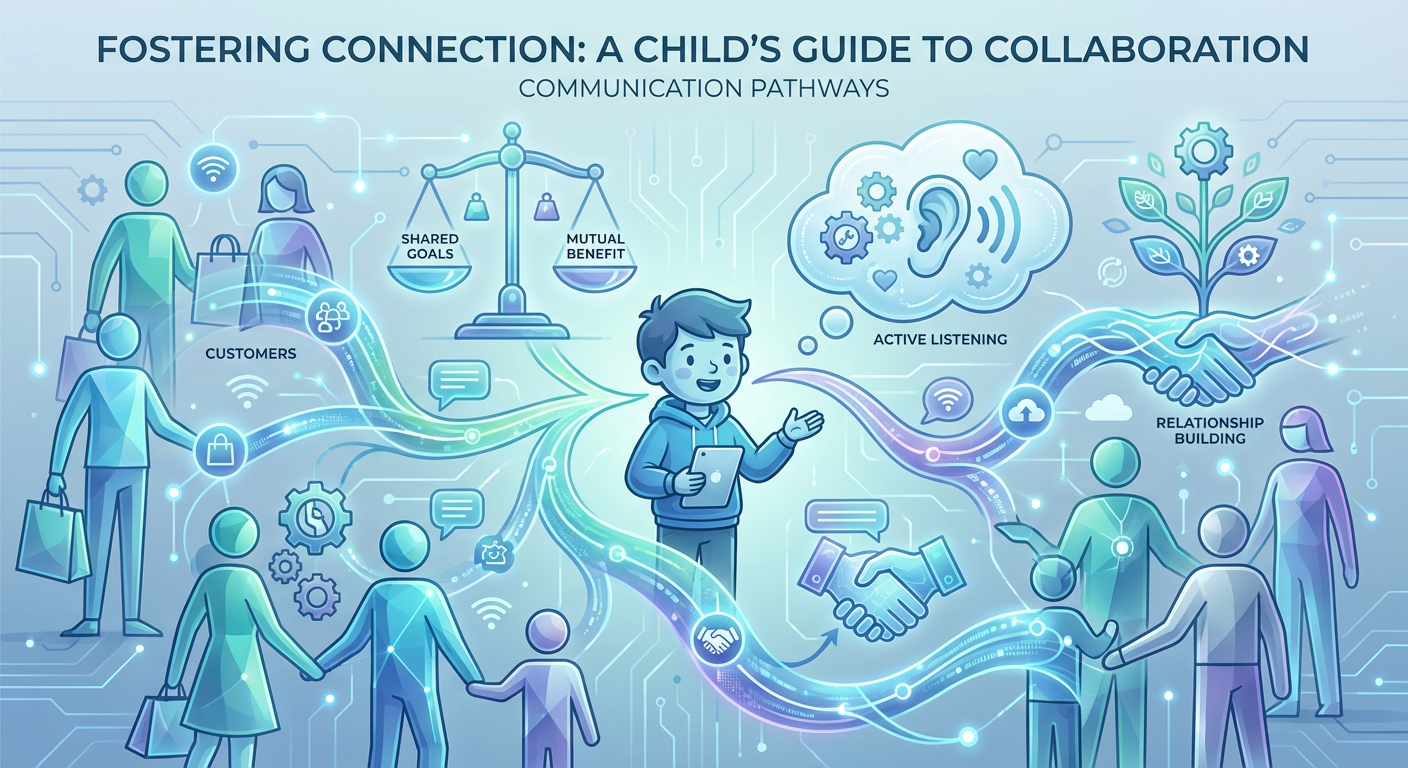
4. Communication and Customer Service Skills Development
The journey of launching and sustaining a micro-business is an immersive masterclass in interpersonal communication and customer service. For children and adolescents, these ventures provide unparalleled real-world laboratories where they learn, practice, and refine a suite of invaluable soft skills that are often overlooked or inadequately addressed in traditional educational settings. Direct interaction with customers, suppliers, and even collaborators compels young entrepreneurs to move beyond passive learning and actively engage in persuasive communication, astute negotiation, empathetic listening, and robust relationship building. This section delves into the profound ways micro-businesses cultivate these critical communication and customer service capabilities, highlighting specific examples and empirical insights from the entrepreneurial landscape.
The Foundational Role of Communication in Micro-Businesses
At its core, every business, regardless of size, relies on effective communication. For young micro-entrepreneurs, this is not an abstract concept but an immediate necessity. Whether it’s a child selling lemonade, a teenager offering tech support, or an artisan vending handmade crafts online, clear and confident communication is the conduit through which products are sold, services are rendered, and trust is built. The absence of a large marketing department or an established sales force means that the young founder often embodies all these roles, demanding rapid skill acquisition.
A. Selling as a Catalyst for Persuasive Communication
The act of selling forces young individuals to articulate the value proposition of their product or service in a compelling manner. This process involves more than just reciting features; it demands an understanding of customer needs and the ability to connect those needs with what is being offered. For instance, 10-year-old Asia Newson, known as “Super Business Girl,” started selling candles at the tender age of five. Her initial success likely stemmed from her innate charm, but as she matured, she had to significantly “refine her sales pitch and value proposition” because the inherent “cute kid” advantage naturally faded with age[7]. This forced adaptation illustrates a key developmental trajectory: moving from intuitive persuasion to a more conscious and strategic form of communication that emphasizes product quality, pricing justification, and understanding the customer’s perspective. Young entrepreneurs learn to make eye contact, project confidence, and speak clearly – fundamental public speaking skills that benefit them across all facets of life.
The development of persuasive communication through selling encompasses several key elements:
- Clarity: Distilling complex ideas (or even simple product attributes) into easily digestible messages.
- Confidence: Overcoming shyness and hesitations to confidently present an idea or product. This self-assurance is often cultivated through repeated interactions.
- Adaptability: Modifying the message based on the listener’s reactions and questions. Asia Newson’s evolution in sales pitch demonstrates this adaptive capacity, learning what resonates with different audiences.
- Active Vocabulary Building: Young entrepreneurs often gain new words to describe their products, services, and the problems they solve, expanding their expressive range.
B. Negotiation and Objection Handling as Interpersonal Training
Micro-businesses are fertile ground for learning essential negotiation skills. Customers rarely buy without questions, and sometimes those questions take the form of objections or attempts to negotiate price. Young entrepreneurs quickly learn that “no” isn’t always final and that compromise can lead to a satisfied customer and a sale. Mark Cuban, a highly successful entrepreneur and investor, attributes part of his early success to selling trash bags door-to-door at age 12. He recalls that every time a neighbor raised an objection, he learned how to “counter it” effectively, for example, by pointing out that they likely paid more at the store for the same product[23]. This early exposure taught him invaluable lessons in persuasive communication and the art of the deal.
Key negotiation skills honed through micro-businesses include:
- Listening to Understand: Identifying the customer’s underlying concerns, not just their stated objections.
- Problem-Solving on the Fly: Discovering creative ways to address customer hesitation, such as offering a small discount, a bundled deal, or highlighting an unforeseen benefit.
- Resilience to Rejection: Learning to handle a “no” without taking it personally, and instead using it as feedback for future attempts.
- Value Articulation: Justifying prices by explaining the effort, quality, or uniqueness of the product or service. This strengthens a child’s confidence in their own work.
Such interactions are invaluable, as they teach young people that direct dialogue and well-reasoned arguments can influence outcomes, fostering a sense of agency and practical problem-solving in social situations.
Cultivating Customer Service Excellence and Empathy
Beyond the transactional aspects of selling and negotiation, micro-businesses instill a deep understanding of customer service, which intrinsically linked to empathy and relationship building. When a young person is directly responsible for every aspect of their business, the impact of positive (or negative) customer interactions is immediate and personal.
A. Active Listening and Responsive Problem-Solving
Serving customers demands active listening. Young entrepreneurs learn to pay close attention to feedback, whether it’s a compliment about their product or a complaint about a flaw. This feedback loop is crucial for improvement and customer satisfaction. A child selling handmade accessories, for example, might receive feedback that an item broke easily. Their decision to offer a replacement, a refund, or to improve product quality demonstrates responsive problem-solving and a commitment to customer well-being. These real-time decisions build practical skills in managing expectations and recovering from service failures.
The significance of active listening is illustrated below:
| Skill Component | Benefit to Young Entrepreneurs | Real-World Application |
|---|---|---|
| Attentive Hearing | Grasping customer concerns fully without interruption. | Understanding why a customer prefers a certain flavor of lemonade or a specific design. |
| Feedback Integration | Using customer input to improve products or services. | Adjusting a recipe, modifying a design, or changing delivery methods based on suggestions. |
| Complaint Resolution | Identifying the root cause of dissatisfaction and offering a fair solution. | Apologizing for a late delivery and offering a discount on the next purchase. |
| Building Rapport | Making customers feel heard and valued, fostering loyalty. | Remembering a customer’s preferences for their next purchase. |
B. Empathy and Understanding Customer Needs
Micro-businesses inherently foster empathy. To successfully sell a product or service, a young entrepreneur must put themselves in the customer’s shoes. What problem is the customer trying to solve? What makes them happy? How do they feel? This requires considering perspectives other than their own. For example, a child operating an online craft store learns that clear product descriptions and prompt communication about shipping are critical because a customer has expectations about their purchase. If a classmate is disappointed with a dried-out slime from a school-based business, offering a replacement or refund isn’t just good business; it’s an act of empathy. These interactions help children develop emotional intelligence and learn to “see from the customer’s perspective”[25].
A Junior Achievement survey highlighted that entrepreneurial experiences make students “more comfortable working with others and improved their ‘people skills’ in teamwork settings”[25]. This speaks to the broader development of social-emotional competencies that underpin successful customer service.
C. Relationship Building and Customer Loyalty
Unlike large corporations with extensive marketing budgets, micro-businesses, especially those run by youth, often thrive on personal connections and repeat business. This forces young entrepreneurs to learn the art of relationship building. Remembering a customer’s name or preferences, following up after a sale, or simply being consistently friendly and helpful can transform a one-time transaction into a loyal customer relationship. This understanding of customer lifetime value is a sophisticated business concept learned experientially. By nurturing these relationships, young entrepreneurs learn that customer satisfaction is not simply about making a sale, but about fostering long-term engagement.
Networking and Expanded Social Interaction
Micro-businesses often push children and adolescents beyond their immediate social circles, forcing them to interact with a diverse range of individuals. This expands their social skills and networking abilities, preparing them for more complex social and professional engagements in the future.
A. Interacting with Diverse Audiences
A young entrepreneur might interact with parents, teachers, neighbors, local community members, market vendors, or even online customers from different regions. Each interaction presents unique communication challenges and opportunities. For kids running a physical stand, it involves direct, face-to-face exchanges. For those with online businesses, it means mastering written communication, responding to inquiries, and managing online reviews. This broadens their social intelligence and teaches them to tailor their communication style to different audiences.
Consider the diverse stakeholders a young entrepreneur might engage with:
- Customers: Of varying ages, backgrounds, and motivations.
- Suppliers: Local craft stores, online wholesalers, or even ingredients from a farmer’s market.
- Mentors: Parents, teachers, community leaders, or local business owners who provide guidance.
- Collaborators: Friends helping at a stand, or peers co-designing a product.
- Community Stakeholders: Event organizers, permit issuers, or local media.
Each interaction is a chance to practice and improve. The teen running a small landscaping service, for instance, learns to negotiate schedules with neighbors and build a network of clientele, directly impacting their social acumen[25].
B. Professional Introduction and Collaboration
Young entrepreneurs are often required to introduce themselves and their business to adults in a professional context. This might be during a local market setup, while seeking sponsorship, or even when being interviewed by local media. These moments teach them how to articulate their business idea succinctly, shake hands confidently, and interact respectfully with authority figures. The experience of “learning the ropes” of professional interaction through their micro-business can make them more comfortable approaching professors, potential employers, or investors in the future[25].
Even small businesses can involve collaboration. Whether it’s enlisting the help of siblings, working with friends, or engaging community assistance, young entrepreneurs learn the dynamics of teamwork, delegation, and managing interpersonal relationships in a business context. Moziah Bridges, founder of Mo’s Bows, had seven employees by age 13, including his mother and grandmother[9]. This early experience managing a team provided him with invaluable lessons in leadership, delegation, and effective internal communication.
Presentation Skills and Confidence Building
Many youth entrepreneurship programs, such as Lemonade Day, incorporate opportunities for young participants to present their business plans or pitches. These experiences are fundamental in building verbal communication and presentation skills, which are transferable to virtually any academic or professional setting.
A. Articulating Ideas Concisely and Convincingly
When presenting their business to judges, potential investors, or even just customers, young entrepreneurs must learn to articulate their vision, product, and business model clearly and concisely. This process involves formulating compelling narratives, identifying key selling points, and practicing delivery. The pressure of a formal pitch or even an informal sales conversation pushes them to organize their thoughts and express themselves effectively, often under time constraints.
B. Handling Q&A and Thinking on Their Feet
Pitching often involves a question-and-answer session, where young entrepreneurs must think quickly to address challenges or elaborate on their ideas. This not only hones their verbal agility but also boosts their confidence in responding to unexpected inquiries. This ability to “think on their feet” is a critical communication skill that extends far beyond the business world, benefiting them in academic debates, job interviews, and general life discussions. Teachers frequently observe that students who have run a small business tend to “speak up more in class and can express their ideas more clearly”[25].
The development of these communication skills is not just about professional readiness; it profoundly impacts a child’s personal growth, self-esteem, and ability to navigate their social world. Effective communication is consistently cited by employers as a top 21st-century skill, and young entrepreneurs are acquiring it through direct, experiential learning.
In summary, micro-businesses serve as powerful incubators for the development of communication and customer service skills in young people. Through direct interaction with a myriad of stakeholders, they learn to persuade, negotiate, listen, empathize, and build relationships. These experiences cultivate not just business acumen, but foster well-rounded, confident individuals adept at navigating complex social dynamics and effectively advocating for themselves and their ideas. This comprehensive skill set empowers them not only in their entrepreneurial endeavors but also in their academic careers, future employments, and personal lives.
The next section will further explore how micro-businesses foster creative problem-solving and innovation, outlining how young entrepreneurs overcome challenges with ingenuity and adaptability.

5. Creative Problem-Solving and Innovation
Micro-businesses serve as dynamic, real-world laboratories where young entrepreneurs cultivate invaluable creative problem-solving and innovation skills. Unlike structured classroom environments, the fluid nature of running a small venture presents children and teenagers with continuous, unanticipated challenges that demand flexible thinking and resourceful solutions. This hands-on experience pushes young minds to move beyond theoretical knowledge, compelling them to adapt, experiment, and transform obstacles into opportunities, often with limited resources. The raw, unfiltered feedback from customers and market conditions acts as a powerful catalyst for innovative thought, shaping resilient and inventive individuals prepared for an ever-changing world. The entrepreneurial journey, even at a micro-scale, inherently involves navigating uncertainty and finding novel ways to address needs. From tweaking a product recipe to outmaneuvering local competition, young entrepreneurs are constantly engaged in a practical application of design thinking and iterative development. This section will delve deeply into how micro-businesses foster these critical skills, examining how young people learn to identify problems, develop creative solutions, adapt to changing conditions, and internalize a mindset of continuous improvement through direct experience.
Turning Problems into Opportunities: The Entrepreneurial Mindset in Action
One of the most remarkable aspects of youth-run micro-businesses is their capacity to transform perceived problems into tangible opportunities. This ability stems from a natural inquisitiveness and a lack of rigid preconceptions often found in adults. When faced with a challenge, young entrepreneurs are less likely to see a dead end and more likely to view it as a puzzle to be solved creatively. This “opportunity-seeking” mindset is a cornerstone of innovation. In fact, many entrepreneurship programs explicitly teach that young participants become adept at finding creative solutions to real-world challenges[8]. A compelling illustration of this phenomenon is the story of Mikaila Ulmer, founder of “Me & the Bees Lemonade.” At just 4 years old, Mikaila was stung by bees, a common childhood fear. However, instead of succumbing to this fear, she learned about the critical role bees play in the ecosystem and their endangered status[50]. This personal encounter with a “problem”—bee stings and the plight of pollinators—sparked an innovative solution. She decided to sweeten her great-grandmother’s flaxseed lemonade recipe with local honey and dedicate a portion of her proceeds to bee conservation efforts[50]. By age 11, Mikaila’s clever integration of a product and a social cause had transformed her micro-business into a national brand with an impressive $11 million distribution deal with Whole Foods[10]. This narrative powerfully demonstrates how a personal problem can be the genesis of a creative business idea, fueled by a child’s unique perspective and a desire to make a difference. Similarly, young entrepreneurs often identify market gaps that adults might overlook. A child who notices peers struggling with note-taking might design a unique organizational notebook. Another who sees neighborhood pets bored at home might initiate a pet exercise service. These observations, when combined with an entrepreneurial drive, lead to the formation of micro-businesses that address specific, often niche, needs. The initial problem (e.g., lack of dapper accessories for kids, as in the case of Moziah Bridges [9], or the difficulty of learning coding for children, as addressed by Samaira Mehta [12]) becomes the fertile ground for innovation. This process inherently teaches children to critically analyze situations, identify pain points, and brainstorm solutions that are not just functional but also marketable. The global surge in youth entrepreneurship during the COVID-19 pandemic further highlights this adaptive problem-solving. Faced with lockdowns and restrictions, many young founders rapidly shifted their strategies, moving from in-person sales to online platforms and developing new products or services to meet changing demands[5]. This necessity-driven innovation solidified their ability to transform adverse conditions into new business avenues.
Innovation on a Shoestring: Resourcefulness with Limited Means
A defining characteristic of micro-businesses, particularly those run by children, is the inherent constraint of limited financial resources. Unlike established businesses with access to capital and extensive infrastructure, young entrepreneurs typically operate on a minimal budget. This scarcity, far from being a deterrent, often acts as a powerful catalyst for ingenuity and resourcefulness. It forces young founders to think creatively about how to achieve their goals without significant monetary investment, essentially practicing “bootstrapping” from an early age. Consider the example of Tilak Mehta, a 13-year-old from Mumbai. He identified a problem: the high cost and inefficiency of quick, same-day courier services in his densely populated city[11]. An adult entrepreneur might have sought significant investment to build a new delivery fleet. However, Tilak, with limited resources, envisioned an innovative solution by partnering with Mumbai’s renowned dabbawalas – the lunchbox delivery men who already navigate the city daily[11]. He developed a mobile app to leverage their existing routes for after-lunch parcel deliveries, effectively “digitizing” a traditional service to solve a modern logistical challenge[11]. His micro-business, “Papers & Parcels,” launched with 200 staff and 300 dabbawalas handling 1,200 deliveries a day, demonstrating exceptional resourcefulness and strategic thinking for his age[11]. This “innovation on a shoestring” manifests in various ways:
- Marketing Creativity: With no budget for extensive advertising, young entrepreneurs become adept at low-cost marketing strategies. This could include creating eye-catching flyers, leveraging social media platforms, relying on word-of-mouth referrals, or even designing unique product packaging from recycled materials.
- Product Development and Sourcing: Limited funds compel kids to explore cost-effective ways to produce or source their goods. For a lemonade stand, this might mean using family-grown lemons or a great-grandmother’s recipe, as Mikaila Ulmer did[50]. For a clothing line, it might involve repurposing scrap fabric, as seen with Moziah Bridges’s bow ties[9].
- Process Optimization: Young entrepreneurs learn to streamline operations to minimize costs and maximize efficiency. This could be as simple as pre-preparing ingredients for a bake sale to reduce on-site effort, or, like Tilak Mehta, finding existing infrastructure to repurpose for a new service.
This constraint-driven innovation teaches young business owners that creativity is more valuable than capital, fostering a mindset where problems are not seen as insurmountable but as opportunities to invent clever workarounds. This skill is transferable to countless real-world scenarios, preparing them to thrive in environments where resources may not always be abundant.
Learning Through Experimentation: Iterative Development and Feedback Loops
Micro-businesses operate as constant experiments, offering young entrepreneurs a dynamic environment for learning through trial and error. The immediate feedback loop inherent in business operations teaches them the value of iterative development and adaptability. If a product isn’t selling, a young entrepreneur isn’t merely told it’s unsuccessful; they experience it directly through slow sales or unsold inventory. This direct consequence prompts them to ask critical questions and experiment with solutions. For instance, a child running a lemonade stand might notice low sales and consider several experiments:
- Product Modification: Should they tweak the recipe to be sweeter or more tart? Offer a new flavor?
- Pricing Adjustment: Is the price too high or too low compared to competitors? Should they offer discounts or bundles?
- Marketing Strategy: Is their sign clear enough? Should they call out to passersby?
- Location Optimization: Is the stand in the best spot for foot traffic?
Each adjustment is an experiment, and the resulting change in sales provides immediate data. This hands-on, scientific approach to business problem-solving is incredibly effective. Entrepreneurship programs particularly highlight that youth participants grow significantly in their ability to solve problems creatively after such experiences[8]. They learn that “failure” is not a definitive end but rather valuable feedback that informs the next attempt towards improvement. The case of Asia Newson, “Super Business Girl,” exemplifies learning through experimentation regarding customer interaction. She started selling candles at age 5, initially thriving on the “cute kid” appeal. However, as she grew older, Asia realized she needed to refine her sales pitch and pricing strategies, as simply being a charming child was no longer sufficient to sustain sales[7]. She had to experiment with and adapt her approach, developing more professional communication tactics and highlighting product quality to maintain her customer base and grow her business. This iterative refinement in response to evolving customer dynamics is a powerful learning experience. This constant cycle of hypothesizing, implementing, observing, and adjusting instills flexibility and analytical thinking. It teaches young entrepreneurs to:
- Identify bottlenecks and inefficiencies.
- Brainstorm diverse solutions.
- Test solutions methodically.
- Analyze outcomes and draw conclusions.
- Accept that not all ideas will succeed, and that’s okay.
This iterative problem-solving closely mirrors the scientific method and is a crucial skill that transcends business, benefitting academic pursuits and personal challenges alike. By experiencing this direct connection between action and outcome, young entrepreneurs internalize a dynamic approach to problem-solving, fostering a mindset of continuous improvement and adaptation.
Tech and Digital Creativity: Modern Problem-Solving Tools
In today’s digital age, youth micro-businesses offer a unique platform for children to integrate technology and digital creativity into problem-solving. Unlike previous generations, today’s young entrepreneurs are digital natives who instinctively leverage technology to create, market, and manage their ventures. This engagement significantly broadens the scope of creative challenges they tackle and the tools they utilize. Samaira Mehta, the creator of CoderBunnyz, is a prime example of this phenomenon. At just 8 years old, Samaira combined her passion for coding with a desire to make programming accessible to other children. She invented a board game, CoderBunnyz, designed to teach the fundamentals of computer programming logic[12]. Her micro-business was not just about selling a game; it was about creatively solving the problem of making complex STEM concepts fun and understandable for her peers. By age 10, she had sold over 1,000 units, generating $35,000 in sales, and her innovation caught the attention of tech giants like Google and Microsoft, who applauded her inventive approach[12]. Samaira’s venture illustrates how young people can apply technical skills to create innovative products that address educational or social needs. The digital landscape offers diverse avenues for young entrepreneurs to exercise creativity:
- Website and App Development: Kids learn to build simple websites or use e-commerce platforms like Etsy to sell their products, developing basic web design skills and understanding online user experience.
- Digital Marketing: They create social media content, design digital flyers, and learn about online engagement to promote their businesses, honing their multimedia content creation and digital marketing skills.
- Product Innovation: From 3D-printed jewelry designed with CAD software to coding simple games or educational apps, young entrepreneurs fuse technical expertise with creative product development.
- Data-Driven Decisions: Using basic analytics from online platforms, they learn to interpret data to understand customer behavior and optimize their strategies.
These experiences provide hands-on training in digital literacy, a vital skill in the 21st century. The seamless integration of STEM knowledge with entrepreneurial endeavors not only helps solve problems (e.g., making coding fun, as Samaira did) but also equips youth with a powerful blend of technical and business acumen. This empowers them to approach innovation holistically, leveraging the power of technology to execute their creative visions and address diverse challenges effectively.
Adaptability and Pivoting: Navigating Change and Uncertainty
A critical aspect of creative problem-solving in business is the ability to adapt strategies and “pivot” when initial plans prove ineffective or external conditions change. Micro-businesses, with their often unpredictable environments, provide an ideal training ground for young entrepreneurs to develop this crucial skill. They learn that rigidity can lead to stagnation, while flexibility can open new pathways. Young entrepreneurs frequently encounter situations that necessitate a pivot. A child selling handmade crafts might find that one type of product consistently sells better than others, prompting them to shift their focus and production. Or, a teen running a lawn care service might discover higher demand for pet-sitting, leading them to adjust their core offerings. This process of identifying what works, what doesn’t, and then creatively adjusting the business model is “pivoting” in action, and young people often do it instinctively. The COVID-19 pandemic offered a stark, real-time lesson in adaptability for a generation of young entrepreneurs. With traditional in-person sales venues closed, many youths transformed their businesses overnight. Those who ran physical lemonade stands transitioned to online orders with contactless delivery; artists shifted from selling physical prints to offering digital commissions; and tutors moved their services to virtual platforms. This rapid adaptation directly contributed to the surge in teen entrepreneurship during 2020-2021, with a 19% jump in teenage entrepreneurs in the UK during that period[5]. This highlights how adversity can force creative adaptation and resourcefulness. These experiences teach young entrepreneurs several invaluable lessons:
- Situational Awareness: They learn to monitor their environment (market trends, customer feedback, external events) and identify changes that impact their business.
- Strategic Adjustment: They understand that sticking to a failing plan is unproductive and develop the courage to re-evaluate and modify their approach.
- Resource Reallocation: Pivoting often involves re-deploying existing resources (time, materials, skills) towards a new direction or product.
- Comfort with Uncertainty: By successfully navigating changes, they build confidence in their ability to handle future unpredictable situations.
This adaptability nurtured in micro-businesses contributes to a “growth mindset” – the belief that challenges and setbacks are opportunities for learning and improvement, rather than insurmountable failures. Young entrepreneurs realize that their enterprise is a living entity that must evolve to survive. This mental agility and resilience in problem-solving are essential traits for success in any future career or life endeavor, equipping them to face larger challenges with innovative solutions and unwavering confidence.
Building Resilience, Grit, and Adaptability from Setbacks
Beyond specific problem-solving techniques, micro-businesses are powerful crucibles for forging character traits like resilience, grit, and enduring adaptability. The entrepreneurial path, even at a small scale, is rarely smooth. Young entrepreneurs inevitably face setbacks, and how they learn to navigate these challenges significantly shapes their capacity for future success. One of the most profound lessons is embracing failure as learning. A lemonade stand might have a slow sales day due to bad weather, a batch of handmade products might not meet quality standards, or a marketing effort might fall flat. These “mini-failures” are not abstract concepts but tangible experiences. In a supportive environment, young entrepreneurs learn to process these setbacks not as personal failings but as valuable data points. Junior Achievement, for instance, emphasizes “learning through failure” as a core tenet of its youth entrepreneurship education, precisely because it cultivates grit[8]. This fosters a mindset where setbacks become opportunities for improvement rather than reasons to quit. Research on successful entrepreneurs suggests that overcoming obstacles early helps youth “not to fear the unknown” and to frame disruption as opportunity[8]. This continuous engagement with challenges also develops persistence and grit. It takes genuine determination for a child to rebound from rejection—whether it’s a neighbor declining to buy their product or an online listing gathering no interest. Instead of giving up, entrepreneurial kids often try different tactics, motivated by the pursuit of their goals, such as saving up for a prized possession. This perseverance transcends the business realm, influencing academic performance and personal endeavors. Studies indicate that young people with entrepreneurial experience tend to exhibit higher “grit” scores, reflecting their enhanced ability to bounce back from adversity[42]. For example, a study in Ghana found that entrepreneurship training significantly boosted youth persistence when faced with challenges[42]. Moreover, micro-businesses cultivate real-time adaptation. As discussed, the COVID-19 pandemic served as a potent example, where young entrepreneurs swiftly pivoted their business models to cope with unprecedented circumstances, demonstrating remarkable resilience and flexibility[5]. This experience teaches them to remain calm under pressure and to creatively adjust their strategies when external conditions change. The cumulative effect of overcoming these varied business challenges instills a deep sense of confidence to face new challenges. Having successfully navigated inventory shortages, difficult customers, or marketing missteps, these individuals develop a robust belief in their problem-solving abilities. This self-efficacy serves as a powerful protective factor against future disappointments, whether in academics, career, or personal life. Many adult entrepreneurs reflect that their self-belief and proactive attitude stem from early childhood ventures where they learned to independently troubleshoot and find solutions. This leads to a proactive mindset: if Plan A fails, they instinctively move to Plan B or C, rather than feeling overwhelmed or helpless. Finally, navigating the emotional rollercoaster of business, with its highs of success and lows of setbacks, contributes to emotional resilience and maturity. Young entrepreneurs learn to manage their emotions, understanding that neither success nor failure is permanent. This teaches a balanced perspective and the importance of steady effort. Parents frequently observe that their entrepreneurial children become more patient and handle disappointment with greater equanimity. By weathering small business “storms,” kids build the psychological fortitude necessary to navigate life’s larger challenges with composure and tenacity.
Leadership, Responsibility, and Initiative in Kid-Run Enterprises
Micro-businesses are not merely platforms for creative problem-solving; they are also powerful incubators for nurturing leadership, responsibility, and initiative in young people. When a child embarks on an entrepreneurial journey, they are effectively stepping into the role of a founder, CEO, and manager—a position typically reserved for adults. This early immersion in responsibility cultivates critical executive functions and a proactive mindset. The act of starting and running a micro-business inherently demands entrepreneurial ownership and early leadership. Whether it’s a simple lemonade stand or a complex online store, the child is solely accountable for its success or failure. They must make all operational decisions: what product to sell, how to price it, where to set up shop, and how to reinvest profits. This deep sense of ownership fosters accountability and decision-making skills. Programs like Lemonade Day report that 87% of participants feel a greater sense of personal responsibility after their experience[11]. This early exposure to leading a project from conception to execution instills confidence and a self-perception as someone capable of creating and managing. Furthermore, running a business teaches essential time management and reliability. A young entrepreneur quickly learns that if they don’t prepare their products, open their stand, or fulfill orders, the business simply won’t operate. This direct consequence instills discipline and the importance of honoring commitments. Juggling business operations with schoolwork forces kids to prioritize tasks, set schedules, and avoid procrastination. Parents often notice that their children become more organized and structured in their daily routines because their business demands it. This self-management is a foundational aspect of effective leadership, where one must first lead themselves before leading others. Some micro-businesses even provide opportunities for teamwork and people management, a rare skill for children to develop. Moziah Bridges, founder of Mo’s Bows, is a striking example. By age 13, his handmade bow tie business employed seven individuals, including his mother and grandmother, for production and shipping[9]. Moziah had to learn to delegate tasks, motivate his team, and oversee operations—essentially acting as a young CEO. Similarly, many teen startups involve co-founders or friends, requiring collaboration, role division, and conflict resolution. These experiences offer practical lessons in leadership styles, feedback mechanisms, and the challenges and rewards of managing people. Perhaps most significantly, micro-businesses cultivate **initiative and a self-starting attitude**. It requires genuine gumption for a child to conceive of a business idea and then take the tangible steps to bring it to fruition. This proactive mindset, once developed, tends to persist. Mark Cuban’s early entrepreneurial journey, selling trash bags door-to-door at age 12 to earn money for desired items, illustrates how parental encouragement of self-reliance can foster initiative[44]. Young entrepreneurs learn they have the agency to create opportunities rather than passively waiting for them. This self-starter quality is highly valued in both academic and professional settings, equipping individuals to be innovators and problem-solvers who can identify needs and take action to address them. Finally, managing a micro-business also provides a unique context for learning about ethics and leadership character. Children learn the importance of honesty and integrity in dealing with customers (a good reputation leads to repeat business), taking accountability for mistakes, and treating others respectfully. Deciding how to split profits with a friend, ensuring product quality, or navigating customer complaints teaches valuable lessons in fairness, empathy, and responsible decision-making. When young entrepreneurs donate profits to charity, as Mikaila Ulmer did for bee conservation[50], or use their platform to teach others, like Asia Newson[55], they are practicing ethical leadership. These experiences instil a sense of principled conduct that goes beyond mere profit motives, shaping them into well-rounded, responsible leaders for the future. The comprehensive development of these leadership, responsibility, and initiative skills empowers children to become confident, self-reliant individuals who are capable of driving their own futures and positively impacting their communities.
Notable Examples: Creativity and Problem-Solving in Action
The entrepreneurial journeys of several young individuals vividly demonstrate the profound impact micro-businesses have in fostering creative problem-solving and innovation:
- Mikaila Ulmer – Me & the Bees Lemonade (USA): Mikaila’s story is a textbook example of turning a personal problem into an innovative business opportunity. Stung by bees and then learning about their endangered status, she ingeniously combined her great-grandmother’s lemonade recipe with a social mission: sweetening with honey and donating to bee conservation[50]. This required innovative product development (honey-sweetened lemonade), creative branding (“Me & the Bees”), and a unique business model that integrated purpose with profit. Her success, leading to an $11 million deal with Whole Foods by age 11[10], highlights how a child’s creative solution to a perceived problem can scale significantly, teaching her branding, social entrepreneurship, and strategic growth.
- Moziah Bridges – Mo’s Bows (USA): Moziah’s creativity stemmed from a personal desire for stylish kid-sized bow ties that weren’t readily available[9]. His solution was to design and hand-sew them himself, leveraging his grandmother’s scrap fabric. This demonstrated innovation in product design and production with limited resources. As his business grew, he faced creative challenges in manufacturing, inventory management, and marketing, including pitching his unique brand on ‘Shark Tank’ and later securing a licensing deal with the NBA[9]. His venture illustrates how a child’s hobby, driven by creative expression, can evolve into a serious enterprise, necessitating continuous innovation in operations and partnerships.
- Samaira Mehta – CoderBunnyz (USA): Samaira exemplifies digital creativity and problem-solving. At 8, she identified a common challenge: making coding accessible and engaging for other kids. Her innovative solution was CoderBunnyz, a board game that teaches programming logic[12]. This required creative problem-solving in game design, educational methodology, and marketing a complex concept to a young audience. Her success, selling 1,000 games and gaining attention from tech giants like Google[12], showcases how young entrepreneurs can apply technical skills to create innovative educational tools, proving that creativity in the digital age knows no age limits.
- Tilak Mehta – Papers & Parcels (India): Tilak’s micro-business demonstrates remarkable strategic and creative problem-solving in a logistical context. At 13, he identified the high cost and inefficiency of urban courier services[11]. Instead of building from scratch, he ingeniously leveraged Mumbai’s existing dabbawala network, developing an app to integrate them into his courier service[11]. This innovative approach solved a complex logistical problem with minimal capital investment, demonstrating exceptional resourcefulness. His ability to conceive and execute such a large-scale, culturally integrated solution, handling 1,200 deliveries a day[11], highlights advanced critical thinking and innovative strategic planning rarely seen in teenagers.
These examples, while diverse in their industries and approaches, consistently underscore how micro-businesses compel young people to think creatively, innovate under pressure, and develop pioneering solutions to real-world problems. They learn to identify opportunities, iterate rapidly, and adapt their strategies—skills that are indispensable for success in any future endeavor. The pervasive interest in youth entrepreneurship, with 75% of teenagers considering becoming entrepreneurs[3] and 50% of Gen Z aspiring to run their own businesses[4], underscores the growing recognition of these benefits. However, a significant portion of these young aspirants (55%) also express a need for more guidance to succeed[3]. Micro-businesses, especially when supported by structured programs and mentorship, provide precisely this practical guidance, translating abstract ambition into concrete creative and innovative capabilities. These formative experiences are not just stepping stones for future business owners; they are fundamental to developing well-rounded individuals equipped with the ingenuity, tenacity, and adaptable mindset required to thrive in a rapidly changing world. The journey through micro-business inherently transforms challenges into growth opportunities, fostering a generation of creative problem-solvers.
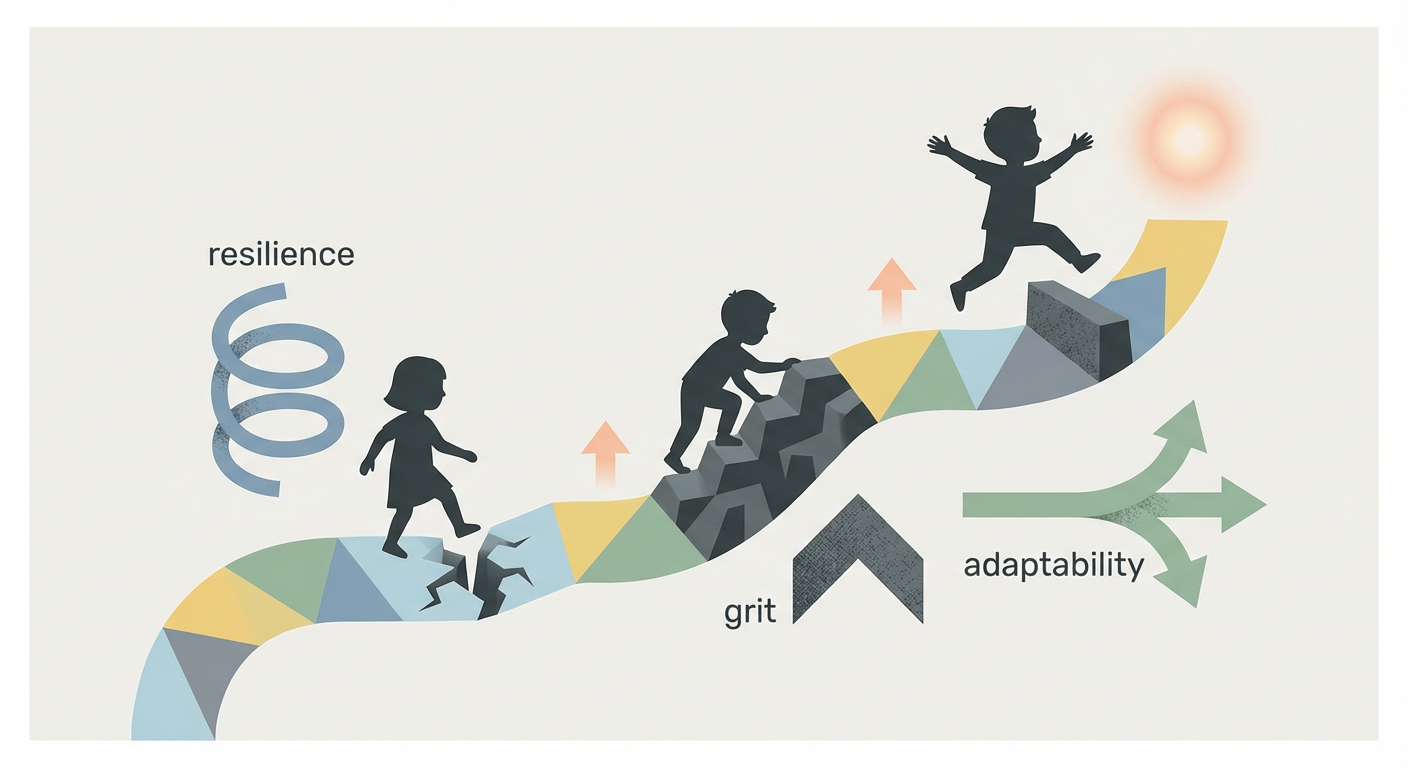
6. Building Resilience, Grit, and Adaptability
The journey of entrepreneurship, regardless of scale, is rarely a smooth one. It is characterized by unforeseen challenges, moments of doubt, and the occasional setback. For children engaged in micro-businesses, these experiences are not merely obstacles; they are invaluable lessons in resilience, grit, and adaptability. These qualities, often honed through dealing with failures, slow sales, or unexpected market shifts, prepare young individuals to navigate not only the complexities of the business world but also the broader challenges of life itself. Early exposure to the realities of launching and maintaining an enterprise fosters an emotional fortitude and strategic flexibility that is profoundly beneficial for future success, regardless of their chosen path. This section will delve into how micro-businesses, through their inherent demands and real-world interactions, cultivate these critical attributes in young entrepreneurs, transforming potential frustrations into powerful learning opportunities.
Embracing Failure as a Catalyst for Learning and Growth
One of the most powerful and enduring lessons derived from running a micro-business is the ability to view failure not as a definitive end, but as a crucial step in the learning process. Unlike controlled academic environments where mistakes often carry negative connotations, the entrepreneurial world inherently normalizes setbacks. For young business owners, the reality of a rainy day ruining lemonade stand sales, a botched batch of homemade products, or an unsuccessful marketing campaign serves as direct and tangible feedback. This immediate cause-and-effect relationship, when navigated with appropriate guidance, teaches children to pivot, refine, and improve rather than simply giving up. For instance, a child selling homemade cookies might experience slow sales on a particular day. This “failure” prompts critical thinking: Was the location wrong? Was the pricing too high? Was the product unappealing? These questions drive iterative improvements, such as altering the recipe, changing the display, or seeking new selling opportunities. This iterative problem-solving loop mirrors the scientific method applied to business, teaching young entrepreneurs to ask “why isn’t this working?” and brainstorm creative solutions [37]. This experiential learning instills a fundamental understanding of perseverance. Junior Achievement, a prominent organization in youth entrepreneurship education, emphasizes “learning through failure” as a cornerstone of its programs. This approach intentionally exposes young participants to the realities of setbacks, transforming them into opportunities to develop grit. Instead of being shielded from negative outcomes, children are encouraged to analyze them, learn from them, and apply those lessons to future endeavors [37]. The ability to bounce back from these minor commercial disappointments builds a strong mental framework for addressing larger challenges later in life. As research suggests, children who successfully overcome obstacles early on “learn not to fear the unknown” and develop the capacity to “frame disruption positively” [8]. This perspective is crucial in fostering a resilient mindset that embraces challenges as opportunities for growth, rather than sources of anxiety or fear. The normalization of failure in the micro-business context helps to inoculate young individuals against the fear of not succeeding, a common barrier to innovation and personal development. They learn that a failed attempt is simply feedback, a data point indicating a need for adjustment, rather than a reflection of their inherent capability. This realization fosters a crucial growth mindset, where challenges are seen as malleable and improvement is always possible.
Developing Adaptability in the Face of Unexpected Obstacles
The real world of business is inherently unpredictable, and micro-businesses expose young entrepreneurs to this reality early on. From sudden changes in customer demand to unexpected competition or logistical issues, young founders learn to adapt their strategies on the fly. This real-time adaptation is a hallmark of entrepreneurial success and a vital life skill. The COVID-19 pandemic provided a stark global example of how quickly businesses, even micro-enterprises, needed to adapt. Many young entrepreneurs whose traditional, in-person business models were disrupted demonstrated remarkable flexibility. For example, children accustomed to selling lemonade from a stand would swiftly pivot to taking orders via social media platforms like Instagram and organizing contactless deliveries. Others shifted their offerings entirely, moving from selling physical products to providing virtual services, such as online tutoring or custom digital art commissions [37]. This rapid adjustment to external shocks highlighted the inherent adaptability cultivated through entrepreneurial experiences. In the UK, the number of teen entrepreneurs actually increased by 19% between 2020 and 2021, a surge largely attributed to young people identifying and capitalizing on new opportunities that arose during the pandemic [5]. This showcases how a crisis, for those with an adaptable mindset, can be transformed into a period of innovation and growth. This ability to adapt strategies, also known as “pivoting,” is a sophisticated skill that even seasoned adult entrepreneurs often struggle with. Yet, young entrepreneurs frequently do it instinctively. If one product doesn’t sell, they creatively switch to another. A teenager selling handmade jewelry might initially focus on a specific style, but if customer feedback suggests a different trend, they promptly adjust their designs. This iterative approach to product development and market response, learned early, equips them with a profound strategic advantage. They are not afraid to change their approach because the entire experience is viewed as a dynamic learning game, a continuous process of testing and iteration. Moreover, micro-businesses often operate with limited resources, forcing young founders to be resourceful and creative in their adaptability. They learn to make do with what they have, find alternative solutions when preferred options are unavailable, and constantly look for more efficient ways to operate. This breeds a pragmatic and flexible approach to problem-solving, which translates into an invaluable skill set for any future endeavor, particularly in an increasingly volatile and rapidly changing global landscape.
Cultivating Persistence and Grit Through Daily Challenges
Beyond merely bouncing back from setbacks, micro-businesses instill a deep sense of persistence and grit – the unwavering commitment to a goal despite difficulties and long-term challenges. Running a business, even a small one, is an ongoing endeavor that requires continuous effort and dedication, often without immediate gratification. Young entrepreneurs frequently face rejection. Potential customers might ignore their sales pitch, or an online product listing might receive many views but no purchases. Instead of becoming disheartened and abandoning their venture, children with an entrepreneurial drive are motivated to try different tactics. They might refine their pitch, improve their product description, or seek new avenues for sales. This process strengthens their resolve and teaches them to view rejection as a temporary hurdle rather than a definitive failure. Mark Cuban, for example, started selling trash bags door-to-door at age 12. Each time a neighbor presented an objection, he learned to counter it, honing his persuasive communication and persistence [23]. Such early experiences build the muscle of perseverance that serves as a foundation for future success. This persistence often stems from internal motivation, such as a personal passion for the product or service, or a specific financial goal like saving for a new item. The direct link between effort and outcome in a micro-business helps children understand the value of sustained hard work. When they finally achieve a sale after multiple rejections, or when their hard work leads to a positive customer review, the sense of accomplishment reinforces the importance of grit. Educators and researchers note that this “grit” cultivated in a business context often translates into other areas of life, including academics. Students who have managed a small business tend to exhibit greater perseverance in their schoolwork, understanding that consistent effort can lead to desired results [37]. Studies, such as one conducted in Ghana, have shown that integrating entrepreneurship and life-skills training significantly increases youths’ persistence in the face of challenges compared to control groups [37]. This demonstrates the tangible impact of entrepreneurial experience on developing character traits like grit. Furthermore, the process of running a micro-business involves managing multiple tasks and staying motivated even when mundane routines are required, such as inventory management, record-keeping, or repeated product creation. Overcoming the tedium and maintaining momentum hones self-discipline and fosters a long-term perspective—qualities essential for any sustained effort.
Building Confidence to Face Future Challenges
Successfully navigating the challenges inherent in a micro-business at a young age instills a profound sense of self-efficacy and confidence. When children overcome issues like inventory shortages, difficult customer interactions, or marketing flops, they learn that they possess the capacity to identify problems, devise solutions, and execute those solutions effectively. This foundational belief in their own problem-solving abilities becomes a powerful asset. This confidence serves as a mental shield against future adversity. When confronted with significant life challenges—be it a difficult academic exam, a rejection from a desired college or job, or a complex workplace problem—individuals with a history of entrepreneurial resilience are less likely to be overwhelmed. They draw upon their past experiences, recalling instances where they successfully navigated business hurdles, and internalize the belief that “I’ve handled worse” [8]. This mental framework encourages a proactive approach, prompting them to instinctively search for “Plan B” or “Plan C” rather than succumbing to helplessness in the face of obstacles. Numerous successful adult entrepreneurs often attribute their self-belief and problem-solving tenacity to their childhood business ventures. While often guided by parents or mentors, the *feeling* of agency and the experience of overcoming real-world problems independently are crucial. Moziah Bridges, for example, who started his bow-tie business at age 9, had to learn manufacturing, inventory management, and negotiation before he was even a teenager [11]. These experiences provided real-world validation of his capabilities. The iterative nature of entrepreneurship, where continuous effort leads to gradual improvement and eventual success, also fosters realistic optimism. Young entrepreneurs learn that not every idea will succeed instantly, but that consistent effort and smart adjustments significantly increase the likelihood of positive outcomes. This pragmatic outlook helps them to celebrate small victories, learn from small failures, and maintain a positive attitude toward sustained effort. This type of confidence is not hubris but a well-earned belief in one’s capacity to overcome challenges.
Fostering Emotional Resilience and Maturity
Running a micro-business is an education in emotional intelligence. Young entrepreneurs experience a wide spectrum of emotions, from the exhilarating high of a successful sale to the disheartening low of a slow business day or a customer complaint. Learning to process and manage these emotions in a productive manner is a critical component of emotional resilience and maturity. For example, a child might feel greatly discouraged when their efforts yield minimal sales. Yet, the very next day, a sudden rush of customers could bring immense joy. Experiencing these emotional fluctuations within a supportive environment (often with guidance from parents or mentors) helps children learn self-regulation. They begin to understand that emotions, like business outcomes, are often temporary and that neither extreme success nor extreme failure is typically permanent. This perspective fosters a more balanced and composed approach to life’s ups and downs. Parents of children involved in micro-businesses frequently report observing a noticeable increase in their children’s patience and an improved ability to handle disappointment. These minor business failures, while initially frustrating, teach children how to cope with unfavorable outcomes and develop coping mechanisms without becoming overly distressed. This emotional “muscle” developed through business challenges can significantly reduce anxiety and fear of failure in other areas, such as academic performance or social situations. A child who has learned to iterate and improve after a business setback is more likely to view a low test score as an opportunity for improvement rather than a personal defeat. Furthermore, the necessity of interacting professionally with customers, even when facing negativity or criticism, teaches young entrepreneurs valuable lessons in emotional control and interpersonal skills. They learn to respond calmly and respectfully, distinguishing between personal feelings and professional conduct. This early exposure to managing professional relationships, handling criticism constructively, and maintaining composure under pressure significantly contributes to their overall emotional maturity. This psychological strengthening prepares them not only for business but for navigating the complex social and emotional landscapes of adulthood with greater equanimity.
| Skill Developed | Mechanism of Development | Real-World Example / Data |
|---|---|---|
| Resilience (Embracing Failure) | Experiencing setbacks (e.g., slow sales, product flops) and being prompted to analyze, adjust, and try again. | “Learning through failure” is a core tenet of youth entrepreneurship programs, teaching kids to view setbacks as chances to improve. Research shows early-obstacle clearers “not to fear the unknown” [8]. |
| Adaptability (Strategic Pivoting) | Responding to changing market conditions, customer feedback, or unforeseen external factors (e.g., pandemic). | During COVID-19, many young entrepreneurs shifted to online sales or virtual services. The UK saw a 19% increase in teen businesses (2020-21) due to adapting to new opportunities [5]. |
| Grit (Persistence) | Sustaining effort despite rejection, low initial returns, or monotonous tasks; pursuing goals over time. | Youth entrepreneurs learn to handle rejection and iterate on strategies. Studies suggest higher “grit” scores among young people with entrepreneurship experience [37]. |
| Confidence (Self-Efficacy) | Successfully overcoming business challenges creates a belief in one’s own problem-solving abilities. | Former kidpreneurs often trace their self-belief back to childhood ventures where they learned to solve problems independently. “I’ve handled worse” mindset [8]. |
| Emotional Resilience | Managing emotional highs and lows associated with business success and failure, fostering balanced perspective. | Kids learn to cope with disappointment (low sales) and excitement (big sales), developing emotional self-regulation. Parents often observe greater patience and better handling of disappointment. |
In conclusion, the micro-business environment serves as a potent training ground for developing resilience, grit, and adaptability in young people. The iterative nature of entrepreneurship, coupled with the direct consequences of decisions and the immediate feedback from the market, creates a unique learning ecosystem. Here, children are not just taught about these critical life skills; they actively develop them through firsthand experience. These foundational traits are paramount for navigating the complexities of modern life, fostering not only successful future entrepreneurs but well-adjusted, confident, and persistent individuals ready to tackle any challenge. The cultivation of these personal attributes is deeply intertwined with the development of leadership, responsibility, and initiative, which form another vital set of skills gained through micro-businesses.
7. Leadership, Responsibility, and Initiative
The journey of launching and managing a micro-business is a potent crucible for developing essential life skills in young people, particularly in the critical areas of leadership, personal responsibility, and initiative. Unlike passive learning environments, the hands-on experience of entrepreneurship forces children and teenagers to take ownership, make decisions, and confront the tangible consequences of their actions. This section delves into how these experiences cultivate a robust sense of accountability, sharpen time management, foster reliability, nurture nascent leadership qualities, and spark proactive self-starting attitudes that resonate far beyond the confines of their immediate venture. The appeal of entrepreneurship is demonstrably high among youth. A 2012 Gallup survey revealed that approximately 43% of U.S. students in grades 5–12 planned to start their own business, a statistic that remained consistent from the previous year, indicating a persistent entrepreneurial inclination[1]. Interestingly, girls (46%) were slightly more inclined than boys (40%) to envision such a path[2]. Fast forward to 2022, and a Junior Achievement (JA) and EY survey found that a staggering 75% of teens would *consider* becoming entrepreneurs, highlighting a broad base of interest that transcends demographic lines[3]. This ambition is particularly pronounced in Gen Z, with a 2023 report indicating that half of those aged 16-25 aspire to run their own businesses rather than pursue traditional corporate careers, a significant shift from previous generations[4]. This inherent desire to create and lead, combined with the practical demands of operating a micro-business, provides unparalleled opportunities for skill development. However, a critical gap exists between aspiration and practical experience. In 2012, only 22% of U.S. students in grades 5-12 had a paying job in the preceding week, and a mere 7% were engaged in an internship or work-based learning position[5]. Furthermore, 41% of students reported no access to entrepreneurship education in their schools[6]. This disconnect underscores the invaluable role micro-businesses play in bridging the gap, offering a real-world “classroom” where abstract concepts become concrete responsibilities. ### The Cultivation of Personal Responsibility and Accountability Running a micro-business fundamentally shifts a child’s perspective from being a consumer to a producer, imbuing them with a profound sense of personal responsibility and accountability. Every decision, from product selection to pricing and customer interaction, directly impacts the success or failure of their venture. This direct cause-and-effect relationship is a powerful teacher. When a child launches a lemonade stand, an online craft shop, or a dog-walking service, they are no longer just playing; they are undertaking a serious commitment. They learn that raw materials must be purchased, products must be crafted, services must be delivered, and customers must be satisfied. If they fail to show up, the business doesn’t operate. If they don’t prepare enough inventory, sales are lost. This immediate feedback loop is far more impactful than theoretical discussions of responsibility. A striking 87% of youth entrepreneurs participating in the Lemonade Day program reported an improved sense of personal responsibility after their experience[7]. This finding suggests that being at the helm of even a small enterprise instills a deep sense of ownership and accountability that extends to various aspects of their lives. For instance, consider the responsibility involved in managing finances. Young entrepreneurs must learn to budget for supplies, set pricing that covers costs and generates profit, and manage cash flow. This directly contributes to financial literacy, with 88% of Lemonade Day participants demonstrating an improved ability to connect classroom math with real-world financial scenarios[8]. Beyond simple calculations, they learn the integrity required to manage money, handle transactions accurately, and understand the implications of financial decisions. If they miscalculate pricing, they might lose money. If they mismanage inventory, capital is tied up. These subtle yet critical lessons in financial accountability build a foundation for responsible fiscal behavior as adults. The element of reliability is also paramount. When a child commits to delivering a product or service by a certain time, they learn the importance of honoring that commitment. A customer expecting a customized item by Friday, or a baked good delivered on Saturday morning, depends on the young entrepreneur’s punctuality and diligence. This fosters dependability, a cornerstone of both personal and professional success. Such experiences teach children that their word carries weight and that consistency builds trust and a positive reputation, which are invaluable assets in anything they pursue. ### Developing Leadership Qualities Even a solo micro-business positions a child as the de facto leader of their enterprise. They assume the roles of CEO, CFO, and COO, making strategic decisions, managing resources, and overseeing operations. This early exposure to leadership is instrumental in shaping their capabilities and self-perception. One of the most compelling examples of budding leadership is Moziah Bridges. Starting his bow-tie business, Mo’s Bows, at just nine years old, Moziah not only managed product design and sales but also gradually built a team. By the age of 13, his micro-business had grown to employ seven individuals, including adults like his mother and grandmother, who assisted with production and shipping[9]. Moziah’s journey provides a tangible illustration of a child transitioning from a sole proprietor to a manager, learning to delegate tasks, oversee operations, and motivate staff. This is a real-life crash course in human resources and team management, experiences rarely accessible to youngsters in any other context. Beyond direct reports, leadership in a micro-business often involves influencing others. A child entrepreneur might need to persuade friends or family to help with a large order, co-opt marketing efforts, or secure support for an event. These situations demand communication, negotiation, and the ability to articulate a clear vision – all fundamental leadership traits. Moreover, presenting their business idea, whether to potential customers, competition judges, or even family members, hones public speaking and persuasive communication skills, making them more confident and articulate leaders. The essence of a micro-business fosters initiative-taking. It requires a child to identify an opportunity, devise a plan, and execute it independently. This self-starting attitude is a distinct hallmark of leaders. They don’t wait for instructions; they identify needs and proactively work to meet them. For example, Mark Cuban’s parents, when urged by young Mark for a new pair of sneakers, told him to earn the money himself. This prompted 12-year-old Mark to take the initiative and start selling trash bags door-to-door in his neighborhood[10]. Such origin stories highlight how the necessity to fulfill a personal goal can ignite an entrepreneurial spark, transforming a desire into active pursuit. **Table 7.1: Leadership Skills Cultivated by Micro-businesses** | Leadership Trait | How a Micro-Business Cultivates It | Example | | :———————— | :—————————————————————————————————————– | :———————————————————————————————————————– | | **Decision-Making** | Requires choices on product, pricing, marketing, and operations. | *Mikaila Ulmer deciding to sweeten her lemonade with honey and donate to bee conservation*[11]. | | **Delegation** | Assigning tasks to family, friends, or hired help (even informally). | *Moziah Bridges managing 7 employees for Mo’s Bows, assigning roles like sewing and order fulfillment*[12]. | | **Problem-Solving** | Navigating unexpected challenges like low sales, supply issues, or customer complaints. | *A kidpreneur whose craft sales are slow pivots to offering custom commissions or changes product design.* | | **Communication** | Engaging with customers, suppliers, and collaborators; making sales pitches. | *Asia Newson’s confident sales pitches for her candles, refining her approach as she grew*[13]. | | **Accountability** | Taking responsibility for the success or failure of the venture. | *Lemonade Day participants feeling a stronger sense of personal responsibility after their business experience*[7]. | | **Initiative** | Identifying opportunities and proactively starting the business; acting without needing external prompting. | *Tilak Mehta, at 13, conceiving Papers & Parcels to address inefficient courier services in Mumbai*[14]. | | **Strategic Thinking** | Planning for the future, adapting to market changes, setting goals. | *Samaira Mehta expanding CoderBunnyz to CoderMindz (AI board game) based on technological trends*[15]. | | **Teamwork (if applicable)** | Collaborating with others, dividing tasks, managing interpersonal dynamics. | *Siblings partnering on a lawn care service, learning to coordinate tasks and resources.* | ### Fostering Effective Time Management and Reliability The unstructured yet demanding nature of micro-business ownership forces young entrepreneurs to become adept at time management and embrace reliability. Unlike school assignments with fixed deadlines, running a business requires self-imposed discipline. The rewards and consequences are directly tied to their own efforts and organizational skills. Consider a child who runs a weekend baking business. To have fresh goods ready for Sunday’s market, they must plan: purchase ingredients on Friday, bake on Saturday, and prepare marketing materials. This necessitates scheduling, prioritizing, and adhering to self-imposed deadlines. Procrastination directly impacts product availability and, consequently, sales. Parents often observe that entrepreneurial children become more organized and skilled at scheduling because the business demands this foresight and discipline. This translates into stronger habits that benefit academic performance and future career paths. Reliability is equally paramount. If a young entrepreneur promises a custom-made item by a specific date, or commits to a service appointment, they learn that their reputation hinges on delivering as promised. Letdowns lead to customer dissatisfaction and potential loss of business, providing a direct, tangible lesson in the importance of being trustworthy. This immediate feedback reinforces the value of keeping one’s word and maintaining high standards, building a foundation of integrity. The integration of business activities with schoolwork also requires sophisticated time management. Children learn to balance their academic responsibilities with the demands of their venture. This often means sacrificing leisure time, prioritizing tasks, and understanding the concept of opportunity cost. These are complex skills that are best learned experientially rather than theoretically. The discipline required to maintain a consistent business operation while managing other commitments builds resilience and a strong work ethic, traits highly valued in any leadership role. ### Instilling Initiative and Teamwork The very act of starting a micro-business is an exercise in initiative. It requires a young person to identify a need or opportunity, conceptualize a solution, and then take the decisive steps to bring that solution to life. This proactive mindset is a defining characteristic of successful entrepreneurs and leaders. They don’t wait for permission or external motivation; they create their own. Many childhood entrepreneur stories begin with a personal need or a perceived gap in the market. Mark Cuban, as noted earlier, started selling trash bags to earn money for new shoes[10]. Tilak Mehta, a 13-year-old in Mumbai, identified an expensive and inefficient courier service market and conceived “Papers & Parcels,” strategically partnering with the city’s famed dabbawalas to create a cost-effective delivery network[14]. These examples illustrate that initiative is born from observation, problem identification, and the courage to act. This “self-starter” quality, once nurtured, tends to permeate other areas of a child’s life, empowering them to take on challenges and create their own opportunities rather than passively awaiting them. While many micro-businesses begin as solo ventures, they often evolve to involve collaboration, thereby fostering teamwork. Moziah Bridges’s business grew to include his family members, requiring Moziah to learn delegation and team coordination[9]. Even informal collaborations, like asking a friend to help staff a market stall or partnering on a creative project, present opportunities for practicing teamwork. Children learn to divide tasks, negotiate roles, resolve minor conflicts, and recognize the value of collective effort towards a shared goal. These are critical soft skills for any leadership position, teaching them how to leverage the strengths of others and build cohesive working relationships. Furthermore, some young entrepreneurs take their initiative beyond their own business, actively engaging in community and philanthropic efforts. Asia Newson, known as “Super Business Girl,” not only built a successful candle business but also used her platform to teach other children entrepreneurship, showcasing leadership and mentorship at a very young age[16]. This social consciousness, where over half of teens (58%) express a willingness to start a business to address societal needs even if it means earning less, demonstrates a powerful blend of initiative and empathy[17]. It indicates that young entrepreneurs are not just building businesses; many are actively building a better world, displaying a sophisticated form of leadership grounded in purpose. ### Case Studies in Youth Leadership and Initiative The impact of micro-businesses on leadership, responsibility, and initiative is vividly illustrated through numerous inspiring examples: * **Mikaila Ulmer (Me & the Bees Lemonade)**: Mikaila started her lemonade business at four, driven by a bee sting and subsequent learning about bee conservation[11]. Her initiative led her to sweeten her great-grandmother’s recipe with honey and donate a portion of proceeds. Her leadership was evident in her marketing, her public speaking (including a $60,000 deal on *Shark Tank* at age nine, and an $11 million distribution deal with Whole Foods by age eleven)[18][19], and her commitment to a social cause. She learned product development, strategic growth, and branding, all while demonstrating profound responsibility towards her mission. * **Moziah Bridges (Mo’s Bows)**: At nine, Moziah began creating bow ties because he couldn’t find ones he liked. This personal initiative quickly scaled into a business that required him to manage a team of seven by the age of 13[9]. Moziah’s journey highlights operational leadership, from product creation and inventory management to navigating negotiations with major entities like the NBA for a licensing deal[12]. His story is a testament to how personal drive can lead to significant management experience at a young age. * **Samaira Mehta (CoderBunnyz)**: Samaira, eight, demonstrated immense initiative by creating CoderBunnyz, a board game to teach other children coding logic[15]. Her business required product design, manufacturing coordination, marketing (demos at libraries and schools), and selling on platforms like Amazon, generating $35,000 in sales within a year[15]. Her efforts highlight leadership in technological innovation and educational entrepreneurship, demonstrating responsibility for her craft and a forward-thinking approach by later developing CoderMindz, an AI board game. * **Tilak Mehta (Papers & Parcels)**: Tilak’s story is a compelling example of strategic leadership and problem-solving initiative. At 13, he identified a real-world courier problem in Mumbai and devised PnP, a micro-business solution that uniquely leveraged the existing network of dabbawalas[14]. His venture quickly grew to employ 200 staff and 300 dabbawalas, handling 1,200 deliveries daily[14]. Tilak’s ability to conceptualize, build a team, secure investment, and execute at such scale showcases an extraordinary aptitude for leadership and business acumen. * **Asia Newson (Super Business Girl)**: Asia started her candle business at five, and by 10, she was branded “Super Business Girl.” Her leadership extended beyond sales as she initiated workshops to teach other children entrepreneurship, effectively becoming a mentor and community leader[16]. Her confidence in speaking to city councils and empowering her peers demonstrates a powerful sense of responsibility to her community, showcasing leadership that contributes to broader social development. These examples underscore that micro-businesses provide a fertile training ground for leadership, responsibility, and initiative. The scale of the venture may be small, but the skills learned are profoundly impactful and transferable to virtually any future endeavor. The opportunity to be the decision-maker, manage resources, face challenges, and lead (even a small team or oneself) at a young age prepares children for complex roles and shapes them into proactive, accountable, and confident individuals. The cultivation of these qualities is not merely about creating future business owners; it’s about nurturing individuals who are equipped to navigate the complexities of life with integrity, resilience, and a self-starting spirit. As these young entrepreneurs mature, these foundational skills will undoubtedly give them a significant advantage, whether they pursue further entrepreneurial ventures, excel in traditional employment, or drive social change. The next section will further explore the broader social and ethical dimensions children learn from micro-businesses, including the development of empathy and community awareness.
References
- [1] Gallup News. (2013). U.S. Students’ Entrepreneurial Aspirations Still Undeveloped. Retrieved from https://news.gallup.com/poll/160040/students-entrepreneurial-aspirations-undeveloped.aspx#:~:text=WASHINGTON%20D.C.%20,something%20that%20changes%20the%20world
- [2] Gallup News. (2013). U.S. Students’ Entrepreneurial Aspirations Still Undeveloped. Retrieved from https://news.gallup.com/poll/160040/students-entrepreneurial-aspirations-undeveloped.aspx#:~:text=Girls%20%2846,something%20that%20changes%20the%20world
- [3] Junior Achievement USA. (2022). Survey: 58 Percent of Teens Would Start a Business to Address a Societal Need. Retrieved from https://jausa.ja.org/news/press-releases/survey-58-percent-of-teens-would-start-a-business-to-address-a-societal-need-even-if%20it%20meant%20making%20less%20money#:~:text=societal%20need%2C%20even%20if%20it,is%20a%20business%20owner%20for
- [4] CNBC. (2023). 50% of Gen Z wants to ditch corporate jobs, run their own business, says report. Retrieved from https://www.cnbc.com/2023/10/31/50percent-of-gen-z-wants-to-ditch-corporate-jobs-run-their-own-business-says-report.html#:~:text=confines%20of%20a%209,from%20Samsung%20and%20Morning%20Consult
- [5] Gallup News. (2013). U.S. Students’ Entrepreneurial Aspirations Still Undeveloped. Retrieved from https://news.gallup.com/poll/160040/students-entrepreneurial-aspirations-undeveloped.aspx#:~:text=work%20experience%20in%20the%20world,say%20they%20are%20currently%20interning
- [6] Gallup News. (2013). U.S. Students’ Entrepreneurial Aspirations Still Undeveloped. Retrieved from https://news.gallup.com/poll/160040/students-entrepreneurial-aspirations-undeveloped.aspx#:~:text=Nearly%20six%20in%2010%20students,this%20is%20up%20from%202011
- [7] Lemonade Day. (2020). 2020 Impact Study: Positive Outcomes of Participating in Lemonade Day. Retrieved from https://info.topyx.com/lp-lemonade-day-case-study#:~:text=%2A%2087,understanding%20of%20saving%20and%20philanthropy
- [8] Lemonade Day. (2020). 2020 Impact Study: Positive Outcomes of Participating in Lemonade Day. Retrieved from https://info.topyx.com/lp-lemonade-day-case-study#:~:text=,math%20with%20the%20real%20world
- [9] BET News. (2015). 13-Year-Old CEO Moziah Bridges Builds $200,000 Business. Retrieved from https://www.bet.com/article/ikokwu/13-year-old-ceo-moziah-bridges-builds-usd200-000-business#:~:text=A%20year%20later%2C%20Moziah%20Bridges,including%20his%20mother%20and%20grandmother
- [10] Benzinga. (2023). Mark Cuban Sold Trash Bags Door-To-Door At 12 Years Old. Retrieved from https://www.benzinga.com/news/23/06/32858841/mark-cuban-sold-trash-bags-door-to-door-at-12-years-old-in-our-household-if-you-wanted-something-you/#:~:text=Mark%20Cuban%20Sold%20Trash%20Bags,Benzinga%20Staff%20Writer%20Follow%20Zinger
- [11] Be Business Smart. (n.d.). How a 4-Year-Old Turned a Lemonade Stand Into a Million-Dollar Brand. Retrieved from https://www.bebusinesssmart.com/mikaila-ulmer-how-a-4-year-old-turned-a-lemonade-stand-into-a-million-dollar-brand/#:~:text=How%20a%204,learned%20about%20their%20role%20in
- [12] BET News. (2015). 13-Year-Old CEO Moziah Bridges Builds $200,000 Business. Retrieved from https://www.bet.com/article/ikokwu/13-year-old-ceo-moziah-bridges-builds-usd200-000-business#:~:text=A%20year%20later%2C%20Moziah%20Bridges,including%20his%20mother%20and%20grandmother
- [13] Forbes. (2017). The 13-Year-Old Entrepreneur Changing The Face of Business In Detroit. Retrieved from https://www.forbes.com/sites/leahhunter/2017/01/10/the-13-year-old-entrepreneur-changing-the-face-of-business-in-detroit/#:~:text=%E2%80%9C,%E2%80%9CAs%20I
- [14] NDTV. (2018). 13-Year-Old Mumbai Boy Partners With Dabbawalas for Courier Startup. Retrieved from https://www.ndtv.com/mumbai-news/13-year-old-mumbai-boy-partners-with-dabbawalas-for-courier-startup-1885673#:~:text=PNP%20uses%20a%20dedicated%20mobile,as%20many%20as%201%2C200%20deliveries
- [15] World Economic Forum. (2018). This 10-year-old coder has caught the attention of Google and Microsoft. Retrieved from https://www.weforum.org/stories/2018/11/this-10-year-old-coder-is-already-so-successful-shes-caught-the-attention-of-google-and-microsoft/#:~:text=Mehta%20was%20featured%20on%20some,selling%20her%20game%20on%20Amazon
- [16] Hello Beautiful. (n.d.). 10-Year-Old Entrepreneur Asia Newson. Retrieved from https://hellobeautiful.com/2669809/super-business-girl-10-year-old-asia-newson/#:~:text=10,teach%20young%20people%2C%20like%20myself
- [17] Junior Achievement USA. (2022). Survey: 58 Percent of Teens Would Start a Business to Address a Societal Need. Retrieved from https://jausa.ja.org/news/press-releases/survey-58-percent-of-teens-would-start-a-business-to-address-a-societal-need-even%20if%20it%20meant%20making%20less%20money#:~:text=Survey%3A%2058%20Percent%20of%20Teens,it%20Meant%20Making%20Less%20Money
- [18] Bizna Kenya. (n.d.). 15 Year Old To Make $6 Billion Revenue This Year. Retrieved from https://biznakenya.com/15-year-old-to-make-6-billion-revenue-this-year/#:~:text=Thursday%2C%20January%2022%2C%202026%20,John%20While%20a%20lot%20of
- [19] My Columbus Power. (2016). Meet The 11-Year-Old Who Made A Sweet $11 Million Deal With Whole Foods. Retrieved from https://mycolumbuspower.com/3132289/meet-mikaila-ulmer-the-11-year-old-who-made-a-sweet-11-million-deal-with-whole-foods/#:~:text=The%2011,million%20deal%20with%20Whole%20Foods
8. Social Impact and Long-Term Success Trajectories
The landscape of youth development is increasingly shaped by entrepreneurial pursuits, extending far beyond mere financial gain. Youth micro-businesses, while often perceived as simple ventures, serve as potent platforms for cultivating social awareness, ethical considerations, and a profound sense of purpose in young individuals. This section delves into the intricate ways these early entrepreneurial experiences not only foster a commitment to social impact but also lay robust foundations for long-term success, innovation, and self-reliance, charting trajectories that differ significantly from those without such formative exposure.
There is a strong and growing entrepreneurial interest among young people globally. In the United States, a significant 43% of students in grades 5–12 expressed plans to start their own businesses, a figure that remained consistent from 2011 to 2012[1]. More recent data from 2022 indicates that three-quarters of teenagers (75%) would consider becoming entrepreneurs[2]. This ambition is particularly pronounced among Generation Z, with half (50%) of those aged 16–25 aspiring to run their own businesses rather than pursuing traditional corporate careers, signifying a notable generational shift towards self-employment[3]. The COVID-19 pandemic further accelerated this trend, with a 19% surge in teenage entrepreneurs in the UK between 2020 and 2021, and one in four UK teenagers reporting thoughts of launching a business in the future[4][5]. This section will explore how this potent combination of entrepreneurial spirit and early practical experience translates into tangible social impact and contributes to enduring personal and professional success.
8.1 Fostering Social Awareness and Ethical Responsibility
Youth micro-businesses are not simply about making money; they are powerful incubators for developing a deep sense of social awareness and ethical responsibility. This generation of young entrepreneurs often views business as a vehicle for positive change, prioritizing purpose alongside profit.
8.1.1 The Rise of Social Entrepreneurship Among Youth
A striking 58% of teenagers would start a business to address a social or environmental need, even if it meant earning less money[12]. This statistic underscores a fundamental shift in entrepreneurial motivation
9. Frequently Asked Questions
Youth entrepreneurship, powered by the accessibility and flexibility of micro-businesses, has emerged as a significant topic of discussion among parents, educators, and policymakers. As more young people express a desire to forge their own paths and create value, a common set of questions frequently arises regarding the phenomenon of kidpreneurs. This section aims to address these frequently asked questions, drawing upon the comprehensive research presented in this report to provide actionable insights and clarify common misconceptions. We delve into the foundational curiosity about why kids are increasingly turning to entrepreneurship, the concrete benefits they derive, and the vital roles adults play in nurturing these ventures, all while grounding our answers in compelling data and real-world examples.
The landscape of youth ambition is clearly shifting. Globally, a substantial number of young individuals aspire to start their own businesses. In the United States, roughly 4 out of 10 students (43%) in grades 5–12 indicate plans to launch their own ventures[1]. This ambition is not merely a passing phase; a 2022 survey found that a striking 75% of teenagers would consider becoming entrepreneurs, though over half identify a need for more guidance to succeed[2]. This entrepreneurial inclination is particularly pronounced among Gen Z, with half of individuals aged 16–25 preferring to run their own businesses over traditional corporate employment[3]. This represents a distinct generational shift, often attributed to a desire for greater flexibility and purpose in their careers. The COVID-19 pandemic further accelerated this trend, with a 19% surge in teenage entrepreneurs in the UK between 2020 and 2021 alone[4]. Such statistics underscore the necessity of understanding and supporting this growing movement. Below, we address key questions that encapsulate the general inquiry into this dynamic and impactful field.
What is driving the increased interest in entrepreneurship among young people?
The surge in entrepreneurial interest among children and teenagers is a multifaceted phenomenon, influenced by evolving cultural values, technological advancements, and shifts in the economic landscape. Several key factors contribute to this growing trend:
- Aspiration for Autonomy and Flexibility: Modern youth, particularly Gen Z, highly value autonomy and flexibility. Approximately 50% of Gen Z (ages 16–25) express a desire to run their own business rather than engage in traditional corporate employment[3]. This is a significant shift compared to previous generations, with only 40% of millennials and 37% of Gen X expressing similar desires in past surveys. This preference reflects a yearning for control over their time, work-life balance, and career trajectory, which traditional employment structures may not always offer. Entrepreneurship provides a pathway to self-determination and the ability to pursue projects aligned with their passions.
- Purpose-Driven Ventures: Today’s youth are profoundly socially conscious. A 2022 Junior Achievement/EY survey revealed that 58% of teens would consider starting a business to address a societal or environmental need, even if it meant earning less money[12]. This highlights a powerful motivation beyond mere profit—a desire to make a tangible positive impact on the world. Micro-businesses offer a direct avenue for kids to translate their concerns about issues like sustainability, community welfare, or social justice into concrete, actionable projects. Examples like Mikaila Ulmer’s “Me & the Bees Lemonade,” which donates a portion of its proceeds to bee conservation, epitomize this drive[44].
- Accessibility of Technology and Digital Platforms: The digital age has significantly lowered the barriers to entry for starting a business. Children and teenagers can now leverage online platforms like Etsy, Shopify, Instagram, or even simple websites to sell products and services globally. This accessibility allows them to bypass traditional gatekeepers and reach wider audiences with minimal overhead. Samaira Mehta, for instance, used Amazon and her website to sell over 1,000 units of her coding board game, CoderBunnyz, by age 10[26]. The ability to create, market, and sell online demystifies the entrepreneurial process and makes it a more realistic endeavor for young people.
- Influence of Media and Role Models: The rise of celebrity entrepreneurs and success stories, often highlighted through social media and mainstream media, also plays a role. Young achievers like Moziah Bridges of Mo’s Bows, who started his business at 9 and expanded it into a brand recognized by the NBA, inspire peers by demonstrating that age is not a barrier to business success[46]. Such narratives normalize entrepreneurship and showcase its potential rewards, both financial and personal.
- Pandemic-Fueled Innovation: The COVID-19 pandemic, while challenging, inadvertently spurred a wave of youth entrepreneurship. With more time at home and traditional job opportunities curtailed, many teens sought alternative ways to earn money and occupy themselves. In the UK, the number of teenage entrepreneurs jumped by 19% during 2020–2021, with many launching tech, creative, or wellness micro-businesses adapted for online engagement[4]. This period highlighted young people’s adaptability and resourcefulness in identifying and capitalizing on new market needs.
- Gaps in Traditional Education and Work Experience: Despite high entrepreneurial aspirations, there is a recognized gap in practical business education and work experience for youth. In 2012, only 22% of U.S. students in grades 5–12 reported having a paying job in the last week, and just 7% had an internship[7]. Furthermore, 41% of students had no access to entrepreneurship education in school[7]. Micro-businesses fill this experiential void, offering hands-on learning that formal education often misses, making it an attractive alternative for gaining real-world skills.
These factors combine to create fertile ground for youth entrepreneurship, positioning micro-businesses not just as hobbies but as meaningful pathways for personal development and societal contribution.
What real-world skills do children and teenagers gain from running micro-businesses?
Running a micro-business provides an unparalleled experiential learning environment for children and teenagers, fostering a broad spectrum of real-world skills crucial for success in any future endeavor. These skills often extend far beyond formal academic curricula:
- Financial Literacy and Money Management:
- Practical Math Application: Children learn to apply mathematical concepts in tangible ways, from calculating costs and setting prices to managing inventory and tracking profits. Programs like Lemonade Day report that 88% of participants improve their ability to connect classroom math with real-world business scenarios[9].
- Budgeting and Resource Allocation: They gain firsthand experience in budgeting, understanding the difference between revenue and profit, and making decisions about reinvesting earnings or saving. This addresses significant gaps in youth financial literacy.
- Saving and Philanthropy: 87% of Lemonade Day participants demonstrated a better understanding of saving and even philanthropy, learning to allocate a portion of their profits for charitable causes[10].
- Communication and Customer Service:
- Interpersonal Skills: Young entrepreneurs develop crucial interpersonal skills by engaging with customers and suppliers. Selling products or services requires clear communication, active listening, and confidence.
- Adaptability in Sales: As exemplified by Asia Newson, who refined her sales pitch for her candle business as she grew older, kids learn to adapt their communication style and value propositions to different audiences[6].
- Conflict Resolution: Handling customer feedback, complaints, or unexpected situations teaches patience, empathy, and professional problem-solving.
- Creative Problem-Solving and Innovation:
- Generating Solutions: Launching a micro-venture compels children to think innovatively, solving unexpected problems ranging from tweaking a product recipe to outshining competitors or pivoting strategies when sales decline.
- Resourcefulness: Operating with limited resources encourages creative solutions for marketing, production, and distribution. Tilak Mehta, who ingeniously partnered with Mumbai’s dabbawalas for his courier service, is a prime example of such resourcefulness[50].
- Learning by Experimentation: The iterative nature of business teaches them to test ideas, analyze results, and make adjustments, akin to a scientific method applied to commerce.
- Resilience, Grit, and Adaptability:
- Overcoming Setbacks: Business inevitably involves challenges, be it slow sales, product failures, or market shifts. These experiences teach perseverance and the ability to bounce back, fostering resilience. Research suggests that overcoming obstacles early on helps youth “not to fear the unknown” and to view disruption as an opportunity[8].
- Dynamic Adjustment: The pandemic demonstrated young entrepreneurs’ capacity to rapidly shift to online sales or new product lines, showcasing their high adaptability[4].
- Emotional Maturity: Dealing with both successes and failures helps children develop emotional intelligence and a balanced perspective on outcomes.
- Leadership, Responsibility, and Initiative:
- Ownership and Accountability: Even a simple business places a child in a leadership role, making them responsible for decisions and outcomes. This boosts accountability and initiative; 87% of youth in the Lemonade Day program reported an improved sense of personal responsibility[10].
- Time Management and Dedication: Managing a business alongside school commitments instills discipline, time management, and a strong work ethic.
- Teamwork and Delegation: Some ventures might involve siblings or friends, teaching early lessons in delegation, motivation, and managing team dynamics, as seen with Moziah Bridges who had 7 employees by age 13[11].
- Social and Ethical Awareness:
- Purpose-Driven Entrepreneurship: A significant portion of young entrepreneurs are motivated by social impact; 58% of teens would start a business to address a societal need even if it meant less profit[12].
- Community Engagement: Many choose to donate part of their earnings or design ventures around social issues, learning the value of business as a force for good.
- Integrity: Dealing with customers and making honest decisions about products and pricing helps develop a strong ethical compass.
These experiences provide a foundational skill set that prepares children not just for potential entrepreneurial careers, but for any professional path requiring self-reliance, innovation, and effective interaction with the world.
How can parents and educators best support youth micro-businesses?
The role of parents and educators is pivotal in nurturing young entrepreneurs. Their support can be the difference between a fleeting idea and a valuable learning experience. Here’s how they can effectively contribute:
For Parents:
- Provide Encouragement and a Safe Space for Experimentation: Children need to feel that their ideas, however embryonic, are valued. Encourage their curiosity about business and assure them that it’s okay to try and even fail. Create a home environment where entrepreneurial attempts are seen as learning opportunities, not just means to an end.
- Offer Practical Guidance, Not Just Money: While financial support can be helpful, more crucial is guidance on practical aspects. This could involve help with budgeting, understanding market demand, simple marketing tactics, or navigating online platforms. Remember, the goal is for the child to learn and lead, with parental support as a safety net. Explain concepts like profit margins, customer base, and overhead costs in age-appropriate terms.
- Act as a Mentor and Sounding Board: Be available to discuss ideas, troubleshoot problems, and celebrate small victories. Share your own experiences, whether from your career or past projects, to provide perspective. For example, if a parent has entrepreneurial experience, those children are significantly more likely to plan on entrepreneurship themselves (49% vs. 40%)[13], highlighting the power of role modeling.
- Facilitate Access to Resources: This might include helping them research supplies, setting up a safe selling space (online or physical), assisting with transportation to markets, or connecting them with local community events where they can sell their products.
- Emphasize the Learning Process Over Profit: Frame the experience as a journey of learning skills like problem-solving, communication, and resilience, rather than solely focusing on financial gains. This reduces pressure and allows them to embrace setbacks as valuable lessons.
- Set Clear Boundaries and Expectations: Help children balance their business activities with academic responsibilities and other family commitments. Establish rules about advertising, sales practices, and financial ethics early on.
- Be a Customer (and a Critic): Purchase their products or services, but also provide constructive feedback. This teaches them about customer satisfaction and product improvement.
For Educators:
- Integrate Entrepreneurial Concepts into the Curriculum: Even without a dedicated entrepreneurship class, teachers can incorporate business principles into existing subjects. Math can cover budgeting and profit calculations, language arts can involve writing business plans or marketing copy, and civics can explore the economic role of small businesses. Nearly 6 in 10 (59%) students reported their school offered classes on starting a business, indicating room for growth in this area[7].
- Facilitate Experiential Learning Programs: Support and promote participation in programs like Lemonade Day, which guide children through the entire process of launching a micro-business. Lemonade Day has seen over 100,000 youths participate across 80+ communities, demonstrating the success of structured programs[14].
- Invite Guest Speakers: Bring in local entrepreneurs, including successful youth entrepreneurs, to share their stories and insights. This provides real-world context and inspires students.
- Organize School Markets or Fairs: Provide opportunities for students to showcase and sell their products within a supportive school environment. This gives them practical selling experience, customer interaction, and a chance to receive direct feedback.
- Encourage Problem-Solving and Critical Thinking: Frame classroom assignments in ways that require students to identify problems and propose innovative solutions, which are core entrepreneurial skills.
- Foster a Growth Mindset: Help students understand that failure is a part of the learning process and not a reflection of their capabilities. Encourage them to iterate, adapt, and persevere.
- Promote Collaboration: Encourage students to work in teams on business projects, teaching them about delegation, conflict resolution, and leveraging diverse skills, much like real-world startups.
By collectively providing a nurturing environment, practical guidance, and opportunities for hands-on learning, both parents and educators can empower young people to develop crucial life skills through micro-businesses, preparing them for future success in an ever-evolving world.
What are the long-term benefits of early entrepreneurial experiences for youth?
The long-term impact of engaging in micro-businesses during childhood and adolescence extends far beyond immediate financial gains or the success of a specific venture. These early entrepreneurial experiences sow seeds that cultivate fundamental qualities and skills crucial for lifelong success, irrespective of whether an individual pursues a dedicated entrepreneurial career or a more traditional path.
One of the most significant long-term benefits is the development of an “entrepreneurial mindset.” This mindset, characterized by traits like creativity, resourcefulness, initiative, and problem-solving, is widely recognized as valuable in all aspects of life[5]. Longitudinal studies indicate that youth who participate in entrepreneurship programs or operate micro-businesses tend to exhibit higher independence, improved problem-solving abilities, and enhanced career readiness later in life[15].
| Category of Benefit | Specific Long-Term Outcomes | Supporting Data/Examples |
|---|---|---|
| Career Readiness & Employability | Enhanced adaptability and initiative, highly sought by employers. Stronger communication and teamwork skills. Ability to identify and solve problems in complex environments. | High school students in mini-company programs scored higher on “entrepreneurial competencies” and were more likely to express interest in starting a venture later[15]. |
| Personal Development & Well-being | Increased self-confidence and self-efficacy. Greater resilience and persistence in the face of challenges. Stronger sense of personal responsibility and agency. | 87% of Lemonade Day participants reported an improved sense of personal responsibility[10]. Early success stories like Warren Buffett (selling gum at 6) and Mark Cuban (selling trash bags at 12) instilled work ethic and business savvy[53][54]. |
| Financial Savvy & Responsibility | Superior money management skills and financial literacy. Understanding of saving, budgeting, and investment principles. Responsible decision-making regarding personal finances. | 88% of Lemonade Day participants improved their ability to apply math in real business contexts; 87% gained better understanding of saving and philanthropy[9][10]. |
| Leadership & Social Impact | Development of leadership qualities and team management skills. Stronger ethical compass and sense of social responsibility. Motivation to create positive change within communities. | 58% of teens would start a business to solve a societal need, even for less money[12]. Moziah Bridges managed 7 employees, including adults, by age 13[11]. |
| Innovation & Adaptability | A proactive approach to identifying and solving problems. Comfort with change and the ability to pivot strategies. Creativity in leveraging resources and technology. | Children who overcome hurdles early “learn not to fear the unknown” and view disruption as opportunity[8]. The 19% spike in UK teen businesses during the pandemic showcases adaptability[4]. |
Specific long-term benefits include:
- Heightened Self-Reliance and Confidence: Successfully navigating the challenges of a micro-business—from generating ideas to making the first sale—builds immense self-confidence. This early sense of accomplishment fosters a belief in one’s ability to tackle future problems independently. Many adult entrepreneurs attribute their self-belief to childhood ventures where they learned to solve problems autonomously.
- Enhanced Employability: Modern workplaces increasingly demand employees with entrepreneurial qualities: initiative, problem-solving skills, creativity, and adaptability. Individuals with early business experience possess a demonstrable track record in these areas, making them highly attractive candidates for employers.
- Stronger Financial Acumen: The practical financial lessons learned early—budgeting, saving, understanding profit and loss—provide a robust foundation for responsible financial management throughout adulthood. This can lead to better personal financial decisions, reduced debt, and improved wealth creation.
- Leadership and Management Aptitude: From leading a small team of friends to overseeing an entire product creation cycle, micro-businesses often involve nascent leadership opportunities. These experiences cultivate essential skills like delegation, motivation, and conflict resolution, preparing individuals for leadership roles in various contexts. For example, Moziah Bridges started his bow-tie business at age 9 and by 13 had seven employees, including his mother, managing production and sales[11].
- Increased Resilience and Grit: Experiencing entrepreneurial setbacks and learning to persevere is a powerful lesson. This cultivates resilience, enabling individuals to handle life’s inevitable failures and challenges with a constructive, growth-oriented mindset. As one piece of research notes, “overcoming obstacles early helps youth ‘not to fear the unknown’ and to frame disruption as opportunity”[8].
- Proactive Problem-Solving: Micro-businesses force children to confront real-world issues—a poor sales day, a flawed product, unexpected competition. This continuous exposure to problem-solving hones their critical thinking and creative faculties, leading them to proactively seek solutions rather than passively waiting for them.
- Social Consciousness and Ethical Decision-Making: Many young entrepreneurs are driven by a desire for social impact. This early exposure to purpose-driven business often instills a lifelong commitment to ethical practices and using one’s skills for the greater good. Over half of teens (58%) would start a business to solve a societal need even if it meant earning less[12].
In essence, early entrepreneurial experiences provide a holistic education in capabilities that underpin success across all domains of life. They equip young people with the foresight to identify opportunities, the courage to act on them, the resilience to overcome obstacles, and the wisdom to contribute meaningfully to their communities. This makes youth micro-businesses a powerful tool for fostering well-rounded, capable, and confident individuals prepared for the complexities of the 21st century.
Are there any risks or downsides to encouraging youth entrepreneurship?
While the benefits of youth entrepreneurship are extensive, it’s important to acknowledge potential risks and downsides, ensuring that support structures are in place to mitigate them. A balanced approach is crucial for fostering positive developmental outcomes.
- Academic Pressure and Time Management Challenges: Young entrepreneurs, especially during school age, must balance their business activities with academic responsibilities. Over-engagement in a micro-business could potentially lead to neglect of schoolwork, stress, or burnout. Parents and educators need to help children establish clear boundaries and prioritize their education, ensuring that the business remains a learning tool rather than an overwhelming burden.
- Exposure to Failure and Handling Disappointment: Entrepreneurship inherently involves risks, and failure is a common part of the learning process. While learning from failure is beneficial for developing resilience, an unmanaged or repeated significant setback could be disheartening for a young person, potentially leading to a loss of confidence or demotivation if not properly supported. It’s crucial for mentors and parents to frame failures as learning opportunities and provide emotional support during these times.
- Financial Stress or Exploitation: While most youth micro-businesses are small-scale, some can involve significant financial stakes. There’s a risk of children mismanaging funds, making poor financial decisions that lead to losses, or even falling prey to exploitative practices if not guided properly. Safeguards, such as parental oversight of finances, clear agreements, and education on financial ethics, are essential.
- Legal and Ethical Complexities: Depending on the nature of the business, young entrepreneurs might inadvertently encounter legal issues related to intellectual property, contracts, labor laws (if they hire peers), or local business regulations. They may also face ethical dilemmas related to pricing, competition, or marketing claims. Without adult guidance, these complexities can be overwhelming and potentially lead to negative consequences.
- Loss of Childhood Experiences: An intense focus on business activities might inadvertently reduce time for typical childhood play, social development, or participation in other extracurricular activities. A well-rounded childhood involves diverse experiences, and entrepreneurship should ideally complement, not replace, these aspects.
- Over-Commercialization and Pressure to Perform: There’s a subtle risk of inadvertently placing undue pressure on children to commercialize every idea or to constantly seek financial returns from their efforts. This could stifle pure creativity or lead to a focus solely on profit over passion and learning. The primary goal should remain skill development and personal growth.
- Risk of Adult Over-Involvement: While adult support is critical, excessive parental or mentor involvement can inadvertently undermine the child’s sense of ownership and initiative. If adults do too much, the child may not fully grasp the lessons of decision-making, problem-solving, and accountability, reducing the developmental benefits. Finding the right balance between guidance and allowing independent action is key.
To mitigate these risks, a structured and supportive framework is indispensable. This includes active parental and educator involvement, clear financial and time management guidelines, emphasis on learning outcomes over pure profit, and access to age-appropriate mentorship and resources. When managed thoughtfully, the risks associated with youth entrepreneurship are generally outweighed by the profound and lasting benefits it offers.
The burgeoning interest in youth entrepreneurship reflects a significant societal shift towards valuing self-reliance, innovation, and purpose-driven work from an early age. The insights shared in this section underscore that youth micro-businesses are not just fleeting fads but powerful platforms for cultivating essential real-world skills. From financial literacy and sharp communication to creative problem-solving, resilience, and leadership, the benefits are compelling and far-reaching. While challenges such as balancing academics and managing potential setbacks exist, these can be effectively navigated through engaged parental support and thoughtful educational frameworks. By fostering environments that encourage curiosity, provide practical guidance, and celebrate the learning journey, we can empower the next generation to be not only successful entrepreneurs but also confident, adaptable, and responsible citizens ready to tackle the complexities of the future.
References
- U.S. Students’ Entrepreneurial Aspirations Still Undeveloped
- Survey: 58 Percent of Teens Would Start a Business to Address a Societal Need, even if it Meant Making Less Money | Junior Achievement USA
- 50% of Gen Z wants to ditch corporate jobs, run their own business, says report
- Pandemic leads to more teen entrepreneurs | OneFamily
- Pandemic leads to more teen entrepreneurs | OneFamily
- Lemonade Day Case Study
- The 13-Year-Old Entrepreneur Changing The Face of Business In Detroit
- The Entrepreneurial Mindset | NFTE
- The 6 Childhood Trends Of Successful Entrepreneurs
- Lemonade Day Case Study
- 13-Year-Old CEO Moziah Bridges Builds $200,000 Business | News | BET
- Survey: 58 Percent of Teens Would Start a Business to Address a Societal Need, even if it Meant Making Less Money | Junior Achievement USA
- What was Warren Buffet’s first business venture?
- The Entrepreneurial Mindset | NFTE
- U.S. Students’ Entrepreneurial Aspirations Still Undeveloped
- U.S. Students’ Entrepreneurial Aspirations Still Undeveloped
- U.S. High School Students’ Entrepreneurial Ambition at New Low
- U.S. High School Students’ Entrepreneurial Ambition at New Low
- U.S. High School Students’ Entrepreneurial Ambition at New Low
- Survey: 58 Percent of Teens Would Start a Business to Address a Societal Need, even if it Meant Making Less Money | Junior Achievement USA
- Survey: 58 Percent of Teens Would Start a Business to Address a Societal Need, even if it Meant Making Less Money | Junior Achievement USA
- 50% of Gen Z wants to ditch corporate jobs, run their own business, says report
- Pandemic leads to more teen entrepreneurs | OneFamily
- Pandemic leads to more teen entrepreneurs | OneFamily
- Youth self-employment and entrepreneurship activities: The Missing Entrepreneurs 2023 | OECD
- Youth self-employment and entrepreneurship activities: The Missing Entrepreneurs 2023 | OECD
- Youth self-employment and entrepreneurship activities: The Missing Entrepreneurs 2023 | OECD
- U.S. Students’ Entrepreneurial Aspirations Still Undeveloped
- U.S. Students’ Entrepreneurial Aspirations Still Undeveloped
- U.S. Students’ Entrepreneurial Aspirations Still Undeveloped
- U.S. Students’ Entrepreneurial Aspirations Still Undeveloped
- Lemonade Day Case Study
- Lemonade Day Case Study
- Lemonade Day Case Study
- Lemonade Day Case Study
- Lemonade Day Case Study
- Survey: 58 Percent of Teens Would Start a Business to Address a Societal Need, even if it Meant Making Less Money | Junior Achievement USA
- What was Warren Buffet’s first business venture?
- From selling garbage bags to billionaire: Mark Cuban’s formula for success
- Youth self-employment and entrepreneurship activities: The Missing Entrepreneurs 2023 | OECD
- 13-Year-Old CEO Moziah Bridges Builds $200,000 Business | News | BET
- The Entrepreneurial Mindset | NFTE
- Lemonade Day Case Study
- U.S. Students’ Entrepreneurial Aspirations Still Undeveloped
- U.S. Students’ Entrepreneurial Aspirations Still Undeveloped
- Lemonade Day Case Study
- Lemonade Day Case Study
- The 13-Year-Old Entrepreneur Changing The Face of Business In Detroit
- Mark Cuban Started His Entrepreneurial Career Selling Trash Bags As A 12-Year-Old – Yahoo News
- The Entrepreneurial Mindset | NFTE
- How a 4-Year-Old Turned a Lemonade Stand Into a Million-Dollar Brand
- The 11-Year-Old Who Made A Sweet $11 Million Deal With Whole Foods
- 13-Year-Old Mumbai Boy Partners With DabbawalasFor Courier Startup
- The Entrepreneurial Mindset | NFTE
- This 10-year-old coder has caught the attention of Google and Microsoft | World Economic Forum
- The 6 Childhood Trends Of Successful Entrepreneurs
- Pandemic leads to more teen entrepreneurs | OneFamily
- Frontiers | Promoting development of entrepreneurial skills of youth in Ghana through a structured sport intervention program
- How Teaching Entrepreneurship Can Help Teens Discover Their Strengths and Interests and Prepare for Their Futures
- Lemonade Day Case Study
- 13-Year-Old CEO Moziah Bridges Builds $200,000 Business | News | BET
- Mark Cuban Sold Trash Bags Door-To-Door At 12 Years Old, ‘In Our Household, If You Wanted Something, You Had To Earn It’ – Benzinga
- 15 Year Old To Make $6 Billion Revenue This Year
- The 11-Year-Old Who Made A Sweet $11 Million Deal With Whole Foods
- The 11-Year-Old Who Made A Sweet $11 Million Deal With Whole Foods
- How a 4-Year-Old Turned a Lemonade Stand Into a Million-Dollar Brand
- 13-Year-Old CEO Moziah Bridges Builds $200,000 Business | News | BET
- 13-Year-Old CEO Moziah Bridges Builds $200,000 Business | News | BET
- 13-Year-Old CEO Moziah Bridges Builds $200,000 Business | News | BET
- This 10-year-old coder has caught the attention of Google and Microsoft | World Economic Forum
- This 10-year-old coder has caught the attention of Google and Microsoft | World Economic Forum
- 13-Year-Old Mumbai Boy Partners With DabbawalasFor Courier Startup
- 13-Year-Old Mumbai Boy Partners With DabbawalasFor Courier Startup
- 13-Year-Old Mumbai Boy Partners With DabbawalasFor Courier Startup
- 10-Year-Old Entreprenuer Asia Newson
- 13-year old Asia Newson is making $100K, training girls to do the same! – Greater Diversity News
- 10-Year-Old Entreprenuer Asia Newson