Research Report: Funding Future Founders: Exploring Access to Capital and Creative Financing Options for Teen Startups
This comprehensive report examines Funding Future Founders: Exploring Access to Capital and Creative Financing Options for Teen Startups through extensive research and analysis.
Key Research Takeaways
- Comprehensive Analysis: This report covers all major aspects of Funding Future Founders: Exploring Access to Capital and Creative Financing Options for Teen Startups
1. Executive Summary
The entrepreneurial landscape is undergoing a transformative shift, driven significantly by the burgeoning ambition of the younger generation. Today’s teenagers, often referred to as Gen Z, are increasingly looking beyond traditional career paths, exhibiting an unprecedented desire to forge their own ventures. This Executive Summary explores the dynamic rise in teen entrepreneurship, the significant hurdles they encounter in securing essential capital, and the innovative solutions and burgeoning support systems that are actively bridging this financing gap. It provides a strategic overview of these trends, highlighting key data, insights, and exemplary cases that underscore the immense potential—and the critical unmet needs—of this emerging demographic of founders.
Gen Z’s Entrepreneurial Surge: A New Era of Teen Startups
A profound cultural and ideological shift is evident in the career aspirations of today’s youth. Entrepreneurial ambition among teenagers is currently surging at record levels, distinguishing Gen Z as a cohort more inclined to start their own businesses than any preceding generation. A recent 2022 survey conducted by Junior Achievement revealed that a striking 60% of U.S. teens expressed a preference for launching their own business over pursuing a traditional job [19]. This figure marks a substantial increase from just 41% in 2018 [20], indicating a significant post-pandemic acceleration in the entrepreneurial mindset. This growing interest is not confined to the United States but is observed globally, fueled by the rising prominence of young CEO role models, an increasingly “startup-savvy” popular culture, and the unprecedented accessibility afforded by e-commerce and digital platforms. In numerous high-income economies, youth entrepreneurship is now perceived as both “cool” and attainable, shedding its former niche status.
The pervasive influence of technology and social media has been a critical enabler of this trend. Unlike previous generations, Gen Z has grown up immersed in social media, online marketplaces, and a plethora of low-cost digital tools, which dramatically lowers the barriers to entry for launching a venture from virtually anywhere. Teenagers can now conceptualize, design, and market products; establish online storefronts via platforms like Shopify; or monetize hobbies through content creation with minimal initial capital. This inherent “digital nativity” fosters experimentation and reduces the traditional costs associated with piloting business ideas. For instance, a contemporary teen startup might manifest as an online clothing brand or a mobile application gaining rapid traction through viral marketing campaigns on platforms such as TikTok. The reduced financial outlay required to test and iterate on business ideas actively encourages more teenagers to embark on entrepreneurial journeys.
The COVID-19 pandemic era (2020–2022) also played a pivotal role in catalyzing youth entrepreneurship. Disruptions to traditional schooling and conventional part-time job opportunities prompted many young individuals to explore side hustles and establish online businesses. Surveys conducted between 2021 and 2022 documented a notable surge in teens engaging in online product sales, tutoring, or monetizing their hobbies during lockdown periods. This experiential learning not only imparted practical business skills but also profoundly reshaped attitudes. Rather than exclusively pursuing “safe” corporate careers, a significant proportion of teenagers now perceive creating their own employment as a viable and attractive alternative. These structural changes underscore a long-term trajectory toward increased youth-driven startups, poised to foster innovation and job creation if adequately nurtured and supported.
Despite this global surge in entrepreneurial ambition, variations exist across different regions. In the European Union, approximately 40% of young individuals (aged 15–30) express a desire to be self-employed [21]. However, the actual rate of self-employment among youth remains considerably lower, at only about 7% [22]. This disparity can be attributed to factors such as robust social safety nets and a cultural inclination towards stable employment opportunities. Conversely, in many emerging economies, youth entrepreneurship rates tend to be higher, often driven by necessity due to a scarcity of formal employment sectors. In these regions, young individuals frequently engage in informal micro-entrepreneurship or the gig economy to secure livelihoods. The underlying drivers thus diverge: in developed nations, entrepreneurship is often a pursuit of opportunity and innovation, while in developing regions, it can be a means of survival. Nevertheless, in both contexts, enhanced access to capital holds the potential to empower these young founders, enabling them to transition beyond subsistence-level operations and achieve sustainable growth.
The implications of this entrepreneurial surge are far-reaching. The emergence of millions of “future founders” necessitates a proactive response from educational institutions and policymakers. This includes the integration of entrepreneurship courses into high school curricula, the organization of startup competitions, and the deliberate highlighting of successful young entrepreneurs. For businesses and investors, this trend presents new avenues for growth and opportunity, as tomorrow’s groundbreaking startups may very well originate from today’s 16- or 17-year-olds. However, it also underscores the critical need for robust support systems, encompassing mentorship, clear legal frameworks, and accessible financing, to prevent this enthusiasm from being stifled by preventable obstacles. The overall trajectory points towards a significant increase in youth-led startups entering the global economy, promising to catalyze innovation and job creation if properly supported and integrated into the broader entrepreneurial ecosystem.
| Metric | 2018 Data | 2022 Data | Trend |
|---|---|---|---|
| U.S. Teens Preferring Entrepreneurship | 41% [20] | 60% [19] | +19% (Significant Increase) |
| EU Youth Aspiring to Self-Employment | ~40% [21] | ~40% [21] (Consistent) | Stable aspiration |
| EU Youth Self-Employed | ~7% [22] | ~7% [22] (Consistent) | Stable (but low) participation |
The Capital Gap: Funding Challenges Facing Teen Founders
Despite the escalating entrepreneurial zeal among teenagers, a significant hurdle persists: access to capital. This “capital gap” is arguably the primary obstacle preventing many young, aspiring founders from transforming their innovative ideas into viable businesses. Nearly 40% of young entrepreneurs (aged 15–30) in Europe identified the lack of funding and resources as their foremost challenge in initiating a business venture [23]. This consistent finding across various surveys highlights a systemic issue that disproportionately affects young individuals.
Traditional financing mechanisms present substantial barriers for young entrepreneurs. Commercial banks typically mandate a proven credit history, collateral, and a stable income—criteria that most teenagers, still in school or at the nascent stages of their careers, cannot fulfill. Furthermore, in many legal jurisdictions, minors (under the age of 18) are legally incapacitated from signing business loans or establishing credit lines without the co-signature of a legal guardian. This structural impediment means that when teenagers attempt to secure conventional business loans, they often encounter closed doors. Even fundamental necessities, such as opening a business bank account or obtaining a credit card, frequently require parental or guardian involvement. Consequently, young entrepreneurs are compelled to seek alternative funding avenues or operate their ventures on an extremely limited budget.
The skepticism from investors, particularly venture capital (VC) firms and angel investors, has historically compounded this challenge. These entities have traditionally shown reluctance to back very young founders unless they exhibit exceptionally disruptive ideas or extraordinary traction. Common investor concerns revolve around teenagers’ perceived lack of business experience, unproven execution capabilities, and the potential for academic commitments or parental constraints to divert attention from their startups. Many investors openly prioritize founders in their late 20s to 40s, with the average age of a funded startup founder typically falling in the mid-30s. While there are iconic exceptions, such as Mark Zuckerberg of Facebook who started at 19, teen CEOs frequently face an uphill battle to be taken seriously by the investment community. They often need to demonstrate exceptional market insight or extraordinary early traction to overcome this implicit age bias.
A fundamental issue is the pervasive lack of personal assets among teenagers. Most young individuals have not had sufficient time to accumulate significant savings or assets. A typical 16- or 18-year-old founder might possess only a few hundred or a few thousand dollars—derived from summer jobs or allowances—to inject into a business concept. This severe financial constraint limits the scope and scale of potential ventures, often forcing them to remain small-scale online operations or local service businesses. Research indicates that approximately 78% of all new entrepreneurs initially rely on personal savings to launch their businesses [24]. For teenagers, who possess minimal financial cushions, this implies that many are unable to launch at all, or can only do so on an extremely modest scale, without external capital. Even seemingly minor startup expenses, such as a few thousand dollars for website development, marketing, or initial inventory, can represent an insurmountable financial barrier.
Beyond monetary constraints, young founders often lack the established networks and business acumen that older entrepreneurs typically acquire over years of professional experience. They may not possess connections to potential investors, vital suppliers, or experienced industry mentors. This “network gap” not only complicates the process of securing funding but also makes navigating complex business aspects, such as legal incorporation, financial management, or grant applications, significantly more challenging. Older entrepreneurs can leverage their professional relationships with accountants, lawyers, and mentors, resources that are largely unavailable to most teenagers. This disparity means that young founders are often expected to achieve more with significantly less support, exacerbating the disadvantage of inadequate capital. The funding gap is often intertwined with this network gap, as investors are generally more inclined to fund individuals within their established networks, which rarely include 17-year-olds.
Furthermore, teenagers and their families often harbor understandable reservations about incurring debt or exposing substantial sums of money to the inherent risks of a new business venture. A failed startup could potentially jeopardize college savings or impose severe financial strain on a family. A Junior Achievement poll identified “fear of failure” as a top concern among teens contemplating entrepreneurship [25]. Unlike a founder in their 30s who may have a professional safety net or alternative career options, a teenager’s entire future lies ahead, amplifying the perceived stakes of such risks. This caution can lead to under-funding a business, where attempts to operate on minimal cash reserves invariably diminish its chances of success. It creates a vicious cycle: insufficient capital increases the likelihood of business failure, which in turn reinforces the fear of financial waste. Breaking this cycle often necessitates access to non-debt, low-risk funding sources, such as small grants or equity investments that do not require repayment if the venture does not succeed.
The collective impact of this funding gap is that numerous teen-led ventures either fail to materialize or remain constrained to a very small scale due to financial limitations. This represents a significant loss of potential innovation and economic contribution, as many promising ideas conceived by young innovators never reach their full potential. For society and policymakers, this situation serves as a compelling impetus to establish targeted funding channels—including small loans and grants—specifically designed to level the playing field for young entrepreneurs. For those teenagers who do manage to launch businesses without adequate financing, the journey can be exceptionally stressful, often involving the arduous balancing of academic responsibilities with startup demands, possibly while working a supplementary job to fund their venture, all without the financial buffer typically enjoyed by adult-run startups. Addressing these multifaceted challenges requires both systemic reforms—such as banks adjusting their lending criteria and governments guaranteeing youth loans—and grassroots support, including mentorship programs and incubators that guide young founders toward alternative financing models. The encouraging news is that awareness of this critical gap is growing, and significant initiatives are now emerging to tackle it effectively.
Creative Financing Options: Crowdfunding and Community Capital
The advent of new financial technologies and community-driven platforms has ushered in a new era of creative financing for young entrepreneurs, effectively sidestepping the traditional barriers posed by conventional lenders and investors. Crowdfunding, in particular, has emerged as a transformative mechanism for teenagers to raise capital, leveraging digital networks to connect with a broad base of potential backers.
Crowdfunding as a Game-Changer
In the past decade, crowdfunding has proven to be an exceptionally powerful funding route for young entrepreneurs who are typically ineligible for traditional financing. Platforms such as Kickstarter and Indiegogo, alongside equity crowdfunding portals like Crowdcube and Wefunder, enable teenagers to present their product or business concept online and secure modest sums of capital from a multitude of individual contributors. This approach entirely bypasses the often-insurmountable requirements of banks and venture capitalists. It has been particularly effective for consumer product ideas that resonate directly with the public. A notable example is Palmer Luckey, who, at just 19 years old, successfully crowdfunded nearly $2.5 million on Kickstarter for his Oculus Rift VR headset in 2012 [26]. This initial community funding propelled his project from a garage prototype into a legitimate company, eventually acquired by Facebook. Such success stories underscore that with a compelling narrative and the ability to mobilize a community, age becomes an inconsequential factor for backers.
Equity Crowdfunding for Startups
Beyond rewards-based crowdfunding, the rise of equity crowdfunding offers another significant avenue, allowing participants to invest small amounts in exchange for actual shares in the company. This legal innovation, which became widespread in many jurisdictions in the mid-2010s, significantly broadened access to capital for youth-led startups. Akshay Ruparelia, a 19-year-old from the UK, famously leveraged Crowdcube to secure £400,000 from approximately 500 individual investors for his online real estate startup [27]. This campaign not only provided critical capital but also propelled his company to a £12 million valuation and generated considerable media attention, all without relying on traditional venture funding. Equity crowdfunding offers a dual benefit: young founders gain capital and a built-in network of brand ambassadors, while supporters gain the potential for financial returns.
Social Media and Peer Support
Teenagers, being digital natives, adeptly utilize social media to bolster their crowdfunding campaigns and secure community-based financing. Many young founders initiate their fundraising by engaging their personal networks—friends, family, and local community—for seed funding, essentially a form of “micro-crowdfunding.” Platforms like Instagram, YouTube, and TikTok are instrumental in promoting their entrepreneurial journeys and soliciting support. A viral post or an engaging video can attract donations or investments from individuals worldwide who connect with the young founder’s vision. This grassroots financing strategy capitalizes on teenagers’ proficiency in online storytelling and networking, effectively mitigating a portion of the network gap that traditionally constrained youth fundraising efforts.
Lower Thresholds, Broader Reach
The inherent advantage of crowdfunding for young entrepreneurs lies in its distributed nature; rather than seeking a large sum from a single entity, they can accumulate funds in smaller increments ($20, $50, $100) from numerous individuals who believe in their idea. This significantly lowers the barrier to entry. A spirited teen entrepreneur with a promising concept can realistically raise several thousand dollars from classmates, community members, and even online strangers, whereas securing a $5,000 bank loan might prove impossible. Furthermore, successful campaigns not only provide financial resources but also validate market demand and cultivate an initial customer base. For young founders, managing a crowdfunding campaign serves as an invaluable learning experience in marketing, pitch development, and customer engagement. This democratization of capital access explains why global crowdfunding volume has recently soared into tens of billions of dollars annually [28].
Challenges and Cautions
Despite its benefits, crowdfunding is not without its difficulties. Teen founders must meticulously plan their campaigns, set realistic goals, and diligently fulfill their commitments to backers. Inexperience can lead to misjudging costs or timelines, resulting in project failure and public dissatisfaction. Additionally, most platforms require users to be 18 years or older to create an account, necessitating parental or guardian involvement for younger entrepreneurs. The competitive nature of crowdfunding also means that a project must possess exceptional content and promotional strategies to stand out. Nevertheless, many underage entrepreneurs have successfully navigated these challenges, leading some educational institutions to integrate crowdfunding into their entrepreneurship curricula as a practical first resort for capital acquisition.
Grants, Competitions, and Micro-Loans: Non-Traditional Funding Paths
Startup Contests for Teens
The past few years have seen a surge in business plan competitions, hackathons, and pitch contests specifically designed for young innovators. Programs like the Diamond Challenge, for example, offer significant prize pools (e.g., $100,000 in awards) for student-run ventures [29]. Organizations such as Junior Achievement host annual competitions where teenage teams present their startup ideas to judges, vying for cash prizes or scholarships. These events not only provide seed money, often ranging from a few hundred to several thousand dollars, but also invaluable coaching and feedback. For many teens, these competitions represent their first tangible opportunity to secure funding to kickstart a project. Such contests are crucial in identifying and nurturing high-potential young founders, offering initial capital and vital validation that can lead to further funding opportunities.
Youth Business Grants
Beyond competitions, various grants are explicitly designated for young entrepreneurs, offering non-repayable funds for promising ideas. These grants originate from diverse sources, including nonprofit foundations, government economic development agencies, and corporations sponsoring youth innovation. The Thiel Fellowship, for instance, provides $100,000 grants to select founders under 23 years old to support their ventures [30]. Similarly, municipal governments and development banks often run youth innovation challenges that award grants to teen-led social enterprises addressing community issues. These programs, while highly competitive, offer crucial financial support and often include mentorship components, effectively treating the startup endeavor as an educational pursuit worthy of funding.
Micro-Loans and Youth Credit Programs
Microfinance institutions, traditionally serving marginalized borrowers, have expanded their offerings to include young entrepreneurs. These micro-loans, ranging from a few hundred to several thousand dollars, are often supported by community organizations or government guarantees to mitigate risk. In Europe, a remarkable 89% of microfinance institutions now provide financing for youth-led ventures, underscoring the widespread adoption of this support mechanism [31]. Programs like Canada’s Futurpreneur and India’s PMYY scheme offer collateral-free loans accompanied by mentorship to young business owners. These programs typically feature more lenient qualification criteria, accepting business plans and potentially personal guarantors in lieu of traditional credit scores, combined with mandatory training for borrowers. While debt can be daunting for teenagers, these micro-loans can provide the necessary capital for equipment or initial inventory. Successful repayment also helps young entrepreneurs build a credit history, facilitating access to larger capital in the future.
School and University Incubators
Educational institutions are increasingly pivotal in facilitating creative financing for teen startups. Many high schools now offer entrepreneurship clubs or incubator programs that provide modest funding, such as $500 to $1,000 “seed grants” for top student business ideas. At the university level, accelerators like Y Combinator have developed student-focused tracks, allowing college-aged founders to apply and defer entry, ensuring that high-potential entrepreneurs are not overlooked due to academic commitments [32]. Some universities also operate venture funds that invest directly in student startups. This academic ecosystem enables a motivated teen founder to progress from a high school demo day win to a college incubator grant, and potentially to a funded accelerator, systematically scaling their venture with structured support.
Corporate and NGO Sponsorships
Corporate entities and non-governmental organizations (NGOs) are also significant contributors to youth innovation financing. Tech giants frequently sponsor coding competitions with cash awards or resources for winners. NGOs focused on economic development implement youth enterprise programs that combine small funding amounts with mentorship. These non-traditional avenues demonstrate that if a teen founder can exhibit passion and potential, diverse sources of capital can be aggregated. This often involves a mix-and-match approach—part grant, part prize winnings, part family loan—illustrating how many under-20 founders creatively finance their initial business endeavors.
Emerging Support Systems and Investment Trends for Teen Startups
The increasing recognition of teen entrepreneurial potential is not merely reflected in individual achievements but is increasingly embedded within the broader startup ecosystem through a proliferation of specialized support systems and evolving investment trends. This represents a systemic shift from viewing youth as a liability to recognizing it as a strategic asset in fostering innovation.
Youth-Focused Venture Funds
A significant development is the emergence of venture funds and angel networks specifically dedicated to backing young founders. Beyond student-run initiatives like Dorm Room Fund, which has made over 150 investments in student startups within five years [33], there are now dedicated funds such as A* Capital, co-founded by Kevin Hartz. This firm explicitly seeks to invest in teenage prodigies. The commitment of seasoned VCs to allocate significant portions of their portfolios to teen-led startups signals a profound change in investor perception. For instance, TechCrunch reported that A* Capital strategically invested approximately 20% of its fund in companies initiated by under-20 entrepreneurs [34]. Other initiatives, like General Catalyst’s Rough Draft Ventures, provide initial financial backing and guidance to college-aged (and occasionally high school) entrepreneurs, serving as crucial feeder systems for larger VC rounds. This trend suggests that youth is increasingly perceived as an advantage, offering fresh perspectives and early access to Gen Z consumer markets, rather than a deterrent.
Accelerators Adjusting for Age
Historically, premier startup accelerators, including Y Combinator and Techstars, featured few, if any, teenage participants. This is now changing. Y Combinator has adapted its programs to accommodate student founders, allowing them to apply early and defer participation until after graduation [35]. This strategy ensures that high-potential college-aged CEOs are not overlooked. Techstars has also engaged in youth hackathons and entrepreneurial bootcamps to cultivate a pipeline of young talent. Furthermore, the landscape is seeing the rise of teen-specific accelerators, such as Young Founders Lab and TartansXX (by Carnegie Mellon University), which provide tailored environments for under-18 innovators to develop their ideas with mentorship and seed funding. These programs often customize their content and scheduling to accommodate younger audiences, bridging the gap between student projects and viable businesses and making these teens more “investment-ready.”
Mentorship and Networks Scaling Up
Recognizing that young founders require guidance as much as capital, a multitude of new mentorship networks have blossomed. Nonprofits like Youth Business International, a global network operating in over 50 countries, connect young entrepreneurs with seasoned business mentors and sometimes facilitate access to loans. Online communities, including Slack groups, Discord channels, and forums dedicated to teen entrepreneurs, foster peer support and resource sharing. This expanding network empowers young founders to navigate challenges such as legal incorporation for minors, identifying teen-friendly investors, and balancing academic and entrepreneurial responsibilities, thereby accelerating their learning curve. For investors, this networked approach offers reassurance: teen founders integrated into robust mentor networks are often better prepared and have access to adult advisors for complex aspects like legal contracts or financial planning.
Changing Attitudes and Success Stories
High-profile success stories of youth-led businesses are gradually dismantling long-held skepticism in the investment community. When a teenager-founded startup achieves significant success—whether through a multi-million-dollar acquisition, like 21-year-old Catherine Cook’s MyYearbook for $100 million [44], or by reaching substantial revenue milestones—it garners media attention and shifts perceptions. Investors, who might have previously been hesitant, are now re-evaluating their stances and becoming more receptive to meeting young founders. This phenomenon, often termed the “Youthquake,” highlights how very young innovators are disrupting established industries, particularly in sectors such as social media, gaming, and the creator economy. The fear of missing out (FOMO) among funders is becoming a potent motivator: they are increasingly unwilling to overlook the next groundbreaking venture simply because its founders are still in their teens. While critics rightly emphasize the enduring importance of experience and management skills for scaling a company, the overarching trend indicates a growing inclusion of youth within the mainstream startup ecosystem.
Policy Support and Legal Reforms
Governments worldwide are beginning to acknowledge the necessity of adapting regulations to better support younger entrepreneurs. Some jurisdictions are actively exploring mechanisms to enable minors to register businesses or access grants with fewer administrative hurdles, often requiring guardian consent rather than full guardianship for every contractual agreement. The success of the UK’s Start Up Loans scheme, which has provided over £100 million to 18-24-year-old founders since 2012 [45], [46], has prompted discussions about extending similar support to under-18 founders through educational channels. Countries grappling with high youth unemployment are increasingly integrating entrepreneurship into broader youth empowerment initiatives. The EU’s “Youth Guarantee” includes provisions to assist young people in starting businesses, and organizations like the OECD offer guidance for policies that enhance access to finance for youth [47], [48]. As these policy recommendations evolve into concrete programs—from entrepreneurship training in schools to dedicated seed funding pools for young innovators—a more enabling environment is anticipated. This momentum suggests that within the next five years, it could become significantly easier for a talented 16- or 20-year-old to launch and scale their startup than it is today.
The convergence of these emerging support systems points towards a virtuous cycle: as more teen startups achieve success, more stakeholders are incentivized to invest in and support them, which, in turn, generates further successes. Looking ahead, it is plausible to foresee teen founders tackling increasingly ambitious ventures in deep technology or biotechnology, leveraging the scaffolding of university labs or corporate accelerator partnerships. Investors may launch funds exclusively dedicated to founders under 25. Advances in digital identity verification and contracting could also streamline legal processes, allowing minors to hold equity or receive funds in trust until they reach legal age, thereby smoothing out existing legal complexities. If the current trajectory continues, “funding future founders” will transcend a mere slogan to become an integrated and essential component of the startup finance landscape, ensuring that creative financing options are widely accessible to the next generation of entrepreneurs, irrespective of their age or background.
This comprehensive overview underscores that while significant challenges remain in accessing traditional capital, the ecosystem supporting teen entrepreneurship is rapidly evolving. The next sections of this report will delve deeper into specific financing mechanisms, successful models, and policy recommendations to further empower this generation of innovators.

2. The Rise of the Teen Founder: Surging Ambition and Digital Native Advantages
The entrepreneurial landscape is undergoing a profound transformation, driven significantly by the emergence of a new generation of innovators: the teen founder. Far from being a fringe phenomenon, the ambition to launch and lead businesses is surging among Generation Z, particularly in the United States and globally. This section delves into the unprecedented rise of the teen founder, exploring the multifaceted influences shaping their entrepreneurial aspirations, including the pervasive impact of technology, the ubiquity of social media, and the indelible marks left by a post-pandemic world. Understanding this seismic shift is crucial, as it outlines the potential implications for future innovation, economic growth, and the very fabric of global commerce. Teenagers today are not merely consumers of digital content; they are digital natives who intrinsically understand and leverage technology to create, connect, and commercialize. This innate familiarity with digital tools, coupled with a growing cultural embrace of youth-led innovation, has fostered an environment ripe for entrepreneurial exploration. The traditional pathways to success, often rooted in corporate employment, are increasingly being challenged by a generation that views self-employment and venture creation as not only viable but often preferable alternatives. This section will systematically explore the drivers behind this surge, the advantages cultivated by this generation, the persistent challenges they face, and the transformative potential they hold for the global economy.
2.1 Gen Z’s Entrepreneurial Surge: A New Era of Teen Startups
The current generation of teenagers, often referred to as Generation Z, exhibits an entrepreneurial mindset unparalleled by previous generations. Recent data unequivocally indicates that the aspiration to build and run a business is at an all-time high, painting a compelling picture of a future workforce dominated by founders rather than employees.
2.1.1 Record Levels of Interest and Shifting Career Paradigms
A stark illustration of this burgeoning ambition comes from a 2022 Junior Achievement survey, which revealed that a remarkable **60% of U.S. teens would prefer to start their own business rather than work a traditional job**1. This figure represents a substantial increase from just four years prior, when a similar survey in 2018 indicated that only 41% of U.S. teens considered entrepreneurship as a career option2. This nearly 50% increase in entrepreneurial preference within a short span signifies a profound cultural shift. Entrepreneurship is no longer seen as a niche or risky career choice but as a mainstream, aspirational path. This growing interest is not confined to the United States. Similar trends are visible on a global scale, where many Gen Z youth perceive entrepreneurship as a viable and attractive career option. This global surge is fueled by several factors, including:
- High-profile young CEO role models: The media frequently highlights the successes of young entrepreneurs who have achieved significant breakthroughs and financial independence, inspiring their peers.
- Startup pop culture: Entrepreneurship is increasingly glorified in popular media, making the startup world appear dynamic, innovative, and “cool” compared to traditional corporate structures.
- Accessibility of e-commerce and digital platforms: The democratizing effect of online marketplaces and digital tools has lowered the barrier to entry, enabling young individuals to launch ventures with minimal upfront investment and technical expertise.
This environment has normalized the idea of youth entrepreneurship, transforming it from a “fringe” concept to an attainable goal.
2.1.2 The Influence of Technology and Social Media
A cornerstone of the teen founder phenomenon is their intrinsic relationship with technology and social media. Gen Z has grown up in a perpetually connected world, making them true digital natives. This native understanding translates into significant advantages for entrepreneurial endeavors:
- Innate digital literacy: Unlike older generations who adopted technology, Gen Z was born into it. They are proficient in navigating complex digital ecosystems, understanding algorithms, and leveraging online tools for communication, marketing, and sales without formal training.
- Low-cost digital tools: The proliferation of accessible and often free digital tools—from website builders and graphic design software to video editing platforms and project management systems—means that teens can design products, create compelling content, and manage operations with minimal capital outlay.
- Direct-to-consumer models: Platforms like Shopify, Etsy, and various social commerce features within Instagram and TikTok allow teens to set up online stores and reach a global customer base directly, bypassing traditional retail channels and geographical limitations. This capability enables rapid market testing and iterative product development at a fraction of the cost associated with traditional business launches.
- Viral marketing and community building: Social media is not just a marketing channel; it’s a domain where Gen Z excels. They intuitively grasp how to create viral content, engage with online communities, and build a brand presence organically. A well-executed TikTok campaign or an engaging Instagram trend can provide unprecedented reach and customer acquisition at virtually no cost.
This technological fluency significantly lowers traditional barriers to entrepreneurship, fostering an environment where a teen’s startup could begin as an online fashion brand or a mobile application gaining traction through viral social media marketing. The ability to test ideas and iterate quickly with minimal financial risk encourages more teenagers to experiment with entrepreneurial ventures.
2.1.3 The Post-Pandemic Mindset
The global COVID-19 pandemic between 2020 and 2022 played an unexpected yet significant role in accelerating youth entrepreneurship. The disruptions caused by lockdowns, remote learning, and changes in traditional part-time job opportunities pushed many young people to adapt and innovate:
- Exploration of side hustles: With physical schools closed and traditional teen jobs (e.g., retail, food service) affected, many teenagers pivoted to online ventures. Surveys from 2021-2022 documented spikes in teens selling products online, offering virtual tutoring services, or monetizing hobbies through digital platforms like YouTube and Twitch.
- Development of practical skills: This period forced young individuals to acquire hands-on business skills, from managing online orders and customer service to digital marketing and financial tracking. These experiences instilled a sense of capability and self-reliance.
- Shift in career perceptions: The instability of traditional employment during the pandemic led many teens to question the perceived safety of corporate careers. For a significant cohort, creating their own job or business emerged as a more resilient and empowering pathway, offering greater control and flexibility. This fostered a desire for autonomy and innovation over traditional career stability.
The pandemic, therefore, served as both a catalyst and a proving ground, demonstrating to a generation that they possess the ingenuity and adaptability to forge their own economic destinies.
2.1.4 Global Variations in Youth Entrepreneurship
While the entrepreneurial spirit is broadly rising across Gen Z, its drivers and manifestations vary significantly across different regions, reflecting diverse socio-economic contexts.
- European Union: In the EU, approximately 40% of young people (aged 15-30) express a desire to be self-employed3. However, the actual rate of youth entrepreneurship remains significantly lower, with only about 7% being actively engaged as entrepreneurs3. This gap between aspiration and participation, highlighted in a 2023 finding, underscores the presence of structural barriers and a stronger preference for stable, traditional employment facilitated by robust social safety nets. Moreover, youth aged 20-29 constitute 18% of the EU workforce but only 8.2% of self-employed workers, indicating they are less than half as likely as older adults to run their own business4. This underrepresentation has remained consistent for over a decade, often attributed to older entrepreneurs possessing greater work experience, accumulated savings, and easier access to capital compared to their younger counterparts4.
- Emerging Economies: In stark contrast, youth entrepreneurship rates in emerging economies often tend to be higher, primarily driven by necessity. Where formal job opportunities are scarce, many young individuals resort to informal micro-businesses or gig economy work to generate income. For example, Sub-Saharan Africa exhibits some of the highest youth self-employment rates, often characterized by young people starting small, informal enterprises to meet immediate financial needs. Here, the primary driver is economic survival rather than opportunity and innovation, though both types of young founders can significantly benefit from enhanced access to capital to scale beyond subsistence.
The table below summarizes key differences in youth entrepreneurial drivers across developed and developing regions:
| Region Type | Primary Drivers of Youth Entrepreneurship | Characteristics of Ventures | Implications for Capital Access |
|---|---|---|---|
| Developed Nations (e.g., US, EU) | Opportunity, innovation, digital leverage, personal autonomy, aspiration for self-direction | Often tech-enabled, scalable, value-driven, diverse sectors (e-commerce, SaaS, creative) | Need for seed funding, grants, mentorship to grow innovative ideas beyond personal savings |
| Emerging Economies (e.g., Sub-Saharan Africa) | Necessity, lack of formal employment, income generation, community needs | Often informal, micro-businesses, local services, traditional crafts, agricultural entrepreneurship | Critical need for micro-loans, basic business training, support to formalize and scale from subsistence |
2.1.5 Implications for Innovation and Economic Growth
The surging entrepreneurial ambition among Gen Z carries significant implications for future innovation and economic growth. We are witnessing the emergence of millions of “future founders” who, if adequately supported, can inject new dynamism into economies worldwide.
- Educational system response: Educational institutions, from high schools to universities, are increasingly recognizing this trend. They are incorporating entrepreneurship courses into curricula, organizing startup competitions, and highlighting local and national success stories. This proactive engagement will further nurture young talent and provide foundational skills.
- New market opportunities: For established businesses and investors, this trend opens doors to new opportunities. Tomorrow’s breakout startup could well be founded by a 16- or 17-year-old today, requiring innovative approaches to scouting talent and early-stage investment.
- Need for robust support systems: To harness this potential fully, stronger support systems are essential. Mentorship programs, legal frameworks tailored for minors in business, and accessible funding mechanisms are critical. Without these, the enthusiasm of young entrepreneurs risks being stifled by preventable obstacles such as lack of knowledge or, most crucially, capital.
The trajectory points towards a future where youth-driven startups will increasingly enter the economy, spurring innovation, creating jobs, and potentially redefining industry landscapes, provided they are properly nurtured and supported.
2.2 The Capital Gap: Funding Challenges Facing Teen Founders
Despite the surging entrepreneurial ambition, a significant chasm exists between aspiration and participation, primarily due to the substantial financial barriers faced by young founders. Access to capital is consistently identified as the primary hurdle, underscoring systemic issues within traditional financing structures that disadvantage minors.
2.2.1 High Barriers at the Bank: The Inaccessibility of Traditional Loans
For most teenagers, traditional financial institutions like banks represent an insurmountable barrier when seeking startup capital. The financial infrastructure is simply not designed to accommodate young individuals, who typically lack the prerequisites for conventional loans:
- Absence of credit history: Teenagers rarely have an established credit history, which is a fundamental requirement for banks to assess creditworthiness. Without a record of managing debt responsibly, loan applications are almost automatically rejected.
- Lack of collateral: Most minors do not possess significant assets that could serve as collateral for a business loan. This absence of tangible security further exacerbates their inability to access conventional financing.
- Limited legal capacity: In many jurisdictions, individuals under the age of 18 are considered minors and lack the legal capacity to enter into binding contracts, including business loans or credit lines, without a co-signer (typically a parent or legal guardian). This legal constraint forces even promising young entrepreneurs to rely on adult intermediaries, adding complexity and potential friction.
These structural barriers mean that banks and conventional lenders effectively close their doors to teen founders. Even basic necessities such as opening a dedicated business bank account or securing a business credit card often necessitate a parent or guardian’s co-signature. Consequently, young entrepreneurs are compelled to explore alternative funding avenues or significantly restrict the scale and ambition of their ventures.
2.2.2 Investor Skepticism and Age Bias in Venture Capital
The world of venture capital (VC) and angel investment, while often portrayed as forward-thinking, has historically shown reluctance to back very young founders. This skepticism stems from several common concerns:
- Lack of business experience: Investors often prioritize founders with a proven track record, believing that extensive experience translates into better decision-making and operational execution. Teenagers, by virtue of their age, typically lack this professional background.
- Unproven ability to execute: Beyond initial ideas, investors assess a team’s capability to execute a business plan, manage finances, lead employees, and navigate market challenges. These are skills that are often perceived to mature with age and experience.
- Distractions from school or parental constraints: The demands of formal education, parental oversight, and the general social developmental stage of adolescence are often seen as potential distractions that could impede a startup’s progress and the founder’s full commitment.
The average age of a funded startup founder is around the mid-30s, highlighting a systemic preference among investors for more experienced entrepreneurs. While there are iconic exceptions like Mark Zuckerberg, who founded Facebook at 19, these are generally viewed as outliers rather than the norm. Teen CEOs frequently face an uphill battle to be taken seriously, often needing to demonstrate extraordinary traction, unique domain expertise, or highly innovative technology to overcome the pervasive age bias. This means that while older founders can gain funding for ideas with potential, teen founders often need to prove substantial progress or even profitability before they are considered investment-ready.
2.2.3 Lack of Personal Assets: The Thin Financial Cushion
Most teenagers have not had sufficient time to build substantial personal savings or acquire significant assets. This means that they operate with an extremely limited personal capital base, typically comprising a few hundred or a few thousand dollars from summer jobs, allowances, or gifts. This minimal financial cushion severely constrains the scope and scale of their entrepreneurial aspirations.
- Bootstrap dependency: A 2019 study revealed that a significant majority—78% of new business owners—did not seek any outside financing in their first year, relying instead on personal savings, funds from family and friends, or income from a primary job to sustain their early ventures5. While this “bootstrapping” approach is common across all age groups, it is particularly challenging for teens who possess the thinnest financial reserves.
- Constrained scope: This reliance on meager personal funds often means teen-led startups remain very small-scale, frequently limited to online ventures or local service businesses that require minimal initial investment.
- Significant hurdle of startup expenses: Even relatively minor startup expenses—such as a few thousand dollars for website development, initial marketing efforts, or inventory—can become insurmountable obstacles without external funding. This reality means many potentially innovative ideas never progress beyond conceptualization due to the absence of seed capital.
The limited personal financial capacity of teens amplifies the funding gap, making them disproportionately dependent on external support or highly innovative financing solutions.
2.2.4 Resource and Network Gaps
Beyond direct financial constraints, young founders often encounter significant resource and network gaps that further impede their entrepreneurial journey:
- Limited professional network: Unlike older entrepreneurs who have spent years building professional relationships, teenagers typically lack connections to potential investors, experienced suppliers, industry experts, or seasoned mentors. This deficit makes it challenging to find backers who often invest based on personal recommendations or established relationships.
- Business acumen deficit: Navigating complex business processes such as business banking, legal incorporation, intellectual property protection, or grant applications requires a level of business acumen that is usually developed with experience. Older entrepreneurs can leverage accountants, lawyers, or mentors for guidance, but teens often lack access to such resources.
- Amplified funding challenges: The network gap directly contributes to the funding gap. Investors are more likely to fund individuals within their established networks, which rarely includes 17-year-olds. Without these connections, young founders struggle to even get their ideas in front of potential funders.
Essentially, young founders are often asked to achieve more with significantly fewer resources and less established support, which magnifies the disadvantage created by their lack of capital.
2.2.5 Fear of Debt and Risk Aversion
The inherent risks associated with starting a business are particularly daunting for teenagers and their families, leading to a natural aversion to debt and high-stakes investments:
- High personal stakes: For a teenager, a failed venture could lead to the depletion of college savings, significant family financial strain, or a sense of personal failure at a formative age. Unlike more mature entrepreneurs who might have a financial safety net or alternative career options, a teen’s entire future often feels dependent on the success of their first venture.
- Fear of failure: A Junior Achievement poll identified “fear of failure” as a top concern among teens considering entrepreneurship6. This fear is exacerbated by the lack of a financial cushion and the perceived permanence of early career decisions.
- Under-funding trap: This risk aversion can lead to a vicious cycle where businesses are under-funded in an attempt to minimize financial exposure. Trying to operate on minimal cash significantly increases the likelihood of failure, thereby validating the initial fear of wasting money.
Breaking this cycle often requires access to non-debt, low-risk funding sources, such as grants or equity investments that do not require repayment if the venture does not succeed. These funding types reduce the financial burden on young founders and encourage greater experimentation without extreme personal risk.
2.2.6 Implications of the Funding Gap
The cumulative effect of these challenges is that a vast number of promising teen-led ventures never materialize, or they remain perpetually small-scale, constrained by financial limitations. This represents a significant loss of potential innovation, economic growth, and the development of future leaders.
- Lost innovation: Many excellent ideas conceived by young innovators simply do not receive the necessary resources to come to fruition, resulting in missed opportunities for societal and economic benefit.
- Strain on young founders: Those who do attempt to launch without adequate funding face immense stress, balancing academic commitments with the demanding realities of building a business, often while working side jobs to self-fund their ventures.
- Policy imperative: For policymakers and society at large, this funding gap serves as a powerful motivator to create targeted, youth-friendly funding channels (e.g., small loans, grants, mentorship programs) to level the playing field.
Addressing these challenges requires both systemic changes within financial institutions (e.g., banks adjusting lending criteria, governments guaranteeing youth loans) and grassroots support through mentorship and incubators that guide young founders toward alternative financing solutions. While the problem is significant, growing awareness has led to the emergence of new initiatives designed to bridge this critical gap, which will be explored in subsequent sections.
2.3 Creative Financing Options: Crowdfunding and Community Capital
In response to the formidable barriers posed by traditional financing, creative financing options have emerged as critical enablers for teen founders. Among these, crowdfunding and community capital stand out as game-changers, leveraging digital platforms and social networks to provide capital access previously unattainable for young entrepreneurs.
2.3.1 Crowdfunding as a Game-Changer
Crowdfunding, the practice of raising small amounts of money from a large number of people, has revolutionized access to capital for young entrepreneurs. Platforms like Kickstarter, Indiegogo, and equity crowdfunding portals (e.g., Crowdcube, Wefunder) allow individuals to pitch their ideas directly to a global audience, bypassing traditional gatekeepers like banks and venture capitalists.
- Bypassing traditional institutions: Crowdfunding enables teens to directly solicit funds, often for product pre-orders, donations, or equity stakes, thus circumscribing the need for credit history, collateral, or stringent legal contracts typically required by banks.
- Proof of market demand: A successful crowdfunding campaign not only provides capital but also serves as powerful validation of market demand for a product or service. This initial success can then attract further investment and partnerships.
- Notable Success Story: Oculus VR. Palmer Luckey, a 19-year-old, launched a **Kickstarter campaign** in 2012 for his Oculus Rift VR headset. He successfully raised **nearly $2.5 million**, significantly exceeding his $250,000 goal7. This community funding allowed him to develop developer kits and refine the technology. Just 20 months later, Facebook acquired Oculus for approximately **$2 billion**, making Luckey, at 21, a tech visionary and demonstrating the immense potential of crowdfunded ventures to scale into billion-dollar enterprises.
This example shows that if a compelling story can be told, and a community rallied, age becomes irrelevant to backers. Crowdfunding thus democratizes access to capital, turning strong ideas and community support into financial leverage.
2.3.2 Equity Crowdfunding for Startups
Beyond rewards-based crowdfunding, equity crowdfunding allows numerous small investors to collectively fund a startup in exchange for a share of ownership. Legal frameworks in many jurisdictions began to permit this in the mid-2010s, opening a new avenue for youth-led ventures.
- Direct investment from the public: Equity crowdfunding empowers the general public to become investors, enabling startups to raise capital without relying on a select group of angel investors or venture capitalists.
- Akshay Ruparelia’s Doorsteps.co.uk: A striking example is Akshay Ruparelia, who at 19 years old, raised **£400,000 (approximately $530,000 USD)** from around 500 individual backers via the Crowdcube equity crowdfunding platform for his online real estate startup, Doorsteps.co.uk8. This campaign, when Ruparelia founded the company while still in high school, valued his business at £12 million. This allowed him to secure substantial capital without resorting to traditional investors or banks, simultaneously generating significant media attention (“Britain’s youngest millionaire”).
- Win-win scenario: Equity crowdfunding offers a dual benefit: young founders acquire essential capital and gain a built-in network of brand ambassadors, while investors get the opportunity to share in the potential exponential growth of promising early-stage companies.
2.3.3 Social Media and Peer Support: The Network Advantage
Teenagers, as quintessential digital natives, are adept at leveraging social media and their extensive online networks to drive crowdfunding efforts and establish community-based financial support.
- Leveraging personal networks: Many young founders initiate their fundraising by engaging their immediate social circles—friends, family, and local community members—a form of “micro-crowdfunding” that provides initial seed capital and momentum.
- Platform-specific engagement: Teens instinctively use platforms like Instagram, YouTube, and TikTok to document their entrepreneurial journeys, promote their products, and solicit support from a broader audience. A viral social media post can attract donations or investments from around the globe, connecting young entrepreneurs with individuals who resonate with their mission.
- Overcoming network gaps: This grassroots approach effectively addresses the traditional network gap that limits young founders’ access to capital. By transforming social capital (followers, community goodwill) into financial capital, talented teens can circumvent the need for established connections in the investment world.
This innate ability to harness online storytelling and community engagement strengthens the fundraising capabilities of young entrepreneurs.
2.3.4 Lower Thresholds, Broader Reach
The inherent advantage of crowdfunding for teens lies in its ability to accumulate capital through numerous small contributions, rather than requiring large sums from single institutions.
- Democratization of capital: Instead of needing a multi-thousand-dollar loan from a bank, a teen entrepreneur can realistically raise several thousand dollars by collecting $20, $50, or $100 contributions from classmates, community members, and internet strangers who believe in their vision. This low threshold makes it possible for many more ventures to launch.
- Market validation and customer acquisition: Successful crowdfunding campaigns not only generate funds but also provide tangible proof of market demand and an early customer base. This dual benefit transforms fundraising into a valuable learning experience in marketing, pitching, and customer engagement for young founders.
- Explosive Growth: The global crowdfunding market experienced significant expansion, generating **$17.4 billion in funding in 2021** and projecting a surge to **$43.5 billion by 2028**910. This remarkable growth of approximately 150% within seven years underscores crowdfunding’s growing mainstream acceptance and its potent role in opening capital access for diverse entrepreneurial profiles, including teens.
2.3.5 Challenges and Cautions in Crowdfunding
While crowdfunding offers immense potential, it is not without its difficulties:
- Campaign management: Successful crowdfunding requires meticulous planning, realistic goal setting, and effective communication to fulfill promises to backers. Inexperience can lead to misjudging costs or timelines, potentially resulting in project failures and public backlash.
- Age restrictions: Most crowdfunding platforms require users to be at least 18 years old to create campaigns. This necessitates parental or guardian involvement for very young entrepreneurs, who may need an adult to formally launch and manage the campaign on their behalf.
- Competition and visibility: The crowdfunding landscape is highly competitive, with thousands of campaigns vying for attention. Teen projects must possess a compelling narrative, high-quality content, and effective promotional strategies to stand out.
Despite these challenges, countless underage entrepreneurs have successfully leveraged community funding. The trend is so robust that some high schools have begun integrating crowdfunding into their entrepreneurship curricula, teaching students an invaluable skill for the modern startup ecosystem.
2.4 Grants, Competitions, and Micro-Loans: Non-Traditional Funding Paths
Beyond crowdfunding, a growing ecosystem of non-traditional funding mechanisms—including grants, business plan competitions, and micro-loans—is specifically designed to support young entrepreneurs who struggle with conventional financing. These avenues provide crucial capital, mentorship, and validation, facilitating the journey from idea to viable business.
2.4.1 Startup Competitions for Teens
Business plan competitions, hackathons, and pitch contests explicitly targeting young innovators have become prevalent. These events offer more than just financial prizes; they provide invaluable experience, mentorship, and networking opportunities.
- Seed money and validation: Competitions like the **Diamond Challenge** offer substantial prize pools, such as $100,000 in awards, for student-run ventures11. Organizations like Junior Achievement also host annual contests where teen teams pitch their startups for cash prizes or scholarships. Winning a competition provides crucial seed money (ranging from a few hundreds to tens of thousands of dollars) that can kickstart a project.
- Coaching and feedback: Participants benefit from structured coaching, feedback from experienced judges, and an opportunity to refine their business models. This process is often as valuable as, if not more important than, the monetary prize itself.
- Exposure and connections: These events expose young founders to potential mentors, investors, and fellow entrepreneurs, helping them build essential networks that are typically out of reach for their age group. The prestige of winning a reputable competition can significantly boost a startup’s credibility.
Such competitions serve as a vital entry point for many teens to secure their first round of funding and gain practical entrepreneurial experience.
2.4.2 Youth Business Grants
Grants represent a highly attractive funding option for young entrepreneurs because they are non-repayable, meaning they do not create debt or dilute equity. These grants are often provided by various entities:
- Nonprofit foundations and government agencies: Many foundations and government economic development agencies earmark grants specifically for youth innovation, often focusing on social impact or technological advancements.
- Corporate sponsorships: Corporations, seeking to foster future talent or align with social responsibility initiatives, also offer grants for youth-led projects.
- The Thiel Fellowship: A prominent example is the **Thiel Fellowship**, which awards **$100,000 grants** to selected founders under the age of 23, encouraging them to bypass traditional college education to focus fully on building their companies12. This non-dilutive funding, coupled with mentorship, has supported over 200 young founders globally and produced several notable startups.
- Other initiatives: Similarly, the 776 Fellowship, established by Reddit co-founder Alexis Ohanian, provides $100,000 grants to young innovators working on ambitious “moonshot” projects. These programs treat entrepreneurship as a valuable educational pursuit, funding it without the expectation of equity repayment.
While competitive, these grant programs provide essential runway, allowing young founders to develop their ideas without the immediate pressure of financial returns or debt repayment.
2.4.3 Micro-Loans and Youth Credit Programs
Microfinance, traditionally serving marginalized entrepreneurs in developing countries, has expanded its scope to include young entrepreneurs globally.
- Small-scale, accessible loans: Micro-loans typically range from a few hundred to a few thousand dollars, designed to cover initial setup costs like equipment or inventory. They are often provided by microfinance institutions (MFIs) or credit unions, sometimes backed by government guarantees to mitigate risk.
- Widespread support in Europe: A 2023 report indicated that **89% of microfinance institutions in Europe now provide financing to young entrepreneurs**13. This demonstrates a significant increase in dedicated support for youth-led ventures, often combining easier qualification criteria (e.g., accepting a business plan and a personal guarantor instead of a credit score) with mandatory business training.
- Government initiatives: Programs like the UK’s Start Up Loans programme, a government-backed scheme, have delivered over **15,000 micro-loans totaling £100 million** to 18-24-year-old entrepreneurs since 201214. These low-interest loans (averaging £5k-£10k) target young individuals unable to secure conventional bank credit, proving the efficacy of policy support for youth business financing. Similar initiatives exist in Canada (Futurpreneur) and India (PMYY scheme), offering collateral-free loans and mentorship.
Micro-loans serve as a critical lifeline, providing essential seed capital and an opportunity for young entrepreneurs to build a credit history, paving the way for larger funding rounds in the future.
2.4.4 School and University Incubators
Educational institutions are increasingly becoming pivotal in fostering and creatively funding teen startups.
- High school entrepreneurship programs: Many high schools now offer entrepreneurship clubs or incubator programs, often providing seed grants ranging from $500 to $1,000 for promising student business ideas developed during a semester-long course.
- University accelerators and venture funds: At the university level, programs like **Y Combinator** have introduced student-focused batches, allowing college-aged (and even some gap-year high school) founders to defer admission while receiving funding and mentorship15. Some universities run dedicated venture funds that invest in student-led startups, sometimes taking equity. University-hosted startup demo days also allow student entrepreneurs to pitch for funding from alumni donors.
This academic ecosystem enables a gradual scaling of support, from initial high school grants to sophisticated university-affiliated accelerators, providing structured pathways and resources at each stage of a young founder’s development.
2.4.5 Corporate and NGO Sponsorships
Large corporations and non-governmental organizations (NGOs) also contribute significantly to financing youth innovation through various sponsorship models.
- Competitive awards and resources: Tech giants sponsor coding competitions for teens, offering cash prizes, resources, and even mentorship. NGOs focused on economic development often administer youth enterprise programs that bundle small funding amounts with extensive mentorship.
- Social impact challenges: The U.N. and development banks, for instance, have sponsored youth entrepreneurship challenges in emerging markets, awarding grants (e.g., $10,000) to young social entrepreneurs addressing critical issues like clean water or education.
- Media exposure: Television programs like “Shark Tank” (and its international equivalents) feature teen entrepreneurs, and even if they don’t secure on-air investments, the resulting media exposure often leads to off-screen funding or partnerships.
These diverse, less conventional avenues highlight that passionate and potential-rich teen founders have multiple non-traditional sources to piece together initial capital, often mixing grants, prize winnings, and family support.
2.4.6 Building Credibility through Milestones
A crucial byproduct of these non-traditional funding mechanisms is the opportunity for young entrepreneurs to build significant credibility. Winning a respected competition, receiving a grant, or completing a recognized incubator program signals to future investors and lenders that a teen’s venture is serious, validated, and de-risked. This external validation makes it easier to secure subsequent meetings with angel investors or launch successful crowdfunding campaigns. These creative financing options not only inject initial capital but also serve as vital stepping stones toward attracting larger funding rounds. Stakeholders, from educational institutions to governments, are increasingly scaling these successful models, recognizing that supporting youth-led businesses is a strategic investment in future economic growth and innovation.
2.5 Emerging Support Systems and Investment Trends for Teen Startups
The landscape of support and investment for teen startups is rapidly evolving, driven by changing attitudes, recognition of their unique advantages, and the emergence of specialized funding mechanisms. This section details the burgeoning systems designed to nurture and fund the next generation of entrepreneurs.
2.5.1 Youth-Focused Venture Funds and Angel Networks
A significant shift in the investment community is the rise of venture capital funds and angel networks specifically targeting young founders. This marks a departure from historical biases against youthful entrepreneurs.
- Specialized Funds:
- Dorm Room Fund (DRF): Pioneering student-run venture fund, backed by First Round Capital, has made over 326 investments in student-founded startups, proving the viability of investing in young talent1617. Their portfolio companies have collectively raised over $300 million in follow-on capital, demonstrating the multiplier effect of early-stage support18.
- A* Capital: Co-founded by veteran VC Kevin Hartz, A* Capital has notably allocated approximately **20% of its fund to startups led by teenagers**19. This unprecedented commitment reflects a growing belief among seasoned investors that young entrepreneurs, particularly in rapidly evolving tech sectors like AI, gaming, and social apps, often possess unique insights and a competitive edge due to their native understanding of emerging trends.
- Rough Draft Ventures: General Catalyst’s initiative provides small checks and strategic guidance to college- and high school-aged entrepreneurs, acting as a crucial feeder system into larger VC rounds.
- Rationale for Investing in Youth: Investors are increasingly recognizing youth not as a liability but as an asset. Young founders often bring fresh perspectives, an intuitive grasp of Gen Z consumer markets, and unparalleled adaptability to new technologies. This shift indicates a paradigm change where exceptional youth are actively scouted and supported.
2.5.2 Accelerators Adjusting for Age
Historically, prestigious startup accelerators like Y Combinator and Techstars primarily selected older, more experienced founders. This trend is now evolving, with accelerators making concerted efforts to accommodate and attract younger talent.
- Y Combinator’s Student Program: YC has launched a dedicated program for student founders, allowing them to apply early and defer their enrollment or take a gap year, effectively ensuring that high-potential college-aged CEOs are not missed or forced to drop out without structured support15.
- Youth-focused Bootcamps and Incubators: Techstars has implemented youth hackathons and entrepreneurial bootcamps, creating pipelines for younger innovators. Moreover, specialized teen-only accelerators, such as Young Founders Lab and TartansXX (by Carnegie Mellon University), provide bespoke environments for under-18 innovators. These programs tailor mentorship, scheduling, and legal guidance to address the specific needs of young founders, making them “investment-ready” while navigating academic commitments.
These adjustments help bridge the critical gap between conceptual student projects and viable commercial ventures, preparing young entrepreneurs for success.
2.5.3 Scaling Mentorship and Networks
Recognizing that guidance is as crucial as capital, robust mentorship networks are expanding their reach to young founders.
- Formal Networks: Organizations like **Youth Business International** (a global network active in over 50 countries) connect young entrepreneurs with seasoned business mentors and often provide access to micro-loans.
- Peer-to-Peer Communities: Online platforms such as Slack groups, Discord communities, and dedicated forums have emerged, facilitating peer support and knowledge exchange among teen entrepreneurs. These communities allow young founders to share advice on challenges like navigating incorporation as a minor, approaching teen-friendly investors, or balancing academic life with startup demands.
- Alumni Networks: Alumni of programs like the Thiel Fellowship often form informal support structures, providing mentorship and resources to new fellows.
This growing network effect provides invaluable guidance and significantly accelerates the learning curve for young founders, making them more prepared and attractive to potential investors through the presence of adult advisors for legal, financial, and strategic matters.
2.5.4 Changing Attitudes and the Impact of Success Stories
High-profile success stories of youth-led businesses are progressively dismantling long-held skeptical attitudes towards young entrepreneurs.
- Inspiring Examples:
- Nick D’Aloisio (Summly): At 17, Nick sold his AI news-summary app, Summly, to Yahoo for **$30 million** in 201320. This transaction made international headlines and proved that age is no barrier to achieving significant exits.
- Catherine Cook (MyYearbook): Co-founded a social network at 15, which was later acquired for **$100 million** when she was 2121.
- Akshay Ruparelia (Doorsteps.co.uk): Raised £400,000 via equity crowdfunding at 19, valuing his proptech company at £12 million a year after its high school inception8.
- Shubham Banerjee (Braigo Labs): At 13, he secured venture funding from Intel Capital for his low-cost Braille printer prototype22.
- Investor Reassessment: Such achievements create a “fear of missing out” (FOMO) among investors, prompting them to re-evaluate their criteria and become more open to meeting and backing young founders. In industries driven by rapid technological change (e.g., social media, gaming, AI), young innovators often hold a distinct advantage due to their innate understanding of emerging trends and user behaviors.
- Cultural Shift: These narratives contribute to a broader cultural acceptance and even celebration of young CEOs, further encouraging entrepreneurial endeavors among Gen Z.
While some critics caution against the over-glamorization of youth entrepreneurship, emphasizing the continued importance of experience and management skills, the overall trend points towards greater inclusion and recognition of youth in the startup ecosystem.
2.5.5 Policy Support and Legal Reforms
Governments and regulatory bodies are beginning to acknowledge the need for policy adjustments to better support young entrepreneurs.
- Regulatory Ease: Discussions are underway in various jurisdictions to simplify processes for minors to register businesses or access grants, potentially requiring parental consent without full guardianship on every legal document.
- Government-backed schemes: The success of programs like the UK’s Start Up Loans scheme, which has invested over £100 million in 18-24-year-old entrepreneurs, has prompted consideration for extending similar support to under-18 founders through educational channels14.
- Youth Empowerment Initiatives: Countries grappling with high youth unemployment are increasingly integrating entrepreneurship into broader youth empowerment strategies. The EU’s “Youth Guarantee” includes provisions to help young people start businesses, and organizations like the OECD continuously provide guidance for policies aimed at improving access to finance for youth.
As these policy discussions translate into concrete programs—ranging from dedicated entrepreneurship training in schools to specialized seed funding pools—the environment for teen founders will become increasingly enabling.
2.5.6 Future Outlook: A Reinforcing Cycle of Innovation
The confluence of these emerging support systems suggests a powerful reinforcing cycle: As more teen startups succeed, more public and private stakeholders are incentivized to invest in and support them, which in turn fosters even greater success. The trajectory is clear:
- Broader Ambitions: We can anticipate young founders tackling increasingly complex and ambitious fields, including deep tech and biotechnology, leveraging academic collaborations or corporate accelerator partnerships.
- Specialized Investment Vehicles: The emergence of venture funds exclusively for founders under 25 may become more common.
- Legal and Digital Infrastructures: Advancements in digital identity and smart contracts could streamline legal processes, allowing minors greater autonomy in business ownership and financial management (e.g., funds held in trust until legal age).
If these trends continue, “funding future founders” will transcend a mere slogan to become an integral, easily accessible component of the global startup finance landscape. The next decade promises a dynamic era where creative financing options are widely available to the next generation of entrepreneurs, irrespective of age or background, driving unprecedented innovation and economic vibrancy. The integration of technology, a post-pandemic entrepreneurial drive, and responsive support systems are positioning teen founders to be significant engines of future global growth. This burgeoning ecosystem necessitates continued research into the specific mechanisms and best practices for supporting these young visionaries. — The subsequent section will delve deeper into the specific financial tools and mechanisms that are effectively bridging the capital gap for teen founders, examining the practical application and impact of creative financing options in greater detail.

3. The Capital Gap: Traditional Financing Hurdles for Young Entrepreneurs
Despite a surging entrepreneurial ambition among today’s youth, particularly among teenagers, a significant chasm persists between aspiration and actualization. In the United States, a 2022 Junior Achievement survey found that a remarkable 60% of teens would prefer to start their own business rather than engage in a traditional job^[1]. This figure represents a considerable increase from 41% in 2018^[19], reflecting a notable cultural shift and the growing appeal of entrepreneurship for Generation Z. Similar trends are observed globally, with approximately 40% of young people (aged 15-30) in the European Union expressing self-employment aspirations^[3]. However, the reality reveals a stark contrast: only about 7% of young people in the EU are actually running their own businesses^[3]. This substantial gap, nearly six-fold, underscores profound structural barriers that impede interested teens from transforming their entrepreneurial dreams into tangible ventures. At the forefront of these obstacles is the critical issue of access to capital, consistently identified as the primary hurdle. Nearly 40% of aspiring young entrepreneurs in Europe pinpointed the lack of funding and resources as their main impediment to launching a business^[4]. This section delves into the intricate challenges teen founders face when attempting to secure traditional financing, exploring the inherent limitations posed by conventional financial institutions and the endemic resource and network gaps experienced by young entrepreneurs.
Traditional Financing: An Impenetrable Fortress for Minors
Traditional financial institutions, such as commercial banks and venture capital firms, are largely designed to operate within established frameworks that inherently disadvantage young, particularly teenage, entrepreneurs. These institutions rely on a set of criteria – credit history, collateral, legal capacity, and proven business experience – that are almost universally absent in the profile of an under-20 founder. For most teenagers, these requirements represent an insurmountable barrier, rendering traditional financing avenues effectively inaccessible.
Lack of Credit History and Collateral
A cornerstone of traditional lending is the borrower’s credit history, a detailed record of their past ability to manage debt and make timely repayments. Teenagers, by virtue of their age, typically have no established credit history. They have not had the opportunity to take out loans, credit cards, or mortgages, which are the building blocks of a credit score. Without this essential track record, banks perceive them as high-risk borrowers, unable to assess their financial reliability. A similar challenge arises with collateral. Lenders often require assets that can be pledged against a loan, providing security in case of default. The vast majority of teenagers possess minimal, if any, personal assets of significant value that could serve as collateral for a business loan. Their belongings are usually limited to personal effects, not real estate, valuable investments, or significant inventories that banks would accept. This dual absence of credit history and substantial collateral leaves teen founders with virtually no leverage in conventional loan applications. A 2019 study highlighted that 78% of all new entrepreneurs, regardless of age, do not seek outside financing in their first year, instead relying on personal savings or family support^[5]. For teenagers, who generally have far fewer personal savings than older entrepreneurs, this reliance on internal funding is even more constrained, implying that many simply cannot launch at all without external capital^[10].
Legal Incapacity and Structural Disadvantages
Beyond financial prerequisites, legal age restrictions present a fundamental impediment. In many jurisdictions, individuals under the age of 18 or 21 are considered minors and lack the legal capacity to enter into binding contracts, which is a prerequisite for obtaining business loans or even opening certain types of business accounts. This means a teenager cannot typically sign a loan agreement, credit line, or many partnership contracts without the involvement and often full legal responsibility of an adult co-signer or guardian. Even basic necessities like establishing a business bank account or acquiring a business credit card often demand an adult’s signature and oversight^[20]. This legal framework, designed to protect minors, unintentionally creates significant structural disadvantages for young entrepreneurs, forcing them to depend on parental involvement or seek alternative legal structures that may add complexity and cost.
| Barrier Category | Specific Impediments | Impact on Teen Founders |
|---|---|---|
| Credit & Collateral | Lack of established credit history | Perceived as high-risk by lenders; unable to secure traditional loans. |
| Absence of significant collateral | No assets to pledge against loans, further deterring banks. | |
| Legal Capacity | Minority status (under 18/21) | Cannot legally enter binding contracts (e.g., loan agreements, business accounts) without adult co-signer. |
| Investor Skepticism | Lack of business experience | Investors doubt execution ability and business acumen. |
| Unproven track record | Difficulty demonstrating ability to scale operations and manage teams. | |
| Concerns about commitment (school, parental constraints) | Investors worry about divided attention and external pressures. | |
| Personal Resources | Limited personal savings | Cannot “bootstrap” effectively, disproportionately dependent on external capital for even minor costs. |
| Network gaps | Lack access to experienced mentors, investors, and industry connections. |
Investor Skepticism and Age Bias in Venture Capital
Venture Capital (VC) and angel investors, while generally more risk-tolerant than banks, have historically shown significant skepticism towards very young entrepreneurs. The traditional VC model often favors founders in their late 20s to 40s, who are perceived to possess greater business experience, a proven track record, and a more robust professional network. The average age of a funded startup founder is around mid-30s. Concerns abound regarding a teenager’s perceived lack of experience, unproven ability to execute a complex business plan, manage a team, or navigate the myriad challenges inherent in scaling a startup^[20]. Investors may also worry about the potential distractions posed by school commitments, parental constraints, or the general instability associated with youth. While high-profile exceptions like Mark Zuckerberg, who started Facebook at 19, exist, these are often viewed as outliers rather than the norm. Teen CEOs often face an uphill battle to be taken seriously, needing to demonstrate extraordinary traction, unique domain expertise, or groundbreaking innovation to overcome age-related biases in the investment community^[20]. For instance, the number of VC deals involving teenage founders in the U.S. has notably doubled in the last five years, but these remain “relatively rare” despite the increase^[14]. This doubling, while positive, underscores that the starting point was exceptionally low, and youth-led deals still constitute a small fraction of overall venture investments.
Limited Personal Assets and Network Gaps
Beyond the institutional barriers, teen entrepreneurs grapple with fundamental limitations in personal resources and social capital, which further exacerbate their funding challenges.
Scarcity of Personal Savings
Most teenagers have not had the opportunity to accumulate significant personal savings or assets. Their financial resources are typically limited to modest earnings from summer jobs, allowances, or gifts, often amounting to only a few hundred or a few thousand dollars. This minuscule pool of capital severely constrains the scale and scope of what they can realistically launch. For an adult entrepreneur, personal savings often serve as crucial seed funding, enabling them to “bootstrap” their venture through its initial stages. However, for a typical 16- or 18-year-old founder, even minor startup expenses – a few thousand dollars for a website, initial inventory, or marketing – can represent an insurmountable financial hurdle without external assistance^[20]. The aforementioned SCORE study indicating that 78% of new business owners fund their ventures from personal savings or second jobs highlights this fundamental disadvantage: teens simply have the thinnest financial cushion of all entrepreneurial groups, making external capital disproportionately vital^[5].
The Network Deficit
Beyond capital, young founders frequently lack the extensive professional networks and accumulated business acumen that older entrepreneurs cultivate over years. They may not possess direct connections to potential investors, experienced mentors, industry suppliers, or well-versed legal and financial advisors. This “network gap” makes it significantly more challenging to find backers, as investors often prefer to fund individuals within their existing circles or those who come highly recommended by trusted contacts. Navigating complex aspects of business, such as incorporation, intellectual property rights, or securing grants, becomes an intricate task without the guidance of seasoned professionals or a mentor’s network^[20]. Essentially, youth are often expected to achieve more with less support and fewer established connections, amplifying the inherent disadvantage of their limited financial resources. This disparity is not merely about access to contacts; it’s about access to crucial information, strategic partnerships, and pathways to opportunities that are often gatekept by established professional circles which rarely include 17-year-olds.
Fear of Debt and Risk Aversion
An additional factor contributing to the capital gap is the understandable apprehension among teenagers and their families regarding debt and financial risk. Unlike an established adult entrepreneur, who might have alternative career paths or a broader financial safety net, a failed venture for a teenager could mean the depletion of college savings or significant family financial strain. A Junior Achievement poll revealed that “fear of failure” consistently ranks as a top concern among teens contemplating entrepreneurship^[21]. This risk aversion can lead to under-funding, where businesses are launched with insufficient capital, thereby increasing their likelihood of failure and validating the initial fear of financial loss. Breaking this cycle necessitates access to creative, non-debt, and low-risk funding mechanisms, such as grants or equity investments that do not require repayment if the venture does not succeed^[20].
The Discrepancy in Entrepreneurial Participation
The cumulative effect of these traditional financing hurdles and personal resource limitations is a stark discrepancy between entrepreneurial aspiration and actual participation among youth. While 60% of U.S. teens express a desire to start a business^[1], and 40% of EU youth aspire to self-employment^[3], only 7% of young Europeans are actually engaged in entrepreneurial activities^[3]. This gap is further illuminated by broader demographic data: youth aged 20-29 constitute 18% of the workforce in the EU but account for a mere 8.2% of self-employed workers as of 2018^[2]. This means young adults are less than half as likely as their older counterparts to be running their own businesses, a ratio that has remained largely unchanged over the past decade^[2]. The underrepresentation is often attributed to older entrepreneurs possessing greater work experience, accumulated savings, and more robust access to capital – precisely the factors lacking among teenagers. The inability to secure funding is consistently cited as the single most significant barrier for young entrepreneurs, topping other concerns such as a lack of skills or fear of failure^[4].
| Region | Aspiration Rate (Youth Interested in Self-Employment) | Participation Rate (Youth Self-Employed) | Year / Source |
|---|---|---|---|
| U.S. | 60% | Not Directly Available (Focus on interest in starting a business) | 2022, Junior Achievement USA^[1] |
| EU | ~40% | ~7% (among 15-30 year olds) | 2023, Microfinance Centre based on OECD data^[3] |
| EU (20-29 year olds) | N/A | 8.2% (of self-employed workers, while 18% of workforce) | 2018, OECD^[2] |
The implications of this capital gap are profound. Many innovative ideas from young minds may never materialize, or they remain confined to small, informal operations, representing a significant loss of potential innovation and economic dynamism. For those teens who do manage to launch, the journey is often fraught with immense stress, requiring them to juggle academic responsibilities, personal growth, and intense entrepreneurial demands, frequently without the financial cushion that many adult-led startups enjoy. This challenging environment underscores the urgent need for structured support systems and tailored financing solutions that can bridge the traditional capital gap for young entrepreneurs.
The Imperative for Alternative Solutions
The analysis of traditional financing hurdles reveals a systemic issue where the prevailing mechanisms for capital allocation are ill-suited to the unique circumstances of teen entrepreneurs. This structural rigidity necessitates the exploration and development of alternative financing models and support systems. Without creative approaches to funding, mentorship, and legal navigation, the burgeoning entrepreneurial ambition of Gen Z risks being stifled by outdated mechanisms. The subsequent sections of this report will delve into precisely these emerging creative financing avenues, youth-focused programs, and evolving investor attitudes that are beginning to address this critical capital gap, transforming the landscape for future generations of founders.
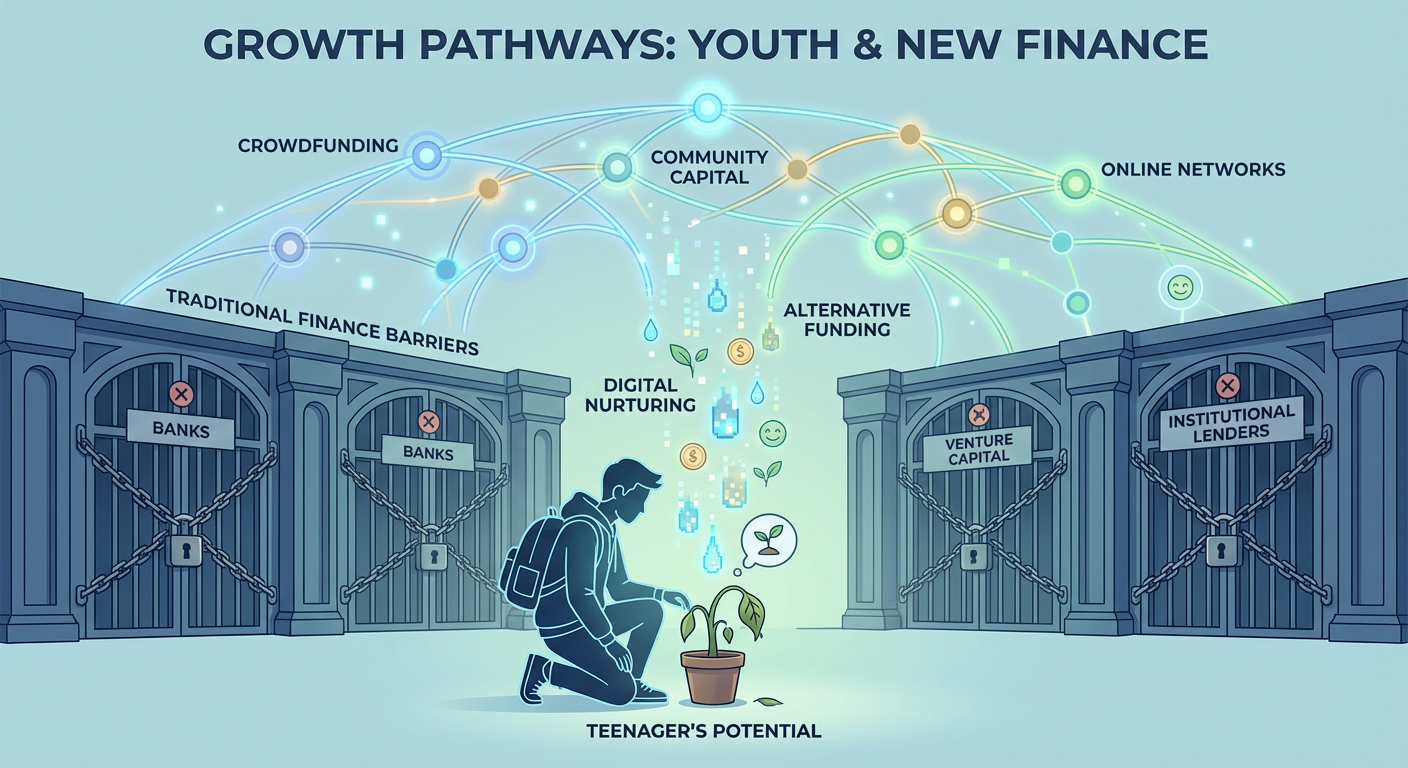
4. Creative Financing: Leveraging Crowdfunding and Community Capital
The traditional landscape of startup funding, characterized by bank loans, angel investors, and venture capital, has historically presented formidable barriers for young entrepreneurs, particularly teenagers. Minors often lack the credit history, collateral, or legal capacity required to secure conventional financing, while even adult investors frequently express skepticism about the business acumen and commitment of under-20 founders [11]. This pervasive funding gap has necessitated the exploration and adoption of alternative, more accessible capital sources. Among these, crowdfunding and community-centric financing mechanisms have emerged as transformative forces, democratizing access to capital and empowering a new generation of teen founders. These creative avenues not only provide vital seed funding but also offer invaluable opportunities for market validation, community building, and skill development. This section delves into the various facets of crowdfunding—rewards-based and equity-based—as well as other non-traditional funding streams such as grants, competitions, and micro-loans, examining their accessibility, their amplification through social media, and the inspiring success stories that underscore their profound potential for teen startups.
The Rise of Crowdfunding as a Game-Changer for Youth
Crowdfunding, defined as raising capital from a large number of people, typically through online platforms, has become a pivotal funding mechanism for young entrepreneurs in the last decade. It offers a stark contrast to traditional methods by eliminating the gatekeepers—banks and institutional investors—who often impose stringent criteria that are unattainable for teenagers [23]. The global crowdfunding market’s exponential growth, reaching **$17.4 billion in 2021** and projected to hit **$43.5 billion by 2028** [5], underscores its increasing legitimacy and widespread adoption. This rapid expansion, forecast at a Compound Annual Growth Rate (CAGR) of over 16.50% from 2022 to 2028, highlights how online platforms are actively opening access to capital for a diverse range of entrepreneurs, including the youth. There are primarily two types of crowdfunding that significantly benefit teen founders: rewards-based crowdfunding and equity-based crowdfunding.
Rewards-Based Crowdfunding: Pre-selling Products and Building a Community
Rewards-based crowdfunding platforms such as Kickstarter and Indiegogo allow entrepreneurs to raise funds by offering backers non-financial rewards, typically in the form of the product or service being developed. This model is particularly well-suited for teen founders with innovative consumer product ideas, as it allows them to gauge market interest, secure pre-orders, and build an early customer base. The age-agnostic nature of these platforms means that a compelling idea, regardless of the founder’s age, can attract significant support. A prime example of rewards-based crowdfunding’s transformative power for a young innovator is the story of Palmer Luckey and Oculus VR. In 2012, at just 19 years old, Palmer Luckey developed a prototype VR headset, the Oculus Rift, in his parents’ garage [24]. Opting against immediate venture capital, he launched a Kickstarter campaign, which spectacularly surpassed its $250,000 goal, raising **nearly $2.5 million** from thousands of backers [24]. This substantial community funding enabled Oculus to develop developer kits and refine its technology. The public validation and excitement generated by the Kickstarter campaign subsequently attracted top-tier investors, leading to over $90 million in VC funding, and ultimately, an acquisition by Facebook for an estimated **$2 billion** just 20 months after the crowdfunding campaign [24]. This case study is a testament to several key benefits of rewards-based crowdfunding for teen entrepreneurs:
- Bypassing Traditional Hurdles: Luckey, at 19, circumvented the typical challenges faced by young founders in securing traditional investment by directly appealing to a global audience.
- Market Validation: The overwhelming success of the campaign served as robust proof of market demand, significantly de-risking the venture for subsequent institutional investors.
- Community Building: Kickstarter backers often become early adopters and vocal advocates, forming a loyal community essential for a startup’s initial growth.
- Seed Capital for Development: The funds raised provided the necessary capital for prototyping and development, turning an ambitious project into a viable product.
Critics previously argued that crowdfunding was primarily for niche projects or small-scale ventures. However, Oculus’s journey from a crowdfunded project to a multi-billion-dollar exit unequivocally demonstrated that crowdfunding is a legitimate launchpad for serious, high-growth companies [24]. For young founders, Palmer’s story highlights that leveraging an online community can not only provide money but also public proof of concept that attracts major investors and acquirers.
Equity-Based Crowdfunding: Offering a Stake to the Crowd
Equity crowdfunding represents a more sophisticated form of crowdfunding where individuals invest small sums in exchange for actual ownership (equity) in the company. This model became legally viable in many jurisdictions in the mid-2010s, further expanding funding avenues for startups, including those led by young entrepreneurs [23]. A compelling illustration of equity crowdfunding’s potential involves Akshay Ruparelia, a British teenager. In 2017, at just 19 years old, Ruparelia utilized the equity crowdfunding platform Crowdcube to raise a substantial **£400,000** (approximately $530,000) from around 500 individual backers for his online real estate startup, Doorsteps.co.uk [10]. This successful campaign valued his company at an impressive £12 million just one year after its inception, earning him media attention as “Britain’s youngest millionaire” [10]. The Ruparelia case showcases several benefits specific to equity crowdfunding for teen founders:
- Access to Mid-Six-Figure Capital: Equity crowdfunding enabled a teenager to secure significant capital that would typically be out of reach without established investor networks or traditional bank financing [10].
- Validation and Publicity: A successful equity crowdfunding campaign not only provides capital but also offers considerable public validation and positive media attention, attracting further interest from potential customers and partners.
- Built-in Brand Ambassadors: Investors in an equity crowdfunding campaign often become loyal customers and vocal advocates for the business, effectively transforming them into a network of brand ambassadors.
- Shared Upside: It allows supporters to genuinely share in the potential financial success of the startup, fostering a stronger sense of connection and commitment.
Equity crowdfunding can be particularly complex for minors due to legal requirements concerning ownership and contracting. However, cases like Ruparelia’s, where a guardian or legal representative might manage the process, demonstrate its viability. This method signifies a profound shift in capital access, demonstrating that youth-led ventures, with a compelling proposition, can attract financial backing from a dispersed network of individuals.
The Role of Social Media in Amplifying Crowdfunding Campaigns
One of the distinct advantages teen founders possess is their inherent digital nativity and proficiency with social media. Platforms like Instagram, YouTube, and TikTok become powerful tools for promoting their startup journeys and galvanizing support for crowdfunding initiatives. This leverages their existing networks of friends, family, and online followers, effectively creating a “micro-crowdfunding” ecosystem [23]. A viral post or a captivating video can draw donations or investments from a global audience who resonate with the young entrepreneur’s vision. This grassroots approach plays directly to teens’ strengths in online storytelling and networking, helping to overcome the traditional “network gap” that often limits young entrepreneurs. The ability to collect small amounts from numerous individuals—whether it’s $20, $50, or $100—significantly lowers the barrier to entry for funding. A teen with a compelling idea can realistically raise several thousand dollars from peers, community members, and even strangers online, an amount that would be nearly impossible to secure through a conventional bank loan [23]. Beyond the monetary aspect, running a crowdfunding campaign offers invaluable learning experiences in marketing, pitching, and engaging with customers, serving as a real-world business school for young founders.
Challenges and Cautions in Crowdfunding
Despite its immense potential, crowdfunding is not without its challenges. Teen founders must meticulously plan their campaigns, set realistic financial goals, and commit to fulfilling promises to their backers. Failure to deliver, often due to inexperience or misjudgment of costs and timelines, can lead to negative public perception and reputational damage. Furthermore, most crowdfunding platforms require users to be at least 18 years old to create an account. This necessitates that very young entrepreneurs (under 18) collaborate with a parent or legal guardian to formally launch and manage the campaign on their behalf. The sheer volume of campaigns also means that a teen’s project must genuinely stand out through high-quality content and effective promotion to capture attention in a competitive landscape [23]. However, given the structured digital environment teens are adept at navigating, these challenges are often surmountable with guidance and careful execution. The increasing prevalence of crowdfunding has even led some high schools to integrate it into entrepreneurship curricula, teaching students the practicalities of raising capital through the crowd.
Grants, Competitions, and Micro-Loans: Expanding the Funding Portfolio
Beyond crowdfunding, several other creative financing mechanisms are becoming increasingly accessible to teen founders, often bridging the gap between small personal investments and larger venture capital rounds. These options include startup competitions, targeted grants, and micro-loans, each offering distinct advantages.
Startup Contests and Pitch Competitions
The proliferation of business plan competitions, hackathons, and pitch contests specifically designed for youth has created vital funding pathways. Events like the **Diamond Challenge** for high school entrepreneurs offer prize pools, with past awards totaling up to $100,000 for student-run ventures [26]. Organizations like Junior Achievement also host annual contests where teen teams present their startup ideas to judges for cash prizes or scholarships. These competitions not only provide crucial seed money but also invaluable mentorship, feedback, and networking opportunities. Even for those who don’t win, the experience gained in developing a business plan and pitching it publicly is immensely beneficial. For many teens, these contests represent their first tangible opportunity to secure external funding, ranging from a few hundred to several thousand dollars, which can be the initial spark for their projects. A notable example is a teenage girl in California who won a $10,000 prize in a startup contest for her renewable energy device, using the funds for prototyping and attracting further grants. Such success stories illustrate how contests can identify and nurture high-potential young founders.
Youth Business Grants: Non-Repayable Capital for Innovation
Grants are particularly attractive as they provide non-repayable funds, alleviating the burden of debt for young entrepreneurs. These grants typically come from nonprofit foundations, government agencies focused on economic development, or corporations supporting youth innovation. The **Thiel Fellowship**, for instance, offers **$100,000 grants** to selected founders under the age of 23, encouraging them to forgo traditional college education to pursue their entrepreneurial ideas [12]. Similarly, city governments and international bodies may offer grants to social enterprises led by young individuals addressing community challenges. For example, some programs award grants of $5,000 or more to teen-led initiatives tackling issues like clean water or education accessibility in emerging markets. The non-dilutive nature of grants (meaning no equity is surrendered) and the often-accompanying mentorship make them exceptionally valuable. They essentially treat the startup as an educational endeavor worthy of investment. These programs, though competitive, offer a critical lifeline for teens who wouldn’t qualify for traditional loans and provide crucial early-stage validation without financial strings attached. The 776 Fellowship, spearheaded by Reddit co-founder Alexis Ohanian, further exemplifies this trend by offering $100,000 to young innovators working on “moonshot projects.”
Micro-Loans: Small Loans with Big Potential
Microfinance, traditionally a tool for empowering entrepreneurs in developing countries, has increasingly adapted to serve young entrepreneurs in various regions. Micro-loans, ranging from a few hundred to a few thousand dollars, are designed to be more accessible, often supported by community organizations or government guarantees to mitigate risk. In Europe, an impressive **89% of microfinance institutions** now provide financing to young entrepreneurs [9], indicating a widespread commitment to bridging the youth funding gap. Programs like the UK’s Start Up Loans programme, which has disbursed over **£100 million** in micro-loans to 18-24-year-old entrepreneurs since 2012, exemplify governmental support for youth business financing [8]. These low-interest loans (averaging £5,000-£10,000) target young people who cannot access conventional bank credit and often include mentorship components [8]. Features such as easier qualification criteria, acceptance of a robust business plan, or a personal guarantor instead of a credit score, coupled with flexible repayment terms (e.g., small installments after a grace period), make these loans a viable option. While taking on debt is a significant step for a teenager, successful repayment of a micro-loan can help build a positive credit history, potentially unlocking larger capital access in the future.
Incubators and Accelerators in Educational Institutions
Educational institutions are becoming active participants in creative financing. Many high schools and universities now operate entrepreneurship clubs, incubators, or accelerator programs that provide seed funding. High school programs might offer $500-$1,000 “seed grants” to top student business ideas. University-level accelerators, such as those that are part of Y Combinator’s student-focused batches, allow college (and some gap-year high school) founders to apply and defer entrance, providing them with funding and structured support once they are ready to fully commit to their startup [11]. These programs also often host demo days where student startups can pitch to alumni or donors for additional funding. This academic ecosystem allows a motivated teen founder to progress from initial grants to potentially larger accelerator investments, scaling their venture with structured support at each stage.
Corporate and NGO Sponsorships
Corporate giants and non-governmental organizations (NGOs) also contribute to financing youth innovation. Tech companies frequently sponsor coding competitions with cash awards, while NGOs focused on economic development implement youth enterprise programs offering small grants alongside mentorship. For instance, the UN and development banks have sponsored youth entrepreneurship challenges in emerging markets, awarding significant sums to young social entrepreneurs. Even television shows such as *Shark Tank* have provided platforms for teenage entrepreneurs, where even if no on-air investment is secured, the exposure often leads to alternative funding or partnerships. This mosaic of grants, prizes, and micro-financing reflects a broader trend: if a teen founder demonstrates passion and potential, multiple non-traditional avenues exist to secure initial capital, often through a creative combination of these sources.
Emerging Support Systems and Investment Trends for Teen Startups
The landscape for teen entrepreneurs is not merely changing in terms of funding sources but also in the broader ecosystem of support and investor attitudes. A growing number of entities are recognizing the untapped potential of young founders, leading to the development of specialized support systems and a notable shift in investment trends.
Youth-Focused Venture Funds and Angel Networks
A significant development is the emergence of venture funds and angel networks explicitly targeting young founders. Beyond student-run initiatives like Dorm Room Fund, which has made over 326 investments in student startups and facilitated over $300 million in follow-on capital [7], there are now established VCs actively seeking out teenage prodigies. Kevin Hartz, a veteran investor, notably allocated approximately **20% of his A* Capital fund** to startups led by teenagers [6]. This bold move by a seasoned VC signals a fundamental shift, recognizing that young minds often possess unique insights into emerging technologies, consumer behaviors, and digital trends, giving them an advantage in sectors like AI, gaming, and social media. This trend indicates that youth is increasingly viewed as an asset—offering fresh perspectives and direct access to Gen Z markets—rather than a liability in the investment world.
Evolving Accelerator Programs
Historically, prestigious accelerators like Y Combinator and Techstars primarily focused on mature startups. However, this is evolving. Y Combinator, for instance, introduced programs for student founders, allowing them to apply early and defer entry if they are still in school, thereby preventing the loss of high-potential college-aged CEOs who might otherwise choose formal education over entrepreneurship [11]. Techstars has also engaged with youth through hackathons and entrepreneurial bootcamps, fostering a pipeline of young talent. Furthermore, specialized “teen-only” accelerators, such as Young Founders Lab and Carnegie Mellon University’s TartansXX, provide tailored support, mentorship, and funding in an environment conducive to underage innovators. These programs often accommodate school schedules and involve parents, helping to bridge the gap between a student project and a viable startup by making teens more “investment-ready.”
Scaling Mentorship and Networking Opportunities
Recognizing that funding alone is insufficient, a robust network of mentorship, peer support, and resource sharing has grown around young entrepreneurs. Nonprofits like Youth Business International connect young individuals with experienced business mentors across over 50 countries. Digital platforms, including Slack groups, Discord communities, and LinkedIn groups dedicated to “Teen CEOs,” facilitate peer interaction and knowledge exchange on topics ranging from legal navigation (e.g., incorporation for minors) to investor relations and balancing academics with entrepreneurial responsibilities. This growing network effect significantly accelerates learning and provides a crucial support structure, offering advice that was once difficult for young founders to access. From an investor perspective, teen founders connected to strong mentor networks are often seen as more prepared and credible, validating the investment.
Impact of Success Stories and Changing Attitudes
High-profile success stories have been instrumental in shifting perceptions. The acquisition of Nick D’Aloisio’s Summly for **$30 million** when he was 17 [9], the sale of Catherine Cook’s MyYearbook for **$100 million** when she was 21 [13], and Shubham Banerjee’s Braigo Labs securing Intel Capital funding at 13 [11], all garnered significant media attention. These cases, while exceptional, challenge the notion that age is a barrier to startup success, inspiring other teenagers and persuading investors to reconsider their biases. The “FOMO” (fear of missing out) among funders, particularly in rapidly evolving digital sectors dominated by younger demographics, further encourages investment in young talent. While some caution against over-romanticizing youth entrepreneurship, acknowledging the importance of experience and management skills for scaling a company, the overall trend points towards increasing inclusion of young founders within the startup ecosystem.
Policy Support and Legal Reforms
Governments and policymakers globally are beginning to address the regulatory hurdles for young entrepreneurs. Discussions are underway to simplify processes for minors to register businesses or access grants, typically requiring parental consent but aiming to Streamline other legal complexities. The success of programs like the UK’s Start Up Loans for individuals 18 and older [8] has prompted considerations for extending similar support to under-18 founders through educational channels. In regions with high youth unemployment, such as the EU (where 40% aspire to self-employment but only 7% are actually entrepreneurs [2]), policies are being developed to foster youth enterprise. The OECD’s “Missing Entrepreneurs” reports provide guidance for policies to improve access to finance for youth [27]. These systemic changes, coupled with grassroots initiatives, are creating a more enabling environment, suggesting that the future will see fewer limitations for talented young entrepreneurs based on age. Looking ahead, the convergence of diverse support systems—from specialized funds and tailored accelerators to robust mentorship networks and evolving policy frameworks—signals a powerful reinforcing cycle. As more teen startups achieve success, more resources will be allocated to support them, leading to even greater innovation and economic contributions. The aim is to make “funding future founders” an integral and organic part of the startup finance landscape, where creative financing options are not just alternatives but mainstream opportunities for the next generation of entrepreneurs, regardless of age or background. In sum, the evolution of creative financing options, particularly crowdfunding, has significantly altered the funding landscape for teen startups. These mechanisms, amplified by social media and buttressed by a growing ecosystem of support, provide crucial lifelines where traditional finance falls short. The success stories of young entrepreneurs leveraging these options serve as powerful proof points, demonstrating that age is no longer an insurmountable barrier to securing capital and building impactful ventures. The discussion now transitions from creative financing approaches to the role of education and mentorship in nurturing these nascent entrepreneurial endeavors.

5. Beyond Loans: Grants, Competitions, and Microfinance for Youth
The burgeoning entrepreneurial spirit among Gen Z presents a compelling paradox: while an unprecedented 60% of U.S. teens prefer starting their own business over traditional employment, up significantly from 41% in 2018[1][2], the actual rate of youth entrepreneurship remains strikingly low, with only about 7% of young people (15-30) in the EU actively running their own ventures despite 40% aspiring to self-employment[3][4]. This considerable gap between aspiration and participation underscores significant structural barriers, the most prominent of which is access to capital. Nearly 40% of aspiring young European entrepreneurs identify lack of funding and resources as their primary obstacle[5]. Traditional financing mechanisms, such as bank loans, are often inaccessible to minors due to a lack of credit history, collateral, and legal capacity, with 78% of new entrepreneurs of all ages relying on personal savings or family support in their first year[6]. This section delves into the critical role of non-traditional and creative financing options that are emerging to bridge this funding gap, enabling a new generation of teen founders to transform their innovative ideas into viable businesses. It explores the landscape of grants, startup competitions, and microfinance, alongside the growing influence of educational incubators and youth credit programs, all designed to cultivate and empower the next wave of entrepreneurial talent.
The Rise of Creative Financing: Addressing the Capital Gap for Youth
Traditional financial institutions are inherently risk-averse, making it exceedingly difficult for young entrepreneurs, particularly those below the age of majority, to secure business loans. The legal framework surrounding contracts and minors, coupled with the absence of credit history or substantial collateral, effectively bars most teenagers from conventional borrowing. This institutional reluctance leaves a significant void, which is increasingly being filled by alternative funding sources. These creative financing options are not merely about providing capital; they often come bundled with mentorship, educational resources, and networking opportunities, which are equally vital for nascent ventures led by inexperienced founders.
The global crowdfunding market serves as a prime example of this shift. Growing from $17.4 billion in 2021 to a projected $43.5 billion by 2028[7][8], crowdfunding platforms have democratized access to capital, allowing teen entrepreneurs to garner small investments from a large number of individuals, bypassing the stringent requirements of traditional lenders or venture capitalists. This mechanism leverages social capital and digital literacy, areas where Gen Z often excels, to convert public interest into financial backing. Additionally, microfinance institutions (MFIs), traditionally serving low-income and marginalized populations, have expanded their scope to include youth. A remarkable 89% of European MFIs now offer financing to young entrepreneurs[9], providing small, accessible loans often paired with business training. These options collectively form a crucial safety net and launchpad for young founders who would otherwise be sidelined by the traditional financial ecosystem.
Grants and Competitions: Fueling Innovation with Non-Dilutive Capital
Startup competitions and grants offer a particularly attractive funding avenue for teen founders because they often provide non-dilutive capital, meaning the founders do not have to give up equity in their company. These programs are designed not only to disburse funds but also to foster entrepreneurial skills, provide valuable feedback, and build foundational networks.
Startup Competitions and Pitch Events
The proliferation of business plan competitions and pitch events tailored for youth has become a significant catalyst for teen entrepreneurship. These events range from local school-level contests to prestigious international challenges, offering prize money, scholarships, and invaluable exposure.
- Structure and Benefits: These competitions typically require participants to develop a business idea, draft a comprehensive business plan, and present their concept to a panel of judges, often comprising experienced entrepreneurs, investors, and academics. Beyond the financial awards, the process itself is highly educational. Participants gain critical skills in market research, financial modeling, public speaking, and strategic thinking. The feedback from judges and mentors can be pivotal for refining their business models and identifying potential pitfalls.
- Prize Pools: Prize money varies significantly, from a few hundred dollars for local contests to substantial sums for national and international challenges. For instance, the Diamond Challenge, a globally recognized competition for high school entrepreneurs, offers a prize pool of $100,000 for student-run ventures[20]. Similarly, organizations like Junior Achievement host annual events where teen teams compete for cash prizes that can serve as crucial seed funding.
- Validation and Networking: Winning or even placing well in a respected competition provides significant validation for a young entrepreneur’s idea. This external endorsement can be a powerful tool when seeking further investment or partnerships. Attendees also gain opportunities to network with peers, mentors, and potential investors, expanding their social capital.
- Case in Point: A teenage girl in California, for instance, secured a $10,000 prize in a startup contest for her renewable energy device. This initial capital allowed her to develop a prototype, which subsequently helped her attract further grants and support. Such examples demonstrate how competitions can identify and nurture high-potential young founders, providing them with the necessary resources to progress.
Youth Business Grants from Foundations, Governments, and Corporations
Grants represent another vital source of non-dilutive funding, often targeting specific demographics or types of ventures, such as social enterprises or innovative tech startups. These grants are increasingly available from a diverse array of sources:
- Non-profit Foundations: Many philanthropic organizations are dedicated to fostering youth development and innovation. Foundations may offer grants to young entrepreneurs whose ideas align with their mission, such as environmental sustainability, social impact, or technological advancement.
- Government Agencies: Governments, recognizing the long-term economic benefits of nurturing entrepreneurship, particularly among youth, have established various grant programs. These can range from local city initiatives supporting youth innovation to national-level programs. For example, some city governments offer $5,000 grants to teen-run social enterprises addressing community issues.
- Corporate Sponsorships: Corporations engage in grant-making as part of their corporate social responsibility initiatives or to scout new talent and ideas. Tech giants, for instance, frequently sponsor coding competitions for teens, offering cash awards and resources to winners. Organizations like the U.N. and development banks also sponsor youth entrepreneurship challenges in emerging markets, awarding grants of around $10,000 to young social entrepreneurs tackling critical issues like clean water or education access.
- Specialized Fellowships: Programs like the Thiel Fellowship exemplify this approach, offering $100,000 grants to selected entrepreneurs under 23 years old, encouraging them to skip or defer college to build their companies[15]. Since its inception in 2011, it has funded over 200 young founders globally[16], producing several notable startups. Other initiatives, like the 776 Fellowship (founded by Reddit co-founder Alexis Ohanian), provide $100,000 to young individuals working on “moonshot projects,” further illustrating the trend of high-value non-dilutive support for youth.
These grant programs, while highly competitive, provide crucial financial runway and often include mentorship components, effectively treating the startup journey as an educational pursuit worthy of investment. For many teens, securing a grant can mean the difference between an idea languishing and transforming into a functional prototype or a small-scale pilot.
Microfinance and Youth Credit Programs: Building Financial Inclusion
While grants and competitions provide non-repayable funds, microfinance and youth credit programs offer debt-based financing tailored to the unique circumstances of young entrepreneurs lacking traditional collateral or credit history.
The Expanding Role of Micro-loans
Microfinance institutions (MFIs) have historically provided small loans to individuals who are excluded from conventional banking services. Their increasing focus on young entrepreneurs represents a significant evolution in financial inclusion efforts.
- Accessibility: Micro-loans typically range from a few hundred to a few thousand dollars, amounts that are manageable for startup costs but often too small for traditional banks to process efficiently. The application criteria are often more flexible, sometimes accepting a robust business plan and a personal guarantor in lieu of a established credit score.
- Prevalence in Europe: A 2023 statistic highlights that 89% of microfinance institutions in Europe now extend financing to young entrepreneurs[9]. This widespread adoption underscores the recognition of microfinance as a vital tool to help young individuals overcome capital barriers and pursue self-employment.
- Support and Training: Many micro-loan programs integrate business training and mentorship alongside financial assistance. This holistic approach is crucial for young founders who may lack formal business education or experience. The training can cover financial literacy, business planning, marketing, and operational management.
- Building Credit History: Successful repayment of a micro-loan can help young entrepreneurs establish a positive credit track record, an essential step toward accessing larger capital pools as their businesses grow. This first financial stepping stone can be transformative for long-term financial independence and business expansion.
Government-Backed Youth Credit Schemes
Governments play an increasingly active role in supporting youth entrepreneurship through dedicated loan programs, recognizing its potential for job creation and economic development.
- UK’s Start Up Loans Programme: A prominent example is the UK’s Start Up Loans programme. Since its inception in 2012, this government-backed scheme has disbursed over 15,000 micro-loans, totaling more than £100 million, to entrepreneurs aged 18–24[14]. These low-interest loans (averaging £5,000–£10,000) are specifically designed for young people who cannot secure credit from conventional banks. The program’s scale demonstrates strong policy support and high demand for youth-specific business financing.
- International Models: Similar initiatives exist globally, such as Canada’s Futurpreneur program and India’s Pradhan Mantri Mudra Yojana (PMMY), which offer collateral-free loans coupled with mentorship to young business owners. These programs are often emulated in other countries, illustrating a growing international commitment to youth entrepreneurship.
- Addressing “Necessity Entrepreneurship”: In regions with high youth unemployment, such as parts of sub-Saharan Africa or South Asia, these financing options are particularly critical. Many young people turn to entrepreneurship out of necessity, creating informal micro-businesses to generate income. Access to micro-loans can help these “necessity entrepreneurs” formalize and scale their ventures, moving beyond subsistence and contributing more significantly to the economy.
While taking on debt can be daunting for young founders, the structured nature, favorable terms, and integrated support of these micro-loan and credit programs make them a viable and often necessary pathway for turning entrepreneurial concepts into commercial realities.
Educational Incubators and Accelerators: Nurturing Growth Beyond Capital
Educational institutions and dedicated youth-focused programs are providing not only seed capital but also the crucial infrastructure and expertise needed to nurture young startups. These incubators and accelerators play a vital role in de-risking early-stage ventures and preparing teen founders for more significant investment.
School and University Programs
- High School Incubators: Many high schools have integrated entrepreneurship into their curriculum, establishing clubs and incubator programs. These programs often provide small “seed grants”—typically $500 to $1,000 for top student business ideas—at the culmination of semester-long courses. This initial funding, paired with educational guidance, allows students to test their concepts in a supportive environment.
- University Accelerators and Funds: At higher education levels, the support becomes more robust. University-affiliated accelerators provide structured programs, office space, mentorship, and often equity-free grants or small investments. Some universities even operate their own venture funds, investing in student-led startups.
- Student-Run Venture Funds: The success of initiatives like Dorm Room Fund, a venture capital fund run by students that targets student-founded startups, illustrates the potent combination of youth insight and institutional backing. Dorm Room Fund has made over 326 investments in student companies, which have collectively raised over $300 million in follow-on capital[12][13]. This demonstrates the multiplier effect of early-stage investment in promising young founders.
- Demo Days: Colleges frequently host “demo days” where student entrepreneurs pitch their ventures to alumni networks and donors, often securing additional funding and mentorship. This ecosystem ensures that a motivated teen can progress through stages of increasing support, from a high school prize to potentially a funded accelerator.
Youth-Focused Accelerators and Mentorship Networks
Beyond traditional educational settings, specialized accelerators and extensive mentorship networks are emerging to cater to the unique needs of young entrepreneurs:
- Tailored Accelerator Programs: While top accelerators like Y Combinator and Techstars primarily target older founders, they are increasingly adapting to accommodate younger talent. Y Combinator, for instance, has launched programs for student founders, allowing them to apply early and defer college entrance, ensuring that promising young CEOs don’t miss out on crucial support. Dedicated teen accelerators, such as Young Founders Lab, provide a safe and structured environment for under-18 innovators, often involving parents in certain sessions and scheduling around school commitments.
- Mentorship as a Cornerstone: Recognizing that young founders often lack business experience and networks, numerous organizations prioritize mentorship. Non-profits such as Youth Business International, a global network operating in over 50 countries, connect young entrepreneurs with seasoned business mentors and sometimes supplement this with loan provisions. The Thiel Fellowship also emphasizes a strong mentorship aspect alongside its grant funding, with alumni forming communities to support new fellows. Veteran investor Daymond John’s mentorship of Moziah Bridges of Mo’s Bows, even in the absence of an immediate cash deal on Shark Tank, proved more valuable, helping propel the business through strategic partnerships and media exposure[25][26][27][28].
- Digital Communities: The digitalネイティブ generation leverages online platforms for peer support. Slack groups, Discord communities, and online forums dedicated to teen entrepreneurs facilitate the exchange of tips on navigating legalities, identifying teen-friendly investors, and balancing academic and startup responsibilities. This growing network effect significantly accelerates learning and reduces the isolation often experienced by young innovators.
These support systems are crucial for fostering a robust youth entrepreneurship ecosystem. They not only provide financial resources but also equip young founders with the knowledge, skills, and connections necessary to grow their ventures sustainably. By creating a more supportive and structured pathway, these programs make young founders more “investment-ready,” paving the way for larger funding rounds down the line.
Emerging Investment Trends and Policy Support for Underage Founders
The landscape of investment for teen startups is undergoing a significant transformation, driven by changing investor attitudes, a growing recognition of youth-led innovation, and evolving policy frameworks. This shift is turning age from a perceived liability into an asset for disruptors.
Warming Up to Younger Founders: VC and Angel Investor Trends
While venture capital traditionally favored older, more experienced entrepreneurs, there is a clear shift in sentiment. The number of venture capital deals involving teenage founders in the U.S. has more than doubled in the past five years[10]. This signals a growing willingness among investors to recognize the unique insights and technical prowess of younger generations.
- Dedicated Youth Funds: The emergence of venture funds specifically targeting young founders is a game-changer. For example, Kevin Hartz, a veteran investor, has allocated approximately 20% of his A* Capital fund to startups led by teenagers[11]. This bold move underscores a belief that young founders, especially in rapidly evolving tech domains like AI, gaming, and social applications, possess an innate understanding of emerging markets and consumer behaviors. As TechCrunch reported, “backing exceptional youth early can yield huge payoffs.” Specialized university funds like General Catalyst’s Rough Draft Ventures also provide seed capital and guidance to promising student entrepreneurs.
- The “Youthquake” Phenomenon: High-profile success stories of young entrepreneurs, such as Nick D’Aloisio selling Summly to Yahoo for $30 million at 17[17][18], or Catherine Cook’s MyYearbook being acquired for $100 million when she was 21[19], have generated considerable media attention. These cases inject a “fear of missing out” (FOMO) among investors, prompting them to actively scout high-school and college-aged founders. The success of Palmer Luckey’s Oculus Rift, which raised nearly $2.5 million via Kickstarter at 19 before a $2 billion acquisition by Facebook, demonstrated the immense potential of crowdfunded teen ventures[23].
- Impact and Innovation Driving Investment: Some investors are particularly swayed by young entrepreneurs tackling significant social challenges. Shubham Banerjee, at just 13, secured an investment from Intel Capital for Braigo, his low-cost Braille printer prototype[29][30]. This illustrates that groundbreaking innovation and strong social impact can transcend age barriers, convincing even major corporate venture arms to invest in a middle-schooler.
Policy Support and Legal Reforms
Governments and regulatory bodies are beginning to acknowledge the need for policy and legal adjustments to better support young entrepreneurs:
- Addressing Legal Hurdles: The legal complexities of minors entering contracts, opening business accounts, or holding intellectual property are significant. Some jurisdictions are exploring legislative changes to simplify these processes for underage founders, possibly through the involvement of guardians or the establishment of specific trust mechanisms. For example, Shubham Banerjee’s mother had to sign on as company president for Braigo Labs to receive Intel’s investment[31].
- Entrepreneurship in Education: Integrating entrepreneurship education into school curricula is a global trend, with many programs culminating in opportunities for seed funding. These educational initiatives cultivate an entrepreneurial mindset from a young age, equipping future founders with foundational skills.
- Youth Empowerment Initiatives: In regions facing high youth unemployment, policy support aims to channel young talent towards entrepreneurship. The EU’s “Youth Guarantee” and OECD’s recommendations for inclusive entrepreneurship policies highlight the importance of dedicated support schemes, including financial access, for young people.
These policy changes, combined with a cultural shift towards celebrating youthful innovation, are creating a more conducive environment for teen startups. As more successes emerge, a positive feedback loop is established, encouraging further investment and support, which in turn facilitates more entrepreneurial endeavors.
Conclusion and Future Outlook
The journey of funding future founders is rapidly evolving beyond the confines of traditional financial models. Grants, competitions, and microfinance, alongside educational incubators and youth credit programs, are proving to be indispensable pathways for teen entrepreneurs. These creative financing options and robust support systems are not just providing capital; they are building confidence, fostering critical skills, and expanding networks for a generation eager to innovate.
The trajectory for teen entrepreneurship points decidedly upward. With demographic shifts favoring digital natives and increased access to online education and marketplaces, the next decade is poised to witness an unprecedented wave of teen-founded startups. The convergence of targeted financial support, mentorship, and a genuine shift in investor perception suggests that age will increasingly become less of a barrier and more of a distinctive advantage. While challenges remain, the ecosystem is rapidly adapting to nurture these young innovators, recognizing that investing in them is an investment in future economic growth and disruptive innovation. The examples of Nick D’Aloisio, Palmer Luckey, Moziah Bridges, and Shubham Banerjee are not mere anomalies but harbingers of a future where exceptional talent, regardless of age, will find the resources and support needed to build world-changing companies.

6. The Evolving Landscape of Support: Youth-Focused Investors and Accelerators
The surge in entrepreneurial ambition among teenagers, with 60% of U.S. teens expressing a preference to start a business over traditional employment, marks a significant cultural shift and an unprecedented “Youthquake” effect on the startup ecosystem1, 2. This enthusiasm, however, has historically been tempered by a stark reality: despite roughly 40% of young people in the European Union aspiring to self-employment, only about 7% actually establish their own ventures, primarily due to significant barriers, with access to capital topping the list for nearly 40% of aspiring young entrepreneurs3, 4. Traditional financing mechanisms remain largely inaccessible for minors, who typically lack credit history, collateral, and legal capacity to secure business loans. This structural impediment has historically stifled the potential of many young innovators, forcing 78% of all new entrepreneurs to rely on personal savings or family support in their first year, a challenge magnified for under-20 founders with limited financial resources5. However, the landscape is rapidly evolving. A growing recognition of the inherent potential, fresh perspectives, and digital fluency of young founders is spurring a transformative shift in how the investment community perceives and supports them. The past decade has witnessed the emergence of specialized youth-focused venture funds, angel networks, accelerators, and creative financing mechanisms designed to bridge this capital gap. This section deep-dives into these burgeoning support structures, illustrating how innovative approaches to funding, mentorship, and ecosystem building are democratizing access to capital for teen startups and fundamentally reshaping the future of entrepreneurship. Driven by early successes of teen-led ventures and the sheer demographic force of a digitally native generation, investors and institutions are increasingly viewing youth as an asset rather than a liability, leading to a vibrant and expanding ecosystem dedicated to nurturing the next wave of founders.
6.1. The Paradigm Shift: Investors Warming Up to Younger Founders
Historically, the venture capital (VC) world has favored founders in their late 20s to 40s, often citing concerns about experience, maturity, and the ability to navigate complex business challenges. This traditional bias meant that teenage entrepreneurs faced an uphill battle for serious consideration. However, data from the past five years indicates a clear and accelerating shift in this attitude. The number of VC deals involving teenage founders in the U.S. has more than doubled, signaling a profound change in investor appetite10. This nascent but significant trend reflects a growing understanding among investors that age is not necessarily a proxy for innovation or market insight, particularly in rapidly evolving technological domains.
6.1.1. Specialized Venture Funds and Angel Networks
One of the most striking developments is the emergence of venture funds and angel networks explicitly created to discover and support young entrepreneurs. These entities are not just dabbling in youth investments; they are making it a core part of their investment strategy. * **Dorm Room Fund (DRF):** A pioneering example, Dorm Room Fund is a student-run venture fund backed by First Round Capital. Since its inception, DRF has made over 326 investments in student-founded startups, primarily targeting college-aged entrepreneurs, but proving the viability of investing in early-stage, young teams7. These portfolio companies have collectively raised over $300 million in follow-on capital from major investors, demonstrating the significant multiplier effect that early-stage student funding can achieve8. DRF typically provides around $40,000 in early-stage capital, acting as a crucial confidence-builder and enabler for young teams. The success of DRF has validated the concept that student-led ventures, often initiated by individuals in their late teens or early twenties, can achieve significant growth and attract further institutional investment. * **A\* Capital and Kevin Hartz’s Vision:** Perhaps the most compelling evidence of this paradigm shift comes from veteran investor Kevin Hartz, co-founder of A\* Capital. Hartz has remarkably allocated close to **20% of his fund** to startups led by teenagers, a strategy virtually unimaginable a decade ago11. His rationale underscores the evolving investment thesis: “young tech entrepreneurs today often have impressive skills and market insight”10. Hartz believes that very young founders often possess an intuitive understanding of emerging trends, especially in areas like AI, gaming, and social apps, where consumption patterns and user expectations are predominantly shaped by their generation. This perspective positions youth as a strategic advantage, offering “fresh perspective and early entrée into Gen Z consumer markets.” The firm actively scouts high-school and college-aged founders, recognizing them as a potential source of disruptive innovation. * **Rough Draft Ventures (General Catalyst):** Similar to Dorm Room Fund, General Catalyst’s Rough Draft Ventures provides small checks and guidance to university entrepreneurs. These initiatives serve as vital feeder systems, nurturing talent at an early stage and preparing them for larger VC rounds. * **Angel Networks and Impact Investing:** Beyond formalized funds, several angel networks and individual angel investors are increasingly specializing in backing youth. These investors often combine financial capital with hands-on mentorship, recognizing that young founders benefit immensely from guidance on business strategy, legal frameworks, and team building. The drive to support social impact ventures also plays a role, as many young founders are driven by a desire to solve global challenges, attracting impact-focused investors. The growing inclusion of younger entrepreneurs in investment portfolios signifies a crucial attitudinal shift. Investors are moving away from rigid age-based criteria towards a more meritocratic approach, where the strength of the idea, the founders’ drive, and their understanding of the market weigh more heavily than their birth certificate.
6.2. Accelerators and Incubators: Tailoring Support for Teen Founders
Traditional startup accelerators and incubators, designed for a more mature demographic, have typically seen very few, if any, teenage participants. However, the increasing interest and success of young founders are prompting these established institutions, as well as new specialized programs, to adapt their models.
6.2.1. Mainstream Accelerators Embracing Youth
Top-tier accelerators are beginning to create pathways for younger talent: * **Y Combinator’s Student Program:** Y Combinator (YC), one of the world’s most prestigious accelerators, has recognized the need to accommodate student founders. They introduced a program that allows talented student entrepreneurs to apply and defer their participation, effectively reserving them a spot and providing funding once they are ready to fully commit (e.g., after graduation)11. This forward-thinking approach acknowledges that high-potential student founders might pursue a degree first but still represent valuable long-term investment prospects. It mitigates the dilemma of choosing between education and entrepreneurship, offering a structured path to both. * **Techstars Youth Initiatives:** Techstars, another prominent accelerator network, has engaged with younger demographics through youth hackathons and entrepreneurial bootcamps. These programs serve as talent pipelines, exposing young innovators to the startup methodology and identifying promising future founders.
6.2.2. Dedicated Youth Accelerators and School-Based Programs
A more direct response to the needs of young founders has been the proliferation of accelerators and incubators specifically designed for them. * **Teen-Only Accelerators:** Programs like **Young Founders Lab** and **TartansXX** (by Carnegie Mellon University) create tailored environments for under-18 innovators. These programs understand the unique constraints and requirements of young founders, such as scheduling around school commitments, involving parents in certain sessions, and providing age-appropriate mentorship. They offer a “safe space for under-18 innovators to accelerate their ideas with mentorship and a bit of funding.” These specialized programs help bridge the gap between an adolescent’s innovative idea and the structured development needed to transform it into a viable startup, making participants more “investment-ready.” * **School and University Incubators:** Educational institutions are becoming crucial players in early-stage youth entrepreneurship. Many high schools now integrate entrepreneurship clubs and incubator programs that provide modest funding and structured learning. For instance, a high school might offer **$500 to $1,000 “seed grants”** to top student business ideas emerging from a semester-long incubator course. At the university level, venture funds often invest in student startups, and demo days provide opportunities for young founders to pitch to alumni donors for funding. This academic ecosystem, therefore, creates a progressive pathway where a motivated teen could move from a local school competition to a university grant, and potentially to a funded accelerator.
6.2.3. The Thiel Fellowship and Non-Traditional Routes
The **Thiel Fellowship**, launched in 2011 by Peter Thiel, represents a radical, yet highly influential, approach to supporting young founders. It offers **$100,000 grants** to entrepreneurs under 23 years old, with the explicit condition of “skipping college” to focus entirely on building their companies12. * **Impact and Inspiration:** To date, the Thiel Fellowship has funded over 200 young founders globally, many of whom have gone on to build notable startups, including several “unicorns” (companies valued at over $1 billion)13. This model demonstrates the power of non-dilutive funding combined with intense mentorship, proving that early, significant investment in raw talent can yield extraordinary results. * **Spinoff Programs:** The success of the Thiel Fellowship has inspired similar programs, such as **Z Fellows**, which offers $10,000 mini-grants specifically to high school-aged innovators14. These programs underscore a shift towards identifying and empowering exceptional individuals regardless of their educational background or age, focusing instead on their potential to redefine industries. The evolution of accelerators and specialized youth programs marks a pivotal point. They provide not just capital but also critical structured guidance, mentorship, and a network that young founders typically lack. This support is instrumental in transforming nascent ideas into viable businesses and preparing teen entrepreneurs for the challenges of scaling.
6.3. Creative Financing Solutions Closing the Capital Gap
Given the traditional barriers to capital for teenagers, creative financing options have become essential for enabling young founders to launch and grow their ventures. These alternatives bypass conventional banking and venture capital, leveraging community support, digital platforms, and targeted government programs.
6.3.1. The Rise of Crowdfunding
Crowdfunding has emerged as a particularly potent tool for young entrepreneurs, allowing them to raise capital directly from a “crowd” of individual backers. Global crowdfunding volume reached $17.4 billion in 2021 and is projected to skyrocket to $43.5 billion by 2028, reflecting its growing mainstream acceptance and accessibility6. * **Lowering Barriers:** Platforms like Kickstarter and Indiegogo enable teens to pitch their ideas online, securing small amounts of money from many supporters. This approach effectively circumvents the need for credit history or collateral. The key for young founders is a compelling story and the ability to rally a community. * **Case Study: Oculus VR (Palmer Luckey):** A prime example is Palmer Luckey, who at 19, prototyped the Oculus Rift VR headset. Instead of seeking traditional VC, he launched a **Kickstarter campaign in 2012** that raised nearly **$2.5 million**, far exceeding his $250,000 goal27. This community funding allowed him to create developer kits and refine the product, eventually attracting top-tier investors and leading to a **$2 billion acquisition by Facebook** just 20 months later. Luckey’s story epitomizes how crowdfunding can validate a product and empower a young creator to secure significant capital. * **Equity Crowdfunding:** Beyond reward-based campaigns, equity crowdfunding allows individuals to invest in a startup in exchange for a share of the company. Akshay Ruparelia, a 19-year-old in the UK, used **Crowdcube to raise £400,000** from approximately 500 individual backers for his online real estate startup, Doorsteps.co.uk16. This secured a **£12 million valuation** for his company within a year of its founding, all without traditional venture capital. Equity crowdfunding provides both capital and a built-in network of brand ambassadors. Crowdfunding also plays to the digital native strengths of Gen Z, who are adept at leveraging social media for storytelling and community building. This grassroots approach helps overcome the network gap that traditionally disadvantaged young entrepreneurs.
6.3.2. Grants, Competitions, and Micro-Loans
A diverse array of non-traditional funding mechanisms further empowers young founders: * **Startup Competitions:** Business plan competitions and pitch contests are invaluable for teens. Events like the **Diamond Challenge** offer significant prize pools, such as **$100,000 in awards**, to student ventures28. Organizations like Junior Achievement also host annual contests where teen teams pitch their startups for cash prizes and scholarships. These competitions not only provide seed money but also essential training, feedback, and networking opportunities. Winning a respected competition can also bestow vital credibility, acting as a “milestone” that attracts further investment or grants. * **Youth Business Grants:** Numerous grants specifically target young entrepreneurs. Non-profit foundations, government economic development agencies, and corporations provide non-repayable funds for promising ideas. For instance, the **Thiel Fellowship offers $100,000 grants** to under-23 founders to “skip college and build companies”12. Small-scale grants like the **776 Fellowship** offer $100,000 each to young individuals pursuing “moonshot projects.” These grants are highly competitive but offer crucial runway without dilution. * **Micro-Loans and Youth Credit Programs:** Leveraging the microfinance model, which traditionally serves low-income entrepreneurs, many microfinance institutions (MFIs) and credit unions now offer specialized products for young founders. In Europe, 89% of MFIs currently provide financing to young entrepreneurs, reflecting a widespread commitment to bridging this financial gap9. These micro-loans, typically ranging from a few hundred to a few thousand dollars, are often backed by community organizations or government guarantees. * The **UK’s Start Up Loans program** (a government initiative) has been particularly impactful, delivering over **15,000 loans totaling more than £100 million** to 18-24-year-old entrepreneurs since 201217. These low-interest loans (averaging £5,000-£10,000) are designed for young individuals who don’t qualify for traditional bank credit, providing essential capital for equipment, inventory, or initial operations. Success with such micro-loans can also help young entrepreneurs build a credit history, paving the way for larger capital access in the future. * **Corporate and NGO Sponsorships:** Large corporations and non-governmental organizations (NGOs) also contribute by sponsoring youth innovation challenges, providing cash awards, resources, and mentorship. Tech giants often fund coding competitions, and development-focused NGOs might run youth enterprise programs, offering combined funding and guidance. Media platforms, such as “Shark Tank-style TV shows,” have also featured teenage entrepreneurs, generating public attention and sometimes leading to funding or partnerships, even if an on-air deal isn’t secured. These creative financing avenues represent a mosaic of support, enabling young founders to combine various sources – a grant here, prize money there, perhaps a micro-loan – to fund their initial ventures. This approach is vital for teenagers who often cannot access a single large funding source.
6.4. Success Stories: Inspiring the Next Generation and Validating the Model
The increasing willingness of investors and institutions to support younger founders is significantly fueled by the growing number of high-profile success stories. These real-world examples demonstrate that age is not a barrier to building valuable and impactful companies, inspiring both aspiring teen entrepreneurs and potential backers. * **Summly (Nick D’Aloisio):** At just 15 years old, Nick D’Aloisio from London created Summly, an AI-powered news-summary app. With initial angel funding (reportedly around $300,000), Summly gained traction. In March 2013, when D’Aloisio was only 17, **Yahoo acquired Summly for approximately $30 million**15. This landmark acquisition made headlines globally, positioning D’Aloisio as one of the youngest tech millionaires and proving that a teenage founder with a compelling product could attract significant corporate interest and acquisition. * **MyYearbook (Catherine Cook):** Catherine Cook co-founded the social networking site MyYearbook with her brothers when she was just 15. The platform grew significantly, and when she was 21, **MyYearbook was acquired for $100 million**18. This long-term success story highlights that teen-led initiatives can evolve into substantial businesses with significant exit potential. * **Mo’s Bows (Moziah Bridges):** Moziah “Mo” Bridges started Mo’s Bows at the age of nine, transforming a hobby of making bow ties into a recognized fashion brand. While he didn’t secure a direct cash investment on “Shark Tank” at age 12, investor Daymond John offered invaluable mentorship29. This guidance helped Mo’s Bows secure major retail and licensing deals, including an agreement with the NBA, demonstrating how **strategic mentorship and partnerships** can be as crucial as direct capital in a young founder’s journey. By 2017, the company had sold over $200,000 worth of bow ties32. * **Braigo Labs (Shubham Banerjee):** Shubham Banerjee, at 12 years old, developed “Braigo,” a low-cost Braille printer prototype using LEGO Mindstorms. By age 13, he secured an unspecified but significant investment (reportedly a few hundred thousand dollars) from **Intel Capital**, making him one of the youngest entrepreneurs to receive venture capital funding19. His story underscores that innovative solutions addressing social problems can attract serious investment, irrespective of the founder’s age, and highlights the necessary adjustments (e.g., parental involvement) when funding underage individuals. These examples, while exceptional, serve as powerful proof points. They inspire other teenagers to pursue their entrepreneurial dreams and, critically, encourage more investors to reconsider their biases. The increasing visibility of such stories contributes to a “Youthquake” effect, creating a “fear of missing out” (FOMO) among funders who do not want to overlook the next disruptive idea simply because its creator is young. This dynamic is slowly but surely normalizing youth entrepreneurship within the mainstream investment community. The table below summarizes key youth-focused funding and support initiatives:
| Initiative/Program | Type of Support | Target Demographic | Key Features & Impact | Source |
|---|---|---|---|---|
| Dorm Room Fund | VC Fund | Student-led startups (college, some high school age) | 326+ investments, ~$40k/startup, >$300M in follow-on capital. Proves viability of investing in young founders. | 7, 8 |
| A* Capital (Kevin Hartz) | VC Fund | Teen-led startups (under 20) | ~20% of fund allocated to teen founders. Focus on fresh perspectives in new tech domains (AI, gaming, apps). | 11 |
| Thiel Fellowship | Non-dilutive Grant & Mentorship | Entrepreneurs under 23 | $100,000 grants to skip college and build companies. Funded 200+ founders globally, several unicorns. | 12, 13 |
| Z Fellows | Mini-grants & Mentorship | High school-aged innovators | $10,000 mini-grants. Inspired by Thiel model, targets even younger demographic. | 14 |
| UK Start Up Loans | Government Micro-loan Program | 18-24 year old entrepreneurs | >15,000 loans, >£100 million disbursed since 2012. Low-interest, small loans with mentorship. | 17 |
| Microfinance Institutions (Europe) | Micro-loans | Young entrepreneurs (often under 30) | 89% of European MFIs finance youth ventures. Bridging gap where traditional banks fail. | 9 |
| Diamond Challenge | Startup Competition | High school students | Offers $100,000 in awards for student ventures. Provides seed money, coaching, and feedback. | 28 |
| Y Combinator (Student Program) | Accelerator | Student founders (college, some high school gap year) | Allows early application and deferred entry after graduation. Accommodates high-potential student CEOs. | 11 |
6.5. Policy Support and the Future Outlook
The momentum building around youth entrepreneurship is also influencing policy and legal frameworks. Governments and international organizations are recognizing the economic and social benefits of fostering young innovators. * **Adapting Regulations:** Some jurisdictions are exploring ways to streamline processes for minors to register businesses or access grants. While parents or guardians remain crucial for legal compliance (e.g., co-signing agreements, as seen in the Braigo Labs case), the goal is to reduce unnecessary bureaucratic hurdles. The success of programs like the UK’s Start Up Loans is leading to discussions about extending similar support to under-18 founders through educational channels. * **Youth Empowerment Initiatives:** In regions grappling with high youth unemployment, entrepreneurship is integrated into broader youth empowerment strategies. The EU’s “Youth Guarantee,” for example, includes provisions to help young people start businesses, reflecting a commitment to viewing entrepreneurship as a viable career path to combat joblessness. Organizations like the OECD are actively publishing policy guidance to improve access to finance for youth, recognizing the persistent “missing entrepreneurs” challenge. * **Reinforcing Cycle:** The convergence of these trends creates a powerful reinforcing cycle: as more teen startups succeed, more investors and institutions are encouraged to support them, which in turn leads to even more successes. This positive feedback loop is crucial for the long-term growth of teen entrepreneurship. * **Addressing Legal and Practicalities:** The involvement of parents or legal guardians is currently indispensable for underage founders, particularly in securing funding or entering contracts. This is evident in cases like Shubham Banerjee’s Braigo Labs, where his mother had to sign on as company president to co-sign the venture agreement19. Future legal reforms might explore mechanisms like trust accounts or guardian-supervised corporate structures that allow minors to directly own equity or receive funds. * **The “Gen Z Advantage”:** Demographic shifts and the innate digital skills of Gen Z and future generations suggest that teen entrepreneurship will continue its upward trajectory. These digital natives are inherently entrepreneurial, with many already engaged in side hustles and online ventures. As they acquire startup skills through formal education and online resources, and with expanding access to alternative financing, the next decade is poised to witness a significant increase in teen-founded startups scaling globally. The evolving landscape of support for youth entrepreneurship is characterized by a dynamic interplay of specialized investment vehicles, tailored accelerator programs, innovative financing models, inspiring success stories, and progressive policy shifts. This comprehensive ecosystem is rapidly transforming what it means to be a young founder, significantly lowering barriers to capital, and fostering a generation of innovators poised to shape the future. The momentum is undeniable, and the trajectory points toward a future where a talented 16-year-old’s groundbreaking idea has a clear and well-supported path to market. _This comprehensive reshaping of the entrepreneurial ecosystem for young founders also brings into focus the evolving role of crowdfunding as a catalyst, which will be explored further in Section 7._
7. Policy and Ecosystem Development: Fostering a More Inclusive Environment
The landscape for teen entrepreneurship, while currently dynamic and full of potential, remains largely unoptimized for the unique challenges faced by young founders. Despite a surging ambition among Gen Z to launch their own ventures—with 60% of U.S. teens preferring entrepreneurship over traditional employment, a substantial increase from 41% in 2018[1], [2]—a significant gap persists between aspiration and actual participation. In the EU, for example, approximately 40% of young people (ages 15-30) aspire to be self-employed, yet only about 7% successfully operate their own businesses[3]. This disparity highlights systemic barriers, foremost among them being access to capital and a supportive ecosystem that recognizes and addresses the distinct needs of minor and early-adult entrepreneurs. Fostering a truly inclusive environment for teen startups demands a multi-pronged approach encompassing policy shifts, legal reforms, robust government and NGO support, and targeted skill development initiatives. This section delves into the evolving mechanisms and considerations necessary to bridge the aspiration-participation gap, ensuring that the entrepreneurial ambitions of future generations are not stifled by anachronistic regulations or a lack of tailored support. It will examine how various stakeholders are responding to this emerging demographic of founders, and what further developments are needed to cultivate a thriving ecosystem for young innovators.
The Need for Policy Shifts and Legal Reforms to Accommodate Young Entrepreneurs
The legal and regulatory frameworks governing business formation and finance are predominantly designed for adults, presenting significant hurdles for minors and young adults. Most teenagers, for instance, lack the requisite credit history, collateral, or legal capacity to independently secure traditional business loans[4]. In many jurisdictions, individuals under 18 cannot legally sign contracts, open business bank accounts without adult co-signatories, or independently manage financial liabilities, effectively acting as an invisible barrier to formal entrepreneurship. This structural barrier forces young entrepreneurs to operate in informal capacities or rely heavily on parental involvement, which may not always be feasible or desirable. The underrepresentation of youth in entrepreneurship further underscores this regulatory void. While youth aged 20-29 constitute 18% of the workforce in the EU, they comprise only 8.2% of self-employed workers, meaning they are less than half as likely as older adults to run their own business[5]. This persistent gap, relatively unchanged over the past decade, points to systemic issues beyond mere individual ambition. To address this, policy shifts are imperative to:
- Revise Age-Related Contractual Limitations: Explore legal provisions that would allow minors, with appropriate safeguards (e.g., trustee oversight, simplified consent mechanisms from guardians), to enter into basic business contracts, open dedicated business accounts, and access specialized financial products.
- Standardize Guardian-Backed Structures: Develop clearer legal templates and guidelines for parents or guardians to facilitate business activities for minor founders without incurring undue personal liability or administrative burden. This could include establishing specific trust structures or limited liability arrangements tailored for youth ventures.
- Streamline Business Registration for Youth: Simplify the process for young entrepreneurs to register their companies, potentially through specialized government portals or reduced fees, recognizing they often operate on limited resources and without professional legal counsel.
These reforms are not merely bureaucratic adjustments; they are foundational steps toward legalizing and legitimizing the entrepreneurial efforts of a demographic eager to contribute to the economy. Without such changes, the impressive ambition of teen founders, evidenced by soaring interest levels, risks remaining largely untapped potential.
Government Programs and NGO Support: Bridging the Capital and Knowledge Gap
Recognizing the specific vulnerabilities and potential of young entrepreneurs, governments and non-governmental organizations (NGOs) worldwide are increasingly stepping in to provide targeted support. These entities play a crucial role in de-risking youth entrepreneurship and providing the initial scaffolding necessary for fledgling ventures.
Government Initiatives: Micro-loans and Seed Funding
Governments are instrumental in creating financial mechanisms designed explicitly for young individuals who do not qualify for traditional bank loans. A prominent example is the UK’s Start Up Loans program, a government-backed scheme that has provided over 15,000 micro-loans, totaling more than £100 million, to entrepreneurs aged 18-24 since 2012[8], [19]. These loans, typically in the range of £5,000–£10,000, target young people who lack adequate credit history or collateral. The scale of this program demonstrates a significant policy commitment to youth business financing, offering flexible terms and often coupled with business advisory services.
| Program | Region | Target Age | Type of Support | Impact/Details |
|---|---|---|---|---|
| UK Start Up Loans | United Kingdom | 18-24 | Micro-loans (£5k-£10k) | >£100M lent to 15,000+ young entrepreneurs since 2012[8] |
| Thiel Fellowship | Global | Under 23 | $100,000 grants, mentorship | Funded >200 young founders, encourages ‘skipping college’ for entrepreneurship[17], [18] |
| Z Fellows | Global | High school-aged | $10k mini-grants | Supports innovation among very young founders[19] |
| Dorm Room Fund | USA | University Students (often 18-22) | Seed investments (~$40k) | 326+ investments, portfolio companies raised >$300M follow-on capital[7], [22] |
| Canada’s Futurpreneur | Canada | 18-39 | Collateral-free loans, mentorship | Provides capital and guidance for young business owners |
| India’s PMYY scheme | India | Youth | Collateral-free loans | Supports young entrepreneurs, particularly in developing economies |
These programs serve multiple functions: they provide crucial capital, validate the entrepreneurial path for young people, and often integrate mentorship, which is vital given the experience gaps of young founders.
NGO Support: Mentorship, Training, and Microfinance
Non-governmental organizations, particularly those focused on youth development and economic empowerment, are pivotal in creating a supportive ecosystem beyond just funding.
- Microfinance Institutions: Traditionally serving low-income and marginalized borrowers, microfinance institutions (MFIs) are increasingly extending their services to youth. A 2023 statistic reveals that 89% of microfinance institutions in Europe now provide financing to young entrepreneurs[9], [6]. These often include small startup loans and tailored training programs for those under 30, helping them overcome fundamental capital barriers and build a credit history.
- Mentorship Networks: Organizations like Youth Business International (a global network operating in over 50 countries) connect young entrepreneurs with experienced business mentors. Given that young founders often lack the extensive networks and business acumen of older counterparts, such mentorship is invaluable. It helps bridge the “network gap” and provides critical guidance on everything from product development to financial planning and legal navigation.
- Entrepreneurial Education and Skill Development: Many NGOs, in collaboration with educational institutions, integrate entrepreneurship skills into curricula. Junior Achievement, for instance, runs programs that teach business fundamentals, culminating in startup competitions and showcases. These initiatives arm young people with practical skills, fostering an entrepreneurial mindset from an early age.
The combination of government-backed financial instruments and NGO-led development programs creates a crucial safety net and launchpad for teen startups, addressing both the financial and human capital deficiencies often faced by this demographic.
Skill Development and Educational Pathways: Cultivating Future Innovators
Beyond direct funding, the strengthening of the entrepreneurship ecosystem relies heavily on cultivating relevant skills and knowledge among young people. Educational institutions and specialized programs are increasingly recognizing the importance of nurturing entrepreneurial talent early.
Formal Education Integration
The surging interest in entrepreneurship among teens means that schools are now uniquely positioned to embed entrepreneurial education directly into their curricula.
- High School Entrepreneurship Programs: Many high schools are introducing specialized courses, clubs, and even mini-incubators. These programs teach students fundamental business concepts, product development, marketing, and financial literacy. Some integrate “seed grants” (e.g., $500–$1,000) for student business ideas, allowing them to test concepts and launch small projects within a supportive environment.
- University Accelerators and Funds: At the university level, institutions like Carnegie Mellon University (with its TartansXX program) and the networks supported by Dorm Room Fund (which has made over 326 investments in student-founded startups, leading to over $300 million in follow-on capital)[7], [22] provide more substantial support. These university-affiliated programs offer accelerators, mentorship, and often seed funding, serving as a critical bridge between academic learning and real-world startup development. Y Combinator, a leading accelerator, has even introduced programs for student founders, allowing them to defer college entry if accepted, signifying a growing recognition of young talent[19], [24].
Informal and Specialized Skill Development
Outside formal academic settings, various initiatives focus on specific skill sets vital for young entrepreneurs.
- Hackathons and Pitch Competitions: Events like the Diamond Challenge, which offer significant prize pools (e.g., $100,000 in awards) to student ventures, provide a competitive yet supportive arena for young founders to hone their pitching, problem-solving, and team-building skills[20]. Even for non-winners, the experience offers invaluable feedback and networking opportunities.
- Digital Literacy and E-commerce Skills: Given Gen Z’s digital native status, programs focusing on leveraging online platforms for business are particularly effective. Training in e-commerce setup (e.g., Shopify), digital marketing, and social media engagement (TikTok, Instagram) empowers teens to launch and scale ventures with minimal capital. The low cost of testing ideas online encourages experimentation and reduces the financial risk typically associated with starting a business.
By integrating these educational and skill-building pathways, the ecosystem ensures that young entrepreneurs are not only inspired but also equipped with the practical tools and knowledge to turn their ambitions into viable enterprises.
Strengthening the Overall Ecosystem: Investment Trends and Changing Perceptions
The broader startup ecosystem is gradually adapting to and embracing the potential of teen founders, driven by a combination of shifting investment trends, high-profile success stories, and an evolving perception of youth-led innovation.
Shifting Investment Landscape
Historically, venture capital (VC) and angel investors have preferred older, more experienced entrepreneurs. However, this trend is changing.
- Increased VC Interest: In the U.S., the number of VC deals involving teenage founders has more than doubled in the last five years[10]. This signals a growing willingness among investors to back younger talent, fueled by the understanding that Gen Z often possesses unique insights into emerging digital trends, consumer behavior, and cutting-edge technologies like AI.
- Dedicated Funds and Allocations: Some prominent VCs are actively allocating significant portions of their funds to youth-led startups. For instance, veteran investor Kevin Hartz’s latest fund, A* Capital, has dedicated approximately 20% of its capital to companies founded by teenagers[11], [23]. This unprecedented commitment underscores a belief that youth can be an asset, bringing fresh perspectives and an early understanding of niche markets. Programs like Z Fellows, offering $10k mini-grants to high school innovators, further demonstrate this specialized support[19].
- Angel Networks and Platforms: The rise of equity crowdfunding, projected to reach $43.5 billion by 2028 from $17.4 billion in 2021[12], [13], has lowered the barriers for young founders to access capital. This allows community members and small-scale investors to directly back projects that resonate with them, bypassing traditional financial gatekeepers. The success of Akshay Ruparelia, who crowdfunded £400,000 for his online real estate startup at age 19, exemplifies this trend[15].
The Impact of Success Stories
High-profile successes of teen-founded ventures are instrumental in changing perceptions and inspiring both young entrepreneurs and potential investors.
- Million-Dollar Exits: Nick D’Aloisio, at 17, sold his app Summly to Yahoo for $30 million[14], [20]. Catherine Cook, who founded MyYearbook at 15, oversaw its acquisition for $100 million by the time she was 21[25]. These cases, along with Palmer Luckey’s Oculus VR (crowdfunded at 19, acquired by Facebook for $2 billion) and Shubham Banerjee’s Braigo Labs (secured Intel Capital funding at 13)[21], [26], demonstrate that age is not a determinant of entrepreneurial success.
- Validation and Inspiration: These stories provide critical proof points that youth can build innovative and highly valuable companies. They inspire other teenagers to pursue their entrepreneurial dreams and encourage investors to reconsider their biases, recognizing the potential for significant returns.
Policy-Level Recognition and Support
Governments and international bodies are increasingly integrating youth entrepreneurship into broader economic development strategies.
- EU Youth Guarantee: The European Union’s “Youth Guarantee” includes provisions to support young people in starting their own businesses, reflecting a commitment to address youth unemployment through entrepreneurship.
- OECD Guidance: Organizations like the OECD publish comprehensive reports and guidance, such as “The Missing Entrepreneurs,” advocating for policies that improve access to finance and support for young entrepreneurs. The OECD recognizes that women and youth are often underrepresented among self-employed workers, underscoring the need for targeted policies[5].
- Addressing “Necessity Entrepreneurship”: In regions grappling with high youth unemployment (global youth jobless rate ~12-13% in 2023)[16], entrepreneurship often emerges out of necessity. Policy development here focuses on formalizing informal micro-enterprises and scaling them through seed funding and skill enhancement programs.
The confluence of these factors creates a more fertile ground for teen startups. As more young founders achieve success, the ecosystem grows stronger, attracting more investment, better policies, and enhanced support structures. This upward trajectory suggests a future where talent and innovation, rather than age, are the primary determinants of entrepreneurial opportunity.
As the entrepreneurial ambitions of Gen Z continue to soar, the need for a robust and inclusive ecosystem supporting teen startups becomes ever more critical. The ongoing evolution of policy, the expansion of government and NGO support, and the shifts in investment trends are all contributing to a more enabling environment for young founders. However, continued collaboration among policymakers, educators, investors, and mentors will be essential to fully harness this burgeoning entrepreneurial energy. The next section will delve into the critical role of legal frameworks and intellectual property rights in safeguarding the creations of these young innovators, ensuring their ideas are protected as they navigate the complex journey from concept to market.
References
[1] Survey: 60% of Teens Would Prefer to Start a Business Over Having a Traditional Job | Junior Achievement USA, jausa.ja.org.
[2] National Entrepreneurship Month Research Shows 41 Percent of Teens would Consider Starting a Business as Career Option | Junior Achievement of Southeastern Pennsylvania, southeasternpa.ja.org.
[3] Unlocking Potential: YEPA’s Vision for Youth Entrepreneurship – Rivista Microcredito, rivista.microcredito.gov.it.
[4] Entrepreneurs Rely on Personal Savings, Second Jobs to Fund Critical First Year, www.prnewswire.com.
[5] Key findings and recommendations: The Missing Entrepreneurs 2019 | OECD, www.oecd.org.
[6] Microfinance for Youth Entrepreneurship Campaign 2024, mfc.org.pl.
[7] Dorm Room Fund returns to campus with new $10.4 million fund | TechCrunch, techcrunch.com.
[8] Press release – 15 February, 2024 | Start Up Loans, www.startuploans.co.uk.
[9] Microfinance for Youth Entrepreneurship Campaign 2024, mfc.org.pl.
[10] 5 Predictions About the Future of Youth Entrepreneurship That’ll Shock You – Startup Buffer | Blog, startupbuffer.com.
[11] This top VC has bet close to 20% of his fund on teenagers — here’s why | TechCrunch, techcrunch.com.
[12] $43+ Billion Global Crowdfunding Market is Expected to Grow, www.globenewswire.com.
[13] $43+ Billion Global Crowdfunding Market is Expected to Grow, www.globenewswire.com.
[14] Nick D’Aloisio Gets $30 Million From Yahoo for Summly App | TIME, time.com.
[15] This 19-year old entrepreneur sold his first house while studying his A levels — and is now a millionaire property tycoon, www.businessinsider.nl.
[16] Global youth unemployment is at a 15-year low | World Economic Forum, www.weforum.org.
[17] Thiel Fellowship Unpacked: Data-Driven Insights & Full List of All Alumni, insights.tryspecter.com.
[18] Thiel Fellowship Unpacked: Data-Driven Insights & Full List of All Alumni, insights.tryspecter.com.
[19] This top VC has bet close to 20% of his fund on teenagers — here’s why | TechCrunch, techcrunch.com.
[20] Competition – Diamond Challenge, diamondchallenge.org.
[21] 13-Year-Old Entrepreneur Gets Funding from Intel to Create Low-Cost Braille Printer, tech.yahoo.com.
[22] Dorm Room Fund 5-Year Report, 5years.dormroomfund.com.
[23] This top VC has bet close to 20% of his fund on teenagers — here’s why | TechCrunch, techcrunch.com.
[24] This top VC has bet close to 20% of his fund on teenagers — here’s why | TechCrunch, techcrunch.com.
[25] Success Story: Catherine Cook, Co-Founder of MyYearbook, killerstartups.com.
[26] 13-Year-Old Entrepreneur Gets Funding from Intel to Create Low-Cost Braille Printer, tech.yahoo.com.
8. Case Studies: Notable Teen Startup Successes and Their Funding Journeys
The burgeoning entrepreneurial spirit among today’s youth is not merely an aspirational trend; it is increasingly manifesting in tangible successes that challenge traditional notions of startup founders and capital access. While stereotypes often paint entrepreneurs as seasoned professionals with extensive networks and deep pockets, a growing number of teenagers are defying these expectations, launching innovative ventures, and securing significant funding. These real-world examples serve as powerful validation for the potential of young innovators, demonstrating that age is no longer an insurmountable barrier to entrepreneurial achievement. This section delves into several prominent case studies of teen-founded companies, dissecting their origin stories, innovative ideas, creative funding strategies, and the profound impact they have had on their respective industries and the broader startup ecosystem. By highlighting these remarkable journeys, we aim to inspire future founders and provide concrete illustrations of how determination, ingenuity, and a strategic approach to capital can transform youthful ambition into commercial reality. These stories underscore the evolving landscape of startup finance, where non-traditional funding mechanisms and a shifting investor mindset are creating unprecedented opportunities for the next generation of business leaders.
8.1. Nick D’Aloisio and Summly: The $30 Million Exit at Age 17
One of the most compelling narratives in recent memory illustrating the meteoric rise of a teen founder is that of Nick D’Aloisio and his news-summary application, Summly. Born and raised in London, Nick demonstrated precocious talent in technology from a young age. His journey into the entrepreneurial spotlight began in 2011, when he was just 15 years old. Observing the increasingly crowded and overwhelming nature of digital news consumption, D’Aloisio conceptualized an artificial intelligence-powered application designed to distil lengthy news articles into concise, digestible summaries for mobile devices[9]. This innovative idea addressed a clear market need, offering a solution to information overload in an era of burgeoning smartphone use. Working from the confines of his bedroom, D’Aloisio meticulously developed Summly’s underlying algorithms and user interface. His technical prowess and the intuitive nature of his application quickly garnered attention within the tech community. Recognizing the potential of his creation, D’Aloisio sought initial capital to further refine Summly and scale its operations. He successfully secured a crucial angel investment, reportedly in the range of $300,000, from a consortium of investors, including the influential Hong Kong billionaire Li Ka-shing[25]. This early seed funding was instrumental, providing the necessary resources to transition Summly from a promising personal project into a functional marketable product. The investment not only injected capital but also provided a critical vote of confidence that helped elevate Summly’s profile. Summly gained considerable traction, attracting a substantial user base and significant media buzz for its elegant design and effective summarization capabilities. This period was characterized by D’Aloisio balancing the demands of growing a tech startup with his ongoing high school education, a feat that itself spoke volumes about his dedication and organizational skills. The application’s growing popularity and technological sophistication eventually captured the attention of major industry players. In March 2013, just as Nick D’Aloisio celebrated his 17th birthday, Yahoo, the global technology giant, announced its acquisition of Summly. The acquisition was reported to be approximately **$30 million**[9]. This landmark deal reverberated across the technology sector and beyond, catapulting D’Aloisio into international headlines as one of the youngest self-made millionaires in the tech world. Following the acquisition, D’Aloisio joined Yahoo’s London office to integrate Summly’s proprietary technology into Yahoo News products. Due to his minor status at the time, his guardian’s oversight was legally required for his employment contract and other formal arrangements within Yahoo.
Table 8.1: Key Milestones in Summly’s Journey
| Year | Age (Nick D’Aloisio) | Milestone | Funding/Outcome |
|---|---|---|---|
| 2011 | 15 | Conceptualized and began developing Summly | Initial angel investment (est. ~$300k) from investors including Li Ka-shing[25] |
| 2013 | 17 | Yahoo acquires Summly | Approximately $30 million exit[9] |
The success of Summly and D’Aloisio’s impressive exit provided several critical takeaways for the teen startup ecosystem:
- Validation of Youth Innovation: D’Aloisio’s story unequivocally demonstrated that a teenager with a groundbreaking idea and the technical expertise to execute it can attract substantial capital and interest from even the most established corporations.
- Importance of Seed-Stage Support: The initial angel investment, though modest in comparison to the final acquisition price, was crucial for Summly’s early development and market entry. It highlighted the importance of early-stage financial and mentorship support for young founders.
- Shifting Investor Mindset: Nick’s ability to secure significant funding and ultimately a multi-million-dollar acquisition at such a young age began to chip away at the long-held investor bias against adolescent entrepreneurs. It signaled to the investment community that exceptional talent and product strength can transcend age.
- Inspiration for Future Founders: D’Aloisio became a prominent role model, inspiring countless other teenagers globally to pursue their entrepreneurial aspirations. His success fostered a belief that youthful innovation can lead to significant outcomes.
Nick D’Aloisio’s journey underscored how a blend of visionary thinking, technical skill, strategic early funding, and unwavering determination can culminate in extraordinary entrepreneurial success, fundamentally altering perceptions of what is possible for young founders. His story continues to be cited as a prime example justifying investments in high-school-aged entrepreneurs.
8.2. Palmer Luckey and Oculus VR: Crowdfunding a Billion-Dollar Vision
Palmer Luckey’s journey with Oculus VR stands as a pivotal case study in the power of creative financing, particularly crowdfunding, to launch a groundbreaking technology and democratize access to capital for young innovators. Luckey, an American teenager with an intense passion for virtual reality (VR) technology, transformed a hobby project developed in his parents’ garage into a company that would redefine the VR landscape. In 2012, at the age of 19, Luckey had developed a functional prototype of an immersive virtual reality headset, which he named the Oculus Rift. Despite the groundbreaking nature of his invention, securing traditional venture capital for a complex hardware product from a relatively unknown 19-year-old would have been an arduous, if not impossible, task. Recognizing this challenge, Luckey opted for an unconventional yet increasingly effective funding method: a Kickstarter crowdfunding campaign. Launched in August 2012, the Kickstarter campaign for the Oculus Rift set a modest goal of $250,000 to fund the production of developer kits. The response was astonishing. The campaign rapidly exceeded its target, ultimately raising nearly **$2.5 million** from thousands of backers who shared Luckey’s vision for the future of virtual reality[26]. This unprecedented success not only provided the necessary capital for Oculus to manufacture its initial developer kits but also generated immense public awareness and validated the market demand for a consumer-grade VR device.
Table 8.2: Oculus VR Funding Journey Snapshot
| Year | Age (Palmer Luckey) | Primary Funding Event | Amount Raised / Valuation |
|---|---|---|---|
| 2012 | 19 | Kickstarter Crowdfunding Campaign | ~$2.5 million[26] |
| 2013-2014 | 20-21 | Venture Capital Funding Rounds | $90 million+ |
| 2014 | 21 | Acquisition by Facebook | ~$2 billion (cash + stock) |
The immense buzz and tangible proof of concept generated by the Kickstarter campaign proved irresistible to traditional investors. In the subsequent year (2013-2014), Oculus VR successfully secured over **$90 million** in venture capital funding from prominent investors, demonstrating how crowdfunding can act as a powerful springboard for attracting later-stage institutional capital. The most significant chapter in Oculus’s funding journey unfolded in 2014, a mere 20 months after the initial Kickstarter launch. Facebook (now Meta) acquired Oculus for approximately **$2 billion** in a combination of cash and stock. At the time of this monumental acquisition, Palmer Luckey was just 21 years old.
The Oculus VR case provides several profound lessons:
- Crowdfunding as a Catalyst: Luckey’s story is a testament to the transformative power of crowdfunding. It enabled a young innovator, lacking traditional credentials, to bypass conventional gatekeepers (banks and VCs) and directly engage a global community to finance a complex hardware product. This democratic approach to capital allowed a revolutionary idea to flourish.
- Proof of Market Demand: The overwhelming success of the Kickstarter campaign served as irrefutable proof of market demand and consumer enthusiasm for VR. This validation was a key factor in attracting subsequent venture capital and eventually, a high-profile acquisition.
- Democratization of Innovation: Oculus showed that with a compelling product and an engaging narrative, age ceases to be a barrier to securing significant funding. The community believed in Luckey’s vision when traditional investors might have been overly skeptical of a young founder in a nascent technology field.
- Path to Mega-Exits: From a crowdfunded project to a multi-billion-dollar acquisition in under two years, Oculus legitimized crowdfunding as a viable launchpad for startups with serious commercial potential, paving the way for other hardware and technology projects by young creators.
Palmer Luckey’s journey with Oculus VR remains an inspiring blueprint for young entrepreneurs, illustrating how innovative financing methods, combined with a truly disruptive idea, can lead to unprecedented success and fundamentally reshape an entire industry.
8.3. Mo’s Bows (Moziah Bridges): Mentorship and Partnerships as Creative Capital
Moziah “Mo” Bridges’ entrepreneurial journey with Mo’s Bows offers a distinctive perspective on creative financing, emphasizing the profound value of strategic mentorship and partnerships over direct capital injections. Mo started his business at the tender age of nine in Memphis, Tennessee, driven by a simple desire for more stylish bow ties than he could find in stores. He began crafting unique, handmade bow ties using scrap fabric from his grandmother, quickly turning a creative hobby into a fledgling business enterprise. Initially, Mo’s Bows operated on a small scale, selling handmade bow ties online and at local markets. While these efforts generated modest revenues, the pivotal moment for Mo and his burgeoning brand arrived in 2014 when, at just 12 years old, he appeared on the popular American television show, Shark Tank. Rather than securing a direct cash investment from the show’s investor panel, Mo’s interaction with Daymond John, the renowned entrepreneur and founder of FUBU, proved to be a far more valuable form of “creative financing.” John, known for his expertise in fashion and brand building, saw immense potential not just in Mo’s product but in Mo himself. Instead of offering a cash deal, John decided to mentor Mo, a form of intellectual and social capital that often proves more impactful than mere financial backing for young founders[27], [28]. This mentorship opened critical doors for Mo’s Bows, providing access to invaluable industry insights, strategic guidance, and vital connections. Under John’s tutelage, Mo’s Bows began to scale. The mentorship helped Mo navigate the complexities of product development, supply chain management, marketing, and securing retail partnerships. A significant milestone was achieved in 2017 when, at 15 years old, Mo’s Bows inked a licensing deal with the NBA to produce team-themed bow ties[29], [30]. This partnership dramatically expanded the brand’s reach and elevated its status. By 2017, Mo’s Bows had reported sales exceeding **$200,000** worth of bow ties[31], a remarkable achievement for a business started as a child’s hobby.
Table 8.3: Key Funding/Support Milestones for Mo’s Bows
| Year | Age (Moziah Bridges) | Funding/Support Mechanism | Impact |
|---|---|---|---|
| Pre-2014 | 9-12 | Self-funded (personal sales) | Generated modest revenue from online/local sales |
| 2014 | 12 | Mentorship from Daymond John (Shark Tank) | Provided invaluable guidance, industry connections, and strategic advice[27], [28] |
| 2017 | 15 | Licensing deal with the NBA | Massively expanded brand reach and product line, leading to reported sales over $200k[29], [30], [31] |
Moziah Bridges’ story highlights several critical lessons:
- Value of Mentorship as Capital: Mo’s Bows exemplifies how non-financial “social capital” in the form of expert mentorship and strategic advising can be as, if not more, valuable than direct financial investment for a young entrepreneur. Daymond John’s guidance prevented costly mistakes and accelerated growth.
- Strategic Partnerships: The NBA licensing deal, facilitated by high-level connections, transformed Mo’s Bows from a boutique operation into a nationally recognized brand. This shows how leveraging a mentor’s network can lead to game-changing partnerships.
- Family Support as a Foundation: Mo’s success also underscores the instrumental role of family support, particularly his mother, in managing operations, legal aspects, and balancing his school life with entrepreneurial demands.
- Media Exposure: Appearances on shows like Shark Tank, even without a cash deal, provide invaluable media exposure that can attract customers, partners, and further opportunities.
Mo’s Bows continues to thrive, validating the idea that a simple, passion-driven concept, when coupled with strategic guidance and opportune partnerships, can evolve into a sustainable and successful enterprise, particularly for teen founders who might lack traditional financial resources initially. It offers a powerful counter-narrative to the prevailing focus on venture capital, demonstrating alternative paths to growth and success for young entrepreneurs.
8.4. Braigo Labs (Shubham Banerjee): Venture Capital for a Social Innovation at 13
Shubham Banerjee’s creation of Braigo and the subsequent funding of Braigo Labs is a remarkable narrative illustrating how deep-seated curiosity, a commitment to social impact, and innovative problem-solving can attract serious investment, even for a very young entrepreneur. Shubham’s journey began at the age of 12, when he learned about the prohibitively high cost of Braille printers, which often exceeded $2,000, making them inaccessible to many visually impaired individuals globally. Inspired by a desire to address this injustice, Shubham embarked on a mission to build a significantly more affordable solution. Working with readily available materials, Shubham ingeniously utilized a LEGO Mindstorms EV3 robotics kit to construct a low-cost Braille printer prototype. He named his invention “Braigo,” a portmanteau of Braille and LEGO. This innovative approach, combining accessible technology with a profound social mission, quickly garnered attention. In 2014, while still an eighth-grader in California, Shubham’s project transcended the typical science fair entry. His work caught the eye of the technology industry, particularly for its potential to democratize access to Braille education. By the age of 13, Shubham made headlines for securing an investment from **Intel Capital**, the venture capital arm of the semiconductor giant Intel[32], [33]. While the exact funding amount was not publicly disclosed, it was reported to be in the “few hundred-thousand dollar range,” making Shubham one of the youngest entrepreneurs ever to receive venture capital funding.
Table 8.4: Braigo Labs Funding Highlights
| Year | Age (Shubham Banerjee) | Key Event/Funding | Impact |
|---|---|---|---|
| 2014 | 12-13 | Developed Braigo prototype with LEGO Mindstorms | Initial proof of concept for an affordable Braille printer. |
| 2014 | 13 | Secured undisclosed multi-hundred thousand dollar investment from Intel Capital[32], [33] | Enabled further R&D to commercialize a ~$500 Braille printer. Intel Capital’s backing brought credibility and resources. |
Navigating the complexities of venture capital at such a young age required unique arrangements. To formalize the investment, Braigo Labs was incorporated. Given Shubham’s minor status, his parents played an integral role in the legal and operational aspects; his mother, for instance, signed on as the company’s president to cosign the venture agreement[34]. This highlights the practical and legal adjustments necessary when very young founders attract significant investment. Intel’s investment was pivotal, providing Braigo Labs with the resources to advance from a LEGO prototype to a more sophisticated, commercially viable Braille printer, with a target price of around $500 – a fraction of the cost of existing solutions.
Shubham Banerjee’s story provides several invaluable insights:
- Impact Over Age: The case of Braigo Labs powerfully demonstrates that a compelling social mission combined with a truly innovative solution can transcend age barriers in the eyes of investors. Shubham’s focus on solving a critical problem for a marginalized community made his idea immediately resonant and attractive.
- Early Investment in IP & Innovation: Intel Capital’s decision to invest in a middle-schooler was driven by the recognition of the innovative intellectual property and the disruptive potential of Braigo. This suggested a growing willingness among VCs to back early-stage, high-impact technologies regardless of the founder’s age.
- Necessity of Guardianship: The legal complexities of a minor running a funded company were clearly observed, with parents stepping in to manage legal and fiduciary responsibilities. This provides a blueprint for future underage founders seeking institutional investment.
- Inspiration for STEM & Social Entrepreneurship: Shubham’s success inspired countless young inventors and tinkerers to apply their skills to tackle real-world problems. It underscored that even at an early age, one can make a tangible difference and attract the resources to scale that impact.
While Shubham later scaled back his direct involvement with Braigo Labs to focus on his education, the precedent set by his venture funding was significant. It opened doors for other very young founders demonstrating technological ingenuity and a commitment to societal improvement, especially within the deep tech and social impact sectors.
8.5. Akshay Ruparelia and Doorsteps.co.uk: Crowdfunding for Proptech Growth
Akshay Ruparelia’s entrepreneurial journey with Doorsteps.co.uk provides another compelling example of how a determined teenager leveraged creative financing, specifically equity crowdfunding, to disrupt a traditional industry. At just 19 years old, while still in school, Ruparelia founded Doorsteps.co.uk in Britain, an innovative online real estate agency designed to offer a more affordable and efficient alternative to conventional high-street agents. From its inception, Doorsteps.co.uk aimed to cut down on exorbitant estate agent fees by operating primarily online, offering homeowners a streamlined process for selling their properties. Ruparelia’s vision was to make buying and selling homes more accessible and cost-effective, a proposition that resonated strongly with consumers. The challenge for a young founder like Ruparelia was securing the significant capital required to build a technology-driven platform and challenge established industry players, particularly without a traditional track record or extensive personal savings. Rather than pursuing traditional bank loans (which would have been challenging at his age) or venture capital rounds (which might have been inaccessible at an early stage), Ruparelia strategically turned to equity crowdfunding. In 2017, when he was 19, Ruparelia launched a campaign on Crowdcube, a leading European equity crowdfunding platform. Through this platform, he sought to raise capital by offering small equity stakes in Doorsteps.co.uk to a large number of individual investors – the “crowd.” The campaign proved to be a resounding success, raising **£400,000** (approximately $530,000 USD at the time) from around 500 individual backers[10].
Table 8.5: Doorsteps.co.uk Funding Via Equity Crowdfunding
| Year | Age (Akshay Ruparelia) | Funding Mechanism | Amount Raised | Valuation |
|---|---|---|---|---|
| 2017 | 19 | Equity Crowdfunding (Crowdcube campaign) | £400,000 (~$530k USD) from ~500 backers[10] | £12 million post-money valuation (one year after founding)[10] |
The Crowdcube campaign not only provided critical capital but also generated significant media attention for Ruparelia and Doorsteps.co.uk. The company was valued at a remarkable **£12 million** just one year after its founding[10], a testament to the business model’s appeal and the power of its crowdfunding-driven growth. This success earned Ruparelia the moniker “Britain’s youngest millionaire” and garnered widespread recognition for his entrepreneurial acumen.
The case of Doorsteps.co.uk and Akshay Ruparelia offers several key insights:
- Equity Crowdfunding for High Growth: This example illustrates how equity crowdfunding can be a powerful financial tool for young entrepreneurs aiming for rapid growth and significant market disruption. It allowed Ruparelia to raise substantial capital directly from a supportive public audience who believed in his vision.
- Bypassing Traditional Gatekeepers: Ruparelia’s success demonstrated that innovative business models and a clear market proposition, even from a young founder, can attract significant investment without needing to navigate the often-restrictive channels of traditional banks or early-stage venture capitalists.
- Validation and Buzz: A successful crowdfunding campaign provides not just capital but also crucial market validation and immense public relations benefits. The exposure from the campaign and subsequent media coverage helped build trust and attract customers to a new, online-only estate agency model.
- Resilience and Multi-tasking: Ruparelia’s ability to balance launching and funding a rapidly growing startup with his demanding school commitments further highlights the dedication and resourcefulness often found in successful teen founders.
Akshay Ruparelia’s achievement with Doorsteps.co.uk solidifies the role of equity crowdfunding as a legitimate and highly effective creative financing option for young entrepreneurs looking to scale ambitious ventures, especially in sectors ripe for tech-enabled disruption. It underscores that with a compelling idea and a strategic approach to capital, even a teenager can command significant investment and market valuation.
8.6. Catherine Cook and MyYearbook (now social.com): Building from High School to a $100 Million Acquisition
Catherine Cook’s journey with MyYearbook, which later evolved into social.com, is a foundational tale of teen entrepreneurship, demonstrating long-term vision and successful scaling from a high school idea to a significant acquisition. In 2005, at the mere age of 15, Catherine, along with her two older brothers Ben and Dave, conceived the idea for MyYearbook. The inspiration stemmed from a common high school experience: feeling socially disconnected and wanting an easier way to meet new people in their school beyond their immediate friend circles. The Cook siblings initially funded MyYearbook with a modest personal loan of **$250,000** from their older brother, Geoff, who had previously found success in dot-com ventures[71]. This initial capital allowed them to build out the platform for what would become one of the earliest social networking sites designed specifically for young people, preceding the widespread dominance of Facebook among high schoolers. MyYearbook distinguished itself by focusing on social discovery and a gamified experience, allowing users to connect with new friends based on shared interests and proximity. Catherine, still in high school, played an active role in the burgeoning startup, particularly in branding, user experience, and understanding the platform’s target demographic. Her direct insight into the needs and preferences of teenage users was a significant asset. Over the years, MyYearbook grew substantially, accumulating millions of active users. It navigated the rapidly evolving social media landscape, proving resilient and adaptable. The company diversified its revenue streams, including advertising and virtual currency for in-app purchases. The platform was a precursor to many modern social-discovery apps. The culmination of their entrepreneurial effort came in 2011, when Catherine was 21 years old. MyYearbook, by then a well-established social network, was acquired by Quepasa, a publicly traded Latino social network, in a deal valued at approximately **$100 million**[13], [71]. The acquisition was structured as $18 million in cash and $82 million in Quepasa stock. Following the acquisition, MyYearbook was rebranded as social.com.
Table 8.6: MyYearbook’s Funding and Exit Overview
| Year | Age (Catherine Cook) | Key Funding/Milestone | Amount/Outcome |
|---|---|---|---|
| 2005 | 15 | Founding and Initial Seed Capital | $250,000 personal loan from older brother Geoff[71] |
| 2011 | 21 | Acquisition by Quepasa | ~$100 million (structured as $18M cash, $82M stock)[13], [71] |
Catherine Cook’s MyYearbook journey offers several important lessons about funding and growing a teen startup:
- “Friends and Family” Seed Capital: The initial $250,000 loan from her brother was a crucial early funding source, highlighting the importance of personal networks and early believers (often family members) for adolescent entrepreneurs who lack access to traditional capital. This initial seed allowed them to build the minimum viable product and gain initial traction.
- Long-Term Vision and Execution: Unlike many short-lived teen projects, MyYearbook demonstrated sustained growth and adaptability over several years, evolving with the social media landscape. This long-term commitment was essential for reaching a significant acquisition valuation.
- Market Instinct: Catherine’s direct connection to the target demographic (teenagers) allowed MyYearbook to tap into authentic user needs and preferences, giving it a powerful edge over competitors. Her understanding contributed significantly to user acquisition and engagement.
- Patience and Persistence: Building to a $100 million exit took six years from conception. This case study illustrates that not all teen successes are overnight sensations; many require years of dedicated work and strategic decision-making.
The success of MyYearbook, founded by a 15-year-old and ultimately acquired for a substantial sum, serves as a powerful testament to the potential of young founders to build enduring businesses with significant financial outcomes. It validates the impact of early, accessible funding, even from within one’s personal network, to ignite significant entrepreneurial journeys.
8.7. Cumulative Lessons from Teen Startup Successes
The preceding case studies offer a tapestry of pathways to entrepreneurial success for teenagers, each highlighting distinct funding strategies, innovative approaches, and the unique challenges and opportunities that arise when young minds embark on venture creation. While diverse in their industries and specific methods, several overarching lessons emerge from these notable examples:
- Idea Strength Trumps Age: In every case—Summly’s AI news summarization, Oculus VR’s immersive technology, Mo’s Bows’ niche fashion, Braigo’s social innovation, and MyYearbook’s social networking—the underlying idea was strong, innovative, and addressed a clear market need or social problem. This underscores that a compelling concept is the primary driver of initial attention and subsequent funding, regardless of the founder’s age.
- Creative Funding is Key: Teen founders rarely fit the mold for traditional bank loans or standard venture capital rounds from the outset. Their success stories are powerful endorsements for alternative and creative financing methods:
- Angel/Seed Investment: Summly’s early $300k angel round demonstrated that individual high-net-worth investors are willing to take calculated risks on exceptionally promising young talent[25].
- Crowdfunding (Rewards and Equity): Oculus VR’s $2.5 million Kickstarter campaign showcased the immense power of community-backed funding to validate demand and provide seed capital for complex products[26]. Akshay Ruparelia’s £400,000 equity crowdfunding for Doorsteps.co.uk further exemplified how the crowd can be tapped for significant growth capital[10]. Global crowdfunding volume increased from $17.4 billion in 2021 to a projected $43.5 billion by 2028[5], [6], indicating the growing importance of this channel.
- Venture Capital for Prodigies: Shubham Banerjee’s investment from Intel Capital at 13 showed that, for truly groundbreaking or socially impactful technology, seasoned VCs are willing to make exceptions and navigate legal complexities for underage founders[32], [33]. In fact, the number of VC deals involving teenage founders has more than doubled in the last five years in the U.S.[10], with one prominent VC, Kevin Hartz, dedicating almost 20% of his fund to teen-led startups[11].
- Mentorship and Strategic Partnerships: Mo’s Bows, through Daymond John’s mentorship and subsequent NBA licensing deal, illustrated that “social capital” (guidance, connections, brand leverage) can be as valuable as, or even supersede, direct financial capital in driving growth[27], [28].
- “Friends and Family” as First Capital: MyYearbook’s initial $250,000 loan from a family member underscores the vital role that trusted personal networks often play in bootstrapping early-stage teen ventures[71].
- Navigating Legal and Parental Involvement: The minor status of these founders often necessitated significant parental or guardian involvement in legal agreements, company registration, and financial dealings. This ranged from parents co-signing venture agreements (Braigo Labs[34]) to guardians overseeing employment contracts (Summly[9]). This highlights the need for supportive ecosystems that understand and facilitate these unique circumstances.
- Media Attention and Validation: Nearly all these successes received widespread media coverage, which served as both a catalyst for further growth and a powerful form of validation. Such publicity attracts customers, partners, and future investors, creating a virtuous cycle of attention and opportunity.
- Long-Term Vision and Resilience: While some stories appear as “overnight successes,” many, like MyYearbook (six years to acquisition) and Mo’s Bows (years of gradual growth), demonstrate that sustained effort, adaptability, and a long-term vision are fundamentally important. Balancing entrepreneurial demands with academic pursuits (as all these founders did) also speaks to exceptional resilience.
- Inspiration and Ecosystem Impact: These headline-grabbing successes have had a ripple effect, inspiring a new generation of teen entrepreneurs and prompting the broader startup ecosystem (investors, accelerators, policymakers) to pay closer attention to young talent. Programs like the Thiel Fellowship ($100k grants to under-23 entrepreneurs, funding over 200 founders to date)[12], [13] and governmental micro-loan initiatives for youth (e.g., UK’s Start Up Loans scheme, providing £100m to 18-24 year olds)[8] are direct responses to the proven potential of young founders.
In conclusion, these case studies collectively dismantle the myth that entrepreneurship is exclusively the domain of older, more experienced individuals. They paint a vibrant picture of a tenacious, innovative, and resourceful generation of teen founders who, when equipped with a strong idea and supported by creative financing mechanisms and strategic mentorship, are capable of building companies that achieve significant commercial success and societal impact. Their journeys not only validate the growing potential of young entrepreneurs but also serve as compelling blueprints for how future founders can navigate the complex terrain of startup funding. The trajectory points towards an acceleration of resources and opportunities for this demographic, positioning them as critical drivers of future innovation and economic prosperity. The insights gleaned from these successes are instrumental in shaping effective strategies for “Funding Future Founders.” The next section will delve into Policy Recommendations, examining how governments, educational institutions, and the private sector can further cultivate an environment conducive to teen entrepreneurship, particularly concerning access to capital.
9. Frequently Asked Questions
Navigating the landscape of entrepreneurship can be complex for any founder, but for teenagers, a unique set of challenges and opportunities arises, particularly concerning access to capital and legal considerations. As the interest in youth entrepreneurship surges, with 60% of U.S. teens expressing a preference to start a business over a traditional job in a 2022 survey – a significant jump from 41% in 2018 – questions frequently emerge regarding how these ambitious young individuals can turn their ideas into viable ventures. This section aims to address common inquiries from aspiring teen founders, their parents, educators, and potential investors, providing clear, data-backed answers and highlighting available resources to unlock the immense potential within this demographic. We delve into the realities of financing, legal frameworks, and support ecosystems specifically tailored to underage entrepreneurs, drawing upon the latest research and successful case studies.
9.1. Is teen entrepreneurial ambition genuinely on the rise, or is it just a fleeting trend?
The data strongly indicates a genuine and sustained surge in entrepreneurial ambition among teenagers, suggesting it is far more than a fleeting trend. A 2022 survey by Junior Achievement found that 3 in 5 American teens (60%) would rather start their own business than work a traditional job [1]. This represents a substantial increase from just 41% in 2018, reflecting a significant shift in career aspirations over a relatively short period [3]. Such enthusiasm is not confined to the U.S.; similar trends are observed globally. In the European Union (EU), approximately 40% of young people aged 15–30 aspire to be self-employed [5]. This pervasive interest points to a cultural shift where entrepreneurship is increasingly viewed as an attractive and viable career path, rather than just an alternative. Several factors contribute to this rise:
- Digital Native Advantage: Today’s teens are digital natives, having grown up with social media, online marketplaces, and accessible digital tools [1]. These technologies significantly lower the barriers to entry for starting a business, allowing them to experiment with online stores, content creation, or app development with minimal capital. The cost to test ideas is remarkably low, fostering a culture of innovation and rapid prototyping.
- Post-Pandemic Mindset: The COVID-19 pandemic further accelerated this trend. Disruptions to traditional schooling and part-time jobs prompted many young people to explore online side hustles and small businesses out of necessity and opportunity. This experience not only equipped them with practical skills but also altered their perceptions of career stability, leading many to see self-employment as a more resilient option.
- Influence of Role Models and Media: The proliferation of success stories featuring young founders, often amplified by social media and mainstream media, has made entrepreneurship seem “cool” and attainable. These narratives inspire a new generation to believe that age is not a limiting factor in achieving significant business success.
- Underrepresentation Gap: Despite the high aspirations, there remains a notable gap between interest and actual participation. While 40% of EU youth aspire to entrepreneurship, only about 7% are actively running their own businesses [5]. This gap highlights the existence of significant barriers that prevent interested teens from launching their ventures, with lack of funding consistently cited as the primary obstacle [7]. Addressing this gap implies a need for stronger support systems, including financial resources, mentorship, and streamlined legal frameworks.
This widespread and growing ambition among teens is a powerful indicator that the next decade could witness a new wave of innovative, youth-led startups shaping the global economy.
9.2. What are the biggest financial barriers for teen entrepreneurs?
The financial barriers for teen entrepreneurs are substantial and often present the most significant hurdle to translating entrepreneurial ambition into action. A critical piece of data highlights this: nearly 40% of aspiring young entrepreneurs (ages 15–30) in Europe identified lack of funding and resources as their primary obstacle to starting a business [7]. This figure consistently places access to capital at the top of the list of challenges, often above concerns like lack of skills or fear of failure. The main financial impediments include:
- Lack of Access to Traditional Financing:
- Credit History and Collateral: Most teenagers lack a credit history, collateral, or significant personal assets, which are typically prerequisites for securing business loans from traditional banks [1]. Banks are inherently risk-averse and prefer lending to established individuals or businesses with proven financial stability.
- Legal Capacity: In many jurisdictions, minors under the age of 18 cannot legally sign binding contracts, including loan agreements, without the co-signature of a parent or guardian. This legal constraint adds complexity and often reluctance from lenders.
- Opening Business Accounts: Even fundamental steps like opening a dedicated business bank account or obtaining a business credit card usually require the involvement of an adult.
- Limited Personal Capital: Unlike older entrepreneurs who might have accumulated savings or assets over years of employment, teenagers typically have very limited personal funds. A 16- or 18-year-old might only have a few hundred or a few thousand dollars from part-time jobs or allowances. This tight financial cushion severely restricts the scale and scope of their initial ventures. For instance, 78% of new entrepreneurs across all age groups rely on personal savings or income from a day job in their first year [9]. For teens, this “bootstrapping” approach is often insufficient to cover even modest startup costs like website development, marketing, or initial inventory.
- Investor Skepticism and Age Bias: Historically, venture capitalists and angel investors have been hesitant to fund very young founders [1]. Concerns often revolve around perceived lack of business experience, unproven execution capabilities, and potential distractions from school or parental commitments. The average age of a funded startup founder tends to be in the mid-30s. While this trend is shifting, teen entrepreneurs still face an uphill battle to be taken seriously and must often demonstrate extraordinary traction or unique insights to overcome age bias.
- Resource and Network Gaps: Beyond direct financial capital, young founders also typically lack the extensive professional networks that older entrepreneurs cultivate over time. These networks are crucial for connecting with potential investors, suppliers, mentors, and early customers. The absence of such connections further exacerbates the funding challenge, as many investment opportunities arise through personal referrals.
- Fear of Debt and Risk Aversion: Teenagers and their families are understandably cautious about incurring debt or risking significant sums on a business, especially when future educational expenses (like college tuition) loom large. A failed venture could have long-term financial consequences. This fear can lead to undercapitalization, where businesses are run on dangerously thin margins, reducing their chances of success [1]. This cycle makes non-debt, low-risk funding sources (like grants or small equity investments) particularly appealing.
In summary, the financial environment for teen entrepreneurs is characterized by restricted access to traditional loans, limited personal savings, and a general skepticism from conventional investors, compounded by legal and network disadvantages. This necessitates a proactive approach to seeking alternative funding sources and leveraging strong support systems.
9.3. What creative financing options are available to underage founders?
Given the significant barriers to traditional financing, teen founders increasingly turn to creative and alternative funding avenues. These options leverage community support, provide grants, or offer micro-loans, often with more flexible criteria designed for younger entrepreneurs. A table outlining key creative financing options:
| Financing Type | Description | Examples/Data | Benefits for Teens | Considerations |
|---|---|---|---|---|
| Crowdfunding | Raising small amounts of money from a large number of people, typically via online platforms. | Global crowdfunding market: $17.4 billion (2021), projected to reach $43.5 billion by 2028 [11]. Palmer Luckey (Oculus Rift): Raised $2.4 million on Kickstarter at 19 [24]. Akshay Ruparelia (Doorsteps.co.uk): Raised £400,000 (~$530k) via equity crowdfunding at 19 [19]. | Bypasses traditional gatekeepers. Validates market demand. Builds a community of early adopters/fans. Leverages social media skills. | Requires a compelling pitch and strong marketing. Adult (18+) usually needed to create platform account. Risk of not fulfilling promises. |
| Grants & Competitions | Non-repayable funds awarded based on merit, innovation, or social impact; often part of contests. | Thiel Fellowship: $100,000 grants to under-23 founders [15]. Diamond Challenge: Offers $100,000+ in awards for student ventures [27]. Z Fellows: $10k mini-grants for high school innovators [17]. | “Free” money, no equity dilution or repayment. Provides mentorship and workshops. Builds credibility and attracts further investment. | Highly competitive. Specific eligibility criteria. Application process can be time-consuming. |
| Micro-loans & Youth Credit Programs | Small, low-interest loans, often from specialized institutions or government programs, sometimes with flexible repayment terms. | UK Start Up Loans: Over £100 million in micro-loans to 18–24-year-olds since 2012 [13]. 89% of European microfinance institutions offer youth business loans [14]. | Accessible where traditional loans are not. Often accompanied by mentorship/training. Helps build credit history. | Still a debt obligation that needs to be repaid. Loan amounts may be small for scaling. May require adult co-signer. |
| Family, Friends, and Mentors | Personal loans, investments, or in-kind support from trusted individuals. | Part of the 78% of new businesses relying on personal funds [9]; Moziah Bridges received mentorship from Daymond John [28]. | High trust, flexible terms. Sources of crucial early seed capital. Mentorship can be invaluable. | Can strain personal relationships if business fails. Limited capital amounts. |
| School & University Incubators/Accelerators | Programs providing seed funding, workspace, mentorship, and educational resources, often tied to academic institutions. | Dorm Room Fund (student-run VC): 326+ investments in student-founded startups, leading to $300M+ follow-on capital [12]. Y Combinator’s Student Program [1]. | Structured support and learning environment. Access to networks and expert advisors. Small seed grants often available. | May require affiliation with the institution. Intense, time-consuming programs. |
These creative financing options, when combined, offer a multifaceted approach for teen founders to secure the necessary capital and support, bridging the gap left by traditional financial institutions.
9.4. What legal considerations do minors face when starting a business or seeking investment?
Legal considerations are paramount for minors engaging in business and financial activities, as their age affects their capacity to enter into contracts and liability. These issues often necessitate active parental or guardian involvement. Key legal considerations include:
- Contractual Capacity: Minors (typically under 18) generally lack the legal capacity to enter into binding contracts. This means:
- Voidable Contracts: Contracts signed by a minor are often voidable at the minor’s discretion, meaning the minor can choose to uphold or cancel the agreement upon reaching the age of majority. This poses a significant risk to the other party (e.g., suppliers, investors, customers), making them hesitant to sign agreements directly with minors.
- Adult Co-Signers: For most significant business agreements, such as leases, loan applications, or major supplier contracts, a parent or legal guardian will need to co-sign, taking on personal liability. This was the case for Shubham Banerjee, who secured investment from Intel Capital at age 13 for his Braigo Labs; his mother signed on as company president to navigate the venture agreement [21].
- Business Formation and Registration:
- Incorporation: While some states or countries allow minors to incorporate, it’s often more practical for a parent or guardian to be listed as a principal officer or director, especially if investor funds or significant liabilities are involved. This ensures legal compliance and credibility.
- Bank Accounts: Establishing a dedicated business bank account usually requires the involvement of an adult, either as a co-owner of the account or by having the business legally structured and registered under an adult’s name until the minor reaches adulthood.
- Investment Agreements:
- Equity Investments: When receiving investments that grant equity, the ownership structure must legally account for the minor’s age. This may involve setting up a trust or custodian account managed by a parent or guardian until the minor comes of age.
- Crowdfunding Platforms: Most crowdfunding platforms (e.g., Kickstarter, Indiegogo) require users to be 18 or older to launch a campaign [27]. Therefore, teens often need a parent or guardian to formally create and manage the campaign on their behalf.
- Liability and Risk:
- Personal vs. Business Liability: Without proper legal structures (like an LLC or corporation), a minor founder’s personal assets (or their parents’) could be at risk in case of lawsuits or business debt. This makes forming a legal entity early on even more critical, though still requiring adult assistance.
- Intellectual Property: Protecting intellectual property (trademarks, copyrights, patents) for a minor-founded business requires adult oversight and legal counsel to ensure that the rights are properly vested and enforceable.
- Employment Laws: If a teen startup plans to hire employees (even other teens), they must comply with child labor laws, minimum wage, and tax regulations, which can be complex and vary by jurisdiction. Again, adult guidance or outsourced professional services are often essential.
- Tax Implications: Business income, particularly from successful ventures or significant investments, will have tax implications. Parents and guardians must understand these and ensure proper reporting and compliance.
- Parental/Guardian Involvement: Throughout all stages, parents or guardians play a crucial role. Their involvement can range from providing consent and co-signing documents to actively managing legal and financial aspects of the business until the minor reaches legal maturity. This dynamic highlights the importance of clear communication and shared understanding between the teen founder and their legal guardians.
Addressing these legal considerations proactively is vital for the long-term viability and success of a teen-led startup, providing a stable foundation for growth and investor confidence.
9.5. What kind of support systems and resources are emerging to help young entrepreneurs?
The increasing recognition of teen entrepreneurial potential has led to the development of a diverse ecosystem of support systems and resources. These initiatives aim to bridge the gaps in funding, mentorship, and legal understanding that young founders often face. Key emerging support systems and resources include:
- Youth-Focused Venture Funds and Angel Networks:
- Traditional venture capital is adapting, with some funds actively seeking out young talent. For instance, veteran investor Kevin Hartz’s A* Capital has dedicated ~20% of its fund to startups led by teenagers [1].
- Student-run VC funds like **Dorm Room Fund** have invested in over 326 student-founded startups, generating over $300 million in follow-on capital [12]. These funds provide early-stage capital (e.g., $40k SAFEs) and invaluable support, seeing youth as an asset with fresh perspectives.
- Specialized Accelerators and Incubators:
- Leading accelerators like Y Combinator are developing student-focused programs to nurture young talent and provide a clear pathway to entrepreneurship post-education [1].
- Dedicated teen-only accelerators and incubators, such as **Young Founders Lab** or **TartansXX** (by Carnegie Mellon University), offer tailored mentorship, resources, and often small seed funding in an environment designed for underage innovators. These programs help “investment-ready” teens refine their ideas and business models.
- Mentorship and Peer Networks:
- Non-profits like **Youth Business International** connect young entrepreneurs with experienced business mentors across 50+ countries.
- Online communities, Slack groups, and Discord channels dedicated to teen entrepreneurs facilitate peer learning and resource sharing. These networks help mitigate the “network gap” often faced by young founders.
- Success stories, such as Moziah Bridges receiving mentorship from Daymond John following his appearance on Shark Tank, highlight the transformative power of expert guidance over direct capital alone [28].
- Government Programs and Microfinance Initiatives:
- Governments are implementing programs to directly support youth businesses. The UK’s **Start Up Loans programme** has provided over £100 million in micro-loans to 18–24-year-old entrepreneurs since 2012, alongside mentorship [13].
- Microfinance institutions (MFIs) are increasingly targeting young entrepreneurs. In Europe, 89% of MFIs now provide financing to youth-led ventures, recognizing their role in fostering economic growth [14]. These loans often come with lenient terms and integrated training.
- Educational Integration and Competitions:
- Entrepreneurship is increasingly being integrated into high school and university curricula, often culminating in pitch competitions that offer cash prizes and scholarships. The **Diamond Challenge**, for example, awards over $100,000 in prizes annually to student ventures [27].
- Programs like the **Thiel Fellowship** offer substantial grants ($100,000) to entrepreneurs under 23 to bypass traditional college and focus on building companies [15].
- Legal Reform and Advocacy:
- There’s growing discussion around adjusting legal frameworks to better accommodate minors in business, such as simplifying business registration or allowing minors to own equity through trusts.
- Organizations like the OECD provide guidance to policymakers on developing inclusive entrepreneurship policies for youth [1].
This comprehensive network of support is creating a more enabling environment for teen entrepreneurs, gradually reducing barriers and fostering a future where age is less of a deterrent to innovation and business success.
9.6. What are some notable success stories of young founders securing capital and achieving scale?
The landscape of teen entrepreneurship is rich with inspiring success stories that demonstrate how age is not a limit to securing capital and achieving substantial business growth. These examples serve as powerful motivators and proof points for the evolving support ecosystem.
- Summly (Nick D’Aloisio): Acquiring Millions from Yahoo at 17[18]
- Founder: Nick D’Aloisio, London.
- Product: An AI-powered news summary app (Summly) that condensed articles for mobile devices.
- Funding Journey: Started at 15, Nick refined his app and secured an initial angel investment of reportedly around $300,000, notably from Hong Kong’s Li Ka-shing [23]. This seed capital was crucial for further development.
- Outcome: In March 2013, just as Nick turned 17, Yahoo acquired Summly for approximately $30 million [18]. He became one of the youngest self-made millionaires in tech and joined Yahoo’s London office, with parental oversight for legal and employment matters due to his age.
- Key Takeaway: Nick’s story highlighted that a compelling product and early seed investment could propel a teen-led venture to a significant exit, capturing the attention of major tech companies. It underscored the willingness of investors to back youthful innovation when the idea and execution are strong.
- Oculus VR (Palmer Luckey): Crowdfunding a Billion-Dollar Startup at 19[25]
- Founder: Palmer Luckey, USA.
- Product: A prototype virtual reality headset, the Oculus Rift.
- Funding Journey: At 19 in 2012, Luckey launched a **Kickstarter crowdfunding campaign** to fund production of developer kits. He aimed for $250,000 but incredibly raised nearly $2.5 million from thousands of backers [25]. This community validation and capital attracted top-tier venture capitalists, leading to over $90 million in VC funding shortly thereafter.
- Outcome: In 2014, just 20 months after the Kickstarter, Facebook acquired Oculus for approximately $2 billion (cash + stock) [25]. Palmer was 21 at the time of acquisition.
- Key Takeaway: Oculus is a prime example of how creative financing (crowdfunding) can act as a crucial launchpad for a young innovator, providing both capital and proof of concept that then attracts large institutional investors and acquirers.
- Mo’s Bows (Moziah Bridges): Turning a Hobby into a Funded Fashion Brand[29]
- Founder: Moziah “Mo” Bridges, Memphis, USA.
- Product: Handmade bow ties, evolving into a full-fledged fashion brand.
- Funding Journey: Mo started at age 9, selling bow ties made from fabric scraps. His appearance on **Shark Tank** at age 12 in 2014 was a game-changer. Although he didn’t secure a traditional capital deal, investor Daymond John (of FUBU fame) offered invaluable mentorship [29].
- Outcome: Under John’s guidance, Mo’s Bows secured press, retail partnerships, and a licensing deal with the NBA by 2017 (when Mo was 15) to produce team-themed bow ties [31]. The company had reported selling over $200,000 worth of bow ties by 2017 [33].
- Key Takeaway: Mo’s journey highlights the power of “social capital” – mentorship, strategic partnerships, and media exposure – as a form of creative financing. For young founders, expert guidance can be as pivotal as direct financial investment.
- Braigo Labs (Shubham Banerjee): 13-Year-Old Secures Venture Funding for Social Innovation[21]
- Founder: Shubham Banerjee, California, USA.
- Product: An affordable, portable Braille printer (Braigo) developed from LEGO robotics parts.
- Funding Journey: At 12, Shubham sought to address the high cost of traditional Braille printers. His innovation caught Intel’s attention, and by age 13, he secured an undisclosed early-stage venture investment from **Intel Capital** [21]. This was a groundbreaking moment for such a young founder. His mother had to officially sign on as company president to navigate the legal complexities of a minor founder receiving VC funds [37].
- Outcome: Intel’s backing allowed Braigo to develop a more advanced prototype, aiming for a ~$500 Braille printer, significantly cheaper than existing options.
- Key Takeaway: Shubham’s story demonstrates that disruptive innovation and a focus on social impact can attract serious institutional investment, even for very young entrepreneurs. It also underscores the crucial role of parental involvement in navigating the legal and operational aspects of funding for minors.
These examples collectively illustrate the diverse pathways available—from strategic crowdfunding to angel investments and corporate venture capital—when young founders demonstrate passion, innovation, and a strong value proposition. They inspire further development of structured support and creative financing models for the next generation of entrepreneurs.
The increasing enthusiasm for entrepreneurship among teenagers, coupled with the evolution of creative financing options and robust support systems, paints a promising picture for the future. While challenges related to traditional funding and legal complexities persist, the emergence of crowdfunding, grants, micro-loans, and youth-focused investment initiatives is steadily leveling the playing field. With inspiring examples of young founders achieving significant success, the trajectory points toward a more inclusive and dynamic entrepreneurial ecosystem. Continue to the next section to explore the policy recommendations for further fostering this promising trend.
References
- Survey: 60% of Teens Would Prefer to Start a Business Over Having a Traditional Job | Junior Achievement USA
- National Entrepreneurship Month Research Shows 41 Percent of Teens would Consider Starting a Business as Career Option | Junior Achievement of Southeastern Pennsylvania
- Unlocking Potential: YEPA’s Vision for Youth Entrepreneurship – Rivista Microcredito
- Unlocking Potential: YEPA’s Vision for Youth Entrepreneurship – Rivista Microcredito
- Entrepreneurs Rely on Personal Savings, Second Jobs to Fund Critical First Year
- $43+ Billion Global Crowdfunding Market is Expected to Grow
- $43+ Billion Global Crowdfunding Market is Expected to Grow
- Microfinance for Youth Entrepreneurship Campaign 2024
- Press release – 15 February, 2024 | Start Up Loans
- 5 Predictions About the Future of Youth Entrepreneurship That’ll Shock You – Startup Buffer | Blog
- This top VC has bet close to 20% of his fund on teenagers — here’s why | TechCrunch
- Nick D’Aloisio Gets $30 Million From Yahoo for Summly App | TIME
- This 19-year old entrepreneur sold his first house while studying his A levels — and is now a millionaire property tycoon
- 13-Year-Old Entrepreneur Gets Funding from Intel to Create Low-Cost Braille Printer
- Survey: 60% of Teens Would Prefer to Start a Business Over Having a Traditional Job | Junior Achievement USA
- National Entrepreneurship Month Research Shows 41 Percent of Teens would Consider Starting a Business as Career Option | Junior Achievement of Southeastern Pennsylvania
- Unlocking Potential: YEPA’s Vision for Youth Entrepreneurship – Rivista Microcredito
- Key findings and recommendations: The Missing Entrepreneurs 2019 | OECD
- Unlocking Potential: YEPA’s Vision for Youth Entrepreneurship – Rivista Microcredito
- Entrepreneurs Rely on Personal Savings, Second Jobs to Fund Critical First Year
- $43+ Billion Global Crowdfunding Market is Expected to Grow
- $43+ Billion Global Crowdfunding Market is Expected to Grow
- Dorm Room Fund returns to campus with new $10.4 million fund | TechCrunch
- Dorm Room Fund 5-Year Report
- Press release – 15 February, 2024 | Start Up Loans
- Microfinance for Youth Entrepreneurship Campaign 2024
- 5 Predictions About the Future of Youth Entrepreneurship That’ll Shock You – Startup Buffer | Blog
- This top VC has bet close to 20% of his fund on teenagers — here’s why | TechCrunch
- Thiel Fellowship Unpacked: Data-Driven Insights & Full List of All Alumni
- Thiel Fellowship Unpacked: Data-Driven Insights & Full List of All Alumni
- This top VC has bet close to 20% of his fund on teenagers — here’s why | TechCrunch
- Nick D’Aloisio Gets $30 Million From Yahoo for Summly App | TIME
- Success Story: Catherine Cook, Co-Founder of MyYearbook
- This 19-year old entrepreneur sold his first house while studying his A levels — and is now a millionaire property tycoon
- Global youth unemployment is at a 15-year low | World Economic Forum
- Survey: 60% of Teens Would Prefer to Start a Business Over Having a Traditional Job | Junior Achievement USA
- Unlocking Potential: YEPA’s Vision for Youth Entrepreneurship – Rivista Microcredito
- Entrepreneurs Rely on Personal Savings, Second Jobs to Fund Critical First Year
- National Entrepreneurship Month Research Shows 41 Percent of Teens would Consider Starting a Business as Career Option | Junior Achievement of Southeastern Pennsylvania
- Top 15 Crowdfunding Success Stories by Young Innovators – Funds for Individuals
- This 19-year old entrepreneur sold his first house while studying his A levels — and is now a millionaire property tycoon
- $43+ Billion Global Crowdfunding Market is Expected to Grow
- Competition – Diamond Challenge
- Thiel Fellowship Unpacked: Data-Driven Insights & Full List of All Alumni
- Microfinance for Youth Entrepreneurship Campaign 2024
- This top VC has bet close to 20% of his fund on teenagers — here’s why | TechCrunch
- Dorm Room Fund 5-Year Report
- Dorm Room Fund returns to campus with new $10.4 million fund | TechCrunch
- This top VC has bet close to 20% of his fund on teenagers — here’s why | TechCrunch
- This top VC has bet close to 20% of his fund on teenagers — here’s why | TechCrunch
- Success Story: Catherine Cook, Co-Founder of MyYearbook
- Press release – 15 February, 2024 | Start Up Loans
- Press release – 15 February, 2024 | Start Up Loans
- Youth in inclusive entrepreneurship | OECD
- Microfinance for Youth Entrepreneurship Campaign 2024
- Nick D’Aloisio Gets $30 Million From Yahoo for Summly App | TIME
- Nick D’Aloisio Gets $30 Million From Yahoo for Summly App | TIME
- Top 15 Crowdfunding Success Stories by Young Innovators – Funds for Individuals
- As a successful entrepreneur and investor, I understand the importance of mentorship. That’s why I was excited to work with Moziah Bridges, the young founder of Mo’s Bows, when he appeared on an… | Daymond John | 31 comments
- Meet the 13-Year-Old CEO Who Built a $200,000 Business and Is Mentored by Daymond John
- Young Entrepreneurs: Moziah Bridges of Mo’s Bows
- Moziah Bridges of Mo’s Bows Talks About Building A Business: Interview
- Meet the 13-Year-Old CEO Who Built a $200,000 Business and Is Mentored by Daymond John
- 13-Year-Old Entrepreneur Gets Funding from Intel to Create Low-Cost Braille Printer
- 13-Year-Old Entrepreneur Gets Funding from Intel to Create Low-Cost Braille Printer
- 13-Year-Old Entrepreneur Gets Funding from Intel to Create Low-Cost Braille Printer
- National Entrepreneurship Month Research Shows 41 Percent of Teens would Consider Starting a Business as Career Option | Junior Achievement of Southeastern Pennsylvania
- National Entrepreneurship Month Research Shows 41 Percent of Teens would Consider Starting a Business as Career Option | Junior Achievement of Southeastern Pennsylvania
- Key findings and recommendations: The Missing Entrepreneurs 2019 | OECD
- Unlocking Potential: YEPA’s Vision for Youth Entrepreneurship – Rivista Microcredito
- Microfinance for Youth Entrepreneurship Campaign 2024
- Microfinance for Youth Entrepreneurship Campaign 2024
- Entrepreneurs Rely on Personal Savings, Second Jobs to Fund Critical First Year
- Entrepreneurs Rely on Personal Savings, Second Jobs to Fund Critical First Year
- $43+ Billion Global Crowdfunding Market is Expected to Grow
- $43+ Billion Global Crowdfunding Market is Expected to Grow
- This top VC has bet close to 20% of his fund on teenagers — here’s why | TechCrunch
- This top VC has bet close to 20% of his fund on teenagers — here’s why | TechCrunch
- Dorm Room Fund returns to campus with new $10.4 million fund | TechCrunch
- Dorm Room Fund returns to campus with new $10.4 million fund | TechCrunch
- Press release – 15 February, 2024 | Start Up Loans
- Press release – 15 February, 2024 | Start Up Loans
- Nick D’Aloisio Gets $30 Million From Yahoo for Summly App | TIME
- 13-Year-Old Entrepreneur Gets Funding from Intel to Create Low-Cost Braille Printer
- This 19-year old entrepreneur sold his first house while studying his A levels — and is now a millionaire property tycoon
- This 19-year old entrepreneur sold his first house while studying his A levels — and is now a millionaire property tycoon
- 13-Year-Old Entrepreneur Gets Funding from Intel to Create Low-Cost Braille Printer
- 13-Year-Old Entrepreneur Gets Funding from Intel to Create Low-Cost Braille Printer
- myYearbook: The $100 Million Startup Name You Need To Know
- Success Story: Catherine Cook, Co-Founder of MyYearbook
- myYearbook: The $100 Million Startup Name You Need To Know