Side Hustles for Ages 13-18 in the Digital Age
The economic landscape for teenagers aged 13 to 18 is undergoing a profound and dynamic transformation, characterized by the meteoric rise of side hustles and micro-entrepreneurship. What was once the exclusive domain of traditional, often physically demanding, part-time jobs like paper routes or babysitting, has rapidly evolved into a vibrant ecosystem of digital income generation. This comprehensive report delves into this burgeoning phenomenon, highlighting its widespread prevalence, the dominant shift towards online ventures, the nuanced financial outcomes, the significant developmental benefits accrued by young participants, and the inherent challenges that accompany this new wave of youth enterprise.
Today’s teenagers are exhibiting an entrepreneurial zeal previously unseen, leveraging their digital fluency and access to global platforms to create diverse income streams. This shift is not merely a localized trend but a global movement, reflecting broader societal changes driven by technological advancements, evolving economic pressures, and a new generation’s ambition to forge their own paths. From reselling apparel on Depop to streaming gameplay on Twitch, and creating engaging content on TikTok, adolescents are redefining what it means to earn money, fostering critical skills, and laying the groundwork for future success.
Key Takeaways:
- Nearly 2 in 5 US adults (39%) have a side hustle, with Gen Z leading the charge. Over 40% of US teens and 38% of UK children (6-16) are now engaged in side hustles.
- Online hustles now surpass traditional teen jobs: 42% of US teens earn through digital channels versus 38% in conventional part-time work.
- While most teens earn modest amounts (US teens average $718/year online), ambition is high, with 76% of 13-17 year olds considering starting a business in the future.
- Top teen side-hustle niches include reselling apparel (~17%), gaming-related income (10-11%), and micro-influencing/content creation (7-8%).
- Side hustles cultivate crucial skills like budgeting, customer service, self-marketing, and time management, boosting confidence and real-world experience.
- The ‘kidfluencer’ phenomenon is growing, with 1 in 3 students under 18 having been approached by a brand or knowing someone who has.
1. Executive Summary
The economic landscape for teenagers between the ages of 13 and 18 is undergoing a profound and dynamic transformation, characterized by the meteoric rise of side hustles and micro-entrepreneurship. What was once the domain of traditional, often physically demanding, part-time jobs like paper routes or babysitting, has rapidly evolved into a vibrant ecosystem of digital income generation. This executive summary provides a comprehensive overview of this burgeoning phenomenon, highlighting its widespread prevalence, the dominant shift towards online ventures, the nuanced financial outcomes, the significant developmental benefits accrued by young participants, and the inherent challenges that accompany this new wave of youth enterprise.
The concept of a “side hustle” has permeated mainstream culture, moving beyond adult demographics into the realm of adolescent economic activity. Today’s teenagers are exhibiting an entrepreneurial zeal previously unseen, leveraging their digital fluency and access to global platforms to create diverse income streams. This shift is not merely a localized trend but a global movement, reflecting broader societal changes driven by technological advancements, evolving economic pressures, and a new generation’s ambition to forge their own paths.
The Booming Prevalence and Generational Shift in Youth Earnings
The landscape of adolescent work has drastically changed, with a significant surge in side hustles among teenagers (13-18 years old). This is part of a broader trend where nearly two in five U.S. adults (39%) now earn income from a side hustle, with younger generations leading this charge; approximately half of Gen Z engaged in side gigs in 202312. Teenagers are increasingly mirroring this trend on a global scale. In the United States, over 40% of teens are actively making money online3, while a substantial 38% of UK children (aged 6 to 16) also report having a “side hustle”4. These figures mark a definitive departure from previous generations, for whom traditional, localized jobs like paper routes and babysitting were the primary means of earning income.
This shift underscores a fundamental redefinition of youth employment, moving away from conventional part-time work towards modern micro-entrepreneurship. The allure of online platforms, coupled with rapid digital native skills, has catalysed this transformation. The data points towards a future where entrepreneurial activity begins much earlier in life, driven by accessibility and aspiration.
A critical indicator of this transformation is the statistical dominance of online side hustles over traditional teen jobs. As of 2023, 42% of U.S. teens earn income through digital channels, surpassing the 38% who engage in conventional part-time work5. This unprecedented inversion demonstrates how platforms such as TikTok, Twitch, Depop, and eBay have become crucial conduits for income generation, enabling teenagers to earn money “from one’s bedroom” rather than in traditional service roles6. Even minors below the legal working age (under 16) are participating, with average online earnings of $561 per year through various creative digital avenues7.
This global phenomenon is particularly clear in the UK, where young people are three times more likely to engage in online selling than to take on a paper route19. Approximately 12% of UK youngsters sell items via the internet, compared to only about 4% who deliver newspapers1920. Such statistics confirm that digital marketplaces are actively displacing traditional first jobs for youth, embedding online commerce as a fundamental pathway for early economic engagement.
The post-pandemic era has further accelerated this trend. With school closures and reduced traditional employment opportunities during 2020-2021, many teens turned to online ventures out of necessity and boredom. This period demonstrated the resilience and adaptability of young individuals, who not only found ways to occupy their time but also managed to generate income. The stories of teens like Max Hayden, who earned $110,000 profit by reselling high-demand products online during the pandemic, served as powerful inspirations, showcasing the potential for significant earnings through agile digital entrepreneurship2728. This period has undeniably fostered a generation that is more comfortable and proficient in leveraging digital tools for financial gain.
Modest Earnings Coupled with High Ambition and Skill Development
While the narrative often highlights a few exceptional teenagers achieving five-figure incomes, the reality for the majority is more modest. The typical teen side-hustler in the U.S. earns approximately $718 per year from online ventures8. For those under the legal working age, this figure is around $561 annually7. These amounts, while not substantial, often fulfill the purpose of providing “pocket money” or contributing to personal savings.
Despite these relatively modest earnings, the underlying ambition among this demographic is remarkably high. A significant 76% of teens aged 13-17 express a likelihood of considering starting their own business in the future9. This entrepreneurial aspiration is largely fueled by social media influencers and famous entrepreneurs, with 30% of teens citing these figures as their primary inspiration10. However, this ambition is tempered by a clear recognition of existing knowledge gaps; 56% of teens admit they need more know-how, and 32% desire mentorship to succeed10. This indicates a generation poised for entrepreneurial endeavors but also seeking structured guidance.
Beyond immediate financial gains, participation in side hustles offers invaluable opportunities for developing critical skills and fostering financial literacy. Parents widely acknowledge these benefits; over 60% report that their children now negotiate pay for chores and jobs22. Notably, these young negotiators achieve, on average, a 34% higher payout through bargaining23. This demonstrates a burgeoning confidence and understanding of value.
Running a side hustle inherently teaches fundamental business administration skills. Teenagers learn:
- Budgeting: Tracking earnings and expenses, essential for financial responsibility24.
- Customer Service: Interacting with clients, managing expectations, and resolving issues.
- Self-Marketing: Promoting their services or products effectively to attract customers25.
- Time Management: Balancing entrepreneurial activities with academic and social responsibilities.
- Problem-Solving: Overcoming obstacles inherent in running any small-scale enterprise.
Many teen entrepreneurs report that their ventures significantly boost confidence, cultivate independence, and provide real-world experience that can profoundly shape their future academic and career paths. These are not merely economic transactions but foundational experiences that lay the groundwork for future success and autonomy. This early exposure to the dynamics of earning and managing money also tends to cultivate more conscious financial habits, with teens often becoming more aware of the value of their earnings and the importance of saving.
Key Niches and the Rise of Digital Micro-Entrepreneurs
The most popular money-making ventures for teenagers largely converge around online selling and content creation, reflective of their digital native characteristics and access to powerful online platforms.
The top side-hustle niches include:
- Reselling Apparel and Accessories: This stands as the number one side hustle, with approximately 17% of teens participating. This involves buying items from thrift stores, clearance sales, or even their own closets, and then selling them for a profit on platforms like Depop or eBay12.
- Gaming-Related Income: About 10-11% of teens monetize their gaming activities. This includes streaming gameplay on platforms like Twitch for ad revenue and donations, or trading and selling in-game items and currencies13.
- Micro-influencing and Content Creation: While less common in terms of direct participation (7-8% of teens), this niche holds significant earning potential for a select few14. Teenagers create content on platforms like TikTok, YouTube, and Instagram, attracting brand deals and sponsorships.
The phenomenon of the “kidfluencer” is a direct outcome of social media’s democratizing effect. These young influencers review products, showcase fashion, provide tutorials, or entertain audiences, often partnering with brands to promote products. A revealing statistic indicates that one in three students under 18 has either been approached by a brand for a partnership or knows someone who has16. While the average teen influencer earns a modest $94 per year from these efforts17, there is a distinct tier of “ultra-high-earning” teens. Research suggests that at least one such individual, making $10,000 or more annually online, exists in every U.S. high school18. Furthermore, nearly 500,000 U.S. teens have reportedly earned at least $1,000 from sponsored posts, signaling a substantial number monetizing content creation at scale15.
Other digital gigs such as graphic design commissions, coding simple applications, participating in paid online surveys (Swagbucks allows 13-year-olds with parental consent26), and even ventures into NFTs and cryptocurrency, further expand the digital income landscape. These diverse avenues highlight how the internet empowers teens to monetize niche skills or interests that previously had no viable market beyond local communities.
Table 1: Top Teen Side-Hustle Activities (U.S., 2024)
| Rank | Activity | Participation Rate | Notes |
|---|---|---|---|
| 1 | Selling Apparel/Accessories Online | 16.7%12 | Includes reselling on platforms like Depop, eBay. |
| 2 | Video Game Streaming/Monetization | 10.1%13 | Streaming on Twitch/YouTube for income. |
| 3 | Selling In-Game Items/Currency | 10.8%13 | Trading digital assets within game ecosystems. |
| 4 | Reviewing Products/Sponsored Content | 8%17 | Micro-influencing for brands. |
| 5 | Brand Sponsorship Deals | 7%14 | Direct partnerships with companies. |
Digital Platforms and Lowered Barriers to Entry
The widespread availability and user-friendliness of digital platforms have significantly lowered the barriers to entrepreneurship for young people. Social media channels like TikTok, Instagram, and YouTube serve not only as entertainment hubs but also as sophisticated marketplaces and media outlets. A teenager with a smartphone can now reach a global audience or customer base at virtually no cost. Platforms like TikTok have an algorithm that can elevate a 15-year-old’s video to millions of viewers overnight, which can directly translate into product sales or brand sponsorships. Similarly, Depop, a popular fashion resale app, reports that approximately 35% of its U.S. users are teenagers, exemplifying the strong inclination of youth towards specialized online marketplaces29. This environment effectively puts a digital storefront or media channel in every teen’s pocket.
Furthermore, the ecosystem of “youth-friendly gig apps” and digital financial tools is evolving to accommodate minors. While many traditional freelance platforms maintain an age 18 minimum, alternatives are emerging. Survey and reward apps, such as Swagbucks, permit users as young as 13, provided they have parental consent26. These apps allow younger teens to earn small amounts by engaging in activities like taking surveys, watching videos, or playing games. Beyond this, specialized tutoring platforms enable high-achieving high school students to earn money by tutoring their peers online. The proliferation of teen-focused fintech solutions, including debit cards and banking apps with parental oversight, simplifies the process of receiving payments and managing funds, bypassing many of the logistical and legal hurdles that previously restricted minors from engaging in commerce30.
Digital payment systems (e.g., PayPal, Stripe, Venmo) are integral to this environment, providing built-in infrastructure that teenagers can leverage, often by using a parent’s account due to age restrictions. These platforms, along with robust safety mechanisms and guidelines for minors, offer a degree of protection. While platforms enforce age restrictions, many enterprising teens find creative ways to navigate these, often with parental support, underscoring their determination to access these burgeoning economic opportunities. The global reach of the internet allows teens in any location to tap into niche markets worldwide, drastically reducing startup costs and expanding the potential scale of their ventures.
Challenges and Necessary Safeguards
Despite the numerous benefits, the landscape of teen side hustles is not without its challenges. The primary concern revolves around balancing entrepreneurial pursuits with academic responsibilities. Educational experts have long noted a correlation between high work intensity and declining academic performance; specifically, teens working over 20 hours per week tend to experience drops in grades and increased stress levels27. While most teen side hustles are part-time, the risk of overextension remains, necessitating careful time management to prevent burnout and academic underperformance.
Legal and regulatory issues also present complexities. Minors are subject to specific labor laws, and while digital side hustles may fall into a grey area, many online platforms and payment processors require users to be 18 or older, often necessitating parental consent or account co-ownership. Tax obligations, too, can arise if earnings exceed certain thresholds, an area where teens and their parents may lack awareness. Navigating these legalities often requires parental involvement to ensure compliance.
Safety and the threat of scams are considerable concerns in the online environment. Young entrepreneurs are vulnerable to fraudulent schemes, late payments, or requests for sensitive personal information. Influencers, in particular, may face exposure to online harassment or pressure to create inappropriate content. Parental guidance is crucial in establishing safe online practices, such as using secure payment methods, safeguarding personal data, and setting clear boundaries on acceptable activities.
Finally, the profitability and sustainability of teen side hustles can be highly variable. The average earnings are modest, and many ventures may not achieve significant success or long-term viability. Teens must be prepared for potential setbacks and failures, learning to adapt or pivot to new ideas. However, even unsuccessful ventures contribute to valuable learning experiences, fostering resilience and an understanding of the unpredictable nature of entrepreneurship.
In conclusion, the rise of money-making side hustles among teenagers signifies a profound shift in youth economic engagement. Driven by digital innovation, global connectivity, and a strong desire for independence, today’s teens are moving beyond traditional employment models to embrace a world of micro-entrepreneurship. While offering immense opportunities for skill development and financial literacy, this evolving landscape also demands careful consideration of balance, safety, and legal compliance to ensure a positive and enriching experience for young individuals. This new generation of digital hustlers is not just earning pocket money; they are building foundational skills, exploring their passions, and actively shaping their economic futures.
Key Takeaways for this Section
- Booming Prevalence: Side hustles are now deeply embedded in teen culture, with over 40% of U.S. teens and 38% of UK children actively earning from them34.
- Digital Dominance: Online ventures have surpassed traditional part-time jobs for teens, with 42% of U.S. teens preferring digital channels versus 38% in conventional roles5.
- Modest Earnings, High Ambition: While average annual earnings are around $718 for U.S. teens8, 76% express interest in starting their own business eventually, fueled by inspiration from social media entrepreneurs9.
- Top Niches: Reselling (apparels, sneakers) and gaming-related income are the most popular, followed by content creation and micro-influencing1213.
- Skill Development: Side hustles foster financial literacy, negotiation skills (+34% higher payout on average for chores/jobs)23, time management, and confidence.
- Global Phenomenon: The trend transcends national borders, with teens worldwide leveraging technology to earn. The global gig economy, enabling many of these hustles, is projected to reach $455 billion in 202321.
- Challenges: Balancing schoolwork (risk of academic decline if working over 20 hrs/week)27, navigating legal age restrictions, and ensuring online safety are key concerns.
- Impactful Examples: Teens like Max Hayden ($110k profit in pandemic reselling)28, Michael Satterlee ($20k/month from 3D printing)31, and Charli D’Amelio ($17.5M from TikTok influencing)32 highlight the immense, though often exceptional, potential.
This overview sets the stage for a deeper exploration into the specific types of side hustles available to teenagers aged 13 to 18, their operational mechanics, and the strategic advantages and considerations associated with each, which will be covered in subsequent sections of this report.
References
- Bankrate. (2023, March 15). Survey: 39% Have A Side Hustle, And 44% Believe They’ll Always Need One. Retrieved from https://www.bankrate.com/personal-finance/side-hustle-survey-2023/#:~:text=Half%20of%20millennials%20and%20more,money%20outside%20of%20their%20primary
- Bankrate. (2024, February 5). Survey: More Than 1 In 3 Americans Earn Money Through Side Hustles. Retrieved from https://www.bankrate.com/credit-cards/news/side-hustles-survey-2024/#:~:text=,always%20need%20a%20side%20hustle
- AOL. (2024, October 16). Forget babysitting, ‘ultra high earning’ teens are making 5+ figures influencing. Retrieved from https://www.aol.com/finance/average-every-high-school-one-125204661.html#:~:text=Around%2042,are%20in%20traditional%20jobs
- The Independent. (2024, August 16). How much money are kids earning from lucrative side hustles?. Retrieved from https://www.independent.co.uk/money/starling-bank-children-kids-b2597245.html#:~:text=Four%20in%2010%20%2838,children%20aged%20six%20to%2016
- AOL. (2024, October 16). Forget babysitting, ‘ultra high earning’ teens are making 5+ figures influencing. Retrieved from https://www.aol.com/finance/average-every-high-school-one-125204661.html#:~:text=Around%2042,are%20in%20traditional%20jobs
- AOL. (2024, October 16). Forget babysitting, ‘ultra high earning’ teens are making 5+ figures influencing. Retrieved from https://www.aol.com/finance/average-every-high-school-one-125204661.html#:~:text=making%20%2410%2C000%20or%20more%20each,year%20without%20leaving%20their%20bedroom
- Whop. (2024, August 22). The US teen digital earnings report. Retrieved from https://whop.com/blog/teen-digital-earnings-report-2024/#:~:text=%2A%20Forty,of%20%24561%20per%20year%20online
- AOL. (2024, October 16). Forget babysitting, ‘ultra high earning’ teens are making 5+ figures influencing. Retrieved from https://www.aol.com/finance/average-every-high-school-one-125204661.html#:~:text=Although%20some%20aspirational%20youngsters%E2%80%94an%20estimated,in%20the%20past%20year%20online
- PRNewswire. (2023, November 1). Survey: Social Media Influencers Inspiring Teens to Consider Starting a Business. Retrieved from https://www.prnewswire.com/news-releases/survey-social-media-influencers-inspiring-teens-to-consider-starting-a-business-301974236.html#:~:text=COLORADO%20SPRINGS%2C%20Colo,10%20%E2%80%93%20October%2015%2C%202023
- PRNewswire. (2023, November 1). Survey: Social Media Influencers Inspiring Teens to Consider Starting a Business. Retrieved from https://www.prnewswire.com/news-releases/survey-social-media-influencers-inspiring-teens-to-consider-starting-a-business-301974236.html#:~:text=COLORADO%20SPRINGS%2C%20Colo,10%20%E2%80%93%20October%2015%2C%202023
- AOL. (2024, October 16). Forget babysitting, ‘ultra high earning’ teens are making 5+ figures influencing. Retrieved from https://www.aol.com/finance/average-every-high-school-one-125204661.html#:~:text=Top%20money
- AOL. (2024, October 16). Forget babysitting, ‘ultra high earning’ teens are making 5+ figures influencing. Retrieved from https://www.aol.com/finance/average-every-high-school-one-125204661.html#:~:text=Top%20money
- AOL. (2024, October 16). Forget babysitting, ‘ultra high earning’ teens are making 5+ figures influencing. Retrieved from https://www.aol.com/finance/average-every-high-school-one-125204661.html#:~:text=to%20sponsor%20a%20product%20through,or%20knows%20someone%20who%20has
- AOL. (2024, October 16). Forget babysitting, ‘ultra high earning’ teens are making 5+ figures influencing. Retrieved from https://www.aol.com/finance/average-every-high-school-one-125204661.html#:~:text=by%20selling%20their%20unloved%20hoodies%2C,gigs%20are%20most%20likely%20influencing
- AOL. (2024, October 16). Forget babysitting, ‘ultra high earning’ teens are making 5+ figures influencing. Retrieved from https://www.aol.com/finance/average-every-high-school-one-125204661.html#:~:text=According%20to%20Whop%2C%20one%20in,or%20knows%20someone%20who%20has
- AOL. (2024, October 16). Forget babysitting, ‘ultra high earning’ teens are making 5+ figures influencing. Retrieved from https://www.aol.com/finance/average-every-high-school-one-125204661.html#:~:text=to%20sponsor%20a%20product%20through,or%20knows%20someone%20who%20has
- AOL. (2024, October 16). Forget babysitting, ‘ultra high earning’ teens are making 5+ figures influencing. Retrieved from https://www.aol.com/finance/average-every-high-school-one-125204661.html#:~:text=In%20fact%2C%20recent%20research%20from,year%20without%20leaving%20their%20bedroom
- The Independent. (2024, August 16). How much money are kids earning from lucrative side hustles?. Retrieved from https://www.independent.co.uk/money/starling-bank-children-kids-b2597245.html#:~:text=The%20research%20also%20indicates%20that,have%20a%20traditional%20paper%20round
- Irish News. (2024, May 15). How much money are kids earning from lucrative side hustles?. Retrieved from https://www.irishnews.com/life/how-much-money-are-kids-earning-from-lucrative-side-hustles-NZ6OC7QPTZL5PC2I5CR2JYL3UU/#:~:text=ExpandA%20young%20person%20using%20a,Alamy%20Stock%20Photo
- The Independent. (2024, August 16). How much money are kids earning from lucrative side hustles?. Retrieved from https://www.independent.co.uk/money/starling-bank-children-kids-b2597245.html#:~:text=The%20research%20also%20indicates%20that,have%20a%20traditional%20paper%20round
- The Independent. (2024, August 16). How much money are kids earning from lucrative side hustles?. Retrieved from https://www.independent.co.uk/money/starling-bank-children-kids-b2597245.html#:~:text=More%20than%20six%20in%2010,paid%20for%20doing%20specific%20tasks
- The Independent. (2024, August 16). How much money are kids earning from lucrative side hustles?. Retrieved from https://www.independent.co.uk/money/starling-bank-children-kids-b2597245.html#:~:text=More%20than%20six%20in%2010,paid%20for%20doing%20specific%20tasks
- The Independent. (2024, August 16). How much money are kids earning from lucrative side hustles?. Retrieved from https://www.independent.co.uk/money/starling-bank-children-kids-b2597245.html#:~:text=Getting%20a%20good%20school%20report%2C,their%20parents%2C%20the%20study%20found
- PRNewswire. (2023, November 1). Survey: Social Media Influencers Inspiring Teens to Consider Starting a Business. Retrieved from https://www.prnewswire.com/news-releases/survey-social-media-influencers-inspiring-teens-to-consider-starting-a-business-301974236.html#:~:text=,understand%20what%27s%20involved%20with%20starting
- GreenDays (GDhelps). (2023, March 15). 2023 Side Hustle Statistics: The Ultimate List. Retrieved from https://a11y.pearson.com/news/13-year-old-side-hustlers-the%20future%20of%20the%20global%20economy#:~:text=survey,of%20the%20global%20economy%20as
- Developmental Psychology (NIH/PubMed). (2010). Adolescent Work Intensity, School Performance, and Academic Engagement. Retrieved from https://pmc.ncbi.nlm.nih.gov/articles/PMC2926992/#:~:text=Teenagers%20working%20over%2020%20hours,between%20students%20in%20academic%20ability
- CNBC. (2021, July 28). Teen brought in millions selling stuff on Amazon during the pandemic. Retrieved from https://www.cnbc.com/2021/07/28/teen-brought-in-millions-selling-stuff-on-amazon-during-the-pandemic.html#:~:text=different%20points%20of%20the%20pandemic,Marketplace%20in%202020%2C%20in%20total
- CNBC. (2021, July 28). Teen brought in millions selling stuff on Amazon during the pandemic. Retrieved from https://www.cnbc.com/2021/07/28/teen-brought-in-millions%20selling%20stuff%20on%20amazon%20during%20the%20pandemic.html#:~:text=After%20accounting%20for%20costs%20like,roughly%20%24110%2C000%20for%20myself
- Statista. (2021, March). U.S. Depop MAU users by age. Retrieved from https://www.statista.com/statistics/1125124/depop-us-users-age/#:~:text=Advertisement%20Advertisement%20As%20of%20March,largest%20user%20group%2C%20accounting%20for
- The Independent. (2024, August 16). How much money are kids earning from lucrative side hustles?. Retrieved from https://www.independent.co.uk/money/starling-bank-children-kids-b2597245.html#:~:text=Boys%20are%20slightly%20more%20successful,of%20girls
- Entrepreneur. (2023, May 19). How a 17-Year-Old Student’s Side Hustle Makes $20k a Month. Retrieved from https://www.entrepreneur.com/starting-a-business/how-a-17-year-old-students-side-hustle-makes-20k-a-month/490211#:~:text=,track%20for%20%24300%2C000%20in%202025
- Forbes. (2022, September 6). Charli D’Amelio Is the Highest-Earning TikToker, Earning $17.5 Million In 2021. Retrieved from https://www.forbes.com/video/6311920384112/charli-damelio-is-the-highestearning-tiktoker-earning-175-million-in-2021/#:~:text=Charli%20D%27Amelio%20Is%20the%20Highest,5%20Million%20In%202021

2. The Global Rise of Teen Side Hustles
The entrepreneurial spirit, once primarily associated with adults in formalized business settings, has found a new and vibrant home among teenagers worldwide. Far from the traditional summer jobs or after-school shifts that characterized adolescent work in past generations, today’s teens are increasingly embracing diverse and often digitally-driven “side hustles” to generate income. This phenomenon represents a significant shift in youthful engagement with the economy, morphing from rudimentary tasks into sophisticated micro-entrepreneurship. The prevalence of side hustles among teenagers mirrors, and in some areas even outpaces, the rise in side Gig engagement seen across the broader adult population. Indeed, nearly 2 in 5 U.S. adults (39%) currently earn income from a side hustle, a trend notably led by younger generations, with approximately half of Generation Z actively engaged in side gigs in 2023 [1] [2]. Teenagers, specifically within the 13-to-18 age bracket, are pivotal to this burgeoning trend, demonstrating a remarkable proclivity for self-starting income-generating activities. This section provides a detailed analysis of the increasing participation of teenagers in side hustles globally, comparing it to historical work patterns and thoroughly examining the technological, economic, and cultural accelerators, including the undeniable influences stemming from the post-pandemic era.
The Rapid Rise of Teen Side Hustles Worldwide
Teenage side hustles are no longer a niche activity conducted by a select few; they have become a pervasive and transformative force in the global youth economy. Data from various international surveys unequivocally points to a mainstreaming of youth entrepreneurship, fundamentally altering the landscape of youthful employment and financial autonomy. In the United States, survey findings from 2023 indicate that over 40% of U.S. teens are actively making money online [3], a figure that surprisingly surpasses the 38% of U.S. teenagers who hold conventional part-time jobs [5]. This marks a profound generational shift, wherein digital channels now provide more income-generating opportunities for teens than traditional employment sectors. A similar pattern is observed in the United Kingdom, where 38% of children aged six to sixteen report having a “side hustle” [4]. This widespread engagement among minors, even extending to one-third of children aged 6-9, underscores a global upswing in youth-driven micro-businesses, indicating that young people are engaging with entrepreneurship at much earlier ages across diverse economic landscapes.
Comparison with Past Generations’ Work Patterns
This contemporary trend presents a stark contrast to the work patterns of previous generations of adolescents. Historically, a teenager’s first forays into the labor market were typically characterized by localized, often low-tech, and physically demanding roles. Common examples included paper routes, babysitting, lawn mowing for neighbors, or part-time work in local retail or food service establishments. These roles were largely characterized by fixed wages, predetermined hours, and a direct employer-employee relationship [26]. The introduction of the internet and digital platforms has shattered these traditional constraints, ushering in an era of “modern micro-entrepreneurship” [3]. Today’s tech-savvy teens are monetizing skills and assets online in ways that were unimaginable even two decades ago. For instance, British children are now three times more likely to sell items online than to have a traditional paper route [19]. This seismic shift reflects not only the evolution of available opportunities but also a redefinition of what “working” means for youth. While traditional teenage labor force participation experienced a decline in the 2000s, the emergence of the side hustle culture has effectively filled this void, offering flexible, often self-directed, and technologically mediated pathways to earning income.
Technological, Economic, and Cultural Drivers
The burgeoning teen side hustle phenomenon is propelled by a confluence of interconnected technological, economic, and cultural factors:
- Technological Accessibility and Pervasiveness: The ubiquity of high-speed internet, smartphones, and user-friendly digital platforms has dramatically lowered the barriers to entry for young entrepreneurs. Platforms such as TikTok, Twitch, Depop, Etsy, and eBay provide immediate access to global audiences and customer bases at virtually no cost. As detailed in the research, “making money from one’s bedroom has eclipsed waiting tables or delivering newspapers” [6]. A teenager with a smartphone possesses a storefront or a media channel in their pocket, capable of reaching millions at little to no inherent expense [33]. This digital infrastructure enables teens to monetize their creative skills, hobbies, or even just their ability to identify market gaps, all from the comfort and safety of their homes.
- Economic Pressures and Financial Autonomy: Economic realities, particularly in the wake of recent global events, have instilled a greater sense of financial urgency and independence among young people. Surveys reveal that over 55% of Gen Z, encompassing many high-school-aged individuals, and millennials currently have a side hustle, collectively earning an average of $1,253 per month in additional income [23]. A significant 80% of these young adults explicitly state that they rely more heavily on this supplementary income due to prevailing economic conditions, such as inflation and rising costs of living [24]. While these figures primarily pertain to young adults, the underlying financial anxieties and desire for supplemental income undoubtedly filter down to the high-school-aged cohort, motivating them to seek out their own revenue streams.
- Cultural Shifts and Entrepreneurial Inspiration: Modern culture, heavily influenced by social media, actively celebrates entrepreneurship and individual success stories. Teens are frequently exposed to narratives of young content creators, influencers, and startup founders who have achieved fame and fortune at an early age. This pervasive media representation normalizes and even glamorizes the idea of starting a venture at 15 or 16, making it appear achievable and “cool” [28]. A noteworthy 76% of teens (13-17) express a likelihood of considering starting their own business one day [9] [21]. Their primary inspirations are social media influencers and famous entrepreneurs, each cited by 30% of teens as motivational figures [10] [22]. This cultural milieu fosters an ambitious outlook, albeit with a recognized need for guidance, as 56% of teens feel they require more information to succeed and 32% desire a business-owner role model [11] [13].
Post-Pandemic Influences
The COVID-19 pandemic (2020-2021) served as a significant accelerant to this trend. With widespread school closures, social restrictions, and disruptions to traditional employment opportunities, teenagers found themselves with unprecedented amounts of free time and a heightened need for engagement and income. Many turned to online ventures out of boredom, necessity, or simply to capitalize on new market demands. The case of Max Hayden, a then 16-year-old from New Jersey, perfectly illustrates this point. During the pandemic, he astutely identified market shortages for items like above-ground pools and patio heaters. By purchasing these items and reselling them on platforms like Amazon and Facebook Marketplace, he generated over $2 million in sales and approximately $110,000 in profit within a single year [39] [40] [29] [30]. Such compelling narratives, widely disseminated through digital channels, inspired countless peers. The result is an entire generation of teens more attuned to entrepreneurial opportunities, eager to create their own income streams, and less reliant on traditional age-restricted employment.
From Chores to Commerce: How Teens Make Money Today
The modalities through which teenagers earn money have diversified dramatically. While traditional avenues persist, the digital realm has introduced myriad new possibilities.
Evolving First Jobs
Despite the digital revolution, traditional odd jobs still form a foundational segment of teen income. Babysitting, yard work, pet care, tutoring, and household chores remain viable options for many, often conducted for family, friends, or local community members. A UK study highlights that common paid tasks for children and teens include washing cars, walking dogs, or even receiving rewards for academic achievements, indicating parental encouragement for responsibility and effort [31]. What is particularly striking, however, is the increasingly business-like approach teens are adopting even for these traditional gigs. Over 60% of parents reported that their children now negotiate payment for tasks or chores, rather than passively accepting an allowance [16] [32]. This newfound assertiveness in negotiation, resulting in an average 34% “pay raise” over initial offers [17] [18], points to an early development of entrepreneurial acumen and self-advocacy skills.
Online Selling and Flipping
One of the most prevalent and profitable modern side hustles for teens is online reselling, often referred to as “flipping.” Teenagers scour thrift stores, clearance sales, or their own wardrobes for items that can be resold at a profit on e-commerce platforms. This strategy is particularly popular in the apparel and accessories sector. In the U.S., selling clothing, sneakers, or accessories is the leading side hustle for teens, engaging approximately 16.7% of this demographic [14] [15] [34]. In the UK, about 12% of young people participate in online selling, making it considerably more popular than the dwindling ranks of paper route delivery [19] [20]. Platforms such as Depop, eBay, and Poshmark facilitate these transactions, allowing teens to tap into a broader market. Some ambitious teens have scaled these ventures into substantial micro-businesses, earning hundreds or even thousands of dollars monthly from a keen eye for trends and effective online marketing.
The Rise of the Teen Content Creator and Influencer
The advent of social media has paved the way for “kidfluencers” and teen content creators to monetize their digital presence. From YouTube channels focusing on gaming or tutorials to TikTok accounts featuring dance challenges or comedy skits, and Instagram pages curated around specific aesthetic interests (e.g., fashion, beauty), teens are leveraging their passions to build audiences. While micro-influencing, defined as creating sponsored content or reviewing products, is still a niche activity engaging approximately 7-8% of teens [12] [35], its potential for significant earnings is undeniable. Brands are increasingly eager to connect with Gen Z audiences through authentic voices, leading to opportunities for paid brand deals and endorsements. One in three students under 18 has either been approached by a brand or knows someone who has received a sponsorship offer [36]. While the average teen influencer might only earn around $94 per year from such activities [12] [37], a small fraction of “ultra-high-earning” teens can generate five-figure incomes annually, as demonstrated by the likes of Charli D’Amelio [8].
Gaming and Digital Gigs
Video gaming, once viewed purely as entertainment, has transformed into a legitimate income source for over 10% of teenagers. This includes streaming gameplay on platforms like Twitch or YouTube, where they earn through fan donations, subscriptions, and advertising revenue. Others monetize their gaming skills by earning and selling in-game currencies, rare items, or providing coaching services [15] [38]. Beyond gaming, teens also engage in various other digital freelancing activities. These can range from graphic design commissions, coding simple websites or apps, participating in paid online surveys or product reviews (often with parental consent for those under 18) [19], and even dabbling in NFTs or cryptocurrency. The unifying theme across these modern digital gigs is the internet’s capacity to enable teens to monetize skills, talents, or time that previously had no viable market beyond their immediate community.
Digital Platforms Lowering Barriers for Young Entrepreneurs
The explosive growth of teen side hustles is inextricably linked to the democratization of entrepreneurship brought about by digital platforms. These platforms have effectively dismantled traditional barriers to entry, making it feasible for virtually any teenager with an internet connection and a marketable skill or product to participate in the global economy.
Social Media as a Marketplace
Social media platforms like TikTok, Instagram, and YouTube are not merely communication tools; they are powerful marketplaces and promotional channels. A simple account on these platforms can provide a teenager with immediate access to a global audience or customer base at little to no cost. TikTok’s algorithmic reach, for instance, can propel a 15-year-old’s video to viral status overnight, potentially leading to brand deals, product sales, or direct donations. The fashion resale app Depop, a prime example of a youth-centric marketplace, reports that a significant 35% of its U.S. users are teenagers [42]. This demonstrates how young people gravitate towards platforms that understand their habits and cater to their entrepreneurial inclinations. In essence, these platforms have transformed every smartphone into a potential storefront or media studio.
Youth-Friendly Gig Apps and Tools
While many mainstream freelance platforms have an 18+ age restriction, a growing ecosystem of apps and online services is specifically designed for, or accessible to, minors. For younger teens, survey and rewards apps like Swagbucks allow users as young as 13 to earn small amounts by completing surveys, watching videos, or playing games, typically with parental consent [43]. Specialized tutoring platforms connect high-achieving high school students with younger peers, enabling them to earn money by sharing their academic knowledge online. Additionally, the proliferation of teen-focused fintech solutions, such as debit cards and banking apps with parental oversight features, streamlines the process for minors to receive payments and manage their funds, circumventing some of the logistical hurdles that previously existed [44]. These innovations serve to mitigate legal and administrative complexities, thereby expanding access to entrepreneurial activities for the under-18 demographic.
Payment and Safety Mechanisms
The existence of robust digital payment systems (e.g., PayPal, Stripe, Venmo) and integrated marketplace functionalities has further simplified teen entrepreneurship. A teenager selling handmade jewelry on Etsy or reselling sneakers on eBay doesn’t need to establish their own payment processing infrastructure; they can leverage existing, secure systems, often through a parent’s account due to age restrictions on these platforms. Beyond payment, many platforms incorporate safety guidelines for minors, including features that restrict certain functionalities or enable parental monitoring. While age restrictions are common, enterprising teens often navigate these rules creatively, such as by using an older sibling’s account or with active parental co-signature, to gain access to platforms where their entrepreneurial ventures can thrive. This combination of accessible technology and existing security measures provides a framework for teens to engage in commerce safely and efficiently, albeit with the caveat of needing diligent parental supervision and guidance.
Global Reach and Niche Markets
Perhaps one of the most profound impacts of digital platforms is the ability for teens to access global markets and cater to highly specific niche audiences. A 14-year-old artist in a small town can sell custom illustrations to buyers across continents, or a teen with exceptional language skills can offer tutoring to students worldwide via video conferencing. This global reach was unimaginable for previous generations, whose entrepreneurial efforts were largely confined to local communities, school fairs, or word-of-mouth networks. The internet effectively reduces geographical barriers and significantly expands the potential customer base for any unique skill, product, or service that a teenager might offer. This low-cost, high-reach environment dramatically lowers the startup costs and increases the scaling potential of teen ventures, enabling a far greater number of young people to experiment with entrepreneurship than ever before.
Benefits: Skills, Experience, and Financial Literacy Gained Early
Beyond the immediate financial gains, engaging in side hustles imparts a wealth of invaluable skills and experiences that contribute significantly to a teenager’s personal and professional development. These benefits extend from practical financial management to critical soft skills and enhanced career prospects.
Financial Responsibility and Literacy
Side hustles offer a practical, real-world education in financial literacy that often surpasses traditional classroom learning. Teenagers who manage their own ventures learn to budget their earnings, track expenses, price their products or services competitively, and make informed decisions about saving and spending. For instance, a teen selling handmade crafts must accurately calculate the cost of materials, factor in their time, and set a selling price that ensures profitability – a direct lesson in basic accounting and profit margins. These experiences reinforce essential concepts related to budgeting, saving, and the value of money. Parents and financial experts frequently observe that teens who earn their own income tend to become more financially conscious and develop healthier money habits, such as consistently saving a portion of their earnings, preparing them for greater financial independence in adulthood [45].
Entrepreneurial and Soft Skills
The demands of running a side hustle naturally cultivate a diverse array of entrepreneurial and soft skills critical for success in any future endeavor. Time management and responsibility are paramount as teens learn to balance their academic commitments with the demands of their business. They develop strong communication and customer service skills through direct interactions with clients or buyers, whether it’s scheduling appointments for yard work or responding to inquiries about an online order. The research highlights an intriguing development: over 60% of parents note that their children actively negotiate payment for tasks, demonstrating an early mastery of negotiation techniques that result in an average 34% increase in their earnings [16] [32]. Such experiences foster confidence, problem-solving abilities, and resilience—qualities that are highly valued in both academic and professional settings.
Boost in Confidence and Creativity
Successfully launching a side project and witnessing its growth, regardless of scale, can be a profoundly empowering experience for a young person. It provides validation of their ideas, skills, and hard work, significantly boosting self-confidence and self-efficacy. Teen entrepreneurs often realize, “I can create something from nothing and generate value,” which in turn stimulates further creativity and innovation. This empowerment can inspire them to pursue larger projects or even envision starting a full-fledged business in the future. Moreover, side hustles can make academic learning more engaging by demonstrating the real-world applications of subjects like mathematics (for financial calculations), language arts (for marketing and communication), and even social studies (for understanding market dynamics and consumer behavior).
Career and College Advantages
Early entrepreneurial experience offers tangible advantages for future career paths and college admissions. Side hustles provide a unique opportunity for teens to build a robust portfolio or résumé long before they graduate high school. Admissions officers at universities and employers increasingly recognize and value the initiative, creativity, and problem-solving skills demonstrated by entrepreneurial students. A high school student who successfully manages an online store or a popular content channel stands out as someone with drive, resilience, and practical business acumen—qualities that are highly sought after in higher education and the competitive job market. While not the norm, some highly successful teen entrepreneurs even choose to defer or forgo traditional college paths to focus on scaling their ventures. Even for those pursuing conventional routes, the real-world experience gained through a side hustle provides a significant head start, equipping them with practical skills and a valuable network that can shape their future endeavors.
Challenges: Balancing School, Legal Hurdles & Staying Safe
While the benefits of teen side hustles are considerable, it is crucial to acknowledge the challenges and potential pitfalls. These largely revolve around maintaining balance, navigating legal complexities, ensuring safety, and managing expectations.
Time Management and Academic Performance
Perhaps the most significant challenge for teen side-hustlers is effectively balancing their entrepreneurial pursuits with their primary responsibility: education. Unlike adult gig workers, teenagers are already engaged in a demanding full-time endeavor – schooling. The time commitment required for a growing side hustle can easily encroach upon academic studies, extracurricular activities, and essential rest. Long-standing research indicates that teenagers who work more than 20 hours per week in traditional jobs often experience declines in academic performance and report higher stress levels [25] [48]. While most teen side hustles begin as part-time endeavors, there is always the risk of overextension as profitability or engagement increases. Parents, educators, and the teens themselves must prioritize setting clear boundaries and rigid schedules to prevent burnout, ensure academic success, and protect overall well-being. This might involve dedicating specific days or hours to the hustle or setting clear revenue targets that align with available time.
Legal and Regulatory Barriers
Minors engaging in commercial activities often encounter a complex landscape of legal and regulatory requirements. Traditional child labor laws, for instance, typically restrict employment for those under 14 and impose limitations on hours for those under 16. While many digital side hustles operate in a legal grey area, platforms themselves often enforce age restrictions. For example, a 14-year-old might run a successful YouTube channel or online store, but they frequently require a parent’s name on the account to comply with a platform’s terms of service. Similarly, payment processors and financial institutions often necessitate an adult co-owner for minors’ bank or payment accounts. Furthermore, earnings above a certain threshold trigger tax obligations, which can be a complex and unfamiliar domain for both teens and their parents. Navigating these legalities often requires parental involvement to establish LLCs, handle tax filings, or simply to ensure compliance with platform-specific age rules, preventing potential legal complications or account suspensions.
Safety and Scams
The online environment, while offering immense opportunities, also presents inherent safety risks for young entrepreneurs. Scams, fraudulent schemes, and “too good to be true” offers abound, targeting eager and sometimes naive teenagers. Common examples include phishing attempts disguised as job offers, requests for upfront fees for vague opportunities, or demands for personal information under false pretenses. Teens involved in selling physical products online must exercise extreme caution regarding meeting strangers for transactions or sharing personal contact details. Content creators and influencers face additional pressures, including exposure to online harassment, cyberbullying, or the temptation to create potentially inappropriate content to gain views or followers. Active parental guidance is paramount in educating teens about safe online practices: using secure payment methods, never divulging personal information to unknown parties, understanding privacy settings, and establishing firm boundaries on content creation and interactions. The informal and often unregulated nature of many teen side gigs means that protective measures primarily rest with the teenagers themselves and their supervising adults.
Uneven Success and Sustainability
It is important to manage expectations, as not all side hustles are profitable, and many ventures launched by teens may not find sustained success. The data indicates that the average U.S. teen side-hustler earns a modest $718 per year online [7] [49]. Many initiatives fizzle out due to a lack of time, intense competition, changing interests, or simply a misjudgment of market demand. The sustainability of a side hustle can also be a challenge; what works for a middle schooler (e.g., selling handmade slime or bespoke fidget toys to classmates) may not scale or remain relevant as they age. Moreover, some teens discover that turning a cherished hobby into a business can inadvertently diminish the joy they once derived from it. Learning to cope with setbacks and failures is a crucial part of the entrepreneurial journey, teaching resilience and the importance of adapting or pivoting to new ideas. Even a short-lived or unprofitable venture can provide valuable lessons, forming a foundational experience in problem-solving and perseverance that can contribute to future success.
The global rise of teen side hustles is a multifaceted phenomenon, reflecting profound shifts in technology, economic landscapes, and cultural values. While offering unparalleled opportunities for skill development, financial literacy, and personal growth, it also brings a new set of challenges that require careful navigation. Understanding these dynamics is crucial for parents, educators, policymakers, and the teenagers themselves as they collectively shape the future of youthful economic engagement.

3. Evolving Methods of Income Generation for Teens
The landscape of youth employment and income generation is undergoing a profound transformation, moving away from traditional adolescent jobs towards a dynamic realm of digital entrepreneurship. For generations, the quintessential image of a teenager earning money conjured visions of paper routes, babysitting, or working part-time at local establishments. However, the advent of pervasive internet access, ubiquitous smartphones, and the proliferation of digital platforms has fundamentally reshaped these patterns. Today, teenagers aged 13 to 18 are increasingly engaged in a burgeoning side-hustle economy, often leveraging online channels to create diverse streams of income. This section delves into the specifics of this evolving phenomenon, distinguishing between traditional odd jobs, the rising dominance of online selling and ‘flipping’ goods, the significant growth of teen content creation and influencing, and the monetization of gaming and various other digital gigs. It will also examine the underlying drivers of this shift, the benefits it confers in terms of skill development and financial literacy, and the inherent challenges that accompany this new wave of adolescent micro-entrepreneurship.
The Rapid Rise of Teen Side Hustles Worldwide
The concept of earning income outside of a primary job, or a “side hustle,” has exploded in prevalence across all age demographics, with younger generations leading this charge. Approximately 2 in 5 U.S. adults (39%) now supplement their income through side hustles, a figure that rises to about half for Gen Z individuals in 2023[1], including those in the latter half of their teenage years[2]. This widespread adult trend is mirrored, and in some aspects, amplified within the teenage demographic. Over 40% of U.S. teens are actively making money online[3], a significant indicator of this shift. Globally, similar patterns are observed, with 38% of children aged 6 to 16 in the UK reporting engagement in some form of “side hustle”[4]. This burgeoning youth entrepreneurship marks a distinct divergence from the historical norms of adolescent work, signaling a sharp transition from the familiar neighborhood odd jobs to highly individualized, often digitally-mediated, micro-entrepreneurial ventures. This global phenomenon transcends geographic boundaries, demonstrating that young individuals worldwide are leveraging technology and creativity to generate income.
Comparison with Past Generations: A Shift from Analog to Digital
The contemporary teen income generation model stands in stark contrast to that of previous generations. Historically, a significant portion of teen employment was characterized by low-tech, locally-rooted roles such as newspaper delivery, babysitting, or seasonal work in retail or food service. These roles typically involved direct physical labor and limited geographical reach. However, the current era is defined by teens who are “tech-savvy” and adept at monetizing digital skills and assets in ways that were unimaginable just two decades ago[34]. The decline in traditional teen labor force participation that began in the 2000s has found its counterbalance in the rise of this side-hustle culture, effectively redefining what it means for young people to work and earn. For instance, in Britain, young people are now three times more likely to sell goods online than to take on a traditional paper route[18], indicating a definitive pivot towards e-commerce as a primary income stream. This change reflects a broader societal transformation where digital platforms have lowered the barriers to entry for commercial activities, making entrepreneurship accessible even to those below the conventional legal working age.
Drivers of Growth: Technology, Economics, and Culture
Several interconnected factors underpin the explosive growth of teen side hustles:
- Technology Access: The widespread availability of high-speed internet, affordable smartphones, and user-friendly digital platforms has provided teens with unprecedented access to global markets and audiences. These tools enable instant communication, transaction processing, and content dissemination, effectively removing traditional geographical and logistical barriers to starting a business.
- Economic Pressures: While some teens pursue side hustles for discretionary spending, many are motivated by genuine economic necessity, particularly in the context of rising living costs. Surveys indicate that over 80% of young side hustlers, encompassing both Gen Z and millennials, rely on their supplementary income due to prevailing economic conditions such as inflation[21]. This economic motivation acts as a powerful catalyst for entrepreneurial initiatives even among high-school-aged individuals.
- Cultural Shifts: Modern youth culture, heavily influenced by social media, champions entrepreneurship and content creation. Social media platforms celebrate young founders and successful content creators, making the prospect of launching a venture at a young age appear不仅 achievable but also aspirational and socially desirable. This cultural endorsement normalizes and encourages entrepreneurial endeavors among teens.
Post-Pandemic Acceleration
The COVID-19 pandemic significantly accelerated the side-hustle trend among adolescents. With schools closed, extracurricular activities halted, and traditional part-time employment opportunities scarce, many teenagers turned to online ventures out of necessity or boredom. This period of disruption highlighted the resilience and adaptability of young people, pushing them to explore digital avenues for income generation. A notable example is Max Hayden, a 16-year-old from New Jersey, who in 2020 capitalized on pandemic-driven shortages by reselling high-demand goods like above-ground pools and patio heaters on platforms like Amazon and Facebook Marketplace. He generated over $2 million in sales and approximately $110,000 in profit that year[38][39]. Such success stories, widely publicized online, inspired countless peers to explore similar entrepreneurial paths. The pandemic, therefore, inadvertently fostered a cohort of young individuals more entrepreneurial and proactive in creating their own income streams, irrespective of age or eligibility for conventional jobs.
From Chores to Commerce: How Teens Make Money Today
The methods by which teenagers generate income have diversified dramatically, with traditional odd jobs coexisting alongside, and often being eclipsed by, digital commerce and content creation. This evolving ecosystem caters to a broad spectrum of skills and interests, offering varied opportunities for financial independence.
Traditional Odd Jobs: A Foundation for Financial Literacy
Despite the digital shift, traditional odd jobs remain a relevant pathway for many teenagers to earn money. These include classic activities such as babysitting, yard work, pet sitting, and tutoring. Moreover, a significant portion of young people still earn income through household chores, often receiving an allowance or direct payment for specific tasks. A UK study highlighted that common paid tasks for children include washing cars, walking dogs, and even getting good grades, with parents often rewarding academic success[22]. Interestingly, even within these traditional domestic settings, shifts in behavior are evident. The study revealed that 61% of parents reported their children actively negotiate payment for chores or tasks, rather than simply accepting predetermined allowance rates[15]. This willingness to negotiate and advocate for higher compensation, resulting in an average “pay raise” of 34% over initial offers[16], indicates that even traditional income streams are becoming more explicitly transactional and business-like for today’s teens.
Table 1: Evolution of Teen Income Generation Methods
| Category | Traditional Methods (Past Generations) | Evolving Methods (Current Generation) |
|---|---|---|
| Physical Labor | Paper routes, farm work, simple manual labor, factory jobs. | Lawn care, pet sitting, babysitting, car washing (often managed via apps). |
| Retail/Service | Cashier, waitress, stock clerk, fast food worker (requiring legal work age). | Online selling/flipping, digital service provision (e.g., graphic design), micro-influencing, gaming monetization. |
| Skill-based | Tutoring, music lessons (locally), craft sales (local fairs). | Online tutoring, content creation (YouTube, TikTok), freelance digital skills, 3D printing. |
| Transaction Model | Hourly wage, fixed payment for service. | E-commerce profit margins, ad revenue, sponsorships, commission on digital sales. |
| Market Reach | Local community, word-of-mouth networks. | Global online marketplaces, social media platforms, niche digital communities. |
Online Selling and Flipping: The New Retail Model
One of the most prominent modern side hustles involves online selling and “flipping” goods. Teenagers are increasingly adept at identifying undervalued items, acquiring them from sources ranging from thrift stores and clearance sales to their own closets, and then reselling them for a profit on various e-commerce platforms. Data indicates that approximately 12% of young people in the UK are engaged in selling items online, making it significantly more popular than the dwindling paper route[18][20]. In the U.S., selling apparel, sneakers, or accessories online stands as the number one side hustle among teens, with around 17% participating in this activity[12]. Platforms like Depop, an app specializing in fashion resale, count approximately 35% of their U.S. users as teenagers, highlighting the demographic’s engagement with youth-friendly marketplaces[25]. This model frequently transforms into profitable micro-businesses, with some teens earning hundreds or even thousands of dollars per month by expertly navigating market trends for items like limited-edition sneakers or vintage clothing.
The Rise of the Teen Content Creator and Influencer
Content creation and influencing represent another rapidly growing avenue for teen income generation. Teenagers are leveraging platforms such as YouTube, TikTok, and Instagram to build audiences around their passions, whether it be makeup tutorials, gaming walkthroughs, comedy skits, or lifestyle vlogs. While only about 8% of teens currently earn money through product reviews or sponsored content[14], the potential for significant rewards drives considerable aspiration. Brands, eager to connect with Gen Z audiences, frequently offer free products or sponsorship deals to teen creators with substantial followings. Research indicates that one in three students under the age of 18 has either been directly approached by a brand for sponsorship or knows someone who has[9]. Although the average teen influencer earns a modest $94 per year from these activities[14], a select few achieve remarkable financial success. There is reportedly “at least one ‘ultra-high-earning’ teen in every U.S. high school” making $10,000 or more annually online[9]. This individualistic path allows teens to monetize their creativity and social reach, turning their digital presence into a personal brand and business.
Monetization of Gaming and Digital Gigs
The expansive world of video games has also become a legitimate source of income for many young people. Roughly 10% of teens generate revenue from gaming, primarily through two main channels: streaming their gameplay on platforms like Twitch and YouTube, where they earn through fan donations, subscriptions, and advertisement revenue; or by monetizing in-game assets, such as rare items or virtual currencies, which can be acquired through gameplay and subsequently sold to other players[12]. Beyond gaming, teens are increasingly taking on a variety of other digital gigs. This includes freelancing in fields like graphic design, web development (e.g., creating simple apps or websites), or video editing on platforms designed for freelance work. Paid online surveys and product review sites (e.g., Swagbucks, which allows 13-year-olds with parental consent[26]) offer micro-earnings for their opinions and time. Some technologically astute teens even delve into more complex areas like non-fungible tokens (NFTs) or cryptocurrency ventures. The common thread unifying these diverse digital revenue streams is the internet’s capacity to enable teenagers to monetize their skills, hobbies, and even leisure time in ways that were previously inaccessible, extending their earning capabilities far beyond local community boundaries.
Digital Platforms Lowering Barriers for Young Entrepreneurs
The proliferation of digital platforms has been a pivotal factor in democratizing entrepreneurship for teenagers. These platforms provide the infrastructure, audience, and payment mechanisms necessary for young people to launch and scale their ventures with minimal upfront costs and technical expertise.
Social Media as a Marketplace
Social media platforms like TikTok, Instagram, and YouTube have fundamentally transformed the landscape of teen entrepreneurship. These platforms offer an unparalleled opportunity for a teenager to reach a global audience or customer base at little to no financial cost. For example, TikTok’s powerful algorithm can propel a 15-year-old’s dance video or creative skit to millions of viewers overnight, which can directly translate into product sales, brand sponsorships, or increased advertising revenue. Depop, the fashion resale app, underscores this trend, with approximately 35% of its U.S. user base comprising teenagers, demonstrating how effectively these platforms capture the youth market and facilitate peer-to-peer commerce directly from smartphones[25]. Essentially, any teen with a smartphone now possesses a potential storefront or a personalized media channel, giving them the tools to market their products or content to a vast audience.
Youth-Friendly Gig Apps and Fintech Solutions
An expanding ecosystem of apps and online services is emerging to cater specifically to under-18 users. While many general freelance platforms impose an 18-year age minimum, alternative solutions exist for younger teens. For instance, survey and reward apps like Swagbucks permit users as young as 13 years old, provided they have parental consent[26]. This allows middle schoolers to earn small sums by completing surveys, watching videos, or playing games. Additionally, specialized online tutoring platforms enable academically strong high school students to earn money by tutoring peers remotely. Innovators in fintech are also developing teen-focused debit cards and banking applications that allow minors to receive payments and manage funds under parental supervision[28]. These technological and financial innovations effectively circumvent many of the legal and logistical hurdles that historically constrained teens’ ability to engage in commerce, thereby broadening their access to entrepreneurial opportunities.
Payment and Safety Mechanisms
Digital payment systems, such as PayPal, Stripe, and Venmo, coupled with established online marketplaces like Etsy and eBay, provide readily available and often secure frameworks for teen entrepreneurs. A teenager selling handmade jewelry on Etsy or vintage items on eBay bypasses the need to develop their own payment infrastructure; instead, they integrate into existing, robust systems. However, age restrictions often necessitate parental involvement, with teens frequently operating accounts under a parent’s name or with their co-signature. Platforms also implement safety measures, such as restricted features for under-18 users on live-streaming services or parental monitoring capabilities. Despite these controls, many driven teenagers creatively navigate age policies—for instance, by using an older sibling’s account or obtaining parental co-signers—to gain access to platforms that might otherwise be inaccessible due to official age limits. This adaptability highlights both the teens’ ingenuity and the platforms’ implicit role in facilitating their participation in the digital economy.
Global Reach and Niche Markets
The internet empowers teenagers, regardless of their geographical location, to connect with niche audiences worldwide. A 14-year-old in a small town with a unique product, such as custom-designed sneakers or ethically sourced jewelry, can find buyers far beyond their immediate community through global online marketplaces. This unprecedented reach contrasts sharply with previous generations, whose entrepreneurial efforts were largely confined to local craft fairs, school sales, or word-of-mouth within their neighborhoods. Now, even highly specialized skills or unusual hobbies can be monetized. For example, a teen fluent in a less common language can offer online tutoring to students globally via video conferencing. Digital platforms drastically reduce the initial startup costs and significantly expand the potential scale of teen ventures, consequently enabling a greater number of young people to engage in entrepreneurship with fewer traditional barriers.
Benefits: Skills, Experience, and Financial Literacy Gained Early
Beyond the immediate financial gains, engaging in side hustles offers teenagers invaluable opportunities for personal and professional development, equipping them with essential life skills that extend far beyond their adolescent years.
Financial Responsibility and Literacy
Running a side hustle provides a real-world masterclass in personal finance, often surpassing conventional classroom instruction. Teenagers are compelled to learn fundamental financial concepts such as budgeting their earnings, accurately pricing their goods or services, and making informed decisions about saving versus spending. A teen selling handmade crafts, for example, must meticulously track material costs, calculate profit margins, and manage inventory – activities that are direct applications of basic accounting principles[29]. Experiences like these not only instill practical financial discipline but also cultivate a deeper understanding of the value of money. Parents and financial experts consistently observe that adolescents who earn their own money tend to develop healthier financial habits, such as consistently saving a portion of their income, preparing them more effectively for adult financial independence.
Entrepreneurial and Soft Skills Development
Side hustles are powerful incubators for critical entrepreneurial and soft skills. The necessity of juggling schoolwork, extracurricular activities, and a personal business instills strong time management and responsibility. Teens learn to prioritize tasks, meet deadlines, and manage their schedules effectively. Furthermore, interacting with clients, customers, or online buyers significantly enhances communication and customer service skills. Whether it’s negotiating a rate for a lawn-mowing job or responding to inquiries on an online store, these interactions build confidence and interpersonal competence. A notable illustration of this skill development is the prevalence of negotiation among teens: over 60% of parents report that their children negotiate payment for chores or tasks, rather than passively accepting a fixed amount[15]. Successfully negotiating a higher rate for pet-sitting, for example, provides a tangible boost to a teen’s self-efficacy and hones a valuable skill applicable in virtually any future career. Such endeavors also foster problem-solving abilities, adaptability, and resilience, as teens inevitably encounter challenges and setbacks that require creative solutions.
Boost in Confidence and Creativity
The process of launching a side project and witnessing its success, however modest, serves as a significant confidence booster for young individuals. It validates their ideas, skills, and hard work, fostering a sense of accomplishment and self-worth. This entrepreneurial journey often cultivates independence and self-efficacy, allowing teens to internalize the powerful realization, “I can create something valuable and earn from it.” Such experiences frequently ignite further creativity and ambition; a teen who achieves initial success in one venture may be inspired to pursue larger projects or envision launching a full-fledged business in the future. Moreover, there’s evidence to suggest that entrepreneurial pursuits can enhance a student’s engagement in academic learning. They begin to recognize the practical applications of subjects ranging from mathematics (managing finances) to language arts (creating compelling marketing copy) and even sociology (understanding consumer behavior), thereby making their education more relevant and meaningful.
Career and College Advantages
Early engagement in side hustles can provide substantial advantages for future academic and professional endeavors. Students gain a unique opportunity to build a personal portfolio or a compelling resume even before entering higher education or the traditional workforce. College admissions officers and prospective employers increasingly value entrepreneurial initiative, as it demonstrates drive, creativity, risk-taking, and practical experience in problem-solving. A student who has successfully managed a small online business or cultivated a popular YouTube channel exhibits qualities that are highly sought after in both higher education and competitive job markets. While rare, some exceptionally ambitious teens might even choose to defer or forgo traditional academic paths to focus on scaling their flourishing ventures. Even for those pursuing conventional routes, casual side hustles impart crucial real-world experience, resilience, and business acumen, ultimately providing them with a distinct head start in their chosen paths.
Challenges: Balancing School, Legal Hurdles & Staying Safe
While the opportunities and benefits of teen side hustles are considerable, this evolving landscape also presents a unique set of challenges that require careful navigation from teenagers, parents, and educators alike.
Time Management and Academic Performance
One of the most significant challenges for young side-hustlers is the delicate balancing act between their entrepreneurial pursuits and their primary responsibility: education. Unlike adult gig-workers, teenagers are already engaged in a demanding full-time “job” – their schooling. If a side hustle becomes too time-consuming or generates excessive pressure, it can encroach upon homework, extracurricular activities, essential sleep, and overall academic performance. Extensive research has consistently shown that teenagers who work more than approximately 20 hours per week tend to experience declines in academic achievement, lower educational aspirations, and increased stress levels[31]. While most side hustles for 13-18-year-olds are inherently part-time, there remains a persistent risk that a driven teenager might overextend themselves in pursuit of income or business success. Therefore, developing effective time management strategies, such as strictly allocating specific hours for the hustle or limiting engagement to weekends, is paramount to mitigating burnout and preventing a detrimental impact on school grades and well-being.
Legal and Regulatory Barriers
Minors navigating the side-hustle economy frequently encounter a complex web of legal and regulatory restrictions. Traditional labor laws often prohibit employment for those under 14 and impose strict limitations on working hours for those under 16. While digital side hustles can operate in a grey area, certain legalities and platform terms-of-service must be addressed. For instance, a 14-year-old might technically earn from a YouTube channel or online marketplace, but often requires a parent’s name on the associated accounts due to age restrictions on most platforms. Similarly, major payment processors and banks typically mandate an adult co-owner for any accounts opened by minors. Furthermore, earnings exceeding specific thresholds can trigger tax obligations, a reality often overlooked by teens and their parents. Navigating these legal intricacies is a significant learning curve; many young entrepreneurs rely heavily on parental guidance to establish legal structures like LLCs, manage tax compliance, or simply ensure adherence to platform age requirements. These hurdles underscore the need for greater awareness and education regarding the legal implications of teen entrepreneurship.
Safety and Scams in the Online Environment
The online nature of many teen side hustles introduces notable safety concerns. Young and often inexperienced entrepreneurs are susceptible to scams and fraudulent opportunities. These can range from “too good to be true” job offers that are actually phishing schemes designed to steal personal information, to requests for upfront fees for non-existent opportunities. Teens engaging in online sales must exercise caution when arranging in-person meetups (if applicable) or when sharing personal details with buyers or clients. The realm of content creation also poses risks, as teen influencers can be exposed to online harassment, cyberbullying, or intense pressure to create potentially inappropriate or controversial content to gain views and maintain engagement. To mitigate these risks, parental involvement and mentorship are frequently essential. This guidance typically includes educating teens on secure payment methods, emphasizing the importance of not divulging sensitive personal information, and establishing clear boundaries regarding the type of content they create and the interactions they engage in online. Ensuring a safe online environment for young entrepreneurs is a joint responsibility for parents, platforms, and the teens themselves.
Uneven Success and Sustainability
The reality of entrepreneurship, even at a micro-level, is that success is not guaranteed, and not all side hustles prove profitable or sustainable. Teens can easily face discouragement if their initial ventures fail to gain traction or generate expected income. Current data indicates that the average earnings for a typical teen side-hustler are relatively modest, often amounting to just a few hundred dollars annually[8], far below the aspirational figures publicized by a few high-earners. Many initiatives fizzle out due to various factors, including lack of time, intense competition, or a natural shift in adolescent interests. Moreover, the sustainability of a side hustle can be a challenge. A venture successful in middle school (e.g., selling homemade slime to classmates) may not be scalable or remain relevant as the teen matures. Another potential pitfall is that turning a beloved hobby into a business can sometimes strip away the enjoyment, making the activity feel like a chore. Consequently, young entrepreneurs must learn to confront and cope with setbacks, failures, and the necessity of pivoting to new ideas. However, these experiences, even when characterized by failure, are crucial learning opportunities that build resilience and provide valuable insights for future endeavors. Many successful adult entrepreneurs often cite their early, failed teenage projects as foundational learning experiences.
Table: Key Data Points on Teen Side Hustles (U.S. & UK)
| Metric | Value | Context / Detail | Source |
|---|---|---|---|
| US Teens in Online Hustles | 42% | Outnumbers teens in traditional jobs (38%) for the first time in 2023. | [3] |
| UK Kids with Side Hustles (6-16) | 38% | Includes children as young as 6-9 (33%). | [4] |
| Average US Teen Online Earnings | $718/year | For those engaged in online side hustles. | [8] |
| Average US Younger Teen (<16) Online Earnings | $561/year | Earning through creative digital means. | [7] |
| Ultra-High Earners ($10K+/year) | 1 in 625 high school students | Equivalent to at least one per average U.S. high school. | [9] |
| Teens selling clothes/shoes online | 16.7% | #1 most popular side hustle for teens. | [12] |
| Teens monetizing gaming (streaming/selling items) | 10-11% | Includes 10.1% streaming and 10.8% selling in-game items. | [13] |
| Teens in micro-influencing | 7-8% | 7% have secured brand deals, 8% review products. | [14] |
| Average Teen Influencer Earnings | $94/year | From sponsored posts, though some earn significantly more. | [14] |
| US Teens with $1K+ from sponsored posts | Nearly 500,000 | Indicates a significant number are monetizing content at scale. | [11] |
| UK kids selling online vs. paper route | 3x more likely | 12% sell online vs. approx. 4% deliver newspapers. | [18] |
| Parents reporting kids negotiate pay | 61% | For chores or tasks, achieving an average +34% pay raise. | [15] |
| Teens considering starting a business | 76% | Inspired by social media influencers and entrepreneurs. | [17] |
Conclusion
The methods of income generation for teenagers have profoundly shifted, driven by technological advancements and cultural influences. The era of traditional odd jobs, while not entirely obsolete, has largely given way to a dynamic landscape dominated by online selling, content creation, and digital gigs. This transformation not only provides new financial opportunities for adolescents but also equips them with crucial entrepreneurial, financial, and interpersonal skills at an early age. However, this evolution is not without its challenges, including the need to balance academic responsibilities, navigate complex legal frameworks, and ensure safety in the online sphere. As digital platforms continue to expand and evolve, the ingenuity of teenagers in monetizing their passions and skills will undoubtedly drive further innovations in income generation. The next section will explore the specific types of side hustles that are most popular among kids aged 13 to 18, detailing the platforms they use and the skills required for success.
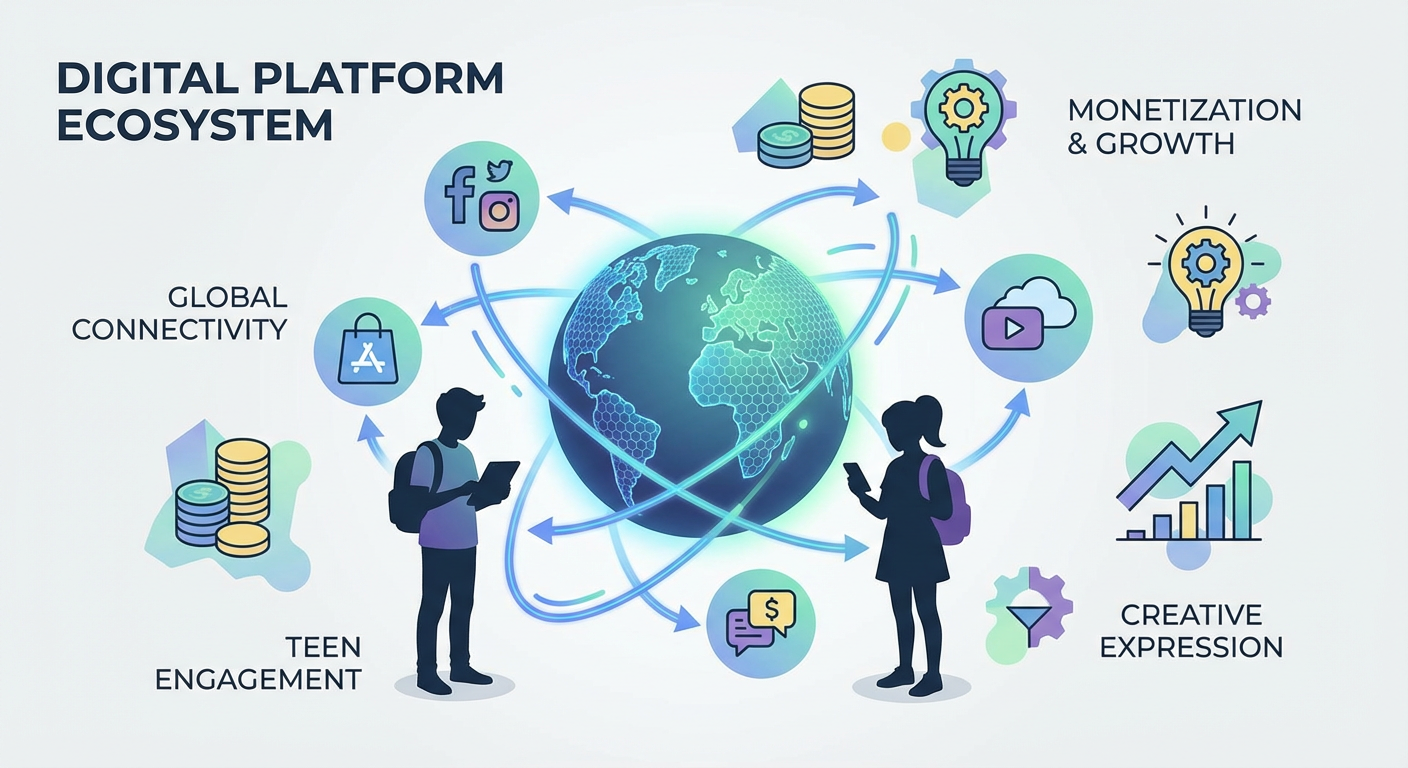
4. Digital Platforms as Catalysts for Young Entrepreneurs
The entrepreneurial landscape for teenagers (ages 13-18) has undergone a profound transformation, pivoting sharply from traditional, localized jobs to a globally connected, digitally-driven ecosystem. In this new era, social media platforms and youth-friendly gig applications have emerged as pivotal catalysts, democratizing entrepreneurship by providing unprecedented access to marketplaces, robust payment systems, essential safety mechanisms, and the ability to reach highly specific niche markets on a global scale. This shift significantly lowers the barriers to entry that once constrained young aspirants, enabling a generation of “micro-entrepreneurs” to monetize their skills, hobbies, and creativity directly from their homes. Indeed, the prevalence of young individuals engaging in side hustles is booming, with nearly 2 in 5 U.S. adults (39%) now earning income from a side hustle, and this trend is even more pronounced among younger generations, with about half of Gen Z (aged 18-26) engaged in side gigs in 2023[11], earning an average of $1,253 per month[12]. Teenagers are actively joining this movement, with over 40% of U.S. teens now actively making money online[3], and 38% of UK children between the ages of six and sixteen having a “side hustle”[4]. This section will delve deeply into how these digital platforms empower young entrepreneurs, moving beyond the anecdotal to present a comprehensive analysis supported by specific data points, statistics, and examples. It will underscore that online hustles have not just grown but have effectively overtaken traditional teen jobs; in the U.S., 42% of teens earn through digital channels compared to 38% in conventional part-time work[5]. This represents a fundamental shift in how young people engage with the economy, fostering an unprecedented level of entrepreneurial activity and skill development.
4.1 The Rapid Rise of Digital Entrepreneurship Among Teenagers
The rise of digital platforms has fundamentally reshaped the landscape of youth employment and entrepreneurship. What was once confined to local communities and limited job opportunities has expanded into a global digital arena, allowing teenagers to bypass many of the traditional entry barriers associated with starting a business or earning income. This transformation is not merely an incremental change but a paradigm shift that demands close examination.
4.1.1 Shift from Traditional to Digital Opportunities
For generations prior, a teenager’s first foray into earning money typically involved roles such as a paper route, babysitting, or working at a local store. These were predominantly face-to-face, geographically bound, and often limited by local demand and formal employment regulations. However, the advent and widespread adoption of digital platforms have initiated a dramatic pivot. Today, online side hustles have surpassed traditional teen jobs in popularity. In the U.S., a significant 42% of teenagers (roughly 13-18 years old) are earning money through digital side hustles, eclipsing the 38% engaged in conventional part-time work[5]. This marks the first time that online gigs have demonstrably overtaken traditional employment for this demographic, signifying a profound generational shift[25]. This trend is not isolated to the U.S.; it is a global phenomenon. In the UK, studies show that young people are approximately three times more likely to sell items online than to take on a classic paper route[19]. Around 12% of British youngsters engage in online selling, whereas only about 4% deliver newspapers[20],[21]. This illustrates how digital marketplaces have largely displaced conventional first jobs among teens and pre-teens, highlighting the allure and accessibility of online commerce. The motivations behind this shift are multi-faceted. While opportunities to earn pocket money through traditional chores remain, even these interactions are evolving. Over 60% of parents reported that their children now negotiate for payment for tasks, often securing an average of a 34% higher payout through bargaining[10],[22]. This indicates a growing entrepreneurial mindset, where even informal tasks are approached with a business-like acumen.
4.1.2 Prevalence and Earnings
The sheer volume of teenagers engaged in digital side hustles is striking. According to a Whop survey of 1,655 teens, 42% of U.S. teens are actively making money online[3]. For those under the legal working age (under 16), the average annual online earnings are approximately $561 per year[7]. For the broader 13-18 age group, the typical U.S. teen engaged in online hustles made approximately $718 in the past year[8]. While these figures suggest that most teens earn modest “pocket money” amounts, they aggregate to a substantial economy. Despite the relatively modest average earnings, the potential for significant income is not entirely absent. The research indicates the presence of “ultra-high-earning” teens. Approximately 1 in 625 high school students is documented as an “ultra-high earner,” making over $10,000 annually from digital side hustles[27]. This translates to at least one such high-earning individual in virtually every average U.S. high school[17], showcasing the transformative potential of these platforms for a select few. Furthermore, nearly 500,000 U.S. teens have achieved a “high-earning” threshold, specifically through paid brand sponsorships on their social media channels, implying earnings of over $1,000 from these activities[14]. These statistics collectively paint a picture of a dynamic, rapidly expanding ecosystem where digital platforms are not merely supplemental but are defining the next generation’s entry into the economy.
| Teen Group | Average Annual Earnings (Online) | Source |
|---|---|---|
| Under 16 (Digital Means) | $561 | Whop.com[7] |
| Typical U.S. Teen Hustler (Online) | $718 | AOL.com[8] |
| “Ultra-High Earner” (Per Year) | $10,000+ | Whop.com, AOL.com[27],[17] |
4.2 Digital Platforms as Accessible Marketplaces
The core of digital platforms’ transformative power lies in their ability to function as highly accessible and efficient marketplaces for young entrepreneurs. They dismantle geographical limitations and reduce startup costs, allowing teenagers with passion and ingenuity to connect with customers worldwide.
4.2.1 Social Media as a Global Storefront and Portfolio
Social media platforms such as TikTok, Instagram, and YouTube have revolutionized the concept of a “storefront” or “portfolio” for teenagers. Traditionally, selling goods or promoting services required physical presence, significant marketing budgets, or established networks. Now, with a smartphone and an internet connection, a teenager can launch an enterprise with virtually no overhead. TikTok, for instance, offers a powerful algorithmic reach that can propel a 15-year-old’s creative content or product showcase to millions of viewers overnight, leading to direct sales or lucrative sponsorship opportunities[5]. These platforms are not just for content creators. Many have evolved into vibrant e-commerce ecosystems. Depop, a mobile-first social shopping app, is particularly favored by Gen Z, with approximately 35% of its U.S. users being teenagers[31]. This demonstrates how teens gravitate towards platforms specifically designed to support peer-to-peer selling and community engagement around shared interests, such as fashion. The result is that a teen with a unique product or service can find a global audience and customer base, circumventing the need for traditional retail spaces or extensive marketing campaigns.
4.2.2 Youth-Friendly Gig Apps and Specialized Platforms
Beyond general social media, a growing array of youth-friendly gig apps and specialized platforms are emerging to cater to the under-18 demographic, navigating the complexities of minor regulations. While many mainstream freelance platforms maintain an 18+ age restriction, alternatives are available for younger teens, often requiring parental consent or oversight to comply with legal and platform policies. * **Survey and Reward Apps:** Platforms like Swagbucks exemplify this trend. They allow users as young as 13 to earn small sums by participating in surveys, watching videos, or playing games, typically with parental permission[23]. These opportunities introduce younger teens to the concept of earning online in a structured and low-risk environment. * **Specialty Tutoring Platforms:** High-achieving high school students can leverage online tutoring platforms to offer their academic skills to peers globally. These platforms handle matchmaking, scheduling, and payment, simplifying the process of monetizing knowledge. * **Creative Marketplaces:** Platforms like Etsy allow teens (often with parental accounts) to sell handmade goods, art, or digital products, connecting them with buyers who appreciate unique, custom items. * **Reselling Platforms:** Sites like eBay, Poshmark, or specialized sneaker resale platforms like StockX (where teens often use parental accounts) facilitate the buying and selling of physical goods. The popularity of reselling clothes and shoes as the #1 teen side hustle (practiced by ~17% of teens)[15] underscores the effectiveness of these platforms. These platforms provide the infrastructure that would otherwise be cost-prohibitive for a young individual to build, including customer acquisition, payment processing, and dispute resolution mechanisms.
4.2.3 Payment Systems and Safety Mechanisms
A critical aspect of digital platforms is their integration of secure payment systems and various safety mechanisms, addressing key logistical and protection concerns for young entrepreneurs. * **Integrated Payment Solutions:** Digital payment systems such as PayPal, Stripe, and Venmo are indispensable. Teenagers selling goods or services online can integrate with these existing systems, often through a parent’s account due to age restrictions, eliminating the need to establish their own payment infrastructure. This simplicity is a major barrier-reducer, as it bypasses complex financial regulations and technical requirements. For instance, a teenager selling custom art on Etsy doesn’t need to worry about credit card processing; the platform handles it, often requiring a parent to manage the associated financial account. * **Parental Oversight and Age Policies:** Many platforms have specific age restrictions and features designed to protect minors. Some live-streaming services, for example, might restrict certain features for users under 18 or offer parental monitoring tools. While these policies aim to ensure compliance with child protection laws and platform terms of service, resourceful teens often navigate them creatively. This might involve using an older sibling’s account, obtaining explicit parental co-signers, or having parents directly manage the financial aspects of an account. While this workaround highlights the desire for participation, it also underscores the enduring need for adult guidance and supervision in digital commercial activities involving minors. * **Global Reach for Niche Markets:** The internet’s global reach, facilitated by these platforms, allows teens to tap into highly specific niche markets that would be unimaginable in a local context. A teenager passionate about a particular subculture, such as custom-painted action figures or highly specific digital art, can connect with collectors and enthusiasts from across the globe. This enables the monetization of unique skills or hobbies that might otherwise have no commercial viability in their immediate community. This unprecedented reach significantly reduces startup costs and increases the potential scale of teen ventures, enabling a broader demographic of young people to explore entrepreneurship with minimal friction. For instance, a teen adept in a less commonly taught language could offer private tutoring sessions to students internationally via video conferencing platforms.
4.3 The Benefits: Skills, Experience, and Financial Literacy
Beyond the raw numbers and the convenience of digital tools, the engagement of teenagers in side hustles facilitated by digital platforms brings a host of invaluable developmental benefits. These extend far beyond merely earning money, encompassing critical life skills, enhanced financial literacy, and essential preparation for future academic and professional endeavors.
4.3.1 Cultivating Financial Responsibility and Literacy
One of the most significant advantages of teen side hustles is the hands-on financial education they provide. Running a micro-business necessitates a deep dive into practical money management that often surpasses what traditional classroom settings can offer. Teenagers learn to: * **Budgeting and Expense Tracking:** They must conceptualize and track their earnings against expenses. For example, a teen selling handmade jewelry online learns to calculate the cost of beads, clasps, and shipping against the selling price to determine profit margins. This is an exercise in basic accounting. * **Pricing Strategy:** They learn about value proposition and market rates when setting prices for their goods or services, understanding that prices must be competitive yet profitable. * **Saving and Investing:** Earnings from side hustles often prompt discussions about saving for goals, whether it’s a new gadget, college, or future business investments. This fosters an early understanding of financial planning and delayed gratification. * **Understanding Value:** Parents and financial experts frequently observe that teens who earn their own money develop a more profound appreciation for its value. This often translates into more conscious spending habits and a greater propensity to save a portion of their income as they transition into adulthood[32]. This direct engagement with finances at a young age provides a foundational layer of financial literacy that is crucial for long-term economic well-being.
4.3.2 Developing Entrepreneurial and Soft Skills
Engagement in side hustles is a powerful incubator for developing a wide array of entrepreneurial and soft skills that are highly valued in any walk of life: * **Responsibility and Time Management:** Teenagers often juggle school, extracurriculars, social lives, and their side ventures. This requires mastering responsibility, self-discipline, and effective time management to meet deadlines and fulfill commitments. * **Communication and Customer Service:** Dealing with clients or buyers, whether responding to inquiries on an e-commerce platform, negotiating service terms, or resolving customer issues, hones critical communication skills. It teaches the importance of professionalism, responsiveness, and problem-solving in a real-world commercial context. * **Negotiation Skills:** A notable finding is that over 60% of parents observe their children explicitly negotiating payments for chores or tasks, frequently securing an average “pay raise” of 34%[22],[33]. This demonstrates a proactive approach to valuing their labor and advocating for themselves—a skill directly transferable to future employment or business dealings. * **Problem-Solving and Adaptability:** Every side hustle faces unforeseen challenges, from technical glitches on a platform to a change in market demand. Teens learn to troubleshoot, adapt, and innovate, fostering resilience and resourcefulness. These experiences simulate real-world business scenarios, offering practical lessons that theoretical education alone cannot replicate.
4.3.3 Boost in Confidence and Creativity
Successfully launching and maintaining a side project, no matter how small, has a significant positive impact on a young person’s self-esteem and intrinsic motivation: * **Enhanced Self-Efficacy:** Discovering “I can create something and earn from it” builds a powerful sense of independence and self-efficacy. It validates their skills, ideas, and effort, which can be immensely empowering. * **Fostering Creativity:** The process of identifying a market need, developing a product or service, and marketing it often sparks further creative exploration. Initial successes inspire teens to think bigger, experiment with new ideas, and sometimes scale their ventures. * **Real-World Application of Learning:** Entrepreneurial activities can bridge the gap between abstract academic concepts and their practical application. For instance, understanding profit margins uses math skills, crafting compelling product descriptions uses writing skills, and analyzing customer feedback uses critical thinking. This makes learning more relevant and engaging. Side hustles contribute significantly to holistic development, nurturing not only financial acumen but also personal growth and a proactive mindset.
4.3.4 Career and College Advantages
The skills and experiences gained from early entrepreneurial endeavors can provide a distinct advantage in future academic and professional pursuits: * **Building a Strong Portfolio and Résumé:** For college admissions officers and prospective employers, a student who has demonstrated initiative, creativity, and problem-solving through a side hustle stands out. These experiences can be highlighted on college applications, scholarship essays, and entry-level job résumés, showcasing qualities that go beyond academic achievements. * **Demonstrating Key Qualities:** Running a small business or managing a successful online channel demonstrates drive, resilience, innovation, and a willingness to take calculated risks – all highly valued attributes in higher education and the modern workforce. * **Real-World Experience:** Even casual side hustles impart a degree of “real-world experience” in areas like marketing, sales, customer relations, and operational management. This exposure helps teenagers develop a more mature understanding of the business world and their potential place within it. * **Entrepreneurial Pathways:** For some, an early side hustle can ignite a lifelong passion for entrepreneurship. While not every teen will become a full-time entrepreneur, the experience equips them with the mindset and foundational skills to pursue entrepreneurial endeavors later in life, or to contribute more effectively in intrapreneurial roles within larger organizations. Notably, 76% of teens (13-17) expressed a likelihood of considering starting their own business someday, often inspired by social media influencers and entrepreneurs[9],[24]. These benefits highlight that digital platforms are not merely tools for earning money but serve as powerful educational grounds preparing teenagers for the complexities and opportunities of the 21st-century economy.
4.4 Challenges and Cautions in the Digital Entrepreneurial Landscape
While digital platforms offer unprecedented opportunities for young entrepreneurs, it is crucial to acknowledge and address the inherent challenges and risks. Navigating the digital space requires careful consideration of time management, legal and regulatory complexities, and personal safety, often necessitating significant parental involvement and guidance.
4.4.1 Balancing Time: Academics vs. Hustle
One of the most persistent challenges for teenagers engaged in side hustles is maintaining a healthy balance between their entrepreneurial pursuits and their academic responsibilities. Unlike adult gig workers, students have a primary full-time commitment: their education. * **Academic Impact:** Research consistently indicates that teenagers who dedicate more than 20 hours per week to employment tend to experience a decline in academic performance and report increased stress levels[26]. While most teen side hustles might not reach this threshold, particularly for younger adolescents, the allure of income or the demands of a growing venture can easily lead to overcommitment. * **Risk of Burnout:** Excessive focus on a side hustle can lead to less time for homework, studying, extracurricular activities, and crucial sleep, ultimately resulting in academic underperformance or physical and mental exhaustion. * **Finding Equilibrium:** Successful teen entrepreneurs often master meticulous time management, scheduling dedicated periods for their ventures (e.g., weekends, after school) and setting firm boundaries to protect their academic and personal lives. However, this skill itself requires practice and often parental oversight.
4.4.2 Legal and Regulatory Hurdles
The legal framework surrounding minors and employment, particularly in the informal digital economy, can be complex and confusing. While child labor laws generally apply to traditional employment, online activities often fall into a grey area, requiring creative solutions and careful adherence to platform policies. * **Age Restrictions on Platforms:** Most major online marketplaces, payment processors, and social media platforms are designed with terms of service that restrict use by individuals under 18. This means a 14-year-old earning money through an Etsy shop or a YouTube channel will typically need to operate under a parent’s account or with parental co-signatory. * **Payment Processing:** Accessing funds earned online often requires bank accounts or payment gateways that necessitate an adult’s identity and oversight. This practical hurdle ensures parental awareness but also places responsibility on parents for compliance. * **Tax Obligations:** Perhaps the most overlooked aspect is tax liability. While individual earnings might seem like “pocket money,” any income above a certain threshold (which varies by jurisdiction) is reportable and taxable. Many teens and their parents may be unaware of these obligations, potentially leading to future compliance issues. Navigating these complexities often requires legal and financial advice, turning an informal hustle into a more formalized (and sometimes daunting) business endeavor.
4.4.3 Safety and Security in the Digital Realm
The interconnected nature of digital platforms, while offering reach, also introduces unique safety and security concerns for young people. * **Online Scams and Fraud:** Eager and less experienced teenagers can be targets for scams, phishing attempts, or “too good to be true” offers that require upfront fees for non-existent opportunities. Differentiating legitimate business dealings from malicious ones can be challenging. * **Personal Safety:** Side hustles involving the sale of physical goods may necessitate in-person exchanges, which present safety risks if not handled cautiously. Teens must be educated on safe meeting practices and the importance of not sharing personal information. * **Online Harassment and Pressure:** For teens who become content creators or influencers, exposure to online trolls, cyberbullying, or pressure to produce provocative content for views is a real and significant threat. Parents and teens need to establish clear boundaries regarding online interactions and content creation. * **Informality and Lack of Regulation:** The informal and largely unregulated nature of many teen side gigs means young entrepreneurs might face issues like late payments, non-payment, or disputes with buyers or clients without formal recourse mechanisms, unlike traditional employment with labor protections.
4.4.4 Uneven Success and Sustainability
The narrative of instant viral success can often overshadow the realities of entrepreneurial endeavors. Not every side hustle thrives, and managing expectations is crucial. * **Low Average Earnings:** While high-earner stories capture headlines, the reality for most teens is more modest, with U.S. teens averaging a few hundred dollars a year[34]. The effort-to-reward ratio can sometimes be disheartening. * **Competition and Market Saturation:** The low barriers to entry mean high competition. A seemingly unique idea can quickly become saturated, requiring constant innovation and adaptation. * **Sustainability and Growth:** A side hustle that works well in one phase of a teen’s life (e.g., selling handmade friendship bracelets to classmates) may not be scalable or sustainable as they grow older or enter different social circles. The challenge lies in adapting the venture or pivoting to new ideas. * **Dealing with Failure:** Entrepreneurship inherently involves setbacks and failures. Teens learn to cope with ventures that don’t take off, products that don’t sell, or negative feedback. While these experiences build resilience, they can also be discouraging without proper support and perspective. Addressing these challenges requires a concerted effort from teens, parents, educators, and platforms themselves to provide guidance, resources, and safer, more transparent environments for young entrepreneurs to thrive.
4.5 Notable Examples of Digital Teen Entrepreneurship
The transformative power of digital platforms is best illustrated through the stories of young individuals who have leveraged these tools to create substantial income and build fledgling businesses. These examples showcase the diverse applications of digital entrepreneurship, from reselling to content creation and specialized services.
4.5.1 Max Hayden: Capitalizing on Pandemic Shortages
During the unprecedented times of the COVID-19 pandemic in 2020, 16-year-old Max Hayden from New Jersey demonstrated an acute understanding of market dynamics by engaging in **reselling high-demand goods online**. Max astutely identified shortages of items like above-ground pools and patio heaters in traditional retail stores and purchased them to resell on platforms such as Amazon and Facebook Marketplace at a significant markup[35]. His entrepreneurial foresight and efficient use of online marketplaces resulted in sales exceeding $2 million within the year, yielding an impressive personal profit of approximately $110,000[36],[37]. Hayden even went on to formalize his venture into a Limited Liability Company (LLC) before completing high school, a testament to the scale and seriousness of his side hustle. His story exemplifies how a teenager, with sharp market observation and digital platform access, can transform a quick-thinking idea into a six-figure enterprise, highlighting youth agility in capitalizing on emerging opportunities.
4.5.2 Michael Satterlee: 3D Printing Innovation
Michael Satterlee, a 17-year-old high school student from New York, transformed a skill acquired in the classroom into a highly profitable digital business. After learning about **3D printing** at school, Michael invested in his own printer and started making custom items, including phone stand accessories and cosplay props. Utilizing social media to showcase his unique creations, he successfully built a nationwide client base. His side hustle rapidly evolved into a company generating approximately $20,000 per month in sales and is on track to achieve $300,000 in annual revenue by 2025[38],[39]. Michael efficiently manages production after school and on weekends, balancing his studies with the demands of a growing business. This case underscores how technology and specialized skills, combined with effective social media marketing, can enable a teen to create and scale a product-based business.
4.5.3 Charli D’Amelio: The Quintessential Digital Influencer
Charli D’Amelio stands as a preeminent example of how a teenage side hustle built on social media can burgeon into global stardom and immense financial success. Beginning in 2019 at the age of 15, Charli started posting short dance videos on TikTok. Her meteoric rise saw her garner tens of millions of followers within a year, catapulting her to become the **highest-earning TikTok creator**. By age 17, she had earned an estimated $17.5 million in 2021 alone, primarily through ad revenue, brand sponsorships, and the launch of her own product lines[40]. Now 20, D’Amelio has expanded into various entrepreneurial ventures, including beauty brands and television shows, all originating from her casual teenage content creation hobby. While an extreme outlier, Charli’s trajectory serves as a powerful inspiration for countless young individuals, demonstrating the unprecedented scale and commercial power an individual can achieve through digital platforms.
4.5.4 Akshay Ruparelia: Disrupting Real Estate Online
Akshay Ruparelia, a British teenager, exemplifies how entrepreneurial ambition and digital innovation can disrupt traditional industries. In 2016, while still attending school, Akshay founded **Doorsteps**, an online real estate agency. At just 17, he recognized an opportunity to offer home selling services online at a fraction of the cost charged by conventional agents. He began by cold-calling homeowners after school hours and developed a website to list properties. The venture rapidly gained traction; within a year, by the time Akshay was 19, Doorsteps was valued at approximately £12 million (equivalent to about $16 million), establishing him as one of the UK’s youngest self-made millionaires[41]. Akshay famously managed his business during lunch breaks and exams, even successfully hiring a team of agents. This case illustrates that serious, industry-disrupting entrepreneurship is a global phenomenon, accessible to resourceful teenagers who leverage online models and demonstrate exceptional persistence while balancing academic commitments. These examples vividly demonstrate that digital platforms are not merely passive tools but active enablers of significant entrepreneurial activity among teenagers across diverse sectors. They underscore the capacity of young individuals to innovate, scale, and achieve remarkable financial and professional success through digital avenues. The profound impact of digital platforms on youth entrepreneurship is undeniable, fostering a new generation of financially literate, skilled, and ambitious young individuals. The next section will further explore the specific types of money-making side hustles that have gained prominence among this demographic, providing practical insights into the most popular and profitable digital ventures for teenagers.
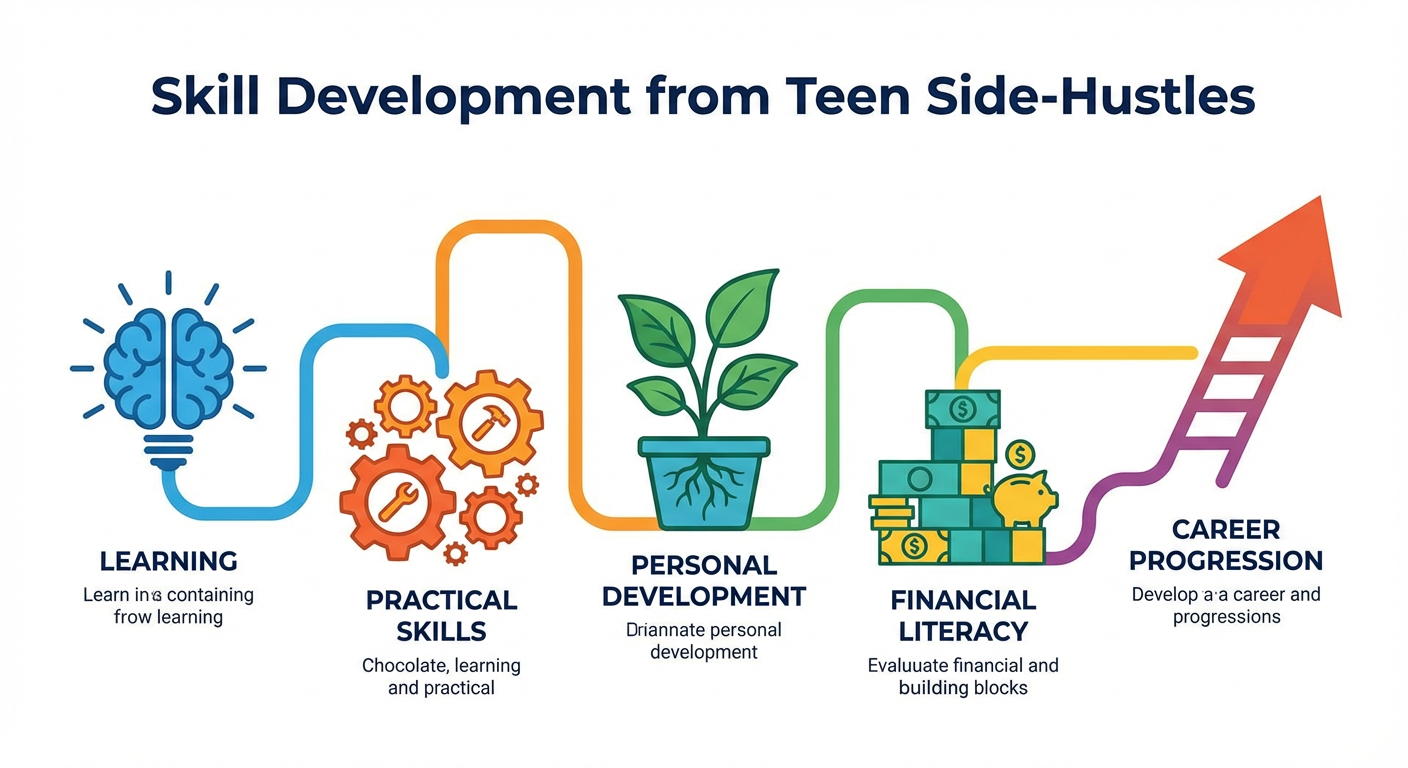
5. Educational and Skill Development Benefits
Beyond the immediate financial gain, engagement in side hustles offers a wealth of non-monetary benefits for teenagers aged 13 to 18. These ventures, whether digital or traditional, serve as fertile ground for cultivating crucial life skills, fostering entrepreneurial mindsets, and enhancing personal development long before formal entry into the workforce. This section comprehensively explores how side hustles contribute to financial literacy, practical money management, the development of essential entrepreneurial and soft skills, increased confidence and creativity, and provide tangible advantages for future academic and career pursuits. The insights gained from managing even a modest income stream can profoundly shape a teenager’s understanding of work, value, and responsibility. The landscape of youth employment has dramatically shifted, moving from traditional roles like paper routes and babysitting to a diverse array of modern micro-entrepreneurship, largely facilitated by digital platforms 3. This evolution has transformed how teenagers acquire early work experience. Instead of merely clocking hours, today’s teen hustlers are often immersed in the multifaceted demands of running their own small enterprises. These demands inherently teach them about revenue generation, cost management, client communication, and self-promotion – lessons that extend far beyond the balance sheet. In fact, while the average U.S. teen side-hustler earns a modest $718 per year online 8 (or $561 for those under legal working age 7), the ambition driving these ventures is significant, with 76% of teens expressing a likelihood to consider starting their own business one day 10. This aspirational outlook is not just about financial independence; it’s about the growth and mastery that comes with navigating the real-world challenges of commerce. Understanding these non-monetary gains is critical for parents, educators, and policymakers alike, as it underscores the potential of side hustles to serve as informal educational platforms. These benefits are not merely incidental but are integral components of a teenager’s holistic development, preparing them for an increasingly complex and self-driven professional world.
5.1. Enhanced Financial Literacy and Practical Money Management
One of the most immediate and profound benefits teenagers derive from engaging in side hustles is a tangible improvement in their financial literacy and practical money management skills. Unlike theoretical classroom lessons, running a side hustle thrusts teens into real-world financial scenarios, demanding they learn essential concepts through direct experience.
5.1.1. Budgeting and Expense Tracking
Teenagers who operate side hustles quickly learn the realities of budgeting. Whether it’s managing costs for materials to create handmade crafts, paying platform fees for online sales, or budgeting for advertising their services, they are forced to track income and expenses. For instance, a teen reselling clothing must calculate the purchase price, shipping costs, and platform fees to determine their actual profit margin. This hands-on process instills an understanding of cash flow and the importance of cost control. These experiences reinforce lessons in budgeting, saving, and even investing income at a young age 25. This goes beyond merely knowing how much money they have; it’s about understanding where their money comes from and where it goes. This foundational knowledge is crucial for future financial independence. The process of managing their own earnings often begins with simple goals, such as saving for a specific item (e.g., a new gaming console, concert tickets, or a driving lesson). However, these early successes can evolve into more sophisticated saving strategies and an appreciation for delayed gratification and investment.
5.1.2. Pricing Strategies and Value Perception
Side hustles introduce teenagers to the complex dynamics of pricing. They must research market rates, consider their time and effort, and factor in product costs to set competitive yet profitable prices for their goods or services. This could involve determining an hourly rate for tutoring, pricing a unique piece of digital art, or setting a resale price for a limited-edition sneaker. This practice cultivates an understanding of value, supply and demand, and the importance of market research. It teaches them that their skills and products have a quantifiable worth, and how to articulate that value to prospective customers.
5.1.3. Earning, Saving, and Investing Foundations
The act of consistently earning their own money fosters a heightened appreciation for its value. Parents and financial experts frequently observe that teens who earn their own income tend to be more judicious with their spending and more inclined to save. Instead of simply receiving an allowance, they understand the effort required to accumulate funds. This newfound appreciation for money can lead to healthier financial habits, such as automatically saving a portion of their earnings. For some, particularly those with higher earnings, this early exposure might even introduce them to basic investment concepts, such as reinvesting profits back into their business or starting a rudimentary savings account with an eye toward larger future goals.
5.2. Development of Entrepreneurial and Soft Skills
The micro-entrepreneurial nature of many teenage side hustles serves as a potent incubator for a range of entrepreneurial and soft skills that are highly valued in both academic and professional settings. These skills extend far beyond specific job functions, enhancing a teenager’s overall capability and adaptability.
5.2.1. Problem-Solving and Adaptability
Every side hustle presents challenges, making problem-solving an inherent part of the experience. Whether it’s figuring out how to source materials, troubleshooting a technical issue on an online store, or resolving a customer complaint, teens are pushed to think critically and come up with creative solutions. This iterative process of identifying a problem, devising a strategy, implementing it, and learning from the outcome builds resilience and an adaptable mindset. They learn that not every plan will succeed, and the ability to pivot and adjust is paramount. Max Hayden, a New Jersey high school student, exemplifies this by capitalising on pandemic shortages by reselling in-demand items, eventually generating $110,000 in profit due to his agility in identifying and adapting to market needs 29.
5.2.2. Communication and Customer Service
Direct interaction with clients or customers is a hallmark of many side hustles, whether it’s a teen mowing lawns, tutoring peers, or selling items online. These interactions hone essential communication skills, including clear articulation, active listening, and persuasive speaking. More importantly, teens learn the intricacies of customer service: managing expectations, addressing concerns, and building positive relationships. Handling inquiries on an online store, coordinating a service appointment, or politely resolving a complaint all contribute to developing patience, empathy, and professional demeanor. These are invaluable interpersonal skills that will serve them well in any future role.
5.2.3. Negotiation and Sales Acumen
Side hustles are a practical training ground for negotiation. A notable statistic from the UK indicates that 61% of parents report their children now negotiate payment for tasks or chores 14, and these young negotiators secure an average pay raise of 34% over the initial offer 15. This demonstrates early competency in advocating for their worth. Beyond chores, active side hustlers must pitch their services or products, persuade potential buyers, and close deals. They learn to identify customer needs, highlight product benefits, and handle objections – foundational sales skills that teach them how to articulate value and secure favorable outcomes.
5.2.4. Time Management and Responsibility
Juggling a side hustle with academic responsibilities, extracurricular activities, and social life demands sophisticated time management. Teenagers learn to prioritize tasks, meet deadlines, and manage their schedules effectively. This self-imposed structure cultivates a strong sense of responsibility and discipline. They understand that their actions (or inactions) directly impact their income and reputation, fostering a mature approach to commitments. However, balance is key, as educational experts caution that working over 20 hours per week can negatively impact academic performance 22.
5.2.5. Creativity and Innovation
Many successful teen side hustles stem from creative ideas or innovative approaches. Michael Satterlee, for example, took his classroom knowledge of 3D printing and transformed it into a custom accessories business projected to make $300,000 annually by 2025 31. This exemplifies how teens leverage technology and creativity to identify opportunities, develop unique products or services, and differentiate themselves in the market. The freedom of a side hustle, unbound by corporate rules, encourages experimentation and out-of-the-box thinking, fostering an entrepreneurial mindset that views challenges as opportunities for innovation.
5.3. Increased Confidence and Independence
The psychological benefits of earning one’s own income and independently managing a small business are profound for teenagers. Side hustles significantly contribute to increased confidence, a stronger sense of independence, and enhanced self-efficacy.
5.3.1. Boost in Self-Efficacy and Accomplishment
Successfully launching and maintaining a side hustle, even a small one, provides tangible evidence of a teenager’s capabilities. Earning money through their own efforts validates their talents, ideas, and hard work. This sense of accomplishment is a powerful confidence booster, demonstrating to them that they can set goals, execute plans, and achieve results. Such experiences fundamentally build self-efficacy – the belief in one’s ability to succeed in specific situations or accomplish a task. This can translate into improved performance and motivation in other areas of life, such as academics or personal challenges.
5.3.2. Fostering Independence
Financial independence, even if modest, is a significant milestone for teenagers. When they earn their own money, they gain greater autonomy over their purchasing decisions and no longer rely solely on parental allowances. This newfound control over their finances fosters a stronger sense of independence and maturity. They learn to make choices about spending, saving, and investing their earnings, taking ownership of their financial destiny. This early taste of self-reliance is a crucial stepping stone toward adult independence.
5.3.3. Resilience and Learning from Failure
Not every side hustle venture will be an unequivocal success. Teenagers will inevitably encounter setbacks, customer rejections, or even outright failures. While these can be frustrating, they provide invaluable lessons in resilience. Instead of being protected from failure, side hustles allow teens to experience it in a relatively low-stakes environment, learning to analyze what went wrong, adapt their strategies, and persevere. This process builds character and fortitude, teaching them that failure is not an end but a learning opportunity. Many successful adult entrepreneurs often recall their initial failed teenage projects as foundational learning experiences.
5.4. Advantages for Future Careers and College Applications
The skills and experiences gained from teenage side hustles offer significant, long-term advantages, providing a competitive edge in future academic pursuits and career opportunities. This is increasingly recognized by educational institutions and employers alike.
5.4.1. Differentiated College Applications
In an increasingly competitive landscape for college admissions, a well-managed side hustle can make a student’s application stand out. Beyond strong grades and test scores, universities seek applicants who demonstrate initiative, leadership, creativity, and real-world experience. A student who has built a small online business, developed a popular social media channel, or provided consistent services to their community showcases these very qualities. Admissions officers view entrepreneurial activities as indicators of a student’s drive, problem-solving abilities, and potential for future success, making them a compelling addition to an application essay or extracurricular activities section. These experiences provide concrete examples for interview discussions, showcasing a student’s ability to apply academic knowledge in practical settings.
5.4.2. Enhanced Career Readiness and Employability
The skills forged through side hustles are directly transferable to the professional world. Whether a teenager pursues traditional employment or continues on an entrepreneurial path, their experience in customer service, marketing, sales, financial management, and problem-solving gives them a significant head start. Employers increasingly value “soft skills” and practical experience, which side hustles provide in abundance. A former teen side-hustler enters the job market with a proven track record of initiative, responsibility, and an understanding of business fundamentals. This makes them highly attractive candidates, often possessing a maturity and practical acumen beyond their years.
5.4.3. Entrepreneurial Mindset for the Future
Perhaps the most lasting benefit is the cultivation of an entrepreneurial mindset. The research highlights strong entrepreneurial ambition among today’s youth, with 76% of teens considering starting their own business one day 10. Side hustles are the first tangible steps in this direction. Even if a teenager doesn’t become a lifelong entrepreneur, the entrepreneurial mindset – characterized by innovation, adaptability, risk-taking, and a proactive approach to challenges – is invaluable in any career. It empowers individuals to identify opportunities, take ownership of projects, and navigate change effectively within larger organizations or in their own independent ventures. The exposure to building something from the ground up, even on a micro-scale, demystifies the process of entrepreneurship and makes it an attainable goal rather than an abstract concept.
The table below summarizes the key educational and skill development benefits derived from teenage side hustles:
| Category of Benefit | Specific Skills / Outcomes | Example Through Side Hustle |
|---|---|---|
| Financial Literacy & Management | Budgeting, Expense Tracking, Pricing Strategy, Saving Habits, Value Perception | A teen selling clothes online tracks purchase costs, platform fees, and shipping, learning to calculate profit margins and set competitive prices. |
| Entrepreneurial Skills | Problem-Solving, Adaptability, Innovation, Market Research, Risk Assessment | A teenager creating 3D printed items uses social media to find customers, identifies new product ideas based on demand, and resolves production issues. |
| Soft Skills | Communication, Customer Service, Negotiation, Time Management, Responsibility, Self-Marketing | A teen tutoring peers learns to explain complex concepts, manages their schedule, responds to parent inquiries, and negotiates rates for their services. |
| Personal Development | Confidence, Self-Efficacy, Independence, Creativity, Resilience, Work Ethic | Successfully maintaining a gaming stream and earning ad revenue builds self-belief, fosters discipline, and encourages creative content development, even amidst challenges. |
| Future Advantages | Differentiated College Applications, Enhanced Employability, Business Acumen, Professional Network | Starting a small e-commerce venture provides tangible experience for a college application, demonstrates initiative to future employers, and introduces the teen to aspects of marketing and logistics. |
In conclusion, teenage side hustles are far more than just a means to earn pocket money; they are dynamic, informal educational platforms that cultivate a comprehensive suite of skills essential for navigating adulthood. From the practicalities of financial management and the demands of entrepreneurship to the nuances of human interaction and the strengthening of self-confidence, these ventures lay a robust foundation for future success. The modern digital economy has amplified these opportunities, enabling teens worldwide to engage in commerce and develop these valuable attributes earlier than ever before. Recognizing and supporting these endeavors can unlock significant long-term benefits for young individuals, preparing them not just for a job, but for a fulfilling and empowered life. This deep dive into the educational and skill development benefits of teen side hustles naturally leads to an exploration of the specific financial gains and overall economic impact these young entrepreneurs are having, which will be covered in the next section.
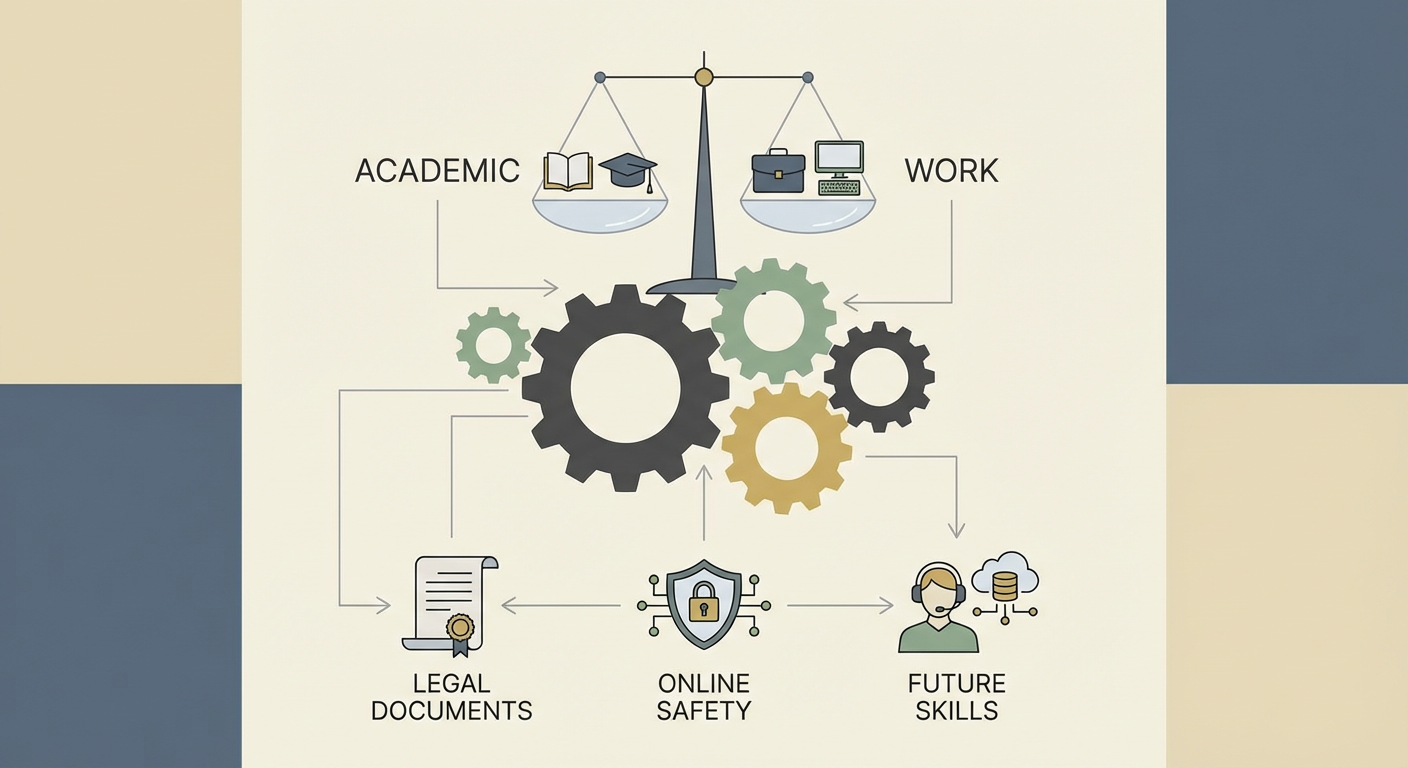
6. Challenges and Considerations for Teen Side Hustlers
While the burgeoning landscape of side hustles presents unprecedented entrepreneurial opportunities for teenagers aged 13 to 18, it is not without its complexities and potential pitfalls. The shift from traditional part-time jobs to online micro-entrepreneurship, driven by digital platforms and a global gig economy projected to reach $455 billion in 2023, introduces a new set of challenges that young entrepreneurs and their support systems must navigate. This section delves into the key hurdles encountered by teenage side hustlers, including the delicate act of balancing academic responsibilities with work, the intricacies of legal and regulatory frameworks, the critical need for online safety, and the often-unpredictable realities of entrepreneurial success and venture sustainability.
The allure of earning income and gaining valuable experience has propelled a significant number of teenagers into the side hustle economy. In the U.S., 42% of teens now earn through digital channels, surpassing the 38% engaged in conventional part-time work. Similarly, 38% of UK children aged six to 16 have a side hustle. However, beneath the impressive statistics and aspirational stories of “kidfluencers” and six-figure earners, lies a landscape fraught with intricate challenges that demand careful consideration. These challenges range from the internal pressures of time management to external legal and safety concerns, all of which shape the trajectory and impact of a teenager’s entrepreneurial journey.
6.1. Balancing Academic Responsibilities with Entrepreneurial Pursuits
One of the most significant and pervasive challenges for teenage side hustlers is the inherent conflict between their entrepreneurial activities and their primary obligation: education. Unlike adult side hustlers, who often juggle their gigs with established careers, teenagers are fundamentally students. Their academic performance, school attendance, and participation in extracurricular activities are critical for their developmental growth and future prospects. The introduction of a side hustle, especially one that gains traction, can quickly create an intense demand on a teenager’s limited time and energy.
The research unequivocally highlights the potential for academic decline when work commitments become excessive. Education experts have long observed that teenagers who work over 20 hours per week show significant declines in academic performance. This threshold serves as a critical benchmark, suggesting that while moderate work can be beneficial, exceeding it can compromise educational outcomes. The nature of side hustles, particularly those online, can blur the lines between work and leisure, making it difficult for teens to accurately track their hours or establish clear boundaries. A teen managing customer inquiries for an online reselling business or editing content for a YouTube channel might not perceive these activities as “work” in the same way they would a scheduled shift at a traditional job, yet they consume valuable time that could otherwise be dedicated to studying, homework, or rest.
The impact of this time drain extends beyond just grades. It can affect sleep patterns, increase stress levels, and reduce participation in school-based activities that are vital for holistic development. For example, a teen dedicated to developing an app or designing custom merchandise in their free time might sacrifice evening hours typically reserved for homework, leading to rushed assignments or diminished understanding of subject matter. The pressure to maintain customer satisfaction or meet content deadlines can create a mental load that interferes with concentration in class or during study sessions.
Furthermore, while side hustles teach invaluable skills like time management, financial literacy, and marketing, the very act of learning and applying these skills takes time. A teenager building a brand online needs to research their market, develop products or services, handle logistics, and engage with their audience. Each of these tasks, while enriching, competes directly with academic demands. Parents and guardians often play a crucial role in helping teens establish boundaries and prioritize. This might involve setting strict “no work during homework hours” rules, limiting total weekly hours dedicated to the hustle, or even helping the teen evaluate if a side hustle is becoming detrimental to their academic standing.
The challenge is particularly pronounced for the small percentage of “ultra-high-earning” teens, those making over $10,000 annually from digital side hustles. While these success stories are inspiring, they can also inadvertently set unrealistic expectations and intensify the pressure on other teens to achieve similar financial milestones, potentially leading them to overcommit. For these high-earners, the balancing act becomes even more complex, often requiring them to make significant sacrifices or develop exceptional organizational skills to manage both a thriving business and their education.
In summary, while the entrepreneurial spirit in teens is commendable, ensuring that side hustles remain additive rather than detrimental to their academic journey requires vigilant oversight and clear communication between teens, parents, and educators. Balance is not merely a preference but a necessity for the long-term well-being and success of teenage side hustlers.
6.2. Navigating Legal and Regulatory Frameworks
The world of entrepreneurial ventures, even at a micro-level, is governed by a complex web of legal and regulatory frameworks. For teenagers, these frameworks present a unique set of challenges often stemming from age restrictions, which are primarily designed for the protection of minors in traditional employment settings. However, the rapid evolution of digital side hustles means that many of these laws and regulations struggle to keep pace with modern earning opportunities.
6.2.1. Age Restrictions and Platform Access
A primary hurdle for younger teens (especially those under 16) is the legal age of consent for contracts and financial transactions. Most online platforms, including social media sites, e-commerce marketplaces, and payment processors, have minimum age requirements, typically 13 or 18 years old. For instance, while some survey apps like Swagbucks permit 13-year-olds, they often require explicit parental consent. Similarly, popular platforms for selling goods or services, like eBay, Etsy, or even setting up ad-supported YouTube channels, generally require users to be at least 18 years old to directly hold an account and conduct business. This forces many younger teens to operate their side hustles under a parent’s name and account, which can complicate aspects of ownership, financial management, and direct legal responsibility.
This reliance on parental accounts, while providing access, introduces a layer of dependency. It means that parents are often the legal and financial representatives for the teen’s venture. This setup can sometimes stifle a teen’s sense of full autonomy and responsibility, or conversely, place an undue burden on parents who may not fully understand the digital business world. For example, parental consent and account co-ownership for platforms like Depop (which has 35% of its U.S. users as teenagers) or Twitch might be a prerequisite, making the parents legally accountable for the teen’s activities, including any terms-of-service violations or disputes.
6.2.2. Tax Implications
Beyond platform access, a significant, often overlooked, legal consideration is tax liability. Many teenage side hustles are informal and their earnings are mistakenly considered negligible for tax purposes. However, any income earned, regardless of age, is generally subject to taxation if it exceeds certain thresholds. For U.S. teens, this typically means reporting income for self-employment tax if net earnings are $400 or more, or if total income (earned and unearned) exceeds the standard deduction for dependents. This is a critical area where both teens and parents are often uninformed. The average U.S. teen side hustler makes $718 per year online, and younger teens under legal working age average $561 per year online. These figures, while seeming like “pocket money,” can still trigger tax obligations, especially if other forms of income are present.
Failing to correctly report income can lead to penalties and back taxes. This introduces a complexity that many teenage entrepreneurs, focused on their craft or sales, are ill-equipped to handle. It necessitates education for teens and parents on concepts like gross income, net income, allowable deductions, and quarterly estimated payments for self-employment income.
6.2.3. Child Labor Laws and Industry-Specific Regulations
While digital side hustles often circumvent traditional child labor laws that regulate hours, prohibited occupations, and safety for minors in conventional employment, some activities might still touch upon these regulations. For example, if a teen’s online business involves creating physical products that require specific machinery, or if it evolves into employing other individuals, state and federal child labor laws as well as business licensing requirements might come into play.
For “kidfluencers,” there’s a growing debate around applying child entertainment industry regulations (like the Coogan Law in California) to online content creators. These laws typically aim to protect child actors’ earnings by setting aside a percentage in a trust and restricting work hours. As teen influencers like Charli D’Amelio earn millions annually, the distinction between a hobby and a professional activity becomes blurred, raising questions about whether existing protections adequately cover this new form of child labor.
The table below summarizes some common legal and regulatory considerations for teen side hustlers:
| Legal/Regulatory Area | Challenge for Teens | Mitigation/Consideration |
|---|---|---|
| Platform Age Restrictions | Many platforms (e-commerce, payment, social media) require users to be 18+ for direct account ownership. | Operating under a parent’s account; requiring parental consent; using teen-specific platforms/apps with parental oversight. |
| Financial Account Access | Minors often cannot open bank accounts or use payment processors (e.g., PayPal, Stripe) independently. | Parental co-signatory for bank accounts; using parent’s payment accounts; utilizing teen debit cards or family banking apps. |
| Tax Obligations | Income from side hustles (including digital) is taxable if thresholds are met; self-employment taxes. | Education on tax basics; meticulous record-keeping; parental assistance for tax filing; consulting with a tax professional. |
| Contractual Agreements | Minors’ contracts are often voidable; legal capacity to enter binding agreements is limited. | Parental review and co-signing of contracts/terms of service for brand deals, platform agreements; using legal counsel for significant deals. |
| Child Labor Laws | Traditional labor laws primarily apply to formal employment but could extend to certain types of side hustle activities. | Awareness of local labor laws if the hustle involves physical labor, working with others, or specific products. |
| Intellectual Property | Understanding copyright, trademark, and fair use when creating or using content/products. | Education on IP rights; ensuring originality; securing necessary licenses for third-party content/materials. |
| Data Privacy (GDPR, COPPA) | Handling personal data of customers or followers requires compliance with privacy regulations. | Understanding privacy policies of platforms; avoiding collection of unnecessary personal data; parental guidance on data handling. |
Successfully navigating these legal and regulatory challenges requires proactive education, diligent oversight from parents, and sometimes, professional advice. It transforms the teen side hustle from a simple income-generating activity into a valuable learning experience in legal compliance and responsible business practices.
6.3. Managing Online Safety and Avoiding Scams
The digital nature of the modern teen side hustle, while offering unparalleled reach and opportunities, simultaneously exposes young entrepreneurs to a myriad of online safety risks and potential scams. Teens, often digitally native but emotionally and experientially less mature than adults, can be particularly vulnerable to exploitation if not adequately prepared and protected.
6.3.1. Exposure to Scams and Fraudulent Schemes
The online world is rife with “get rich quick” schemes and fraudulent opportunities designed to prey on hopeful individuals, and teenagers with entrepreneurial ambitions are often targeted. These can range from fake job offers that demand an upfront payment for “training materials” or “registration fees,” to pyramid schemes disguised as legitimate multi-level marketing. Teenagers, eager to earn money, might fall for promises of exceptionally high returns for minimal effort or investment. Examples include:
- Phishing attempts: Emails or messages disguised as legitimate business inquiries that seek personal information or account credentials.
- Fake brand deals: Influencers are particularly targeted, where fraudulent “brand representatives” offer lucrative deals in exchange for sensitive banking information or product purchases that are never reimbursed.
- Counterfeit product scams: When reselling physical goods, teens can unknowingly purchase counterfeit items, which not only harms their reputation but can also lead to legal issues. Or, they might become victims of buyers claiming counterfeits to get refunds while keeping the authentic item.
- Payment fraud: Buyers using stolen credit cards or chargeback scams wherein they receive goods/services and then dispute the charge, leaving the teen out of pocket.
- Unrealistic investment opportunities: Schemes promising guaranteed high returns on cryptocurrency, NFTs, or other assets, often requiring initial capital investment from the teen or their parents.
The informal and unregulated nature of many teen side gigs means there’s often no official recourse or consumer protection for fraudulent activities, unlike traditional employment which has established labor laws and worker protections. This necessitates a proactive and cautious approach from both the teen and their parents.
6.3.2. Personal Safety and Privacy Risks
Online side hustles, especially those involving selling physical products or services, can also pose personal safety and privacy risks:
- Meeting strangers: If a side hustle involves in-person transactions (e.g., selling items locally, offering tutoring or babysitting services arranged online), careful precautions must be taken. Meeting in public places, having a parent accompany the teen, and keeping personal address information private are crucial.
- Sharing personal information: Online platforms require varying degrees of personal information. Teens need to be educated on what information is safe to share, how to create strong, unique passwords, and the dangers of oversharing personal details (e.g., school name, daily routines) that could identify their location or routine.
- Online harassment and cyberbullying: Building an online presence as an influencer or content creator can expose teens to negative comments, harassment, or cyberbullying. This can take a toll on their mental well-being and confidence. Parents need to monitor online interactions and provide support to manage such encounters.
- Content exploitation: For content creators, there is a risk of their content being used without permission, or being pressured to create content that might be inappropriate or unsafe in pursuit of views or financial gain. This is particularly relevant given that 1 in 3 students under 18 have been approached by a brand or know someone who has, increasing exposure to various online contacts.
6.3.3. Mitigation Strategies for Online Safety
Effective management of online safety requires a multi-pronged approach involving education, practical guidelines, and parental oversight:
- Education: Parents should actively educate their teens about common online scams, phishing tactics, and the importance of critical thinking when evaluating online offers. Discussing real-world examples of fraud can be highly effective.
- Strict Privacy Settings: Teach teens to maximize privacy settings on all social media and selling platforms. Emphasize never sharing their home address, phone number, or school name publicly.
- Secure Payment Methods: Utilize secure, reputable payment platforms for all transactions. Prefer platforms that offer buyer/seller protection. If a buyer insists on an unconventional payment method, it should be a red flag. Using a parent’s PayPal or bank account with adult oversight is often the safest path for minors.
- Parental Involvement: Parents should maintain open communication channels with their teens about their online activities and earnings. Regular check-ins, reviewing online communications, and co-managing accounts (where required or advised) can help prevent issues.
- “If it sounds too good to be true, it probably is”: Instill this principle. Highly lucrative, low-effort opportunities often hide scams. Encourage teens to question unsolicited offers, especially those demanding personal financial details or upfront payments.
- Reporting and Blocking: Teach teens how to report suspicious activity or harassment on platforms and to block unwanted contacts.
- Boundary Setting: For influencers, help them set boundaries on what content they will create, what information they will share, and how they will interact with followers to protect their time and privacy.
By proactively addressing these online safety considerations, parents can empower teen side hustlers to leverage digital opportunities while minimizing their vulnerability to the darker aspects of the internet.
6.4. Confronting Uneven Success and Venture Sustainability
The narrative surrounding teen side hustles often highlights extraordinary successes—the “ultra-high-earning” teen making five figures or the “kidfluencer” with millions of followers. While these stories are inspiring, they represent a small fraction of the reality. For the vast majority of teenage entrepreneurs, the journey is characterized by uneven success, modest earnings, and significant challenges in maintaining venture sustainability. It’s crucial for teens and their families to approach side hustles with realistic expectations and an understanding that not every endeavor will yield substantial financial rewards or long-term viability.
6.4.1. The Reality of Modest Earnings
Despite the high-profile examples, the data reveals that most teen side hustles generate modest income. The typical U.S. teen side-hustler earns only a few hundred dollars per year, with an average of $718 online in the past year. For younger teens under the legal working age (under 16), average earnings stand at approximately $561 per year online. These figures, while meaningful for pocket money or saving for specific goals, are a far cry from the $10,000+ earned by roughly one “ultra-high-earning” teen per average U.S. high school. Even among teen influencers—a highly visible segment—the average annual earnings from sponsored posts hover around $94 per year, despite almost 500,000 U.S. teens making at least $1,000 from such activities (suggesting a wide disparity between the few high-earners and the many modest ones).
This gap between aspiration and reality can be a source of discouragement. Teens inspired by social media success stories might enter the side hustle world with inflated expectations, only to be met with slow growth, low sales, or minimal engagement. It’s important to frame these experiences not as failures, but as intrinsic parts of the entrepreneurial learning process.
6.4.2. Challenges to Venture Sustainability
Beyond initial earnings, sustaining a side hustle over time presents its own set of difficulties:
a. Time Constraints and Shifting Priorities: As discussed in Section 6.1, school remains the priority. As academic demands increase (e.g., during exam periods or college application cycles), or as new extracurricular opportunities arise, the time available for a side hustle can diminish significantly. What might be a viable business for a 14-year-old could become unsustainable for a 17-year-old preparing for university.
b. Competition and Market Saturation: Many popular teen side hustles, like reselling clothes (the #1 activity, done by ~17% of teens) or content creation, operate in highly competitive markets. What starts as a unique idea can quickly face numerous competitors, making it difficult to stand out, attract customers, or maintain profit margins. Trends also shift rapidly, meaning a business based on a trending product or social media format might become obsolete quickly.
c. Limited Resources: Teenagers often have limited capital for investment, marketing, or scaling their operations. They may rely on parental support for initial investments or access to resources, which might not always be sustainable or desirable long-term.
d. Burnout and Loss of Interest: Turning a hobby into a business can sometimes strip away the enjoyment of the activity. The pressures of customer service, marketing, and financial management can lead to burnout. A change in interests, a common phenomenon during adolescence, can also lead to a teen abandoning a venture that previously captivated them.
e. Adapting to Growth: If a side hustle does succeed and begins to grow, teens face new challenges related to scaling operations, managing increased demand, hiring (if applicable), and potentially formalizing their business Structure. These are complex tasks even for adult entrepreneurs, requiring skills and experience that teens are still developing.
6.4.3. Uneven Success as a Learning Opportunity
It is vital to reframe the concept of “uneven success.” Even a side hustle that generates minimal income or eventually folds can provide invaluable non-financial returns:
- Resilience: Experiencing setbacks—a product that doesn’t sell, a social media post that flops, or a difficult customer—teaches resilience and problem-solving.
- Skill Development: Every aspect of a side hustle, regardless of its financial outcome, builds skills: customer service, marketing, financial literacy, negotiation (61% of parents report their kids negotiate payment for tasks, securing a 34% higher payout), and self-advocacy.
- Self-Awareness: Teens discover what they enjoy, what they are good at, and what aspects of entrepreneurship they find challenging. This self-knowledge is crucial for future career choices.
- Networking: Even a small venture can connect teens with mentors, suppliers, or customers who might offer future opportunities.
As the Junior Achievement USA survey indicates, 76% of teens (13-17) are likely to consider starting a business one day, but 56% feel they need more know-how, and 32% desire a business-owner role model. This highlights a strong ambition coupled with an acknowledgment of the knowledge gap. Recognizing that the primary value of a teen side hustle often lies in the learning and development, rather than solely the financial returns, can help manage expectations and foster a growth mindset. Many successful adult entrepreneurs often point to their early, “failed” teenage ventures as crucial learning experiences that paved the way for later successes.
In conclusion, while the path of a teenage side hustler is paved with exciting possibilities, it is equally dotted with significant challenges regarding time management, legal compliance, online safety, and the often-unpredictable nature of entrepreneurial success. Addressing these considerations proactively—through education, parental guidance, and realistic expectations—is paramount to ensuring that these ventures remain enriching and positive experiences, contributing significantly to a teenager’s personal and professional development rather than detracting from it.
The next section of this report will delve into the broader societal implications of the teen side hustle phenomenon, examining its impact on traditional labor markets, educational systems, and the future of work.
References
- www.aol.com. Forget babysitting, ‘ultra high earning’ teens are making 5+ figures influencing. Referenced on October 16, 2024. [Online] Available: https://www.aol.com/finance/average-every-high-school-one-125204661.html#:~:text=Around%2042,are%20in%20traditional%20jobs
- www.independent.co.uk. How much money are kids earning from lucrative side hustles? | The Independent. Referenced on August 16, 2024. [Online] Available: https://www.independent.co.uk/money/starling-bank-children-kids-b2597245.html#:~:text=Four%20in%2010%20%2838,children%20aged%20six%20to%2016
- www.aol.com. Forget babysitting, ‘ultra high earning’ teens are making 5+ figures influencing. Referenced on October 16, 2024. [Online] Available: https://www.aol.com/finance/average-every-high-school-one-125204661.html#:~:text=Although%20some%20aspirational%20youngsters%E2%80%94an%20estimated,in%20the%20past%20year%20online
- whop.com. The US teen digital earnings report. Referenced on August 22, 2024. [Online] Available: https://whop.com/blog/teen-digital-earnings-report-2024/#:~:text=%2A%20Forty,of%20%24561%20per%20year%20online
- www.aol.com. Forget babysitting, ‘ultra high earning’ teens are making 5+ figures influencing. Referenced on October 16, 2024. [Online] Available: https://www.aol.com/finance/average-every-high-school-one-125204661.html#:~:text=by%20selling%20their%20unloved%20hoodies%2C,gigs%20are%20most%20likely%20influencing
- www.aol.com. Forget babysitting, ‘ultra high earning’ teens are making 5+ figures influencing. Referenced on October 16, 2024. [Online] Available: https://www.aol.com/finance/average-every-high-school-one-125204661.html#:~:text=According%20to%20Whop%2C%20one%20in,or%20knows%20someone%20who%20has
- www.aol.com. Forget babysitting, ‘ultra high earning’ teens are making 5+ figures influencing. Referenced on October 16, 2024. [Online] Available: https://www.aol.com/finance/average-every-high-school-one-125204661.html#:~:text=Top%20money
- www.aol.com. Forget babysitting, ‘ultra high earning’ teens are making 5+ figures influencing. Referenced on October 16, 2024. [Online] Available: https://www.aol.com/finance/average-every-high-school-one-125204661.html#:~:text=to%20sponsor%20a%20product%20through,or%20knows%20someone%20who%20has
- www.aol.com. Forget babysitting, ‘ultra high earning’ teens are making 5+ figures influencing. Referenced on October 16, 2024. [Online] Available: https://www.aol.com/finance/average-every-high-school-one-125204661.html#:~:text=In%20fact%2C%20recent%20research%20from,year%20without%20leaving%20their%20bedroom
- www.prnewswire.com. Survey: Social Media Influencers Inspiring Teens to Consider Starting a Business. Referenced on November 1, 2023. [Online] Available: https://www.prnewswire.com/news-releases/survey-social-media-influencers-inspiring-teens-to-consider-starting-a-business-301974236.html#:~:text=COLORADO%20SPRINGS%2C%20Colo,10%20%E2%80%93%20October%2015%2C%202023
- www.independent.co.uk. How much money are kids earning from lucrative side hustles? | The Independent. Referenced on August 16, 2024. [Online] Available: https://www.independent.co.uk/money/starling-bank-children-kids-b2597245.html#:~:text=More%20than%20six%20in%2010,paid%20for%20doing%20specific%20tasks
- www.prnewswire.com. Survey: Social Media Influencers Inspiring Teens to Consider Starting a Business. Referenced on November 1, 2023. [Online] Available: https://www.prnewswire.com/news-releases/survey-social-media-influencers-inspiring-teens-to-consider-starting-a-business-301974236.html#:~:text=COLORADO%20SPRINGS%2C%20Colo,10%20%E2%80%93%20October%2015%2C%202023
- pmc.ncbi.nlm.nih.gov. ADOLESCENT WORK INTENSITY, SCHOOL PERFORMANCE, AND ACADEMIC ENGAGEMENT – PMC. Referenced on 2010. [Online] Available: https://pmc.ncbi.nlm.nih.gov/articles/PMC2926992/#:~:text=Teenagers%20working%20over%2020%20hours,between%20students%20in%20academic%20ability
- a11y.pearson.com. 13 Year Old Side Hustlers The Future Of The Global Economy – Latest Viral News. Referenced on March 15, 2023. [Online] Available: https://a11y.pearson.com/news/13-year-old-side-hustlers-the-future-of-the-global-economy#:~:text=survey,of%20the%20global%20economy%20as
- a11y.pearson.com. 13 Year Old Side Hustlers The Future Of The Global Economy – Latest Viral News. Referenced on March 15, 2023. [Online] Available: https://a11y.pearson.com/news/13-year-old-side-hustlers-the-future-of%20the%20global%20economy#:~:text=economy%20is%20expected%20to%20be,dive%20into%20the%20latest%20side
- www.statista.com. U.S. Depop MAU users by age 2021| Statista. Referenced on March 2021. [Online] Available: https://www.statista.com/statistics/1125124/depop-us-users-age/#:~:text=Advertisement%20Advertisement%20As%20of%20March,largest%20user%20group%2C%20accounting%20for
- www.forbes.com. Charli D’Amelio Is the Highest-Earning TikToker, Earning $17.5 Million in 2021. Referenced on September 6, 2022. [Online] Available: https://www.forbes.com/video/6311920384112/charli-damelio-is-the-highestearning-tiktoker-earning-175-million-in-2021/#:~:text=Charli%20D%27Amelio%20Is%20the%20Highest,5%20Million%20In%202021
7. Notable Examples of Teen Entrepreneurial Success
The burgeoning landscape of teen side hustles, propelled by digital platforms and an increasingly entrepreneurial youth culture, has given rise to numerous remarkable success stories. While the average teen side-hustler earns a modest amount, typically around $718 per year in the U.S. and $561 for those under legal working age online[7][3], a select group of young innovators has leveraged their ingenuity, digital fluency, and keen understanding of market demands to achieve significant financial success and establish burgeoning businesses before even graduating high school. These “ultra-high earners,” with at least one making over $10,000 annually from digital side hustles present in virtually every U.S. high school, highlight the extraordinary potential inherent in this modern micro-entrepreneurship movement[4][5].
These case studies serve not only as inspiring narratives but also as concrete illustrations of the diverse pathways available to teen entrepreneurs. From capitalizing on supply chain shortages through strategic online reselling to transforming a passion for 3D printing into a lucrative manufacturing enterprise, and from becoming global social media sensations to disrupting established industries like real estate, these young individuals demonstrate that age is no longer a barrier to significant business achievement. Their ventures showcase a wide array of skills – marketing, product development, logistics, negotiation, and financial management – all honed in real-world settings alongside their academic pursuits. This section will delve into specific examples of these prominent teenagers, examining the origins of their ventures, the strategies they employed, and the scale of their success, thereby underscoring the transformative power and diverse opportunities within the teen entrepreneurial ecosystem.
The Rise of the Reselling Moguls: Max Hayden’s Pandemic Profits
The ability to identify market inefficiencies and capitalize on demand has always been a hallmark of successful entrepreneurship, and teenagers are proving exceptionally adept at this skill in the digital age. A compelling example is Max Hayden, who, at just 16 years old and attending high school in New Jersey, turned the unprecedented market conditions of the COVID-19 pandemic into a multi-million dollar reselling empire. His story is a poignant illustration of agility, market savvy, and the power of online platforms.
Capitalizing on Crisis: Max Hayden’s Strategy
In 2020, as the world grappled with lockdowns and supply chain disruptions, consumers faced shortages of various goods. Max Hayden recognized this void and acted decisively. He strategically scoured online marketplaces and local retailers for items that suddenly became high-demand, but scarce. These included everything from above-ground swimming pools, which saw a surge in popularity as families sought home-based entertainment during lockdown, to patio heaters, as people adapted to outdoor gatherings. Max would acquire these items, often at their retail price, and then resell them at a significant markup on platforms like Amazon and Facebook Marketplace[23].
His business model was straightforward yet highly effective: identify scarcity, purchase inventory before it became widely available or when retail stocks were replenished, and then leverage the widespread need among consumers who couldn’t find these items elsewhere. Max’s success was not just about finding products; it was about understanding the psychology of demand during a crisis and the willingness of consumers to pay a premium for immediate availability.
Scale of Success and Business Formalization
Hayden’s venture quickly escalated from a side hustle to a massive operation. By the end of 2020, still a high school student, he had sold more than $2 million worth of products. After accounting for all his costs, such as purchasing inventory, shipping, and platform fees, Max personally netted approximately $110,000 in profit for the year[24][25]. This incredible achievement underscores how a keen eye for commerce, combined with the accessibility of online selling platforms like Amazon and Facebook Marketplace, can enable teenagers to generate revenues typically associated with much larger, established businesses.
Beyond the impressive financial figures, Max also demonstrated foresight in formalizing his business. Before even graduating high school, he established his venture as an LLC (Limited Liability Company), a move that signifies a serious approach to entrepreneurship and provides legal and financial structure. His journey exemplifies how young individuals can quickly transition from informal “flipping” to operating legitimate, profitable businesses, learning about sourcing, logistics, pricing, customer service, and even legal structures along the way.
Max Hayden’s story is a powerful illustration of how market insight and digital platforms can empower a teenager to build a substantial income stream. It highlights youth agility in identifying burgeoning opportunities and showcases the potential for high-reward ventures rooted in reselling, particularly during periods of unprecedented market shifts. His success provides a tangible example for other aspiring teen entrepreneurs on how to turn an understanding of market dynamics into significant financial gains.
Innovation from the Classroom: Michael Satterlee’s 3D Printing Enterprise
The integration of technology and academic learning is a growing trend among entrepreneurial teenagers. Michael Satterlee, a 17-year-old high school student from New York, vividly demonstrates how classroom skills can be directly translated into a thriving commercial enterprise. His journey from learning 3D printing in school to establishing a successful custom manufacturing business is a testament to the power of applied knowledge and digital marketing.
Learning and Leveraging Technology
Michael’s entrepreneurial path began not in a garage, but in a classroom. He acquired foundational skills in 3D printing during his high school education. This exposure to cutting-edge technology sparked an idea: what if he could use this skill to create custom products for a broader market? Investing in his own 3D printer, Michael began experimenting at home, manufacturing bespoke items like specialized phone stand accessories and intricate cosplay props[27].
His initial motivation was likely a combination of curiosity, a desire to apply his newfound skills, and an understanding of the growing demand for personalized goods. Unlike mass-produced items, custom 3D-printed products offer uniqueness and precision, appealing to niche markets that value individuality and specialized functionality.
Building a Client Base Through Social Media
A critical component of Michael’s success was his astute use of social media. Recognizing the visual nature of his products, he leveraged platforms to showcase his 3D-printed creations. By posting high-quality images and videos of his custom phone stands, cosplay items, and other unique designs, he was able to attract interest from potential customers. This digital storefront allowed him to transcend geographical limitations, building a client base that extended nationwide, far beyond his local community[27].
The strategy highlights the symbiotic relationship between modern manufacturing techniques (like 3D printing) and digital marketing. Social media provided a low-cost, high-reach channel for Michael to display his craftsmanship, engage with potential buyers, and take orders directly, effectively bypassing traditional retail channels and reducing overheads.
Remarkable Growth and Future Projections
What started as a hobby-oriented side hustle quickly evolved into a significant business entity. Michael’s venture is currently generating approximately $20,000 per month in sales. This impressive monthly revenue positions his company on a trajectory to reach an estimated $300,000 in annual revenue by 2025[28][27]. Remarkably, Michael continues to manage the production and operations of his growing enterprise outside of school hours, dedicating his after-school time and weekends to fulfilling orders and managing his business. This dedication underscores the commitment often required to scale a side hustle into a full-fledged company, even for a high school student.
Michael Satterlee’s case is an inspiring example of how a teenager can harness emerging technologies and entrepreneurial drive to create a valuable product and scale a business. It provides a blueprint for other tech-savvy youth who wish to monetize their technical skills and demonstrates the crucial role of digital platforms in reaching a broad customer base and achieving significant commercial success from a passion project.
The Social Media Phenomenon: Charli D’Amelio’s Global Influence
The advent of social media platforms has created an entirely new category of entrepreneurial success for teenagers: the “kidfluencer.” Among these, Charli D’Amelio stands out as an emblem of how a hobby and authentic self-expression online can transform into global stardom and immense financial success. Her journey from high school student to the highest-earning TikTok creator exemplifies the unprecedented scale achievable through digital content creation.
From Dance Videos to Digital Empire
Charli D’Amelio’s rise to prominence began modestly in 2019 when she was a 15-year-old high school student in Connecticut. She started posting short dance videos on TikTok, a platform that was rapidly gaining popularity among Gen Z. Her authentic style, relatable content, and engaging personality quickly resonated with viewers. Within an astonishingly short period – less than a year – Charli amassed tens of millions of followers, becoming one of the most recognized faces on the platform.
Her content was not complex; it was primarily dance routines and lip-sync videos, popular formats on TikTok. However, her consistency, genuine enjoyment, and ability to connect with a young, digitally native audience set her apart. This organic growth underscored a key aspect of influencer marketing: authenticity often trumps highly polished, commercial content for Gen Z audiences.
Unprecedented Financial Success and Diversification
Charli’s rapid accumulation of followers translated directly into significant commercial opportunities. By age 17, she had transcended her status as a content creator to become a full-blown media personality and businesswoman. In 2021 alone, Forbes estimated her earnings to be an staggering $17.5 million[30]. This immense income was generated through a diverse portfolio of ventures, including:
- Ad Revenue: From her massive viewership on TikTok and other platforms.
- Brand Sponsorships: Collaborating with major brands eager to tap into her enormous youth demographic.
- Product Lines: Developing and launching her own merchandise, beauty lines, and other consumer products.
- Television Appearances and Endorsements: Expanding her presence into traditional media, further solidifying her celebrity status.
Now in her early twenties, Charli D’Amelio has expanded her entrepreneurial endeavors beyond social media, venturing into beauty brands and television shows. Her trajectory demonstrates how a teenage side hustle built on a passion for content creation can evolve into a comprehensive and highly lucrative business entity, inspiring millions of young people to explore social media as a viable career path.
The Influencer Economy and Teen Aspirations
Charli’s success, while an outlier in scale, serves as a powerful inspiration for countless teenagers. It showcases that the “glamour” of being an influencer can indeed be highly lucrative. While the average teen influencer earns a modest $94 per year[17], Charli’s story keeps the dream alive among young people. Surveys indicate that nearly 500,000 U.S. teens have already earned at least $1,000 from sponsored posts[6], and 1 in 3 students under 18 have either been approached by a brand for sponsorship or know someone who has[16]. These figures demonstrate the tangible, albeit often modest, earning potential within the influencer economy for young people. Charli D’Amelio embodies the pinnacle of this new career landscape, proving that with the right combination of talent, timing, and digital savvy, a teen’s online presence can translate into a multi-million-dollar enterprise.
Disrupting Established Industries: Akshay Ruparelia’s Online Real Estate Venture
Teen entrepreneurial spirit is not confined to digital-native spaces like social media or online reselling. Some young visionaries are capable of identifying inefficiencies in traditional industries and leveraging technology to create disruptive business models. Akshay Ruparelia, a British teenager, offers a compelling example of this, transforming the staid real estate market with his innovative online agency, Doorsteps.
Identifying a Market Gap at a Young Age
In 2016, at the tender age of 17, Akshay Ruparelia was still a student in school when he recognized a significant opportunity within the UK real estate sector. Traditional real estate agents charged substantial commissions, often thousands of pounds, for selling homes. Akshay theorized that by moving the entire process online, he could drastically reduce overheads and offer the same service at a fraction of the cost. His business model was simple yet revolutionary: provide an online platform for homeowners to list properties, manage viewings, and close sales, thereby cutting out the expensive brick-and-mortar offices and commission structures of conventional agencies.
Building a Business Around Academics
What makes Akshay’s story particularly remarkable is how he managed to build and scale his venture while simultaneously navigating the demands of his academic studies. He started Doorsteps by cold-calling homeowners after school, personally convincing them to list their properties with his fledgling online agency. He then developed a functional website to showcase these listings. This dedication meant juggling business operations – making sales calls, developing the platform, and managing client relations – with homework, exams, and other school commitments. His ability to multitask and remain disciplined was crucial to his early success[31].
Rapid Growth and Millionaire Status
Doorsteps experienced incredibly rapid growth. Within just one year, by the time Akshay was 19, his online real estate agency was valued at approximately £12 million (equivalent to about $16 million USD)[32]. This made him one of the youngest self-made millionaires in the United Kingdom. His success demonstrated that consumers were ready for a more cost-effective and digitally streamlined approach to property sales, and Akshay was able to deliver it. His business model resonated with a market segment eager to save on agent fees without compromising on service quality.
Akshay’s success was not achieved in isolation. As his business grew, he demonstrated strong leadership by hiring a team of agents and support staff to manage the expanding operations. He famously conducted business calls during lunch breaks and even between exam sessions, showcasing an extraordinary level of commitment and entrepreneurial drive for someone his age.
Akshay Ruparelia’s case is a powerful testament to the fact that groundbreaking entrepreneurial success is not limited by age or geography. It highlights the potential for resourceful teenagers to identify and address market inefficiencies, even in established sectors, by leveraging innovative online models and combining persistence with strategic execution. His story is particularly inspiring as it demonstrates how a young individual, balancing rigorous academic life, can still achieve significant commercial disruption and wealth creation.
Lessons from Teen Trailblazers: Common Threads of Success
The remarkable stories of Max Hayden, Michael Satterlee, Charli D’Amelio, and Akshay Ruparelia, though diverse in their industries and approaches, reveal several common threads that contribute to profound teen entrepreneurial success. These shared characteristics offer valuable insights for aspiring young business owners and underscore the evolving nature of youth employment and wealth creation.
Identifying and Capitalizing on Market Opportunities
- Max Hayden: Recognized acute supply shortages during the pandemic and strategically supplied high-demand goods via online reselling[23]. His success was rooted in market arbitrage and nimble response to real-time consumer needs.
- Michael Satterlee: Identified a niche for custom, 3D-printed items, capitalizing on the growing demand for personalized products that mass production cannot easily fulfill. He transformed a technical skill into a product offering[27].
- Charli D’Amelio: Tapped into the burgeoning short-form video trend and the desire for authentic, relatable content on TikTok, creating a massive audience before significant competition emerged. She monetized attention and engagement.
- Akshay Ruparelia: Spotted the high commission costs in traditional real estate and offered a disruptive, lower-cost online model, addressing a clear pain point for homeowners[31].
These examples illustrate that successful teen entrepreneurs possess a keen ability to observe the market, identify unmet needs or inefficiencies, and conceptualize how their skills or resources can provide a solution. This market-oriented thinking is a foundational element of their achievements.
Leveraging Digital Platforms for Reach and Scale
A consistent differentiator for these high-achieving teens is their masterful utilization of digital platforms. The internet effectively lowers barriers to entry, providing access to a global customer base with minimal overhead costs.
- Online Marketplaces: Max Hayden used Amazon and Facebook Marketplace to reach millions of potential buyers for his resold goods[23].
- Social Media as Showcases: Michael Satterlee showcased his 3D-printed products on social media to attract clients nationwide[27].
- Content Distribution Networks: Charli D’Amelio exploded her fame through TikTok, an entertainment platform that turned into a personal brand launchpad.
- Proprietary Online Platforms: Akshay Ruparelia built his own online real estate agency, leveraging web technology to streamline transactions and reduce costs[31].
These platforms not only facilitate sales and marketing but also enable teens to circumvent traditional age-related restrictions often encountered in physical businesses. They offer unparalleled reach, allowing a teenager from a small town to connect with a global audience or find specific niche markets.
Dedications, Discipline, and Multitasking
Despite their young age, these entrepreneurs demonstrated an extraordinary level of dedication and discipline. Running a demanding side hustle alongside academic responsibilities requires exceptional time management and commitment.
- Max Hayden managed multi-million dollar sales while attending high school, even formalizing his business into an LLC before graduation[25].
- Michael Satterlee dedicates his non-school hours, evenings, and weekends to manage his 3D printing business, which is on track for $300,000 in annual revenue[28].
- Akshay Ruparelia famously handled critical business calls during school lunch breaks and between exams, illustrating intense focus and strategic time allocation[31].
Their ability to balance schoolwork with significant business operations refutes the notion that serious entrepreneurship is only for adults. It highlights how the generation accustomed to multitasking across digital platforms can apply this skill to real-world business challenges.
Inspiring a Generation of Entrepreneurs
These success stories resonate deeply with other teens. The presence of “at least one ‘ultra-high-earning’ teen in every U.S. high school” making over $10,000 annually online inspires peers to consider similar ventures[5]. A survey revealed that 76% of teens (13-17) are likely to consider starting a business one day, with social media influencers and famous entrepreneurs being key inspirations[8]. While the average teen side hustle generates modest earnings (U.S. teens average $718/year online)[3], these breakout examples provide tangible proof that substantial success is within reach for a determined few. They redefine the traditional path for youth, demonstrating that early entrepreneurial pursuits can lead to significant financial independence and career opportunities, often bypassing conventional employment routes.
The stories of Max, Michael, Charli, and Akshay collectively paint a picture of a dynamic era where youth, armed with technology and driven by ambition, are reshaping economic landscapes, one innovative side hustle at a time. Their achievements are not just individual triumphs but indicators of a broader societal shift towards fostering and celebrating young entrepreneurs.
As these narratives demonstrate, the boundary between a casual pursuit and a significant enterprise is increasingly blurred for today’s teenagers. The next section will further explore the broader context of youth entrepreneurship, examining the economic implications, skill development benefits, and the challenges faced by this emerging generation of business leaders. This exploration will provide a holistic view of the side hustle phenomenon among 13-18 year olds, building upon the inspiring examples set by these young trailblazers.
8. Key Facts & Data: Statistical Insights
The landscape of youth employment and income generation has undergone a profound transformation, propelled by digital connectivity and an increasingly entrepreneurial mindset among younger generations. No longer primarily confined to traditional part-time jobs, teenagers aged 13 to 18 are actively participating in a burgeoning gig economy, leveraging technology to create diverse income streams. This section delves into the critical statistics and data points that illuminate the scale, nature, and impact of money-making side-hustles for teens. These insights reveal a dynamic shift from conventional labor models to modern micro-entrepreneurship, highlighting prevalence rates, earning potentials, popular activities, and the broader global context of this phenomenon.
The data presented herein supports the central thesis that teen side-hustles are not merely a fleeting trend but a fundamental redefinition of youth economic engagement. It portrays a generation seizing opportunities for financial independence and skill development at an unprecedented rate, often bypassing the traditional pathways to early employment. We will explore how online channels have eclipsed brick-and-mortar jobs, the varying degrees of financial success achieved, the specific niches teens are carving out, and the global implications of this shift. Through a detailed analysis of recent surveys and reports, this section aims to provide a comprehensive statistical overview, laying the groundwork for understanding the multifaceted world of teen side-hustles.
Prevalence and Shifting Employment Landscape
The data unequivocally demonstrates a significant societal shift towards side-hustles across all age groups, with younger generations leading this charge. A 2023 survey indicated that nearly 2 in 5 U.S. adults (39%) now earn income from a side hustle, with approximately half of Gen Z engaged in such activities[1]. This trend is even more pronounced among teenagers, marking a distinct departure from historical employment patterns. In the U.S., a staggering 42% of teens are actively making money online, a figure that now surpasses those engaged in traditional part-time work[3]. This represents a monumental reversal where digital income generation has overtaken conventional employment for American youth, with 42% earning through digital channels compared to 38% in conventional part-time work[6].
This phenomenon is not exclusive to the United States. In the United Kingdom, approximately 38% of children aged 6 to 16 currently have a “side hustle”[4]. This widespread adoption of entrepreneurial activities by children and young teens indicates a global behavioral change. The proliferation of platforms like TikTok, Twitch, Depop, and eBay has enabled a new era where earning money from one’s bedroom is a viable and increasingly common alternative to working in service industries or delivering newspapers[7]. The numbers further highlight this disparity in the UK, where youngsters are approximately three times more likely to sell items online than to take on a traditional paper route[18], with about 12% engaged in online selling versus only 4% delivering newspapers[19][20].
This transformation is partly attributed to the post-pandemic acceleration of digital engagement. With educational institutions shut down and extracurricular activities curtailed, many teens turned to online ventures to combat boredom and generate income. For instance, Max Hayden, a 16-year-old student from New Jersey, capitalized on pandemic-driven shortages by reselling high-demand products online, ultimately netting $110,000 in profit in 2020 by selling over $2 million worth of products[53][55]. Such compelling narratives, widely disseminated online, serve as powerful motivators, inspiring peers to explore entrepreneurial endeavors irrespective of age or traditional employment eligibility.
This statistical evidence, particularly the high percentage of teens earning online, underscores a fundamental shift in youth economic participation. It suggests that side-hustles are becoming a new norm, providing avenues for financial agency and skill development that were largely inaccessible to previous generations.
Earnings: Modest Averages, Significant High-Ends, and Entrepreneurial Ambition
While the prevalence of teen side-hustles is high, the financial returns vary significantly, ranging from modest pocket money to substantial five-figure incomes for a select few. The typical U.S. teen engaged in online side-hustles earns an average of $718 per year[8]. For younger teens who are below the legal working age (under 16), the average annual online earnings stand at approximately $561[9]. These figures indicate that for most young participants, side-hustles serve as a means of generating discretionary income rather than primary financial support.
However, the landscape also includes a segment of “ultra-high-earning” teens. Recent research from Whop suggests that approximately one in every 625 high school students in the U.S. earns over $10,000 annually from digital side-hustles[10]. This translates to at least one such high earner in every average U.S. high school[11]. This stark contrast between average earnings and high-end outliers highlights the potential for significant wealth generation through online ventures, albeit for a minority of highly successful individuals.
The impact of social media influencing on teen earnings is particularly noteworthy. While only around 7-8% of teens are involved in micro-influencing or securing brand deals[14], and the average teen influencer earns only about $94 per year from these activities[16], the potential for high earnings is significant for those who achieve virality or build large followings. A Whop report revealed that nearly 500,000 U.S. teens have reached a “high-earning” threshold, primarily through paid brand sponsorships on social media channels, implying earnings of at least $1,000 from such activities[12]. This statistic underscores the substantial monetization opportunities available to teens in content creation.
Despite the often modest earnings, the ambition among teens is remarkably high. A survey conducted by Junior Achievement USA and EY revealed that 76% of teens (13-17) express a likelihood of considering starting their own business in the future[15]. This entrepreneurial aspiration is largely inspired by social media influencers and famous entrepreneurs, with 30% of teens citing each as their inspiration[15]. However, a significant portion (56%) acknowledge needing more information to succeed, and 32% desire a business-owner role model[17], indicating a strong interest coupled with a need for guidance and knowledge.
Popular Side-Hustle Activities and Niches
The diversification of money-making activities for teens reflects the evolving digital landscape and their inherent creativity. Certain niches have emerged as particularly popular and financially rewarding.
The most prevalent side-hustle among U.S. teens is online selling of apparel or accessories, engaged in by approximately 16.7% of participants[13]. This category includes reselling clothes, shoes, and other fashion items on platforms like Depop, eBay, and Poshmark. This activity is a clear example of how teens are leveraging e-commerce platforms to turn personal interests and discarded items into profit. In the UK, this trend is mirrored, with approximately 12% of youngsters selling items online, making it significantly more popular than traditional paper routes[19][20] (only ~4% deliver newspapers).
Gaming-related income constitutes another significant category, demonstrating the monetization of digital entertainment. Approximately 10.1% of teens generate income by streaming their gameplay, while 10.8% earn and sell in-game currencies or items[13]. Platforms such as Twitch and YouTube have enabled talented gamers to build communities and monetize their skills through subscriptions, donations, and advertisements.
While micro-influencing, involving product reviews and sponsored content, is a less common activity (around 8% of teens participate, with 7% securing brand deals)[14], it offers substantial earning potential for a select few. The average annual earning for teen influencers is about $94[16], but nearly 500,000 U.S. teens have reportedly earned at least $1,000 from sponsored posts[12]. This highlights a “winner take all” dynamic within the influencer economy, where a small percentage achieve significant financial success while the majority earn modest sums.
Beyond these primary categories, teens also engage in various other digital and traditional gigs:
- Tutoring: Leveraging academic strengths to teach peers online or in person.
- Graphic Design/Coding: Offering freelance services through platforms or direct client engagement.
- Paid Surveys/App Testing: Participating in market research, with platforms like Swagbucks accepting users as young as 13 with parental consent[30].
- Creative Arts: Selling handmade crafts, artwork, or digital assets online.
The table below summarizes the top side-hustle activities by participation rates among U.S. teens:
| Side-Hustle Activity | Participation Rate (U.S. Teens) |
|---|---|
| Online selling (apparel/accessories) | 16.7%[13] |
| Selling in-game items/currency | 10.8%[13] |
| Streaming gameplay for income | 10.1%[13] |
| Micro-influencing/Sponsored content | ~8%[14] |
| Brand sponsorship deals | 7%[14] |
These statistics illustrate how teens are adept at identifying and capitalizing on various opportunities, both digital and local, shaping a diverse and dynamic side-hustle ecosystem.
Global Gig Economy and Its Impact on Youth Entrepreneurship
The rise of teen side-hustles is intrinsically linked to the broader expansion of the global gig economy. This market, characterized by temporary, flexible jobs and freelance work, was projected to reach $455 billion worldwide by the end of 2023[25]. This massive and growing ecosystem provides the infrastructure and opportunities for individuals, including minors, to participate in various forms of commerce without the need for traditional employment structures.
Digital platforms act as a critical enabler, effectively lowering barriers to entry for young entrepreneurs. Social media sites like TikTok, Instagram, and YouTube serve as immediate marketplaces and broadcasting channels, allowing teens to reach global audiences at minimal cost. Depop, a fashion resale app, reports that approximately 35% of its U.S. users are teenagers, further illustrating how youth-centric platforms facilitate online commerce[31]. These platforms allow teens to monetize their skills and hobbies, whether it’s selling handmade goods, offering graphic design services, or creating engaging content.
The global nature of the internet means that geographical limitations are largely removed. A teenager in a small town can find a global niche market for their unique products or services. This unprecedented reach allows highly specific skills or hobbies to be monetized, creating opportunities far beyond what was possible for previous generations who were limited to local markets or word-of-mouth. The rise of these digital platforms drastically reduces start-up costs and significantly expands the potential scale of teen ventures.
Financial technology (fintech) also plays a crucial role. Digital payment systems such as PayPal, Stripe, and Venmo provide ready-made payment infrastructures. While age restrictions often require parental involvement (e.g., co-owning accounts), these systems simplify transactions and foster early financial literacy. The availability of teen-focused fintech tools, such as controlled debit cards and banking apps with parental oversight, further facilitates minors’ ability to receive payments and manage their funds[32].
The global gig economy’s trajectory suggests that teen side-hustles are more than just a temporary trend; they are an integral part of an evolving economic model that empowers young individuals to become active participants and contributors from a much earlier age.
Skills Development and Financial Literacy
Beyond the direct financial gains, engaging in side-hustles provides teens with invaluable life skills and fosters early financial literacy. This practical experience often transcends what traditional education can offer, preparing them for future academic and professional endeavors.
Financial Responsibility: Side-hustles impart fundamental lessons in money management. Teens learn to budget their earnings, understand profit margins, and make informed decisions about spending versus saving. For instance, a teen selling handmade crafts must track material costs, price their goods competitively, and calculate their net income, an exercise in basic accounting. These experiences reinforce the value of money and encourage healthier financial habits. A UK survey noted that children aged 6 to 16 are increasingly motivated by opportunities to save for significant purchases (e.g., holidays, games consoles), with parents often matching contributions to encourage saving[33].
Entrepreneurial and Soft Skills: Side-hustles are a fertile ground for developing a wide array of entrepreneurial and soft skills. These include:
- Responsibility and Time Management: Juggling school, social life, and a side-hustle demands effective time management and adherence to commitments.
- Communication and Customer Service: Interacting with clients, buyers, or audiences develops communication skills, problem-solving abilities, and an understanding of customer needs.
- Negotiation and Self-Advocacy: A compelling statistic shows that 61% of parents report their children negotiate payment for tasks or chores[21]. Through bargaining, these enterprising kids secure an average of a 34% higher payout than initially offered[22]. This demonstrates a burgeoning skill in negotiation and self-advocacy critical for future success.
- Problem-Solving: Teens encounter real-world challenges, from managing inventory to addressing customer complaints, fostering critical thinking and adaptability.
- Marketing and Sales: Promoting products or services online, creating engaging content, and understanding target audiences builds essential marketing and sales acumen.
Confidence and Creativity: The act of launching a project and witnessing its success, however small, significantly boosts a young person’s confidence and self-efficacy. It validates their ideas and skills, fostering a sense of independence and inspiring further creative ventures. This entrepreneurial drive can also lead to increased engagement in academic pursuits, as teens begin to see the practical applications of subjects like math, writing, and even sociology in their entrepreneurial endeavors.
Career and College Advantages: Early side-hustle experience can provide a distinct advantage in college applications and future career paths. Admissions officers and employers increasingly value candidates who demonstrate initiative, creativity, and a proactive approach to problem-solving. A teen who has managed a small business or cultivated a successful content channel offers compelling evidence of drive and real-world experience, distinguishing them from peers with only traditional academic achievements.
Challenges and Cautions
While the benefits of teen side-hustles are considerable, it is crucial to acknowledge the challenges and potential pitfalls. These largely revolve around balancing responsibilities, navigating legal complexities, ensuring safety, and managing expectations.
Time Management and Academic Performance: The primary responsibility for teens is their education. Juggling a side-hustle with schoolwork, extracurricular activities, and social life can be demanding. Research indicates that teens who work beyond approximately 20 hours per week tend to experience declines in academic performance and increased stress levels[24]. While most teen side-hustles are part-time by necessity, there is an inherent risk of overextension if a venture gains significant traction or if the teen lacks effective time management skills. Maintaining a healthy balance is critical to prevent academic burnout and ensure overall well-being.
Legal and Regulatory Hurdles: The legal framework for minor employment often lags behind the realities of the digital gig economy. Traditional labor laws typically impose age restrictions and limit working hours for minors. While direct online entrepreneurship often bypasses these, teens frequently encounter age restrictions on digital platforms and payment processors, necessitating parental consent or account co-ownership. For example, survey apps like Swagbucks allow 13-year-olds to participate but require parental permission[30]. Additionally, earnings above certain thresholds may trigger tax obligations, which many teens and their parents may be unaware of, leading to potential compliance issues. Navigating these legal complexities often requires significant parental involvement or specialized guidance.
Safety and Scams: The online environment presents various safety concerns for young entrepreneurs. Teens are susceptible to scams, fraudulent job offers, and phishing attempts that target their eagerness to earn. Selling products online may sometimes involve meeting strangers, necessitating strict safety protocols. Teen content creators or influencers also face exposure to online harassment, cyberbullying, and pressure to create potentially inappropriate content for views or engagement. Parents and mentors play a vital role in educating teens about safe online practices, secure payment methods, privacy settings, and setting clear boundaries regarding content and personal interactions.
Uneven Success and Sustainability: The reality is that not all side-hustles are successful. The average earnings for most teens are modest, and many ventures may not generate significant income or prove sustainable long-term. Teens can experience discouragement if their efforts do not yield the anticipated results, or if their interests shift. The competitive nature of online markets, coupled with limited time and resources, means that ventures may fizzle out. However, even “failed” ventures provide valuable learning experiences in resilience, problem-solving, and adaptability. Many highly successful adult entrepreneurs recount early teenage projects that, while unsuccessful financially, were instrumental in developing their entrepreneurial mindset.
These challenges highlight the necessity for parental guidance, educational resources, and supportive mentorship to ensure that teen side-hustles remain a positive and developmental experience rather than a source of stress or exploitation.
Conclusion
The statistical insights presented in this section paint a clear picture of a new era in youth economic activity. Teen side-hustles are no longer anecdotes but a pervasive and growing phenomenon, with online income-generating efforts now outnumbering traditional teen jobs in the U.S. While average earnings remain modest, the potential for significant income, especially in content creation and online reselling, is a powerful draw for a subset of ambitious young entrepreneurs. The global gig economy provides an accessible platform, enabling teens to develop crucial financial literacy, entrepreneurial skills, and confidence. However, navigating these opportunities requires careful attention to education-work balance, legal compliance, and online safety. As this trend continues to evolve, understanding these key facts and data points is paramount for parents, educators, policymakers, and teens themselves, enabling them to maximize the benefits while mitigating the inherent challenges.
This comprehensive quantitative analysis serves as a foundational understanding, providing context for the subsequent sections that will delve deeper into specific types of side-hustles, best practices, and support systems for young entrepreneurs.
9. Frequently Asked Questions
Navigating the landscape of money-making side hustles for teenagers (ages 13 to 18) can raise numerous questions for both the teens themselves and their parents. This section aims to address the most common inquiries, providing detailed answers backed by recent research and illuminating the practicalities, benefits, and challenges associated with youth entrepreneurship in the modern digital age. From expected earnings to safety considerations, and the crucial balance between earning and learning, a comprehensive understanding is essential for fostering successful and responsible teenage hustles. The rise of digital platforms has fundamentally reshaped how young people engage with work and commerce, marking a significant departure from previous generations’ traditional entry into the workforce. This shift necessitates clear guidance, particularly as nearly 2 in 5 U.S. adults (39%) now earn income from a side hustle, with younger generations, including Gen Z, leading this trend 1, 2.
How Much Money Do Teenagers Typically Make from Side Hustles?
The financial returns from teenage side hustles can vary significantly, ranging from modest supplementary income to, in rare cases, substantial five-figure annual earnings. However, it is important to set realistic expectations based on available data.
Average Earnings
For the typical U.S. teen engaged in online side hustles, the average annual income is approximately $718 8. This figure reflects the reality that for most young entrepreneurs, these ventures serve as a means to earn “pocket money” rather than to achieve financial independence. Even for teenagers below the legal working age (typically under 16), who are increasingly participating in the digital economy, average online earnings hover around $561 per year 7. These numbers highlight the accessibility of various online opportunities that allow younger individuals to start earning. In the UK, the prevalence of side hustles is also notable, with 38% of children aged six to 16 having a “side hustle,” underscoring a global inclination towards early entrepreneurial activities 4.
A UK survey found that common paid tasks for children include washing cars, walking dogs, or even being rewarded by parents for good academic reports. Interestingly, over 60% of parents reported their children negotiating pay for chores or tasks, successfully securing an average of a 34% higher payout than initially offered 21, 22. This demonstrates a burgeoning financial savviness and negotiation skill developing among today’s youth, regardless of the scale of their earnings.
High-Earning Teenagers
While the averages are relatively modest, there is a distinct, albeit smaller, segment of “ultra-high-earning” teens who generate substantial income. Research indicates that approximately 1 in 625 high school students in the U.S. earns over $10,000 annually from digital side hustles 9. This suggests that virtually every U.S. high school likely has at least one student achieving this significant level of income 10. These high earners often thrive in specific niches:
- Influencers: Nearly 500,000 U.S. teens have reportedly crossed a “high-earning” threshold, primarily through paid brand sponsorships on social media channels 11. While the average teen influencer earns only about $94 per year from such activities 13, the top earners can command considerable sums. Charli D’Amelio, for instance, started posting dance videos on TikTok at 15 and by 17, she was reportedly the highest-earning TikTok creator, making an estimated $17.5 million in 2021 39.
- Online Resellers: Max Hayden, a 16-year-old high school student, provides another striking example. During the pandemic, he profitably resold high-demand goods online, selling over $2 million worth of products and netting approximately $110,000 in profit for himself 35, 36, 37. Reselling clothing, sneakers, or accessories is, in fact, the most common side hustle for teens, with about 16.7% participating 12.
- Specialized Services: Michael Satterlee, a 17-year-old, turned his 3D printing skills into a business, generating around $20,000 per month and projecting $300,000 in annual revenue by 2025 38. This demonstrates the potential of leveraging technical skills acquired in school or independently.
These examples, while exceptional, illustrate the diverse opportunities available in the teen side hustle economy, especially within digital sectors. The motivations for earning also vary; for young adults (Gen Z and millennials), over 55% with side hustles rely on this extra income (averaging $1,253 per month) due to economic conditions like inflation 16, 17. This economic backdrop likely influences younger teens as well, underscoring the shift from purely discretionary spending to covering personal expenses or saving for larger goals.
What Are the Safest Online Platforms for Teen Side Hustles?
The digital nature of many teen side hustles necessitates careful consideration of platform safety, age restrictions, and parental oversight. While no platform is entirely risk-free, several options offer built-in protections and age-appropriate access.
Platforms with Age-Appropriate Access and Parental Oversight
- Survey and Reward Apps: Platforms like Swagbucks exemplify how teens can engage in digital tasks. They typically allow users as young as 13, provided they have parental consent 28. These platforms often involve low-stakes activities like taking surveys, watching videos, or playing games, offering small monetary rewards or gift cards. They are generally considered safe as they do not require interaction with unknown individuals in a transactional context.
- E-commerce Platforms (with Adult Assistance): Websites like eBay, Depop, and Etsy are popular for selling items, but typically have age restrictions (usually 18+ for primary account holders). However, teens can use these platforms under the supervision or through accounts of a parent or guardian. Depop, for instance, is highly popular among Gen Z, with about 35% of its U.S. users being teenagers 29. This approach allows teens to gain selling experience while parents handle technical aspects, legalities, and payment processing.
- Content Creation Platforms (with Parental Monitoring): YouTube, TikTok, and Twitch are immense platforms for content creation. While they have minimum age requirements (e.g., typically 13 for YouTube with parental supervision), monetization features often have higher age thresholds or require adult accounts. Parents can establish family accounts, monitor content, and manage interactions. Many live-streaming services restrict certain features for under-18 users or allow parental monitoring, offering some safeguards.
- Dedicated Teen Financial Management Apps: The emergence of fintech tools specifically for teens, such as teen debit cards and banking apps, facilitate payment reception and money management with parental oversight 30. These tools can help manage income from side hustles securely.
General Safety Guidelines for Online Platforms:
Regardless of the platform, certain precautions are paramount to ensure safety and mitigate risks:
- Parental Involvement: For any online money-making activity, parents should be actively involved in reviewing chosen platforms, setting up accounts, and monitoring a teen’s online interactions and transactions. Minors often need parental consent or accounts to use platforms, especially for payment processing 28.
- Privacy Settings: Emphasize strict privacy settings on all social media and selling platforms. Teens should understand the implications of sharing personal information online.
- Secure Payment Methods: Always use established and secure payment processors (like PayPal, Stripe) where funds can be held until goods or services are delivered, and disputes can be mediated. Most payment processors and banks require an adult co-owner for minors’ accounts. Meeting in person for transactions should be avoided unless accompanied by a trusted adult in a public place.
- Awareness of Scams: Teens should be educated about common online scams, such as “too good to be true” offers, requests for upfront fees, or phishing schemes. Trusting intuition and discussing suspicious activity with a parent is crucial.
- Content Moderation: For content creators, parents should help manage comments, messages, and potential exposure to online negativity or inappropriate content.
- Clear Boundaries: Establish clear boundaries regarding what information can be shared, who can be interacted with, and what kind of opportunities to pursue.
The ability to find niche audiences globally through digital platforms is a significant advantage, but it also means encountering a wider array of individuals online 31. Teens leveraging platforms for entrepreneurial activities must always prioritize their safety and personal data.
How Can Parents Support Their Teen’s Entrepreneurial Ambitions?
Parental support is vital for nurturing a teen’s entrepreneurial spirit, providing guidance, and ensuring a safe and balanced experience. This support goes beyond financial assistance to include mentorship, resource provision, and emotional encouragement.
Providing Practical Guidance and Resources
- Help with Initial Setup: Many platforms have age restrictions, requiring an adult to co-sign or hold the primary account. Parents can help their teens navigate these legalities, setting up necessary accounts (e.g., payment processors like PayPal or Stripe, or seller accounts on Etsy/eBay) while maintaining oversight 30. This is also important for understanding tax implications if earnings exceed certain thresholds.
- Financial Literacy Coaching: Side hustles offer excellent opportunities for practical financial education. Parents can help teens budget their earnings, understand profit margins, and make decisions about reinvesting versus saving. This teaches valuable lessons in budgeting, saving, and the concept of return on investment 32.
- Skill Development: Encourage teens to leverage existing skills (e.g., coding, graphics design, writing) or to learn new ones that can be monetized. Providing access to online courses, workshops, or industry professionals can be incredibly beneficial.
- Market Research and Strategy: Help teens assess market demand, identify target audiences, and strategize their offerings. Discussing pricing, competition, and customer service can build foundational business acumen.
- Networking Opportunities: While teens might not attend formal networking events, parents can introduce them to professionals in relevant fields or encourage participation in youth entrepreneurship programs.
Fostering a Supportive Environment
- Encourage Risk-Taking (Within Reason): Entrepreneurship involves trial and error. Parents should create an environment where teens feel comfortable experimenting and learning from setbacks without fear of severe consequences. Not all side hustles will be profitable, with the average teen’s earnings often being modest 34, but the learning experience remains invaluable.
- Celebrate Small Wins: Acknowledging progress and celebrating achievements, no matter how small, can boost a teen’s confidence and motivation. Success in a side project can significantly enhance a young person’s self-efficacy and creative drive 33.
- Be a Role Model or Facilitate Mentorship: Teens are highly inspired by social media influencers and famous entrepreneurs, with 76% likely to consider starting a business themselves 14. However, 56% feel they need more information, and 32% desire a business-owner role model 15. Parents can fill this role or help connect teens with mentors who have relevant experience.
- Offer Emotional Support: Entrepreneurship can be stressful. Parents should be a sounding board, helping teens navigate challenges, manage expectations, and cope with the pressures of juggling a business with academic and social life.
Ensuring Balance and Safety
- Monitor Time Commitment: Actively help teens manage their time to ensure the side hustle doesn’t negatively impact schoolwork, sleep, or extracurricular activities. This is a critical point given that research shows teens working over 20 hours per week tend to experience declines in academic performance 25.
- Prioritize Safety: As discussed in the previous section, parental involvement in reviewing platforms, monitoring online interactions, and teaching internet safety protocols is non-negotiable.
- Manage Expectations: Help teens understand that entrepreneurship often involves modest beginnings and consistent effort. While highly lucrative success stories exist (like Charli D’Amelio earning $17.5 million 39 or Max Hayden making $110,000 profit 37), these are outliers. The primary value often lies in the skills and experience gained.
By providing practical tools, emotional support, and a watchful eye, parents can empower their teens to explore entrepreneurship safely and productively, turning potential challenges into valuable learning experiences.
Tips for Balancing School with a Side Hustle
Balancing academic responsibilities with the demands of a side hustle is arguably one of the most critical challenges for teenage entrepreneurs. Success in both areas requires discipline, effective time management, and clear boundaries. Education experts affirm that working too many hours can hinder academic performance, making strategic balance essential 25.
Strategic Time Management and Prioritization
- Create a Detailed Schedule:
- Allocate Specific Blocks: Designate specific times for schoolwork, side hustle activities, and personal commitments (including sleep, relaxation, and social life). Treat side hustle time as seriously as homework time. For example, a teen might dedicate evenings for schoolwork and weekends or specific afternoon slots for their business.
- Use Planners and Calendars: Encourage the use of digital or physical planners to visualize commitments, deadlines, and available work slots. This helps avoid conflicts and ensures important tasks are not overlooked.
- Prioritize School Above All Else:
- Set Academic Minimums: Establish academic benchmarks (e.g., maintaining a certain GPA) that must be met before allocating additional time to the side hustle. If grades slip, the hustle should be scaled back. Research consistently shows a negative correlation between high work hours and academic success for teens 25.
- Homework First Rule: Instill a “homework first” rule, ensuring all academic obligations are completed before shifting focus to the side hustle.
- Optimize Workflows:
- Batch Tasks: Group similar side hustle tasks together (e.g., all social media posting at once, all packaging at once).
- Delegate or Automate: Where possible, explore tools or parental assistance for repetitive tasks. For digital tasks such as scheduling posts or managing inventory, utilize available tools.
Setting Boundaries and Managing Expectations
- Limit Weekly Hours:
- Avoid Over-commitment: Be acutely aware that working over 20 hours per week in typical jobs has been shown to result in decreased academic performance and increased stress for teenagers 25. While side hustles can be more flexible, setting clear limits (e.g., no more than 10-15 hours a week) is crucial to prevent burnout.
- Flexibility for Peak Times: Understand that some periods (e.g., during product launches or holiday sales) might require temporarily increased hours, but these should be balanced with lighter periods.
- Communicate with Mentors/Parents:
- Regular Check-ins: Maintain open lines of communication with parents or mentors. They can help identify when a teen is becoming overwhelmed or when the balance is shifting too heavily towards work.
- Seek Advice: Discuss challenges and seek advice on time management strategies or how to handle increased demand without sacrificing academics.
- Protect Personal Time:
- Schedule Downtime: Ensure sufficient time for sleep, exercise, social activities, and relaxation. These are crucial for physical and mental well-being and academic performance.
- Recognize Burnout Signs: Teens and parents should be aware of signs of stress or burnout, such as decreased motivation, chronic fatigue, or irritability, and adjust the workload accordingly.
Leveraging Learning Opportunities
Surprisingly, a well-managed side hustle can actually enhance academic learning and skill development. It offers real-world application for various subjects:
- Math: Budgeting, profit calculation, pricing strategies.
- English/Communication: Marketing copy, customer service interactions, email correspondence.
- Technology: Website design, social media management, digital tools.
- Economics/Business: Supply and demand, market analysis, financial planning.
- Life Skills: Negotiation (61% of parents report their kids negotiate for payments, securing a 34% higher payout 21), problem-solving, resilience, and self-discipline.
By consciously connecting side hustle activities to academic subjects, teens can create a synergistic relationship where one reinforces the other, making both more engaging and effective. This entrepreneurial mindset also fosters ambition, with 76% of teens expressing interest in starting their own business one day 14.
In conclusion, the rise of money-making side hustles for kids aged 13 to 18 is a transformative trend, offering invaluable opportunities for learning, skill development, and financial empowerment. While the earnings are often modest, the experiences gained in financial literacy, entrepreneurship, and personal responsibility are profound. Navigating this exciting new landscape requires careful consideration of safety, strategic parental support, and a keen focus on balancing entrepreneurial ambitions with the paramount importance of education. By addressing these frequently asked questions with thoughtful planning and open communication, teenagers can successfully embark on their entrepreneurial journeys, setting a strong foundation for future success.
Table: Summary of Teen Side Hustle Statistics (U.S. & UK)
| Metric | Value | Source/Context |
|---|---|---|
| Teens with Online Side Hustles (U.S.) | 42% | Higher than those in traditional jobs (38%) 3 |
| Teens with Side Hustles (UK, 6-16 yrs) | 38% | Reflects global trend in early entrepreneurship 4 |
| Avg. Annual Online Earnings (U.S. teens) | $718 | Typical income for most teen side-hustlers 8 |
| Avg. Annual Online Earnings (U.S. teens <16) | $561 | Earnings for younger teens below legal working age 7 |
| Teens Earning $10,000+ Annually (U.S.) | 1 in 625 HS students | “Ultra-high earners,” found in virtually every high school 9, 10 |
| Teens Earning $1,000+ from Influencing (U.S.) | ~500,000 | Primarily through paid brand sponsorships 11 |
| Most Popular Side Hustle for Teens (U.S.) | Reselling apparel/accessories (16.7%) | Followed by gaming-related income (10-11%) 12 |
| Teens Selling Online vs. Paper Route (UK) | 3x more likely to sell online | Shift to e-commerce, ~12% sell online vs. ~4% deliver newspapers 18, 19, 20 |
| Parents Whose Kids Negotiate Pay (UK) | 61% | Kids secure an average of 34% higher payout 21, 22 |
| Teens Likely to Start Own Business (U.S.) | 76% | Inspired by social media and celebrity entrepreneurs 14 |
| Academic Impact of Working >20 hrs/week | Declines in performance | Emphasizes importance of balancing work with school 25 |
This comprehensive overview aims to equip parents and teens with the necessary information to navigate the dynamic world of money-making side hustles, ensuring a positive and enriching experience. The next section will delve into the future outlook of teen entrepreneurship, exploring emerging trends and the long-term implications of this generational shift towards micro-entrepreneurship.
References
- Survey: 39% Have A Side Hustle, And 44% Believe They’ll Always Need One | Bankrate
- Survey: More Than 1 In 3 Americans Earn Money Through Side Hustles | Bankrate
- Forget babysitting, ‘ultra high earning’ teens are making 5+ figures influencing
- How much money are kids earning from lucrative side hustles? | The Independent
- Forget babysitting, ‘ultra high earning’ teens are making 5+ figures influencing
- Forget babysitting, ‘ultra high earning’ teens are making 5+ figures influencing
- The US teen digital earnings report
- Forget babysitting, ‘ultra high earning’ teens are making 5+ figures influencing
- Survey: Social Media Influencers Inspiring Teens to Consider Starting a Business
- Survey: Social Media Influencers Inspiring Teens to Consider Starting a Business
- Forget babysitting, ‘ultra high earning’ teens are making 5+ figures influencing
- Forget babysitting, ‘ultra high earning’ teens are making 5+ figures influencing
- Forget babysitting, ‘ultra high earning’ teens are making 5+ figures influencing
- Forget babysitting, ‘ultra high earning’ teens are making 5+ figures influencing
- Forget babysitting, ‘ultra high earning’ teens are making 5+ figures influencing
- Forget babysitting, ‘ultra high earning’ teens are making 5+ figures influencing
- Forget babysitting, ‘ultra high earning’ teens are making 5+ figures influencing
- How much money are kids earning from lucrative side hustles? | The Independent
- 13 Year Old Side Hustlers The Future Of The Global Economy – Latest Viral News
- How much money are kids earning from lucrative side hustles? | The Independent
- How much money are kids earning from lucrative side hustles? | The Independent
- How much money are kids earning from lucrative side hustles? | The Independent
- Survey: Social Media Influencers Inspiring Teens to Consider Starting a Business
- ADOLESCENT WORK INTENSITY, SCHOOL PERFORMANCE, AND ACADEMIC ENGAGEMENT – PMC
- 13 Year Old Side Hustlers The Future Of The Global Economy – Latest Viral News
- Forget babysitting, ‘ultra high earning’ teens are making 5+ figures influencing
- Forget babysitting, ‘ultra high earning’ teens are making 5+ figures influencing
- The US teen digital earnings report
- The US teen digital earnings report
- Forget babysitting, ‘ultra high earning’ teens are making 5+ figures influencing
- Forget babysitting, ‘ultra high earning’ teens are making 5+ figures influencing
- Forget babysitting, ‘ultra high earning’ teens are making 5+ figures influencing
- Forget babysitting, ‘ultra high earning’ teens are making 5+ figures influencing
- Forget babysitting, ‘ultra high earning’ teens are making 5+ figures influencing
- Forget babysitting, ‘ultra high earning’ teens are making 5+ figures influencing
- How much money are kids earning from lucrative side hustles? | The Independent
- How much money are kids earning from lucrative side hustles? | The Independent
- How much money are kids earning from lucrative side hustles? | The Independent
- How much money are kids earning from lucrative side hustles? – The Irish News
- How much money are kids earning from lucrative side hustles? | The Independent
- How much money are kids earning from lucrative side hustles? | The Independent
- How much money are kids earning from lucrative side hustles? | The Independent
- Survey: Social Media Influencers Inspiring Teens to Consider Starting a Business
- Survey: Social Media Influencers Inspiring Teens to Consider Starting a Business
- Survey: Social Media Influencers Inspiring Teens to Consider Starting a Business
- 55% of Gen Zers and Millennials Have a Side Hustle | LendingTree
- 55% of Gen Zers and Millennials Have a Side Hustle | LendingTree
- 13 Year Old Side Hustlers The Future Of The Global Economy – Latest Viral News
- Forget babysitting, ‘ultra high earning’ teens are making 5+ figures influencing
- How much money are kids earning from lucrative side hustles? | The Independent
- Does your teen have a ‘side hustle’? New research reveals today’s most common first jobs and they couldn’t be more different from previous generations | GoodtoKnow
- How much money are kids earning from lucrative side hustles? | The Independent
- 55% of Gen Zers and Millennials Have a Side Hustle | LendingTree
- Teen brought in millions selling stuff on Amazon during the pandemic
- Teen brought in millions selling stuff on Amazon during the pandemic
- How much money are kids earning from lucrative side hustles? | The Independent
- How much money are kids earning from lucrative side hustles? | The Independent
- How much money are kids earning from lucrative side hustles? | The Independent
- Forget babysitting, ‘ultra high earning’ teens are making 5+ figures influencing
- Forget babysitting, ‘ultra high earning’ teens are making 5+ figures influencing
- Forget babysitting, ‘ultra high earning’ teens are making 5+ figures influencing
- Forget babysitting, ‘ultra high earning’ teens are making 5+ figures influencing
- U.S. Depop MAU users by age 2021| Statista
- 13 Year Old Side Hustlers The Future Of The Global Economy – Latest Viral News
- How much money are kids earning from lucrative side hustles? | The Independent
- How much money are kids earning from lucrative side hustles? | The Independent
- How much money are kids earning from lucrative side hustles? | The Independent
- ADOLESCENT WORK INTENSITY, SCHOOL PERFORMANCE, AND ACADEMIC ENGAGEMENT – PMC
- Forget babysitting, ‘ultra high earning’ teens are making 5+ figures influencing
- Teen brought in millions selling stuff on Amazon during the pandemic
- Teen brought in millions selling stuff on Amazon during the pandemic
- Teen brought in millions selling stuff on Amazon during the pandemic
- How a 17-Year-Old Student’s Side Hustle Makes $20k a Month
- How a 17-Year-Old Student’s Side Hustle Makes $20k a Month
- Charli D’Amelio Is the Highest-Earning TikToker, Earning $17.5 Million In 2021
- Indian origin teenager Akshay Ruparelia becomes UK’s youngest millionaire – BusinessToday
- The US teen digital earnings report
- The US teen digital earnings report
- Forget babysitting, ‘ultra high earning’ teens are making 5+ figures influencing
- Forget babysitting, ‘ultra high earning’ teens are making 5+ figures influencing
- How much money are kids earning from lucrative side hustles? | The Independent
- How much money are kids earning from lucrative side hustles? | The Independent
- Survey: Social Media Influencers Inspiring Teens to Consider Starting a Business
- Teen brought in millions selling stuff on Amazon during the pandemic
- Teen brought in millions selling stuff on Amazon during the pandemic
- 55% of Gen Zers and Millennials Have a Side Hustle | LendingTree
- Does your teen have a ‘side hustle’? New research reveals today’s most common first jobs and they couldn’t be more different from previous generations | GoodtoKnow
- Does your teen have a ‘side hustle’? New research reveals today’s most common first jobs and they couldn’t be more different from previous generations | GoodtoKnow
- Charli D’Amelio Is the Highest-Earning TikToker, Earning $17.5 Million In 2021
- Indian origin teenager Akshay Ruparelia becomes UK’s youngest millionaire – BusinessToday
- ADOLESCENT WORK INTENSITY, SCHOOL PERFORMANCE, AND ACADEMIC ENGAGEMENT – PMC
- 13 Year Old Side Hustlers The Future Of The Global Economy – Latest Viral News