Social Media Mastery for Teen Businesses
The entrepreneurial landscape is undergoing a profound transformation, significantly driven by the burgeoning interest and active participation of Generation Z. This demographic, comprising individuals born roughly between the mid-1990s and early 2010s, is not merely observing the business world but actively shaping it, particularly within the digital sphere. This comprehensive report explores the unprecedented surge in teen entrepreneurship, elucidates the critical role of digital marketplaces and social media platforms, and identifies the key opportunities and challenges that confront young business owners in the contemporary digital economy. Drawing from recent surveys, market reports, and illustrative case studies, we paint a vivid picture of a generation eager to innovate, create, and lead.
The data reveals an unprecedented surge in entrepreneurial ambition among teenagers, with a significant three out of four teens (76%) expressing consideration for becoming entrepreneurs in 2023 – a dramatic increase from just 41% in 2018. This shift is fueled by Gen Z’s inherent desire for independence, self-direction, and a more flexible approach to their careers. The digital marketplace has proven indispensable, lowering barriers to entry for young individuals to launch and operate businesses online. Coupled with their innate mastery of social media, platforms like Instagram and TikTok have become primary storefronts and powerful marketing channels, enabling rapid growth and direct sales through social commerce.
Key Takeaways
- Surging Teen Entrepreneurship: 76% of teens considered entrepreneurship in 2023, nearly doubling in five years, reflecting Gen Z’s desire for independence.
- Global Youth-Led Rise: Gen Z founders are increasing rapidly, with UK directors growing 78% annually and 19% of US young adults (18-24) actively starting businesses.
- E-commerce is a Gateway: Digital marketplaces (20.1% of global retail sales) and platforms like Shopify and Etsy empower teens to launch businesses with minimal investment.
- 74% of Gen Z discover new products via social media, and 70% are swayed by influencer recommendations, making social platforms vital for marketing and branding.
- Booming Social Commerce: 39% of Gen Z make direct purchases through social channels, driving global social commerce sales to an anticipated $1.2 trillion by 2025.
- Real-world Success Stories: Teen-founded businesses like Da Bomb Bath Fizzers ($20M/year) and Gymshark ($1.45B valuation) demonstrate significant scalability in the digital age.
- Challenges and Support Needs: Teens require more education (56%), mentorship (32%), and practical guidance to overcome legal, financial, and academic hurdles.
1. Executive Summary
The entrepreneurial landscape is undergoing a profound transformation, driven significantly by the burgeoning interest and active participation of Generation Z. This demographic, comprising individuals born roughly between the mid-1990s and early 2010s, is not merely observing the business world but actively shaping it, particularly within the digital sphere. This executive summary provides a high-level overview of the surging trend of teen entrepreneurship, elucidates the critical role of digital marketplaces and social media platforms, and identifies the key opportunities and challenges that confront young business owners in the contemporary digital economy. The insights presented herein are drawn from a comprehensive analysis of recent surveys, market reports, and illustrative case studies, painting a vivid picture of a generation eager to innovate, create, and lead.
The data reveals an unprecedented surge in entrepreneurial ambition among teenagers. In 2023, a significant three out of four teens (76%) expressed consideration for becoming entrepreneurs [2]. This marks a substantial increase from just 60% in 2022 [4] and a mere 41% in 2018 [19]. Such a dramatic rise in interest—nearly doubling in just five years—is not an anomaly but a reflection of Gen Z’s inherent desire for independence, self-direction, and a more flexible approach to their careers than previous generations. This shift is global, with young people launching businesses at earlier ages than ever before. For instance, in the UK, the number of Gen Z company directors has been growing at an astounding rate of approximately 78% annually since their first appearance in 2013, with an estimated 393,000 Gen Z directors projected by 2024 [3]. In the United States, about 19% of adults aged 18–24 were actively engaged in starting or running a new business in 2021, a rate noted by researchers as one of the highest on record for young entrepreneurship [3]. This suggests a systemic shift where the entrepreneurial pipeline is increasingly beginning at a younger age, fundamentally altering the traditional career trajectory.
The digital marketplace has played an indispensable role in enabling this youth-led entrepreneurial movement. The global e-commerce boom has significantly lowered barriers to entry, making it feasible for teenagers to launch and operate businesses online with minimal upfront investment. E-commerce now commands a substantial portion of all retail sales worldwide, reaching 20.1% in 2024, a notable increase from 16% in 2019 [6]. This pervasive online presence means that Gen Z entrepreneurs, who are inherently digital natives, are positioned to capitaloze on a massive and growing consumer base. User-friendly platforms such as Shopify, Etsy, Depop, and the increasing viability of models like dropshipping—a market projected to grow from approximately $0.4 trillion in 2025 to $1.1 trillion by 2030 [7]—provide accessible avenues for young individuals to establish online stores and commence trading. This allows teen businesses to operate virtually from their homes, effectively reaching a global clientele.
Social media emerges as a game-changer, acting as both a primary marketing channel and a direct sales platform for these young entrepreneurs. Gen Z’s innate understanding and mastery of social platforms translate directly into effective branding and customer engagement strategies. Approximately 74% of Gen Z consumers discover new products through social media platforms or influencers [8], and 69% actively follow at least one brand online [9]. The influence of digital personalities is particularly potent, with nearly 70% of Gen Z purchase decisions being swayed by influencer recommendations [10]. This dynamic enables teen-run companies to achieve rapid growth through viral content creation, strategic partnerships with micro-influencers, and authentic engagement with their target audience. The phenomenon of social commerce, where transactions occur directly within social media apps, is experiencing explosive growth, largely fueled by Gen Z. With 76% of Gen Z discovering products via social media and 39% making direct purchases through these channels [5], global social commerce sales are anticipated to reach $1.2 trillion by 2025, nearly tripling the 2021 figure [5]. This trend underscores why platforms like Instagram and TikTok are not just for communication but are increasingly primary storefronts for young entrepreneurs.
Notable real-world examples underscore the immense potential of this trend. Businesses founded by teenagers, such as Da Bomb Bath Fizzers, started by sisters Caroline and Isabel Bercaw, have scaled to over $20 million in annual revenue [11]. Similarly, Ben Francis’s Gymshark, initiated when he was 19, achieved a $1.45 billion valuation by 2020 through astute social media and influencer marketing [12]. These success stories demonstrate that age is no longer a definitive barrier to building highly successful, scalable enterprises in the digital age. Beyond financial success, many Gen Z entrepreneurs integrate social purpose into their brands. With 56% of Gen Z preferring brands that support social causes [13], value-driven business models that donate profits or address societal issues resonate strongly with their ethical consumer base.
However, the path of a teen entrepreneur is not without its obstacles. Despite their inherent digital fluency, many young individuals feel a significant gap in their understanding of fundamental business principles. More than 56% of aspiring teen entrepreneurs acknowledge the need for more information on achieving success, and 32% express a desire for mentorship and role models [14]. This highlights the crucial demand for tailored educational resources, entrepreneurship courses within schools, and robust mentorship programs. Furthermore, practical challenges such as securing funding, navigating legal frameworks (e.g., opening bank accounts or signing contracts as minors), and managing the demanding time commitment alongside academic responsibilities are prevalent. The fear of failure is a considerable deterrent for 67% of teens considering entrepreneurship [15]. Addressing these challenges through structured support systems and increased access to practical guidance will be paramount to nurturing this burgeoning generation of innovators.
In essence, the digital marketplace and social media are not just tools but foundational pillars enabling Gen Z to redefine entrepreneurship. Their comfort with technology, desire for autonomy, and commitment to social values are converging to create a vibrant, dynamic, and digitally-native entrepreneurial ecosystem. The following sections will delve deeper into these aspects, exploring the specific strategies employed by teen businesses and the broader implications for the future of commerce.
The Unprecedented Rise of Teen Entrepreneurship
The current era marks a distinctive shift towards youth-driven entrepreneurship, largely propelled by Generation Z’s unique blend of digital fluency, a quest for autonomy, and a fresh perspective on work and purpose. This isn’t merely a fleeting trend but a profound cultural and economic movement. The most compelling evidence of this surge comes from recent surveys. In 2023, a striking 76% of teenagers, aged 13–17, indicated they would consider starting their own business [1]. This figure represents a nearly double increase from just five years prior, when only 41% of U.S. teens viewed entrepreneurship as a viable career option in 2018 [2]. The trajectory of this growth is particularly illuminating: from 41% in 2018, it rose to 60% in 2022 [4], culminating in the 76% recorded in 2023 [2]. This exponential growth underscores a fundamental psychological and generational shift towards self-employment and business ownership.
Demographic and Behavioral Drivers
Several factors contribute to this pronounced interest. Gen Z has come of age in an era defined by rapid technological advancement, the gig economy, and a widespread understanding of digital commerce. This generation values independence and flexibility more than traditional career structures. They aspire to career paths that offer greater control over their work-life balance and provide avenues for self-expression [22]. The allure of transforming personal passions into profitable ventures is particularly strong. Furthermore, the COVID-19 pandemic inadvertently played a role in normalizing entrepreneurship, as many individuals, including family members, turned to online businesses and side hustles during lockdowns. The U.S. saw a 53% increase in new business applications from 2019 to 2021, totaling 5.4 million in 2021 [23], creating a fertile ground for youth entrepreneurial aspirations.
Beyond aspiration, objective data confirms the rise of younger founders. In the United Kingdom, the number of Gen Z company directors has experienced an extraordinary growth rate of approximately 78% annually since 2013, leading to an estimated 393,000 Gen Z directors by 2024 [12]. Similarly, in the U.S., the early-stage entrepreneurship rate for 18–24-year-olds reached 19% in 2021 [3], a level unprecedented in recent history. These statistics highlight that Gen Z is not merely contemplating entrepreneurship but is actively engaged in launching and running businesses at an earlier stage of life.
The “Role Model Effect” of Social Media
A significant catalyst for this entrepreneurial wave is the pervasive influence of social media and the visibility of successful young founders. Approximately two in five teens cite social media influencers or celebrity entrepreneurs as their primary source of inspiration for starting a business [16]. Seeing peers and slightly older entrepreneurs achieve success—whether through viral content, merchandise lines, or highly valued startups—makes the entrepreneurial path appear attainable and aspirational. This “role model effect” legitimizes self-starters and underscores that formal qualifications or extensive experience are not always prerequisites for success in the digital age. Teenagers are moving beyond mere fantasy; they are seriously planning and executing their ventures.
Digital Marketplaces: Empowering the Next Generation of Entrepreneurs
The proliferation of digital marketplaces and the continued growth of e-commerce have fundamentally reshaped the ability of young individuals to enter the business world. Barriers to entry, once prohibitive due to capital requirements and logistical complexities, have been significantly dismantled, offering an unprecedented launchpad for teen entrepreneurs.
Lowered Entry Barriers and Ubiquitous E-commerce
In contrast to previous generations, starting a business no longer necessitates substantial seed capital or a physical storefront. Today, a teenager can launch a venture using just a laptop or a smartphone. Platforms like Shopify, Etsy, and even direct social media selling functionalities allow for swift and straightforward creation of online stores. This has led to a boom in teen-run microbusinesses, operating from bedrooms and homes but capable of reaching a global customer base. The sheer scale of the online market is immense: global e-retail sales are projected to exceed $6 trillion in 2024, with e-commerce now constituting 20.1% of all retail sales worldwide [6]. For young entrepreneurs, this means their innate digital-first approach aligns perfectly with how a substantial and growing segment of consumers prefers to shop. An estimated 80% of Gen Z consumers, for instance, prefer online shopping to physical stores [17].
Youth-Centric Platforms and Lean Models
Specific platforms cater explicitly to this young demographic. Depop, a peer-to-peer fashion resale app, serves as a prime example, with about 90% of its 30 million users being under 26 years old [21]. This environment allows teens to not only buy but also sell thrifted fashion, upcycled clothing, and original designs, thereby monetizing hobbies and interests. These platforms, along with social media marketplaces like Instagram Shops, provide accessible avenues for testing business ideas and learning the fundamentals of online commerce, including product photography, descriptions, and customer service in a mobile-native context. Moreover, business models requiring minimal upfront investment, such as print-on-demand and dropshipping, have become incredibly popular. The global dropshipping market is expected to surge from approximately $365 billion in 2024 to surpass $1.2 trillion by 2030, exhibiting a compound annual growth rate exceeding 22% [13]. This model particularly resonates with young entrepreneurs due to limited access to capital, enabling them to validate demand before committing to inventory.
Mobile-First Commerce and Global Reach
Gen Z entrepreneurs possess an intuitive understanding of mobile technology, designing their businesses and customer interactions around smartphones. This is crucial, as 78% of Gen Z utilize their phones for the majority of their online shopping activities [18]. This mobile-first mindset gives them a competitive edge, as they naturally optimize their presence for the devices their peers use most. Beyond local markets, the digital marketplace dissolves geographical boundaries. A teen business can advertise on social media and ship products internationally, leveraging global logistics and online payment systems. While this offers access to a worldwide customer base, it also demands navigating complexities like international shipping, currency exchange, and customs regulations – a steep but valuable learning curve.
Social Media Mastery: The Epicenter of Teen Business Branding and Marketing
For Gen Z entrepreneurs, social media is far more than a communication tool; it is the core engine of their marketing, branding, and customer acquisition strategies. Their inherent understanding of social dynamics and content creation provides a distinct advantage in building brands online.
Authentic Engagement as a Marketing Strategy
Teen entrepreneurs instinctively gravitate towards social media platforms—TikTok, Instagram, YouTube, Snapchat—because that’s where their target audience, Gen Z consumers, spend an average of two or more hours daily [24]. They often serve as the authentic “face” of their brand, sharing their entrepreneurial journey, challenges, and successes in a relatable, personal manner. This transparent approach fosters a strong sense of community and trust, which is highly valued by Gen Z consumers. Research indicates that 62% of Gen Z are more inclined to purchase from brands that exhibit a robust social media presence [25].
Leveraging Viral Content and Influencer Collaborations
Having grown up creating and consuming digital content, Gen Z founders are adept at producing viral material. A single, well-executed TikTok video showcasing a product can translate into an immediate and massive spike in sales. The case of Gymshark illustrates this powerfully: an influencer event reportedly boosted Gymshark’s daily sales from approximately $450 to an astounding $45,000 [26]. Young entrepreneurs frequently integrate trending memes, music, and challenges into their marketing, ensuring their promotional efforts feel organic and native to social feeds. Lacking large advertising budgets, they strategically collaborate with micro-influencers and peer ambassadors, often by providing free samples or affiliate codes. This cost-effective approach taps into the significant influence of peers; 70% of Gen Z consumers rely on influencer recommendations for their purchasing decisions [10], often leading to direct sales.
Building Trust Through User-Generated Content and Storytelling
Authenticity is a cornerstone of Gen Z consumerism. Teen founders, as peers of their customers, communicate in a genuine and casual voice that contrasts sharply with corporate messaging. They candidly share their brand story, offering behind-the-scenes glimpses into their operations, which humanizes the brand. This personal narrative is crucial, as 68% of Gen Z trust user-generated content and peer reviews over professionally produced advertisements [27]. Teen businesses actively encourage and repost customer reviews and user-generated content, leveraging this peer endorsement to amplify their reach and reinforce their brand as community-driven.
Social Commerce: Bridging Content and Sales for the ‘Instagram Generation’
The evolution of social media from mere content platforms to direct sales channels, termed social commerce, is profoundly impacting how teen entrepreneurs conduct business. Gen Z is at the forefront of this shift, seamlessly moving from product discovery to purchase within social apps.
Direct Selling on Social Platforms
For young businesses, social media is no longer just for promotion; it’s a primary point-of-sale. Over three-quarters of Gen Z have discovered new products via social media, and approximately 40% have directly purchased items through social media posts or integrated shopping functionalities [5]. Platforms like Instagram, TikTok, and Pinterest have introduced in-app storefronts, product tags, and shoppable links, enabling instantaneous purchases. Teen entrepreneurs are early adopters of these features, creating Instagram Shop profiles, enabling TikTok Shopping, and embedding product links in their content. This “collapsed funnel” approach allows customers to transition from viewing content to making an impulse purchase almost instantaneously. Consequently, many teen-run brands derive a significant portion of their sales directly from social channels rather than traditional e-commerce websites.
Market Growth and Interactive Sales Strategies
The global social commerce market is projected to reach $1.2 trillion by 2025, which is nearly a threefold increase from 2021 [5]. This explosive growth is largely fueled by younger consumers, with Gen Z expected to account for a substantial share of this spending alongside Millennials [30]. Teen entrepreneurs excel in this environment because they instinctively grasp social media dynamics. They utilize features like Instagram Live and TikTok livestreams to host real-time product showcases, answer customer questions, and offer limited-time discounts, replicating a personalized shopping experience online. This interactive approach fosters urgency and a sense of community, driving immediate sales.
Influencers as Catalysts of Social Commerce
Within the social commerce ecosystem, influencers often act as mobile storefronts or highly persuasive salespeople. Young business owners frequently collaborate with influencers not just for promotional reach but for direct sales conversion events, such as live sales or product launches hosted by the influencer. Given that 61% of Gen Z have made a purchase after encountering a social media advertisement or sponsored post [28], strategic influencer partnerships can lead to significant sales spikes. Many teen entrepreneurs effectively become their own influencers, cultivating a personal brand around their hobby or personality before launching a product line, leveraging established trust with their audience for commercial success.
Multi-Channel Approach and Experiential E-commerce
Gen Z businesses are inherently omnichannel. They sell across various platforms simultaneously—their own websites, large marketplaces like Amazon, and multiple social media applications. This agility allows them to capture different customer segments, from casual browsers on Instagram to intent-driven shoppers on Etsy. The emergence of live shopping, characterized by real-time product demonstrations and interactions, is another trend spearheaded by young sellers. These live events can generate substantial revenue within minutes, transforming a teen’s personal space into a global retail stage. As platforms continue to innovate with shoppable videos and augmented reality try-ons, teen entrepreneurs are poised to be early adopters, further blurring the lines between content, engagement, and commerce.
Challenges and Opportunities for Aspiring Teen Entrepreneurs
While the digital landscape presents unparalleled opportunities, teen entrepreneurs also navigate a distinct set of challenges. Addressing these hurdles necessitates tailored support, education, and mentorship to truly unlock their potential.
Bridging Knowledge and Skill Gaps
Despite their digital fluency, many young entrepreneurs lack fundamental business knowledge in areas such as financial planning, accounting, legal structures, and supply chain management. Over 56% of teens interested in entrepreneurship acknowledge their need for more information on how to succeed [14]. A significant demand also exists for direct mentorship, with 45% of teens expressing a desire to learn from experienced business owners [16]. These findings highlight the critical role of educational initiatives and mentorship programs. Organizations like Junior Achievement offer company programs, hackathons, and business plan competitions designed to inoculate teens with practical business acumen. Connecting aspiring young founders with mentors can significantly accelerate their learning curve, addressing critical gaps in their understanding of operational and strategic business elements.
Funding Limitations and Regulatory Complexities
Access to capital remains a perennial challenge, exacerbated for minors who often cannot secure traditional business loans or open business bank accounts without adult co-signers. Lacking credit history and collateral, most teen businesses begin by bootstrapping with personal savings or family support. Around 36% of young aspiring entrepreneurs cite lack of financing as a major barrier [31]. However, the rise of crowdfunding platforms has opened new funding avenues, allowing teens to leverage their social networks to raise seed capital. Additionally, the legal landscape poses challenges; minors typically cannot enter contracts, requiring parental oversight for agreements with suppliers and payment processors. This can complicate operations and raise questions of credibility with larger partners. While some platforms and institutions are adapting to youth entrepreneurs, navigating these legal and financial complexities often requires adult guidance, underscoring the need for supportive networks.
Balancing Business with Academic and Personal Life
Managing an online business alongside academic commitments is a significant practical challenge for teen entrepreneurs. The Bercaw sisters of Da Bomb Bath Fizzers, for instance, juggled making 20,000 bath bombs a month in their parents’ basement with high school coursework, illustrating the immense time management skills required [32]. Many young founders sacrifice leisure activities and sleep to fulfill orders and manage their brand’s online presence. Family support often becomes crucial, with parents or siblings assisting with operations and logistics [33]. Strategies include launching businesses during breaks or, as the business grows, learning to delegate tasks to peers or part-time help. This intense balancing act, though stressful, instills invaluable time management skills and a strong work ethic.
Resilience and Learning from Failure
Inevitably, teen entrepreneurs will encounter setbacks, from failed product launches to logistical errors. The fear of failure is a considerable deterrent, with 67% of teens citing it as a potential barrier to starting a business [34]. However, starting young offers a unique opportunity to experience and learn from failure with relatively lower stakes. These early experiences foster resilience and adaptability, traits crucial for long-term entrepreneurial success. The cultural perception of failure is also evolving, with a growing embrace of the “fail fast” mentality, which encourages iterative learning. With robust support networks, young entrepreneurs can pivot from setbacks, apply lessons learned, and embark on new ventures, transforming perceived failures into invaluable building blocks for future success.
Notable Examples: Inspiration from Young Innovators
The entrepreneurial spirit of Gen Z is best illustrated by several compelling success stories, demonstrating how vision, digital savviness, and determination can lead to significant achievements at a young age.
Gymshark: From Bedroom Startup to Billion-Dollar Brand
Ben Francis’s journey with Gymshark began modestly in 2012 when he was just 19, operating from his bedroom, sewing workout apparel, and dropshipping supplements [35]. What set Gymshark apart was its pioneering use of social media and influencer marketing. Francis invested minimal fees, reportedly as low as $500 per month, to fitness YouTubers to wear his brand’s gear [37]. This strategy led to exponential growth, with daily sales reportedly skyrocketing from $450 to $45,000 after a key influencer event [38]. By 2020, Gymshark achieved a valuation of £1 billion ($1.4 billion USD) [39], and by 2023, Francis, at age 30, became one of the youngest billionaires with an estimated $1.2 billion net worth [40]. Gymshark’s story is a powerful testament to how digital channels and authentic engagement with niche communities can catapult a young entrepreneur to global success, effectively leveling the playing field against established brands.
Da Bomb Bath Fizzers: Turning a Hobby into a Multi-Million Enterprise
Sisters Caroline and Isabel Bercaw started Da Bomb Bath Fizzers in 2012 when they were 12 and 11, respectively [41]. Their innovative idea of hiding prizes inside bath bombs quickly resonated with consumers. What began as a hobby in their Minneapolis home evolved into a business generating over $20 million in annual revenue [42]. Their rapid growth necessitated a shift from basement production to a dedicated warehouse, with the sisters even enrolling in a school program that provided academic credit for their business operations [43]. A pivotal moment was securing a deal with Target to stock their products in 1,800 stores nationwide [44], which prompted their mother to step in as CEO to manage the scaling efforts. Da Bomb Bath Fizzers exemplifies how creativity, market insight, and supportive family structures can transform a youthful project into a national brand, even before the founders complete high school.
Me & the Bees Lemonade: Purpose-Driven Business by a Child CEO
Mikaila Ulmer began her lemonade business in Austin, Texas, at the age of four, inspired by her great-grandmother’s recipe and a mission to save bees. Her commitment to using local honey and donating a portion of profits to bee conservation distinguished her brand. At just nine years old, she secured a $60,000 investment on ABC’s *Shark Tank* from Daymond John [45]. Renamed “Me & the Bees,” her lemonade gained national distribution through retailers like Whole Foods and Target. By the time Mikaila was 17–18, her company reported over $5 million in annual revenue (as of 2022) with total sales exceeding $10 million [46][47], and she had donated over $100,000 to bee conservation. Mikaila’s story illustrates the power of a strong social mission as a market differentiator, proving that even a child entrepreneur can build a significant enterprise by aligning profit with purpose, captivating investors, customers, and media attention.
Are You Kidding? Socks: Kidpreneurs with a Cause
Brothers Brandon (age 13) and Sebastian (age 11) Martinez initiated “Are You Kidding?” a vibrant sock business rooted in fun designs and charitable causes. Launched when Sebastian was only five, their company had generated nearly $1 million in sales across the U.S. by 2019 [48]. Their bold designs and youthful energy garnered national media attention, including an appearance on *Good Morning America*. A core aspect of their business model is “Charity Socks,” where a portion of sales supports causes like autism awareness and cancer research [49]. The brothers balanced school with business travel, learning tough lessons along the way, such as the importance of written contracts and due diligence after a charitable partner failed to follow through [50]. Their journey highlights how enthusiasm and altruism can be powerful business drivers, enabling young entrepreneurs to create impactful brands while learning critical business fundamentals through direct experience.
These examples collectively showcase the diverse avenues through which teens are engaging with entrepreneurship, from leveraging digital platforms for rapid growth to integrating social missions as core brand values. They underscore the resilience, creativity, and unique insights that this generation brings to the business world.
The succeeding sections of this report will delve deeper into each of these areas, providing detailed analyses of specific e-commerce strategies, social media marketing tactics, and the ecosystem of support available to these dynamic young entrepreneurs. This comprehensive review aims to equip educators, policymakers, parents, and budding entrepreneurs with a clearer understanding of this transformative trend.

2. The Rise of Teen Entrepreneurship: A Generational Shift
The dawn of the 21st century has heralded a transformative era in entrepreneurship, marked by an unprecedented surge in interest and activity among the youngest demographic: teenagers. This phenomenon, largely spearheaded by Generation Z (Gen Z), represents a profound generational shift in career aspirations and economic engagement. Once considered an outlier, teen entrepreneurship is fast becoming a legitimate, even aspirational, career path, challenging traditional notions of early career development. This section delves into the multifaceted factors underpinning this rise, exploring the potent cocktail of digital native capabilities, desire for independence, influence of social media, the evolution of digital marketplaces, and a burgeoning global startup culture that collectively empower young individuals to launch and scale their own businesses at an increasingly early age.
The data paints a compelling picture: in 2023, a striking 76% of teens expressed a willingness to consider entrepreneurship, a significant leap from just 41% five years prior in 2018[2][19]. This near-doubling of entrepreneurial intent within half a decade underscores a fundamental reorientation of youth ambitions. This is not merely idle curiosity; the numbers show a tangible shift, with 19% of U.S. adults aged 18-24 actively starting or running a new business in 2021, representing one of the highest young entrepreneurship rates ever recorded[12]. Globally, the trend is equally pronounced. In the United Kingdom, Gen Z company directors have seen their numbers grow by approximately 78% annually since their first appearance in 2013, with projections estimating 393,000 Gen Z directors by 2024[3]. This section will unpack the driving forces behind this generational shift, dissecting how digital tools, social platforms, and evolving societal values have converged to foster an environment ripe for youth-led innovation and enterprise.
Gen Z’s Entrepreneurial Surge: A Generation Wants to Be Their Own Boss
The current generation of teenagers, commonly referred to as Gen Z, exhibits a strikingly different outlook on career and personal achievement compared to their predecessors. This cohort, born into a world saturated with digital technology and global connectivity, demonstrates a profound inclination towards self-employment and business ownership. The shift is not anecdotal; it is firmly rooted in robust statistical evidence, indicating a significant cultural and economic transformation.
Record-High Interest in Entrepreneurship
The most striking indicator of this generational shift is the dramatic increase in entrepreneurial interest among teens. A late-2023 survey revealed that an overwhelming 76% of teens (ages 13–17) would consider starting a business[2]. This figure represents a remarkable surge from preceding years: in 2022, 60% of teens showed similar interest, which itself was a substantial increase from a mere 41% in 2018[1][10][19]. This nearly doubled interest in just five years highlights a fundamental rebranding of entrepreneurship in the minds of young people, moving it from a niche path to a mainstream aspiration. This desire stems from Gen Z’s inherent longing for independence, self-direction, and a departure from traditional 9-to-5 employment structures[20]. They prioritize flexible careers, creative control, and the ability to dictate their own work-life balance, all of which are hallmarks of entrepreneurship.
This generational shift is not confined to the United States. While precise global figures for teen interest are more nascent, the rise of young founders is a worldwide phenomenon. For instance, the number of Gen Z company directors in the UK has skyrocketed, growing by approximately 78% annually since 2013, with projections estimating around 393,000 such directors by 2024[3]. This exponential growth rate underscores a global trend toward younger business leadership.
Influenced by Success Stories and Social Media
The pervasive influence of social media and the widespread visibility of successful young entrepreneurs have played a critical role in normalizing and popularizing the entrepreneurial path for Gen Z. Unlike previous generations who might have associated business ownership with seasoned professionals, today’s teens are constantly exposed to peers and near-peers who have achieved notable success online. Approximately 2 in 5 teens attribute their entrepreneurial inspiration directly to social media influencers or celebrity entrepreneurs[4]. From YouTube creators launching merchandise lines to teenage CEOs making headlines, “the role model effect” is profoundly impactful. These examples make entrepreneurship feel less like an unattainable dream and more like a tangible, accessible reality.
The narrative of young founders scaling businesses from their bedrooms or dorm rooms resonates deeply with a generation that has grown up online. Witnessing individuals like Ben Francis of Gymshark transform a passion project into a billion-dollar enterprise via authentic social media engagement[7] provides a powerful template. This constant exposure to peer success stories fosters a belief that “if they can do it, so can I,” galvanizing many to transform their ideas into viable ventures.
Younger Founders Emerging in Big Numbers
Beyond expressed interest, concrete evidence demonstrates a tangible increase in youth business formation. The 2021/2022 Global Entrepreneurship Monitor (GEM) report for the U.S. highlighted that the early-stage entrepreneurship rate for 18–24-year-olds reached 19%[12]. Researchers noted this level of youth startup activity as “one of the highest young entrepreneurship rates on record” and “hasn’t been seen in recent history”[12]. This indicates a pipeline of entrepreneurs that is significantly younger than in previous decades.
The underlying factors for this surge are robust. Gen Z’s coming-of-age years coincided with the proliferation of the gig economy and a pandemic-induced boom in new business registrations. In the U.S., 5.4 million new business applications were filed in 2021, marking a 53% increase compared to pre-pandemic 2019 levels[13]. This environment normalized side-hustles and online businesses, showcasing countless examples of individuals successfully adapting to changing economic landscapes. For teens, this meant an increased probability of seeing family members or community figures embark on entrepreneurial journeys, further embedding the idea of business ownership as a viable and often necessary pursuit.
The desire for autonomy and opportunity are core drivers. Research indicates that young people are drawn to entrepreneurship for reasons such as escaping the strictures of traditional employment, achieving a better work-life balance (often meaning the flexibility to integrate work with personal passions and school), and the intrinsic appeal of transforming personal interests into a career[20]. This generation seeks purpose and impact in their work, and entrepreneurship provides an unparalleled avenue for self-expression and direct contribution. This signifies an incoming generation of founders poised to disrupt established industries with fresh perspectives and digital-first strategies.
E-Commerce as a Launchpad: How Teens Capitalize on the Digital Marketplace
The rise of teen entrepreneurship is intrinsically linked to the transformative power of e-commerce. Digital marketplaces have dramatically lowered the barriers to entry that historically prevented young individuals from starting businesses, democratizing access to global markets and sophisticated business tools.
Lower Barriers with Online Platforms
The traditional prerequisites for launching a business—significant startup capital, physical storefronts, and complex distribution networks—have largely been dismantled by the advent of e-commerce. Today’s teens can initiate ventures with minimal capital, often utilizing just a laptop or a smartphone. Platforms like Shopify, Etsy, and various social media storefronts offer user-friendly interfaces that empower young entrepreneurs to establish an online presence in a matter of hours, bypassing the need for advanced technical skills or substantial financial investment. This accessibility means a high school student can conceptualize a product, create an online store, and begin selling to a global audience from their bedroom.
The sheer scale of the digital marketplace further enhances this opportunity. In 2024, e-commerce accounted for 20.1% of all retail sales worldwide, an increase from approximately 16% in 2019, marking the first time it surpassed the 20% threshold[5]. This robust, continuously expanding online consumer base ensures that efforts by young entrepreneurs to reach customers online are met with a substantial and receptive audience. Moreover, e-commerce facilitates direct-to-consumer (D2C) models, allowing teen businesses to bypass intermediaries, maintain higher profit margins, and build direct relationships with their clientele.
Youth-Friendly Marketplaces Thriving
Specific digital platforms have emerged as particularly conducive environments for young entrepreneurs. Depop, a peer-to-peer fashion resale app, exemplifies this trend, reporting that an astonishing 90% of its 30 million users are under the age of 26[18]. Such platforms provide a ready-made community of young buyers and sellers, simplifying the entry into retail for teens interested in fashion, thrifting, upcycling, or their own designs. These platforms not only offer a marketplace but also an ecosystem where young entrepreneurs can learn foundational business skills such as product photography, compelling descriptions, and customer service in an intuitive, mobile-native setting.
Beyond dedicated resale apps, social media marketplaces (e.g., Instagram Shops, TikTok Shopping, Facebook Marketplace) and established platforms like Poshmark and Shopee further lower the entry hurdles. These channels are integral to how Gen Z interacts with commerce, making them natural environments for young founders to connect with their target demographic.
Direct-to-Consumer and Niche Brands
Armed with accessible e-commerce tools, teen entrepreneurs excel at identifying and serving niche markets, which are often overlooked by larger corporations. Their innate understanding of internet culture and specific youth subgroups allows them to create and market products that resonate deeply with targeted communities (e.g., eco-friendly products, aesthetic clothing, fan-specific merchandise). The D2C model empowers them to bypass traditional retail channels, offering a direct conduit to customers worldwide.
A significant advantage for teen-led D2C brands is that their target demographic, Gen Z consumers, overwhelmingly prefers online shopping. An estimated 80% of Gen Z consumers prefer to shop online rather than in physical stores[15]. This digital-first purchasing habit creates an inherent synergy with teen-run e-commerce businesses, as young founders instinctively market and sell in the manner their generation prefers to buy.
Furthermore, innovative models like dropshipping minimize upfront investment and inventory risk, making it highly attractive to resource-constrained young entrepreneurs. The global dropshipping market is projected to grow from approximately $0.4 trillion in 2024 to $1.2 trillion by 2030[6][17], indicating its widespread adoption and efficacy, particularly among those with limited access to capital.
Mobile-First Everything
Gen Z entrepreneurs possess an intrinsic understanding of mobile technology, which forms the bedrock of their commerce strategies. Recognizing that 78% of Gen Z utilize smartphones for the majority of their online shopping[16], young business owners prioritize mobile-optimized websites, integrate mobile payment solutions, and frequently engage customers via messaging apps and social media direct messages. Many even forgo traditional websites, conducting business primarily through mobile apps or text-based commerce.
This mobile-first approach is key to meeting customers where they are and maintaining low overheads. For instance, a teen clothing seller might manage their entire operation through Instagram DMs and PayPal links, seamlessly integrating their business into their daily digital life. As mobile commerce continues its upward trajectory, these agile, phone-centric operations are well-positioned to scale rapidly without the infrastructural constraints faced by desktop-era businesses.
Global Reach from Day One
The digital marketplace has effectively dismantled geographical barriers for young entrepreneurs. A teen, regardless of location, can leverage social media for advertising and utilize international fulfillment services to ship products globally. This unprecedented access to a worldwide customer base enables teen businesses to find and serve niche audiences far beyond local confines. For instance, a graphic designer in one continent can sell custom apparel to customers on another, or a young artisan can export handmade goods via Etsy to buyers across the globe.
While this global reach offers immense opportunity, it also introduces complexities such as navigating international shipping, currency exchange, and customs regulations. However, for many young entrepreneurs, these challenges are viewed as learning opportunities, further enhancing their business acumen and preparing them for an increasingly interconnected global economy.
Social Media Mastery: Teen Entrepreneurs Building Brands Online
For Gen Z entrepreneurs, social media is not merely a marketing channel; it is the fundamental infrastructure upon which their brands are built and scaled. Having grown up in a perpetually connected world, these young founders possess an intuitive understanding of digital platforms, enabling them to craft engaging content, foster communities, and drive sales with unparalleled authenticity and efficiency.
Marketing Where Their Peers Hang Out
Gen Z spends an average of over two hours daily on social platforms[21]. Teen entrepreneurs instinctively capitalize on this by creating content across TikTok, Instagram, YouTube, and Snapchat, effectively meeting their target audience where they are most engaged. Unlike older generations, many young founders comfortably serve as the public face of their brands, personally engaging with followers through live videos, stories, and interactive posts. This personal, relatable approach fosters trust and connection, resonating strongly with young audiences.
The authenticity conveyed through such direct engagement is a significant competitive advantage. Consumers, particularly Gen Z, are increasingly wary of slick, overly polished corporate advertising. Instead, 62% of Gen Z are more likely to purchase from brands that exhibit a strong, authentic social media presence[22]. By sharing behind-the-scenes glimpses, responding to comments, and interacting via DMs, teenpreneurs cultivate a vibrant community around their products, often at negligible financial cost. This direct, transparent communication builds brand loyalty and creates a sense of shared experience between the founder and their customer base.
Viral Content = Rapid Growth
Gen Z founders possess an innate understanding of viral content mechanics, a skill honed through years of consuming and creating digital media. A single, well-executed TikTok video demonstrating a product can lead to an exponential spike in demand, transforming a nascent business overnight. The rapid growth of Gymshark, a fitness apparel brand founded by Ben Francis at 19, provides a prime example; he leveraged social media buzz and strategically partnered with fitness influencers, propelling daily sales from approximately $450 to $45,000 after a key influencer event[8][23].
Young entrepreneurs seamlessly integrate trending memes, music, and challenges into their brand promotions, making their marketing appear organic and native to social feeds. This ability to capture online attention through culturally relevant content allows some teen businesses to achieve rapid scalability. It is not uncommon for a high school entrepreneur to experience thousands of orders following a viral product demonstration or a shout-out from a popular micro-influencer, demonstrating the potent impact of culturally attuned digital marketing.
Influencer Collaborations on a Budget
Lacking the budget for traditional advertising campaigns, teen entrepreneurs ingeniously leverage micro-influencers and peer ambassadors. They often initiate collaborations by sending free samples or offering affiliate codes to campus influencers, local trendsetters, or niche content creators whose audiences align with their brand vision. Gymshark’s early success was partly attributed to paying fitness YouTubers as little as $500 per month to wear their apparel, generating immense awareness within their target demographic[24]. This playbook is replicated by countless teen businesses today—a teen skincare brand might partner with a burgeoning beauty vlogger, or a student-run apparel line might engage popular classmates to promote their products on Instagram Stories.
The effectiveness of this strategy is rooted in credibility: approximately 70% of Gen Z consumers make purchasing decisions based on influencer recommendations[9]. These collaborations, often facilitated through direct messaging and informal agreements, translate directly into sales by tapping into pre-existing trust between influencers and their followers. For young entrepreneurs, this low-cost, high-impact marketing approach is a cornerstone of their growth strategy.
Authenticity and Brand Story
Authenticity is a paramount value for Gen Z consumers, and teen founders instinctively embody this principle. As peers of their target customers, they communicate in a genuine, often casual voice that large, established corporations struggle to replicate. Many openly share their entrepreneurial journey, chronicling their startup story on social media, which constructs a compelling brand narrative. For instance, a 16-year-old launching a sustainable jewelry brand might create TikTok videos detailing her sourcing of eco-friendly materials or the daily juggle of schoolwork and order fulfillment. These behind-the-scenes narratives humanize the brand and foster a deep sense of connection.
Research indicates that 68% of Gen Z trust user-generated content and peer reviews more than professional advertisements[14]. Teen enterprises excel at leveraging this by actively reposting customer reviews, encouraging user-generated content, and even initiating brand-related challenges on platforms like TikTok. This organic, user-driven buzz not only amplifies marketing reach but also reinforces the brand’s community-centric nature and its alignment with the values of its young audience.
Social Commerce & Sales Strategies: Selling to the ‘Instagram Generation’
For modern teen businesses, social media transcends its role as a marketing tool, evolving into a primary sales channel itself. This integration of content and commerce, known as social commerce, is rapidly being driven by Gen Z, who seamlessly transition from content consumption to product purchase within the same digital ecosystem.
Meeting Gen Z on Social Platforms
Gen Z is at the vanguard of adopting in-app purchasing functionalities on social media. Over 75% of Gen Z have reported using social media to discover new products, and a significant 39% have directly purchased items through social media posts or links[10]. Platforms such as Instagram, TikTok, and Pinterest have integrated shoppable posts, in-app storefronts, and product tagging features, allowing consumers to complete transactions without ever leaving the application. This frictionless buying experience, where a user can go from viewing interesting content to making a purchase in mere seconds, is a key element of social commerce.
Teen entrepreneurs have swiftly embraced these functionalities. They set up Instagram Shop profiles, enable TikTok Shopping, and embed product links directly into their YouTube videos, streamlining the path to purchase for their followers. This strategy is highly effective because it shortens the customer journey and caters to the instant gratification sought by digital natives. For many teen-run brands, social channels serve as the primary, if not exclusive, point of sale, showcasing a fundamental shift away from traditional e-commerce website dependency.
Explosive Growth of Social Shopping
The market data consistently underscores the strategic imperative of social commerce for youth businesses. Global social commerce sales are projected to reach an astounding $1.2 trillion by 2025, a near threefold increase from the 2021 figure of approximately $492 billion[11]. This explosive growth is overwhelmingly propelled by younger demographics, with Gen Z and Millennials being the principal drivers[11][26].
Teen entrepreneurs inherently grasp the dynamics of social media and are adept at utilizing platform-specific features to their advantage. They employ tools like Instagram Live or TikTok livestreams for real-time product showcases, engaging in Q&A sessions with potential customers, and offering limited-time discount codes. This approach replicates a personalized shopping experience in a digital format, enabling young founders to cultivate immediate engagement and drive conversions. The rapid adoption of these interactive selling formats positions teen businesses to capture significant market share in the burgeoning social commerce landscape.
Influencers as the New Storefronts
In the realm of social commerce, influencers frequently assume the role of de facto storefronts and sales representatives. Young business owners collaborate with influencers not solely for promotional purposes but also for direct sales events, such as an influencer hosting a live sale featuring the teen’s products. Given that 61% of Gen Z consumers have made a purchase after encountering a social media ad or sponsored post[27], a strategic influencer partnership can trigger an immediate surge in sales.
Some teen entrepreneurs are themselves influencers, having cultivated a significant following around a hobby or personal brand before transitioning to monetize through product lines. This “creator-to-commerce” pipeline is becoming increasingly prevalent, exemplified by a teenage makeup tutorial influencer launching her own cosmetics brand. Collaborating with these established creators allows peer entrepreneurs to leverage pre-existing audience trust, effectively blurring the lines between content and commerce in a way that Gen Z not only accepts but actively embraces for its convenience.
Multi-channel Strategies from Day One
Unlike older corporations that had to adapt to online sales, Gen Z businesses are inherently omnichannel. Teen entrepreneurs instinctively understand the importance of being present wherever their potential customers reside. This often translates into distributing products across their own websites, major marketplaces like Amazon or Etsy, and multiple social media platforms simultaneously. A single teen-operated brand might list products on Etsy, maintain a pop-up store on Amazon Marketplace, and simultaneously feature shoppable posts on TikTok, Instagram, and even Pinterest.
This agility enables them to target diverse customer segments effectively. For instance, casual browsers might discover their products on Instagram, while those with higher purchase intent might navigate to the brand’s Etsy store. This multi-channel approach maximizes reach without necessitating substantial marketing budgets. Data showing that 74% of Gen Z discover products via social media[28], while other demographics may prefer traditional search engines, motivates young founders to remain versatile. By maintaining a presence across various digital touchpoints, teen businesses optimize their visibility and sales potential in a competitive marketplace.
Emergence of Live and Experiential E-commerce
A burgeoning trend, largely pioneered by young sellers, is the rise of live shopping. Platforms are increasingly enabling live-stream commerce, where hosts (often charismatic young influencers or the entrepreneurs themselves) showcase products, answer questions, and interact with viewers in real-time. Originating as a massive trend in Asian markets, live shopping is rapidly gaining traction among Western Gen Z consumers. Salesforce reports that Gen Z is 2.5 times more likely than Baby Boomers to desire real-time product recommendations through interactive media[29].
Teen entrepreneurs are early adopters of this dynamic sales format. Many host weekly live-stream sales on Instagram or TikTok, creating urgency and excitement through limited product drops and flash sales. These live events can generate thousands of dollars in sales within minutes, effectively transforming a teen’s personal space into a global storefront. As social platforms continue to invest in and promote these interactive features, more young business owners are expected to integrate live demonstrations, Q&A sessions, and even augmented reality (AR) try-ons to capture the attention of “scrolling” customers and convert them into immediate buyers.
Challenges and Opportunities for Teen Business Owners
While the digital age has democratized entrepreneurship for teenagers, it has not eliminated the inherent challenges of starting and running a business. Young founders frequently encounter specific hurdles related to their age, experience, and access to traditional resources. However, these challenges often present unique opportunities for learning, adaptation, and innovation.
Knowledge & Skill Gaps
Despite their digital savvy, many teens lack foundational business knowledge. Areas such as financial planning, accounting, legal structures, taxation, and supply chain logistics are typically outside the scope of their formal education. A significant 56% of aspiring teen entrepreneurs feel they need more information on how to succeed and run a business[2]. They may struggle with developing comprehensive business plans or negotiating with suppliers, underscoring a critical need for structured guidance.
This gap in knowledge presents a substantial opportunity for educational institutions and mentorship programs. Schools are increasingly integrating entrepreneurship courses, hackathons, and business plan competitions into their curricula to equip teens with essential business acumen. Furthermore, a substantial 45% of teens express a desire to learn entrepreneurship directly from experienced business owners through mentorship[4]. Connecting young founders with mentors can fill these knowledge voids rapidly, guiding them through complexities and offering practical, real-world advice. The emergence of online communities and accelerators specifically designed for youth entrepreneurs further supports this demand, offering tailored resources and peer networks.
Funding and Financial Barriers
Access to capital remains a significant challenge for young entrepreneurs. Being under 18 often precludes them from securing traditional business loans or even opening dedicated business bank accounts without parental co-signature. They typically lack credit history and collateral, making conventional financing avenues inaccessible. Consequently, most teen businesses are bootstrapped, relying on personal savings, family contributions, or modest seed investments from their immediate networks.
Surveys indicate that around 36% of young aspiring entrepreneurs cite lack of financing as a major impediment[30]. However, the rise of crowdfunding platforms has opened new avenues, enabling teens to raise initial capital by leveraging their social networks and compelling narratives. Grants and pitch competitions specifically targeting young entrepreneurs (e.g., Ashoka Youth Venture awards) also provide crucial early-stage funding. While venture capital is rare for teen startups, exceptional cases have seen young founders secure investor backing or incubator deals. The necessity to bootstrap instills a culture of lean operation and resourcefulness, often serving as a strength as these entrepreneurs learn to validate demand and achieve profitability with minimal initial outlay.
Balancing Business with School/Life
A pervasive practical challenge for teen entrepreneurs is effective time management, balancing demanding academic schedules with the responsibilities of running a business. Even a small e-commerce venture can demand significant time, akin to a part-time job or more, exacerbating the pressures of high school or college coursework. The exemplary case of the Bercaw sisters, founders of Da Bomb Bath Fizzers, illustrates this challenge; they produced 20,000 bath bombs monthly from their parents’ basement while still in high school, eventually enrolling in a work-study program to gain school credit for their business operations[8][31].
Many teen founders navigate compromises, sacrificing sleep or social activities to fulfill orders and manage their online presence. Parental and family support often proves critical, with family members assisting in operations and logistics. Some teens strategically launch and scale their businesses during summer breaks to establish initial traction before resuming academic responsibilities. Learning to delegate tasks as the business grows becomes another vital skill, often involving hiring peers or part-time help. While demanding, this balancing act cultivates invaluable time management skills, resilience, and a strong work ethic that benefits these young individuals regardless of their long-term career trajectory.
Legal and Credibility Hurdles
Being a minor can introduce significant legal complexities for entrepreneurs. Teens are often unable to enter into legal contracts, impacting agreements with online payment processors, wholesale suppliers, or landlords, typically requiring a parent or guardian to act as a co-signer or official business registrant. This can complicate operational autonomy and may deter some from pursuing their ventures.
Credibility is another hurdle. A 16-year-old CEO pitching to a supplier or negotiating a lease may face skepticism or be taken less seriously by adult counterparts. Some young founders strategically address this by maintaining a highly professional demeanor in all communications, occasionally delaying the disclosure of their age until a rapport is established. Others lean into their youth as a unique selling proposition, leveraging media interest in “teen prodigy” narratives for public relations. Gradually, institutions are adapting: some online platforms (e.g., eBay, Etsy) permit underage sellers with parental oversight, and banks are beginning to offer youth-specific business accounts. However, navigating the legal complexities often necessitates adult guidance, placing a reliance on parents or mentors for contractual agreements, intellectual property filings, and regulatory compliance until the entrepreneur reaches legal adulthood.
Resilience and Learning from Failure
Given their limited experience, teen entrepreneurs frequently encounter setbacks, ranging from unsuccessful product launches and inventory mismanagement to simply lagging sales. The fear of failure is palpable, with approximately 67% of teens admitting that this fear could prevent them from starting a business[19]. However, starting young offers a unique advantage: the opportunity to fail early and recover with relatively low stakes. Without mortgages or families to support, a business failure at 17 can be a profoundly educational experience rather than a financially devastating one.
Many successful young entrepreneurs attribute their eventual triumphs to lessons learned from earlier, less successful ventures. They tend to be highly resilient and adept at iterating quickly, pivoting ideas, or launching new enterprises based on learned insights. The cultural narrative around failure is also shifting, with Silicon Valley’s “fail fast” ethos increasingly influencing youth entrepreneurship education, encouraging teens to perceive setbacks as integral to the learning process. Supported by mentors, family, and peer networks, young entrepreneurs are often equipped to transform failures into valuable stepping stones, demonstrating a remarkable capacity for adaptability and perseverance that will serve them well throughout their careers.
Notable Examples
The rise of teen entrepreneurship is best understood through the lens of individuals who have successfully navigated its challenges and opportunities, carving out significant ventures at impressively young ages. These case studies illuminate the practical application of e-commerce strategies and social media mastery, showcasing the potential for immense growth from humble beginnings.
Gymshark (Ben Francis, UK) – From Teen Startup to $1 Billion Brand
Ben Francis began Gymshark in 2012 from his bedroom at the age of 19[33]. Initially, he hand-sewed workout apparel and engaged in dropshipping supplements[33]. Francis’s genius lay in his early and audacious adoption of social media and influencer marketing, before it was commonplace. He famously struck deals with fitness YouTubers, paying modest fees—as low as $500 per month—to wear and promote his gear[8][24]. This strategy led to explosive growth: a single influencer event once catapulted Gymshark’s daily sales from approximately $450 to $45,000[23]. By 2020, Gymshark achieved a valuation of £1 billion ($1.4 billion USD) when Francis sold a 21% stake to General Atlantic[7][25]. By 2023, at the age of 30, Ben Francis was recognized as one of the world’s youngest billionaires, with an estimated $1.2 billion net worth attributable to Gymshark’s monumental success[34].
- Key Lesson: Gymshark exemplifies how social media has leveled the playing field, allowing a teen founder with minimal traditional advertising budget to build a global brand. Francis demonstrated the power of niche focus (connecting with fitness enthusiasts) and authentic marketing strategies. His youth was an advantage, as he intuitively mastered digital channels that established competitors had not yet fully embraced.
Da Bomb Bath Fizzers (Caroline & Isabel Bercaw, USA) – Tween Hobby to Multi-Million Enterprise
In 2012, sisters Isabel (11) and Caroline (12) Bercaw started making bath bombs in their Minneapolis home[35]. Their innovative idea was to embed small prizes inside each bath fizzer, captivating a younger audience. After a successful local art fair, they recognized the commercial viability of their hobby. Throughout their teenage years, the Bercaw sisters scaled Da Bomb Bath Fizzers into a highly successful enterprise, generating over $20 million in annual revenue[8][36]. Their expansion required moving production from their basement to a dedicated warehouse, and they even enrolled in a school program that provided academic credit for time spent on business operations[31]. A pivotal moment was securing a deal with Target, which agreed to stock their products in 1,800 stores nationwide[8][37]. This rapid scaling prompted their mother to step in as CEO to manage the accelerating growth[32].
- Key Lesson: The Bercaw sisters’ story highlights the potential for creative problem-solving and meeting market demand. They turned a simple product into an exciting experience, demonstrating how innovation in a familiar space can lead to substantial success. Their journey also underscores the importance of family support and adapting educational paths to accommodate entrepreneurial ambitions, transforming a fun project into a recognized national brand before graduating high school.
Me & the Bees Lemonade (Mikaila Ulmer, USA) – Socially-Conscious Brand Built by a Child CEO
Mikaila Ulmer founded her lemonade business at age 4 in Austin, Texas, using her great-grandmother’s recipe. Her venture stood out due to its compelling social mission: inspired by the declining bee population, Mikaila sweetened her lemonade with local honey and dedicated a portion of her efforts to bee conservation. At just 9 years old in 2015, she appeared on *Shark Tank*, securing a $60,000 investment from Daymond John[38]. Renamed “Me & the Bees,” her lemonade achieved national distribution, including placements in major retailers like Whole Foods and Target. By her late teens, the company reported over $5 million in annual revenue (as of 2022) and more than $10 million in total sales to date[39][40]. Mikaila has also donated over $100,000 to bee conservation efforts. Now in her early 20s, she continues to serve as CEO, expanding the product line and advocating for her cause.
- Key Lesson: Mikaila Ulmer’s success demonstrates that a strong social mission can be a powerful differentiator and a cornerstone for brand identity. Her authentic story and commitment to purpose resonated with investors, customers, and the media, proving that even a child entrepreneur can build a significant brand by aligning profit with purpose. Her journey also illustrates the importance of gradual scaling and maintaining core values throughout growth, from local markets to national distribution.
Are You Kidding? Socks (Brandon and Sebastian Martinez, USA) – Kidpreneurs with a Cause
Brandon (13) and Sebastian (11) Martinez from Florida transformed a childhood idea into a successful sock business called “Are You Kidding?” Sebastian began designing unique sock patterns at age 5, leading to a business that, by 2019, had sold nearly $1 million worth of socks across the U.S.[41]. Their vibrant designs and infectious enthusiasm garnered national media attention, including an appearance on *Good Morning America*. A key aspect of their brand is their “Charity Socks” line, where a portion of sales supports causes like autism awareness and cancer research[42]. The brothers juggled their business commitments, including trade shows and presentations, with their school responsibilities. They encountered challenges, such as manufacturer changes and issues with a purported charity partner that highlighted the importance of written contracts and due diligence[43].
- Key Lesson: The Martinez brothers exemplify how youthful creativity combined with altruism can create a compelling business model. Their ability to integrate philanthropy differentiated their brand and resonated with consumers seeking value-driven products. Their experiences also underscore the practical learning curves inherent in entrepreneurship, from supply chain management to partner vetting, demonstrating that young founders learn critical business fundamentals through hands-on experience, often with adult guidance.
***
The burgeoning landscape of teen entrepreneurship signals a fundamental shift in how the younger generation perceives and approaches careers. Driven by a desire for independence, amplified by social media, and facilitated by accessible digital marketplaces, Gen Z is redefining what it means to start a business. These young founders are not merely dabbling; they are building substantial, often purpose-driven, enterprises that leverage their innate digital fluency to reach global audiences and generate significant revenue. While challenges like funding, legalities, and balancing school with business persist, the opportunities for learning, growth, and impact for this generation of entrepreneurs are unprecedented. The next section will delve deeper into the strategies these teen businesses employ to navigate the digital marketplace, focusing specifically on e-commerce tools and platforms, and how they leverage social media for both marketing and direct sales.

3. E-commerce as an Accessible Launchpad for Teens
The landscape of entrepreneurship has undergone a profound transformation, positioning digital marketplaces and e-commerce platforms as unprecedented launchpads for a new generation of business owners: teenagers. In an era where digital fluency is almost innate for young individuals, the internet has dismantled many of the traditional barriers to entry that once necessitated significant capital, established networks, and adult age. This shift is not merely coincidental but is a direct consequence of several converging factors: the ubiquitous growth of online retail, the inherent digital-first preferences of Generation Z (Gen Z), and the proliferation of user-friendly platforms and low-cost business models. These elements collectively empower young entrepreneurs to transform nascent ideas into viable businesses, often from the confines of their bedrooms or dorm rooms, and scale them to national or even international recognition. Recent data underscores this burgeoning trend, revealing a significant and accelerating interest in entrepreneurship among teens. In 2023, a striking three out of four teens (76%) reported that they would consider becoming entrepreneurs. This figure marks a substantial increase from 60% in 2022 and a mere 41% in 2018, demonstrating a rapid evolution in aspirations within this demographic[1][2]. This surge reflects Gen Z’s palpable desire for independence, self-direction, and the ability to combine personal passions with a career path. Furthermore, the rise of Gen Z founders is a global phenomenon. In the United Kingdom, for instance, the number of Gen Z company directors has escalated by approximately 78% annually since their first appearance in 2013, with projections indicating an estimated 393,000 Gen Z directors by 2024[3]. Similarly, in the United States, nearly one-fifth (19%) of adults aged 18–24 were actively engaged in starting or operating a new business in 2021, marking one of the highest rates of young entrepreneurship ever recorded[4]. These statistics paint a clear picture: the entrepreneurial pipeline is skewing younger, with e-commerce serving as the primary conduit for this generational shift. The accessibility and inherent flexibility of digital commerce align perfectly with the aspirations and technological prowess of today’s teens, who are not just adapting to the digital marketplace, but actively shaping it.
3.1. The Digital Revolution: Lowering Barriers to Entry for Teen Entrepreneurs
The most significant factor enabling teen entrepreneurship today is the inherent accessibility of the digital marketplace. Historically, starting a business required substantial physical infrastructure, a brick-and-mortar storefront, and considerable upfront capital, all of which were largely unattainable for minors. E-commerce has effectively dismantled these traditional hurdles, allowing young entrepreneurs to launch and operate businesses with minimal investment and infrastructure.
3.1.1. The E-commerce Boom and Digital-First Generation
The global e-commerce boom has provided a fertile ground for young entrepreneurs. Online retail now accounts for a significant portion of all sales, with 20.1% of global retail sales conducted via e-commerce in 2024, a notable increase from 16% in 2019[5]. This pervasive shift towards online shopping means that a substantial share of consumers are already engaged in digital transactions, creating a ready market for online businesses. For teens, who are digital natives, this online environment is instinctively understood and easily navigated. They are not merely participants in the digital economy but are often its driving force. Gen Z’s preference for online shopping further amplifies this opportunity. An estimated 80% of Gen Z consumers prefer to shop online rather than in physical stores[7]. This digital-first consumer habit creates a natural alignment with teen-run e-commerce businesses, as young founders inherently create products and experiences that resonate with their peers’ purchasing behaviors. Moreover, the mobile-native habits of Gen Z are critical; 78% of Gen Z utilize smartphones for the majority of their online shopping[8]. This necessitates mobile-friendly platforms and strategies, an area where young entrepreneurs naturally excel, often designing their businesses with a mobile-first mindset from the outset.
3.1.2. User-Friendly Platforms and Minimal Initial Investment
The advent of highly intuitive and user-friendly e-commerce platforms has made launching an online store as simple as setting up a social media profile. Platforms like Shopify, Etsy, and Depop are designed for ease of use, enabling individuals with limited technical expertise to create professional-looking online storefronts within hours. These platforms abstract away the complexities of web development, payment processing, and order management, allowing teens to focus on product creation and marketing. For example, a teen can set up a Shopify store with customizable templates and integrated payment gateways, launch an Etsy shop to sell handmade crafts, or use Depop to resell clothing. The accessibility of these tools means that young entrepreneurs can test business ideas, gather feedback, and iterate rapidly without incurring significant financial risk. Beyond platform accessibility, the rise of low-cost operating models further removes financial barriers. Dropshipping, for instance, allows entrepreneurs to sell products without holding any inventory. When a customer places an order, the teen business owner simply forwards the order to a third-party supplier, who then ships the product directly to the customer. This model eliminates the need for upfront capital to purchase inventory and mitigates storage and logistics costs, which are typically prohibitive for young individuals with limited funds. The global dropshipping market was estimated at approximately $365 billion in 2024 and is projected to surpass $1.2 trillion by 2030, reflecting its widespread adoption and viability[13]. This explosive growth rate, with a 22%+ compound annual growth, underscores how attractive this lean model is, especially for budding entrepreneurs[6]. Print-on-demand services operate on a similar principle, allowing teens to create custom-designed merchandise (e.g., t-shirts, mugs) that are only produced once an order is placed, again minimizing inventory risk.
3.1.3. Youth-Centric Marketplaces and Niche Specialization
Specific online marketplaces have emerged that cater predominantly to younger demographics and offer particularly low barriers to entry, becoming incubators for teen entrepreneurship. Depop stands out as a prime example, where approximately 90% of its 30 million users are under the age of 26[12]. This platform has empowered countless teens to monetize their hobbies, such as thrifting, upcycling vintage apparel, or selling their unique designs. These marketplaces provide a built-in community of like-minded individuals, simplifying buyer acquisition and fostering peer-to-peer commerce. In these environments, teen entrepreneurs often thrive by targeting niche markets that larger retailers might overlook. Their intuitive understanding of youth culture, trends, and specific community needs allows them to identify and cater to underserved segments. Whether it’s eco-friendly school supplies, custom artwork for specific fandoms, or streetwear tailored to gamers, teen businesses can effectively leverage their digital savvy to create direct-to-consumer (D2C) brands. The D2C model is particularly effective as it allows them to bypass traditional retail channels, engage directly with customers, and cultivate strong brand loyalty without needing physical storefronts.
3.2. Global Reach from Day One: Expanding Horizons for Young Ventures
The digital marketplace transcends geographical boundaries, offering teen entrepreneurs an immediate global reach that was previously unimaginable for small, nascent businesses. This capability significantly amplifies their growth potential and entrepreneurial learning experience.
3.2.1. Breaking Geographic Barriers
For previous generations, expanding beyond local markets meant navigating complex international trade regulations, establishing overseas distribution networks, and incurring substantial shipping costs. For today’s teen entrepreneurs, these barriers are dramatically reduced. A teenager operating from a small town can advertise on global social media platforms and fulfill international orders with relative ease, leveraging advances in global logistics and online payment systems. This access to a worldwide customer pool allows teen-run brands to find their niche audience anywhere, rather than being confined to local geography. For instance, a designer in Africa can sell graphic tees to customers in Europe, or a 15-year-old in India can export handmade crafts via platforms like Etsy. This global accessibility means that even highly specialized or unique products can find a viable market beyond immediate borders, enabling economies of scale and diverse customer bases for young ventures.
3.2.2. Navigating Global Logistics and Payments
While the internet facilitates global reach, young entrepreneurs must still contend with the practicalities of international commerce. This includes understanding customs regulations, managing international shipping costs, and handling currency exchange. These challenges, while complex, become invaluable learning opportunities that build critical business acumen at an early age. The increasing sophistication of third-party logistics (3PL) providers and international payment processors (e.g., PayPal, Stripe) has simplified many of these processes, making cross-border trade more accessible to individuals.
3.2.3. Fostering Entrepreneurial Mindset and Skills
Engaging with a global market from the outset pushes teen entrepreneurs to develop adaptable strategies, cultivate cross-cultural communication skills, and understand diverse consumer preferences. This early exposure to the intricacies of international trade equips them with a more robust and flexible entrepreneurial mindset, preparing them for future ventures in an increasingly interconnected global economy.
3.3. Balancing Act: Opportunities and Challenges for Teen Founders
While e-commerce provides unprecedented opportunities, teen entrepreneurs also navigate unique challenges, predominantly concerning knowledge gaps, financial constraints, and the demands of balancing business with academic and personal life.
3.3.1. Addressing Knowledge and Skill Gaps
Despite their digital fluency, many teens lack formal business education. Core business functions such as financial planning, accounting, legal structures, taxation, and supply chain management represent significant knowledge gaps. Over 56% of aspiring teen entrepreneurs acknowledge needing more information on how to succeed and run a business effectively[17]. There’s a strong demand for practical guidance, with 45% of teens expressing a desire to learn entrepreneurship directly from experienced business owners, and 37% wishing for more entrepreneurship programs in schools[15]. This need highlights an opportunity for educational institutions, non-profit organizations, and mentorship programs to provide tailored resources. Programs like Junior Achievement’s company programs, hackathons, and business plan competitions are crucial in equipping young founders with foundational business acumen. Connecting aspiring teens with seasoned mentors can dramatically accelerate their learning curve, filling critical gaps in their understanding and providing invaluable guidance on real-world business scenarios.
3.3.2. Navigating Funding and Financial Barriers
Access to capital remains a significant hurdle. As minors, teens often face legal restrictions, such as the inability to secure business loans or open business bank accounts without adult co-signers who assume legal responsibility. They typically lack credit history and collateral, making traditional financing avenues inaccessible. Consequently, most teen businesses begin by bootstrapping, relying on personal savings, small family investments, or revenue generated from initial sales. Surveys indicate that a substantial portion, around 36% of young would-be entrepreneurs, identify lack of financing as a major constraint[27]. However, the digital landscape also offers alternative funding mechanisms. Crowdfunding platforms like Kickstarter and GoFundMe provide avenues for teens to raise initial capital by leveraging their social networks and compelling product ideas. Additionally, grants and pitch competitions specifically targeting young entrepreneurs (e.g., Ashoka Youth Venture awards) offer non-dilutive funding opportunities. While venture capital is rare for teen-led startups, it is not unheard of for exceptional cases, particularly in tech. The necessity to operate with limited funds often fosters an entrepreneurial discipline, compelling teen CEOs to be scrappy, efficient, and to prove market demand before seeking external investments.
3.3.3. Balancing Business with Academic and Personal Life
A practical and often underestimated challenge for teen entrepreneurs is time management. Running an e-commerce business, even a small one, demands substantial time and effort, effectively becoming a part-time or even full-time commitment on top of schoolwork, extracurricular activities, and social life. The experience of the Bercaw sisters, who founded Da Bomb Bath Fizzers, illustrates this: they were producing 20,000 bath bombs monthly from their parents’ basement while still in high school[42]. They even enrolled in a work-study program to gain school credit for the hours dedicated to their business[44]. Many young founders make personal sacrifices, trading sleep and social outings for order fulfillment, customer service, and social media management. Parental and family support often plays a crucial role in these instances, with family members assisting with operations, logistics, or even stepping in at leadership roles as businesses scale. Launching ventures during summer breaks can provide initial traction before the demands of the academic year resume. As businesses grow, learning to delegate tasks or hire part-time help (often peers or “friendployees”) becomes essential for sustainable growth. Despite the stress, this balancing act instills valuable time management skills, resilience, and a strong work ethic that benefits these individuals regardless of their future career paths.
3.3.4. Overcoming Legal and Credibility Hurdles
Being a minor presents specific legal limitations. Minors are typically unable to enter binding contracts, which affects agreements with payment processors, suppliers, and distributors. This often necessitates a parent or guardian to act as the official business registrant or co-signatory, adding layers of complexity to business operations. Beyond legalities, young entrepreneurs may face skepticism from suppliers, partners, or even customers due to their age. A 16-year-old CEO pitching a product or negotiating terms might encounter preconceived notions about their capabilities. To counter this, many young founders cultivate professionalism in their communication and operations, sometimes strategically delaying revealing their age until a rapport is established. Others leverage their youth as a unique selling proposition, drawing media attention and public interest as “prodigies.” Institutions are gradually adapting to the rise of young entrepreneurs; some online platforms allow under-18 users with parental oversight, and certain regions are introducing youth entrepreneur visas or specialized bank accounts. However, navigating the intricate legal and regulatory landscape often requires adult guidance, with parents or mentors playing a vital role in handling contracts, intellectual property filings, and compliance.
3.3.5. Embracing Resilience and Learning from Failure
Inexperience means teen entrepreneurs are often prone to setbacks, such as product failures, inventory mismanagement, or lower-than-expected sales. The fear of failure is palpable, with about 67% of teens admitting it might deter them from starting a business[20]. However, starting young offers a unique advantage: the opportunity to “fail fast” with relatively low stakes. Unlike adult entrepreneurs who may risk mortgages or family finances, teens typically have less to lose. A business failure at 17 can be a profoundly valuable learning experience, cultivating resilience and adaptability. The entrepreneurial ecosystem is increasingly shifting its narrative around failure, embracing the “fail fast, learn faster” philosophy. Supportive networks, including family, mentors, and fellow young founders, play a crucial role in helping teens process setbacks, pivot their ideas, or launch new ventures armed with valuable lessons. This cultivated resilience and iterative approach are core attributes that will serve Gen Z entrepreneurs well as they continue to shape the future business landscape.
3.4. Conclusion
The e-commerce landscape has undeniably revolutionized the path to entrepreneurship for teenagers, lowering the traditional barriers of capital, physical infrastructure, and market access. User-friendly platforms, the global reach of online retail, and innovative business models like dropshipping have empowered a generation to transform hobbies into thriving businesses. While challenges such as knowledge gaps, funding complexities, and the demanding balance between school and business persist, the inherent digital fluency and innovative spirit of Gen Z, coupled with increasing institutional support, are paving the way for a dynamic and diverse cohort of young entrepreneurs. Their journey not only highlights the power of digital marketplaces but also redefines the entrepreneurial archetype for the 21st century. This unprecedented accessibility through e-commerce naturally brings us to the next critical component for these young ventures: the mastery of social media, not just as a marketing tool, but as an integrated platform for brand building, community engagement, and direct sales.
Sources
- Survey: Social Media Influencers Inspiring Teens to Consider Starting a Business — Junior Achievement USA/EY (Press Release via PR Newswire) — Nov 1, 2023 — *[Link](https://www.prnewswire.com/news-releases/survey-social-media-influencers-inspiring-teens-to-consider-starting-a-business-301974236.html)*
- 60% of teens want to launch businesses instead of working regular jobs — CNBC — Mar 3, 2022 — *[Link](https://www.cnbc.com/2022/03/03/60percent-of-teens-want-to-launch-businesses-instead-of-working-regular-jobs.html)*
- Next-Gen (Z) Entrepreneurs: Is the future of business getting younger? — Hiscox (UK) — Dec 3, 2025 — *[Link](https://www.hiscox.co.uk/business-blog/next-gen-z-entrepreneurs-future-business-getting-younger)*
- 2021/2022 U.S. Global Entrepreneurship Monitor Report: Gen Z Interest in Entrepreneurship Grows — Babson College — 2022 — *[Link](https://entrepreneurship.babson.edu/2022-us-gem-report/)*
- Global Ecommerce Share of Retail Sales (2022–2024) — Oberlo (Shopify) — Oct 23, 2024 — *[Link](https://www.oberlo.com/statistics/ecommerce-share-of-retail-sales)*
- Dropshipping Market Size, Share, Trends & Industry Report, 2030 — Mordor Intelligence — *[Link](https://www.mordorintelligence.com/industry-reports/global-dropshipping-market)*
- Marketing to Gen Z: Key Statistics for 2024 — WinSavvy — *[Link](https://www.winsavvy.com/marketing-to-gen-z-key-statistics/#:~:text=,store)*
- Marketing to Gen Z: Key Statistics for 2024 — WinSavvy — *[Link](https://www.winsavvy.com/marketing-to-gen-z-key-statistics/#:~:text=match%20at%20L51%20%2A%2078,a%20stand%20on%20social%20issues)*
- The Role of Social Media in Gen Z’s Purchasing Decisions — Kadence (Blog) — 2023 — *[Link](https://kadence.com/the-role-of-social-media-in-gen-zs-purchasing-decisions/)*
- Marketing to Gen Z: Key Statistics for 2024 — WinSavvy — *[Link](https://www.winsavvy.com/marketing-to-gen-z-key-statistics/#:~:text=%2A%2070,Do%20Gen%20Z%20Use%20Instagram)*
- Salesforce: Gen Z Fuels Social Shopping (Connected Shoppers Report) — Salesforce News & Insights — Dec 2023 — *[Link](https://www.salesforce.com/news/stories/social-shopping-stats-2025/)*
- Depop Revenue and Usage Statistics (2025) — Business of Apps — Feb 19, 2025 — *[Link](https://www.businessofapps.com/data/depop-statistics/)*
- Global Dropshipping Market Size, Share, Trends & Industry Report (2024) — Grand View Research — *[Link](https://www.grandviewresearch.com/horizon/outlook/dropshipping-market-size/global)*
- Shopping on Social Media Platforms Expected to Reach $1.2 Trillion Globally by 2025, driven by Gen Z and Millennials — Accenture (Newsroom) — Jan 4, 2022 — *[Link](https://newsroom.accenture.com/news/shopping-on-social-media-platforms-expected-to-reach-1-2-trillion-globally-by-2025-new-accenture-study-finds.htm)*
- 60% of teens want to launch businesses instead of working regular jobs — CNBC — Mar 3, 2022 — *[Link](https://www.cnbc.com/2022/03/03/60percent-of-teens-want-to-launch-businesses-instead-of-working-regular-jobs.html)*
- Meet 16 Teen Founders Who Are Building Big Businesses — and Making Big Money — Entrepreneur — Sept 2019 — *[Link](https://www.entrepreneur.com/leadership/meet-16-teen-founders-who-are-building-big-businesses/337852)*
- Survey: Social Media Influencers Inspiring Teens to Consider Starting a Business — Junior Achievement USA/EY (Press Release via PR Newswire) — Nov 1, 2023 — *[Link](https://www.prnewswire.com/news-releases/survey-social-media-influencers-inspiring-teens-to-consider-starting-a-business-301974236.html)*
- From Bodybuilder To Billionaire: How Gymshark Founder Ben Francis Built A Sportswear Unicorn — Forbes — Apr 5, 2023 — *[Link](https://www.forbes.com/sites/giacomotognini/2023/04/05/from-bodybuilder-to-billionaire-how-gymshark-founder-ben-francis-built-a-sportswear-unicorn/)*
- The Role of Social Media in Gen Z’s Purchasing Decisions — Kadence (Blog) — 2023 — *[Link](https://kadence.com/the-role-of-social-media-in-gen-zs-purchasing-decisions/)*
- National Entrepreneurship Month Research Shows 41 Percent of Teens would Consider Starting a Business as a Career Option — Junior Achievement of Greater Washington — Nov 6, 2018 — *[Link](https://www.myja.org/news/latest/2018/11/6/national-entrepreneurship-month-research-shows-41-percent-of-teens-would-consider-starting-a-business-as-a-career-option)*
- The Role of Social Media in Gen Z’s Purchasing Decisions — Kadence (Blog) — 2023 — *[Link](https://kadence.com/the-role-of-social-media-in-gen-zs-purchasing-decisions/)*
- Marketing to Gen Z: Key Statistics for 2024 — WinSavvy — *[Link](https://www.winsavvy.com/marketing-to-gen-z-key-statistics/#:~:text=%2A%2073,brands%20that%20support%20social%20causes)*
- From Millennials to Gen Z: The rise of Generation Entrepreneur — Mastercard Newsroom — March 20, 2025 — *[Link](https://www.mastercard.com/news/ap/en-in/newsroom/press-releases/en-in/2025/march/from-millennials-to-gen-z-the-rise-of-generation-entrepreneur/)*
- 2022-02-15 | The pandemic-era small business boom — Axios — Feb 15, 2022 — *[Link](https://www.axios.com/2022/02/15/small-business-boom-covid-recession-pandemic)*
- Marketing to Gen Z: Key Statistics for 2024 — WinSavvy — *[Link](https://www.winsavvy.com/marketing-to-gen-z-key-statistics/#:~:text=%2A%2062,is%20Sustainability%20to%20Gen%20Z)*
- Where is Bee Sweet Lemonade now? Company earns $5M yearly revenue after ‘Shark Tank’ debut — MEAWW — Feb 17, 2023 — *[Link](https://meaww.com/where-is-bee-sweet-lemonade-now-company-earns-5-m-yearly-revenue-after-shark-tank-debut)*
- From Millennials to Gen Z: The rise of Generation Entrepreneur — Mastercard Newsroom — March 20, 2025 — *[Link](https://www.mastercard.com/news/ap/en-in/newsroom/press-releases/en-in/2025/march/from-millennials-to-gen-z-the-rise-of-generation-entrepreneur/)*
- Mikaila Ulmer’s Me and the Bees lemonade brand reaches $10.2M in revenue, reports $250K to bee conservation efforts in “Shark Tank” update — BlackDollarMag — Nov 17, 2022 — *[Link](https://www.blackdollarmag.com/mikaila-ulmer-reach-10-2m-in-revenue-reports-250k-to-bee-organizations/)*
- Social commerce spend by age group 2025| Statista — Statista — Aug 19, 2021 — *[Link](https://www.statista.com/statistics/1333758/social-commerce-spending-worldwide-generation/)*
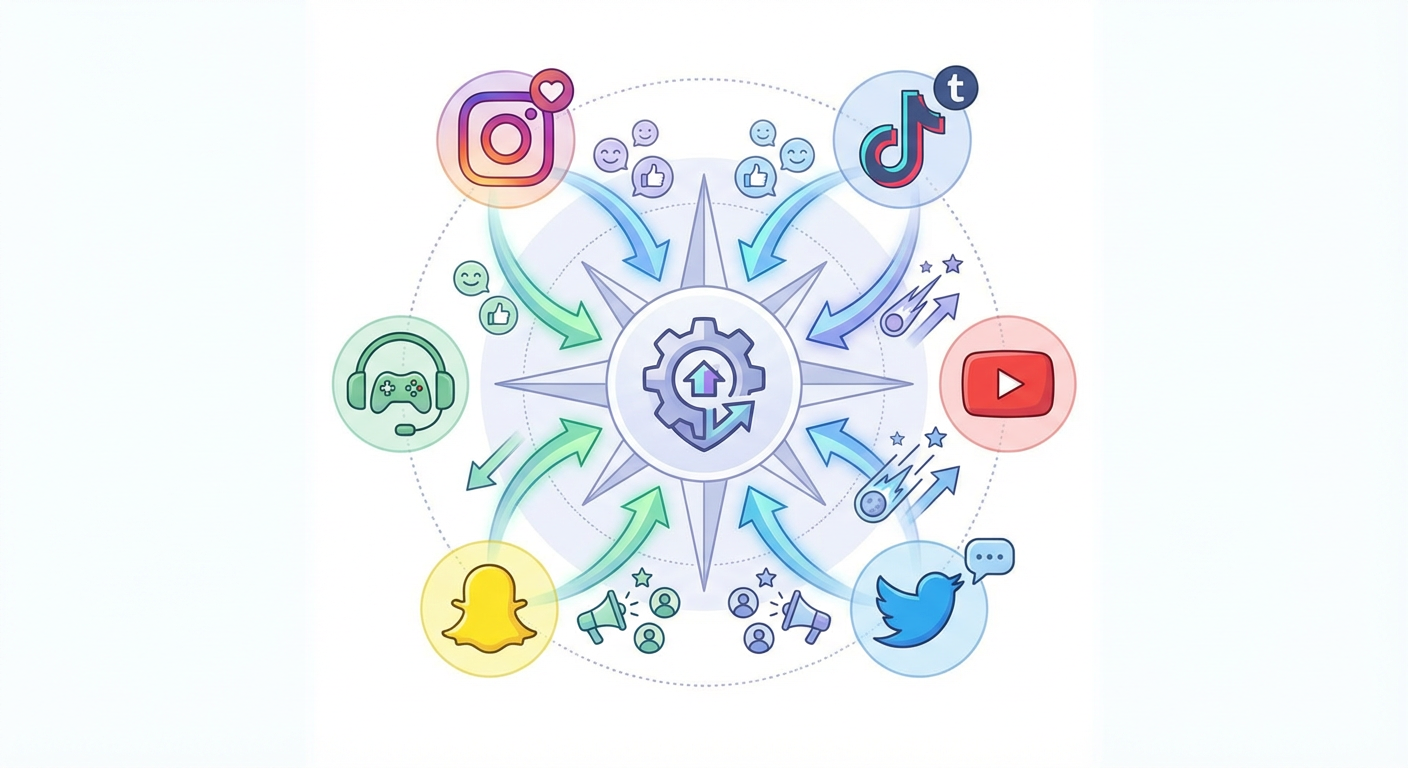
4. Social Media Mastery: Marketing and Branding Strategies
The burgeoning landscape of teen entrepreneurship is inextricably linked with the pervasive influence of social media. For Generation Z, digital platforms are not merely communication tools but fundamental marketplaces, discovery engines, and branding canvases. This section delves into how teen entrepreneurs, who are intrinsic digital natives, are leveraging social media to build, market, and scale their businesses. It explores their proficiency in engaging their demographic, creating viral content, utilizing micro-influencers for authentic promotion, and crafting compelling brand narratives rooted in authenticity and purpose.
The Social Media Landscape: A Native Environment for Teen Entrepreneurs
The rise of teen entrepreneurship, marked by a significant surge in interest from 41% in 2018 to 76% in 2023, is deeply intertwined with the accessibility and power of social media for marketing and sales[2][17]. Unlike previous generations that relied on traditional advertising channels, today’s young entrepreneurs inherently understand the mechanics of digital engagement. They are building businesses on platforms where their peers spend significant time, making social media their primary marketing engine. Gen Z consumers, the core demographic for many teen-led ventures, dedicate an average of over two hours daily to social platforms[24]. This extensive engagement creates a fertile ground for teen business owners to capture attention, cultivate communities, and drive sales.
The efficacy of social media for reaching Gen Z is further underscored by their product discovery behavior. Approximately 74% of Gen Z globally report discovering new products and services through social media feeds or influencers[11]. This far surpasses traditional advertising methods and highlights a fundamental shift in consumer purchase journeys. Moreover, 75% of Gen Z consumers rely on social media reviews or posts when making purchasing decisions[11]. This reliance on peer recommendations and user-generated content means that social platforms are not just for awareness, but for building trust and directly influencing buying behavior. Teen entrepreneurs, who often operate as the “face” of their brand, foster this trust through personal engagement, authentic narratives, and direct interaction with their audience via live videos, stories, and comments. This personal touch, often difficult for larger corporations to replicate, allows young businesses to build a loyal customer base at minimal financial outlay. Indeed, 62% of Gen Z are more inclined to purchase from brands with a robust social media presence[25].
The symbiotic relationship between Gen Z and social media has positioned young entrepreneurs with an innate advantage. They craft content that seamlessly integrates into social feeds, often blurring the lines between personal updates and product promotion. This native understanding of digital culture enables them to create marketing strategies that feel organic and resonate deeply with their target demographic. The result is a marketing approach that is both cost-effective and highly impactful, contributing significantly to the rapid growth observed in many teen-led businesses.
Viral Content: The Catalyst for Rapid Growth
One of the most distinctive aspects of social media mastery among teen entrepreneurs is their ability to generate viral content for rapid business growth. Having grown up immersed in platforms like TikTok, Instagram, and YouTube, these young founders possess an intuitive grasp of what makes content shareable and engaging. They understand trends, memes, music, and challenges, and skillfully integrate these elements into their brand promotions, making their marketing campaigns feel less like advertisements and more like part of the cultural zeitgeist.
A compelling example of viral content driving explosive growth is the story of Gymshark. Founded by a 19-year-old Ben Francis, the fitness apparel brand leveraged social media buzz and strategic collaborations with fitness influencers to achieve remarkable results. An influencer event dramatically boosted Gymshark’s daily sales from approximately $450 to $45,000[7][26]. This demonstrates how a single, well-executed social media campaign or a product demonstration video can lead to an overnight surge in sales and brand recognition. For teen entrepreneurs with limited financial resources, mastering viral content creation is a powerful alternative to expensive traditional advertising. It allows their businesses to scale incredibly fast when their content “catches fire” within the vast digital ecosystem.
The mechanics of viral content often involve short-form video formats, particularly prevalent on platforms like TikTok and Instagram Reels. These formats encourage quick consumption and easy sharing, enabling products and brands to reach millions of users within hours or days. Teen entrepreneurs excel at producing content that is authentic, often unpolished, and highly relatable. They might showcase their product’s functionality, offer a behind-the-scenes look at their production process, or simply engage with a trending audio track while subtly featuring their brand. This approach contrasts sharply with the highly produced advertisements of traditional brands, which often struggle to connect authentically with Gen Z consumers. The trust placed in user-generated content (68% of Gen Z trust it more than brand-produced content) is a testament to the power of this authentic, viral-driven marketing strategy[14].
Leveraging Micro-Influencers for Authentic Promotion
Given their often-limited budgets, teen entrepreneurs have innovated their marketing strategies by relying heavily on micro-influencers and peer ambassadors rather than expensive celebrity endorsements. This approach aligns perfectly with Gen Z’s preference for authenticity and relatable content. Micro-influencers, characterized by their smaller but highly engaged and niche audiences, offer a more genuine connection than macro-influencers, often seen as less trustworthy due to their commercialized nature.
The strategy typically involves sending free product samples or providing affiliate codes to campus influencers, local trendsetters, or niche content creators whose followers align with the brand’s target demographic. The founder of Gymshark famously utilized this strategy in its formative years, paying fitness YouTubers as little as $500 per month to wear and promote Gymshark apparel[7][27]. These modest investments yielded substantial returns by generating significant awareness among the target customer base. This playbook is now widely adopted by teen businesses:
- A teen skincare brand might collaborate with a student beauty vlogger.
- A student-run apparel line could recruit popular classmates to showcase their products on Instagram.
The effectiveness of micro-influencers stems from the high level of trust their followers place in their recommendations. With roughly 70% of Gen Z consumers making purchase decisions based on influencer recommendations[28], these collaborations frequently translate directly into sales. These partnerships feel less like traditional advertising and more like genuine peer advice, resonating deeply with a generation that values transparency and relatability. Furthermore, the barrier to entry for becoming a micro-influencer is low, allowing many teen entrepreneurs to organically grow their own personal brand and then effortlessly pivot to promoting their business, creating a powerful creator-to-commerce pipeline.
Building Compelling Brand Stories Grounded in Authenticity and Purpose
At the core of social media mastery for teen entrepreneurs lies their ability to build compelling brand stories grounded in authenticity and purpose. Gen Z consumers are highly value-driven; 56% prefer brands that support social causes[14]. This generation seeks genuine connection and transparency from the brands they support. Teen founders, often peers of their target customers, instinctively communicate in a genuine, casual voice that larger, more corporate brands often struggle to embody.
Teen entrepreneurs frequently leverage their personal journey as a key part of their brand narrative. They openly share their founder story, chronicling the ups and downs of their startup journey on social media. This behind-the-scenes look humanizes their brand and creates a powerful emotional connection with their audience. For instance, a 16-year-old starting a sustainable jewelry business might use TikTok to share her process of sourcing eco-friendly materials or balancing schoolwork with fulfilling orders. This user-generated content and transparent storytelling resonate deeply: 68% of Gen Z trust user-generated content and peer reviews more than professional ads sponsored by brands[14][29]. By reposting customer reviews, encouraging followers to share content, and even creating brand-centric challenges, teen enterprises amplify their reach and reinforce their image as community-driven and authentic.
Beyond personal authenticity, many teen entrepreneurs infuse their businesses with a strong social purpose. This value-driven approach is a significant differentiator and a direct reflection of Gen Z’s ethical consumerism. Examples include:
- Me & the Bees Lemonade (Mikaila Ulmer): Mikaila started her lemonade business at age four, leveraging a family recipe and a mission to save bees. Her commitment to donating a portion of profits (over $100,000 to date) to bee conservation efforts differentiated her brand and earned her national recognition, including a $60,000 investment on Shark Tank and distribution in major retailers like Whole Foods and Target[33][34]. By the time Mikaila was 17-18, the company reported over $5 million in annual revenue[34][35].
- Are You Kidding? Socks (Brandon and Sebastian Martinez): These brothers launched a sock business featuring colorful, themed designs, many of which are linked to charitable causes like autism awareness and cancer research. By integrating philanthropy into their model, they not only differentiated their brand but also appealed to a socially conscious customer base, achieving nearly $1 million in sales by 2019[36][37].
These examples illustrate how integrating compelling personal stories and social causes into the brand narrative significantly elevates brand appeal among young consumers. This genuine alignment with values builds a deeper connection with customers, fostering loyalty that goes beyond product features or price points. Teen entrepreneurs inherently understand that their generation wants to buy from brands that stand for something, and they are skillfully weaving these values into the very fabric of their social media presence.
Social Commerce: From Marketing Channel to Point of Sale
For Gen Z entrepreneurs, social media transcends its role as a mere marketing channel; it serves as a direct point of sale, seamlessly integrating content with commerce. This shift is particularly evident in the rapid growth of social commerce, a market projected to reach $1.2 trillion globally by 2025, nearly tripling its 2021 figure[5][13]. Gen Z and Millennials are the primary drivers of this growth, with Gen Z leading the charge in adopting in-app shopping functionalities.
Key Data on Gen Z and Social Commerce:
| Metric | Percentage | Source |
|---|---|---|
| Gen Z who discovered products via social media | 76% | Salesforce[6][12] |
| Gen Z who purchased directly through social channels | 39% | Salesforce[6][12] |
| Gen Z who bought something after seeing a social media ad | 61% | Kadence[11][10] |
Platforms like Instagram, TikTok, Pinterest, and Snapchat now offer integrated shopping features such as in-app storefronts, product tags, and shoppable videos. Teen entrepreneurs are quick to adopt these tools, setting up Instagram Shop profiles, enabling TikTok Shopping, and embedding product links directly within their content. This strategy streamlines the purchase journey, allowing viewers to transition from discovering a product to buying it within seconds, often without leaving the social media application. Many teen-run brands derive a significant portion, if not the majority, of their sales directly from these social commerce channels, bypassing traditional e-commerce websites altogether.
The emergence of live and experiential e-commerce is another significant trend championed by young sellers. Features like Instagram Live and TikTok livestreams enable entrepreneurs to conduct real-time product showcases, answer customer questions, and offer limited-time discounts. This creates an interactive and engaging shopping experience, akin to a modern-day home shopping network, but delivered through a personal, authentic lens. Gen Z consumers are particularly receptive to these formats, with Salesforce reporting they are 2.5 times more likely than Boomers to seek real-time product recommendations through interactive media[30]. These live events can generate substantial sales volumes in a short period, effectively transforming a teen’s personal space into a global storefront.
Furthermore, the agility of teen entrepreneurs allows them to implement multi-channel strategies from day one. They do not restrict themselves to a single platform but sell wherever their target audience is present. This could mean simultaneously listing products on their own website, third-party marketplaces like Etsy or Depop (where 90% of users are under 26)[12][9], and various social media platforms. This diversification ensures maximum reach and caters to different customer segments, from casual browsers on Instagram to intent-driven shoppers on Etsy. The intuitive understanding of mobile-first commerce (78% of Gen Z use smartphones for online shopping)[8][23] allows teen entrepreneurs to design their processes around mobile technology, ensuring seamless experiences for their mobile-native customers while keeping overheads low.
The ability of teen entrepreneurs to navigate and leverage social media for both marketing and direct sales represents a paradigm shift in business. Their inherent digital fluency, coupled with a genuine understanding of their peer demographic’s preferences, enables them to build thriving businesses in a dynamic and increasingly social digital marketplace. This mastery provides a blueprint for future generations of business owners and reshapes how brands engage with their audiences.
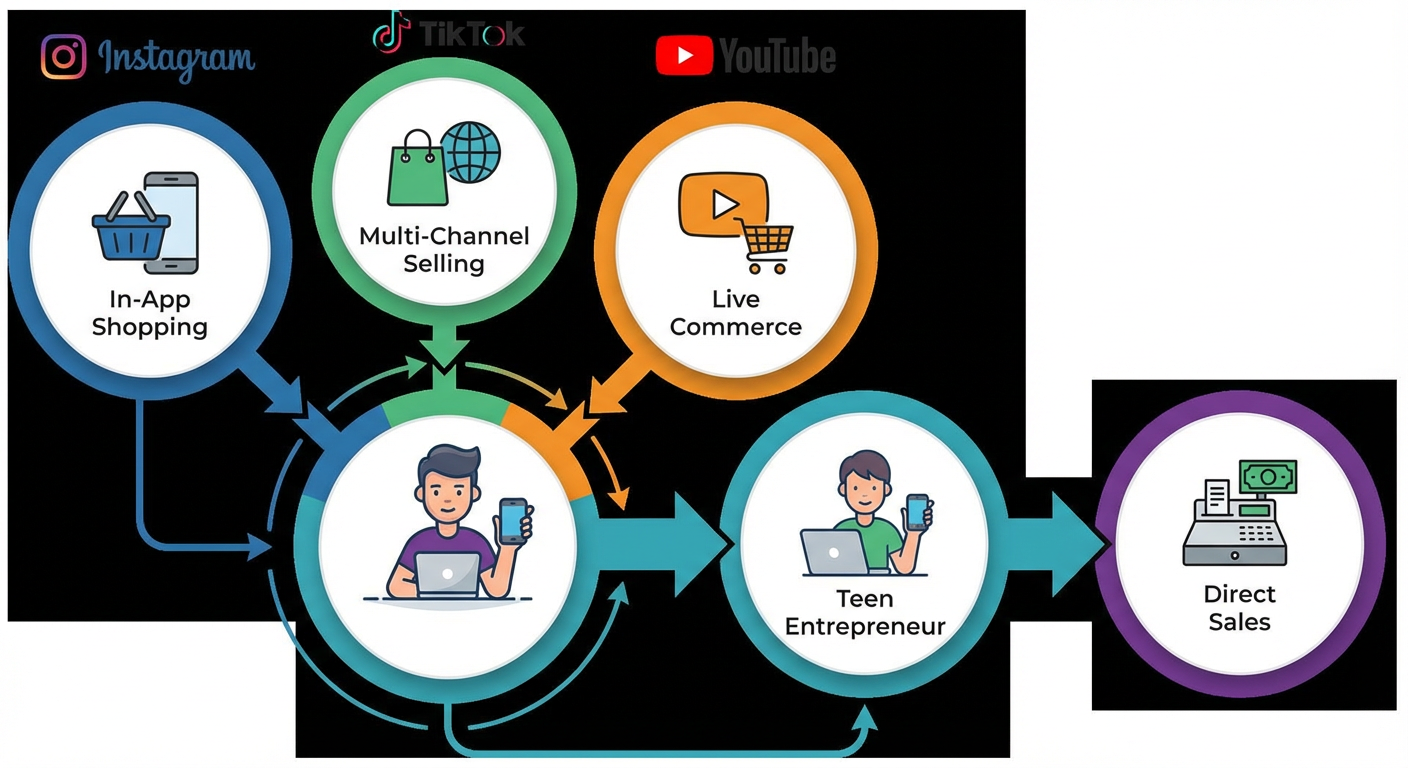
5. Social Commerce and Direct Sales Strategies
The digital landscape has profoundly reshaped the path to market for businesses, particularly for the emerging generation of teen entrepreneurs. No longer confined to traditional brick-and-mortar storefronts or complex, expensive e-commerce setups, these young innovators are harnessing the pervasive power of social media to not only promote their brands but also to directly convert engagement into sales. This phenomenon, known as social commerce, represents a pivotal shift in retail, with Gen Z at its vanguard. This section delves into how teen businesses are mastering social commerce, leveraging in-app shopping features, adopting multi-channel selling approaches, and pioneering the next wave of live and experiential e-commerce to drive direct sales and build thriving enterprises.
The Ascendancy of Social Commerce: From Discovery to Purchase
Social media platforms, initially designed for interpersonal connection, have rapidly evolved into sophisticated marketplaces. For Gen Z entrepreneurs, these platforms are intuitive and powerful tools that collapse the customer journey from product discovery to purchase into a seamless, often impulsive, experience. This is particularly effective given that roughly three-quarters of Gen Z consumers, approximately 74% globally, discover new products and services through their social media feeds or via influencers[11]. This innate behavior of Gen Z consumers provides a significant advantage to teen businesses, which predominantly operate within these digital ecosystems. The data unequivocally highlights the central role of social media in Gen Z’s purchasing decisions:
- Product Discovery: 76% of Gen Z have reported discovering products through social media[6].
- Direct Purchases: A substantial 39% of Gen Z have directly purchased products through social channels[6]. This figure underscores the effectiveness of integrated shopping features within social platforms and the willingness of young consumers to transact directly in-app.
- Influencer Impact: Approximately 70% of Gen Z consumers report making purchase decisions based on recommendations from influencers on social media[10]. Furthermore, 61% of Gen Z have bought items after seeing a social media advertisement[11].
This preference for social discovery and purchasing is driving the explosive growth of social commerce. Global social commerce sales are projected to reach an astounding $1.2 trillion by 2025[5], a near threefold increase from the 2021 figure of approximately $492 billion. Gen Z and Millennials are identified as the primary accelerators of this growth[5]. For teen businesses, establishing a strong presence on platforms like Instagram, TikTok, and Snapchat, which increasingly offer native shopping capabilities, is not merely advantageous, but often a core component of their business model. When a viewer can transition from watching a captivating product demonstration video to completing a purchase within seconds, the sales funnel is dramatically tightened. Teen entrepreneurs inherently grasp this dynamic, setting up Instagram Shop profiles, enabling TikTok Shopping, or embedding product links directly into their YouTube content. This direct-response capability allows them to capitalize on the immediacy and immersive nature of social media, converting passive engagement into active sales with unparalleled efficiency. As a result, it is not uncommon for many teen-run brands to generate a significant, if not majority, portion of their sales directly via social channels, often bypassing traditional dedicated e-commerce websites as their primary point of sale.
In-App Shopping Features and Native Marketplaces
Social media platforms have actively cultivated environments conducive to direct sales, integrating features that allow businesses to create storefronts and facilitate transactions without users leaving the application. Teen entrepreneurs and their target demographic are digitally native, making these in-app shopping experiences highly intuitive and convenient. Key platforms and their features leveraged by teen businesses include:
- Instagram Shops: This feature allows businesses to create a customizable storefront within the Instagram app. Products can be tagged in posts and stories, enabling users to tap and purchase directly or be redirected to a product page. For a teen selling handmade jewelry, Instagram Shops provides a visually rich and direct pathway from aesthetic appreciation to purchase.
- TikTok Shopping: With its immense reach among younger demographics, TikTok has rapidly expanded its e-commerce capabilities. Businesses can embed product links in videos, host shoppable LIVE sessions, and even integrate with Shopify to create in-app storefronts. The viral potential of TikTok videos means a single product demonstration can lead to an overnight surge in sales. Ben Francis’s Gymshark, for example, saw its sales jump from around $450 to $45,000 per day after leveraging social media buzz and influencers around an expo, demonstrating the immense power of visually-driven, influencer-backed content[7].
- Pinterest Shop and Idea Pins: Pinterest, often viewed as a visual search engine, is a powerful tool for product discovery. Shoppable Idea Pins allow creators to tag products directly within rich visual content, turning inspiration into immediate purchase opportunities.
Beyond these integrated social commerce giants, specialized youth-centric marketplaces have also thrived, providing niche environments that perfectly align with teen entrepreneurial activities. Depop stands out as a prime example, with a staggering 90% of its 30 million users being under the age of 26[9]. This peer-to-peer fashion resale app allows teens to monetize hobbies like thrifting, upcycling vintage clothing, or selling their own designs within a community that values sustainability and unique style. Such platforms offer a built-in digital marketplace, community, and buyer base, simplifying the entry into retail for young entrepreneurs. They also provide valuable lessons in product photography, descriptive writing, and customer service within a mobile-native context familiar to Gen Z. The ease of entry offered by these platforms, combined with low upfront costs, makes them ideal starting points for teen businesses. A teen can set up a basic Shopify store or an Etsy shop in a matter of hours, or begin selling through Instagram without needing any web development expertise. This accessibility has led to a proliferation of teen-run microbusinesses, operating from bedrooms yet reaching a global customer base. The digital infrastructure has become so robust that e-commerce now accounts for 20.1% of all global retail sales as of 2024, a significant rise from 16% in 2019[10]. This means the default online approach of young entrepreneurs is already aligned with a substantial and growing segment of consumer behavior.
Multi-Channel Selling and Lean Business Models
Unlike traditional businesses that had to adapt to online sales, Gen Z businesses are inherently multi-channel, or “omnichannel,” from their inception. They strategically diversify their sales presence across various platforms to maximize reach and cater to different customer preferences. A single teen-operated brand might simultaneously manage:
- A dedicated e-commerce website (e.g., Shopify, Squarespace)
- Listings on large marketplaces (e.g., Etsy for handmade goods, Amazon for broader reach)
- Shoppable posts and stories on Instagram and TikTok
- Presence on niche marketplaces relevant to their product (e.g., Depop for fashion)
This agile approach allows them to capture diverse customer segments. For instance, a customer browsing casually on Instagram might make an impulse purchase, while another with a specific product in mind might seek out the brand on Etsy or a dedicated website. Teen entrepreneurs understand that if 74% of their generation discover products via social media, but other demographics or more intent-driven shoppers utilize platforms like Amazon, then a diversified presence is crucial[11]. A significant enabler of this multi-channel strategy, particularly for teens with limited capital, is the adoption of lean business models like dropshipping and print-on-demand. Dropshipping, where businesses sell products without holding any inventory themselves (the supplier ships directly to the customer), minimizes upfront investment and logistical complexities. The global dropshipping market is estimated at approximately $365 billion in 2024 and is forecast to exceed $1.2 trillion by 2030, reflecting a robust compound annual growth rate of over 22%[13]. This model is exceptionally popular among young entrepreneurs because it bypasses the need for significant startup capital, warehouse space, or inventory management, aligning perfectly with teens’ often-limited access to funding. Teenagers are empowered to test product ideas, source from global suppliers (many vetted via e-commerce platforms), and launch online stores with minimal financial risk. Another complementary model is print-on-demand, common for apparel and merchandise. Teens can design products (t-shirts, mugs, phone cases) and have them manufactured and shipped only when an order is placed, eliminating inventory costs and waste. These flexible models allow young entrepreneurs to focus their resources on marketing and content creation, which are often their strongest suits.
The Rise of Live and Experiential E-commerce
A rapidly evolving facet of social commerce, prominently embraced by teen businesses, is live shopping and experiential e-commerce. This trend, already a colossal market in Asia, is gaining traction among Western Gen Z consumers. Live shopping essentially replicates the interactive experience of a home shopping network (like QVC) but within social media feeds, featuring hosts (often the entrepreneurs themselves or charismatic influencers) showcasing products, answering questions in real-time, and offering limited-time deals. According to Salesforce, Gen Z consumers are 2.5 times more likely than Baby Boomers to seek real-time product recommendations through interactive media[6]. Teen entrepreneurs are early adopters of this format, recognizing its power to create urgency, build community, and drive impulse purchases. Examples include:
- Livestream Sales: Hosting weekly Instagram or TikTok Live sessions where new products are unveiled, demonstrated, and sold. These events often feature limited-edition drops or exclusive discounts, fostering a sense of excitement and fear of missing out (FOMO) among viewers.
- Interactive Q&A: Live sessions allow for immediate interaction, enabling customers to ask questions about products, materials, sizing, or anything else, directly to the founder or a brand representative. This builds trust and rapport, mimicking a personalized in-store experience.
- Augmented Reality (AR) Try-Ons: While still nascent, platforms are integrating AR functionalities, allowing customers to virtually “try on” clothes, makeup, or assess how furniture might look in their homes. This experiential element enhances confidence in online purchases.
These live events can generate thousands of dollars in sales within minutes, effectively transforming a teen’s bedroom or dorm room into a global shop floor. The success of these strategies hinges on the authenticity and direct connection that young entrepreneurs inherently bring to their brands. They are their target audience, so they understand how to speak to them, what content resonates, and how to create engaging, shoppable experiences.
Case Studies in Social Commerce Mastery
The success of several established companies, many founded during the owners’ teen years, powerfully illustrates the efficacy of these social commerce strategies:

| Business/Founder | Early Social Commerce Strategy | Impact |
|---|---|---|
| Gymshark (Ben Francis) | Leveraged fitness YouTubers/influencers (as low as $500/month) to wear and promote apparel; created organic buzz around expos. | Daily sales jumped from ~$450 to $45,000 during an influencer event[7]. Valued at £1 billion ($1.4 billion) by 2020[7], Ben Francis became a billionaire by age 30. |
| Da Bomb Bath Fizzers (Bercaw Sisters) | Engaged with customers at local art fairs, built organic buzz. While not social-first, their creative, prize-filled product catered to a youth market ripe for social sharing. | Grew to over $20 million in annual revenue[8], secured national distribution in 1,800 Target stores[8]. |
| Me & the Bees Lemonade (Mikaila Ulmer) | Built a brand around a social mission (saving bees) and an authentic founder story; early media appearances and endorsements (e.g., Shark Tank, meeting President Obama) amplified reach. | Secured $60,000 investment on Shark Tank[23], achieved national distribution (Whole Foods, Target), over $5 million in annual revenue (as of 2022)[24]. |
Ben Francis, who founded Gymshark at 19, exemplifies how a teen entrepreneur can build a global brand through focused social media and influencer marketing. Beginning from his bedroom, Francis famously paid modest fees to fitness YouTubers to wear his apparel, cultivating an authentic association between his brand and credible fitness personalities[7]. This strategy not only fostered explosive growth, but also cemented Gymshark’s position as a brand deeply rooted in and understood by its target fitness community. The company’s trajectory from a bedroom startup to a £1 billion valuation demonstrates the profound impact of understanding and leveraging social dynamics to drive direct sales. These examples underscore that social commerce is not just a passing trend but a fundamental operational model for many teen businesses. Their intrinsic understanding of digital platforms, their ability to create engaging and authentic content, and their willingness to experiment with new technologies like live shopping gives them a powerful edge in the contemporary digital marketplace.
Transition to the Next Section
The mastery of social commerce and direct sales strategies allows teen entrepreneurs to launch and scale businesses with agility and minimal capital, largely side-stepping traditional retail hurdles. However, behind these successful sales figures lie persistent challenges related to business foundations, funding, and the balancing act of entrepreneurship with adolescence. The next section, “Challenges and Opportunities for Teen Business Owners,” will delve into these critical areas, examining the common obstacles faced by young founders and the educational, financial, and mentorship opportunities that can help them overcome these hurdles and sustain their growth.
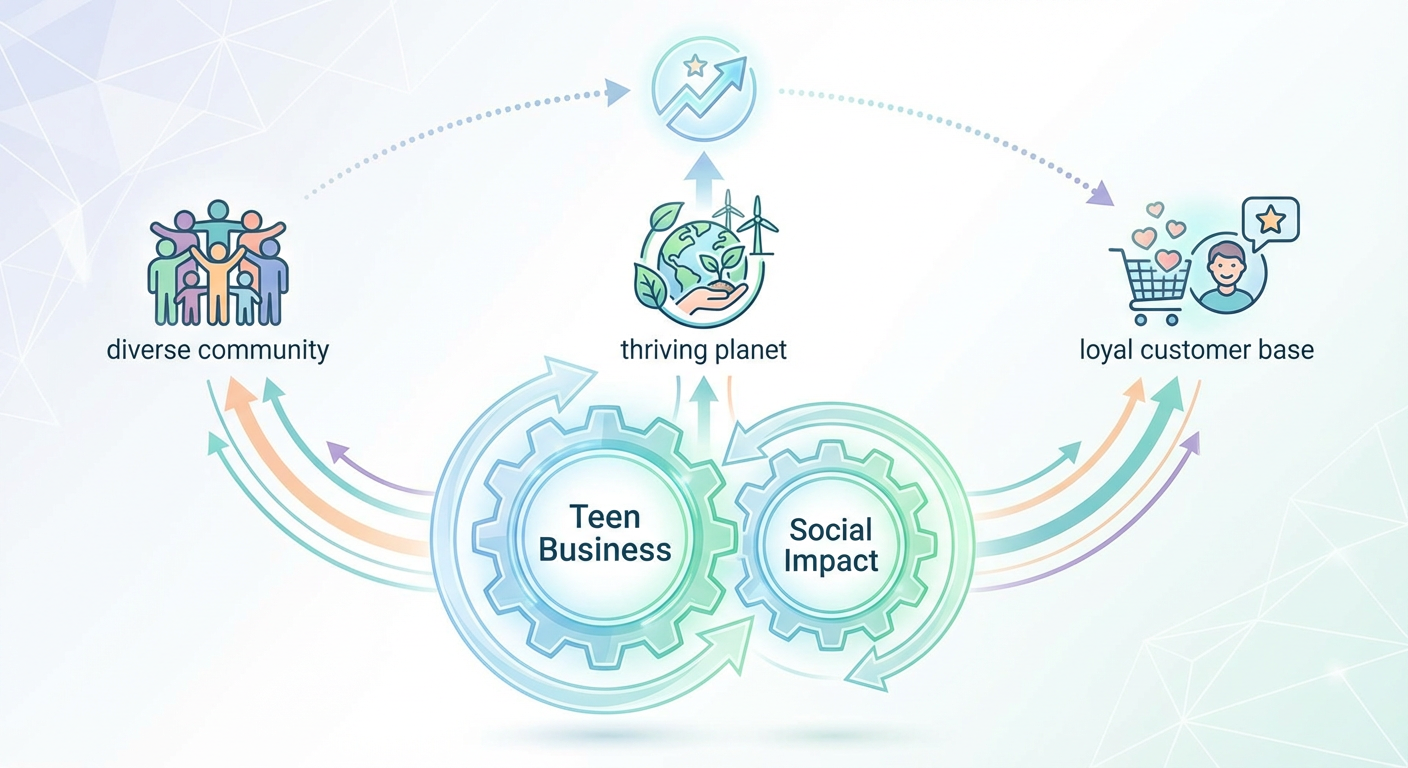
6. Integrating Purpose: Social Impact in Teen Businesses
The burgeoning landscape of teen entrepreneurship is not merely a reflection of increased digital access or a desire for financial independence; it also encapsulates a profound generational shift towards purpose-driven commerce. Generation Z (Gen Z), the demographic cohort born between the mid-1990s and early 2010s, exhibits a pronounced inclination to integrate social causes and values into their entrepreneurial ventures. This approach is not merely altruistic; it is a strategic alignment with their generation’s deeply ingrained preference for socially responsible brands, fundamentally influencing brand appeal and fostering robust customer loyalty. For Gen Z entrepreneurs, business is increasingly a platform for change, a means to address global and local issues that resonate deeply with their values. This section delves into how teen businesses are championing social impact, exploring the motivations behind this trend, the diverse forms it takes, and its tangible effects on brand perception and consumer engagement. We will examine how this cohort leverages their innate understanding of social media to amplify their message, connect with like-minded consumers, and build businesses that contribute positively to the world while achieving commercial success.
The Value-Driven Foundation of Gen Z Entrepreneurship
At the core of Gen Z’s entrepreneurial spirit is a clear set of values that extends beyond traditional profit motives. This generation has grown up in an era marked by significant social and environmental challenges, fostering a collective awareness and a desire to contribute to solutions. Their business models often reflect a conscious effort to weave social responsibility into the very fabric of their operations, challenging the long-held notion that profit and purpose are mutually exclusive. A significant indicator of this trend is the preference among Gen Z consumers for brands that actively support social causes. Research indicates that as many as 56% of Gen Z consumers prefer brands that align with and support social causes[14]. This isn’t just a passive preference; it translates into purchasing decisions. Teen entrepreneurs, being members of this generation themselves, intuitively understand this demand and proactively integrate social good into their business strategies. This value-driven approach serves multiple purposes: it differentiates their brand in a crowded digital marketplace, resonates deeply with their target demographic (often their peers), and provides personal fulfillment by addressing issues they genuinely care about.
Motivational Factors: More Than Just Profit
- Authenticity and Trust: Gen Z values authenticity above all else. Brands that genuinely embed social impact into their mission, rather than merely engaging in superficial “woke-washing,” are more likely to earn their trust. With 68% of Gen Z trusting online reviews and user-generated content more than brand-produced content, the authenticity of a brand’s social impact initiatives becomes critical for credibility[14]. Teen entrepreneurs, often the faces of their own brands, foster this authenticity through personal narratives and direct engagement transparently communicating their mission.
- Personal Connection to Causes: Many young entrepreneurs choose social causes that directly affect them or their communities. Whether it’s climate change, mental health awareness, social justice, or animal welfare, their close proximity to these issues fuels a genuine desire to make a difference. For example, Mikaila Ulmer, the founder of Me & the Bees Lemonade, was inspired to save bees after being stung twice, transforming her fear into an environmental mission attached to her product[49].
- Peer Influence and Community Building: Social impact initiatives offer a powerful way to build a community around a brand. By supporting causes, teen businesses attract customers who share those values, fostering a sense of belonging and collective action. This community then becomes a powerful marketing tool, leveraging word-of-mouth and user-generated content to amplify the brand’s message.
- Competitive Differentiation: In a highly competitive digital marketplace where barriers to entry are low, social impact provides a potent differentiator. When product quality or price points are similar, a brand’s commitment to social responsibility can be the decisive factor for a Gen Z consumer. This is especially true given the demographic’s significant financial influence, with global social commerce sales projected to reach $1.2 trillion by 2025, heavily driven by Gen Z and Millennials[5].
Manifestations of Social Impact in Teen Businesses
The forms that social impact takes in teen businesses are diverse, reflecting the creativity and varied interests of young entrepreneurs. These initiatives span the entire business operation, from product sourcing and manufacturing to profit allocation and advocacy.
Ethical Sourcing and Sustainability
Many teen businesses prioritize ethical and sustainable practices, recognizing the environmental and social implications of their supply chains. This includes:
- Eco-friendly Products: Brands often focus on creating products that are recyclable, compostable, made from recycled materials, or designed to reduce waste. For instance, a teen-run craft business might exclusively use sustainably sourced woods or upcycled textiles.
- Sustainable Packaging: A commitment to sustainability extends to packaging, with young entrepreneurs often opting for biodegradable, reusable, or minimal packaging to reduce their environmental footprint.
- Fair Trade and Local Sourcing: Some businesses ensure that their raw materials are sourced ethically, supporting fair labor practices or purchasing from local producers to reduce carbon emissions and support local economies.
Donating a Portion of Profits
A common and straightforward way for teen businesses to integrate social impact is by pledging a percentage of their profits to charitable organizations or causes. This model is transparent and easily communicated to consumers, who appreciate knowing their purchase contributes to a greater good.
| Teen Business Name (Example) | Social Cause Supported | Impact Mechanism |
|---|---|---|
| Me & the Bees Lemonade[49] | Bee conservation | A portion of profits (over $100k donated) to bee conservation efforts[51] |
| Are You Kidding? Socks[52] | Autism awareness, cancer research, etc. | Portion of sales from “Charity Socks” line donated to specific organizations[53] |
| (Hypothetical) Eco-Jewelry Brand | Ocean plastics cleanup | 5% of all sales donated to ocean cleanup non-profits |
Mikaila Ulmer’s “Me & the Bees Lemonade” is a prime example of this model. Starting her business at age four, Mikaila integrated bee conservation into her brand’s DNA. By her late teens, the company had not only achieved over $5 million in annual revenue[50] but had also donated more than $100,000 to organizations dedicated to saving bees[51]. Her story demonstrates how embedding a social mission from the outset can drive both commercial success and significant philanthropic contributions.
Advocacy and Awareness
Beyond transactional giving, many teen entrepreneurs use their platforms to advocate for causes and raise awareness. This might involve:
- Educational Content: Creating social media content that informs followers about specific social or environmental issues related to their business. For example, a teen selling handmade candles might share facts about sustainable forestry for wax production.
- Partnerships with Advocacy Groups: Collaborating with non-profit organizations to run campaigns, share resources, or co-host events that promote awareness and advocacy.
- Using Brand Messaging: Integrating social messages directly into their brand narrative, product descriptions, and marketing materials to subtly (or overtly) champion their chosen causes.
Community Engagement and Empowerment
Some teen businesses focus their social impact locally, empowering their communities or supporting marginalized groups. This could include:
- Local Initiatives: Organizing community clean-ups, volunteering, or sponsoring local events.
- Empowering Peers: Creating products or services that address specific needs within their peer group, such as mental health resources or educational tools.
- Inclusive Business Practices: Ensuring that their businesses promote diversity and inclusion, both in terms of their internal operations and their external messaging.
Impact on Brand Appeal and Customer Loyalty
Integrating purpose into a business model is not merely a moral imperative for Gen Z entrepreneurs; it is a powerful strategic asset. This approach directly translates into enhanced brand appeal and robust customer loyalty, particularly with their target demographic.
Enhanced Brand Appeal
A socially conscious brand inherently holds greater appeal for Gen Z consumers who are actively seeking to align their purchasing power with their values. This appeal stems from several factors:
- Alignment with Personal Values: Consumers feel good about supporting businesses that mirror their own ethical standpoints. This creates a stronger emotional connection to the brand, moving beyond a purely transactional relationship.
- Positive Brand Image: Brands committed to social impact are perceived as more trustworthy, responsible, and ethical. This positive image extends to the quality and reliability of their products or services.
- Differentiation in a Crowded Market: In a global e-commerce market where products can be easily replicated, a genuine social mission provides a unique selling proposition that is difficult for competitors to imitate. This distinctiveness helps teen businesses stand out.
- Storytelling Potential: A social mission provides a rich narrative for marketing. Teen entrepreneurs can weave compelling stories about their cause, their personal motivations, and the impact their business is making, which resonates deeply with Gen Z’s preference for authentic, story-driven content.
Fostering Customer Loyalty
The emotional connection fostered by a shared value system is a significant driver of customer loyalty. Gen Z consumers are not just buying products; they are investing in causes and movements they believe in. This commitment leads to:
- Repeat Purchases: Customers are more likely to return to brands that consistently demonstrate a commitment to social responsibility, even if alternatives might be slightly cheaper. The value derived from contributing to a cause often outweighs minor price differences.
- Advocacy and Word-of-Mouth Marketing: Loyal customers become brand advocates. They are more likely to share their positive experiences, promote the brand on social media, and recommend it to friends and family. Given that 70% of Gen Z make purchase decisions based on influencer recommendations[10], and peer recommendations are paramount, this user-generated advocacy is invaluable for teen businesses.
- Resilience during Challenges: Brands with a strong purpose tend to have more forgiving customer bases. Should a teen business face a challenge or make a mistake, loyal customers are more likely to offer understanding and continued support, thanks to the established emotional bond.
- Enhanced Engagement: Socially conscious brands often experience higher levels of engagement on social media and other platforms. Customers are not just followers; they are active participants, commenting on posts, sharing content, and contributing ideas, further cementing their loyalty and belonging to the brand’s community.
Leveraging Social Media for Purpose-Driven Messaging
Gen Z entrepreneurs are digital natives, innately understanding the nuances of social media. They leverage platforms like TikTok, Instagram, and YouTube not just for product promotion, but as powerful tools to communicate their social mission, engage with their audience, and amplify their impact.
Authentic Storytelling and Transparency
Social media allows teen founders to share their personal journey and the ‘why’ behind their social initiatives with unparalleled authenticity. They share:
- Behind-the-Scenes Content: Videos and posts showing the process of ethically sourcing materials, engaging in community service, or communicating with charitable partners. This transparency builds trust and reinforces their commitment.
- Founder’s Personal Narratives: Entrepreneurial teens often share their personal motivations for supporting a cause, making their social mission relatable and human. For instance, the Martinez brothers, founders of “Are You Kidding? Socks,” openly discussed their experiences with challenges and how it reinforced their commitment to giving back[54].
- Impact Reporting: Regularly showcasing the tangible results of their social efforts, such as the amount donated to charity, the number of trees planted, or the beneficiaries of their community projects.
Community Engagement and Collective Action
Social platforms are ideal for fostering a sense of community around shared values and mobilizing collective action:
- Interactive Content: Polls, Q&As, and discussions on social issues directly relevant to their brand encourage followers to engage and feel heard.
- User-Generated Content (UGC): Encouraging customers to share how they are contributing to the cause or using the brand’s products to make a difference creates a powerful network effect of advocacy. As 68% of Gen Z trust UGC more than brand-produced content, this is immensely valuable[14].
- Calls to Action: Social media is used to rally support for specific campaigns, fundraisers, or advocacy efforts, turning consumers into active participants in the brand’s mission.
Strategic Partnerships and Amplification
Teen entrepreneurs often collaborate with influencers and other purpose-driven organizations to amplify their social message and reach new audiences:
- Influencer Marketing: Partnering with micro-influencers or content creators who share their values to authentically promote their products and social mission. This leverages the 70% of Gen Z who trust influencer recommendations[10].
- Cross-Promotions: Collaborating with other mission-aligned businesses or non-profits to broaden their reach and collective impact.
Challenges and Opportunities in Scaling Social Impact
While integrating social purpose offers significant advantages, it also presents unique challenges for young entrepreneurs. Scaling a business while maintaining authentic commitment to social impact requires careful navigation.
Challenges:
- Maintaining Authenticity: As a business grows, the risk of “tokenism” or “greenwashing” increases. Teen entrepreneurs must ensure their social mission remains authentic and deeply integrated, rather than becoming a mere marketing tactic.
- Operational Costs: Ethical sourcing, sustainable manufacturing, and charitable donations can sometimes entail higher operational costs, which might impact profit margins, especially for bootstrapped teen businesses.
- Measuring and Communicating Impact: Quantifying and effectively communicating social impact can be complex. Teen entrepreneurs need to develop clear metrics and transparent reporting to validate their claims to discerning Gen Z consumers.
- Regulatory and Legal Frameworks: Operating a purpose-driven business often involves navigating complex regulations related to non-profit partnerships, charitable giving, and environmental certifications, which can be daunting for young founders.
Opportunities:
- Attracting Talent: Purpose-driven businesses are more attractive to mission-aligned Gen Z talent, making it easier to build a passionate and committed team as the business scales.
- Access to Funding: A strong social mission can attract impact investors or grants specifically allocated for socially responsible enterprises, offering alternative funding avenues distinct from traditional venture capital.
- Increased Resilience: Brands with a strong purpose are often more resilient during economic downturns or crises, as their customer base is built on loyalty rooted in shared values.
- Innovation Driver: A commitment to social impact can spur innovation in product development, sourcing, and operational processes, leading to unique and competitive advantages.
Looking Ahead: The Future of Purpose-Driven Teen Businesses
The trend of integrating social impact into teen businesses is not a fleeting fad but a fundamental characteristic of Gen Z entrepreneurship. As this generation matures and gains further economic and political influence, their demand for and creation of socially responsible brands will only intensify. The examples of Mikaila Ulmer’s Me & the Bees Lemonade, who secured a $60,000 investment on Shark Tank at age nine[49], and the Martinez brothers’ Are You Kidding? Socks, which sold nearly $1 million worth of products while supporting various causes[52], underscore that social good and commercial success are not mutually exclusive. These young entrepreneurs are demonstrating that business can be a powerful force for positive change, and their approach is setting a new standard for corporate responsibility. Mentorship and educational support are crucial to help these young founders navigate the complexities of combining purpose with profit. Over 56% of aspiring teen entrepreneurs feel they lack sufficient knowledge for success, and 45% desire learning directly from experienced business owners[15]. Providing these resources will empower the next wave of socially conscious businesses to flourish. The continued rise of purpose-driven teen businesses will inevitably reshape the digital marketplace, making ethical considerations and social contributions increasingly central to brand identity and consumer choice. This evolution benefits not only individual businesses but also contributes to a more responsible and sustainable economy driven by a generation that truly desires to make a difference. As these young innovators continue to grow and expand their ventures, their integrated approach to purpose will likely serve as a blueprint for future generations of entrepreneurs and a benchmark for established corporations striving for relevance in a values-driven world.
The next section of this report will delve into “Education and Mentorship: Fueling the Next Generation of Entrepreneurs,” exploring the critical role of support systems in nurturing young business talent.
7. Navigating Challenges: Funding, Logistics, and Education
The burgeoning enthusiasm for teen entrepreneurship, underscored by a remarkable surge in interest—from 41% of teens considering entrepreneurship in 2018 to 76% in 2023[17][19]—presents a dynamic landscape ripe with opportunity. However, this demographic—distinct in its life stage, legal standing, and resource access—faces a unique confluence of obstacles that can either stifle nascent ventures or, with proper guidance and resilience, forge exceptionally capable future business leaders. While digital platforms and social media have profoundly lowered barriers to entry, enabling a 19-year-old like Ben Francis to build Gymshark from his bedroom into a multi-billion-dollar enterprise[42][43], the complexities of business operations, financial constraints, and fundamental knowledge gaps remain formidable. This section delves into the multifaceted challenges confronting teen business owners, examining the intertwined issues of funding, logistics, legal frameworks, educational necessities, and the critical role of resilience in fostering success despite inevitable setbacks.
7.1. Knowledge Gaps in Business Fundamentals
Despite their digital fluency and innate understanding of social media dynamics, many teen entrepreneurs approach the business world with significant knowledge gaps in foundational principles. The transition from a creative idea to a sustainable, scalable enterprise requires a grasp of numerous non-glamorous, yet critical, components that are typically outside the scope of traditional secondary education or immediate family experience.
7.1.1. The Demand for Business Education and Mentorship
A striking statistic reveals this vulnerability: over 56% of aspiring teen entrepreneurs openly admit they need more information on how to be successful in business[15]. This isn’t merely a desire for advanced strategies but a fundamental need for guidance on core business functions. These areas often include financial planning, basic accounting, understanding legal structures, navigating tax obligations, and managing supply chain logistics. Teen founders, while adept at crafting viral content or identifying market trends, may not instinctively possess the acumen for negotiating supplier contracts or optimizing inventory. The absence of formal education in these areas within standard curricula is a significant contributing factor. While some schools and non-profit organizations are beginning to integrate entrepreneurship programs, such as Junior Achievement’s company programs, hackathons, and business plan competitions, these efforts are not universally available or standardized[15]. The prevailing sentiment among teens themselves supports external learning avenues: nearly 45% of teens express a desire to learn entrepreneurship directly from experienced business owners, and 37% advocate for schools to offer dedicated entrepreneurship programs[15][23]. This highlights a critical need for practical, real-world instruction complementing academic learning. Mentorship emerges as a potent solution to bridge these knowledge gaps. The guidance of an experienced individual can demystify complex business concepts, offer practical advice, and provide a roadmap for navigating unfamiliar territories. Programs that connect young founders with seasoned entrepreneurs or provide online communities specifically tailored for youth entrepreneurs are increasingly vital. Such connections can rapidly accelerate a teen’s learning curve, offering insights that theoretical instruction alone cannot provide. For instance, understanding the nuances of customer service, developing efficient fulfillment processes, or even the ethical considerations in marketing are often best learned through direct interaction and observation.
7.1.2. Operational Complexities and Learning Curve
Beyond theoretical knowledge, the practical execution of business operations presents a steep learning curve. Logistics, in particular, can be daunting. For an e-commerce business, this involves everything from sourcing raw materials or finished products, managing inventory (even for dropshipping models), packaging, shipping, and handling returns. The Bercaw sisters of Da Bomb Bath Fizzers, for example, had to produce 20,000 bath bombs a month from their parents’ basement while still in high school, a logistical feat illustrating the rapid scaling challenges[8]. Ben Francis, the founder of Gymshark, initially started with dropshipping supplements before moving into manufacturing apparel, a transition that likely involved a significant logistical learning curve[43]. These real-world examples highlight that while the digital storefront might be easy to set up, the physical movement of goods presents substantial operational hurdles. Furthermore, legal and regulatory compliance can be a maze for any new business owner, let alone a minor. This includes understanding permits, licenses, consumer protection laws, intellectual property rights, and increasingly, data privacy regulations. Without proper guidance, young entrepreneurs risk inadvertently violating laws or making critical errors that could jeopardize their venture. The Martinez brothers, founders of “Are You Kidding? Socks,” learned firsthand the importance of due diligence and written contracts after a partnership with a charity failed to materialize as promised, underscoring the need for structured legal and business understanding[55]. This operational complexity necessitates accessible educational resources and practical support mechanisms. Online tutorials, workshops, simplified business guides, and even specialized software tailored for young entrepreneurs could help break down complex tasks into manageable steps.
7.2. Financial and Legal Barriers Due to Age
The legal status of a minor imposes significant financial and legal barriers that often require creative solutions and parental involvement. Unlike adult entrepreneurs who can independently access loans or enter contracts, teens face systemic hurdles that delineate their path to formal business establishment and scaling.
7.2.1. Access to Capital and Funding Mechanisms
Access to capital is a perennial challenge for startups, but it is magnified for teen entrepreneurs who typically lack credit history, collateral, and the legal capacity to secure traditional loans. Conventional business loans requiring a minimum age of 18 or 21 are simply out of reach. This forces many teen businesses to be bootstrapped, relying on personal savings, gifts from family, or the initial profits generated from small-scale sales. A survey indicated that approximately 36% of young would-be entrepreneurs cite a lack of financing as a major barrier[34]. However, the digital era has introduced alternative funding mechanisms that lower these financial hurdles:
- Crowdfunding: Platforms like Kickstarter and GoFundMe have enabled teens to bypass traditional lenders. By leveraging their social networks and compelling storytelling, young entrepreneurs can raise seed money directly from supporters, as seen with Mikaila Ulmer securing a $60,000 investment on Shark Tank for “Me & the Bees Lemonade” at age 9[49]. This democratized funding source is particularly effective for products with a strong narrative or social mission.
- Micro-grants and Pitch Competitions: The growing recognition of youth entrepreneurship has led to the emergence of grants and competitions specifically targeting young founders. Organizations like Ashoka Youth Venture and various incubators offer funding opportunities, alongside mentorship and training, to promising teen startups.
- Lean Startup Models: The necessity of limited capital has inadvertently fostered lean startup practices among young entrepreneurs. Models like dropshipping, which reduces the need for upfront inventory investment, are particularly favored. The global dropshipping market, estimated at $365 billion in 2024 and projected to exceed $1.2 trillion by 2030[13][14], highlights its viability. These lean approaches teach valuable lessons in resourcefulness and market validation before significant investment.
Despite these alternatives, the absence of formal funding channels means that growth can be slower, and the ambition of a business might be capped by financial limitations. This financial constraint necessitates a deeply entrepreneurial mindset, where creativity and efficiency are paramount.
7.2.2. Legal Limitations and Parental Involvement
The legal status of a minor is perhaps the most pervasive barrier. Under most jurisdictions, individuals under 18 cannot independently:
- Enter into legally binding contracts (e.g., with suppliers, landlords, or service providers).
- Open business bank accounts.
- Register a business entity (like an LLC or corporation).
- Sign legal agreements with online platforms or payment processors.
These restrictions often necessitate significant parental or guardian involvement. Parents may need to co-sign loans, act as the official registrant for the business, or even formally establish the company in their own name. While this can provide a layer of protection and guidance, it also shifts some autonomy and responsibility away from the teen founder. For instance, Da Bomb Bath Fizzers ultimately had their mother step in as CEO to manage rapid expansion after Target agreed to stock their products in 1,800 stores[8][52]. The issue of credibility also arises. A 16-year-old CEO, despite their innovation and drive, might face skepticism when interacting with established suppliers, retailers, or financial institutions. Navigating these professional environments requires a combination of self-assurance, excellent presentation skills, and often the backing of an adult advocate. Some teens strategically wait to reveal their age until a rapport is established, while others leverage their youth as a unique selling point, capitalizing on media interest in young prodigies. However, there are signs of gradual institutional adaptation. Platforms like eBay and Etsy have provisions for under-18 users to sell with parental oversight. Some banks are exploring “youth business accounts,” and certain regions offer student entrepreneur visas or permits. Nevertheless, until age-related legal hurdles are systematically addressed, adult mentorship and familial support remain indispensable in navigating the legal landscape and ensuring compliance. This reliance underscores the importance of a supportive ecosystem that understands and accommodates the unique legal standing of young entrepreneurs.
7.3. Balancing Academics with Business Operations
For teen entrepreneurs, entrepreneurship isn’t merely a career choice; it’s an extracurricular endeavor undertaken alongside the substantial demands of academic life. Balancing rigorous school schedules, homework, exams, and social commitments with the relentless operational needs of a growing business constitutes a significant challenge.
7.3.1. Time Management and Prioritization
Running even a small e-commerce venture can easily consume the time equivalent of a part-time or even full-time job. Orders need to be fulfilled, customer inquiries answered, social media content created and managed, and administrative tasks completed. This can lead to intense pressure, often resulting in sacrifices in sleep or social activities. The Bercaw sisters of Da Bomb Bath Fizzers famously balanced manufacturing 20,000 bath bombs a month with their high school studies, eventually enrolling in a work-study program that allowed business operations to count as school credit[8]. This extreme example illustrates the dedication and innovative solutions sometimes required. Several strategies emerge for managing this delicate balance:
- Strategic Scheduling: Many teen founders utilize school breaks, weekends, and after-school hours for their business activities. Launching during summer vacations can provide a crucial period to establish initial momentum without academic conflict.
- Delegation and Support Networks: As businesses grow, founders learn the essential skill of delegation. This might involve recruiting friends or family members to help with packaging, social media, or customer service. The concept of “friendployees” (peers hired for part-time help) is common in these early stages. Parental support, as seen with Da Bomb Bath Fizzers, can be critical, with parents often contributing time, expertise, or even taking on executive roles.
- Efficiency and Automation: Teen entrepreneurs, being digital natives, often leverage technology to streamline processes. Automation tools for social media posting, efficient online payment systems, and user-friendly e-commerce platforms like Shopify minimize manual effort, allowing more time for academics.
While stressful, the act of balancing school and a startup instills extraordinary time management skills, discipline, and a strong work ethic that will undoubtedly benefit these young individuals regardless of their future career paths. It teaches them to prioritize, manage multiple deadlines, and make efficient use of every available hour.
7.3.2. Impact on Well-being and Mental Health
The demands of entrepreneurship, coupled with academic pressures, can take a toll on a teen’s well-being and mental health. The constant pressure to perform, meet deadlines, manage customer expectations, and maintain grades can lead to stress, burnout, and anxiety. The intense scrutiny and public nature of social media-driven businesses also expose young founders to online criticism, which can be particularly challenging for developing self-esteem. Factors contributing to this include:
- Lack of Downtime: With school during the day and business responsibilities stretching into evenings and weekends, opportunities for relaxation, hobbies, and socialization (critical for adolescent development) can be severely limited.
- Emotional Labor: Managing customer complaints, dealing with unforeseen operational issues, and experiencing business setbacks can be emotionally draining, especially for individuals who may not yet have fully developed coping mechanisms for stress.
- Fear of Failure (FOMO): The fear of failure is a real deterrent, with 67% of teens admitting it might stop them from starting a business[16]. This constant underlying anxiety can exacerbate stress.
Addressing these well-being concerns requires a proactive approach from schools, parents, and support organizations. Encouraging healthy boundaries, promoting mindfulness and stress-reduction techniques, and ensuring access to mental health resources are crucial. Parents and mentors play a vital role in monitoring a teen’s workload and ensuring they maintain a healthy balance. The goal should be to foster an entrepreneurial spirit without compromising physical or mental health.
7.4. The Importance of Resilience in Overcoming Setbacks
Given their relative inexperience, teen entrepreneurs are highly susceptible to setbacks, from product launch failures to logistical errors or simply slower-than-expected sales. However, this early exposure to adversity, when coupled with resilience and a growth mindset, can be a profound advantage.
7.4.1. Learning from Failure and Iteration
The “fail fast” mantra, prevalent in the startup world, holds particular relevance for young entrepreneurs. While the fear of failure is significant, affecting 67% of teens considering entrepreneurship[16], the reality is that starting a business at a young age often entails lower stakes. Unlike adult founders with mortgages and families to support, teens typically have fewer financial obligations, allowing them to experiment, take risks, and learn from mistakes without catastrophic consequences. A business failure at 17 can be viewed as an invaluable learning experience, providing practical insights into market dynamics, customer behavior, and operational challenges that formal education rarely offers. Examples like the Martinez brothers of “Are You Kidding? Socks” illustrate this perfectly. They faced hurdles such as switching manufacturers and dealing with unreliable partners, which taught them critical lessons about contracts and due diligence[55]. These experiences, though challenging, contribute directly to the development of a more astute and resilient entrepreneur. Many successful entrepreneurs, regardless of age, have a history of earlier ventures that didn’t fully materialize. The ability to pivot, learn from what didn’t work, and apply those lessons to new ideas is a hallmark of successful entrepreneurship.
7.4.2. Developing Adaptability and Problem-Solving Skills
The entrepreneurial journey for teens is a continuous exercise in problem-solving. From figuring out how to fund a new product to navigating supply chain disruptions or responding to unexpected customer feedback, every challenge demands creative thinking and adaptability. This constant need to overcome obstacles cultivates a robust set of skills:
- Resourcefulness: Operating with limited capital and resources forces teen entrepreneurs to be highly resourceful, finding innovative solutions and maximizing existing assets.
- Adaptability: Market demands, social media trends, and technological changes can shift rapidly. Young founders, with their digital intuition, often demonstrate a remarkable ability to adapt their offerings and marketing strategies swiftly.
- Self-Efficacy: Successfully navigating challenges instills a strong sense of self-efficacy—the belief in one’s own ability to succeed in specific situations or accomplish a task. This confidence is a significant asset in future endeavors.
- Critical Thinking: Analyzing what went wrong, devising corrective actions, and evaluating outcomes enhance critical thinking and analytical skills.
These skills are transferable and highly valued across all sectors, preparing young entrepreneurs for dynamic careers, whether they continue as business owners or pursue other professional paths. The supportive networks of family, mentors, and fellow young founders play a crucial role in providing encouragement and guidance during these learning experiences, helping teens cultivate a positive perspective on setbacks and embrace them as opportunities for growth.
7.5. Support Ecosystems: A Path Forward
The challenges faced by teen entrepreneurs highlight a clear need for robust support ecosystems. Addressing knowledge gaps, mitigating financial and legal barriers, aiding in time management, and fostering resilience requires a multi-pronged approach involving various stakeholders. Schools have an increasing role to play by integrating practical entrepreneurship education into their curricula, moving beyond theoretical business studies to hands-on project-based learning. This can include partnerships with local businesses, mentorship programs, and dedicated incubators for student ventures. Non-profit organizations specializing in youth development, like Junior Achievement, are vital in offering structured programs and competitions that build skills and confidence. For financial hurdles, expanding micro-grant opportunities, facilitating access to youth-specific crowdfunding platforms, and encouraging financial institutions to develop age-appropriate banking and loan products are essential steps. Legal guidance, often provided pro bono or through educational workshops, can help teens and their families navigate the complexities of contracts, intellectual property, and regulatory compliance. Finally, the role of mentorship cannot be overstated. Experienced entrepreneurs, community leaders, and even successful older teen entrepreneurs can provide invaluable advice, open doors, and act as sounding boards, helping young founders navigate both the practical challenges and the emotional toll of running a business. This collective support not only helps individual teen businesses succeed but also cultivates a culture of innovation and resilience that benefits the broader economy. In conclusion, while the digital marketplace has extended an unprecedented invitation to young entrepreneurs, its navigation is far from effortless. The path is paved with practical obstacles relating to business fundamentals, financial access, legal standing, and the demanding juggle of school and business. Yet, these very challenges, when confronted with adequate support and a resilient mindset, serve as a crucible, forging a generation of adaptable, resourceful, and innovative leaders poised to shape the future economic landscape. (Transition to the next section) Having explored the significant challenges confronting teen entrepreneurs, the subsequent section delves into the foundational elements of establishing a business presence within these digital ecosystems…
8. Case Studies of Successful Teen Enterprises
The emergence of a new generation of entrepreneurs, often dubbed “Gen Z,” marks a significant shift in the global business landscape. Unburdened by traditional corporate hierarchies and inherently connected to digital platforms, these young innovators are redefining what it means to start and scale a business. The proliferation of accessible e-commerce tools and the pervasive reach of social media have dramatically lowered the barriers to entry, enabling teenagers to launch ventures with minimal upfront capital and a global customer reach from their bedrooms. Indeed, interest in entrepreneurship among teens is surging, with 76% of teens in 2023 considering becoming entrepreneurs, a notable increase from 60% in 2022 and just 41% in 2018[1][2]. This section presents a detailed exploration of successful businesses founded by teenagers, highlighting their unique strategies, growth trajectories, and the pivotal role played by digital and social media strategies in their development. These case studies underscore the transformative power of the digital marketplace and illustrate how ingenuity, strategic use of technology, and a deep understanding of their generation’s consumer behavior can lead to extraordinary commercial success. From multi-million dollar bath bomb empires to billion-dollar fitness apparel brands, these examples provide concrete evidence of the immense potential residing within the demographic of young founders. Each case study delves into the inception of the business, its core digital strategies, milestones achieved, and the key lessons that can be drawn for aspiring young entrepreneurs, emphasizing the themes of innovation, adaptability, and leveraging digital tools to carve out significant market niches.
8.1. The Digital-Native Advantage: How Accessible Platforms Empower Teen Founders
The current entrepreneurial surge among teenagers is intrinsically linked to the accessibility and user-friendliness of modern digital platforms. Unlike previous generations that faced significant hurdles in terms of capital, infrastructure, and geographical reach, today’s teens can launch full-fledged businesses with little more than a smartphone and an internet connection. E-commerce platforms such as Shopify, Etsy, and Depop have democratized access to the global marketplace, allowing young entrepreneurs to establish online storefronts with minimal technical expertise or financial outlay. This phenomenon is reflected in the broader trend of global e-commerce, which now accounts for 20.1% of all retail sales worldwide in 2024, a substantial increase from 16% in 2019[3]. This extensive digital penetration directly benefits teen-led businesses, as their primary market—Gen Z consumers—overwhelmingly prefers online shopping, with an estimated 80% favoring digital over physical stores[4]. Moreover, business models like dropshipping, projected to reach a market value of $1.1 trillion by 2030, offer a low-risk entry point, eliminating the need for upfront inventory investment[5]. This aligns perfectly with the limited capital often available to young entrepreneurs. The innate mobile-first orientation of Gen Z further amplifies this advantage; 78% of Gen Z consumers use their smartphones for the majority of their online shopping[6]. Teen founders are naturally adept at optimizing their businesses for mobile experience, from mobile-friendly websites to seamless in-app purchasing features, thereby meeting their target customers exactly where they are. The blend of user-friendly platforms, low startup costs, and mobile-first consumer habits creates an unprecedented environment for teen entrepreneurship. These digital advantages are a recurrent theme across various successful teen enterprises, enabling them to compete effectively against much larger, established businesses by leveraging agility and an intuitive understanding of the digital landscape.
8.2. Social Media as the Engine of Growth: Marketing and Sales Strategies
For teen businesses, social media is not merely a marketing channel; it is a fundamental ecosystem for brand building, product discovery, and direct sales. Gen Z entrepreneurs possess an inherent understanding of social media dynamics, having grown up immersed in these platforms. They leverage this insight to connect with their peers and target audiences in authentic and engaging ways that often elude traditional marketers. Research indicates that 74% of Gen Z discover new products and services through social media feeds or influencers[7], and 69% follow at least one brand online[8]. This makes social platforms indispensable for building awareness and driving purchasing decisions. A major strategic advantage for teen founders is their ability to create viral content. With a natural propensity for understanding trends, memes, and engaging short-form video formats, a single well-executed piece of content can explode a business’s visibility overnight. This virality, coupled with targeted influencer marketing, forms the backbone of many teen businesses’ growth strategies. Notably, approximately 70% of Gen Z consumers make purchase decisions based on influencer recommendations[9]. Teen entrepreneurs often partner with micro-influencers or popular peers by offering free products or small payments, generating authentic endorsements that resonate powerfully with their demographic, proving far more cost-effective than traditional advertising. The rise of social commerce further blurs the lines between content and transaction. About 39% of Gen Z have directly purchased through social channels, and 76% have used social media to discover products or brands[10]. Global social commerce sales are projected to reach $1.2 trillion by 2025, driven significantly by Gen Z and Millennials[11]. Teen businesses are at the forefront of adopting these features, using Instagram Shops, TikTok Shopping, and live-stream commerce to facilitate seamless, in-app purchases. This strategy leverages the impulsive nature of social media usage, converting immediate interest into direct sales. By establishing an omnipresence across the social platforms frequented by their target demographic, teen entrepreneurs capitalize on a massive, highly engaged audience without incurring prohibitive marketing costs. They embody the principle of “selling where their peers hang out,” which is a foundational element of their success.
8.3. Case Study: Gymshark (Ben Francis, UK) – From Bedroom to Billion-Dollar Brand
One of the most compelling narratives in teen entrepreneurship is that of Ben Francis and Gymshark. Started in 2012 by 19-year-old Francis from his parents’ garage in the West Midlands, UK, Gymshark has ascended from a dropshipping operation to a global sportswear powerhouse valued at £1 billion ($1.4 billion) by 2020[13][15]. Francis’s journey exemplifies the strategic use of social media and influencer marketing to build a brand from scratch with minimal traditional advertising.
8.3.1. Inception and Early Strategy
Francis, a former pizza delivery driver and university student, started by dropshipping bodybuilding supplements while also custom-making workout apparel in his bedroom using a screen printer and a sewing machine[17]. His initial inspiration stemmed from a personal frustration with the lack of stylish fitness wear available for his physique. He began by designing and manufacturing clothing that appealed directly to his niche: the fitness enthusiast community. This deep understanding of his target audience’s desires and pain points was foundational.
8.3.2. Social Media and Influencer Marketing Mastery
Gymshark’s explosive growth is inextricably linked to Francis’s pioneering use of social media and influencer marketing. In an era when many brands were still grappling with traditional advertising methods, Francis understood the power of authentic recommendations from trusted figures within the fitness community. He began by sending free Gymshark products to popular fitness YouTubers and Instagrammers, requesting them to wear the gear in their content. Crucially, he established partnerships with these influencers even when his budget was extremely modest, reportedly paying them as little as $500 per month in the early days to showcase his apparel[15]. This strategy paid off dramatically. At one event where Francis leveraged social media buzz around an expo and partnered with fitness influencers, Gymshark’s daily sales soared from approximately $450 to an astounding $45,000[15]. This demonstrated the immense return on investment of his influencer-centric approach, which built a loyal community around the brand before it became widely known. Gymshark’s social media presence was not just about product placement; it was about fostering a community. The brand consistently interacted with its audience, shared user-generated content, and created an aspirational lifestyle tied to fitness. They curated a team of athletes, known as “Gymshark Athletes,” who became faces of the brand, further cementing its credibility and reach within the fitness world.
8.3.3. Growth Trajectory and Milestones
By tailoring products specifically for bodybuilders and gym-goers who were active on social media, Francis shrewdly bypassed traditional retail channels and went direct-to-consumer. This allowed for rapid feedback on products and a leaner operational model. The brand capitalized on scarcity and “drop culture” that is popular with Gen Z, releasing limited edition collections that often sold out within minutes. This created hype and urgency, further driving engagement and sales. In 2020, Gymshark achieved “unicorn” status when it received a private equity investment from General Atlantic, valuing the company at £1 billion ($1.4 billion)[13]. This made Ben Francis, at age 28, one of the youngest billionaires in the world by 2023, with an estimated net worth of $1.2 billion[19]. The company continued to expand its product lines, venturing into broader activewear categories, and has established a global footprint, primarily through its robust e-commerce operations.
8.3.4. Key Lessons from Gymshark
- Niche Focus and Authentic Connection: Francis understood his target audience deeply. By creating products specifically for fitness enthusiasts and engaging with them on platforms they frequented, he built a genuine connection long before seeking mass appeal.
- Pioneering Influencer Marketing: Gymshark was an early adopter and master of influencer marketing, demonstrating how even a modest budget could yield exponential results by leveraging authentic voices within a specific community.
- Community Building: The brand didn’t just sell products; it built a global community around fitness and ambition, fostering loyalty and advocacy among its customers.
- Direct-to-Consumer Model: By circumventing traditional retail, Gymshark maintained control over its brand image, customer relationships, and profit margins, enabling faster growth and adaptability.
- Digital-First Mindset: From its inception, Gymshark was built as a digital-native brand, leveraging e-commerce and social media as its primary channels for sales and marketing.
Gymshark’s journey illustrates that with a clear vision, an understanding of digital dynamics, and a strong community focus, a teen-founded business can not only survive but thrive on a global scale, challenging established industry giants.
8.4. Case Study: Da Bomb Bath Fizzers (Caroline & Isabel Bercaw, USA) – Creative Hobby to National Retail Presence
The story of Da Bomb Bath Fizzers is a testament to how creative ingenuity combined with a solid business strategy and critical family support can transform a childhood hobby into a multi-million-dollar enterprise. Founded by sisters Isabel and Caroline Bercaw in Minneapolis, USA, in 2012, when they were just 11 and 12 years old, respectively, Da Bomb Bath Fizzers capitalized on a simple yet effective idea.
8.4.1. The Spark of Innovation
The sisters started making bath bombs as a fun creative project, selling them at local art fairs. Their unique selling proposition was simple but brilliant: each handmade bath bomb contained a small, surprising prize inside. This element of discovery and play quickly captured the attention of customers, particularly young girls and teenagers. The concept tapped into a gap in the bath bomb market for products that were not just about scent and color but offered an engaging, interactive experience[21]. From their initial success at a local fair, the Bercaw sisters recognized the commercial potential of their idea. They moved production from their kitchen to their parents’ basement, steadily increasing output to meet growing demand.
8.4.2. Scaling Production and Leveraging Opportunity
As orders increased, the challenges of scaling production became evident. While still in high school, Caroline and Isabel were producing an astonishing 20,000 bath bombs a month from their basement[23]. This required significant time commitment, prompting them to enroll in a school work-study program that allowed them to apply time spent on their business towards academic credit[23]. A pivotal moment arrived when major retailer Target expressed interest in stocking their products. This represented a massive leap from a direct-to-consumer basement operation to national distribution in 1,800 stores across the U.S.[23] This opportunity necessitated a rapid professionalization of their operations. To manage the immense scaling demands, their mother, Kim Bercaw, stepped in as CEO, providing crucial business acumen, logistics management, and strategic guidance, while the sisters remained involved in product development, marketing, and brand vision[23].
8.4.3. Business Growth and Impact
Under this family-led structure, Da Bomb Bath Fizzers transformed into a business generating over $20 million in annual revenue[27]. Their success demonstrated that a well-conceived product, even one born from a simple hobby, could achieve national recognition and significant revenue. The appeal of their bath bombs lay not only in the hidden prizes but also in their playful marketing and the authentic story of two young sisters building a business. They maintained a strong brand identity focused on fun and surprise, resonating with their young target demographic.
8.4.4. Key Lessons from Da Bomb Bath Fizzers
- Creative Problem-Solving & Niche Appeal: The sisters identified a market gap for playful, interactive bath bombs, moving beyond purely sensory experiences. The hidden prize concept was a simple yet highly effective differentiator.
- Scalability and Adaptability: They demonstrated the ability to scale production from a home kitchen to a basement factory, and then to a professional warehouse, adapting to increasing demand.
- Leveraging Family Support: The critical involvement of their mother as CEO highlights the importance of mentorship and adult guidance in navigating the complexities of scaling a business as minors.
- Capitalizing on Retail Opportunities: Securing a distribution deal with a major retailer like Target was a game-changer, albeit one that required significant operational adjustments and readiness.
- Balancing Education and Entrepreneurship: Their unique work-study arrangement shows creative ways young entrepreneurs can manage academic responsibilities alongside demanding business operations.
The Bercaw sisters’ journey with Da Bomb Bath Fizzers serves as an inspiring example of how youthful creativity, coupled with strategic execution and crucial support, can build a substantial and successful brand within a competitive market.
8.5. Case Study: Me & the Bees Lemonade (Mikaila Ulmer, USA) – Purpose-Driven Branding and Scaling with a Mission
Mikaila Ulmer’s “Me & the Bees Lemonade” is a powerful illustration of how embedding a social mission at the core of a business model can drive significant commercial success and create a lasting impact. Mikaila started her lemonade business at an age where most children are focused on play, transforming a simple childhood lemonade stand into a nationally recognized brand by integrating a commitment to environmental conservation.
8.5.1. Genesis and the Bumblebee Inspiration
At just four years old, Mikaila, residing in Austin, Texas, found herself with two traumatic encounters with bees. These experiences, coupled with receiving her great-grandmother’s 1940s flaxseed lemonade recipe, inspired a new direction. Instead of fearing bees, Mikaila began to learn about their critical role in the ecosystem and the alarming decline in their populations. This newfound knowledge sparked an idea: sweeten her lemonade with local honey and dedicate a portion of her profits to saving the bees. This mission-driven approach was innovative, especially for a child entrepreneur, and became the unique selling proposition for her lemonade[29].
8.5.2. Early Traction and Media Engagement
Mikaila’s lemonade quickly gained local popularity, and her charming story and clear social mission attracted media attention. This early exposure helped build a foundation of brand recognition and goodwill. A significant turning point came in 2015, when at the age of nine, Mikaila appeared on ABC’s *Shark Tank*. Her eloquent pitch and compelling story resonated with the investors, leading to a $60,000 investment from Daymond John[29]. This investment provided crucial capital and mentorship, accelerating the company’s growth.
8.5.3. Strategic Partnerships and National Distribution
The *Shark Tank* exposure and subsequent investment opened doors to strategic distribution partnerships. Me & the Bees Lemonade secured placements in major grocery chains, including Whole Foods and Target, expanding its reach from local markets to a national audience. This required a significant scale-up in production and supply chain management, showcasing Mikaila’s early business acumen and the support structure around her (including very involved parents and a team of advisors). By the time Mikaila was 17-18 years old, Me & the Bees Lemonade had reported over $5 million in annual revenue by 2022 and over $10 million in total sales to date[31][32]. Crucially, the brand remained deeply committed to its mission, donating over $100,000 of its profits to bee conservation efforts. Mikaila herself became a prominent young advocate for social entrepreneurship and environmental conservation, even meeting President Obama as a testament to her inspiring work. She continued to serve as CEO, expanding the brand into children’s books and other bee-friendly merchandise.
8.5.4. Key Lessons from Me & the Bees Lemonade
- Purpose-Driven Branding: Mikaila demonstrated that a strong social cause can be a powerful differentiator and a compelling brand narrative, resonating deeply with conscious consumers, especially Gen Z, where 56% prefer brands that support social causes[14].
- Authenticity and Charisma: Her authentic story, combined with her innate charisma, captivated investors, media, and consumers, fostering significant brand loyalty.
- Leveraging Media Opportunities: Appearing on *Shark Tank* provided both critical capital and invaluable national exposure that would have been inaccessible otherwise.
- Gradual and Strategic Scaling: The business grew organically from local sales to regional and then national distribution, indicating a careful and consistent approach to scaling while maintaining brand values.
- Ecosystem of Support: The success highlights the importance of family guidance, mentorship (from investors like Daymond John), and a professional team in guiding a young entrepreneur through complex business growth.
Mikaila Ulmer’s journey is a beacon for young entrepreneurs, proving that purpose and profit can effectively coalesce, and that even the youngest among us can build impactful and highly successful businesses with a meaningful mission.
8.6. Case Study: Are You Kidding? Socks (Brandon and Sebastian Martinez, USA) – Siblings, Creativity, and Philanthropy
The journey of Brandon and Sebastian Martinez, known for their vibrant sock brand “Are You Kidding? Socks,” illustrates the power of sibling partnership, creative product design, and integrating philanthropy from a young age. Residing in Florida, the brothers turned a playful hobby into a recognizable brand with a mission.
8.6.1. A Young Start to Design
The origins of “Are You Kidding?” trace back to Sebastian, who at just five years old, began designing funky sock patterns. His older brother, Brandon, saw the potential in these unique designs. Together, they decided to turn Sebastian’s creative output into a business venture, launching “Are You Kidding? Socks.” Their product stood out in a commodity market by offering colorful, themed, and often whimsical designs that appealed to a wide audience seeking fun and expressive accessories. Their youth and the nature of their partnership added a compelling narrative to their brand[35].
8.6.2. Growth, Media Exposure, and Philanthropic Integration
The brothers proactively marketed their brand, attending trade shows and pitching their products. Their infectious enthusiasm and unique story quickly caught the attention of media outlets, leading to national exposure, including an appearance on *Good Morning America*. Such media coverage amplified their brand’s reach significantly, showcasing them as “kidpreneurs.” A distinctive aspect of their business model was the integration of charitable giving. They launched a successful line of “Charity Socks,” where a portion of each sale was dedicated to supporting various causes important to them, such as autism awareness and cancer research[35]. This resonated strongly with consumers, particularly Gen Z, who increasingly favor brands with social consciousness. By 2019, the Martinez brothers had sold nearly $1 million worth of socks across the U.S.[35]
8.6.3. Learning Through Challenges
Like many early-stage entrepreneurs, the Martinez brothers encountered their share of challenges. They faced issues with manufacturing, needing to switch suppliers to ensure quality and reliability. A particularly tough lesson came when a charitable partner failed to follow through on commitments, underscoring the critical importance of due diligence and having formal written contracts, particularly when dealing with third parties. These experiences, though difficult, proved to be invaluable learning opportunities that made them more astute business owners, even while still in middle school[35]. They balanced their business commitments, which included travel for trade shows and presentations, with their school responsibilities, demonstrating dedication and effective time management.
8.6.4. Key Lessons from Are You Kidding? Socks
- Product Differentiation through Creativity: They succeeded by offering a fun, unique product (colorful, imaginative socks) in a market often dominated by generic offerings.
- Philanthropy as a Core Value and Differentiator: Integrating charitable giving directly into their business model attracted purpose-driven consumers and created a powerful brand narrative.
- Leveraging Personal Story and Media: Their youth, sibling dynamic, and relatable journey resonated with media, providing significant, cost-effective publicity.
- Resilience and Learning from Setbacks: Their experiences with manufacturing issues and untrustworthy partners demonstrated the importance of resilience, adaptability, and continuous learning in entrepreneurship.
- Early Exposure to Business Fundamentals: Navigating supply chain, partnerships, and legal aspects at a young age provided practical, real-world business education.
The Martinez brothers’ story with “Are You Kidding? Socks” highlights that enthusiasm, creative flair, and a commitment to social good can build a successful enterprise. Their journey also emphasizes that the entrepreneurial path, especially for young founders, is a constant learning process filled with both triumphs and essential lessons from challenges.
8.7. Synthesis of Key Strategies and the Future of Teen Enterprises
The case studies of Gymshark, Da Bomb Bath Fizzers, Me & the Bees Lemonade, and Are You Kidding? Socks collectively paint a vivid picture of the modern teen entrepreneur. Several overarching themes and strategies emerge from their successes:
| Strategy/Characteristic | Description and Impact | Example Businesses |
|---|---|---|
| Digital-First & E-commerce Native | Leveraging online platforms (e.g., e-commerce sites, social media shops) for low-cost market entry, global reach, and direct-to-consumer sales. This bypasses traditional retail barriers and aligns with Gen Z’s online shopping preferences. | Gymshark, Da Bomb Bath Fizzers, Me & the Bees Lemonade, Are You Kidding? Socks (all use online sales as primary channel) |
| Social Media & Influencer Mastery | Using platforms like Instagram, TikTok, and YouTube for authentic marketing, community building, and direct engagement. Strategically partnering with micro-influencers or establishing “athlete teams” for organic growth and viral potential. | Gymshark (pioneered influencer marketing), Me & the Bees Lemonade ( leveraged personal story on social media), Are You Kidding? Socks (media exposure from authentic story) |
| Niche Focus & Product Differentiation | Identifying specific market gaps or underserved customer segments and developing unique, appealing products that stand out. This often involves creative problem-solving or personalized offerings. | Gymshark (fitness wear for bodybuilders), Da Bomb Bath Fizzers (bath bombs with hidden prizes), Me & the Bees Lemonade (honey-sweetened, mission-driven lemonade), Are You Kidding? Socks (colorful, themed socks) |
| Purpose-Driven Branding | Integrating a social mission or charitable cause into the core business model. This resonates deeply with Gen Z consumers who prioritize brands aligning with their values, fostering loyalty and positive brand perception. | Me & the Bees Lemonade (bee conservation), Are You Kidding? Socks (charity socks for various causes) |
| Utilizing Support Systems & Mentorship | Relying on family, mentors, or educational programs for guidance, capital (initial bootstrapping), and operational support, particularly in legal, financial, and logistical aspects. | Da Bomb Bath Fizzers (mother as CEO), Me & the Bees Lemonade (Shark Tank investment, parental support), Are You Kidding? Socks (parental guidance for tough lessons) |
| Resilience & Learning from Setbacks | Demonstrating adaptability and persistence when faced with manufacturing issues, partnership challenges, or unexpected business complexities, viewing failures as learning opportunities. | Are You Kidding? Socks (switching manufacturers, learning about contracts), Gymshark (early growth challenges) |
These examples collectively demonstrate that the digital marketplace, combined with social media mastery, offers an unprecedented launchpad for young entrepreneurs. The ability to connect directly with target audiences, articulate authentic brand stories, and differentiate products through creativity and purpose has proven to be a winning formula. As the entrepreneurial interest among Gen Z continues to surge (76% in 2023[1]), we can anticipate even more innovative and impactful teen-led businesses emerging. However, the recurring need for mentorship and guidance cannot be overstated; over 56% of aspiring teen entrepreneurs feel they need more information to be successful, and 32% desire a role model or mentor[40]. Addressing these educational and mentorship gaps will be crucial to fostering the next wave of successful teen enterprises. The future of business will undoubtedly be shaped by these digitally fluent, purpose-driven young founders. This detailed look into successful teen enterprises provides a compelling argument for the transformative power of digital channels and the inherent entrepreneurial spirit of Gen Z. The subsequent section will delve into critical success factors and growth hacking strategies specific to teen businesses, building on these foundational insights to provide actionable advice for aspiring young founders.
9. Frequently Asked Questions
Navigating the dynamic landscape of entrepreneurship, particularly at a young age, often comes with a myriad of questions. As Generation Z increasingly pivots towards self-employment and digital commerce, aspiring teen entrepreneurs, their parents, educators, and mentors seek clarity on various aspects of launching and sustaining a business in the modern era. This section addresses common inquiries surrounding teen entrepreneurship, delving into the motivations, practicalities, challenges, and support systems vital for success in the digital marketplace. Drawing upon compelling statistics and real-world examples, we aim to provide comprehensive answers that illuminate the path for the next generation of business leaders. The surge in teen entrepreneurial intent is undeniable, with three out of four teens (76%) expressing interest in entrepreneurship in 2023, a significant leap from 60% in 2022 and merely 41% in 2018[2][4]. This trend is not confined to aspirations; young adults are actively starting businesses at historically high rates, with approximately 19% of U.S. adults aged 18–24 engaged in new business ventures in 2021[3]. Such enthusiasm, however, brings forth legitimate questions about how these young founders can effectively leverage digital tools, manage inherent challenges, and find the necessary support to transform their innovative ideas into sustainable enterprises.
What is driving the current surge in teen entrepreneurship?
The remarkable increase in teen entrepreneurial interest is a multifaceted phenomenon, reflecting a combination of generational shifts, technological advancements, and evolving cultural norms. Fundamentally, Generation Z exhibits a strong desire for independence, flexibility, and creative control over their careers, which aligns seamlessly with the entrepreneurial lifestyle[19]. One primary driver is the significant influence of social media. Approximately two in five teens cite social media influencers or celebrity entrepreneurs as their main source of inspiration to start a business[17]. The proliferation of content showcasing young, successful founders across platforms like TikTok, Instagram, and YouTube makes entrepreneurship appear more accessible and desirable. These digital role models demonstrate that it is possible to transform passions into profitable ventures, often from non-traditional settings like a bedroom or dorm room. For example, Ben Francis of Gymshark began his now multi-billion dollar enterprise from his bedroom, initially hand-sewing apparel[44][45]. The visible success of such figures demystifies the entrepreneurial journey and inspires many to take similar leaps. Furthermore, digital marketplaces have dramatically lowered the barriers to entry for new businesses. Platforms such as Shopify, Etsy, and Depop, along with business models like dropshipping, allow teens to launch online stores with minimal upfront investment and technical expertise[13]. E-commerce now constitutes 20.1% of all retail sales worldwide in 2024, a notable increase from 16% in 2019, signifying a vast and accessible market for online businesses[10]. This digital infrastructure removes the traditional hurdles of needing physical storefronts, large capital, or extensive distribution networks, empowering teens to reach a global customer base from day one. The global dropshipping market, for instance, is projected to reach $1.1 trillion by 2030, highlighting the feasibility of low-cost, high-potential business models[13][23]. The experience of growing up during the COVID-19 pandemic also played a role. The pandemic era saw a substantial increase in new business applications, with 5.4 million filed in the U.S. in 2021—a 53% surge compared to 2019 levels[5]. This period normalized side hustles and online businesses, making entrepreneurship a more common and accepted career path. Many teens observed family members or community members launching small enterprises, fostering an environment where starting a business seemed a viable alternative to traditional employment. This exposure to a booming startup culture has likely influenced a generation that values innovation and self-reliance. Culturally, Gen Z is characterized by a strong emphasis on purpose-driven work and aligning values with their endeavors. Surveys indicate that 56% of Gen Z consumers prefer brands that support social causes[14]. Many young entrepreneurs integrate social responsibility into their business models, such as donating a portion of profits to charity or focusing on eco-friendly products. This value-driven approach not only resonates with their generation’s ethics but also distinguishes their brands in a crowded marketplace. Mikaila Ulmer’s “Me & the Bees Lemonade,” which donates a percentage of profits to bee conservation, is a prime example of a teen-founded business built around a social mission[49]. Finally, the sheer growth in young adult entrepreneurship reinforces this trend. In the UK, Gen Z company directors have seen an annual growth rate of approximately 78% since 2013, with an estimated 393,000 Gen Z directors by 2024[18]. This suggests a systemic shift where younger individuals are not just contemplating, but actively pursuing, entrepreneurial ventures at an earlier age than previous generations. This combination of inspiration, accessible tools, cultural shifts, and visible success stories creates a powerful impetus for teen entrepreneurship.
How can teen entrepreneurs effectively leverage e-commerce platforms?
E-commerce platforms are the bedrock of teen entrepreneurship in the digital age, providing accessible tools and global reach. To effectively leverage these platforms, teen entrepreneurs must adopt strategic approaches that capitalize on their strengths and the digital environment. Firstly, opting for user-friendly platforms is crucial. For example, Shopify, Etsy, and Depop are popular choices because they require minimal technical expertise to set up and manage[13]. A teen can establish an online store within hours, immediately gaining access to payment processing, inventory management, and basic customer service tools. These platforms remove the complexities of web development, allowing young founders to focus on product creation and marketing. Depop, in particular, thrives among young sellers, with 90% of its 30 million users being under 26, many of whom are both buyers and sellers of fashion items[12]. Secondly, embracing low-cost models like dropshipping or print-on-demand services is highly beneficial. Dropshipping, a market valued at approximately $365 billion in 2024 and projected to exceed $1.2 trillion by 2030, allows teens to sell products online without holding any inventory[22][23]. This significantly reduces upfront costs and financial risk, which is a major advantage for young entrepreneurs with limited capital. Print-on-demand services operate similarly, allowing teens to design products like t-shirts or mugs and have them produced only when an order is placed. These models facilitate a lean startup approach, enabling rapid testing of product ideas and market demand without substantial financial commitment. Thirdly, a mobile-first approach is essential. Given that 78% of Gen Z use smartphones for most of their online shopping, teen entrepreneurs should ensure their e-commerce presence is optimized for mobile devices[8]. This means websites must be responsive, product images clear on small screens, and checkout processes streamlined for mobile users. Many teen entrepreneurs even conduct business primarily through mobile apps or messaging services, directly communicating with customers via DMs and processing payments through platforms like PayPal, effectively running their operations straight from their phones. Fourthly, understanding and engaging with youth-centric marketplaces can lead to significant success. Beyond the mainstream platforms, niche marketplaces like Poshmark or even direct selling through Instagram Shops or TikTok Shopping are critical. These platforms often come with built-in communities of young consumers who are actively looking for unique products. This allows teen businesses to easily tap into their target demographic without extensive advertising budgets. Lastly, being prepared for global reach is inherent to e-commerce. Digital platforms naturally erase geographical boundaries, meaning a teen’s products can reach international customers from day one. While this presents immense opportunity, it also means young entrepreneurs need to be aware of the complexities of international shipping, currency exchange, and potentially different tax regulations. While daunting, these are valuable learning experiences that prepare them for future business expansion. However, many logistic partners and platforms simplify this by managing international shipping partially or fully.
What is the role of social media in marketing teen businesses?
Social media is arguably the most powerful tool in a teen entrepreneur’s arsenal, transforming marketing from an expensive endeavor into an accessible, dynamic, and often viral activity. Gen Z entrepreneurs instinctively use social media as their primary marketing engine, understanding it as the digital town square where their peers spend significant time. Firstly, social media serves as the quintessential discovery engine for Gen Z. Approximately 74% of Gen Z consumers discover new products and services through social media feeds or influencers[9]. This makes platforms like TikTok, Instagram, and YouTube indispensable for marketing. Teen business owners create engaging content—ranging from product demonstrations and behind-the-scenes glimpses to relatable skits and challenges—to capture the attention of their target audience. This organic, authentic approach resonates deeply with young consumers, 62% of whom are more likely to buy from brands with a strong social media presence[26]. Secondly, social media facilitates rapid brand growth through viral content. Teen entrepreneurs, having grown up within content creation culture, often possess an innate understanding of what makes content shareable. A single well-crafted TikTok video showcasing a product can lead to an overnight explosion in sales and brand recognition. Gymshark’s early success, for instance, saw daily sales jump from $450 to $45,000 after its founder leveraged social media buzz and fitness influencers[6][28]. This ability to create “viral loops” allows small businesses to compete with much larger enterprises without a massive advertising budget. Thirdly, influencer marketing is a game-changer. Rather than investing in expensive traditional advertising, teen entrepreneurs often collaborate with micro-influencers or peer ambassadors. Sending free samples, offering affiliate codes, or engaging campus influencers can generate significant buzz and sales. Given that 70% of Gen Z consumers make purchase decisions based on influencer recommendations, these collaborations are often highly effective[7]. These partnerships often feel more genuine to the Gen Z audience because they come from relatable peers rather than polished celebrities. Gymshark famously paid fitness YouTubers modest fees in its early days to wear its apparel, driving immense awareness among its core audience[6][27]. Fourthly, social media empowers brands to tell authentic stories and build communities. Gen Z consumers value transparency and purpose. Teen founders, often the face of their brands, share their entrepreneurial journeys, challenges, and successes. This “behind-the-scenes” content fosters a strong connection with their audience. For example, a teen running an eco-friendly jewelry business might share videos about sourcing sustainable materials or balancing school with order fulfillment. This type of user-generated and transparent content is trusted more by 68% of Gen Z than traditional brand-produced ads[14]. By actively engaging with comments, DMs, and reposting customer content, teen businesses cultivate a loyal community that feels invested in the brand’s mission. Finally, social media platforms are evolving into direct sales channels. This shift towards social commerce means that platforms are not just for promotion but are becoming points of sale. Around 39% of Gen Z have purchased products directly through social channels, and 76% discover products this way[6][11]. Features like Instagram Shops, TikTok Shopping, and shoppable links make impulse purchases seamless, collapsing the funnel from discovery to transaction. The global social commerce market is expected to reach $1.2 trillion by 2025, driven heavily by Gen Z and Millennials[5][11]. This allows teen entrepreneurs to leverage livestream shopping, virtual try-ons, and interactive Q&As to create engaging shopping experiences that resonate with their tech-savvy demographic.
What are the biggest challenges faced by teen entrepreneurs, and how can they overcome them?
While teen entrepreneurship is booming, young founders encounter a unique set of challenges that require resilience, resourcefulness, and often, adult guidance. Understanding these hurdles and developing strategies to overcome them is crucial for success. **1. Knowledge and Skill Gaps:** Teens, despite their digital fluency, often lack formal business education in areas such as financial planning, legal structures, taxation, supply chain logistics, and contract negotiation. Over 56% of aspiring teen entrepreneurs feel they lack sufficient information to be successful, and 32% desire a mentor or role model[15]. * **Overcoming this:** * **Mentorship:** Seeking guidance from experienced business owners is invaluable. 45% of teens express a desire to learn entrepreneurship directly from business owners[16]. Mentors can offer practical advice, share lessons learned, and help navigate complex business situations. * **Education:** Participating in school entrepreneurship programs, online courses, workshops, or business plan competitions (like those offered by Junior Achievement) can provide foundational knowledge. * **Learning by Doing:** Many lessons are learned through experience. Starting small, experimenting, and being open to feedback can bridge many knowledge gaps over time. **2. Funding and Financial Barriers:** Access to capital is a persistent challenge. Minors often cannot legally obtain business loans, open business bank accounts, or sign contracts without an adult co-signer. This forces most teen businesses to bootstrap from personal savings or rely on family contributions. Approximately 36% of young aspiring entrepreneurs cite lack of financing as a significant barrier[37]. * **Overcoming this:** * **Bootstrapping:** Starting with minimal investment and reinvesting profits is a common and effective strategy. Models like dropshipping or print-on-demand significantly reduce initial capital needs. * **Crowdfunding:** Platforms like Kickstarter or GoFundMe can be leveraged to raise seed capital by engaging their social networks and telling compelling brand stories. * **Grants and Competitions:** Many organizations and schools offer grants or host pitch competitions specifically for young entrepreneurs (e.g., Ashoka Youth Venture awards). * **Adult Support:** Collaborating with parents or responsible adults for financial accounts and legal agreements can provide necessary infrastructure. **3. Balancing Business with School and Life:** Managing a business alongside demanding academic schedules, extracurricular activities, and a social life is a major time management challenge. Stories like the Bercaw sisters of Da Bomb Bath Fizzers, who produced 20,000 bath bombs a month in their basement while in high school, illustrate this constant juggle[38]. * **Overcoming this:** * **Time Management:** Developing strong organizational skills, prioritizing tasks, and setting clear boundaries between school and business commitments. * **Delegation:** As the business grows, delegating tasks to trusted friends, family, or part-time hires can alleviate workload. * **Strategic Planning:** Utilizing summer breaks or less demanding periods to build and scale the business can be effective. * **Support System:** Family support, where parents assist with logistics or even step in as CEOs during growth phases (as seen with Da Bomb Bath Fizzers)[39], is often crucial. **4. Legal and Credibility Hurdles:** Being a minor can complicate legal matters, such as contract signing, intellectual property registration, and obtaining licenses. There’s also the challenge of being taken seriously by suppliers, partners, or even customers. * **Overcoming this:** * **Adult Co-Signers:** Parents or legal guardians can assist with legal documentation, bank accounts, and critical contracts until the entrepreneur reaches legal age. * **Professionalism:** Presenting themselves as professional and knowledgeable can help overcome biases related to age. Sometimes, it’s strategic to let the business’s quality and service speak for itself before revealing age. * **Leveraging Youth:** Conversely, some teen entrepreneurs turn their youth into a PR advantage, capitalizing on media interest in young prodigies, which generates valuable free publicity. * **Legal Counsel:** Seeking advice from legal professionals, even briefly, can ensure compliance and protect the business. **5. Fear of Failure and Resilience:** The fear of failure is a significant deterrent, with 67% of teens admitting it might prevent them from starting a business[40]. Inexperience means setbacks are likely. * **Overcoming this:** * **Embracing Failure as Learning:** Adopting a “fail fast, learn faster” mentality where setbacks are viewed as opportunities for growth rather than definitive endings. * **Lower Stakes:** Teen entrepreneurs typically have less to lose financially or personally than adult counterparts, making early failures less catastrophic and more instructive. * **Support Networks:** Leaning on mentors, family, and peer entrepreneur communities for emotional support and advice during difficult times. * **Iteration and Pivot:** Being flexible enough to adjust business models, products, or target markets based on feedback and market changes. Mikaila Ulmer’s continuous evolution of Me & the Bees Lemonade beyond the initial product demonstrates this adaptability. By proactively addressing these challenges, teen entrepreneurs can transform potential roadblocks into valuable learning experiences, fostering resilience and developing critical business acumen that will serve them throughout their careers.
What kind of support systems are available for young business owners?
The growing interest in teen entrepreneurship has led to the development of various support systems designed to nurture young talent and help them navigate the complexities of business ownership. These systems span educational, mentorship, financial, and community-based initiatives. **1. Educational Programs:** Many schools and non-profit organizations offer specialized entrepreneurship programs. For instance, Junior Achievement (JA) provides comprehensive curricula and hands-on experiences that teach business basics, financial literacy, and leadership skills. These programs often include company simulations, business plan competitions, and opportunities to interact with local business leaders. Nearly 37% of teens want schools to offer entrepreneurship programs[16], indicating a strong demand for formal education in this area. These programs help bridge the knowledge gaps teens often face by providing structured learning environments. **2. Mentorship Programs:** A significant number of teens—over 45%—express a desire to learn entrepreneurship directly from experienced business owners, and 32% specifically seek a role model or business mentor[16][15]. This demand has spurred the creation of mentorship initiatives where young aspiring entrepreneurs are paired with seasoned professionals. Organizations like SCORE (Service Corps of Retired Executives) offer free mentorship, though many focus on adult businesses. However, specialized youth entrepreneurship programs, incubators, and even informal networks facilitate these crucial connections. Mentors provide practical advice, share industry insights, offer emotional support, and help young founders avoid common pitfalls. **3. Online Communities and Resources:** The digital nature of teen entrepreneurship means numerous online platforms and communities exist for support. Forums, social media groups, and dedicated websites provide spaces for young founders to connect, share experiences, ask questions, and collaborate. Platforms like Reddit offer subreddits for entrepreneurship, and many e-commerce platforms (Shopify, Etsy) have extensive help documentation, tutorials, and community forums. These resources democratize access to information and peer support, which can be particularly helpful for teens who may not have local entrepreneurial networks. **4. Financial Support and Competitions:** While traditional funding is often inaccessible, specific avenues cater to young entrepreneurs: * **Grants:** Organizations and foundations sometimes offer grants to young individuals with innovative business ideas, especially those with a social impact. * **Pitch Competitions:** Many schools, universities, and non-profits host pitch competitions where teens can present their business ideas to judges for prize money, seed funding, or mentorship opportunities. * **Crowdfunding:** Platforms allow teens (with adult supervision) to raise small amounts of capital from a large number of people, often their social network. * **”Angel” Investors/Family Capital:** For exceptional cases, family members or family friends might provide early-stage investment. **5. Legal and Administrative Assistance:** Navigating legalities can be daunting for minors. Support systems can include: * **Parental Guidance:** Parents often play a crucial role as co-signers for bank accounts, contracts, and legal registrations. * **Legal Aid/Pro Bono Services:** Some legal firms or university clinics offer pro bono services for startups, which might extend to guiding young entrepreneurs or their parents through initial legal setups. * **Simplified Platforms:** E-commerce platforms usually have terms of service that allow minors to operate stores with parental consent, simplifying administrative hurdles. **6. Incubators and Accelerators:** Though typically geared towards slightly older founders or more developed startups, an increasing number of incubators and accelerators are creating pathways or dedicated programs for young entrepreneurs. These programs provide structured support, including office space, expert workshops, networking events, and sometimes initial funding, helping teen businesses scale. The availability and quality of these support systems further solidify the foundation for this emerging generation of entrepreneurs, helping them transform their innovative ideas into impactful ventures.
Table: Summary of Support Systems for Teen Entrepreneurs
| Support System | Description | Examples/Benefits | | :————————- | :——————————————————————————————————————————————————————————————————————— | :———————————————————————————————————————————————————————— | | **Educational Programs** | Structured curricula and hands-on learning experiences focusing on business fundamentals, financial literacy, and leadership skills. | Junior Achievement (JA) programs; high school and college entrepreneurship courses; business plan competitions; workshops. | | **Mentorship Programs** | Linking young aspiring entrepreneurs with experienced business owners for guidance, advice, and industry insights. | SCORE (Service Corps of Retired Executives – with adult guardian); dedicated youth entrepreneurship mentorship networks; informal connections through family/community. | | **Online Communities** | Digital platforms and groups where young founders can connect, share experiences, ask questions, and collaborate with peers and experts. | Reddit communities (e.g., r/Entrepreneur); e-commerce platform forums (Shopify, Etsy communities); Facebook/LinkedIn groups for young founders. | | **Financial Support** | Avenues for securing capital, beyond traditional loans, tailored to the unique circumstances of young entrepreneurs. | Bootstrapping; crowdfunding (e.g., Kickstarter with adult oversight); grants for youth businesses; pitch competition prizes; limited family investments. | | **Legal & Admin. Assist.** | Guidance and practical support for navigating the legal and administrative aspects of business, often challenging for minors. | Parental co-signing for bank accounts and contracts; legal aid assistance; simplified terms on e-commerce platforms for minors (with consent). | | **Incubators/Accelerators** | Structured programs providing resources like workspace, expert workshops, networking, and sometimes seed funding to help businesses scale. | Local business incubators with youth tracks; university-affiliated startup accelerators; specialized youth entrepreneurship hubs. | The landscape of teen entrepreneurship is vibrant and continually evolving. As digital natives, Gen Z entrepreneurs are uniquely positioned to leverage technology and social media. However, success hinges on robust support systems that address their specific needs in terms of education, mentorship, funding, and legal guidance. By fostering an ecosystem that encourages and equips these young innovators, we can expect to see an even greater surge in impactful businesses emerging from this dynamic generation. The next section will delve into case studies of successful teen entrepreneurs, providing detailed examples and actionable insights derived from their experiences.
References
- Survey: Social Media Influencers Inspiring Teens to Consider Starting a Business
- 60% of teens want to launch businesses instead of working regular jobs
- Gen Z Entrepreneurs: Is the future of business getting younger? | Hiscox UK
- New U.S. GEM Report: Gen Z Interest in Entrepreneurship Grows
- Global Ecommerce Share of Retail Sales (Latest 2025 Data)
- Dropshipping Market Size, Share, Trends & Industry Report, 2030
- The Role of Social Media in Gen Z’s Purchasing Decisions. | Kadence
- Marketing to Gen Z: Key Statistics for 2024
- Marketing to Gen Z: Key Statistics for 2024
- Salesforce shares social shopping stats for 2025 – Salesforce
- Shopping on Social Media Platforms Expected to Reach $1.2 Trillion Globally by 2025, New Accenture Study Finds
- Meet 16 Teen Founders Who Are Building Big Businesses — and Making Big Money — and Making Big Money
- From Bodybuilder To Billionaire: How Gymshark Founder Ben Francis Built A Sportswear Unicorn
- Marketing to Gen Z: Key Statistics for 2024
- Survey: Social Media Influencers Inspiring Teens to Consider Starting a Business
- 60% of teens want to launch businesses instead of working regular jobs
- National Entrepreneurship Month Research Shows 41 Percent of Teens would Consider Starting a Business as a Career Option — Junior Achievement of Greater Washington
- Survey: Social Media Influencers Inspiring Teens to Consider Starting a Business
- National Entrepreneurship Month Research Shows 41 Percent of Teens would Consider Starting a Business as a Career Option — Junior Achievement of Greater Washington
- 60% of teens want to launch businesses instead of working regular jobs
- Survey: Social Media Influencers Inspiring Teens to Consider Starting a Business
- National Entrepreneurship Month Research Shows 41 Percent of Teens would Consider Starting a Business as a Career Option — Junior Achievement of Greater Washington
- New U.S. GEM Report: Gen Z Interest in Entrepreneurship Grows
- 2022-02-15 | The pandemic-era small business boom
- Global Ecommerce Share of Retail Sales (Latest 2025 Data)
- Marketing to Gen Z: Key Statistics for 2024
- Marketing to Gen Z: Key Statistics for 2024
- The Role of Social Media in Gen Z’s Purchasing Decisions. | Kadence
- The Role of Social Media in Gen Z’s Purchasing Decisions. | Kadence
- Marketing to Gen Z: Key Statistics for 2024
- The Role of Social Media in Gen Z’s Purchasing Decisions. | Kadence
- Salesforce shares social shopping stats for 2025 – Salesforce
- Shopping on Social Media Platforms Expected to Reach $1.2 Trillion Globally by 2025, New Accenture Study Finds
- Etsy targets GenZ shoppers with $1.6 billion Depop deal – CGTN
- Dropshipping Market Size & Outlook, 2030
- Dropshipping Market Size, Share, Trends & Industry Report, 2030
- The Role of Social Media in Gen Z’s Purchasing Decisions. | Kadence
- Marketing to Gen Z: Key Statistics for 2024
- 60% of teens want to launch businesses instead of working regular jobs
- Survey: Social Media Influencers Inspiring Teens to Consider Starting a Business
- Survey: Social Media Influencers Inspiring Teens to Consider Starting a Business
- National Entrepreneurship Month Research Shows 41 Percent of Teens would Consider Starting a Business as a Career Option — Junior Achievement of Greater Washington
- 60% of teens want to launch businesses instead of working regular jobs
- Gen Z Entrepreneurs: Is the future of business getting younger? | Hiscox UK
- New U.S. GEM Report: Gen Z Interest in Entrepreneurship Grows
- From Millennials to Gen Z: The rise of Generation Entrepreneur | Mastercard Newsroom
- 2022-02-15 | The pandemic-era small business boom
- Global Ecommerce Share of Retail Sales (Latest 2025 Data)
- Etsy targets GenZ shoppers with $1.6 billion Depop deal – CGTN
- Marketing to Gen Z: Key Statistics for 2024
- Dropshipping Market Size, Share, Trends & Industry Report, 2030
- Marketing to Gen Z: Key Statistics for 2024
- The Role of Social Media in Gen Z’s Purchasing Decisions. | Kadence
- Marketing to Gen Z: Key Statistics for 2024
- From Bodybuilder To Billionaire: How Gymshark Founder Ben Francis Built A Sportswear Unicorn
- From Bodybuilder To Billionaire: How Gymshark Founder Ben Francis Built A Sportswear Unicorn
- Marketing to Gen Z: Key Statistics for 2024
- The Role of Social Media in Gen Z’s Purchasing Decisions. | Kadence
- Salesforce shares social shopping stats for 2025 – Salesforce
- Shopping on Social Media Platforms Expected to Reach $1.2 Trillion Globally by 2025, New Accenture Study Finds
- Social commerce spend by age group 2025| Statista
- The Role of Social Media in Gen Z’s Purchasing Decisions. | Kadence
- The Role of Social Media in Gen Z’s Purchasing Decisions. | Kadence
- Salesforce shares social shopping stats for 2025 – Salesforce
- Survey: Social Media Influencers Inspiring Teens to Consider Starting a Business
- 60% of teens want to launch businesses instead of working regular jobs
- From Millennials to Gen Z: The rise of Generation Entrepreneur | Mastercard Newsroom
- Meet 16 Teen Founders Who Are Building Big Businesses — and Making Big Money — and Making Big Money
- Meet 16 Teen Founders Who Are Building Big Businesses — and Making Big Money — and Making Big Money
- National Entrepreneurship Month Research Shows 41 Percent of Teens would Consider Starting a Business as a Career Option — Junior Achievement of Greater Washington
- Gymshark founder Ben Francis headlines Forbes young billionaires list
- From Bodybuilder To Billionaire: How Gymshark Founder Ben Francis Built A Sportswear Unicorn
- From Bodybuilder To Billionaire: How Gymshark Founder Ben Francis Built A Sportswear Unicorn
- From Bodybuilder To Billionaire: How Gymshark Founder Ben Francis Built A Sportswear Unicorn
- From Bodybuilder To Billionaire: How Gymshark Founder Ben Francis Built A Sportswear Unicorn
- From Bodybuilder To Billionaire: How Gymshark Founder Ben Francis Built A Sportswear Unicorn
- Meet 16 Teen Founders Who Are Building Big Businesses — and Making Big Money — and Making Big Money
- Meet 16 Teen Founders Who Are Building Big Businesses — and Making Big Money — and Making Big Money
- Meet 16 Teen Founders Who Are Building Big Businesses — and Making Big Money — and Making Big Money
- Meet 16 Teen Founders Who Are Building Big Businesses — and Making Big Money — and Making Big Money
- Where is Bee Sweet Lemonade now? Company earns $5M yearly revenue after ‘Shark Tank’ debut
- Where is Bee Sweet Lemonade now? Company earns $5M yearly revenue after ‘Shark Tank’ debut
- Mikaila Ulmer’s Me and the Bees lemonade brand reaches $10.2M in revenue, reports $250K to bee conservation efforts in “Shark Tank” update
- Meet 16 Teen Founders Who Are Building Big Businesses — and Making Big Money — and Making Big Money
- Meet 16 Teen Founders Who Are Building Big Businesses — and Making Big Money — and Making Big Money
- Meet 16 Teen Founders Who Are Building Big Businesses — and Making Big Money — and Making Big Money