The Critical Importance of Financial Literacy in Early Childhood (Ages 3-8)
The foundation of lifelong financial well-being is not laid in high school or adulthood but in the formative years of early childhood. This comprehensive report delves into the compelling necessity of cultivating financial literacy in children aged 3 to 8, a crucial developmental window when basic money concepts are grasped and core financial habits are indelibly shaped. Drawing upon cutting-edge research, we examine how early exposure to financial principles, coupled with active parental involvement and age-appropriate educational strategies, can significantly influence a child’s future financial trajectory, fostering resilience, responsibility, and informed decision-making.
As societal complexities increase and economic landscapes evolve, the traditional reactive approach to financial education is proving insufficient. This report synthesizes global findings that highlight a growing parental awareness and a powerful youth-driven demand for earlier, more comprehensive financial instruction. We explore the profound impact of parental guidance as the ‘first financial classroom,’ providing insights into effective allowance strategies and communication techniques that transform everyday interactions into impactful learning opportunities. Furthermore, we analyze the current policy landscape, identifying both progress and persistent gaps in formal financial education for the youngest learners, while underscoring the long-term benefits that extend from higher credit scores to improved overall financial stability in adulthood.
Key Takeaways
- Early Habits Form Quickly: Children begin grasping money concepts by age 3, with core financial habits established by age 7, making early intervention critical.
- Parents Are Primary Educators: A significant 72% of parents acknowledge responsibility for financial education, engaging in discussions with 97% of their children.
- Allowance is Common, But Guidance Lacks: While 71% of parents give allowances, half struggle to explain complex financial concepts in an age-appropriate manner.
- Youth Demand More Education: Financial education ranks as the second-most desired reform by students globally, signaling a clear need for practical money skills.
- Policy Momentum Growing: 25 U.S. states now mandate personal finance in high school, but early elementary grades often lack formal requirements.
- Proven Long-Term Benefits: Early financial education correlates with higher credit scores and lower debt delinquency rates in adulthood.
- Critical Developmental Window: Ages 3-8 are vital for shaping positive attitudes towards money, emphasizing concrete, play-based learning over abstract concepts.
1. Executive Summary
The landscape of financial education is undergoing a transformative shift, driven by a growing recognition that an early introduction to monetary concepts is paramount for fostering lifelong financial well-being. This executive summary critically examines the pressing importance of cultivating financial literacy in children aged 3 to 8 years old, drawing upon key research findings that highlight parental involvement, evolving educational trends, and the indelible long-term benefits of early intervention. Traditionally, financial education has been largely confined to older age groups, often integrated into high school curricula or addressed in adulthood reactively. However, compelling evidence now suggests that foundational money habits and attitudes are established much earlier in life, creating a critical window of opportunity during the formative years of early childhood.
Research conclusively demonstrates that children begin to grasp basic money concepts as early as age 3, with many of their core financial habits solidified by age 7[1]. This fundamental insight underscores the urgency of integrating financial lessons into early childhood development, positioning these years not merely as a precursor to formal learning, but as a crucial period for laying the groundwork of financial acumen. Waiting until adolescence to impart such vital skills risks missing the prime developmental stage when children are most receptive to internalizing behaviors and attitudes. A profound global survey conducted in 2025 revealed that a significant 72% of parents acknowledge their personal responsibility in educating their children about money, with an overwhelming 97% reporting some level of financial discussion with their offspring[2]. This data signifies a compelling and positive shift in parental awareness and engagement, indicating that contemporary parents increasingly view themselves as their children’s primary financial educators. However, this commitment is not without its challenges. While the practice of giving children an allowance is widespread, with 71% of parents with children aged 5–17 providing an average of $37 per week, approximately 50% of these parents concede to struggling with the articulation of complex financial concepts in an age-appropriate manner[3], [4]. This communication gap highlights a critical need for accessible resources, tools, and pedagogical strategies designed to empower parents in effectively translating financial principles into understandable lessons for young minds.
Beyond the domestic sphere, there is a discernible global demand for enhanced financial literacy education from the youth themselves. A 2023 global survey encompassing 37,000 students across 150 countries identified improved financial education as the second-most desired educational reform, cited by 59% of students, trailing only technology education in priority[5]. This youth-driven impetus is gradually catalyzing policy responses, albeit predominantly in later educational stages. As of 2024, 25 U.S. states mandate at least one semester of personal finance in high school, a substantial increase from just 8 states in 2020[6]. While this policy momentum is encouraging, it frequently bypasses early elementary grades, highlighting a prevailing gap in formal educational provisions for younger children. Nonetheless, the proven long-term benefits of financial education, including higher credit scores and lower debt delinquency rates among young adults who have received such instruction, reinforce the argument for earlier and more comprehensive integration throughout the educational continuum[7]. The objective of this summary is to synthesize these findings and articulate a compelling case for prioritizing early financial literacy education for children aged 3 to 8, recognizing its profound impact on individual, familial, and societal financial health.
1.1 The Crucial Window of Early Childhood: Shaping Lifelong Financial Habits
The most compelling argument for early financial literacy for kids is grounded in neurodevelopmental research, which identifies the period between ages 3 and 8 as a critical window for habit formation. Studies, such as those conducted by Cambridge University and cited by PBS, unequivocally state that children begin to understand basic money concepts by age 3, and critically, many of their core money habits are already established by age 7[8]. This means that fundamental attitudes towards saving, spending, and the value of money are not abstract concepts introduced in adolescence but are rather deeply ingrained behaviors formed during preschool and early elementary years. If a child passively observes a parent making impulsive purchases or experiences a lack of discussion around financial planning, these early observations can inadvertently shape their own financial predispositions.
Conversely, children who are exposed to intentional financial lessons during this formative period are more likely to develop positive money habits that persist into adulthood. The analogy often drawn is that just as reading and arithmetic are taught early because literacy and numeracy build cumulatively over years, financial literacy also has a “prime learning time” in early childhood for foundational skills[9]. Missing this critical window can make it significantly harder to rectify ingrained poor habits or alleviate financial anxieties developed during youth. For instance, a child who never learns the concept of delayed gratification by saving for a desired item may grow into an adult prone to instant gratification and unchecked spending. The long-term payoff is substantial: individuals who receive early financial education tend to exhibit better financial outcomes, including higher savings rates and improved net worth in their late 20s[10]. This underscores the proactive nature of early financial literacy as an investment in a child’s future resilience and prosperity.
However, the early introduction of financial concepts necessitates an age-appropriate approach. For children aged 3-5, lessons should be concrete and experiential, focusing on simple concepts like coin recognition, distinguishing between needs and wants, and the basic exchange of money for goods. More abstract topics like credit, insurance, or complex investments are beyond their developmental stage and could lead to confusion or disengagement. The emphasis should be on play-based learning, storytelling, and interactive activities that make money concepts tangible and relevant to their world. A nuanced understanding is essential; for example, a study in Ghana found that purely financial lessons for young children could unintentionally encourage them to work more at the expense of their schooling, highlighting the importance of balancing financial education with social and developmental considerations[11]. The goal is to cultivate positive financial behaviors and a healthy relationship with money, not to induce premature engagement in complex financial systems.
1.2 The Pivotal Role of Parental Involvement: The Home as the First Financial Classroom
Parents are increasingly recognizing their indispensable role as the primary architects of their children’s financial understanding. The 2025 Ameriprise survey highlighted that a substantial 72% of parents feel personally responsible for teaching their children about money, and almost all (97%) engage in financial discussions with their children to some degree[12], [13]. This represents a significant evolution from previous generations, where financial topics were often considered taboo or simply not discussed within the family unit. Historically, a concerning 18% of U.S. adults reported never receiving any financial education from their parents, and this gap was particularly pronounced among women (22% of female respondents vs. 15% of males)[14], [15]. Modern parents, driven by an awareness of economic uncertainties and a wealth of accessible resources, are actively striving to bridge these historical gaps and prioritize financial literacy as a core component of their children’s upbringing.
The home environment serves as an invaluable, organic laboratory for financial learning. Children are keen observers, and they absorb financial behaviors by watching their parents navigate everyday monetary decisions. Therefore, parents can transform routine activities—such as grocery shopping, paying bills, or using an ATM—into teachable moments. Experts recommend that parents narrate their financial actions, explaining, for example, “We’re using a coupon to save money,” or “I pay this bill monthly so we can have electricity.”[16] These ongoing conversations normalize financial discussions, demystify money, and help children understand the practical applications of financial concepts within a real-world context. Children who regularly engage in such discussions with their parents tend to exhibit higher financial literacy measures and greater confidence in managing money as they grow older[17].
Allowance systems remain a prevalent and effective pedagogical tool. With 71% of parents already providing allowances, typically starting between ages 5 and 8, this practice offers a tangible “income” for children to manage[18]. The most impactful allowance strategies extend beyond mere remuneration, instead becoming structured learning opportunities. Many families adopt approaches where children are encouraged to divide their allowance into distinct categories such as “Spend,” “Save,” and “Donate,” often utilizing physical jars or digital apps. Some parents link allowances to chores, establishing a direct connection between effort, work, and monetary reward. For instance, the Stern family in San Diego implemented an “earn and learn” system, paying their sons for additional tasks beyond basic responsibilities, thereby teaching the valuable lesson that money is earned through effort and is finite[19]. This experiential learning fosters budgeting skills, delayed gratification, and a deeper appreciation for the value of money.
Furthermore, contemporary parental involvement is actively addressing historical gender biases in financial education. Parents are now encouraged to involve all children, regardless of gender, in household financial activities, thereby ensuring equitable skill development. The past disparity, where 22% of women reported no childhood financial education compared to 15% of men, serves as a poignant reminder of the need for intentional, inclusive financial socialization[20]. By actively engaging both boys and girls in discussions about budgeting, saving, and making informed financial choices, parents can cultivate confidence and competence in all their children, laying the foundation for greater financial equality in the future. Financial institutions and educational organizations play a crucial supporting role by providing parents with accessible resources, conversation guides, and age-appropriate tools to facilitate these essential money discussions at home.
1.3 The Expanding Ecosystem of Support: Schools, Policy, and Community Initiatives
While parental influence is undeniably central, the broader societal ecosystem — encompassing schools, policymakers, and community organizations — is increasingly recognizing its role in cultivating early financial literacy. Historically, formal financial education has been largely confined to secondary or tertiary education, if integrated at all. However, a significant policy shift is underway in the United States, where 25 states now mandate a high school personal finance course, a remarkable 212% increase since 2020[21]. Although this momentum primarily focuses on older students, it signals a broader political and educational acknowledgment of financial literacy’s importance, which observers anticipate will eventually “trickle down” to earlier grades.
Internationally, there is a growing consensus, championed by organizations like the OECD, that financial education should commence in primary school and be integrated continuously throughout a child’s educational journey[22]. This guidance is inspiring ministries of education globally to explore age-appropriate financial literacy modules for younger students. Initiatives like Global Money Week, an annual campaign engaging over 170 countries, often include activities designed for elementary-aged children, utilizing interactive approaches such as bank field trips or school savings clubs to make learning about money engaging and relevant. Programs like the “Cha-Ching” curriculum in Asia, which employs animated music videos and classroom activities to teach core financial concepts—Earn, Save, Spend, and Donate—have demonstrated remarkable success. For instance, in the Philippines, this program is projected to have reached 1 million students by the 2023–2024 school year, exemplifying how creative, age-tailored content can achieve widespread impact[23], [24]. These international examples highlight the potential for scalable solutions when educational content is thoughtfully designed for young learners.
Despite this global momentum, implementing early financial literacy in schools faces practical challenges. Many primary school teachers may feel ill-equipped to teach financial topics without specialized training, and the already crowded curriculum presents a barrier to adding new standalone subjects. To overcome these hurdles, innovative approaches are being adopted, such as integrating financial concepts into existing subjects—for instance, using money-related word problems in math class or role-playing economic scenarios in social studies. Furthermore, ensuring that educational materials are developmentally appropriate is crucial; while abstract financial instruments are unsuitable for young children, tangible concepts like differentiating between “needs” and “wants” can be effectively introduced to children as young as six. Addressing these challenges will require robust teacher training, the development of engaging, play-based pedagogies, and collaborative efforts between educational institutions and financial sector organizations.
Community and industry support are vital components of this expanding ecosystem. Financial institutions and non-profit organizations frequently sponsor programs that deploy volunteers to elementary classrooms, provide free lesson plans, or host educational events during periods like Financial Literacy Month. These collaborations often offer resources that complement parental efforts, creating a more comprehensive learning environment. For example, the “For Me, For You, For Later” program, a partnership between Sesame Workshop and PNC Bank, developed bilingual educational kits featuring beloved Muppet characters to teach preschoolers about spending, sharing, and saving[42]. Distributed through libraries, schools, and bank branches, this initiative reached hundreds of thousands of families, offering a playful and relatable entry point into financial concepts for children as young as three. These community-led initiatives not only enhance financial literacy but also underscore the collective responsibility of various stakeholders in nurturing financially capable future generations.
1.4 Effective Pedagogies: Learning by Doing for Ages 3-8
For children aged 3 to 8, effective financial literacy education hinges on experiential, play-based learning that makes abstract concepts tangible and relatable. Young children are inherently hands-on learners, and instructional strategies should leverage their natural curiosity and desire for engagement rather than relying on abstract lectures. The overarching principle is that children learn finance best by “doing” with appropriate guidance; every interaction with money, whether real or simulated, serves as a building block for future understanding.
Play-based Learning and Gamification: Successful programs often integrate games, role-play, and interactive activities. For instance, setting up a “pretend store” in a classroom or at home allows children to practice using play money, understanding pricing, and making change in a low-stakes, fun environment. Board games like “Cashflow for Kids” introduce concepts such as investing and saving in a simplified format, making complex financial ideas accessible to younger audiences[25]. Mobile applications tailored for children also offer gamified approaches, enabling kids to manage virtual allowances, track savings goals, and understand spending decisions under parental supervision. Through these methods, children as young as 5 or 6 can begin to internalize principles like earning (linking effort to reward), saving (accumulating resources for a larger goal), and smart spending (making choices within limited resources).
Chore and Reward Systems: Tying money to chores or tasks is a widely recommended practice for teaching the fundamental connection between work and income. This system helps children understand that money is not an endless resource but is earned through effort and contribution. The Stern family’s “earn and learn” model, where children receive payment for extra chores and community service beyond their basic responsibilities, exemplifies this approach. This not only teaches the value of hard work but also introduces budgeting, as children learn to manage variable income and prioritize their spending and saving decisions[26]. Such systems help cultivate an important mindset that money is finite and requires deliberate planning.
Saving Tools: From Piggy Banks to Digital Apps: The ubiquitous piggy bank remains an effective tool for teaching saving to younger children. Clear piggy banks or those with segmented compartments (e.g., “Save,” “Spend,” “Donate”) visually reinforce money allocation concepts. In the digital age, secure money management apps for children, such as Greenlight or GoHenry, offer modern alternatives. These apps, typically controlled by parents, allow children to see their account balances grow with savings and decrease with spending, providing real-time feedback on their financial decisions. Many platforms incorporate kid-friendly interfaces, interactive lessons, or quizzes. Greenlight, for example, allows children to set savings goals and even engage in small, parent-approved investments, transforming abstract financial concepts into concrete experiences that motivate continued saving[27]. For the youngest demographic (3–5 years), simple sticker charts to track savings toward a desired treat can lay the groundwork for later digital engagement.
Stories, Media, and Real-Life Transactions: Children’s literature and educational media are powerful conduits for conveying financial lessons. Picture books exploring themes of earning, saving, and distinguishing needs from wants (e.g., “Curious George Saves His Pennies”) make these concepts relatable. Iconic children’s programs, such as Sesame Street, have also integrated financial basics into their content. The “For Me, For You, For Later” initiative, for example, leveraged beloved Muppet characters to demonstrate spending, saving, and sharing to preschoolers through videos and storybooks. This use of familiar narratives and characters helps demystify financial concepts, allowing children to connect with situations where characters make financial choices and experience the consequences. In reinforcing these lessons, parents can involve children in small, real-life transactions: allowing a 6-year-old to hand cash to a cashier and receive change, or permitting a 7-year-old to select an item within a pre-set budget. These mini-experiences build confidence, teach about currency value, and foster decision-making skills.
Furthermore, opening a simple savings account (often joint with a parent) can significantly reinforce saving habits. Research shows that children with a savings account, even with a modest balance, are more likely to develop sustained saving habits and pursue higher education later in life[28], [29]. This demonstrates that experiential learning, coupled with tangible tools and engaging content, is the most effective approach to instilling foundational financial literacy in children aged 3-8, cultivating skills and mindsets that will serve them throughout their lives.
1.5 Lifelong Impact: The Far-Reaching Benefits of Early Financial Literacy
The ultimate rationale for investing in early financial literacy for children aged 3 to 8 lies in its profound and enduring lifelong impact, shaping not only individual financial health but also contributing to broader societal well-being. The benefits extend far beyond merely understanding money to influence personal trajectories in education, career, and overall economic stability.
Improved Financial Outcomes as Adults: There is compelling evidence linking early financial education to demonstrably better financial outcomes in adulthood. Longitudinal studies in the U.S. indicate that individuals who received personal finance instruction, even if introduced later in their teenage years, exhibit significantly better financial behaviors. For instance, young adults in states with mandated financial education courses showed lower credit delinquency rates (1-3% lower) and higher credit scores (often 10-20 point increases by their early 20s) compared to their peers without such education[30]. Starting this education even earlier, during the foundational years of 3-8, provides an extended runway for children to internalize these habits, potentially leading to even more pronounced and positive cumulative advantages throughout their lives. The earlier the foundation is laid, the greater the likelihood of robust financial resilience in adulthood.
Enhanced Educational and Career Trajectories: Early financial literacy also plays a critical role in shaping educational and career aspirations. Children who grasp concepts of saving and investing in themselves are more inclined to pursue higher education or vocational training. Research on Children’s Savings Account (CSA) programs underscores this link: even a small, dedicated college savings fund can dramatically increase a child’s likelihood of attending and completing college. Studies have found that low-to-moderate-income children with less than $500 saved for college were approximately three times more likely to enroll, and those with $500 or more saved were about four times more likely to graduate, compared to those with no savings[31], [32]. This demonstrates that the act of saving early on cultivates not only a financial asset but also a powerful mindset of investing in one’s future, influencing long-term educational and career choices.
Promoting Economic Inclusion and Social Mobility: Financial literacy is increasingly recognized as a vital tool for fostering economic equity and social mobility. Children from disadvantaged backgrounds, without access to early financial guidance, may face a double disadvantage: a lack of inherited wealth compounded by a deficit in financial knowledge. Early interventions can help bridge this gap. Programs targeting young children in underserved communities, such as school-based banking initiatives or games teaching entrepreneurship, have shown promise in boosting savings behaviors and financial confidence[33]. Over time, these micro-level changes can contribute to macro-level improvements, including higher rates of bank account ownership, reduced susceptibility to predatory financial practices, and an enhanced capacity to accumulate assets. In essence, financial literacy acts as a form of human capital; much like early reading skills contribute to higher lifetime earnings, early financial literacy can significantly enhance economic stability and upward mobility, especially for vulnerable populations.
Multiplier Effect on Families and Communities: The impact of early financial literacy extends beyond the individual child, creating a positive multiplier effect within families and communities. When children learn about money concepts, they often engage their parents in discussions, prompting caregivers to re-evaluate or expand their own financial knowledge. A child’s direct inquiries about topics like needs vs. wants can initiate household discussions about budgeting or savings goals. Financially literate adults are also less likely to require financial support from wider family networks, contributing to the overall resilience of the family unit. This ripple effect signifies that early financial education is not merely an individual endeavor but a collective investment that can uplift entire communities. Moreover, a generation that is financially literate from childhood is likely to become more responsible consumers and informed citizens, making more prudent decisions regarding personal debt, investments, and economic participation. This shift contributes to a more stable and prosperous society, validating the OECD’s conclusion that teaching financial skills early is “an investment that pays dividends for life” for individuals, economies, and society at large[34].
1.6 Key Data Points and Statistics Supporting Early Financial Literacy
The imperative for early financial literacy is substantiated by a robust body of research and compelling statistics. These data points collectively underscore the necessity of formal and informal financial education for children aged 3-8:
- Early Habit Formation: Children begin to grasp basic money concepts by age 3, and critical money habits are largely established by age 7[8] (Cambridge University study, cited by PBS, 2018).
- Parental Responsibility: A 2025 global survey found that 72% of parents feel personally responsible for teaching their children about money, with 97% reporting at least some financial discussion with their kids[12], [13] (Ameriprise Financial, 2025).
- Allowance Prevalence & Challenge: 71% of parents (with kids aged 5-17) provide an allowance, averaging $37 per week[18]. However, approximately 50% of these parents admit they struggle to explain financial concepts in an age-appropriate way[4] (Wells Fargo survey, 2023).
- Youth Demand: A 2023 global survey of 37,000 students across 150 countries revealed that 59% desire more financial literacy education in school, making it the second-most requested curriculum reform after technology education[5].
- Policy Momentum: As of early 2024, 25 U.S. states mandate a personal finance course for high school graduation, a significant increase from just 8 states in 2020[6]. This represents a 212% increase in state mandates within four years.
- Lifelong Benefits: Students who receive personal finance instruction demonstrate higher credit scores (10-20 point increases) and lower debt delinquency rates (1-3% lower) as young adults[7] (Financial Literacy and Education Commission, various studies).
- Saving Potential: Children often save a significant portion of their allowance; an analysis of family allowance apps showed kids saved roughly 43% of their allowance on average in 2022, up from 38% in 2019[27], [35] (RoosterMoney data, 2022).
- Global Financial Illiteracy: Only about 33% of adults globally are considered financially literate[36] (S&P Global FinLit Survey, 2015).
- Gender Gap in Home Education: Among U.S. adults, 22% of women reported receiving no childhood financial education from parents, compared to 15% of men[15] (CardRatings.com survey, 2023).
- Impact of Children’s Savings Accounts: Low-to-moderate-income children with less than $500 saved for college were approximately 3 times more likely to enroll, and those with $500+ saved were 4 times more likely to graduate[31], [32].
These data collectively paint a clear picture: early childhood is a critical period for financial habit formation, parents are increasingly eager to teach, and effective, age-appropriate educational strategies, supported by policy and community efforts, yield substantial and lasting positive outcomes for individuals and society.
The preceding analysis unequivocally establishes the critical importance of early financial literacy for children aged 3-8. The subsequent sections of this report will delve deeper into specific aspects of this topic, beginning with an exploration of the theoretical frameworks guiding early childhood financial education, followed by detailed examinations of practical strategies for parents and educators, and discussions on policy implications and future directions.

2. The Formative Years: Why Financial Habits are Built by Age 7
The journey towards financial literacy is often perceived as a late-stage educational endeavor, typically relegated to high school curricula or the precipice of adulthood. However, an accumulating body of research unequivocally demonstrates that the foundational bricks of financial understanding and behavior are laid much, much earlier in life. Indeed, the period between ages 3 and 8 represents a critical, formative window where children begin to grasp fundamental money concepts and, crucially, establish core financial habits that can significantly influence their long-term economic well-being. This section delves deeply into the scientific basis for early financial education, highlighting why these years are a ‘prime learning time’ and exploring the profound, enduring payoffs of early intervention.
The notion that basic money concepts are understood by age 3 might initially seem counterintuitive. Conventional wisdom often assumes that such abstract thinking is beyond the capacity of preschoolers. Yet, studies, including a significant Cambridge University study for the UK’s Money Advice Service, have revealed that very young children process information about value and exchange at a remarkably early age. By age 3, children can recognize coins and understand the elementary principle of trading money for goods [1]. This early cognitive ability to understand transactional relationships forms the bedrock upon which more complex financial ideas will later be built. The subsequent years, up to age 7, are then crucial for solidifying these nascent understandings into ingrained habits. By this pivotal age, many core money habits, such as tendencies towards saving or spending, are already firmly established [1].
This early habit formation is not merely anecdotal; it is a profound developmental insight with significant implications for educational strategies. Just as early childhood is recognized as a vital period for language acquisition and social-emotional development, it is increasingly being seen as equally important for financial socialization. The argument is simple yet powerful: if crucial life habits are formed by age 7, waiting until the teenage years to introduce formal financial education may be a missed opportunity, akin to expecting a child to read fluently without early exposure to phonics and words. This section will meticulously examine the research supporting this perspective, explore the multifaceted influences shaping these early habits, and articulate why investing in financial literacy for children aged 3-8 is an investment in a more financially secure future.
2.1 The Critical Window: Money Concepts by Age 3, Habits by Age 7
The scientific understanding of childhood development has long underscored the plasticity of the young brain and the profound influence of early experiences on lifelong traits. In the realm of financial literacy, this principle holds particularly true. Research indicates that children are far more capable of absorbing monetary concepts at a young age than previously assumed, and these early exposures significantly contribute to the formation of enduring financial behaviors.
A seminal study conducted by researchers at Cambridge University, cited by PBS, provides compelling evidence that children begin to understand fundamental aspects of money as early as age 3 [1]. At this stage, cognitive abilities are developing rapidly, allowing children to recognize the physical attributes of currency (e.g., distinguishing a coin from a button), and to grasp the basic concept of exchange—understanding that money is given in return for goods or services. This intuitive understanding of ‘value’ and ‘transaction’ is foundational, even if rudimentary. As children progress to ages 5, 6, and 7, their cognitive capabilities expand, enabling them to comprehend more nuanced ideas such as delayed gratification, the purpose of saving, and the distinction between needs and wants. For instance, a first grader can often understand the concept of putting aside money to purchase a desired toy at a later date [1].
The apex of this early learning curve, according to the Cambridge University study, is around age 7, by which time many of a child’s core financial behaviors are already established [1]. These behaviors include tendencies towards saving, impulsivity in spending, and even attitudes towards sharing. This finding suggests that these behaviors are not merely temporary childhood quirks but are deeply ingrained predispositions that can persist into adulthood. The study highlights that the ‘prime learning time’ for financial habits parallels that for other critical life skills, such as reading, where early exposure translates into greater proficiency and confidence down the line [17]. An analogy often used is that just as we teach reading early because literacy builds over years, financial literacy’s “prime learning time” is in early childhood for foundational skills [17].
The implications of this research are far-reaching. If core money habits crystallize by age 7, then interventions or educational efforts initiated much later, such as in high school, may face significant challenges in reshaping deeply entrenched patterns. While later education can certainly provide valuable knowledge and strategies, its ability to alter fundamental behavioral tendencies might be limited compared to interventions during the formative years. This is not to say that financial education at later stages is ineffective, but rather that it builds upon a foundation (or lack thereof) established much earlier. The absence of early guidance can lead to the development of undesirable habits or anxieties around money, which can be difficult to undo later in life [8].
For example, a child who consistently receives instant gratification for every desire without understanding the concept of saving might grow into an adult prone to impulsive spending and debt accumulation. Conversely, a child who learns to save a portion of their birthday money from a young age is more likely to develop that routine as second nature, carrying it into adulthood [17]. Statistics underscore the potential long-term impact: a global survey from 2015 found that only 1-in-3 adults is financially literate across the world, a deficit many experts attribute to a lack of early exposure to financial education [18]. Early intervention, therefore, is not merely beneficial; it is essential for cultivating a generation with robust financial literacy.
However, it is crucial that the approach to early financial education is age-appropriate. While very young children can grasp basic concepts, formal economics or complex financial products are far beyond their developmental capacity. For ages 3-5, lessons should be concrete and experiential, focusing on activities like identifying coins, understanding that money is exchanged for goods, or the simple act of choosing between two items with limited funds. The key is integrating learning through play and gradual introduction, avoiding pressure or anxiety around money. A cautionary example from Ghana, where a study found that purely financial lessons inadvertently led some children to work more (to earn money) at the expense of schooling, highlights the importance of balancing financial instruction with social lessons to mitigate unintended negative consequences [19]. The nuance lies in fostering good habits through play and practical experience, without promoting materialism or misinterpreting the value of money in relation to other life aspects.
By understanding and leveraging this critical developmental window, parents, educators, and policymakers can create environments where children not only learn about money but also internalize prudent financial behaviors from preschool, setting the stage for a lifetime of informed financial decision-making.
2.2 The Parent’s Influence: Home as the First Finance Classroom
While schools and formal educational programs play an increasingly vital role in financial literacy, the home environment remains the primary crucible where a child’s earliest and most impactful financial lessons are forged. Parents, by virtue of their constant presence and modeling, are undeniably their children’s first and most influential financial educators. The financial behaviors, attitudes, and conversations children witness and participate in at home profoundly shape their understanding of money and their own future financial habits.
This significant parental role is widely recognized by modern parents. A global survey conducted in 2025, involving approximately 3,000 parents worldwide, revealed that a substantial 72% feel personally responsible for teaching their children about money [20]. Furthermore, an overwhelming 97% of parents reported engaging in financial discussions with their children at least occasionally [20]. This represents a notable shift from previous generations, where discussions about money were often considered taboo or simply not prioritized. Historically, 18% of U.S. adults surveyed stated they received no financial education from their parents, and this figure was even higher for women, with 22% of female respondents reporting a lack of early financial guidance compared to 15% of males [10]. The modern parental recognition of their responsibility reflects a growing awareness of the importance of financial skills in an increasingly complex economic world, and a desire to better prepare their children for it.
The impact of parental modeling cannot be overstated. Children are keen observers, and they absorb financial behaviors by watching their parents navigate everyday situations. Routine activities such as grocery shopping, paying bills, using credit cards, or making decisions about household budgets become invaluable teachable moments. Experts recommend that parents actively narrate these activities, explaining the rationale behind financial choices. For example, a parent might explain, “We’re using this coupon because it helps us save money,” or “I pay the electricity bill each month so we can have lights” [21]. These simple explanations demystify money management and illustrate the practical application of financial principles. Normalizing discussions about saving goals, budgets, and even family financial constraints helps to alleviate the anxiety often associated with money and fosters an open environment for learning. Children who regularly discuss finances with their parents tend to score higher on financial literacy assessments during their teenage years and exhibit greater confidence in managing money independently [22].
One of the most common and effective tools parents employ for hands-on financial education is the allowance. A 2023 Wells Fargo survey found that 71% of parents with children aged 5-17 provide an allowance, averaging $37 per week, with many initiating this practice when children are between 5 and 8 years old [23]. This mini “income” provides children with a tangible resource to manage. The most beneficial allowance systems tie the money to deliberate lessons. For instance, many families encourage or require children to divide their allowance into distinct jars or accounts designated for “Spend,” “Save,” and “Donate.” This segmentation helps children visualize the different purposes of money and introduces foundational budgeting concepts. Another effective approach is connecting allowance to chores or tasks, thereby instilling the critical link between effort and earning. The Stern family in San Diego, for example, implemented an “earn and learn” system where their three sons (ages 5, 8, 11) receive payment for extra chores beyond their basic responsibilities, such as yard work or contributing to community service [24]. This method directly teaches that money is earned through labor, fostering a stronger work ethic and a more discerning approach to spending. While there is no universal “best” approach, the common thread is active parental guidance and involving children in decision-making regarding their own funds.
Despite the widespread use of allowances and the recognition of parental responsibility, a significant communication gap persists. Approximately 50% of parents who provide allowances admit to struggling with explaining financial concepts to their children in an understandable way [23]. This highlights a crucial area for support, as providing money is easier than effectively teaching its management. Parents require resources and confidence to convey lessons on budgeting, saving, or distinguishing between needs and wants to young children. This gap underscores the need for accessible, age-appropriate educational materials and guidance for parents themselves.
Addressing historical biases, particularly gender-based disparities in financial education, is also a critical aspect of parental influence. The past tendency for parents to discuss finances more extensively with sons than daughters has contributed to a gender gap in financial literacy and confidence. Modern parents are actively working to close this gap by intentionally involving all children in financial activities, whether it’s decision-making during grocery shopping or discussing savings for a family outing. Businesses and educators can support these efforts by providing gender-neutral resources such as conversation guides, storybooks, and interactive apps designed to facilitate inclusive discussions at home.
In essence, the home is a dynamic and ever-present financial laboratory for children. The financial culture established by parents, through their actions, conversations, and the tools they provide (like allowances), forms the fundamental framework for their children’s future financial capability. Recognizing and empowering parents as primary financial educators is therefore paramount to building a financially literate future generation.
2.3 Schools and Society: Integrating Financial Literacy into Early Education
While the home serves as the initial classroom for financial learning, the broader educational system and societal initiatives play an increasingly crucial role in supplementing and formalizing early financial literacy. Historically, formal financial education has been largely confined to later stages of schooling, typically high school. However, a growing consensus, supported by international bodies and policy trends, advocates for the integration of age-appropriate financial lessons into early elementary curricula. This shift recognizes the critical window of habit formation in early childhood and aims to build a more robust foundation for financial capability from the ground up.
The current state of financial literacy within formal education reveals a significant disparity. As of early 2024, approximately 25 U.S. states mandate at least one semester of personal finance instruction for high school graduation, a substantial increase from just 8 states in 2020, representing a 212% surge in mandates within four years [25]. This rapid expansion reflects a broader acknowledgement of financial literacy’s importance at a policy level, driven in large part by student demand and proven long-term benefits [5]. However, this momentum predominantly targets older students. Very few national curricula globally mandate financial literacy in early elementary grades. Where it does exist, it’s often woven into existing subjects like mathematics (e.g., counting coins, making change) or social studies (e.g., understanding markets, trade) rather than a standalone subject.
However, international organizations like the Organisation for Economic Co-operation and Development (OECD) are actively advocating for earlier intervention. The OECD explicitly recommends that financial education begin early and be integrated throughout a child’s schooling, starting from elementary years onward [13]. This guidance emphasizes the importance of introducing age-appropriate money lessons in primary school, rather than deferring such critical instruction until high school. This international push is prompting education ministries worldwide to consider rolling out structured, age-appropriate financial literacy modules for younger students.
Global initiatives and policy trends further illustrate this growing emphasis on early financial education. Annual campaigns like Global Money Week, celebrated in over 170 countries, often feature activities tailored for elementary-aged children, including bank field trips, school savings clubs, and interactive workshops designed to make learning about money enjoyable. Pilot programs are emerging in various regions; for instance, some parts of Asia and Europe have seen governments partnering with Non-Governmental Organizations (NGOs) to deliver financial literacy workshops directly in primary schools. The UK, despite its formal personal finance education typically commencing in secondary school, has many primary schools voluntarily adopting programs from charities like Young Enterprise, which teach basic saving and budgeting concepts using play money. Moreover, innovation is evident in emerging markets, with countries like Kenya and Uganda introducing “school bank” programs where children can deposit small savings weekly, thereby fostering both mathematical skills and a savings habit from a young age [26]. The overarching policy trajectory is clear: financial capability is being recognized as a fundamental life skill, akin to literacy and numeracy, meriting its integration into education as early as possible.
Despite high-level support, the practical implementation of early financial literacy faces several challenges. A primary hurdle is that many primary school teachers may feel ill-equipped or lack the necessary training to effectively teach financial topics. This issue is often compounded by an already crowded curriculum, where adding new content competes with essential subjects like reading, mathematics, and science. To address these challenges, many successful programs adapt by integrating financial lessons into existing subjects rather than introducing entirely new ones. For example, math classes can incorporate story problems involving spending, saving, and making change, thereby reinforcing both mathematical and financial concepts simultaneously.
Another crucial implementation challenge is ensuring that educational materials are developmentally appropriate. Abstract financial concepts like credit, interest rates, or insurance are generally beyond the cognitive grasp of a 6- or 7-year-old. Therefore, curricula for this age group must focus on concrete ideas, such as distinguishing between “needs vs. wants,” the concept of earning money through effort, or the practice of saving for a specific goal. Education experts consistently emphasize the importance of robust teacher training and engaging pedagogical approaches—including storytelling, games, and interactive activities—to make these lessons effective and enjoyable for young learners. Furthermore, some countries are initiating outcome measurements, assessing whether children exposed to early financial lessons demonstrate improved numeracy or a greater understanding of economic principles, to strengthen the case for broader implementation.
Community and industry support are also critical for successful integration. Financial institutions and nonprofit organizations frequently collaborate with schools, sponsoring programs that send volunteers to elementary classrooms or providing free, well-designed lesson plans. Across Canada and in other nations, banks actively participate in financial literacy months by sending employees to schools to conduct classes on money basics. There’s also a growing recognition of the need for cultural tailoring and local relevance. Programs might adapt their content to reflect local currencies, customary saving practices, or community-specific economic contexts. The involvement of community organizations can prove invaluable in this regard, facilitating cultural adaptation and reaching younger children in informal settings such as community centers, libraries, and even children’s museums with interactive financial exhibits. As financial literacy moves towards becoming a universally acknowledged life skill, the collaborative efforts of schools, parents, governments, and businesses are increasingly extending to engage children in the crucial 3-8 age bracket.
2.4 Learning by Doing: Effective Methods to Teach Ages 3–8
For children aged 3–8, abstract lectures or complex theoretical explanations of finance are largely ineffective. Instead, learning by doing, through concrete experiences, play, and engaging narratives, is the most powerful pedagogical approach. Successful financial literacy programs and parental strategies for this age group prioritize hands-on interaction and relatable scenarios, transforming potentially daunting topics into accessible and enjoyable lessons.
2.4.1 Play-Based Learning
Play is a child’s natural mode of learning and exploration. Integrating financial concepts into play activities can make these ideas concrete and memorable. A common and highly effective classroom activity is setting up a “pretend store” where children use play money to buy and sell items, practicing price recognition, counting, and making change. This experiential learning allows them to internalize the transactional nature of money in a safe, low-stakes environment. Similarly, board games designed with financial themes, such as a simplified version of “Monopoly” or “Cashflow for Kids” (which introduces concepts like investing and saving in a fun, accessible format), help children grasp ideas like earning, saving, and spending through interactive engagement [27]. Through such play, children as young as five or six can begin to understand the idea of earning through effort, the concept of saving for a larger goal, and the critical skill of making choices with limited resources.
2.4.2 Chore and Reward Systems
Many experts advocate for tying monetary rewards to chores or tasks, which directly teaches the fundamental connection between work and income. Even a five-year-old can comprehend that effort leads to reward. The Stern family of San Diego offers a compelling example: their three sons (ages 5, 8, and 11) engage in an “earn and learn” system, where they receive payment for additional chores beyond their routine responsibilities, such as washing the car or picking up park litter. This system empowers the children to understand that money is earned and encourages them to be more discerning about their spending choices [28]. For instance, their eight-year-old saved his chore money for months to purchase a specific LEGO set, fostering a profound sense of accomplishment and demonstrating the principle of delayed gratification. This method not only teaches earning and budgeting but also reinforces the vital mindset that money is a finite resource directly linked to effort and contribution.
2.4.3 Saving Tools: From Piggy Banks to Apps
Visual and tangible saving tools are crucial for young learners. The classic piggy bank remains an effective starting point for preschoolers and early elementary children. Clear piggy banks or those with partitioned sections (e.g., “Save,” “Spend,” “Donate,” “Invest”) help children visualize how money can be allocated for different purposes. In the digital age, innovative apps like Greenlight or GoHenry offer modern alternatives. These parent-controlled platforms allow even young children to track their “account” balances, seeing their money grow with savings and diminish with spending, all under parental supervision. Many of these apps feature kid-friendly interfaces, interactive lessons, and quizzes that reinforce financial concepts. Parents report that seeing their savings totals visually displayed can be a powerful motivator for children to achieve financial goals. Greenlight, for example, allows children to set savings goals and even engage in small, parent-approved investments, making abstract financial concepts more concrete and relatable [29]. For the youngest age group (3-5 years), analog methods such as sticker charts linked to saving coins for a special treat can effectively lay the groundwork, gradually transitioning to digital tools as they mature.
2.4.4 Stories and Media
Children’s literature and media are powerful vehicles for conveying financial lessons in an engaging and accessible manner. Picture books that explore themes like earning, saving for a special item, or distinguishing between needs and wants (e.g., “Curious George Saves His Pennies” or “Bunny Money”) provide relatable narratives that resonate with young children. A notable initiative is the “For Me, For You, For Later” program launched by Sesame Workshop (creators of Sesame Street) in partnership with PNC Bank in 2011. This bilingual financial education program utilizes beloved Muppets like Elmo and Cookie Monster in videos and storybooks to introduce basic money ideas: spending, sharing, and saving. Free kits, including storybooks, parent guides, and activity workbooks, were distributed to hundreds of thousands of families and schools across the U.S. The program successfully provided parents with a comfortable framework (the “Three S” approach: Spend, Share, Save) to discuss money with their preschoolers. Evaluations indicated that children who engaged with the content were better able to identify coins and articulate the meaning of saving [30]. This demonstrates the power of familiar characters and narratives to demystify complex ideas for a pre-Kindergarten audience, while also emphasizing a crucial best practice: educating parents alongside children to reinforce lessons within the home environment.
2.4.5 Real Transactions and Mini-Experiences
Nothing solidifies learning quite like real-world application. Parents can create simple, supervised mini-experiences that serve as teachable moments. These might include:
- Allowing a six-year-old to hand cash to a cashier and receive change, thereby understanding currency value and the exchange process.
- Empowering a seven-year-old to choose an item within a set budget during a shopping trip (e.g., “Here’s $5, you can pick one treat”), fostering decision-making skills and an understanding of limits.
- Participating in school “market day” events, where children create and “sell” simple products using play money, offering an early introduction to entrepreneurship, cost, and profit.
- Opening a simple savings account for a child, often jointly with a parent. Seeing their money in a bank and observing even minimal interest accrual makes the concept of saving tangible and exciting, reinforcing the habit of regular contributions. Research indicates that children with a savings account in their name, even with a small balance, are significantly more likely to develop lasting saving habits and pursue higher education [31] [32].
The overarching principle is that children learn finance most effectively when they are actively involved in practical, guided experiences. Every coin deposited into a piggy bank, every supervised purchase, and every discussion around financial decisions serves as a vital building block in their journey towards comprehensive financial literacy.
2.5 Lifelong Impact: How Early Financial Literacy Shapes Future Behavior
The commitment to cultivating financial literacy in children aged 3-8 is not merely an educational ideal but a strategic investment with profound and long-lasting societal benefits. The evidence increasingly suggests that early financial education forms the bedrock for better financial outcomes, enhanced educational and career trajectories, greater economic inclusion, and the development of responsible citizens. The ultimate goal is to nurture financially capable adults who can navigate economic complexities with confidence and make informed decisions throughout their lives.
2.5.1 Better Financial Outcomes
The most direct benefit of early financial literacy is its correlation with improved adult financial health. While most impact studies often focus on high school financial education, the principles extend to earlier interventions. Longitudinal data from the U.S., for example, reveals that students in states with mandated high school personal finance education demonstrate significantly better financial behaviors as young adults. These include lower credit delinquency rates (1-3% lower) and higher credit scores (often 10-20 point increases by their early 20s) compared to peers in states without such mandates [5]. It stands to reason that children who begin receiving financial education as early as 7 or 8, and continue to benefit from sequential learning throughout their schooling, possess an even longer runway to develop and solidify healthy financial habits. This cumulative advantage can translate into substantial improvements in their financial well-being, including better debt management, increased savings, and wiser investment decisions over their lifetime.
2.5.2 College and Career Readiness
Early financial literacy also profoundly impacts educational and career trajectories. Children who understand the value of saving, the cost of education, and the concept of investing in their future are more likely to pursue higher education or vocational training thoughtfully. Research on Children’s Savings Account (CSA) programs, which often commence in elementary school, highlights this impact. Studies have shown that even a small college savings fund can dramatically increase a child’s likelihood of attending and completing college. Specifically, low-to-moderate-income children with savings designated for college—even amounts under $500—were found to be approximately three times more likely to enroll in college. For those with $500 or more saved, the likelihood of graduation increased by an astonishing four times compared to peers with no savings [31] [32]. The act of saving early not only provides a financial asset but also cultivates a forward-thinking mindset of investing in oneself and one’s future, directly impacting aspirations and achievements.
2.5.3 Economic Inclusion and Mobility
Financial illiteracy exacerbates socioeconomic disparities. Without early guidance, children from less affluent backgrounds may enter adulthood facing a dual disadvantage: a lack of inherited wealth combined with a lack of financial acumen. Early interventions can play a crucial role in bridging this gap, fostering greater economic inclusion and mobility. Programs targeting young children in underserved communities—such as school-based banking initiatives or games designed to teach entrepreneurship—have demonstrated promising results in boosting savings behaviors and cultivating financial confidence [33]. Over time, these micro-level changes can aggregate into macro-level outcomes: higher rates of bank account ownership, reduced vulnerability to predatory lending and scams, and an enhanced capacity to accumulate assets. In essence, financial literacy functions as a form of human capital. Just as early literary skills correlate with higher lifetime earnings, early financial literacy can significantly contribute to greater economic stability and upward mobility for individuals and communities.
2.5.4 Multiplier Effect on Families and Communities
The impact of early financial education extends beyond the individual child, often creating a positive multiplier effect within families and communities. When children are exposed to financial concepts at a young age, their curiosity can prompt financial discussions within the home, potentially encouraging parents to re-evaluate or deepen their own financial knowledge. Some family-oriented financial literacy programs actively encourage children to share their lessons with caregivers. For instance, a 7-year-old learning about needs versus wants at school might spark a family discussion about budgeting for groceries (a need) before discretionary purchases like toys (a want). Over time, financially literate children grow into capable adults who can support their families through informed decisions, such as navigating complex college loan options or avoiding costly debt, reducing the likelihood of their needing financial support themselves. This ripple effect means that early financial education can uplift entire families and contribute to the economic resilience of communities.
2.5.5 Responsible Consumers and Investors
Early exposure to financial concepts cultivates a more discerning and responsible consumer and an informed citizen. Children who learn about the mechanisms of advertising from a young age are more likely to become skeptical teenagers and adults, less susceptible to misleading marketing or “buy now, pay later” schemes. Understanding the power of compound interest through observing their earliest savings grow might inspire them to begin investing strategically in their twenties. On a broader societal scale, a generation steeped in financial literacy from childhood is poised to make more prudent collective decisions. They are likely to be better prepared for retirement, less prone to excessive debt, and more inclined to participate in the economy in healthy and productive ways, such as homeownership or entrepreneurship. These long-term societal benefits, though difficult to quantify precisely year-by-year, underpin the compelling argument for the collaborative efforts of businesses, educators, and policymakers to champion financial literacy from the earliest ages. As an OECD report aptly summarizes, “teaching financial skills early is an investment that pays dividends for life – for individuals, economies, and society at large” [13].
In conclusion, the evidence overwhelmingly supports the assertion that the formative years, particularly ages 3-8, are a critical period for establishing fundamental financial understanding and lifelong money habits. The confluence of early cognitive development, profound parental influence, and the increasing societal recognition of financial literacy as an essential life skill necessitates early intervention. By embracing age-appropriate, play-based learning and integrating financial education into both home and school environments, it is possible to cultivate a generation of financially capable individuals prepared for the complexities of the modern world.
The next section will build on this understanding of early habit formation by exploring the specific developmental milestones and cognitive capacities of children aged 3-8, providing a clearer roadmap for what financial concepts can realistically be taught at each stage of early childhood.
References
[1] PBS NewsHour. (April 5, 2018). Money habits are set by age 7. Teach your kids the value of a dollar now. Retrieved from www.pbs.org
[17] PBS NewsHour. (April 5, 2018). Money habits are set by age 7. Teach your kids the value of a dollar now. Retrieved from www.pbs.org
[8] CardRatings.com. (March 6, 2023). Survey: Early financial education at home matters, but there’s a gender gap. Retrieved from www.cardratings.com
[18] Kids’ Money. (March 20, 2023). Large Global Survey of Students Reveals 59 Percent Want More Financial Literacy Education. Retrieved from www.kidsmoney.org
[19] J-PAL/IPA Study Summary. (2018). Evaluating the efficacy of school-based financial education programs with children in Ghana. Retrieved from www.povertyactionlab.org
[20] Kiplinger. (July 25, 2025). From Piggy Banks to Portfolios: A Financial Planner’s Guide to Talking to Your Kids About Money at Every Age. Retrieved from www.kiplinger.com
[10] CardRatings.com. (March 6, 2023). Survey: Early financial education at home matters, but there’s a gender gap. Retrieved from www.cardratings.com
[21] PBS NewsHour. (April 5, 2018). Money habits are set by age 7. Teach your kids the value of a dollar now. Retrieved from www.pbs.org
[22] CardRatings.com. (March 6, 2023). Survey: Early financial education at home matters, but there’s a gender gap. Retrieved from www.cardratings.com
[23] Kiplinger. (November 8, 2025). Smart Strategies for Paying Your Child an Allowance. Retrieved from www.kiplinger.com
[24] Kiplinger. (November 8, 2025). Smart Strategies for Paying Your Child an Allowance. Retrieved from www.kiplinger.com
[25] Axios. (April 16, 2024). Texas and California among states lacking personal finance education. Retrieved from www.axios.com
[5] Axios. (April 16, 2024). Texas and California among states lacking personal finance education. Retrieved from www.axios.com
[13] Kids’ Money. (March 20, 2023). Large Global Survey of Students Reveals 59 Percent Want More Financial Literacy Education. Retrieved from www.kidsmoney.org
[26] PubMed. (2016). The Impact of Social and Financial Education on Savings Attitudes and Behaviors Among Primary School Children in Uganda. Retrieved from pubmed.ncbi.nlm.nih.gov
[27] The Atlantic. (December 2025). The New Allowance. Retrieved from www.theatlantic.com
[28] Kiplinger. (November 8, 2025). Smart Strategies for Paying Your Child an Allowance. Retrieved from www.kiplinger.com
[29] The Atlantic. (December 2025). The New Allowance. Retrieved from www.theatlantic.com
[30] No direct citation from research text for “Sesame Street & PNC Bank’s “For Me, For You, For Later” program. Information for this section draws on the detail provided in the extracted text itself.
[31] Wikipedia. Children’s Savings Accounts. Retrieved from en.wikipedia.org
[32] Wikipedia. Children’s Savings Accounts. Retrieved from en.wikipedia.org
[33] PubMed. (2016). The Impact of Social and Financial Education on Savings Attitudes and Behaviors Among Primary School Children in Uganda. Retrieved from pubmed.ncbi.nlm.nih.gov
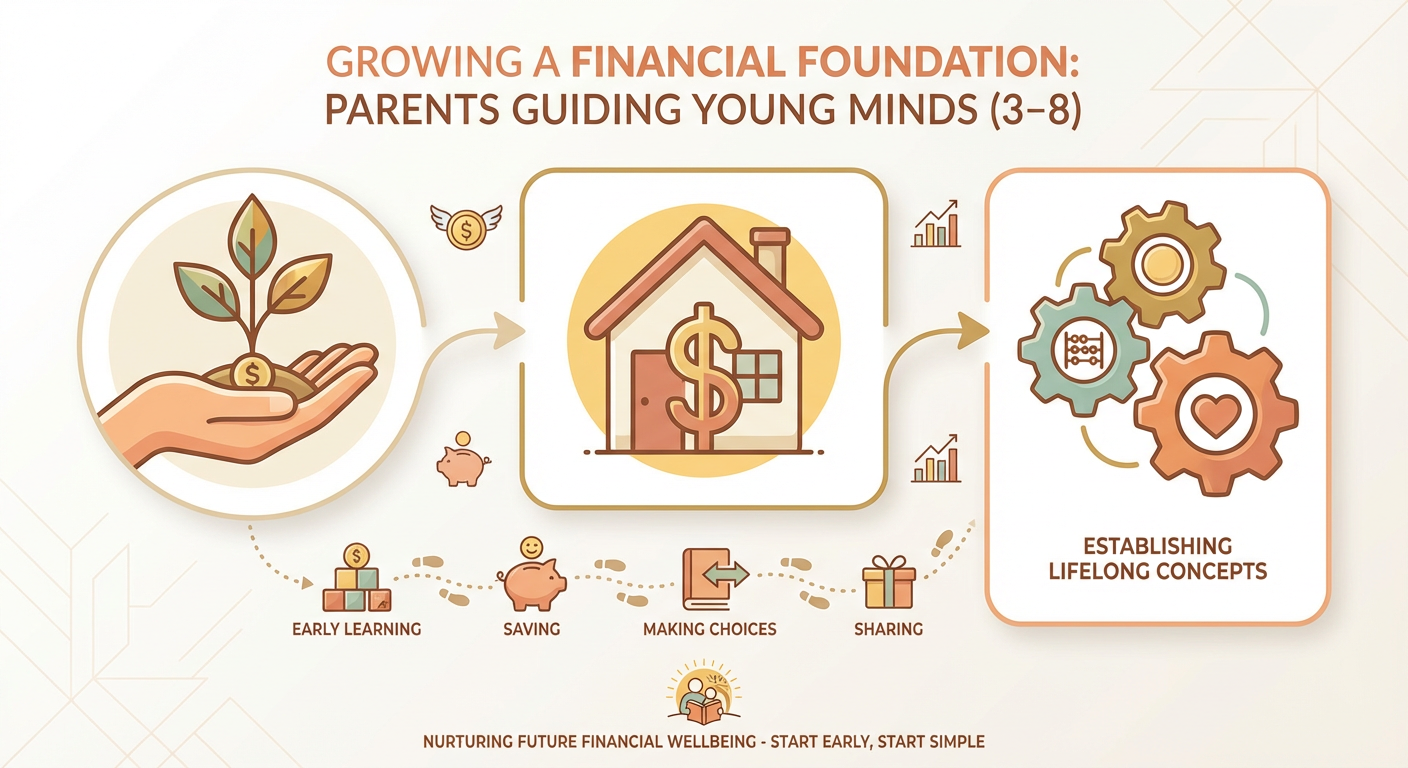
3. The Crucial Role of Parents: Home as the First Financial Classroom
The journey toward financial literacy often begins not in a formal classroom, but within the home. Parents, as the primary caregivers and educators during a child’s most formative years, wield significant influence over their children’s understanding and attitudes toward money. Research consistently highlights the profound impact parental engagement has on shaping early money habits, with children as young as three beginning to grasp basic financial concepts, and many core money behaviors firmly established by age seven[1]. This critical developmental window underscores why the home environment is increasingly recognized as the foundational financial classroom, and parents as the inaugural financial educators. Their conversations, examples, and practical tools, such as allowances, lay the groundwork for lifelong financial decision-making.
In recent years, there has been a notable shift in parental recognition of this responsibility. A 2025 global survey revealed that a substantial 72% of parents feel personally responsible for teaching their children about money. Furthermore, an overwhelming 97% reported engaging in financial discussions with their children to some extent[2]. This near-universal acknowledgment signals a positive trend, moving away from past generations where money was often considered a taboo subject. However, this commitment is not without its challenges. While many parents are willing to provide financial education, about 50% of those who issue allowances admit to struggling with explaining financial concepts in a way their children can easily understand[3]. This highlights a crucial gap between intent and effective implementation, emphasizing the need for better resources and strategies to empower parents in this vital role. This section will delve deep into the multifaceted influence of parents, examining their evolving responsibilities, the utility of tools like allowances, the art of effective money conversations, and the imperative to address historical biases to ensure inclusive financial education for all children.
The Foundational Impact of Early Parental Guidance
The earliest years of a child’s life are widely acknowledged as a period of rapid development, where fundamental skills and attitudes are established. This principle extends profoundly to financial literacy. By age three, children demonstrate an understanding of basic money concepts, such as recognizing coins and the principle of exchange. More significantly, by age seven, many of their core money habits – encompassing tendencies toward saving, spending, and financial discipline – are largely entrenched[4]. This scientific consensus, stemming notably from a Cambridge University study cited by PBS NewsHour, dramatically redefines the perceived timeline for financial education, pushing it much earlier than traditionally assumed. Waiting until adolescence or high school to introduce financial concepts, as many curricula do, may prove to be a missed opportunity to shape fundamental behaviors when they are most malleable.
The habits formed in early childhood are particularly resilient and tend to persist into adulthood. For instance, a child who is encouraged to save a portion of their allowance or birthday money from a young age is more likely to develop a lifelong saving habit. Conversely, a lack of early exposure to money management can lead to later challenges. As one expert analogy suggests, just as reading is taught early because literacy builds over years, financial literacy has a “prime learning time” in early childhood for foundational skills[5]. The implication is clear: the cumulative effect of continuous financial education, starting from ages 3-8, grants children a significant advantage in building healthy financial behaviors.
The long-term benefits of this early parental guidance are substantial. Studies have shown that individuals who received financial education, whether at home or in school, tend to exhibit higher savings rates and greater net worth in their late 20s than their peers who did not[6]. This underscores that financial literacy is not merely about understanding complex financial products, but about cultivating strong behavioral patterns early on. The global statistic that only about 33% of adults are considered financially literate highlights a widespread deficiency that many experts believe can be remedied by initiating financial education much earlier in life[7]. Parents are the first line of defense in addressing this deficit, fostering a generation that is more equipped to navigate the complexities of personal finance.
However, it is crucial that this early intervention is age-appropriate. For children aged 3-5, lessons should be concrete and experiential. This might involve recognizing coins, understanding that money is exchanged for goods, or differentiating between needs and wants through simple examples. Introducing abstract concepts like interest rates or mortgages to very young children can be confusing or even counterproductive. The focus should be on play-based learning and gradual introduction. For instance, a study in Ghana found that purely financial lessons, without accompanying social lessons, could inadvertently encourage children to work more at the expense of their schooling, highlighting the importance of balancing financial concepts with broader ethical and social considerations[8]. Therefore, parental guidance must be carefully calibrated to a child’s developmental stage, ensuring that financial education is both effective and holistic.
Parents as Exemplars: Modeling and Money Conversations
Beyond explicit instruction, parents serve as powerful role models, with their own financial behaviors and attitudes profoundly influencing their children. Children observe and absorb lessons from everyday parental actions, whether it’s using a credit card, budgeting during grocery shopping, or withdrawing cash from an ATM. These seemingly mundane activities become invaluable “teachable moments” when accompanied by parental narration and explanation. For example, a parent might articulate, “We’re using this coupon because it helps us save money,” or “I’m paying the electricity bill so we can have lights in our home.” Such commentary helps demystify money, making abstract financial processes tangible and understandable for young minds.
The increasing willingness of parents to openly discuss financial matters marks a significant departure from historical norms. A 2025 Ameriprise survey indicates that 72% of parents now accept personal responsibility for teaching finances, with a striking 97% engaging in some form of money conversation with their children[9]. This contrasts sharply with previous generations, where a notable 18% of adults reported receiving no financial guidance from their parents whatsoever[10]. Modern parents, often driven by the desire to better prepare their children for economic realities, are actively dismantling past taboos surrounding money, transforming the home into a dynamic forum for financial learning.
Regular discussions about budgets, saving goals, and even family financial constraints (articulated in an age-appropriate manner) are crucial. These conversations not only build financial literacy but also foster a sense of shared responsibility and economic realism. Children who regularly engage in financial discussions with their parents tend to score higher on financial literacy assessments as teenagers and report greater confidence in handling money independently[11]. This ongoing dialogue helps children understand the practical applications of financial concepts and cultivates a mindset of prudent management. The informal, continuous nature of these home-based discussions allows for lessons to be reinforced and adapted as a child grows, making them highly effective.
The Allowance as a Practical Teaching Tool
One of the most widespread and effective tools parents employ for hands-on financial education is the allowance. A recent survey revealed that 71% of parents with children aged 5 to 17 provide an allowance, with the average weekly amount being $37[12]. This practice provides children with a structured opportunity to manage their own mini “income” and learn essential skills like budgeting, saving, and spending.
The utility of allowance is maximized when it is intentionally linked to financial lessons. Many families adopt strategies that require children to allocate their allowance into designated categories, often depicted through a system of jars or bank accounts labeled “Spend,” “Save,” and “Donate.” This segmentation visually reinforces the concept of financial planning and encourages children to consider different uses for their money. For instance, the Stern family in San Diego implemented an “earn and learn” system, paying their sons for extra chores beyond their regular responsibilities, thereby establishing a clear link between effort and income[13]. This method not only teaches about earning but also about budgeting, as fluctuating income requires flexible planning for spending and saving. It ingrains the understanding that money is a finite resource often tied to effort, a critical lesson for early financial development. Another important finding from family allowance apps is that kids saved approximately 43% of their allowance on average in 2022, an increase from 38% in 2019[14]. This demonstrates children’s capacity and willingness to save when given the opportunity and structure.
While the allowance is a valuable pedagogical tool, its effective implementation requires thoughtful communication. Approximately 50% of parents providing allowances acknowledge difficulty in explaining financial concepts in an easily digestible manner for their children[15]. This communication gap suggests that parents may benefit from resources and greater confidence in conveying principles like budgeting, distinguishing between needs and wants, and understanding the value of saving. The goal of an allowance should extend beyond simply providing money; it should be a vehicle for teaching financial responsibility and decision-making within a safe, guided environment.
Addressing Historical Gender Biases in Financial Education
Historically, financial discussions within families often exhibited significant gender biases. Money was not only a taboo subject but also one discussed differently with sons than with daughters. This historical disparity has contributed to significant gaps in financial literacy between genders. Data from a 2023 CardRatings.com survey reveals that 22% of women reported receiving no childhood financial education from their parents, compared to 15% of men[16]. This imbalance in early financial socialization can lead to differences in confidence, financial knowledge, and practical skills later in life.
Modern parents are increasingly aware of this issue and are actively working to mitigate such biases. The current trend emphasizes involving all children, regardless of gender, in financial activities and conversations. This might include:
- Budgeting for family groceries.
- Discussing savings goals for family vacations or large purchases.
- Participating in charitable giving decisions.
By intentionally fostering financial responsibility in both boys and girls, parents aim to equip all their children with the necessary skills to navigate their financial futures confidently. The objective is to ensure that no child is disadvantaged due to outdated gender norms regarding money management. Businesses and educators have a vital role to play in supporting parents in this endeavor by developing resources such as free conversation guides, engaging storybooks, and interactive apps that promote inclusive, age-appropriate financial discussions within the home. This concerted effort is essential to closing historical gaps and fostering a more financially equitable future.
Strategies for Effective Money Conversations at Home
For parents, the challenge often lies not in the willingness to teach, but in knowing precisely how to initiate and sustain meaningful financial conversations with young children. The critical window of ages 3-8 demands approaches that are concrete, engaging, and developmentally appropriate. Experts offer several practical strategies:
- Narrate Everyday Transactions: As mentioned, every time money is exchanged, it’s an opportunity. When paying for groceries, explain, “We’re using money to buy food because food is a need.” At a toy store, you might say, “You have enough money for this small toy, but if you save a little more, you can get the bigger one you really want.” These simple narrations demystify the process and connect money to real-world outcomes.
- Use Physical Money: For ages 3-8, physical coins and bills are far more comprehensible than digital transactions. Engage children in sorting coins, counting them, and understanding their relative values. A clear piggy bank with separate compartments for “Spend,” “Save,” and “Give” helps visualize financial allocation.
- Play Money Games: Board games like Monopoly Junior or simple “store” role-play using play money can introduce concepts of earning, spending, and saving in a fun, pressure-free environment. Even digital games and apps designed for young children can be effective, provided they offer tangible learning experiences.
- Involve Them in Decision-Making: Give children limited choices that involve money. For instance, “We’re buying new crayons, and you can choose between the 8-pack or the 16-pack. The 16-pack costs a bit more. Which do you think is a better value for your art projects?” This empowers them and encourages critical thinking about spending.
- Practice Delayed Gratification: Teach saving for a specific, desired item. If a child wants a particular toy, help them set a goal and save their allowance or gift money towards it. The process of watching their savings grow and eventually making the purchase reinforces the value of patience and planning.
- Connect Earning to Effort: Whether it’s a formal earned allowance system or payment for specific extra chores, linking money to work instills the understanding of income generation. This helps prevent the misconception that money simply appears when needed.
- Introduce Giving: Encourage children to allocate a portion of their money to charity or helping others. This teaches empathy and the idea that money can be used for purposes beyond personal consumption. The Bill and Melinda Gates’ matching challenge, where their children’s charitable contributions were matched by the parents, is a powerful example of this strategy[17].
- Leverage Stories and Media: Children’s books, engaging videos, and age-appropriate television shows can effectively introduce financial concepts. For instance, Sesame Street’s “For Me, For You, For Later” program, developed in partnership with PNC Bank, uses beloved Muppets to teach preschoolers about spending, sharing, and saving, distributing millions of free kits that include stories, parent guides, and activity workbooks[18]. These resources make complex ideas accessible and relatable.
The overarching principle is consistency. Regular, brief interactions about money are far more effective than infrequent, intense lectures. By embedding financial lessons into the fabric of daily family life, parents can foster a natural curiosity and competence in their children, transforming potential financial anxieties into confident capabilities.
The Ecosystem of Support: Schools, Community, and Technology
While parents are undeniably the primary drivers of early financial literacy, they are not, and should not be, alone in this endeavor. An effective ecosystem of support, involving schools, community organizations, technology, and policy, can significantly amplify parental efforts and address areas where home-based education might fall short.
Schools as Reinforcement Centers
Historically, formal financial education has been largely confined to later grades, if offered at all. Only 25 U.S. states currently mandate a personal finance course for high school graduation, a significant increase from just 8 states in 2020[19]. However, very few curricula globally require financial literacy instruction at the early elementary level. Despite this, international bodies like the OECD now explicitly recommend integrating financial education from primary school onward, starting with age-appropriate lessons[20]. This guidance is slowly beginning to influence educational policies, prompting consideration of financial literacy modules for younger students.
For children aged 3-8, schools can reinforce concepts learned at home through play-based activities integrated into existing subjects. Math classes can incorporate coin counting and simple budgeting problems. Social studies can explore trade and exchange. Programs like the “Pretend Store” where children use play money to buy items teach practical skills in a fun environment. The Cha-Ching financial literacy program in Asia, for instance, uses animated music videos and classroom activities to teach children aged 7-12 about earning, saving, spending, and donating, reaching millions of students in countries like the Philippines[21]. Such initiatives demonstrate the scalability and effectiveness of incorporating engaging financial education into primary school settings.
Challenges remain, particularly concerning teacher training and an already crowded curriculum. Many primary school teachers may not feel equipped to teach financial topics confidently. Overcoming this requires professional development and resources that easily integrate financial literacy into existing lessons without adding undue burden. The key is to make financial education a natural extension of core subjects through engaging pedagogies like stories, games, and interactive activities.
Community and Industry Engagement
Financial institutions and nonprofit organizations are increasingly stepping in to complement home and school efforts. Banks often sponsor programs that send volunteers to elementary classrooms or provide free lesson plans. In various countries, bank employees visit schools to teach money basics during financial literacy month. Community centers, libraries, and children’s museums also offer valuable informal learning environments. For example, children’s museums with interactive exhibits like miniature grocery stores or banks allow young children to engage in real-world financial scenarios through play.
The involvement of these external partners helps tailor content to local cultures and needs, ensuring relevance and accessibility. This community-wide approach ensures that financial literacy is not solely the responsibility of parents or schools but is reinforced through various touchpoints in a child’s life. This broad support system is crucial for creating a universal foundation for financial understanding.
Technological Advancements in Early Financial Education
Technology has introduced innovative tools that support both parents and children in understanding money. Beyond traditional piggy banks, digital savings apps like Greenlight or GoHenry provide a modern twist. These parent-controlled apps allow even young children to visualize their allowance and savings grow or shrink, making abstract financial concepts more concrete. These platforms often include kid-friendly interfaces, interactive lessons, and quizzes. For example, Greenlight enables children to set savings goals and even make small investments with parental approval, turning complex financial concepts into tangible, guided experiences[22].
While these tools are powerful, they require careful parental oversight to ensure children still grasp the physical value of money before transitioning too heavily to digital. For the youngest age group (3-5), analog methods like sticker charts for saving towards a treat remain effective in laying the cognitive groundwork before introducing online financial management tools.
Lifelong Resonance: The Power of Early Beginnings
The investment in early financial literacy yields a lifetime of dividends. The goal is to nurture financially competent adults, and compelling evidence suggests a strong correlation between early financial education and improved long-term financial health. For instance, data indicates that students who received personal finance education exhibited lower credit delinquency rates and higher credit scores in early adulthood, even if the education was mandated in later grades[23]. For those who begin this journey at ages 3-8, the cumulative advantage is magnified, allowing for a longer runway to embed healthy behaviors.
Early financial literacy also plays a pivotal role in college and career readiness. Children who understand the value of saving and investing in themselves are more inclined to pursue higher education or vocational training. Research on Children’s Savings Account (CSA) programs underscores this, showing that a small college savings fund, even under $500, significantly increases a child’s likelihood of enrolling in college, and over $500 dramatically increases the chances of graduation[24],[25]. The act of saving early cultivates both a financial asset and a future-oriented mindset.
Furthermore, early financial education is an instrument of economic inclusion and mobility. It helps bridge gaps for children from less affluent backgrounds who otherwise might lack both wealth and financial savvy. Programs targeting underserved communities have demonstrated success in boosting savings behaviors and financial confidence[26]. This form of “human capital” promotes bank account ownership, reduces vulnerability to predatory debt, and enhances the ability to accumulate assets. Just as early literacy correlates with higher lifetime earnings, early financial literacy contributes to greater economic stability and mobility for individuals and communities.
The impact extends beyond the individual to the entire family unit. Children’s questions about money can prompt parents to re-evaluate or improve their own financial knowledge. A child learning about needs versus wants might spark a family discussion about budgeting. This ripple effect means early financial education can uplift entire families and communities, fostering a cycle of financial responsibility and informed decision-making. Young, financially literate adults are less likely to require financial support from their families and are more equipped to make sound choices, such as comparing college loan options or avoiding costly debt.
Ultimately, early exposure cultivates more responsible consumers and informed citizens. Children who understand advertising’s influence may grow into skeptical adolescents and adults, less susceptible to financial gimmicks. Learning about compounding interest through small savings can inspire early investment. The societal benefits are profound: a generation prepared for retirement, less burdened by debt, and actively participating in healthy economic behaviors. As the OECD aptly summarized, teaching financial skills early is an investment that pays dividends for life—for individuals, economies, and societies at large[27].
The crucial role of parents in shaping their children’s financial literacy is undeniable. From the cognitive understanding of money at age three to the establishment of core habits by age seven, the home serves as the primary and most influential financial classroom. While the journey is challenging, with communication gaps and historical biases to overcome, the evolving commitment of parents, coupled with support from schools, communities, and technology, is forging a path toward a more financially intelligent generation. The next section will explore the specific developmental stages within the 3-8 age range, detailing how financial concepts can be introduced and reinforced in age-appropriate ways.
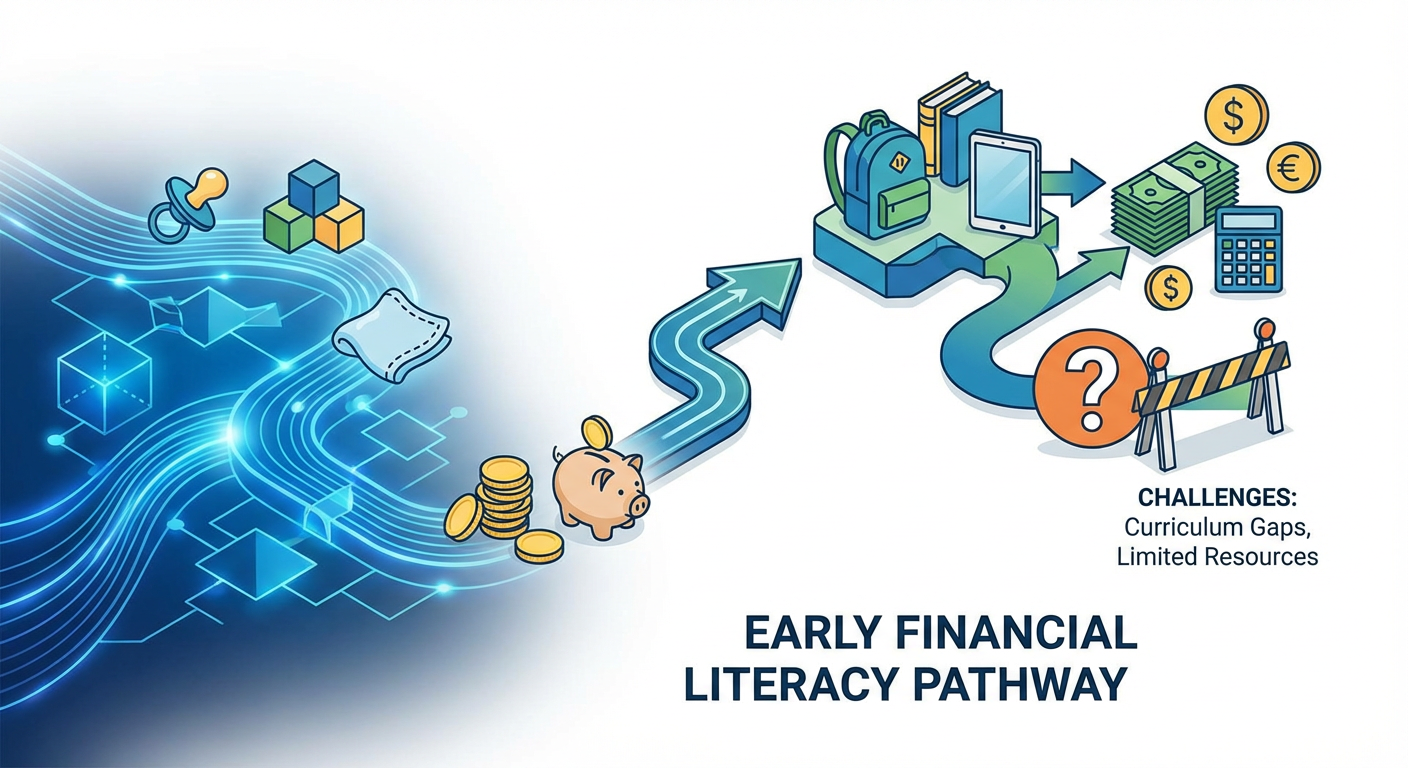
4. Integrating Financial Literacy into Early Education: Trends and Challenges
The journey to robust financial literacy is a lifelong endeavor, yet its foundational elements are laidsurprisingly early in a child’s development. While traditionally, financial education has been relegated to the later stages of schooling, predominantly high school, a growing body of research and evolving societal perspectives underscore the critical importance of introducing money concepts during the formative years of ages 3–8. This section delves into the current landscape of financial literacy integration within early education systems, examining global initiatives, the increasing policy momentum that, while currently focused on older students, signals a broader shift, and the practical challenges inherent in implementing financial education for young children. It highlights the paradigm shift from viewing financial literacy as a specialized, adult skill to recognizing it as a fundamental life competency that begins with foundational understanding in preschool and early elementary grades.
The imperative for early intervention stems from compelling evidence: children begin to grasp basic money concepts as early as age 3, and critically, many of their core money habits, such as saving and spending tendencies, are firmly established by age 7[1]. This finding from a Cambridge University study, cited by PBS, suggests that waiting until adolescence to introduce financial topics may miss a crucial developmental window, making it significantly harder to shape positive behaviors and attitudes toward money. Consequently, educators, policymakers, and parents are increasingly grappling with how to effectively weave financial literacy into the fabric of early childhood learning, moving beyond mere theoretical recognition to practical, age-appropriate implementation. This section will systematically explore the forces driving this integration and the obstacles that must be overcome.
The Shifting Paradigm: From Remedial to Foundational Financial Education
For decades, financial literacy education was often viewed as a remedial measure, introduced primarily in high school to equip students with practical skills as they approached adulthood and independent living. However, this perspective is undergoing a significant transformation, driven by critical insights into child development and the demonstrable benefits of early financial understanding. The realization that core money habits are largely formed by age 7 has reshaped the conversation, emphasizing that foundational financial literacy is not merely beneficial but essential for long-term financial well-being[1]. This calls for a proactive approach, integrating financial concepts into early education rather than waiting for potential financial missteps to emerge later in life.
Early Cognitive Development and Habit Formation
Research confirms that children are far more receptive to basic financial concepts than previously assumed. By age 3, children can understand the rudimentary ideas of value and exchange, recognizing that money is traded for goods and services. As they progress to ages 5-8, they begin to grasp more complex notions like saving for future goals, understanding the difference between needs and wants, and the basic principles of earning. The Cambridge University study for the UK’s Money Advice Service profoundly influenced this understanding, concluding that adult money habits are largely set by age 7[1]. This means that financial behaviors, whether positive or negative, are not nascent in adolescence but are deeply ingrained during early childhood. This underscores an urgent need to bring financial lessons into these crucial years, well before children enter their teens, when established habits become much harder to alter[1].
Experts draw an analogy to reading literacy: just as we teach reading early because literacy builds over years, the “prime learning time” for foundational financial skills is in early childhood[16]. Missing this critical window may make it more challenging to undo negative financial habits or anxieties about money developed at a young age. Children who learn to set aside a portion of their birthday money at age 5, for instance, are developing a routine that can become second nature, extending well into adulthood. Conversely, a child who lacks early exposure to managing money might develop impulsive spending tendencies or financial anxiety. These early learnings contribute significantly to developing higher credit scores and lower debt delinquency rates as young adults, validating the long-term benefits of early financial education[6].
Parental Role and the Home as the First Classroom
While formal education is crucial, parents play an indispensable role as children’s primary financial educators. A 2025 global survey highlighted that 72% of parents
5. Effective Teaching Methods for Ages 3-8: Learning by Doing
The foundation of lifelong financial well-being is not laid in adulthood, nor even in the teenage years, but rather during the crucial early development period of childhood. Research consistently demonstrates that children begin to understand basic money concepts by the tender age of three, and many of their fundamental money habits and attitudes are firmly established by age seven[1]. This profound insight underscores the urgent need to introduce financial literacy much earlier than is traditionally the case, shifting the focus from high school classrooms to elementary school-aged children, and even preschoolers. For children aged 3-8, the most effective pedagogies are those that eschew abstract lectures in favor of concrete, experiential, and play-based learning. This section delves into proven strategies and methodologies that transform complex financial concepts into digestible, engaging, and impactful lessons for young minds, fostering a generation that is not only financially fluent but also intrinsically motivated towards responsible money management. The shift towards early financial education is driven by clear evidence of its long-term benefits. Studies consistently link financial education to tangible real-life advantages, such as higher credit scores and lower debt delinquency rates in young adulthood[2]. These findings validate that financial literacy is not merely a “nice-to-have” skill but a critical life competency that measurably improves financial behaviors and outcomes. The Organisation for Economic Co-operation and Development (OECD) also explicitly recommends that financial education should commence early and be woven into a child’s educational journey from elementary school onwards, emphasizing that ages 3-8 present an ideal window for introducing core concepts like coin recognition, saving habits, and discerning needs from wants[3]. This section will explore how parents, educators, and communities can leverage this critical developmental window through play-based learning, structured reward systems, innovative saving tools, and the power of narrative to cultivate robust financial habits from the ground up.
5.1 The Imperative of Play-Based Learning
For children aged 3-8, learning is synonymous with play. It is through imaginative engagement, hands-on exploration, and interactive experiences that young children construct their understanding of the world. Financial education at this age must, therefore, be deeply embedded within play-based methodologies to be effective and engaging. Formal instruction or abstract discussions about economics are not only developmentally inappropriate but can also be counterproductive, potentially leading to disinterest or anxiety. Instead, educators and parents are encouraged to create environments where financial concepts are encountered naturally and joyfully. One of the most enduring and effective examples of play-based learning for financial literacy is the “pretend store” or “mini-market” activity. In this setup, children assume roles as shoppers and cashiers, using play money to buy and sell items. This simple yet profound exercise introduces several core financial concepts:
- Currency Recognition: Handling play coins and bills helps children familiarize themselves with different denominations.
- Value and Exchange: They learn that money is exchanged for goods and services, and that different items have different “prices” or values.
- Basic Math Skills: Calculating totals, making change, and understanding budgets (e.g., “I only have $5, so I can buy this toy but not that bigger one”) directly apply mathematical principles in a meaningful context.
- Decision-Making: With limited play money, children are forced to make choices, prioritizing what they “need” or “want” most within their budget.
These activities are far more than just fun; they lay the neurological groundwork for more complex financial reasoning later in life. Board games specifically designed to teach financial concepts further enhance this learning. For example, “Cashflow for Kids,” from the author of *Rich Dad Poor Dad*, simplifies sophisticated concepts like investing and saving into an accessible, game-based format for children as young as 5 or 6 years old[4]. These games allow children to experience winning and losing, making choices with consequences, and understanding the accumulation of assets in a low-stakes, engaging manner. Mobile applications tailored for children also harness play-based learning. Many apps, often integrated with parental control features, offer interactive games and quizzes that teach earning, saving, and spending. These digital platforms can make abstract ideas more concrete by visually representing money going into a “savings account” or being used for a “purchase” on screen. The key is to ensure that these tools are interactive, visually appealing, and rooted in storytelling or challenge-solving, rather than simply presenting information. Through consistent, imaginative play, children develop an intuitive grasp of financial principles, building a positive and confident relationship with money from an early age.
5.2 The Power of Chore and Reward Systems
Linking effort directly to financial reward is a cornerstone of effective financial education for young children. Chore and reward systems provide a practical framework for children to understand the fundamental connection between work and income. This approach moves beyond simply giving an allowance and instead cultivates a deeper appreciation for earning. While a no-strings-attached allowance can offer valuable spending and saving practice, integrating chores can instill a vital work ethic and sense of responsibility. The prevalence of allowances is significant. A 2023 Wells Fargo survey revealed that 71% of parents with children aged 5-17 provide an allowance, with an average of $37 per week[5]. However, nearly 50% of these parents acknowledged struggling to articulate financial concepts in a way their children could readily comprehend[6]. This highlights a crucial gap: providing money is not enough; it must be accompanied by intentional teaching. An “earned allowance” model, where children are paid for specific tasks beyond their expected daily contributions, effectively addresses this gap. The *Stern family in San Diego* provides a compelling real-world example. They developed an “earn and learn” system for their three sons (ages 5, 8, and 11), offering payment for extra chores and community service tasks, such as yard work or picking up trash in a local park, for $5 or $10[7]. This system immediately taught the boys that money is earned through effort. It also introduced them to budgeting, as variable income necessitates more careful planning for spending and saving. Key benefits of a well-implemented chore and reward system include:
- Understanding Earning: Direct experience that money is a result of work and effort, rather than an endless parental resource.
- Delayed Gratification: Children learn to save earned money for desired items, fostering patience and planning. The 8-year-old Stern son, for instance, saved for months to purchase a specific LEGO set, experiencing the triumph of a self-funded goal[7].
- Budgeting Skills: Managing variable income encourages careful spending choices and resource allocation.
- Value of Money: Having to work for money increases appreciation for its value and promotes more thoughtful spending decisions.
- Responsibility and Contribution: Children learn that they are active, contributing members of the household and community.
Furthermore, some families incorporate additional layers into these systems, such as mandating that a portion of earned money be allocated to saving, spending, and charitable giving. This structured allocation introduces children to philanthropic concepts alongside personal financial management. The 11-year-old Stern son’s decision to donate part of his earnings to an animal shelter was a direct outcome of this embedded lesson in generosity[7]. Such systems not only build financial skills but also cultivate positive character traits within young children.
5.3 Evolution of Saving Tools: From Piggy Banks to Digital Apps
The act of saving is arguably one of the most critical financial habits to instill in childhood. Visual, tangible, and accessible saving tools play a pivotal role in helping young children grasp this abstract concept. While the traditional piggy bank remains a powerful symbol and practical initial tool, modern technology now offers sophisticated digital alternatives that cater to the evolving needs and tech-savviness of today’s youth.
5.3.1 The Enduring Appeal of the Piggy Bank
For children aged 3-8, direct physical interaction with money is invaluable. A classic piggy bank, particularly transparent ones, allows children to visually track their savings grow. This tangible experience reinforces the idea that small amounts accumulate over time. Many parents and educators advocate for multi-chambered piggy banks, often labeled “Save,” “Spend,” and “Donate” (or “Invest”). This simple organizational structure immediately teaches children about budgeting and allocating funds for different purposes, even before they fully comprehend the nuances of each category. Seeing their money physically divide into these compartments clarifies that financial decisions involve choices and trade-offs. The “Save” slot teaches goal-setting and delayed gratification (saving for a desired toy), the “Spend” slot allows for immediate wants, and the “Donate” slot introduces philanthropy and the concept of sharing wealth.
5.3.2 The Rise of Digital Saving Apps
As children grow and technology integrates further into daily life, digital saving tools offer an evolution of the piggy bank concept. Parent-controlled apps such as Greenlight or GoHenry provide a virtual banking experience for children, making managing money both interactive and educational. These apps typically feature:
- Visual Tracking: Kids can see their “account” balance grow with deposits (allowance, gift money) and decrease with expenses, mirroring real banking.
- Goal Setting: Customizable savings goals (e.g., “new bike fund”) motivate children to save consistently.
- Parental Oversight: Parents retain full control, setting spending limits, approving purchases, and transferring funds.
- Integrated Learning: Many apps include mini-lessons, quizzes, or interactive modules on financial concepts, gamifying education.
- Real-World Transactions: Linked debit cards (under parental supervision) allow children to make supervised purchases, practicing financial decisions in real-life scenarios.
Greenlight, for instance, allows children to set savings goals and even explore micro-investing with parental approval, transforming once-abstract financial concepts into concrete, manageable activities[8]. Parents frequently report that the visual growth of savings on a screen significantly motivates children to achieve their financial objectives. Data indicates that these tools encourage saving: one analysis of family allowance apps in 2022 found that children saved approximately 43% of their allowance, an increase from 38% in 2019[9]. This suggests that modern, engaging saving tools effectively foster greater saving habits. For the youngest age group (3-5), analog methods like sticker charts, where stickers represent saved coins towards a treat, can serve as a preparatory step before transitioning to digital tools as they mature.
5.4 Harnessing Children’s Literature and Real-Life Transactions
Beyond structured systems and dedicated tools, the integration of financial lessons into everyday life through storytelling and direct experience forms a powerful pedagogical approach for young children. These methods are particularly effective because they tap into a child’s natural curiosity and desire to understand the world around them, making financial literacy feel less like a lesson and more like a discovery.
5.4.1 The Power of Narrative: Children’s Literature and Media
Children’s literature and educational media are invaluable resources for introducing complex financial concepts in an age-appropriate and relatable manner. Storytelling provides a context that children can understand and empathize with, making abstract ideas concrete. Picture books, for example, often explore themes like saving for a cherished item, the concept of earning money, and distinguishing between needs and wants. Classic examples include *“Curious George Saves His Pennies”* or *“Bunny Money”* by Rosemary Wells. These narratives allow children to follow characters who encounter financial dilemmas and make choices, learn from mistakes, and experience the rewards of wise decisions. Educational television programs have also successfully leveraged this approach. The Sesame Workshop, in collaboration with PNC Bank, launched the “For Me, For You, For Later: First Steps to Spending, Sharing, and Saving” initiative in 2011[10]. This bilingual program featured beloved Muppets, such as Elmo and Cookie Monster, in videos and storybooks designed for preschoolers and their parents. Free kits, distributed widely, helped families engage in money conversations based on Sesame Street’s “Three S” framework: Spend, Share, Save. Evaluations demonstrated that children exposed to this content were better able to identify coins and explain the concept of saving compared to a control group[10]. The success of this program underscores the efficacy of using familiar characters and engaging narratives to democratize financial literacy from a very early age. When children can relate to a character who must choose between an immediate small treat and saving for a larger goal, the lesson resonates deeply.
5.4.2 Learning Through Real-Life Transactions
Direct, supervised involvement in real financial transactions provides invaluable experiential learning opportunities. For children aged 3-8, these “mini-experiences” demystify money and turn theoretical knowledge into practical skills. Simple everyday activities become teachable moments:
- Grocery Shopping: Involve children in family grocery shopping. Let a 7-year-old hold the shopping list and help find items within a budget. Discuss price comparisons and the concept of “needs” (food, basic necessities) versus “wants” (a toy, candy). “We’re buying milk because we *need* it, then we can see if there’s enough money left for one *want* item,” provides practical context for budgeting.
- Making Purchases: Allow a 6-year-old to hand cash or a card to the cashier, receive change, and perhaps even count it. This teaches about currency exchange and builds confidence.
- Budgeted Choices: Provide a fixed amount of money (e.g., “$5 for one treat at the store”) and let the child choose. This directly teaches them about spending limits and decision-making under constraint.
- Opening a Savings Account: Taking a child to a bank to open a physical savings account (jointly with a parent) can be a memorable and impactful experience. Seeing their name on the account, depositing money, and later observing interest accrual (even small amounts) reinforces the saving habit. Research indicates that children with a dedicated savings account, even with modest balances, are significantly more likely to develop lasting saving habits and even pursue higher education[11][12].
- Community Market Days: Some schools organize “market day” events where students create and sell simple products using play money. This introduces basic entrepreneurship, pricing, and “profit” in a fun, simulated environment.
The overarching principle is “learning by doing.” Each supervised transaction, every coin placed in a visible savings mechanism, and every story read about responsible money choices contributes to a comprehensive and durable understanding of financial literacy. These active experiences, paired with ongoing parental guidance and narrative reinforcement, empower young children to develop responsible financial behaviors that will serve them throughout their lives.
5.5 Long-Term Impact: Shaping Future Financial Behavior
The cumulative effect of early financial education, particularly through effective methods employed during ages 3-8, extends far beyond childhood, profoundly shaping an individual’s financial trajectory and overall well-being. The investment in age-appropriate financial literacy during these formative years yields significant dividends throughout life for individuals, families, and society at large.
5.5.1 Enhanced Adult Financial Outcomes
The primary objective of initial financial instruction is to cultivate financially competent adults. Correlational studies provide concrete evidence linking early exposure to money management concepts with improved adult financial health. For example, in the United States, states that mandated personal finance education at the high school level observed a discernible positive impact on their former students. These individuals, typically in their early to mid-20s, subsequently demonstrated lower credit delinquency rates (by 1-3%) and higher credit scores compared to their peers who did not receive such instruction[13]. When financial education commences even earlier, specifically by age 7, and is reinforced consistently, the foundation for these positive behaviors is strengthened over a longer period. This “cumulative advantage” means that individuals benefiting from a sustained and early financial education are likely to experience even more favorable outcomes, such as higher savings rates and increased net worth in later adulthood. The deficiency in financial literacy among adults, with only about 33% globally deemed financially literate as per a 2015 S&P Global FinLit Survey, is a stark indicator of the need for early intervention, signaling that future generations could be substantially more financially savvy through early childhood education[3].
5.5.2 College and Career Readiness
Financial literacy acquired in early childhood can significantly influence educational and career paths. Children who internalize the value of saving and the concept of investing in their future are more likely to pursue higher education or vocational training thoughtfully. Programs like Children’s Savings Accounts (CSAs), often initiated during elementary school, exemplify this impact. Research on CSAs has demonstrated that even a modest college savings fund dramatically increases a child’s likelihood of attending and completing college. One study revealed that low- to moderate-income children with designated college savings—even under $500—were approximately three times more likely to enroll in college. Critically, those with over $500 saved were about four times more likely to graduate than children with no savings[11][12]. This suggests that the act of saving money early not only provides a financial asset but also cultivates a mindset of planning, foresight, and investment in personal development.
5.5.3 Fostering Economic Inclusion and Mobility
Early financial education is increasingly recognized as a vital tool for promoting economic equity and mobility. Children from disadvantaged backgrounds, without access to financial guidance, may face a compounded disadvantage in adulthood, lacking both financial resources and the necessary competencies to manage them effectively. Early interventions can help bridge this gap. Targeted programs for young children in underserved communities, such as school-based banking initiatives or entrepreneurship games, have shown promising results in improving savings behaviors and financial confidence[14]. Over time, these micro-level changes can contribute to macro-level improvements: higher rates of bank account ownership, reduced vulnerability to predatory lending, and an enhanced capacity to accumulate assets. In essence, financial literacy is a form of human capital; just as early literacy skills are linked to higher lifetime earnings, early financial literacy can contribute significantly to greater economic stability and upward mobility.
5.5.4 Multiplier Effect on Families and Communities
The impact of early financial literacy extends beyond the individual child, often creating a positive “multiplier effect” within families and communities. When children are taught about money, they frequently bring these lessons and questions home, prompting parents to engage in financial discussions and sometimes even re-evaluate their own financial habits. A 7-year-old discussing “needs vs. wants” from a classroom activity can spark a valuable family conversation about budgeting for groceries (a need) before discretionary purchases (a want). Over time, financially literate children grow into adults who can make informed decisions, such as comparing student loan options or avoiding costly debt, reducing the likelihood of needing financial support from their families. This ripple effect means that early financial education has the potential to uplift entire families and broader communities, fostering a more financially robust and responsible citizenry. These significant long-term societal benefits underscore why businesses, educators, and policymakers are increasingly prioritizing financial literacy for the youngest age groups, viewing it as an investment that yields lifelong dividends for individuals, economies, and overall societal well-being[15].
The evidence overwhelmingly supports the notion that effective financial education for children aged 3-8, rooted in hands-on, play-based methods and reinforced by consistent real-life applications, is not just beneficial but foundational. As we move forward, integrating these proven strategies into homes, schools, and communities will be paramount for nurturing a generation that is financially empowered and prepared for the complexities of the modern economic landscape. The next section will delve further into the challenges and opportunities for integrating these concepts into formal educational curricula, bridging the gap between home-based learning and systemic educational reform.
6. Long-Term Impact: Shaping Future Financial Behavior and Outcomes
The journey towards financial well-being is often heralded as a lifelong endeavor, but its foundational steps are taken far earlier than generally perceived. Research overwhelmingly indicates that the bedrock of adult financial health, encompassing everything from college and career readiness to economic inclusion and responsible consumer behavior, is laid during early childhood. The period between ages 3 and 8, though seemingly distant from complex financial decisions like mortgages or investments, serves as a critical window for habit formation and attitude development that profoundly influences an individual’s entire financial trajectory. This section will delve into the compelling evidence linking early financial literacy education to measurable, positive long-term financial outcomes, demonstrating how instilling basic money principles in young children can lead to higher credit scores, lower debt burdens, and increased educational attainment in adulthood.
The notion that basic money concepts begin to form by age 3, with many core money habits firmly established by age 7, underscores the urgency and importance of early intervention in financial education [1]. Missing this crucial developmental phase can create enduring challenges, making it significantly harder to reverse detrimental habits or alleviate financial anxieties later in life [8]. By examining the impact across several key dimensions, from individual financial stability to broader societal inclusion, we will argue that early financial literacy is not merely a beneficial add-on but a fundamental investment in the future of individuals and communities.
6.1. The Formative Years: Why Early Financial Habits Persist into Adulthood
The concept that financial habits are largely set by age seven is a cornerstone of the argument for early financial literacy. This finding, derived from a Cambridge University study cited by PBS NewsHour, highlights a profound truth: the elementary understanding and behaviors children adopt concerning money during their preschool and early elementary years are not transient; they become ingrained patterns that shape future financial decision-making [14]. By age 3, children are capable of grasping basic concepts like value and exchange, and by age 7, tendencies towards saving or spending are often observable [1]. This period is akin to building the foundation of a house; a strong, well-designed foundation provides stability and support for all subsequent construction.
Consider the habit of saving. If a child, at age 5, is encouraged to put aside a portion of birthday money or allowance, this action, repeated over time, can become an intrinsic part of their financial routine. This routine, cultivated in a low-stakes environment, naturally extends into adolescence and adulthood, leading to higher savings rates and a greater propensity for financial planning. Conversely, a child who lacks such early exposure may develop a more impulsive relationship with money, potentially leading to challenges with debt or insufficient savings later on. The analogy frequently deployed by experts is that just as early reading instruction lays the groundwork for lifelong literacy, early financial education establishes the “prime learning time” for foundational money skills [15].
This early habit formation translates into tangible long-term benefits. Studies suggest that individuals who receive some form of financial education during their foundational years tend to exhibit higher savings rates and improved net worth in their late 20s [16]. This cumulative advantage grows over time, helping individuals avoid the pitfalls of financial illiteracy that currently plague a significant portion of the global adult population. A 2015 S&P Global FinLit Survey, for instance, revealed that only about 33% of adults worldwide are considered financially literate, capable of understanding basic concepts like inflation, interest, and risk [11]. This pervasive lack of financial understanding in adulthood can often be traced back to a deficiency in early exposure and sustained financial education throughout childhood [16]. Initiating financial lessons in the 3-8 age range, and continuing this education progressively, is therefore a preventative measure against widespread financial vulnerability.
However, it is crucial to approach early financial education with an age-appropriate perspective. While starting early is vital, the methodology must align with a child’s developmental stage. For children aged 3-5, lessons should remain concrete and simple, focusing on tangible concepts such as coin recognition or the simple mechanics of trading money for goods [17]. Overemphasis on abstract economic principles or excessive focus on material wealth at this tender age could be counterproductive, potentially leading to confusion or stress. A study in Ghana, for example, highlighted that purely financial lessons, without social context, led some children to prioritize earning money to the detriment of schooling. However, by integrating social lessons, this negative effect was mitigated [18]. This demonstrates the importance of balance: financial education for young children should foster healthy money habits without inadvertently promoting materialism or child labor. The goal is a fun, play-based introduction to concepts that build a robust foundation, not an early immersion into complex financial mechanisms [17].
6.2. Tangible Outcomes: Higher Credit Scores, Lower Debt, and Enhanced College Readiness
The theoretical benefits of early financial habit formation are strongly supported by empirical evidence pointing to concrete improvements in adult financial health. The most striking of these include demonstrably higher credit scores, significantly lower debt delinquency rates, and an increased likelihood of pursuing and completing higher education.
6.2.1. Improved Credit Scores and Reduced Debt Burden
Studies linking financial education to real-life financial metrics provide compelling validation. Young adults who received personal finance instruction, even those primarily exposed during their high school years, tend to exhibit more prudent financial behaviors. Data compiled from multiple U.S. states illustrates that students who underwent personal finance courses showed measurable improvements in their financial standing as young adults. Specifically, these individuals recorded higher credit scores, often seeing increases of 10-20 points by their early 20s, and experienced lower loan delinquency rates, with reductions of several percentage points, compared to their peers who did not receive such education [5]. While these findings largely stem from high school interventions, the implication for even earlier education is clear: starting financial literacy at age 3-8 provides a significantly longer period for these positive behaviors to take root and compound, potentially leading to even more pronounced and sustained financial advantages.
The impact of this early grounding is not merely about understanding concepts but about internalizing responsible behaviors. Learning about saving, budgeting, and the consequences of borrowing money much earlier in life can equip individuals with the foresight to avoid common pitfalls. This translates into more judicious use of credit, a greater understanding of interest rates, and a proactive approach to debt management, all of which contribute to a healthier credit profile. A strong credit score is not just a numerical value; it is a gateway to crucial life opportunities, influencing everything from securing housing and employment to accessing favorable loan terms for major purchases like homes and cars.
6.2.2. College and Career Readiness
Financial literacy acquired in childhood extends its influence far beyond immediate money management; it significantly impacts long-term educational and career outcomes. Children who are taught about the value of saving and the concept of investing in oneself are more likely to pursue higher education or specialized vocational training. This is partly due to a deeper understanding of the future value of education and partly to the practical experience of setting and working towards financial goals.
A powerful example of this connection comes from research on Children’s Savings Account (CSA) programs. CSAs, which often begin when children are in elementary school, have demonstrated a remarkable effect on college enrollment rates. Studies indicate that low-to-moderate-income children who had savings specifically designated for college—even amounts as modest as under $500—were approximately three times more likely to enroll in college compared to those with no savings. Furthermore, children with $500 or more saved were about four times more likely to graduate from college [12][13]. These statistics are profoundly significant, highlighting that the mere act of creating a savings account and fostering a saving habit instills a future-oriented mindset and belief in the attainability of higher education, regardless of the ultimate sum accumulated.
The presence of even a small amount of savings acts as a psychological anchor, transforming abstract dreams into concrete possibilities. This early engagement with financial planning for higher education also often involves parental discussions, further reinforcing the importance of education and financial responsibility. Consequently, children from financially literate backgrounds are better prepared for the economic realities of college life, from understanding student loans to managing daily expenses, thereby reducing financial stress and potentially increasing their chances of academic success and completion.
6.3. Fostering Economic Inclusion and Responsible Consumer Behavior
The proliferation of financial literacy initiatives, particularly those targeting younger children, is increasingly viewed through the lens of social equity and economic inclusion. Financial education at an early age serves as a powerful tool to bridge socio-economic gaps, equip all children with essential life skills, and cultivate a generation of responsible, informed consumers and engaged citizens.
6.3.1. Bridging Gaps and Promoting Economic Mobility
A lack of early financial guidance disproportionately affects vulnerable populations, with some groups historically receiving less coaching. For instance, approximately 18% of U.S. adults report receiving no financial education from their parents, with women being more likely to report this absence (22% of female respondents versus 15% of males) [9][10]. Such disparities in early financial socialization can perpetuate cycles of financial instability across generations. Early interventions in financial literacy are thus crucial for promoting economic inclusion, ensuring that children from all backgrounds have the opportunity to develop the skills necessary for financial well-being.
Programs specifically designed for young children in underserved communities, such as school-based banking initiatives or games that teach entrepreneurial skills, have shown promising results. By empowering children early on, these programs can boost savings behaviors and enhance financial confidence [27]. Over time, these micro-level changes contribute to macro-level outcomes, leading to higher rates of bank account ownership, reduced susceptibility to predatory financial practices, and an increased capacity to build assets. Financial literacy, in this context, functions as a form of human capital, much like reading or numeracy. Just as early literacy correlates with higher lifetime earnings, early financial literacy can significantly enhance long-term economic stability and upward mobility, enabling individuals to become active and valued participants in the economy.
6.3.2. Cultivating Responsible Consumers and Engaged Citizens
Beyond personal financial management, early financial literacy is instrumental in shaping responsible consumer behavior. Children who learn about the distinction between needs and wants, the impact of advertising, and the consequences of impulsive spending are better equipped to navigate a complex marketplace as they grow older. This foundational understanding can lead to more discerning choices, making them less susceptible to aggressive marketing tactics or “buy now, pay later” schemes that often target financially uneducated consumers. For example, a young person who understood the power of saving to achieve goals as a child might later be more inclined to save for a down payment on a house rather than accumulating excessive credit card debt.
Furthermore, early exposure to financial concepts can foster a more informed and engaged citizenry. Individuals who understand basic economic principles are better positioned to comprehend public policy debates, evaluate financial news, and make responsible decisions as voters and citizens. This contributes to a more financially robust society overall, characterized by lower rates of household debt, higher rates of retirement savings, and an increased capacity for entrepreneurship and innovation. The OECD emphasizes that teaching financial skills early represents an investment that yields dividends for individuals, economies, and society as a whole [28].
6.4. The Multiplier Effect: Impact on Families and Communities
The benefits of early financial literacy are not confined to the individual child. They extend outwards, creating a powerful multiplier effect that positively influences entire families and communities. When children are engaged in financial learning, their curiosity and newfound knowledge can spark broader financial discussions and learning within the household, ultimately strengthening collective financial resilience.
6.4.1. Intergenerational Learning and Family Financial Health
Children, particularly those in the 3-8 age range, often act as catalysts for family conversations. Their innocent yet probing questions—such as “Where does money come from?” or “Why can’t we buy that?”—can prompt parents to reflect on and articulate their own financial practices. This dynamic can serve as an opportunity for parents to enhance their own financial knowledge and communication skills. Programs that involve both children and caregivers, such as Sesame Street’s “For Me, For You, For Later” initiative, are particularly effective because they equip parents with the tools and language to discuss money with their children, thereby reinforcing lessons learned through educational media [34]. An evaluation of this program found that children who engaged with the content were better able to identify coins and explain the concept of saving, and crucially, it provided a comfortable framework for parents to discuss money with their young ones [34].
Moreover, when children bring home lessons from school about concepts like “needs vs. wants,” these can directly translate into household discussions about budgeting for essentials (e.g., groceries) versus discretionary spending (e.g., toys). This intergenerational learning can lead to improved financial planning and decision-making for the entire family. Over time, children who mature with a strong financial foundation are less likely to require financial support from their families as adults, and may even be in a position to offer advice or assistance, thus strengthening the financial stability of the family unit across generations. This ripple effect underscores why early financial education is a strategic investment in familial well-being.
6.4.2. Strengthening Communities through Collective Financial Capability
At a broader community level, a generation of financially literate individuals contributes to a more robust and resilient local economy. Communities comprised of residents who possess strong financial management skills are less susceptible to economic downturns, predatory lending, and cycles of poverty. When more individuals save, invest wisely, and avoid excessive debt, the collective financial health of the community improves. This can manifest in various ways, such as increased local investment, higher rates of homeownership, and greater participation in entrepreneurial ventures.
The active involvement of community organizations, often partnering with schools or financial institutions, in delivering age-appropriate financial literacy programs, further strengthens these communal ties. These collaborations can ensure that financial education content is culturally relevant and addresses the specific needs of diverse local populations. For example, initiatives like Global Money Week, which involves activities for elementary-aged children in over 170 countries, often include bank field trips or school savings clubs, immersing children within their local financial ecosystem [23]. Such efforts foster a collective understanding of financial principles, encouraging community members to support one another in achieving financial goals and creating a more stable and prosperous environment for all.
6.5. Policy Momentum and Future Implications
Recognizing the profound impact of financial literacy, policymakers globally are increasingly advocating for its integration into educational curricula. While the primary focus traditionally has been on high school students, there is growing momentum to introduce financial education at much earlier stages, aligned with the understanding of early habit formation.
6.5.1. Shifting Policy Landscape
As of 2024, 25 U.S. states mandate at least one semester of personal finance in high school, a dramatic increase from just 8 states in 2020 [23]. This 212% surge in mandates within four years reflects a significant shift in policy priorities, acknowledging financial literacy as a core life skill for adolescents [23]. While this progress is primarily at the secondary education level, it signals a broader acknowledgment that financial education is essential and supports the argument for “trickle-down” inclusion in earlier grades.
International bodies, such as the OECD, are also championing early financial education. The OECD explicitly recommends that financial education should commence in elementary years and be integrated throughout a child’s schooling [12]. This guidance is pushing education ministries worldwide to consider incorporating age-appropriate financial literacy modules into primary school curricula. The understanding is that abstract concepts built upon concrete foundations are much more effectively absorbed, making the early years ideal for introducing concepts like coin recognition, saving habits, and differentiating between needs and wants.
6.5.2. A Future of Financial Empowerment
The long-term impact of integrating financial literacy from ages 3-8 into mainstream education promises a paradigm shift in societal financial health. Imagine a future generation where basic financial principles are as fundamental as reading and arithmetic. Such a generation would be characterized by significantly enhanced adaptability to economic changes, reduced vulnerability to financial exploitation, and a greater capacity for wealth creation and retention.
This widespread financial empowerment can lead to substantial improvements in macro-economic stability, fostering environments where entrepreneurship thrives and consumer debt is managed more responsibly. It could also alleviate the strain on social safety nets by reducing personal financial crises. The proactive investment in early financial literacy stands as a testament to the belief that empowering children with sound financial knowledge is not just about individual success, but about building a more equitable, resilient, and prosperous global society. As policymakers continue to respond to the growing demand from young people themselves for more practical money skills, the trajectory is clear: early financial literacy will become an indispensable component of comprehensive education, preparing future generations for the complexities of modern economic life.
In summation, the long-term impact of financial literacy education for children aged 3-8 is profound and multifaceted. It shapes individual financial health by instilling foundational habits, demonstrably improves objective financial outcomes like credit scores and debt levels, enhances college and career readiness, and contributes significantly to economic inclusion and responsible consumer behavior. Furthermore, its multiplier effect strengthens families and communities. The growing policy momentum to integrate financial education from the earliest years is a testament to the recognition of these far-reaching benefits. As we look towards the next section, we will delve into the societal benefits and policy implications of this crucial early intervention, synthesizing these individual and collective advantages into a comprehensive argument for universal early financial literacy programs.
| Benefit Category | Key Indicators of Impact | Supporting Data/Research |
|---|---|---|
| Individual Financial Health | Higher Credit Scores (10-20 point increase) Lower Loan Delinquency Rates (several percentage points reduction) Higher Savings Rates | Studies in multiple U.S. states on financial education coursework [5] |
| Educational Attainment | Increased College Enrollment (3-4 times more likely) Increased College Graduation Rates | Research on Children’s Savings Account (CSA) programs for low-income children [12][26] |
| Economic Inclusion | Reduced gender gap in financial literacy Improved financial confidence and savings behavior in underserved communities Higher rates of bank account ownership | CardRatings.com survey (gender gap) [9]; Studies on school-based banking programs [27] |
| Responsible Consumer Behavior | More informed spending & saving decisions Reduced susceptibility to predatory financial products Increased long-term investment activity (e.g., contributing to retirement) | General principle derived from understanding needs vs. wants, value of savings, and advertising effects taught early |
| Family & Community Impact | Increased family financial discussions Enhanced intergenerational financial literacy More resilient community economies | Sesame Street “For Me, For You, For Later” program evaluation [34]; OECD recommendations on societal benefits [28] |
The trajectory set in these early years dictates not just individual financial success, but also the collective prosperity and resilience of society. The evidence strongly supports a proactive, comprehensive approach to embedding financial literacy from ages 3-8, leading to measurable improvements across diverse socio-economic indicators. This early investment promises a future where financial well-being is a fundamental outcome, rather than an elusive aspiration, for all citizens.
7. Notable Programs and Examples: Case Studies in Early Financial Education
The imperative to instill financial literacy in children has gained significant traction, driven by compelling evidence that core money habits are largely established by age seven [1]. While the broader educational landscape, particularly in high schools, has seen a surge
8. Global Disparities and the Need for Inclusive Financial Education
The journey toward financial literacy is not universally shared. While the critical importance of early financial education, particularly for children aged 3–8, is gaining recognition, significant disparities persist across genders, socioeconomic backgrounds, and geographical regions. Historically, access to foundational financial guidance has been uneven, leaving certain segments of the population at a distinct disadvantage. This section delves into these global disparities, highlighting the systemic gaps in financial education access and underscoring the imperative of designing and implementing inclusive financial education programs. Ensuring that all children, irrespective of their starting point, receive foundational financial guidance is not merely an educational goal but a critical step towards fostering economic equity and stability for future generations. The research indicates that fundamental money concepts begin to form as early as age 3, with core money habits largely established by age 7[1]. Missing this crucial developmental window can have lasting consequences, making it more challenging to unlearn poor habits or anxieties about money in adulthood[8]. However, the transmission of this vital knowledge is often inconsistent, leading to observable gaps. Addressing these inequalities in financial literacy is paramount, not only for individual well-being but for broader societal and economic resilience.
8.1 The Persistence of Disparities in Financial Education
Despite a growing global consensus on the importance of financial literacy, access to quality financial education remains uneven. This is not purely an issue of wealth or national development; even within developed nations, significant demographic disparities are evident. The consequences of these gaps are profound, contributing to cycles of financial instability and limiting opportunities for economic mobility.
8.1.1 The Gender Gap in Financial Socialization
One of the most striking disparities highlighted by recent research is the persistent gender gap in early financial socialization. A 2023 CardRatings.com survey in the U.S. revealed a concerning trend: 22% of female respondents reported never receiving any financial education from their parents during childhood, compared to 15% of male respondents[11]. This 7 percentage point difference suggests that parents have historically been more likely to discuss financial matters with their sons than their daughters. This historical imbalance in household financial discussions can have long-term repercussions. Girls who are not exposed to basic money management skills at an early age may grow up with less financial confidence and fewer practical skills, potentially contributing to gender disparities in financial outcomes later in life, such as lower savings rates, less investment activity, or greater reliance on others for financial decision-making. The absence of early financial lessons can create a self-perpetuating cycle, where a lack of foundational knowledge leads to reduced engagement with financial topics, exacerbating the disparity. The imperative to close this gap is clear. Modern parenting and educational approaches must actively encourage financial conversations with all children, regardless of gender. This involves parents being mindful of their own biases and ensuring that financial education, whether through allowances, discussions about family budgets, or involvement in financial activities, is equitable. Initiatives that specifically target girls and young women with financial literacy programs can help counterbalance historical under-representation and empower them with the knowledge and confidence to manage their finances effectively.
8.1.2 The Socioeconomic Divide and Educational Access
Beyond gender, socioeconomic background plays a significant role in determining a child’s access to financial education. Children from less affluent households or underserved communities often face a “double disadvantage”: they may lack both familial financial guidance and institutional educational opportunities. The 2023 CardRatings.com survey also indicated that a substantial portion of U.S. adults, 18%, reported receiving no financial education from their parents at all[10]. While this figure encompasses both genders, it is plausible that this absence of home-based financial guidance is more prevalent in households where parents themselves may have limited financial literacy, face economic hardship, or must prioritize immediate survival over long-term financial planning education. In such contexts, the role of formal education becomes even more critical. However, formal financial literacy instruction, particularly in early elementary years, is often inconsistent or entirely absent in school curricula worldwide. While momentum for mandating personal finance education is growing at the high school level (with 25 U.S. states now requiring it, up from 8 in 2020[4]), early elementary grades often lack formal requirements globally. This means that children whose parents are unable or ill-equipped to provide financial education at home may not receive it through the school system either, at least not during the critical formative years of ages 3-8 when habits are most readily established[8]. This creates a cycle where children from economically disadvantaged backgrounds are less likely to develop crucial financial habits and understanding, potentially limiting their future economic mobility. Without early intervention, these children may enter adulthood less prepared to navigate complex financial landscapes, manage debt, save for future goals, or make informed economic decisions.
8.1.3 Global Variation in Financial Literacy Rates
On a global scale, the disparity in financial literacy is even starker. A 2015 S&P Global FinLit Survey, conducted by the World Bank and Gallup, revealed that only about 33% of adults globally are considered financially literate[12]. This means two-thirds of the world’s adult population lacks a fundamental understanding of basic financial concepts like inflation, interest, and risk.
Table 8.1: Global Financial Literacy Rates (2015)
| Region/Population Group | Estimated Financial Literacy Rate | Key Contributing Factors (General) |
|---|---|---|
| Global Average | 33%[12] | Varies significantly by country, age, gender, and education. |
| High-Income Countries (e.g., OECD) | Often >50% | Better access to education, financial services, and often national financial literacy strategies (though not always early-childhood focused). |
| Low-Income Countries | Often <20% | Limited access to formal education, financial products, and informal economies. |
| Women (Global) | Lower than men (approx. 5% difference) | Cultural factors, educational disparities, historical exclusion from financial decision-making. |
| Youth (Global) | Varies, but often below adult average if no formal education. | Lack of exposure, lack of formalized early education. |
This alarming statistic underpins the urgent need for comprehensive financial education starting much earlier in life. Many governments and organizations now advocate for the integration of financial education into school curricula from early childhood, recognizing that waiting until adulthood to address this deficiency is largely ineffective. The OECD, a leading global policy body, explicitly recommends that financial education begin early and be integrated throughout a child’s schooling, from elementary years onward, emphasizing age-appropriate lessons in primary school rather than deferring until high school[13]. The disparity in global financial literacy is compounded by local cultural, economic, and political factors. For example, in regions with predominantly informal economies, conventional financial literacy lessons related to banking or credit might require significant adaptation to be relevant. Furthermore, the capacity of educational systems in many developing countries to implement new curricula like financial literacy can be severely constrained by limited resources, lack of trained teachers, and competing educational priorities.
8.2 The Urgency of Inclusive Financial Education
The existence of these global and demographic disparities underscores a critical need: financial education must be inclusive. It cannot be an optional add-on or a privilege reserved for certain groups; it must be a fundamental right for every child. An inclusive approach aims to deliberately reach those who have been historically underserved or overlooked, ensuring that foundational financial guidance is accessible to all.
8.2.1 Why Inclusivity Matters: Equity and Empowerment
Inclusive financial education is a matter of equity and empowerment. Without early financial guidance, children from marginalized or disadvantaged backgrounds may enter adulthood facing systemic hurdles related to financial stability. Early interventions can serve as powerful tools to bridge these gaps, offering children the foundational knowledge and skills necessary to navigate economic challenges and seize opportunities.
The benefits of early, inclusive financial education are extensive:
- Enhanced Economic Mobility: For children in underserved communities, financial literacy can be a pathway to breaking cycles of poverty. Programs targeting young children in these communities have shown promising results in boosting savings behavior and financial confidence[23]. This translates into higher rates of bank account ownership, reduced susceptibility to predatory lending, and improved capacity for asset accumulation over time.
- Reduced Vulnerability: Financially literate individuals are generally better equipped to protect themselves from financial scams, make informed decisions about debt, and understand the risks associated with various financial products. By instilling these protective skills early, inclusive education builds resilience against financial exploitation.
- Greater Participation in the Formal Economy: Many individuals in developing countries operate largely outside the formal financial system. Early exposure to concepts like saving, banking, and insurance, even in simplified forms, can encourage greater engagement with formal financial institutions, leading to safer and more efficient financial tool utilization.
- Fostering Responsible Citizenship: Financial literacy is a form of human capital. Just as early literacy in reading is linked to higher lifetime earnings, early financial literacy contributes to greater economic stability and mobility[23]. This, in turn, can lead to more engaged and responsible citizens who are better prepared for retirement, less prone to excessive debt, and more likely to contribute positively to the economy.
8.2.2 Addressing Parental Communication Gaps
A significant challenge to inclusivity lies in the communication gap identified among parents. While 72% of parents globally feel personally responsible for teaching their kids about money, and 97% report talking to their children about finances to some degree in a 2025 survey[2], approximately 50% of parents who give allowances admit they struggle to discuss financial concepts in a way their children understand[3]. This communication struggle is likely even more pronounced in households where parents themselves lack strong financial literacy. Inclusive financial education must therefore empower parents. This involves providing accessible, age-appropriate resources that parents can use at home, alongside school-based programs. Examples include:
- Easy-to-Understand Guides: Simple guides on how to discuss money with young children, distinguishing between needs and wants, or setting up savings goals.
- Interactive Tools: Free storybooks, games, or apps that facilitate money discussions in a fun, non-intimidating way. The Sesame Street and PNC Bank partnership, “For Me, For You, For Later,” (launched 2011) successfully leveraged beloved characters to spark money conversations among preschoolers and parents, distributing free bilingual kits to hundreds of thousands of families[42]. This initiative not only taught kids about spending, saving, and sharing but also provided caregivers with practical tips for integrating these lessons into daily life.
- Parent Workshops: Community-based workshops or online modules that equip parents with the confidence and knowledge to become their children’s primary financial educators.
By supporting parents, inclusive education can create a more consistent and reinforcing learning environment for children, bridging the gap between familial and formal education.
8.2.3 Leveraging Technology for Broader Reach
Technological advancements offer unprecedented opportunities to deliver inclusive financial education to a wider audience, especially to those in remote areas or resource-constrained environments. Digital platforms, mobile applications, and online resources can circumvent traditional barriers to access.
Examples of technology-driven inclusivity include:
- Kid-Friendly Financial Apps: Parent-controlled apps like Greenlight or GoHenry allow even young children to visualize their account balances, track savings goals, and understand spending, often with interactive lessons or quizzes[20]. These tools make abstract financial concepts more concrete and engaging.
- Online Educational Content: Animated videos, interactive games, and digital storybooks can deliver age-appropriate financial lessons. The Cha-Ching curriculum in Asia, for instance, uses animated music videos to teach core money concepts (Earn, Save, Spend, Donate) to children aged 7-12, reaching over 1 million students in the Philippines through public school integration[25]. Its success demonstrates the power of culturally adapted, media-rich content to scale financial education to millions of kids.
- Hybrid Learning Models: Combining in-person teaching with digital resources can enhance learning outcomes, especially for teachers who may feel ill-equipped to teach financial topics. Digital resources can provide supplementary materials, lesson plans, and professional development for educators.
However, the use of technology must be mindful of the “digital divide,” ensuring that inequities in internet access or device ownership do not create new forms of exclusion. Programs must consider providing offline resources or community technology access points to maintain inclusivity.
8.3 Policy and Global Initiatives for Inclusion
The shift towards inclusive financial education requires coordinated efforts from policymakers, international organizations, and civil society. A growing number of initiatives are demonstrating how financial literacy can be integrated into early education frameworks globally.
8.3.1 International Recommendations and Global Momentum
International organizations, such as the OECD, are increasingly advocating for early and pervasive financial education. The OECD recommends that financial education start in primary school and be integrated continuously throughout a child’s schooling[13]. This guidance represents a global consensus that early childhood is the ideal time to introduce foundational financial concepts in simple, age-appropriate ways. This recommendation is being translated into action through various global initiatives:
- Global Money Week: An annual campaign involving over 170 countries, Global Money Week often includes activities for elementary-aged children. These activities, such as bank field trips or school savings clubs, are designed to make learning about money fun and accessible to diverse groups of children.
- Pilot Programs in Emerging Markets: In countries like Kenya and Uganda, schools have introduced “school bank” programs where children deposit small savings weekly. These initiatives build not only math skills but also a crucial savings habit, addressing financial exclusion from an early age in contexts where formal banking might be less common[23].
- National Strategies: While many national strategies for financial literacy focus on older students, the growing emphasis on early intervention is prompting ministries of education to consider age-appropriate financial literacy modules for younger students.
These efforts demonstrate a clear policy trajectory: financial capability is being recognized as a core life skill, akin to literacy and numeracy, and must be introduced as early as possible.
8.3.2 Challenges in Implementation and Cultural Adaptation
Despite policy momentum, implementing inclusive financial education at scale presents significant challenges, particularly in diverse global contexts.
- Teacher Training and Curriculum Overload: Primary school teachers often lack specialized training in financial topics and may feel ill-equipped to teach them. Furthermore, school curricula are already crowded, creating competition with existing subjects[30]. Solutions involve integrating financial lessons into existing subjects (e.g., using money-related problems in math) and providing robust teacher training on engaging, age-appropriate pedagogies.
- Developmental Appropriateness: Designing content that is suitable for 3-8-year-olds is crucial. Abstract concepts like credit or insurance are beyond their grasp. Instead, lessons must focus on concrete ideas such as distinguishing between needs vs. wants, coin recognition, or the concept of saving for a goal, often through play-based methods.
- Cultural Sensitivity: Financial concepts and practices can vary significantly across cultures. Inclusive education programs must be culturally adapted to resonate with local contexts. For example, lessons on saving in some communities might need to incorporate customary saving practices or local currencies. The Ghana study, referenced earlier, highlighted the importance of balancing financial lessons with social lessons, as purely financial incentives could unintentionally lead to increased child labor in certain contexts[9].
- Measurement and Evaluation: To build a stronger case for scaling, programs need robust measurement and evaluation frameworks to assess if early financial lessons lead to improved numeracy, economic understanding, and better financial behaviors later in life.
Addressing these challenges requires a collaborative approach involving governments, educational institutions, development organizations, financial institutions, and local communities to tailor programs that are effective, relevant, and sustainable.
8.4 The Multiplier Effect: Transforming Families and Communities
The impact of inclusive financial education for children extends far beyond the individual child, creating a “multiplier effect” that can transform families and entire communities.
8.4.1 Empowering Families Through Child-Led Learning
When children learn about money, they don’t do so in isolation. A child asking questions like “Where does money come from?” or excitedly sharing a lesson about saving for a toy can prompt parents to reflect on and even improve their own financial understanding. Some family-oriented financial literacy programs intentionally design activities that children bring home, sparking household discussions about budgeting, needs versus wants, or saving for family goals. This can initiate a positive feedback loop, where children become catalysts for improved financial dialogue and practices within the home. Children who grow up with strong financial literacy are also more likely to make informed decisions as adults, such as comparing college loan options or avoiding high-interest debt. This reduces the likelihood of them requiring financial support from their families later in life, and, conversely, positions them to support future generations more effectively.
8.4.2 Community-Wide Economic Benefits
At a broader level, a generation that is financially literate from childhood is better equipped to contribute positively to the economy. They are more likely to:
- Participate in formal financial systems: Increased literacy can lead to higher rates of bank account ownership, informed use of credit, and engagement with investment opportunities, stimulating local economies.
- Foster entrepreneurship: Early lessons in earning, saving, and managing resources can sow the seeds of entrepreneurial spirit, leading to the creation of new businesses and job opportunities.
- Enhance community resilience: Financially savvy citizens are better prepared for economic downturns, more likely to save for emergencies, and generally contribute to a more stable local economy.
In essence, inclusive financial education is a long-term investment in human capital that yields significant dividends across individuals, families, and society at large. As eloquently summarized in an OECD report, “teaching financial skills early is an investment that pays dividends for life – for individuals, economies, and society at large”[24]. Ensuring this investment reaches every child, irrespective of background, is fundamental to building a more equitable and financially resilient world. The call for inclusive financial education is a recognition that the foundational habits and attitudes toward money are established in early childhood. Failing to provide this guidance uniformly perpetuates and exacerbates existing inequalities. By actively working to close gender and socioeconomic gaps, and by implementing globally informed yet locally adapted programs, we can ensure that every child has the opportunity to develop the financial wisdom needed for a stable and prosperous future. The future of financial well-being hinges on our collective commitment to this inclusive vision.
9. Frequently Asked Questions
The growing recognition of the importance of early financial literacy for children aged 3–8 has naturally led to numerous questions from parents, educators, and policymakers. This section aims to provide comprehensive answers to the most common inquiries, drawing upon the extensive research and data presented throughout this report. The goal is to distill complex information into actionable insights, reinforcing the critical message that foundational money habits are developed far earlier than many traditionally assumed.
What is financial literacy for kids aged 3–8, and why is it important at such a young age?
Financial literacy for children aged 3–8 involves introducing fundamental money concepts in an age-appropriate and engaging manner. This includes understanding what money is, where it comes from (earning), how it’s used (spending), the benefits of setting it aside (saving), and the distinction between needs and wants. Research unequivocally demonstrates that children begin to grasp basic money concepts by age 3, and a significant portion of their core money habits are already established by age 7[1]. This early window, often referred to as a “critical window in childhood,” means that attitudes towards money and foundational behaviors are molded during these formative years. Experts note that money behaviors and attitudes formed in early childhood can significantly influence financial decision-making later in life[8][9]. Delaying financial education until later grades, such as high school, may be too late to reshape deeply ingrained habits or alleviate existing financial anxieties. The OECD, a leading global policy body, explicitly recommends that financial education start early and be integrated throughout a child’s schooling from elementary years onward, emphasizing that ages 3–8 are not too early but rather ideal for building foundational skills like coin recognition, saving habits, and smart spending choices[12].
The importance lies in the long-term benefits. Students who receive personal finance instruction tend to have higher credit scores and lower debt delinquency rates as young adults[7]. Early teaching of money skills fosters positive behaviors, such as saving regularly, which can persist into adulthood and contribute to better financial stability[7]. For example, a Cambridge University study highlighted that adult money habits are largely formed by age seven, underscoring that this early period is a “prime learning time” for financial literacy, akin to teaching reading and numeracy[14].
Who is primarily responsible for teaching financial literacy to young children?
Parents play a crucial role in shaping a child’s understanding of money, often serving as their children’s first financial educators. A 2025 global survey found that 72% of parents feel personally responsible for teaching their kids about money, and an overwhelming 97% report discussing finances with their children to some degree[2][3]. This highlights a significant and positive shift from previous generations, where discussions about money were often considered taboo; historically, 18% of U.S. adults reported never receiving any financial education from their parents[10]. Parental involvement is one of the strongest factors influencing a child’s financial capability. Children absorb financial behaviors by observing their parents’ actions, turning everyday activities like grocery shopping or bill paying into valuable teachable moments. Narrating these experiences, such as explaining the use of coupons or paying for utilities, demystifies money and normalizes financial discussions within the home. Children who regularly discuss finances with their parents tend to score higher on financial literacy measures as teenagers and exhibit greater confidence in managing money independently[18].
While parents are the primary drivers, schools and society also have a role. Formal education typically introduces financial literacy in high school, with 25 U.S. states mandating at least one semester of personal finance as of 2024[6]. However, international recommendations like those from the OECD advocate for integrating financial education from elementary years onward[12]. Non-profit organizations, financial institutions, and media initiatives (like Sesame Street’s “For Me, For You, For Later” program) also contribute significantly, providing resources and engaging content to support both parents and educators.
How can parents effectively teach financial concepts to children aged 3–8?
Effective financial education for young children hinges on age-appropriate, hands-on, and engaging methods. Here are several proven strategies:
- Play-Based Learning: Children learn best through play. Setting up a “pretend store” where kids use play money to buy and sell items teaches about prices, exchange, and making change. Board games and digital apps like “Cashflow for Kids” make learning about saving and investing fun and accessible[24].
- Chore and Reward Systems: Linking money to effort helps establish the work-money connection. Parents can offer payment for extra chores beyond regular responsibilities. For instance, the Stern family in San Diego implemented an “earned allowance” where their young sons earned money for tasks like yard work, teaching the direct relationship between effort and income[26]. This not only encourages responsibility but also facilitates budgeting as income becomes variable.
- Saving Tools: The classic piggy bank is still relevant, especially clear ones or those with designated compartments for “Spend,” “Save,” and “Donate.” Modern alternatives include parent-controlled digital apps like Greenlight or GoHenry, which allow children to visualize their account balances grow and shrink, set savings goals, and even make small investments with parental approval[27]. These tools motivate saving by making abstract concepts concrete.
- Stories and Media: Children’s literature and animated programs can convey financial lessons effectively. Picture books like “Curious George Saves His Pennies” or “Bunny Money” teach saving, while initiatives like Sesame Street’s “For Me, For You, For Later” use beloved characters to introduce concepts like spending, sharing, and saving to preschoolers[28]. Familiar narratives help children relate to financial choices.
- Real Transactions and Mini-Experiences: Involving children in everyday financial activities provides invaluable real-world learning. This could mean letting a 6-year-old hand cash to a cashier and receive change, or allowing a 7-year-old to choose an item within a set budget. Opening a simple savings account, joint with a parent, can further reinforce the habit of saving and introduce the concept of interest. Studies show that children with even a small savings account are more likely to develop saving habits and pursue higher education[29][30].
- Open Communication: Consistently talking about money, explaining financial decisions (e.g., buying generic brands to save money), and involving children in family budget discussions (at an age-appropriate level) are critical. About 50% of parents who give allowances admit they struggle to discuss money in a way their children understand[4], highlighting a need for resources and confidence in explaining basic financial concepts.
It’s vital to remember that the approach must be tailored to a child’s developmental stage. Abstract concepts like credit or insurance are beyond a second-grader’s grasp, so focusing on concrete ideas like “needs vs. wants” and coin recognition is key[16].
Are there particular financial concepts that are most suitable for teaching children aged 3–8?
Yes, certain financial concepts are particularly well-suited for this age group, focusing on concrete experiences rather than abstract theories:
| Age Group | Suitable Financial Concepts | Examples of Activities |
|---|---|---|
| 3–5 years | What money is: Recognizing coins and bills. Value and Exchange: Understanding that money is traded for goods/services. Earning: Simple understanding that effort leads to reward. Needs vs. Wants (basic): Distinguishing between essential items and desires. | Playing with toy money. Role-playing a shop or restaurant. Putting coins in a piggy bank for a small treat. Explaining that food is a “need,” while a new toy is a “want.” |
| 6–8 years | Saving: Setting aside money for future purchases, delayed gratification. Spending: Making choices with limited funds, budgeting for small items. Cause and Effect: If you spend all your money, you don’t have any left. Making Change: Basic math skills applied to transactions. Generosity: Donating a portion of money to those in need. Entrepreneurship (basic): Understanding how items are made/sold for profit. | Using a clear piggy bank with “Save,” “Spend,” “Donate” compartments. Allowances tied to chores with choices on how to allocate funds. Going to a store with a set amount of money to buy one item. Participating in school “market day” to sell handmade items. Opening a children’s savings account. |
For this age group, the emphasis should be on simple, repeated messages and tangible experiences. Rather than focusing on complex financial products, the goal is to establish positive behaviors and foundational understanding that can be built upon as children mature.
What challenges exist in implementing early financial literacy programs, and how can they be overcome?
Implementing financial literacy programs for children aged 3–8 faces several challenges:
- Teacher Preparedness: Primary school teachers may feel ill-equipped or lack confidence to teach financial topics, especially if they haven’t received adequate training themselves. This can be overcome by providing comprehensive, easy-to-use teacher training programs and curriculum materials. Many programs, like the “Cha-Ching Curriculum” in Asia, include detailed teacher guides to support educators[39].
- Curriculum Crowding: School curricula are already packed with core subjects. Adding a new subject like financial literacy can be challenging. A solution is to integrate financial concepts into existing subjects (e.g., using money-related word problems in math, or historical trade in social studies). The OECD recommends integration throughout schooling rather than standalone courses at early ages[23].
- Age-Appropriateness: Ensuring content is developmentally appropriate is crucial. Abstract concepts must be translated into concrete, relatable experiences. This involves using play-based learning, stories, and practical examples instead of lectures. The Sesame Workshop program, for example, successfully distilled complex ideas for preschoolers using beloved characters[28].
- Parental Engagement: While parents recognize their responsibility, many struggle to explain financial concepts in an understandable way to their children[4]. Providing parents with resources, conversation guides, and family-friendly activities can empower them to reinforce lessons learned in school or initiate discussions at home.
- Measurement and Evaluation: It can be difficult to measure the immediate impact of early financial literacy. Longitudinal studies are needed to track long-term behavioral changes. Efforts are underway to evaluate if early financial lessons improve numeracy or economic understanding to build the case for scaling these initiatives.
- Global Disparities: Lack of early financial guidance isn’t uniform. Historically, some groups (e.g., women, 22% of whom reported no childhood financial education vs. 15% of men) received less coaching, leading to inclusion issues[11]. Overcoming this requires targeted outreach to underserved communities and culturally relevant content that addresses diverse backgrounds.
These challenges underscore the need for a collaborative approach involving governments, educators, parents, financial institutions, and non-profit organizations to create a supportive ecosystem for early financial literacy.
What are the long-term impacts of instilling financial literacy in children aged 3–8?
The long-term impacts of early financial literacy are profound and far-reaching, shaping individuals’ financial well-being and contributing to broader societal benefits:
- Improved Personal Financial Outcomes: Individuals who receive financial education from a young age tend to exhibit better financial behaviors as adults. Studies show tangible benefits such as higher credit scores (often 10–20 point increases) and lower loan delinquency rates among young adults who had personal finance classes[31]. Starting these lessons at ages 3–8 provides an even longer runway for habits to solidify, leading to greater financial resilience.
- Enhanced College and Career Readiness: Early financial literacy can positively influence educational and career paths. Children who understand saving and the concept of investing in their future are more likely to pursue higher education. Research on Children’s Savings Account (CSA) programs indicates that even a small college savings fund (under $500) significantly increases a child’s likelihood of college enrollment (approximately 3 times more likely) and graduation (4 times more likely for those with $500+)[32][33].
- Greater Economic Inclusion and Mobility: Financial literacy is a crucial tool for equity and social mobility. Providing early interventions can help bridge the gap for children from less affluent backgrounds who might otherwise enter adulthood without foundational financial knowledge. Programs targeting underserved communities have shown promising results in boosting savings behavior and financial confidence[34], ultimately leading to higher rates of bank account ownership, reduced debt vulnerability, and increased asset accumulation. Financial literacy acts as a form of “human capital,” akin to early literacy, contributing to greater economic stability.
- Positive Multiplier Effect on Families: When children learn about money, it often sparks conversations and learning within the entire family. A child’s questions about money can prompt parents to self-educate and adopt better financial practices. Family-oriented financial literacy programs encourage children to share their lessons with caregivers, fostering household discussions about budgeting, needs vs. wants, and saving for shared goals. This ripple effect means that early financial education can uplift entire families and communities.
- Development of Responsible Consumers and Investors: Early exposure to financial concepts cultivates more discerning consumers and informed citizens. Children who understand advertising or the power of compounding interest are better equipped to make sound financial decisions as adults, such as avoiding high-interest debt or making informed investment choices. This contributes to a generation prepared for retirement, less prone to excessive debt, and more engaged in healthy economic practices like homeownership and entrepreneurship. The OECD highlights that teaching financial skills early is an investment that pays dividends for life for individuals, economies, and society[35].
What role do digital tools and technology play in teaching financial literacy to young kids?
Digital tools and technology are increasingly valuable aids in teaching financial literacy to young children, complementing traditional methods:
- Interactive Learning Platforms: Mobile apps and online games designed for kids, such as “Cashflow for Kids” or platforms offered by organizations like Junior Achievement (e.g., “Cha-Ching”), make learning engaging. These tools often use gamification to teach concepts like earning, saving, spending, and donating in a fun, interactive format[24][39]. Their visual and interactive nature appeals to young learners.
- Parent-Controlled Money Management Apps: Apps like Greenlight or GoHenry provide a supervised environment for children to manage real money. Parents can set up virtual debit cards, assign chores, allocate allowances, and track spending and saving. These apps allow children to see their balances, set savings goals, and understand the consequences of their financial decisions in a safe, digital space, making abstract concepts concrete[27]. Greenlight even offers opportunities for kids to invest small amounts with parental guidance, demystifying the stock market at an early age.
- Educational Media: Animated videos and online storybooks, exemplified by the Sesame Workshop program “For Me, For You, For Later,” leverage popular characters to introduce financial concepts to preschoolers and their parents[28]. This makes financial discussions accessible and less intimidating.
- Visualization and Goal Setting: Digital tools excel at visualizing progress. Kids can see their savings grow towards a specific goal, which can be highly motivating. This digital visualization reinforces the connection between saving and achieving objectives.
While digital tools offer significant advantages in engagement and practicality, they should be used in conjunction with real-world experiences and parental guidance. The goal is to provide a balanced approach that combines screen time learning with tangible interactions with money, fostering a comprehensive understanding of financial principles.
As this section has explored, the questions surrounding financial literacy for young children are numerous, reflecting a growing awareness of its importance. The answers consistently point to the need for early intervention, strong parental involvement, age-appropriate educational methods, and a collaborative societal effort. The next section will delve deeper into policy implications, examining how governments and institutions can further support and integrate financial education into early childhood development frameworks.
References
- Money habits are set by age 7. Teach your kids the value of a dollar now | PBS News
- From Piggy Banks to Portfolios: A Financial Planner’s Guide to Talking to Your Kids About Money at Every Age
- Smart Strategies for Paying Your Child an Allowance
- Smart Strategies for Paying Your Child an Allowance
- Large Global Survey of Students Reveals 59 Percent Want More Financial Literacy Education – Kids’ Money
- Texas and California among states lacking personal finance education
- Texas and California among states lacking personal finance education
- Money habits are set by age 7. Teach your kids the value of a dollar now | PBS News
- Survey: Early financial education at home matters, but there’s a gender gap
- Survey: Early financial education at home matters, but there’s a gender gap
- Survey: Early financial education at home matters, but there’s a gender gap
- Money habits are set by age 7. Teach your kids the value of a dollar now | PBS News
- From Piggy Banks to Portfolios: A Financial Planner’s Guide to Talking to Your Kids About Money at Every Age
- From Piggy Banks to Portfolios: A Financial Planner’s Guide to Talking to Your Kids About Money at Every Age
- Smart Strategies for Paying Your Child an Allowance
- Smart Strategies for Paying Your Child an Allowance
- Large Global Survey of Students Reveals 59 Percent Want More Financial Literacy Education – Kids’ Money
- Large Global Survey of Students Reveals 59 Percent Want More Financial Literacy Education – Kids’ Money
- Survey: Early financial education at home matters, but there’s a gender gap
- Survey: Early financial education at home matters, but there’s a gender gap
- Survey: Early financial education at home matters, but there’s a gender gap
- Texas and California among states lacking personal finance education
- Texas and California among states lacking personal finance education
- Smart Strategies for Paying Your Child an Allowance
- Smart Strategies for Paying Your Child an Allowance
- Large Global Survey of Students Reveals 59 Percent Want More Financial Literacy Education – Kids’ Money
- Money habits are set by age 7. Teach your kids the value of a dollar now | PBS News
- Money habits are set by age 7. Teach your kids the value of a dollar now | PBS News
- Money habits are set by age 7. Teach your kids the value of a dollar now | PBS News
- Large Global Survey of Students Reveals 59 Percent Want More Financial Literacy Education – Kids’ Money
- Evaluating the Efficacy of School Based Financial Education Programs with Children in Ghana | The Abdul Latif Jameel Poverty Action Lab
- From Piggy Banks to Portfolios: A Financial Planner’s Guide to Talking to Your Kids About Money at Every Age
- Survey: Early financial education at home matters, but there’s a gender gap
- Survey: Early financial education at home matters, but there’s a gender gap
- Smart Strategies for Paying Your Child an Allowance
- Smart Strategies for Paying Your Child an Allowance
- Survey: Early financial education at home matters, but there’s a gender gap
- Texas and California among states lacking personal finance education
- Large Global Survey of Students Reveals 59 Percent Want More Financial Literacy Education – Kids’ Money
- The New Allowance
- Smart Strategies for Paying Your Child an Allowance
- The New Allowance
- Children’s Savings Accounts
- Children’s Savings Accounts
- Texas and California among states lacking personal finance education
- Children’s Savings Accounts
- Children’s Savings Accounts
- The Impact of Social and Financial Education on Savings Attitudes and Behavior Among Primary School Children in Uganda – PubMed
- Large Global Survey of Students Reveals 59 Percent Want More Financial Literacy Education – Kids’ Money
- Cha-Ching, a financial literacy program, aims to reach 1M young students — Klikd2
- Cha-Ching, a financial literacy program, aims to reach 1M young students — Klikd2
- Smart Strategies for Paying Your Child an Allowance
- The New Allowance
- Money habits are set by age 7. Teach your kids the value of a dollar now | PBS News
- Money habits are set by age 7. Teach your kids the value of a dollar now | PBS News
- From Piggy Banks to Portfolios: A Financial Planner’s Guide to Talking to Your Kids About Money at Every Age
- Smart Strategies for Paying Your Child an Allowance
- Smart Strategies for Paying Your Child an Allowance
- Survey: Early financial education at home matters, but there’s a gender gap
- Survey: Early financial education at home matters, but there’s a gender gap
- Texas and California among states lacking personal finance education
- Texas and California among states lacking personal finance education
- Large Global Survey of Students Reveals 59 Percent Want More Financial Literacy Education – Kids’ Money
- Large Global Survey of Students Reveals 59 Percent Want More Financial Literacy Education – Kids’ Money
- The New Allowance
- The New Allowance
- Cha-Ching, a financial literacy program, aims to reach 1M young students — Klikd2
- Cha-Ching, a financial literacy program, aims to reach 1M young students — Klikd2
- Evaluating the Efficacy of School Based Financial Education Programs with Children in Ghana | The Abdul Latif Jameel Poverty Action Lab
- Large Global Survey of Students Reveals 59 Percent Want More Financial Literacy Education – Kids’ Money
- Large Global Survey of Students Reveals 59 Percent Want More Financial Literacy Education – Kids’ Money
- Money habits are set by age 7. Teach your kids the value of a dollar now | PBS News
- Children’s Savings Accounts
- Children’s Savings Accounts