The Rise of Kid Entrepreneurs
Unpacking Youth Entrepreneurship from Aspiration to Action
The global business landscape is witnessing a dynamic shift, with an unprecedented surge in entrepreneurial interest among young people. This comprehensive report, “The Rise of Kid Entrepreneurs,” delves into the burgeoning phenomenon of youth entrepreneurship, exploring what entrepreneurship means for kids and how their ambitious visions are shaping the future of business. From lemonade stands to tech startups, young innovators are increasingly seeking to create, lead, and impact, redefining traditional career paths and challenging the status quo. This report provides a deep dive into the aspirations, realities, benefits, and challenges faced by young entrepreneurs, offering a holistic perspective on this transformative trend.
We will examine the significant gap between the high levels of entrepreneurial interest among children and teenagers—a sentiment consistently echoed across global surveys—and the actual translation of these aspirations into tangible business ventures. Furthermore, this report dissects the critical barriers impeding young founders, including access to capital, lack of experience, and fear of failure, while simultaneously highlighting the evolving ecosystem of support systems, educational initiatives, and government policies designed to nurture this next generation of business leaders. By synthesizing statistical data, illustrative case studies, and expert insights, we aim to provide a clear understanding of the entrepreneurial journey for kids and its profound implications for education, economic development, and societal innovation.
Key Takeaways:
- High Aspirations, Action Gap: 60-66% of teens want to start businesses, yet only single-digit percentages actually do, highlighting a significant ambition-to-action disconnect.
- Gen Z’s Entrepreneurial Drive: Over half of Gen Z (54% in the U.S.) prefer business ownership over employment, signaling a generational shift towards autonomy and innovation.
- Funding is a Major Hurdle: 40% of young entrepreneurs identify lack of capital as their biggest barrier, making mentorship and alternative funding crucial.
- Booming Education Market: The children’s business education market is projected to reach $18.2 billion by 2032, reflecting massive investment in youth entrepreneurial learning.
- Skill Development Beyond Profit: Kid entrepreneurship fosters vital skills like financial literacy (kids average $168 profit with 79% saving), problem-solving, and social responsibility (73% donate profits).
- Economic Contribution: Though often small, youth-led businesses, such as self-employed young people in Europe employing 350,000 others, contribute meaningfully to the economy.
1. Executive Summary
The landscape of youth engagement in business is undergoing a transformative shift, marked by an unprecedented surge in entrepreneurial interest among young people worldwide. This executive summary provides a comprehensive overview of “entrepreneurship for kids,” dissecting the current environment by examining the high aspirations of the younger generation, the discernible gap between their ambition and actionable business ventures, and the robust support systems and multifarious benefits encouraging kids to embark on their own commercial endeavors. It highlights how today’s youth, particularly Generation Z, are not merely dabbling in rudimentary business concepts but are actively redefining the very essence of entrepreneurship, blending profit motives with profound social and environmental purpose. This section delves deeply into pertinent statistical data, illustrative case studies, and crucial insights to paint a holistic picture of this burgeoning phenomenon, underscoring its significant implications for education, economic development, and future societal trends.
1.1. The Exploding Interest in Youth Entrepreneurship Versus the Reality of Action
The notion of children and teenagers launching their own businesses, once a rare curiosity, has evolved into a prominent global trend, reflecting a fundamental shift in career aspirations among the younger generation. Data consistently reveals a striking level of interest in entrepreneurship among young people, far surpassing traditional employment preferences. Surveys indicate that a significant majority of teenagers express a desire to start their own businesses rather than pursue conventional career paths. For instance, roughly 60–66% of teens convey an interest in venturing into business, a sentiment that has remained remarkably consistent and robust, even amid global uncertainties such as the pandemic [1][2]. In the United States, this entrepreneurial zeal is particularly strong, with 66% of American teens (aged 13-17) indicating in 2020 that they were “likely” to consider starting a business as adults, a figure nearly identical to the 69% reported in 2017 [1]. This demonstrates a sustained and resilient entrepreneurial mindset among this demographic.
This aspirational shift is arguably most pronounced within Generation Z. More than half of Gen Z individuals in the U.S. (54%, ages 12–27) articulate a desire to establish their own companies, expressing a clear preference for business ownership over being an employee [3]. Globally, this pattern is mirrored, with approximately 40% of youth indicating a preference for self-employment [4]. Such statistics underscore a burgeoning generational inclination towards autonomy, innovation, and business ownership, signaling a departure from the traditional emphasis on stable, corporate employment that characterized prior generations.
However, a critical examination reveals a notable disparity between this pronounced interest and the actual engagement in entrepreneurial activities. Despite the high levels of aspiration, the number of young people actively launching or operating businesses remains in the single digits in many regions. In the European Union, for example, only 5% of youth (aged 18–30) were in the process of starting a venture between 2018 and 2022, with a mere 4% operating new businesses during the same period [5]. In OECD countries, the startup rate for youth was slightly higher at 9% for those involved in startup activities and 5% for those running new businesses [6]. These figures, while comparable to or slightly above the entrepreneurship rates for older adults, nonetheless highlight a significant gap between expressed ambition and concrete action in the entrepreneurial ecosystem. This gap suggests that a substantial latent potential exists, with an estimated 812,000 additional young entrepreneurs in the EU and 3.6 million more in OECD countries if youth started businesses at the same rate as prime-age adults [7]. This indicates that a vast pool of entrepreneurial talent remains untapped, primarily due to various barriers that prevent the materialization of these youthful aspirations.
The implications of this dual reality are profound. While the widespread interest among youth is a positive indicator for future innovation, job creation, and economic vitality, the bottleneck in translating this interest into actual ventures signifies missed opportunities. Addressing this discrepancy requires a deeper understanding of the obstacles faced by young, aspiring entrepreneurs and the development of targeted interventions that can bridge this ambition-action gap. This introductory section sets the stage for a more detailed analysis of the barriers, benefits, and support structures pertinent to fostering entrepreneurship among children and teenagers.
1.2. Critical Barriers and Essential Support Systems for Young Entrepreneurs
The journey from entrepreneurial aspiration to actual business creation is often fraught with significant challenges for young people, leading to the substantial gap observed between interest and action. Identifying and mitigating these barriers is crucial for unlocking the full potential of youth entrepreneurship. Concurrently, a growing network of support systems is emerging globally, designed to empower young founders and facilitate their entry into the business world.
1.2.1. Principal Obstacles Hindering Youth Entrepreneurship
One of the most formidable barriers for aspiring young entrepreneurs is the lack of capital. Statistical evidence underscores this, with 40% of young people in a recent EU survey pinpointing insufficient financing as a primary impediment to starting a business [8]. Unlike their adult counterparts, minors and young adults typically lack personal savings, credit history, or collateral, making it exceedingly difficult to secure traditional loans or attract investors. This “funding gap” often stifles innovative ideas at their nascent stage, preventing them from scaling beyond a micro-enterprise. Young entrepreneurs often need an investor or backer, with 52% of teens expressing this need [9].
Beyond capital, young founders frequently encounter deficits in experience and business acumen. Crucial skills such as financial literacy, market analysis, legal compliance, and strategic planning are often not comprehensively taught in conventional educational settings. Consequently, 51% of teens acknowledge a need for more information on how to succeed in business, and 34% desire a business-owner role model [9]. This lack of practical knowledge and mentorship can lead to hesitation, costly mistakes, or an outright abandonment of entrepreneurial pursuits due to perceived complexity and risk.
Fear of failure and risk aversion also play a significant psychological role. The prospect of losing money, societal judgment, or simply the unknown can be daunting. Nearly 30% of teens highlight “too risky” as their biggest concern about starting a business [19]. Without external validation, robust support networks, or a safe environment for experimentation, many young individuals are deterred from taking the entrepreneurial leap.
Furthermore, legal and logistical constraints pose practical hurdles. Minors face specific legal limitations regarding contract signing, business registration, and product sales, often necessitating significant adult involvement. These regulatory complexities can transform a straightforward business idea into a bureaucratic challenge, adding layers of difficulty that can be discouraging.
1.2.2. Evolving Support Infrastructure
In recognition of these challenges, a burgeoning ecosystem of support systems has emerged, demonstrating a global commitment to nurturing youth entrepreneurship. This includes:
- Expanded Youth Entrepreneurship Education: Governments, educational institutions, and non-profit organizations worldwide are dramatically increasing entrepreneurship programs for children and teens. Almost all EU countries now provide youth-focused entrepreneurship training, and 22 out of 27 have specific coaching and mentoring schemes [10]. This includes not just formal curriculum integration but also diverse extracurricular activities like startup camps, incubators, and pitch competitions. The surging investment is reflected in the children’s business education market, valued at $5.5 billion in 2024 and projected to triple to an astounding $18.2 billion by 2032 [11]. Organizations like Junior Achievement (JA) reached approximately 10.8 million students globally in 2022 with entrepreneurship and financial literacy programs [22], while Lemonade Day has engaged over 1 million youth since 2007 [23]. Remarkably, 37% of teens express interest in school programs teaching entrepreneurship [21].
- Government Initiatives and Policy Backing: Policy-makers are increasingly recognizing the economic and social benefits of youth entrepreneurship. The EU and OECD countries have integrated youth entrepreneurship into national youth and skills strategies [24]. Examples like Hungary’s national Youth Entrepreneurship Programme, which supported over 6,500 young people, exemplify direct governmental support through training and grants [25]. The proliferation of “lemonade stand laws” in various U.S. states, easing restrictions on minor-run businesses, further illustrates a policy trend towards lowering barriers.
- Mentorship and Role Models: The provision of experienced mentors is proving transformational. Youth Business International (YBI) reported supporting over 123,000 young people in developing entrepreneurial skills in 2022, leading to nearly 15,000 new businesses [5]. The presence of relatable young entrepreneurs in media and local communities serves as powerful inspiration, demonstrating the attainability of entrepreneurial goals.
- Technological Enablement: Digital tools, e-commerce platforms, and social media have dramatically lowered entry barriers. Tech-savvy kids can now launch online stores, content creation channels, or app ventures from home with minimal initial investment [27]. This digital democratization allows young entrepreneurs to access global markets and monetize their creativity in ways previously unimaginable [27].
The combination of these burgeoning support systems and targeted interventions directly addresses the financial, knowledge, psychological, and logistical barriers, fostering an environment where more young people can transition from aspiring dreamers to active business creators.
1.3. Holistic Benefits of Early Entrepreneurial Engagement
Engaging in entrepreneurship from a young age offers a multifaceted array of benefits that extend far beyond mere financial literacy, contributing significantly to a child’s holistic development and future readiness. These advantages encompass the cultivation of critical skills, the nurturing of a resilient mindset, and the instillation of a sense of purpose and social responsibility.
1.3.1. Development of Real-World Skills
One of the most tangible benefits is the acquisition of practical, real-world skills often overlooked in traditional educational curricula. Children running small businesses, whether a lemonade stand or an online craft shop, gain hands-on experience in areas such as:
- Financial Literacy: They learn about budgeting, pricing, profit margins, and managing revenue. For instance, participants in the Lemonade Day program averaged $168 in profit from a single lemonade stand, with 79% saving a portion of their earnings and many even opening bank accounts [12]. This instills money management habits early on.
- Problem-Solving: Encountering challenges like unexpected material costs, customer complaints, or logistical hurdles forces young entrepreneurs to think critically and devise creative solutions.
- Customer Communication and Sales: Direct interaction with customers teaches valuable interpersonal skills, negotiation, and the art of persuasion.
- Time Management and Organization: Balancing business operations with school and other activities sharpens organizational skills and the ability to prioritize tasks effectively.
These experiences provide a practical context for academic subjects, making learning more relevant and engaging.
1.3.2. Enhanced Creativity, Resilience, and Proactivity
Entrepreneurship inherently fosters creativity as children conceptualize unique products, branding, and marketing strategies. It also builds resilience, as setbacks, such as slow sales or unexpected operational issues, become opportunities for learning and adaptation. They learn to iterate on ideas and persist despite failures, developing a growth mindset essential for navigating life’s complexities. This process enhances their proactiveness and self-confidence, as they witness tangible results stemming directly from their initiative and ideas.
1.3.3. Leadership, Teamwork, and Social Responsibility
Many youth ventures involve collaboration, requiring young entrepreneurs to practice leadership by delegating tasks, motivating peers, and resolving conflicts. They gain valuable teamwork skills, understanding the importance of collective effort. Moreover, early entrepreneurial experiences often instill a sense of social responsibility. A notable 73% of Lemonade Day participants donated part of their profits to community causes [13], demonstrating that youth ventures can be powerful vehicles for nurturing altruism and civic engagement. This blend of individual ambition with collective well-being is a hallmark of today’s purpose-driven Generation Z entrepreneurs, with over 80% describing their ventures as mission-driven [14].
1.3.4. Economic Empowerment and Future Career Success
For individuals, entrepreneurship provides economic empowerment, enabling them to generate their own income and gain financial independence, often through online side gigs (nearly half of Gen Z workers had an online side gig or business by 2024) [15]. For the broader economy, youth-led businesses, though often small, contribute significantly to job creation. In Europe, young self-employed individuals employed at least 350,000 others in 2022 [16]. Perhaps most critically, sustained engagement in entrepreneurship cultivates an “entrepreneurial mindset” – a proactive, innovative, and opportunity-seeking approach that benefits individuals regardless of their eventual career path. This mindset leads to intrapreneurship within larger organizations and greater comfort with risk-taking, setting the foundation for sustained success and adaptability in a rapidly changing world.
1.4. Redefining Entrepreneurship: The Impact of Generation Z
Generation Z is not merely participating in entrepreneurship; they are actively reshaping its definition and practice. As digital natives, they leverage technology and platforms to create businesses that are agile, accessible, and often deeply embedded in their values. This generation displays a distinctive blend of commercial ambition and a potent drive for social and environmental impact. For these young entrepreneurs, profit and purpose are not mutually exclusive but intrinsically linked.
1.4.1. Purpose-Driven Ventures
A defining characteristic of Gen Z entrepreneurship is its mission-driven nature. Over 80% of Gen Z business owners classify their ventures as purpose-driven [14]. This involves prioritizing social good, environmental sustainability, or community benefit alongside financial returns. This commitment is not superficial; 16% of young people interested in entrepreneurship explicitly cite achieving social or environmental impact as a primary goal [17]. This contrasts sharply with previous generations, where social responsibility was often an afterthought or a separate philanthropic endeavor. For Gen Z, business is seen as a powerful tool for positive change, allowing them to pursue their passions (cited by nearly 46% of young people interested in entrepreneurship) [17] while simultaneously addressing issues they deeply care about.
1.4.2. Digital Native Entrepreneurship
Growing up in a hyper-connected world, Gen Z entrepreneurs are inherently skilled at utilizing digital tools, e-commerce platforms, and social media to launch and scale their businesses. This technological fluency significantly lowers barriers to entry, enabling them to reach global audiences and execute sophisticated marketing campaigns from a young age. Side hustles, often digitally enabled, are a new norm for this generation; by 2024, nearly half of Gen Z workers had an online side gig or business [15]. This digital fluency allows for creative business models, such as influencer marketing, content creation, and app development, often blurring the lines between hobbies, personal branding, and commercial enterprises. Payment processors and student-friendly business platforms further democratize the ability to handle transactions, making it feasible for a middle-schooler with a laptop to establish a legitimate company.
1.4.3. Innovation and Economic Influence
Young entrepreneurs are not just creating small, local businesses; many are leveraging their digital prowess to build ventures with impressive scale and reach. Examples include teen influencers monetizing their content, developers creating popular apps, and designers building e-commerce brands with minimal overhead. The economic influence of these “kidpreneurs” is steadily rising. They are bringing fresh perspectives and innovative solutions to market, often identifying problems and opportunities that older generations might overlook. This generational shift promises to drive long-term trends in the business world, fostering a more inclusive, purpose-driven, and technologically advanced entrepreneurial ecosystem.
1.5. Illustrative Success Stories: Kidpreneurs in Action
The burgeoning trend of youth entrepreneurship is best understood through the compelling examples of young individuals who have transformed innovative ideas into thriving businesses. These “kidpreneurs” not only demonstrate the feasibility of early entrepreneurial success but also highlight the diverse motivations and impacts defining this movement.
1.5.1. Mikaila Ulmer: Me & the Bees Lemonade (USA)
Mikaila Ulmer’s journey began at age four when she was stung by bees, an event that, rather than fostering fear, ignited a passion for bee conservation. Using her great-grandmother’s flaxseed lemonade recipe, Mikaila launched “BeeSweet Lemonade” (later “Me & the Bees Lemonade”) in 2009. Her business explicitly merged profit with purpose, donating a portion of proceeds to organizations dedicated to saving bees. At just nine years old, she secured a $60,000 investment on the television show Shark Tank [29]. By 2015, her product landed a contract with Whole Foods, and by 2019, Me & the Bees Lemonade was available in over 1,000 stores across 40 states [30]. Mikaila’s story exemplifies how a simple childhood idea, coupled with a strong social mission and parental support, can scale into a national brand, delivering both commercial success and significant social impact [30][31].
1.5.2. Moziah “Mo” Bridges: Mo’s Bows (USA)
Moziah Bridges started his handmade bow tie business, Mo’s Bows, at the tender age of nine in Memphis. Driven by a desire for unique accessories he couldn’t find in stores, he began crafting bow ties from his grandmother’s scrap fabric. His distinctive designs soon garnered attention, leading to an appearance on Shark Tank at age 12. Although he didn’t receive a direct investment, celebrity investor Daymond John became his mentor, a pivotal moment in Mo’s trajectory [33]. Under John’s guidance, Mo’s Bows flourished, achieving over $100,000 in sales by his early teens and features in high-end retailers like Neiman Marcus [34]. His biggest breakthrough came at 15 with a seven-figure licensing deal with the NBA to produce team-branded bow ties, tapping into the league’s massive merchandise market [35][36]. Mo’s story underscores the transformative power of mentorship and media exposure in elevating a child’s hobby into a multi-million-dollar enterprise [37][38].
1.5.3. Alina Morse: Zolli Candy (USA)
At age seven, Alina Morse, inspired by a desire for a healthier lollipop option, posed a simple yet profound question: “why can’t we make a healthy lollipop?” This led to the creation of Zolli Candy. By age nine in 2014, Alina launched Zollipops—sugar-free lollipops formulated with tooth-friendly ingredients [39]. Through collaboration with her father and food scientists, and navigating regulatory approvals, Zollipops became a retail success. By 2018, her company generated over $6 million in sales and expanded into a full line of Zolli-branded candies [40]. By 14, Alina had sold 60 million pieces of candy, and her products were stocked in over 25,000 stores, including major retailers like Walmart [41][42]. She also demonstrated social entrepreneurship by setting aside 10% of her company’s profits for the “Million Smiles” program, which donates Zollipops to schools to promote oral health [43]. Alina’s success highlights the impact of innovative problem-solving and the integration of philanthropy into a successful business model [44][45].
1.5.4. Tilak Mehta: Papers N Parcels (India)
In 2018, 13-year-old Tilak Mehta, frustrated by the lack of quick delivery services in Mumbai, conceptualized Papers N Parcels (PNP). This hyperlocal courier platform aimed to provide same-day delivery within Mumbai. Tilak’s innovative spirit led him to pitch his idea to a family friend, a seasoned banker, who subsequently became the CEO. Crucially, Tilak partnered with Mumbai’s legendary dabbawalas (lunchbox deliverymen) to handle last-mile logistics, creating a hybrid model combining technology and an established workforce [46]. Within its first year, PNP employed over 200 people and integrated 300+ dabbawalas. The company ambitiously targeted capturing 20% of Mumbai’s intra-city delivery market and projected ₹100 crore (~$14 million) in revenue by 2020 [47][48]. Tilak’s venture demonstrates how young innovators, even in complex markets, can identify acute local problems and devise inventive solutions by leveraging existing resources and recruiting experienced professionals [49][50].
These examples illustrate that age is no longer a barrier to significant entrepreneurial achievement. They showcase the diverse range of industries susceptible to disruption by youthful visionaries and the profound impact these young leaders can have, from job creation and economic growth to social change and cultural transformation.
The detailed exploration of youth entrepreneurship thus far reveals a dynamic and rapidly evolving space, characterized by high ambition, significant opportunities, and evolving support structures. The following section will further dissect the academic and pedagogical underpinnings of entrepreneurship education for kids, providing deeper insights into how these aspirations are being nurtured and developed.
| Metric | Data Point | Source/Context |
|---|---|---|
| Teen Interest in Entrepreneurship (US) | 60-66% | Surveys (2017-2022) [1][2] |
| Gen Z Desire to Start Company (US) | 54% | Square “Future of Commerce” report (2022) [3] |
| Global Youth Preference for Self-Employment | ~40% | OECD (EU youth ages 15-30) [4] |
| Youth (18-30) Actively Launching Business (EU) | 5% | OECD (2018-2022) [5] |
| Youth (18-30) Operating New Business (EU) | 4% | OECD (2018-2022) [5] |
| Youth (OECD) Startup Involvement | 9% | OECD [6] |
| Top Barrier for Young Entrepreneurs | 40% cite lack of capital | EU survey [8] |
| Teens Needing Investor/Backer | 52% | JA Survey [9] |
| Teens Needing More Info to Succeed | 51% | JA Survey [9] |
| Estimated “Missing” Youth Entrepreneurs (EU) | 812,000 additional | OECD [7] |
| Estimated “Missing” Youth Entrepreneurs (OECD) | 3.6 million additional | OECD [7] |
| Youth Business Education Market Value (2024) | $5.5 Billion | Projected [11] |
| Youth Business Education Market Value (2032 Projection) | $18.2 Billion | Projected [11] |
| Average Profit from Lemonade Stands | $168 | Lemonade Day Program [12] |
| Lemonade Day Participants Saving Earnings | 79% | Lemonade Day Program [12] |
| Lemonade Day Participants Donating Profits | 73% | Lemonade Day Program [13] |
| Jobs Supported by Youth Self-Employed (EU, 2022) | 350,000+ | OECD [16] |
| Gen Z Businesses Described as Purpose-Driven | 80%+ | Intuit Report [14] |
| Gen Z Workers with Online Side Gig/Business (2024) | Nearly 50% | Fortune [15] |

2. The Rise of Youth Entrepreneurial Ambition
The entrepreneurial landscape is undergoing a profound transformation, driven significantly by the burgeoning ambition of younger generations. No longer content with traditional career paths, a substantial and growing segment of teenagers and Gen Z are setting their sights on business ownership and self-employment. This shift represents a fundamental re-evaluation of career success, moving away from corporate stability towards autonomy, purpose, and impact. While this surge in interest is a global phenomenon, the journey from aspiration to action is fraught with barriers, highlighting a critical gap between interest and actual business creation. Understanding this generational pivot, its underlying motivations, and the challenges faced by young aspiring entrepreneurs is crucial for fostering an environment that can harness this immense, often untapped, potential.
The consistent and high-level interest in entrepreneurship among teens and Gen Z, observed even amidst economic uncertainties like the COVID-19 pandemic, signals a durable trend rather than a transient fad. This section will delve into the compelling data demonstrating this rise, explore the key factors distinguishing this generation’s entrepreneurial mindset, analyze the significant hurdles that prevent many from realizing their ambitions, and examine the increasing support systems emerging to bridge this gap. By contrasting the widespread desire for business ownership with the comparatively lower rates of actual business launch, we aim to shed light on how societies can better empower these “missing entrepreneurs” to translate their innovative visions into tangible economic and social contributions.
2.1 A Generational Shift: Teens and Gen Z Embrace Entrepreneurship
The conventional wisdom of pursuing a stable, traditional job is rapidly eroding among younger demographics. Surveys consistently reveal a pronounced preference for entrepreneurial endeavors over employment within established organizations. This trend is not confined to anecdotes; it is quantitatively supported by robust data across different studies and geographical regions, signaling a significant generational shift in career aspirations. The resilience of this interest, even during periods of economic instability, further underscores its deep-rooted nature.
2.1.1 Overwhelming Preference for Business Ownership
One of the most compelling indicators of this generational shift comes from a 2021 survey of 1,000 U.S. teenagers, which found that a striking 60% of them were more interested in starting a business someday than working a traditional job[2]. This majority preference is a clear departure from historical norms, where corporate or professional careers often held paramount appeal. This isn’t a new phenomenon; earlier data from 2020 indicated that 66% of American teens (ages 13–17) expressed they were “likely” to consider starting a business as adults, a figure that remained virtually unchanged from 69% in 2017[1]. The consistency of these figures over several years, encompassing pre-pandemic and pandemic periods, demonstrates that this entrepreneurial mindset is not a fleeting trend but a sustained interest among young people.
Extending beyond the teenage years, the enthusiasm for entrepreneurship continues into early adulthood for Gen Z (defined as ages 12–27). In the U.S., 54% of Gen Z individuals state their desire to start their own company rather than be employees, according to the 2022 Square “Future of Commerce” report[3]. This figure, representing more than half of the entire Gen Z cohort, highlights a markedly higher share of entrepreneurial ambition compared to previous generations. It reflects a growing independent and startup-minded ethos that prioritizes autonomy, flexibility, and the ability to pursue personal passions.
2.1.2 Global Perspectives on Youth Entrepreneurial Ambition
This entrepreneurial ambition is not solely a Western phenomenon; it resonates on a global scale. Worldwide, approximately 40% of youth would prefer self-employment over being an employee[4]. This global perspective is crucial, as it indicates a universal aspiration among the next generation to prioritize business ownership and personal agency in their careers. While the definition and nature of self-employment can vary widely, particularly between developed and developing economies (where necessity entrepreneurship is more common), the underlying desire for independence remains a strong unifying factor. The global youth entrepreneurship rate, as of the mid-2010s, showed that about 1 in 4 young people worldwide were self-employed or entrepreneurs[12]. This figure, though including subsistence businesses, points to significant existing entrepreneurial activity among youth and a desire to control their economic destiny.
Even within specific economic blocs, like the European Union, the preference for self-employment is substantial. Around 39–40% of young people (15–30) in the EU would choose self-employment over working for someone else[7]. This highlights that while security and traditional employment still hold appeal for a majority, a significant, almost equal, minority of young Europeans are drawn to the perceived benefits of entrepreneurship, such as flexibility and being their own boss. Table 2.1 summarizes these key statistics on youth entrepreneurial interest.
| Demographic Group | Entrepreneurial Ambition | Source / Year |
|---|---|---|
| U.S. Teens (13-17) | 66% likely to consider starting a business as adults | Junior Achievement USA, 2020[1] |
| U.S. Teens | 60% prefer starting a business over traditional job | CNBC / Junior Achievement & Wakefield Research, 2021[2] |
| U.S. Gen Z (12-27) | 54% want to start their own company | Fox Business / Square “Future of Commerce”, 2022[3] |
| Global Youth | ~40% prefer self-employment over being an employee | OECD, 2023[4] |
| EU Youth (15-30) | 39-40% would prefer to be self-employed | OECD, 2023[7] |
2.1.3 The Underlying Motivations of Gen Z Entrepreneurs
The entrepreneurial drive within Gen Z is not merely about financial gain; it’s deeply intertwined with a desire for purpose, autonomy, and the ability to make a meaningful impact. Over 80% of Gen Z business owners describe their ventures as mission-driven[10]. This reflects a generation that seeks to blend profit with purpose, using business as a vehicle for social and environmental change. For many, entrepreneurship is a way to pursue their passions and interests, with nearly 46% of young people interested in entrepreneurship citing this as a key motivation[14]. Furthermore, 16% explicitly state aiming to achieve social/environmental impact as a startup goal[14]. This indicates a conscious decision to create businesses that not only succeed financially but also contribute positively to the world.
Gen Z are also digital natives, inherently comfortable with online platforms and technologies. This comfort translates into a proactive engagement with entrepreneurial activities through digital channels. By 2024, nearly half of Gen Z workers had an online side gig or business, reflecting a new norm where entrepreneurial activity is pursued alongside school or traditional jobs[11]. This prevalence of “side hustles” demonstrates a flexible and innovative approach to work, where young individuals leverage digital tools to create multiple income streams and test entrepreneurial ideas with lower risk. This blend of purpose-driven ventures and digital fluency is redefining entrepreneurship and is expected to drive long-term trends in the business world.
2.2 The Gap Between Ambition and Action: “Missing Entrepreneurs”
Despite the overwhelming and sustained interest in entrepreneurship among teens and Gen Z, the actual rates of formal business creation by young people remain significantly lower. This discrepancy highlights a critical challenge: a large segment of aspiring young entrepreneurs are held back by various barriers, leading to what can be termed a phenomenon of “missing entrepreneurs.”
2.2.1 Disparity in Startup Rates
While 60-66% of teens express interest in starting a business[1][2] and 54% of Gen Z aspire to be entrepreneurs[3], the translation of this ambition into actual business launches is considerably less. For example, in the European Union, only 5% of youth (aged 18–30) were in the process of starting a venture between 2018–2022, and merely 4% were actively operating new businesses[5]. In OECD countries, which generally have more robust entrepreneurial ecosystems, the youth startup rate was slightly higher at 9% (for early-stage startup involvement) and 5% (for new business owners)[6]. Though these figures are slightly above the entrepreneurship rates for the general adult population, they paint a clear picture of a significant drop-off between aspiration and realization. This translates into a substantial untapped potential: if young people started businesses at the same rate as prime-age adults (30–49), there would be an estimated 812,000 additional young entrepreneurs in the EU and 3.6 million more in OECD countries[6].
This “missing entrepreneurs” gap represents not just statistics, but lost opportunities for economic growth, innovation, and job creation. It underscores the urgency of identifying and dismantling the obstacles that impede young people from converting their entrepreneurial dreams into reality.
2.2.2 Primary Barriers to Youth Entrepreneurship
The journey from entrepreneurial ambition to actual business ownership is often obstructed by a multitude of challenges unique to young founders. These barriers can be broadly categorized into financial, knowledge-based, psychological, and systemic issues.
- Lack of Capital: The Foremost Hurdle
Consisting the biggest barrier, financial constraints consistently emerge as the primary obstacle for aspiring young entrepreneurs. A significant 40% of young people in an EU survey cited lack of capital/resources as a key impediment to starting a business[8]. This is a particularly acute problem for younger individuals who typically have limited personal savings, lack collateral, and face difficulties securing traditional loans from banks that often require established credit histories and business plans developed by experienced adults. The absence of seed funding or micro-grants tailored for minors and young adults means many innovative ideas never progress beyond the conceptual stage. Furthermore, when asked what they would need to start a business, 52% of teens specifically mentioned an investor/backer[9]. This highlights the critical role external funding plays in empowering their entrepreneurial ventures. - Experience and Know-How Deficits
Young entrepreneurs frequently lack the practical business knowledge, skills, and networks that seasoned adults acquire over years of professional experience. Essential skills such as marketing, legal compliance, financial management, team building, and strategic planning are often not part of standard educational curricula. This knowledge gap can be a significant inhibitor. Surveys show that 51% of teens need more information on how to succeed, and 34% desire a business-owner role model[9]. Without mentorship and accessible educational resources, young founders are left to navigate complex business landscapes with insufficient guidance, leading to mistakes, inefficiencies, or outright stagnation. - Fear of Failure and Risk Aversion
The psychological barrier of fear of failure is a potent deterrent for many young individuals. For nearly 30% of teens, the biggest concern about starting a business was that it is “too risky”[1]. This apprehension can be amplified by a lack of a financial safety net, the social stigma sometimes associated with business failure, and the inherent uncertainties of entrepreneurship. Unlike older entrepreneurs who might have accumulated assets or experience to buffer setbacks, young founders often perceive the risks as disproportionately high, leading them to gravitate towards perceived safer, traditional employment paths. - Legal and Logistical Constraints
Children and minors face specific legal and logistical hurdles that older entrepreneurs do not. These include age restrictions on legally registering a business, signing contracts, opening business bank accounts, or even obtaining necessary permits for certain activities. For instance, setting up a simple online store or a physical pop-up shop often requires a parent or guardian to act as a legal proxy, adding layers of complexity and dependence. While “lemonade stand laws” and similar initiatives aim to ease these restrictions for micro-businesses, substantial administrative challenges remain for more complex ventures led by minors. - Lack of Support Systems
Beyond direct financial and knowledge gaps, a noticeable absence of family support or experienced mentors can also be a significant barrier. 47% of teens indicated needing family support to start a business[9], pointing to the crucial role of encouragement and practical assistance from within the immediate social circle. The lack of accessible role models or a robust local entrepreneurial ecosystem can make the path seem isolating and unachievable.
Understanding these intertwined challenges makes it clear that a multifaceted approach is required to transform latent entrepreneurial potential into active enterprise. Addressing these barriers through targeted interventions—such as accessible seed funding, specialized education, mentorship programs, and policy reforms—can significantly increase the number of young people who successfully launch and grow businesses.
2.3 The Benefits of Cultivating Early Entrepreneurial Experiences
Beyond the direct economic impact of new businesses, fostering entrepreneurial skills and mindsets in children and teenagers yields a wide array of developmental benefits. These advantages extend far beyond potential business success, equipping young individuals with critical life skills, enhancing their creativity, and building resilience that serves them in all aspects of life.
2.3.1 Developing Practical Life Skills
Engaging in entrepreneurial activities from a young age provides a unique platform for developing practical skills that are often not comprehensively addressed in conventional education. Whether it’s managing a lemonade stand or selling handmade crafts online, young entrepreneurs learn by doing. These experiences instill:
- Financial Literacy: Kids learn budgeting, pricing products, tracking expenses, and understanding profit and loss. On Lemonade Day, a popular youth business program, participants averaged $168 in profit from their stands. Crucially, 79% saved a portion of their earnings, and many opened their first bank accounts, thereby internalizing money management habits early on[6].
- Problem-Solving: Every business venture, no matter how small, presents challenges, from supply chain issues to customer complaints. Young entrepreneurs are forced to think on their feet, identify problems, and devise creative solutions.
- Communication and Customer Service: Interacting with customers teaches effective communication, negotiation, and the importance of meeting customer needs and expectations. These are invaluable interpersonal skills for any future career.
- Time Management and Organization: Balancing school, personal life, and a business venture demands effective time management and organizational skills. Setting goals, prioritizing tasks, and meeting deadlines become essential.
2.3.2 Fostering Creativity, Resilience, and Responsibility
Entrepreneurship functions as a powerful incubator for developing crucial soft skills that are highly valued in both professional and personal contexts:
- Creativity and Innovation: Identifying market gaps, designing unique products, or crafting compelling marketing messages all demand creative thinking. Young entrepreneurs learn to innovate, differentiate their offerings, and adapt to changing market conditions.
- Resilience and Grit: Business ventures invariably encounter setbacks, from low sales to unexpected challenges. Experiencing and overcoming these difficulties builds resilience, persistence, and the ability to learn from failures rather than being defeated by them.
- Self-Confidence and Initiative: Successfully launching and managing a venture, even a small one, provides a significant boost to self-confidence. Children gain a sense of accomplishment and learn to take initiative, transform ideas into tangible outcomes, and believe in their own capabilities.
In addition to personal development, early entrepreneurial ventures often instill a strong sense of social responsibility. A notable 73% of Lemonade Day participants donated part of their profits to community causes[6]. This demonstrates that for many young entrepreneurs, business is not purely about profit but also about contributing positively to their communities and causes they care about.
2.3.3 Enhancing Engagement in Learning and Future Career Prospects
Bringing entrepreneurial concepts into education can dramatically increase student engagement in traditional subjects. A child passionate about creating a product might suddenly find math relevant for pricing, writing essential for marketing, or science applicable to product development. This real-world application makes academic learning more meaningful and exciting. The high interest is evident: 37% of teens expressed interest in school programs teaching entrepreneurship[2], indicating it’s a topic that captivates their attention.
Moreover, early exposure to entrepreneurship equips children with an invaluable mindset: that they are creators of opportunities, not just consumers of jobs. This agency over their future is critical, cultivating an “intrapreneurial” spirit, where individuals are innovative and proactive within larger organizations, even if they don’t become full-time entrepreneurs. Many successful adult entrepreneurs frequently trace their career trajectories back to childhood ventures, underscoring how these early experiences lay essential groundwork for future success and comfort with risk-taking. By planting these seeds early, societies invest in a future generation that is adaptable, innovative, and capable of driving economic and social progress.
2.4 Support Systems and Enabling Trends
The growing recognition of youth entrepreneurial potential, coupled with the persistent barriers they face, has spurred a significant expansion in support systems and a confluence of favorable trends. Governments, educational institutions, non-profits, and technological advancements are collectively creating an increasingly enabling environment for young aspiring entrepreneurs.
2.4.1 Explosion of Youth Entrepreneurship Programs
Over the past decade, a concerted effort has been made to formalize and scale entrepreneurship education for young people. The market for business education aimed at children and teens is projected to surge from $5.5 billion in 2024 to $18.2 billion by 2032, reflecting a robust 16.1% Compound Annual Growth Rate (CAGR) and signaling massive investment in entrepreneurial learning for under-18s[11]. This growth is driven by:
- Non-profit Initiatives: Organizations like Junior Achievement (JA) play a pivotal role, reaching approximately 10.8 million students worldwide in 2022 with their entrepreneurship and financial literacy programs[13]. Lemonade Day, another impactful non-profit, has engaged over 1 million youth since 2007 in experiential learning through running lemonade stands[6]. These programs provide structured curricula, mentorship, and practical experience.
- Educational Offerings: Schools, universities, and private entities are increasingly offering after-school clubs, summer camps, and specialized courses focused on entrepreneurship. These range from basic business concepts to advanced digital marketing and product development.
- Incubators and Accelerators: A new wave of youth-focused incubators and accelerators is emerging, providing mentorship, resources, and even seed funding specifically for young founders.
2.4.2 Government Initiatives and Policy Support
Governments worldwide are recognizing the strategic importance of youth entrepreneurship for economic development, job creation, and fostering innovation. This recognition has translated into tangible policy support:
- Integrated Strategies: Most EU countries have integrated youth entrepreneurship into broader national youth or skills development strategies[10].
- Dedicated Training and Mentoring: Virtually all EU countries now offer youth-focused entrepreneurship training, and 22 out of 27 have dedicated coaching/mentoring schemes for young entrepreneurs[9]. This extensive support infrastructure provides guidance, skill development, and access to networks.
- Promotional Campaigns: About 70% of EU states actively run targeted campaigns to promote entrepreneurship to young people[9], aiming to shift cultural perceptions and inspire more youth to consider this path.
- Legislative Changes: A growing number of U.S. states have enacted “lemonade stand laws,” which ease restrictions on micro-businesses run by minors, eliminating the need for costly permits and licenses. Such policies directly lower the legal and logistical barriers previously mentioned.
2.4.3 The Critical Role of Mentorship and Role Models
Mentorship is proving to be a game-changer for kidpreneurs, bridging the knowledge and experience gap. Organizations like Youth Business International (YBI) reported in 2022 that their global network supported over 123,000 young people in developing entrepreneurial skills, leading to nearly 15,000 new businesses started[5]. These figures underscore the profound impact of connecting young aspiring entrepreneurs with experienced mentors who can provide guidance, advice, and access to networks. Furthermore, the media’s increasing celebration of successful young founders (like Mikaila Ulmer and Mo Bridges) creates a powerful ripple effect. These “kidpreneurs” serve as accessible peer role models, making entrepreneurship feel more achievable and inspiring others to pursue their own ventures.
2.4.4 Technology and Digital Platforms as Enablers
The digital revolution has dramatically lowered the barriers to entry for young entrepreneurs. Today’s tech-savvy kids can leverage readily available tools and platforms to launch and scale businesses from their homes with minimal upfront investment:
- E-commerce Platforms: Websites like Shopify, Etsy, or even social media marketplaces allow young creators to sell products globally.
- Content Creation and Monetization: YouTube, TikTok, and other platforms enable young individuals to monetize their creativity, build personal brands, and generate revenue, sometimes reaching millions of followers. As ‘Fortune’ reported, ultra-high-earning teenagers are making significant money through online side hustles[11].
- App Development: Coding skills, often learned through accessible online tutorials or school programs, allow young inventors to develop and market their own mobile applications.
- Affordable Tools: Cloud computing, graphic design software, and various digital marketing tools are often free or low-cost, democratizing access to professional-grade resources.
This technological enablement means a middle-schooler with a laptop and a compelling idea can launch a legitimate business, a phenomenon unprecedented in previous generations. This digital democratization of entrepreneurship is a key driver behind the rise of youth entrepreneurial ambition.
2.4.5 Cultural Normalization of Kid Entrepreneurs
Finally, there is a growing cultural acceptance and even celebration of youth entrepreneurship. Schools now host “market days,” youth startup pitch competitions are proliferating, and media outlets frequently feature stories of successful young CEOs. The very concept of “kidpreneurship” is becoming normalized, akin to traditional extracurricular pursuits like sports or music. This cultural shift creates a positive feedback loop: as more young people see entrepreneurship as a viable and respected path, more are encouraged to explore it, leading to even greater participation and innovation within the youth segment. This evolving perception is crucial for sustaining the long-term rise of youth entrepreneurial ambition and ensuring that the next generation remains a vibrant source of economic dynamism.
The confluence of increased youth ambition, supportive educational and governmental ecosystems, technological advancements, and a cultural shift towards celebrating young innovators paints a compelling picture. While challenges remain, the infrastructure for nurturing “kidpreneurs” is expanding at an unprecedented rate, promising a future where entrepreneurial thinking is considered a fundamental skill for all young people.
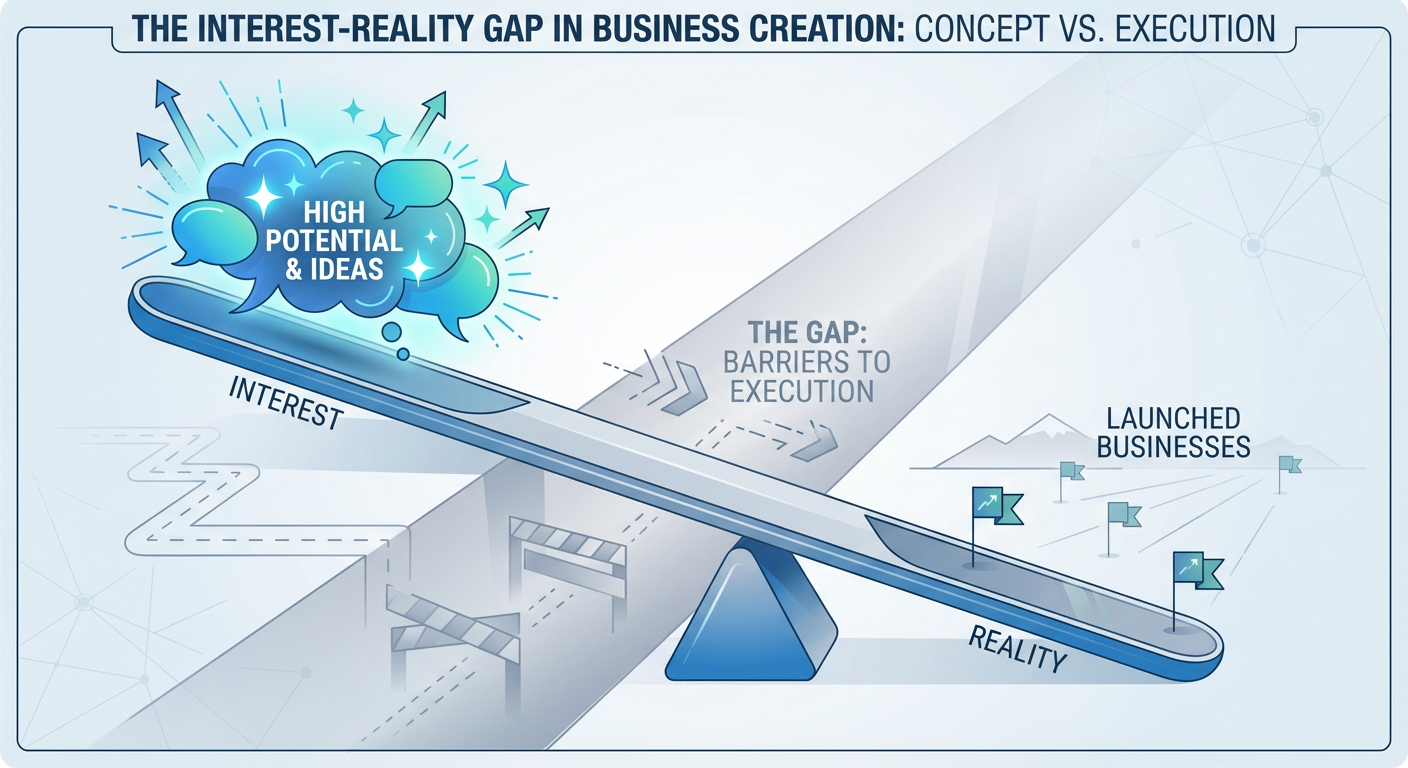
3. Bridging the Gap: Interest vs. Reality
The landscape of youth aspirations reveals a striking paradox: an overwhelmingly high level of interest in entrepreneurship among young people stands in stark contrast to the relatively low percentage who actually translate this ambition into launching a business. This disparity, often termed the concept of ‘missing entrepreneurs,’ represents a significant untapped potential for economic growth, innovation, and personal development. While the allure of self-employment, autonomy, and purpose-driven ventures resonates deeply with the younger generations, a complex web of barriers consistently hinders them from taking the crucial leap from interest to action. Understanding this gap is paramount for policymakers, educators, and support organizations aiming to cultivate a more robust and inclusive entrepreneurial ecosystem for kids and young adults.
Surveys consistently highlight a strong entrepreneurial pulse among the youth. For instance, roughly 60–66% of teens express a preference for starting their own business over working a traditional job, a sentiment that has remained resilient even through periods of global uncertainty like the pandemic[1][2]. In the U.S., a remarkable 54% of Gen Z (ages 12–27) articulate a desire to launch their own companies, indicating a profound shift in career outlook compared to prior generations[3]. Globally, approximately 40% of youth would opt for self-employment, signaling a widespread prioritization of autonomy and business ownership[4]. This pervasive interest underscores a generational mindset that values independence, innovation, and the ability to dictate one’s own professional path. However, despite this palpable enthusiasm, the actual rates of youth business creation tell a different story. In the European Union, only 5% of youth aged 18–30 were in the process of starting a venture between 2018 and 2022, with just 4% operating newly established businesses[5]. Similarly, in OECD countries, the startup rate for youth hovered at a modest 9%[6]. This chasm between aspiration and realization is not merely a statistical anomaly; it represents a critical challenge and a missed opportunity to harness the innovative spirit of the next generation.
The phenomenon of “missing entrepreneurs” is particularly evident when comparing youth startup rates to those of prime-age adults. The OECD’s 2023 report on “The Missing Entrepreneurs” estimates that if young people (aged 18-30) started businesses at the same rate as adults aged 30-49, there would be an additional 812,000 young entrepreneurs in the EU and a staggering 3.6 million more in OECD countries[12]. This represents a vast reservoir of untapped potential, stifled by various systemic and individual barriers. Bridging this gap requires a deep understanding of these obstacles and a concerted effort from various stakeholders to provide the necessary support, resources, and educational pathways to empower young people to transform their entrepreneurial dreams into tangible realities.
3.1 The Allure of Youth Entrepreneurship: A Generational Shift in Aspirations
The current generation of young people exhibits an unprecedented level of entrepreneurial ambition, fundamentally redefining traditional career paths. This shift is not merely fleeting but a sustained trend, as evidenced by consistent survey data over recent years, even amidst economic fluctuations. This section delves into the compelling reasons behind this heightened interest and how it contrasts with historical career preferences.
3.1.1 High Interest and Resilience
The desire to be one’s own boss appears deeply ingrained in today’s youth. Data indicates that a significant majority of teens are inclined towards entrepreneurship over conventional employment. According to a 2020 Junior Achievement USA and Brian Hamilton Foundation survey, an impressive 66% of American teens (ages 13–17) expressed that they were “likely” to consider starting a business as adults. This figure remained remarkably stable, only slightly dipping from 69% in 2017[1]. This resilience in interest, even amid global uncertainties like the COVID-19 pandemic, signals a robust and enduring entrepreneurial mindset among young people[1]. Further reinforcing this trend, a December 2021 survey of 1,000 U.S. teenagers found that 60% were more interested in venturing into business for themselves someday than pursuing a traditional job[2]. This majority preference highlights a generational pivot towards entrepreneurial career paths, prioritizing self-direction and innovation.
3.1.2 Gen Z’s Entrepreneurial Ethos
Gen Z, specifically those aged 12 to 27, stands out for its strong independent and startup-minded ethos. A 2022 Square “Future of Commerce” report revealed that more than half of Gen Z in the U.S., specifically 54%, aspire to be entrepreneurs rather than employees[3]. This is a considerably higher proportion compared to previous generations, indicating a fundamental shift in how young people envision their professional futures. This generation values flexibility, purpose, and the ability to influence the world through their work, which entrepreneurship inherently offers. The desire for autonomy and meaning often outweighs the perceived security of traditional employment.
Beyond national boundaries, this entrepreneurial drive is a global phenomenon. Approximately 40% of young people worldwide would prefer self-employment over being an employee[4]. This preference underscores a universal yearning among youth for control over their work environment and the opportunities to pursue passions and innovate. The global context, however, also introduces nuances, as entrepreneurial activity in developing regions sometimes stems from necessity rather than choice, though the underlying ambition remains palpable. This inherent drive for self-employment hints at a future workforce that is less reliant on established corporate structures and more inclined to carve out its own niches.
3.1.3 Implications of High Interest
The consistently high interest in entrepreneurship among young people presents both a promising outlook and a significant challenge. On one hand, it portends a future rich with innovation, economic dynamism, and the creation of new businesses and job opportunities. On the other hand, the vast chasm between this widespread interest and the comparatively low rates of actual business creation indicates a substantial amount of untapped potential. Policymakers and educational institutions are increasingly recognizing that converting even a fraction of this 54%+ of interested Gen Zers into active entrepreneurs could significantly boost economic activity and innovation[3]. The objective now shifts from fostering interest, which appears naturally abundant, to establishing clear pathways and dismantling barriers that prevent these aspirations from materializing into real-world ventures. This collective motivation signifies a cultural shift where self-made success and impact are highly valued, reflecting Gen Z’s inclination towards purpose-driven work and independent endeavors[10].
3.2 The Reality Check: Low Startup Rates and the “Missing Entrepreneurs”
Despite the fervent interest in entrepreneurship among young people, the actual rates of business formation remain strikingly low, highlighting a significant “implementation gap.” This section will quantify this disparity and introduce the concept of “missing entrepreneurs,” emphasizing the lost opportunities for economic development.
3.2.1 Quantifying the Disparity
The contrast between entrepreneurial aspiration and concrete action is stark. While surveys reveal that a substantial majority of young individuals dream of owning a business, only a small fraction actually embark on that journey. In the European Union, between 2018 and 2022, a mere 5% of youth (aged 18–30) were actively involved in the process of starting a new venture, and only 4% were operating new businesses[5]. These single-digit percentages critically underscore the challenges in transitioning from interest to execution. Even within the broader scope of OECD countries, the youth startup rate was only marginally higher at 9% for those in the startup phase and 5% for those with new businesses[6]. When contrasted with the 60-66% of teens expressing interest in entrepreneurship, the disparity is undeniable and concerning for economic planners[1][2].
Table 3.1 illustrates this gap:
| Region/Demographic | Interest in Entrepreneurship | Actual Participation in Startups (Youth) | Gap (Interest vs. Reality) |
|---|---|---|---|
| U.S. Teens (13-17) | 60-66% (prefer starting business over job)[1][2] | N/A (specific teen startup rate not provided for this age group) | Substantial, indirect |
| U.S. Gen Z (12-27) | 54% (desire to be entrepreneurs)[3] | N/A (specific Gen Z startup rate not provided) | Substantial, indirect |
| EU Youth (18-30) | 39-40% (prefer self-employment)[13][14] | 5% (actively working on startup)[5] 4% (running new business)[5] | ~35% (conservative estimate for ‘actively working on startup’) |
| OECD Youth (18-30) | N/A (specific interest rate not provided) | 9% (startup phase)[6] 5% (running new business)[6] | Significant potential, direct comparison not available |
It is important to note that global youth entrepreneurship often encompasses a broader definition, including necessity-driven entrepreneurship, particularly in developing regions. For instance, roughly 1 in 4 young people worldwide were self-employed or entrepreneurs as of the mid-2010s[7]. However, this global figure, while higher, includes many informal and survivalist businesses which differ significantly from the growth-oriented ventures often contemplated by youth in developed economies.
3.2.2 The Concept of “Missing Entrepreneurs”
The term “missing entrepreneurs” encapsulates the vast, unfulfilled potential arising from this interest-to-action disparity. The OECD’s analysis highlights this vividly by estimating the number of additional young entrepreneurs who would exist if youth participation mirrored that of prime-age adults (30-49 years old). The projection suggests there would be an estimated 812,000 additional young entrepreneurs in the EU and 3.6 million more across OECD countries[12]. This gap is not due to a lack of ideas or motivation among youth but rather points to systemic barriers that disproportionately affect them.
The implications of these missing entrepreneurs are far-reaching. Each ‘missing’ individual represents a potentially lost innovative idea, a new business that could have created jobs, and an economic contribution that never materialized. The potential for job creation is especially critical; even though only about 12% of self-employed youth in the EU had employees in 2022, their businesses collectively supported approximately 350,000 jobs for other people across the EU[15]. Increasing the number of youth startups could significantly amplify this job creation effect, helping to combat youth unemployment and foster economic resilience.
Understanding the sheer magnitude of this lost potential is a powerful motivator for developing targeted interventions. It underscores the economic imperative of empowering young people, not just for their personal development, but for the broader societal benefits their entrepreneurial activities can bring. By bridging this gap, societies can unlock a dynamic force for innovation and economic progress that is currently largely dormant.
3.3 Key Barriers and Challenges Hindering Young Founders
The journey from entrepreneurial interest to actual business launch is fraught with challenges for young people, often more so than for their adult counterparts. These barriers are multifaceted, ranging from financial constraints to psychological deterrents, and critically impede the conversion of youthful ambition into concrete ventures.
3.3.1 Access to Capital: The Foremost Hurdle
Consistently, the most significant obstacle cited by aspiring young entrepreneurs is the lack of adequate financing. A survey conducted in the EU revealed that a substantial 40% of young people identified insufficient capital and resources as a primary barrier to starting a business[8]. Minors, in particular, rarely possess personal savings or substantial assets that could serve as collateral for traditional loans. Furthermore, established financial institutions are often hesitant to provide funding to individuals under 18, viewing them as higher risk due to their lack of credit history, limited legal capacity to enter contracts, and perceived inexperience. This funding gap is a critical choke point, often confining youth-led ventures to the idea stage or limiting them to micro-scale operations that struggle to achieve significant growth or impact. Without seed capital, brilliant ideas often languish, and the practical implementation of even the simplest business concept becomes challenging.
3.3.2 Experience and Know-how Deficits
Beyond capital, young would-be founders frequently grapple with a lack of practical business knowledge and established networks. Unlike older entrepreneurs who may have years of professional experience in management, marketing, or finance, young individuals typically lack this foundational understanding. A significant portion of teens, specifically 51%, indicate a need for more information on how to succeed in business, while 52% express the need for an investor or backer to aid their entrepreneurial journey[9]. A further 34% desire a business-owner role model to guide them, highlighting the acute need for mentorship and practical education[9]. Without proactive educational interventions, young people remain unfamiliar with essential concepts such as business planning, market analysis, legal requirements, or even basic accounting. This knowledge deficit can lead to critical errors, missed opportunities, or a paralyzing fear of the unknown, preventing them from taking the initial steps towards launching their ventures.
3.3.3 Fear of Failure and Risk Aversion
The perceived risks associated with entrepreneurship can be a significant psychological barrier. Nearly 30% of teens in one survey admitted that their primary concern about starting a business was that it was “too risky”[18]. Young individuals, often without significant financial safety nets or extensive life experience, can be particularly intimidated by the prospect of losing money or experiencing public failure. Societies that stigmatize business failure further exacerbate this fear, discouraging potential entrepreneurs from even attempting their ideas. This psychological hurdle can be as potent as financial or knowledge barriers, preventing otherwise capable and innovative young people from pursuing their entrepreneurial dreams.
3.3.4 Legal and Logistical Constraints
Children and minors face specific legal and logistical limitations that adults do not. These include restrictions on registering a business, signing contracts, opening business bank accounts, or obtaining necessary permits for certain types of sales. For example, local regulations around permits for food sales or street vending (like lemonade stands) can pose unexpected challenges. Even setting up a simple online store often requires a parent or guardian to act as a legal proxy, signing up for payment processors or managing tax obligations. These practical, administrative hurdles, though seemingly minor, can complicate the entrepreneurial process, increase reliance on adult involvement, and deter young founders who prefer independent operation.
3.3.5 Lack of Supportive Ecosystems
While the market for business education for children and teens is booming, projected to reach $18.2 billion by 2032 from $5.5 billion in 2024[11], access to this educational support, mentorship networks, and a general supportive ecosystem is not universally available. Many youth, especially those from underserved communities, may lack access to entrepreneurship programs, experienced mentors, and family support necessary to navigate these challenges. For instance, 47% of teens cite family support as a crucial need for starting a business[9]. Without a robust local ecosystem that connects aspiring young entrepreneurs with funding, knowledge, and mentorship, the gap between interest and reality will persist.
Addressing these multifaceted barriers requires a holistic approach that combines financial assistance, enhanced educational opportunities, mentorship programs, and policy adjustments to ease legal and logistical constraints for young entrepreneurs. By systematically tackling these challenges, society can convert more of the abundant youthful entrepreneurial interest into impactful, real-world ventures.
3.4 Pathways to Bridging the Gap: Cultivating Youth Entrepreneurial Ecosystems
Recognizing the substantial gap between high youth entrepreneurial interest and low startup rates, various stakeholders are actively developing strategies and support systems to empower young individuals. These initiatives aim to dismantle barriers and provide the necessary tools for youth to transform their ideas into viable businesses.
3.4.1 Expansion of Youth Entrepreneurship Education
A global movement is underway to integrate entrepreneurship education into curricula and extra-curricular activities for young people. Governments, schools, and non-profit organizations are increasingly recognizing the value of teaching entrepreneurial skills early. Virtually all EU countries now offer youth-focused entrepreneurship training. Moreover, 22 out of 27 EU member states have dedicated coaching and mentoring schemes specifically designed for young entrepreneurs, reflecting a targeted policy effort to nurture this talent[9]. Additionally, about 70% of EU states actively run targeted campaigns to promote entrepreneurship to young people, aiming to inspire and inform them about the possibilities[10].
The “kidpreneur” education market itself is experiencing explosive growth. Valued at $5.5 billion in 2024, it is projected to triple to an astonishing $18.2 billion by 2032, demonstrating a robust 16.1% Compound Annual Growth Rate (CAGR)[11]. This booming industry encompasses a wide array of offerings, including startup camps, incubators for young innovators, specialized educational products, and online learning platforms. Organizations like Junior Achievement (JA) play a pivotal role, having reached approximately 10.8 million students worldwide in 2022 through their entrepreneurship and financial literacy programs[19]. Similarly, nonprofits such as Lemonade Day have engaged over 1 million youth since 2007, guiding them through the practicalities of running their own lemonade stands[20]. These programs instill crucial business acumen, financial literacy, problem-solving abilities, and resilience from an early age.
3.4.2 Government Initiatives and Policy Support
Governments worldwide are increasingly recognizing youth entrepreneurship as a vital component of economic strategy and youth development. Many nations have integrated youth entrepreneurship into their national youth or skills strategies. For example, Hungary’s national Youth Entrepreneurship Programme has supported over 6,500 young people with training and grants in recent years[22]. Beyond direct programmatic support, some legislative efforts are aimed at easing the legal and bureaucratic burdens on young entrepreneurs. The proliferation of “lemonade stand laws” in various U.S. states, which permit children to operate small businesses without prohibitive permits, is a symbolic yet powerful example of policy evolving to encourage youthful ventures. This top-down policy support, coupled with grassroots educational efforts, creates a more favorable environment for young founders.
3.4.3 The Critical Role of Mentorship and Role Models
Mentorship is emerging as a game-changer for kidpreneurs, providing the guidance and support often lacking due to inexperience. Organizations like Youth Business International (YBI) connect young entrepreneurs with experienced mentors, facilitating tangible outcomes. In 2022, YBI’s global network supported over 123,000 young people in developing entrepreneurial skills, leading to nearly 15,000 new businesses being started[23]. The presence of successful young founders, often highlighted in media and social platforms, provides powerful role models, inspiring peers and making entrepreneurship seem more attainable. These mentors offer practical advice, shared experience, and critical networking opportunities, helping young founders navigate the complexities of launching and scaling a business. For example, Moziah “Mo” Bridges, founder of Mo’s Bows, benefited significantly from mentorship by investor Daymond John, which helped him secure a seven-figure licensing deal with the NBA[25][26].
3.4.4 Technology as an Equalizer
The advent of digital tools and platforms has profoundly lowered the barriers to entry for young entrepreneurs. Tech-savvy kids can now launch e-commerce stores, create monetized YouTube channels, or develop app-based ventures from their homes with minimal upfront costs. Social media platforms provide direct marketing and sales channels, enabling global reach that was previously unimaginable. Teen influencers, for instance, are monetizing their content and building personal brands into businesses that can generate substantial revenue. As of 2024, nearly half of Gen Z workers have an online side gig or business, reflecting a new norm of combining entrepreneurial activity with academic pursuits or traditional employment[11]. Payment processors and student-friendly business platforms (some even tailored for minors) further streamline operations, making it increasingly feasible for a middle-schooler with a laptop to establish a legitimate business. This digital democratization of entrepreneurship is a powerful trend, enabling young innovators to bypass many traditional hurdles.
3.4.5 Cultural Normalization and Shifting Perceptions
There is a growing cultural acceptance and even celebration of young entrepreneurs. Schools increasingly organize “market days” or pitch competitions, integrating entrepreneurial experiences into the educational fabric. Media outlets feature inspiring stories of young CEOs, and even toy companies are developing “startup kits” for children. This normalization helps to de-risk entrepreneurship in the eyes of youth and their parents, presenting it as a viable and respected career path, much like sports or arts. As entrepreneurship becomes more visible and celebrated, it creates a positive feedback loop, encouraging greater participation and nurturing a mindset that values innovation, autonomy, and making a tangible impact on the world. This cultural shift transforms the perception of entrepreneurship from a niche pursuit to a mainstream aspirational goal for young people.
3.5 Success Stories as Catalysts: Inspiring the Next Generation
The most compelling evidence of the potential of youth entrepreneurship lies in the remarkable success stories of young founders who have defied age barriers to create impactful and sometimes multi-million-dollar businesses. These examples serve as powerful catalysts, demonstrating that with passion, innovation, and support, kids can turn their ideas into significant ventures.
3.5.1 Mikaila Ulmer: From Lemonade Stand to Bee-Saving Empire
One of the most inspiring examples is Mikaila Ulmer, who, at the tender age of four, transformed a childhood fear of bees into a mission-driven lemonade business. After being stung, Mikaila learned about the critical role of bees in the ecosystem, leading her to found Me & the Bees Lemonade (originally “BeeSweet Lemonade”) in 2009. Starting with local fairs, she gained national recognition, securing a $60,000 investment on ABC’s Shark Tank at just nine years old[27]. By 2015, her product landed a contract with Whole Foods. By 2019, Mikaila’s bottled lemonade was sold in over 1,000 stores across 40 states and expanded into honey-infused lemonades and natural lip balms[28][29]. Her business also donates a portion of its profits to organizations dedicated to saving bees. Mikaila’s story exemplifies how a simple childhood idea, coupled with a strong social mission and parental support, can scale into a national brand, while educating others and contributing to environmental conservation. She has become a sought-after speaker, encouraging others to “bee-liev” in their ideas[29].
3.5.2 Moziah “Mo” Bridges: Tying a Future with Bow Ties
Moziah “Mo” Bridges from Memphis, Tennessee, started his handmade bow tie business, Mo’s Bows, at age nine. Motivated by a desire for stylish accessories not readily available for kids, he began creating unique bow ties from fabric scraps with his grandmother. His charm and unique products led him to Shark Tank at age 12. Although he didn’t secure a deal on the show, investor Daymond John recognized his potential and became his mentor[31][32]. Under John’s guidance, Mo’s Bows flourished, achieving over $100,000 in sales and features in high-end stores like Neiman Marcus[33]. His biggest breakthrough came at 15 with a seven-figure licensing deal with the NBA, granting him rights to produce bow ties featuring all NBA team logos, integrating his brand into the league’s estimated $6 billion annual merchandise market[25][26]. By 2020, Mo’s net worth from the business was reportedly over $2 million[34]. Mo’s journey underscores the transformative power of mentorship and strategic media exposure in scaling a hobby into a formidable enterprise. His youth became a unique selling proposition, resonating with both children and adults.
3.5.3 Alina Morse: Sweet Success with a Healthy Twist
Alina Morse, the founder of Zolli Candy, disrupted the confectionery industry with a healthy alternative. At age seven, pondering why healthy lollipops didn’t exist, she launched Zollipops at age nine in 2014. These sugar-free lollipops, sweetened with tooth-friendly ingredients like xylitol, were the result of extensive collaboration with food scientists and navigation of FDA approvals by Alina and her father. The innovation paid off dramatically: by 2018, her company generated over $6 million in sales, expanding into a full line of Zolli-branded candies[36]. By age 14, Alina’s company had sold 60 million pieces of candy and secured placement in over 25,000 stores, including major retailers like Walmart and Walgreens[37][38]. She impressively became the youngest person to feature on the Inc. 5000 list of fastest-growing private companies in 2019, showcasing 696% three-year growth[39]. Alina also created the “Million Smiles” program, donating Zollipops to schools to promote oral health, funded by 10% of her company’s profits[40]. Her success illustrates that even mature industries can be revolutionized by a child’s fresh perspective, emphasizing the balance between business acumen and social responsibility.
3.5.4 Tilak Mehta: Innovating Logistics in Mumbai
Tilak Mehta from Mumbai, India, exemplifies how young entrepreneurs can address local problems with innovative solutions. At 13 years old in 2018, frustrated by slow courier services for school papers, he conceived Papers N Parcels (PNP), a hyperlocal courier platform. Tilak’s bold vision led him to recruit a seasoned banker as CEO and partner with Mumbai’s iconic dabbawalas (lunchbox delivery men) for last-mile logistics[41]. PNP, leveraging a mobile app, aimed to offer 4-8 hour delivery within city limits. Within its first year, PNP boasted over 200 employees and 300+ dabbawalas integrated into its service, completing tens of thousands of deliveries. The company projected capturing 20% of Mumbai’s intra-city delivery market and generating an ambitious ₹100 crore (approximately $14 million) in revenue by 2020[42][43]. Tilak’s story demonstrates the power of youthful problem identification combined with strategic adult collaboration to overcome operational complexities and scale rapidly in an emerging market. He became a global inspiration for youthful entrepreneurship in tech and logistics.
These stories highlight several recurrent themes: the importance of identifying a need or passion, the value of mentorship and family support, the leveraging of technology, and the integration of social impact. They also demonstrate that early entrepreneurial experiences can lay the groundwork for sustained success, providing young founders with invaluable experience, credibility, and networks that continue to grow into adulthood. These success stories are not just anecdotes; they are powerful examples that inspire more young people to bridge the gap between their entrepreneurial interest and reality, signaling a future where age is no longer a deterrent to impactful business creation.
The journey from entrepreneurial interest to concrete business realization for kids is multifaceted, characterized by immense potential yet significant hurdles. The prevalence of high interest among young people, especially Gen Z, signals a dynamic shift in career aspirations towards autonomy and purpose. However, the relatively low rates of actual startup launches highlight persistent barriers, predominantly revolving around access to capital, lack of experience, fear of failure, and legal complexities. Recognizing these ‘missing entrepreneurs’ is crucial, as their unmet potential represents a considerable loss for economic growth and innovation. Fortunately, a growing ecosystem of support, encompassing specialized education, governmental initiatives, vital mentorship, and enabling digital technologies, is emerging to bridge this gap. Inspiring success stories of child and teen entrepreneurs further demonstrate the tangible impact young individuals can have, not just personally, but on their communities and industries. These narratives underscore that with the right support, the entrepreneurial spirit of today’s youth can be effectively channeled into a powerful force for a vibrant and innovative future.
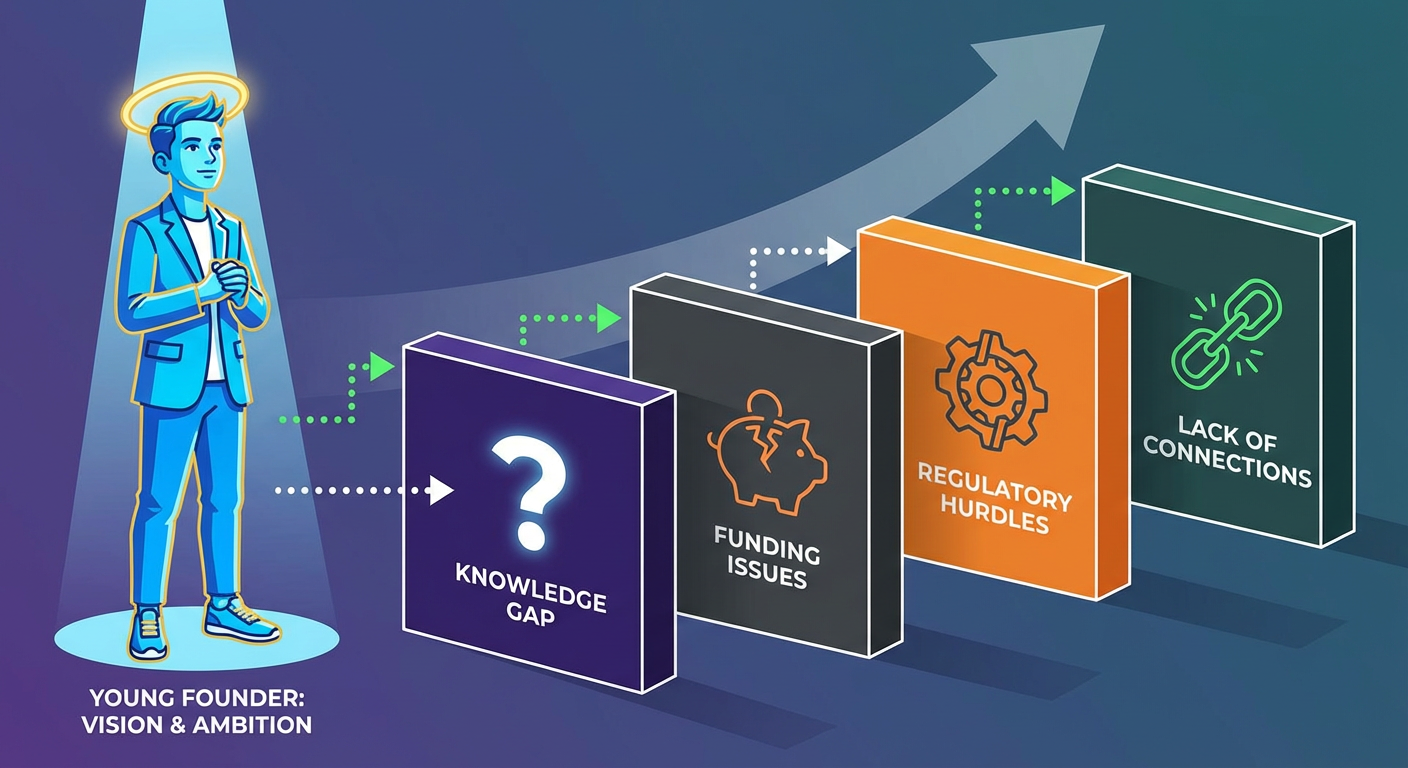
4. Key Obstacles for Young Founders
While the enthusiasm for entrepreneurship among young people, particularly Generation Z, is remarkably high, a significant disparity exists between aspiration and actualization. Surveys consistently show that a large majority of teenagers and Gen Z individuals express a strong desire to start their own businesses or pursue self-employment rather than traditional job roles. For instance, roughly 60-66% of U.S. teens are interested in entrepreneurship, and 54% of Gen Z in the U.S. aspire to be entrepreneurs. Globally, about 40% of youth favor self-employment over being an employee [3], [4], [1], [2]. This pervasive ambition suggests a generational shift, highlighting a strong desire for autonomy, purpose, and impact in their careers. However, statistics reveal a stark contrast to these high aspirations. Only a fraction of young people actually translate this interest into concrete entrepreneurial ventures. In the European Union, for example, just 5% of youth aged 18-30 were actively engaged in starting a venture, and 4% were already operating new businesses between 2018 and 2022 [5]. Even in the broader OECD countries, the startup rate for youth hovered around 9% [6]. This chasm between entrepreneurial intent and action is striking and points to a complex array of barriers that impede young founders from transforming their innovative ideas into tangible businesses. The substantial gap between the reported interest and the actual participation in entrepreneurial activities represents a considerable amount of untapped potential – an estimated 812,000 additional young entrepreneurs in the EU and 3.6 million more in OECD countries if youth started businesses at the same rate as prime-age adults [7]. Understanding and addressing these primary obstacles is crucial for fostering a more inclusive and dynamic entrepreneurial ecosystem that supports the next generation of innovators and business leaders. This section will delve into the critical challenges faced by young founders, examining limitations such as access to capital, lack of experience and know-how, psychological barriers like fear of failure, and various legal and logistical constraints.
4.1. Access to Capital and Financial Barriers
The most frequently cited and formidable obstacle for aspiring young entrepreneurs is the lack of access to capital and financial resources [8]. Entrepreneurship, regardless of scale, almost invariably requires some form of startup funding, whether it’s for purchasing raw materials, developing a product, marketing, or simply covering initial operational costs. For young individuals, particularly those under the age of 18, securing such funding presents unique and significant challenges.
4.1.1. Limited Personal Funds and Collateral
Unlike adult entrepreneurs who might leverage personal savings, second mortgages, or established credit lines, young founders typically lack these financial foundations. Most teenagers and children do not have substantial savings of their own, nor do they possess assets that could serve as collateral for a loan. This inherent lack of personal financial reserves means that even the most promising ideas can remain grounded due to a simple inability to fund basic startup expenses. In a survey in the EU, a significant 40% of young entrepreneurs explicitly identified insufficient capital or resources as their primary barrier to starting a business [8].
4.1.2. Reluctance of Traditional Lenders
Traditional financial institutions, such as banks and credit unions, are often highly risk-averse, particularly when it comes to lending to individuals with no proven credit history, limited assets, and, crucially, who are legally minors. The legal frameworks in many jurisdictions impose strict restrictions on minors entering into contracts, including loan agreements. This makes it challenging, if not impossible, for young people to obtain conventional business loans without significant adult co-signatory support. The perceived risk by lenders is compounded by the typical small scale and often unproven nature of youth-led ventures. Without a developed business plan, market research, or previous success, a young person’s enterprise is often considered too speculative for conventional funding. This forces many to rely on alternative, often less structured, sources of funding.
4.1.3. Dependence on External Support
Given the difficulties with self-funding and traditional loans, young founders often turn to external sources. A striking 52% of teens indicate that they would require an “investor/backer” to start their business [9]. This highlights a critical need for external financial support, whether from family members, dedicated youth entrepreneurship grants, or impact-driven angel investors. However, not all young people have access to family resources or are aware of specific funding programs for minors. This unequal access perpetuates a systemic disadvantage, where financial background can dictate entrepreneurial opportunity rather than the merit of an idea.
4.1.4. The Funding Gap and “Missing Entrepreneurs”
The funding barrier significantly contributes to the phenomenon of “missing entrepreneurs.” Despite millions of young people expressing a desire to start a business, the reality of a single-digit percentage actually doing so is largely influenced by this financial hurdle [5], [6]. Without tailored financial mechanisms that recognize the unique circumstances of young founders—such as micro-grants, simplified seed funding applications, or crowdfunding platforms specifically designed for youth projects—a vast pool of innovative ideas and entrepreneurial spirit remains unrealized. This gap demonstrates that the issue is often not a lack of interest or viable concepts, but rather the practical means to bring those concepts to fruition.
Table 4.1: Top Barriers to Youth Entrepreneurship
| Barrier Category | Specific Obstacle | Data/Reference |
|---|---|---|
| Financial | Lack of capital/resources | 40% of young entrepreneurs [8] |
| Financial | Need for an investor/backer | 52% of teens [9] |
| Knowledge/Experience | Need for more information on how to succeed | 51% of teens [9] |
| Knowledge/Experience | Lack of a business-owner role model | 34% of teens [9] |
| Psychological | Fear of failure (“too risky”) | Nearly 30% of teens [16] |
| Support System | Need for family support | 47% of teens [9] |
4.2. Lack of Experience, Knowledge, and Mentorship
Beyond financial constraints, young entrepreneurs often grapple with a fundamental lack of practical business experience and domain-specific knowledge. Unlike adult founders who may have years of professional work history, industry contacts, or formal business education, children and teenagers are typically just beginning to acquire these skills.
4.2.1. Deficits in Business Know-How
Launching and running a business requires a diverse skill set, including market research, product development, marketing, sales, accounting, legal compliance, and human resources. Most young people have not been exposed to these concepts in a practical setting. While schools are increasingly incorporating entrepreneurship education, such programs often provide foundational knowledge rather than the deep, experiential learning necessary for successful venture creation. As a result, young founders may struggle with critical aspects such as understanding their target market, pricing strategies, managing inventory, or even developing a coherent business plan. The research indicates that over 50% of teens feel they need more information on “how to succeed” in business [9].
4.2.2. Absence of Mentorship and Role Models
Mentorship plays a pivotal role in entrepreneurial success, offering guidance, sharing insights from experience, and providing crucial networking opportunities. For young founders, this need is even more pronounced. Without experienced advisors, they may make avoidable mistakes, miss critical opportunities, or become overwhelmed by the complexities of starting a business. Nearly half (47%) of teens surveyed highlight the need for family support, but critically, 34% also explicitly state a desire for a “business-owner role model” [9]. This underscores the importance of connecting young aspiring entrepreneurs with individuals who have navigated the challenges of business ownership themselves. While organizations like Youth Business International (YBI) are working to bridge this gap, supporting 123,000+ young people in entrepreneurial skills and helping 15,000 start businesses in 2022, the demand for such guidance remains high [11].
4.2.3. Limited Networks and Connections
Successful entrepreneurship often relies on a robust network of suppliers, partners, customers, and investors. Young individuals typically have underdeveloped professional networks, which can limit their access to resources, advice, and opportunities. Building these connections takes time and exposure, which children and teenagers often lack due to their age and social circles. This absence of an established professional ecosystem can make it harder for them to find reliable suppliers, distribution channels, or even initial customers beyond their immediate family and friends.
4.2.4. Educational System Gaps
While youth entrepreneurship education is expanding, there are still gaps in how comprehensively and practically it is delivered. Theoretical knowledge of business principles is valuable, but the real-world application, problem-solving, and resilience required to sustain a venture often demand hands-on experience and direct coaching. The booming “kidpreneur” education market, projected to reach $18.2 billion by 2032, signifies a growing recognition of this need, but widespread access to high-quality, practical training remains a challenge for many [12].
4.3. Psychological Barriers: Fear of Failure and Risk Aversion
Beyond tangible resources and knowledge, psychological factors significantly influence a young person’s decision to pursue or abandon an entrepreneurial path. The fear of failure, coupled with inherent risk aversion and a lack of self-confidence, can be powerful deterrents.
4.3.1. The Stigma of Failure
Society often celebrates success but can be less forgiving of failure. For young people, who are still developing their sense of self and confidence, the prospect of public or personal failure can be particularly intimidating. Entrepreneurship, by its very nature, involves a high degree of risk and a strong likelihood of setbacks. The idea of investing time, effort, and potentially money into a venture that ultimately doesn’t succeed can be a scary thought. Nearly 30% of teens in one survey admitted that their biggest concern about starting a business was that it felt “too risky” [16]. This concern is often amplified if they perceive a lack of a safety net or support system to fall back on.
4.3.2. Lack of Self-Efficacy and Experience with Setbacks
Adult entrepreneurs typically have a accumulation of life experiences, including previous failures from which they’ve learned and built resilience. Young individuals often lack this reservoir of experience. They may not have developed the coping mechanisms or the understanding that failure is an integral part of the learning process. This can lead to a lower sense of self-efficacy—the belief in one’s ability to succeed in specific situations or accomplish a task. Without the confidence that they can overcome challenges and learn from mistakes, many may choose not to embark on the entrepreneurial journey at all.
4.3.3. Peer Pressure and External Expectations
Conforming to peer expectations and navigating the expectations of parents, teachers, and society can also create psychological pressure. While peer and family support is deemed important by 47% of teens [9], negative perceptions or a lack of understanding about entrepreneurship from these influential groups can inadvertently discourage young founders. If entrepreneurship is seen as an unstable or unconventional path, young people might feel pressure to pursue more traditional and perceived “safe” career options, even if their true passion lies elsewhere. This is particularly true in cultures where stability and conventional employment are highly valued.
4.3.4. Overcoming the Psychological Hurdle
Addressing these psychological barriers requires more than just practical business training. It necessitates fostering a growth mindset, celebrating effort and learning over immediate success, and providing safe environments where young people can experiment and fail without severe repercussions. Mentorship, as discussed earlier, can be invaluable here, as mentors can share their own experiences with failure and guide young founders through challenging moments, building their resilience and self-belief.
4.4. Legal and Logistical Constraints
The legal and administrative landscape presents a unique set of challenges for young entrepreneurs, particularly minors. Current legal structures are not always designed to accommodate individuals who are not yet of legal age to enter into contracts, manage finances independently, or fully assume legal liabilities.
4.4.1. Age Restrictions and Legal Capacity
One of the most fundamental barriers is the issue of legal capacity. In many jurisdictions, individuals under 18 years of age are considered minors and have limited legal capacity. This means they often cannot legally:
- Formally register a business: The paperwork for business registration typically requires an adult’s signature or involvement.
- Enter into contracts: Minors may not be able to sign legally binding contracts with suppliers, clients, or service providers (like web hosting companies or payment processors), which are essential for most businesses.
- Open business bank accounts: Financial institutions generally require account holders to be of legal age, often necessitating an adult co-signer or guardian to manage business funds.
- Acquire licenses or permits: Depending on the type of business, specific licenses or permits may be required (e.g., food safety, vending), and these are usually issued to adults.
These restrictions necessitate significant adult involvement, often from parents or guardians, to handle the administrative and legal aspects of the business. While this adult support can be beneficial, it adds a layer of complexity and potential dependence that can hinder a young founder’s autonomy and learning experience.
4.4.2. Regulatory Compliance and Taxation
Navigating the world of regulatory compliance and taxation can be daunting even for experienced adult entrepreneurs, let alone children. Understanding sales tax, income tax, and specific industry regulations requires a level of financial and legal literacy that is typically beyond a young person’s educational attainment. For example, a child selling products online internationally might unknowingly encounter complex tax implications or import/export rules. This often requires parents or legal guardians to shoulder the burden of ensuring compliance, potentially diminishing the young person’s hands-on learning in these critical areas.
4.4.3. Logistical Hurdles in Operations
Beyond legalities, logistical operations can also pose challenges. For instance, shipping products, particularly internationally, requires knowledge of logistics, customs, and reliable carriers. Access to equipment, workstations, or dedicated commercial spaces may also be limited. While digital platforms and the gig economy have lowered some barriers, issues like managing inventory, handling customer service at a young age, or dealing with returns can still be complex and time-consuming. Cases like Tilak Mehta, who founded Papers N Parcels at 13, show that these challenges can be overcome, but often require clever partnerships (like with Mumbai’s dabbawalas) and the involvement of experienced adults to manage complex logistics [19].
4.4.4. Easing Legal Constraints: “Lemonade Stand Laws”
Recognizing these barriers, some legislative bodies have begun to enact “lemonade stand laws” or similar measures to exempt minor entrepreneurs from certain permits and regulations for small-scale ventures. These initiatives are a step in the right direction, aiming to ease the path for young individuals to experiment with entrepreneurship without encountering prohibitive red tape. However, such laws are still not universally adopted or comprehensive enough to cover the breadth of potential youth ventures, highlighting an ongoing need for policy reform specific to young founders.
In summary, the journey of a young founder is often punctuated by a series of significant hurdles. From the fundamental struggle for capital to the absence of guiding experience and mentorship, and the intricate web of legal and logistical complexities, these barriers stand between a budding idea and a thriving enterprise. Overcoming these challenges requires not only individual resilience and ingenuity but also a concerted effort from educators, policymakers, and the wider community to create a more supportive and accessible ecosystem for the next generation of entrepreneurs. By addressing these pain points, society can help convert more of the immense entrepreneurial interest among young people into meaningful economic and social contributions. Programs providing micro-grants, accessible mentorship networks, simplified regulatory pathways, and robust entrepreneurship education models are critical in alleviating these obstacles and nurturing the entrepreneurial inclination of youth.
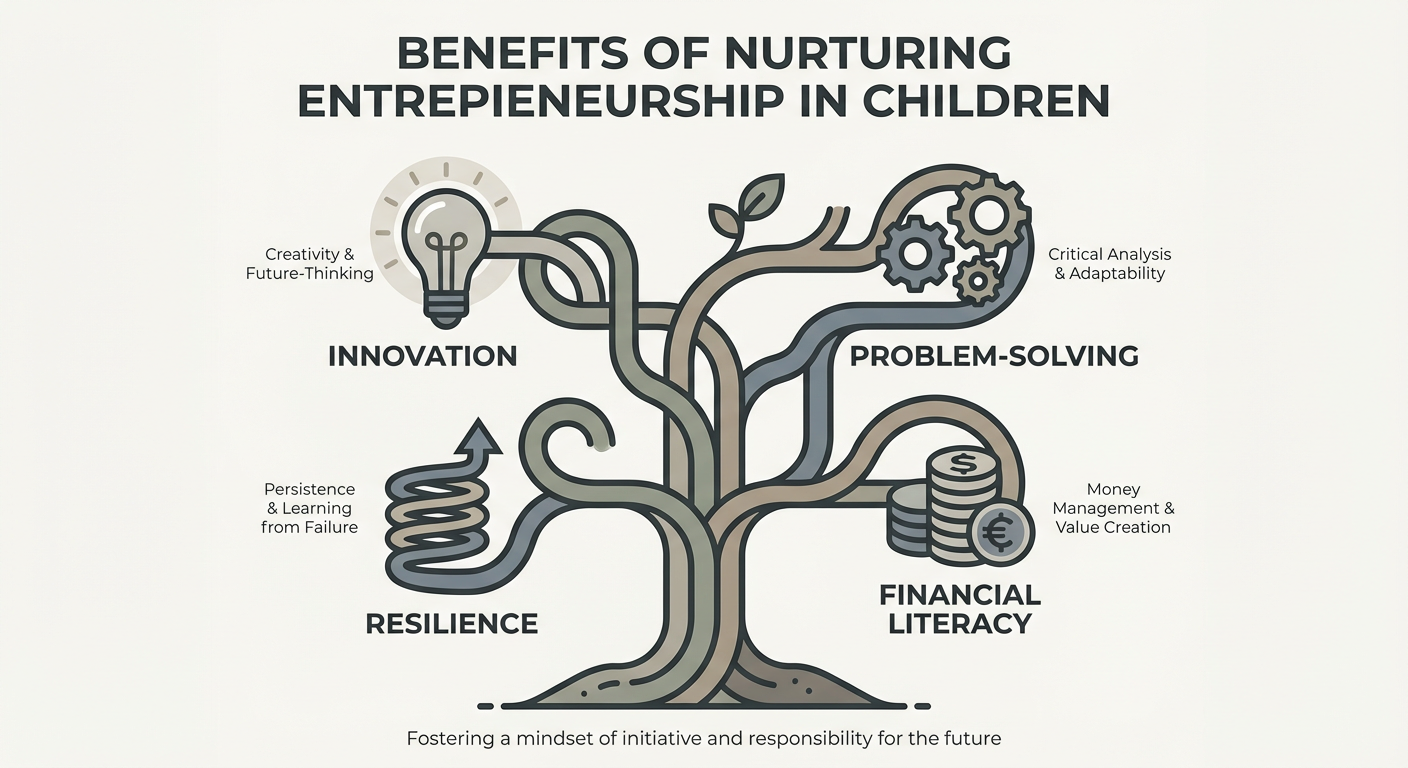
5. Benefits of Nurturing Entrepreneurship in Children
In an increasingly dynamic and unpredictable global economy, cultivating an entrepreneurial mindset in children and adolescents has moved beyond a niche educational pursuit to become a crucial developmental imperative. While traditional education systems primarily focus on academic knowledge, early exposure to entrepreneurship offers a multifaceted array of advantages, fostering not only practical business acumen but also a robust suite of transferable life skills. The inherent enthusiasm among young people for entrepreneurial ventures is striking; surveys consistently show a significant proportion of teenagers and Gen Z expressing a strong desire to start their own businesses rather than pursue conventional employment paths. For instance, roughly 60–66% of teens indicate an interest in entrepreneurship, a sentiment that has remained resilient even through periods of economic uncertainty like the COVID-19 pandemic[1][2]. More specifically, 60% of U.S. teenagers surveyed in December 2021 expressed a preference for launching a business over a traditional job[2]. This ambition extends across generations, with 54% of Gen Z (ages 12–27) in the U.S. aspiring to start their own companies, and approximately 40% of youth globally preferring self-employment[3][4]. This pronounced generational shift towards valuing autonomy and business ownership underscores the latent potential within younger cohorts. However, despite this high level of interest, only a small percentage of young people actually translate their entrepreneurial aspirations into tangible businesses. For example, in the European Union, only 5% of youth aged 18–30 were actively engaged in starting a venture between 2018 and 2022, and merely 4% were operating new businesses[5]. The startup rate for youth in OECD countries was slightly higher at 9%, with 5% running new businesses[6]. This gap between ambition and action highlights significant barriers, primarily lack of capital (cited by 40% of aspiring young entrepreneurs) and insufficient mentorship, information, and family support[7][8]. Recognizing this untapped potential, governments, schools, and non-profit organizations worldwide are making concerted efforts to expand youth entrepreneurship education, with the children’s business education market projected to surge from $5.5 billion in 2024 to $18.2 billion by 2032[9][10]. This burgeoning investment is a testament to the profound and holistic benefits that early entrepreneurial engagement can bestow upon children, preparing them not just for economic independence but for a future that demands innovation, adaptability, and leadership. The benefits of nurturing entrepreneurship in children are extensive, encompassing critical practical skills, enhanced cognitive and emotional development, improved academic engagement, and the cultivation of a responsible and impactful future generation. Below, we delve into these multifaceted advantages in detail.
5.1. Development of Practical Skills: Financial Literacy, Problem-Solving, and Project Management
One of the most immediate and tangible benefits of early entrepreneurial engagement is the development of crucial practical skills that are often overlooked in traditional curricula. These skills provide a foundation for both personal and professional success, regardless of whether a child ultimately pursues entrepreneurship as a career.
5.1.1. Financial Literacy and Money Management
Entrepreneurship offers a hands-on laboratory for children to learn about money in a practical context. When a child runs a small venture, such as a lemonade stand or a handcrafted item shop, they are directly confronted with concepts like revenue, costs, profit, pricing, and budgeting. This experiential learning translates into a deeper understanding of financial principles than abstract classroom lessons alone. For instance, the popular “Lemonade Day” program, which guides children through the process of setting up and running a lemonade stand, yielded compelling results. Participants averaged $168 in profit, with 79% saving a portion of their earnings[11]. A significant 20% even took the initiative to open their own bank accounts[12]. These numbers demonstrate a remarkable internalization of financial responsibility and savings habits at a young age. Children learn the value of money not just as a means to an end, but as a resource to be managed, saved, and potentially reinvested. They gain an intuitive understanding of the relationship between effort and reward, profit margins, and the importance of tracking income and expenses. This foundational financial literacy is invaluable, preparing them for future personal finance decisions and complex economic landscapes.
5.1.2. Problem-Solving and Critical Thinking
Starting and running a business, no matter how small, is an exercise in continuous problem-solving. From identifying a market need to overcoming operational hurdles, young entrepreneurs are constantly challenged to think critically and find creative solutions. A child selling handmade greeting cards might encounter issues with sourcing materials, inconsistent demand, or unexpected competitive pressures. Each of these scenarios requires them to analyze the situation, brainstorm potential solutions, evaluate their viability, and implement the chosen strategy. This iterative process builds robust problem-solving skills. They learn to identify obstacles, break down complex problems into manageable parts, and think on their feet. For example, if a product isn’t selling as expected, a young entrepreneur might need to adjust pricing, modify the product, or change their marketing approach. These real-world challenges empower children to develop a proactive mindset, rather than passively waiting for solutions to be provided. This skill is universally applicable, preparing them to tackle academic challenges, personal dilemmas, and future career obstacles with greater confidence and ingenuity.
5.1.3. Project Management and Organizational Skills
From conceiving an initial business idea to its execution and evaluation, entrepreneurship inherently involves a full project management lifecycle. Children learn to plan, organize, execute, and monitor their ventures. This includes setting clear goals (e.g., “sell 20 items”), allocating resources (e.g., “I need this much raw material and this much time”), managing timelines (e.g., “I need to have this ready by Saturday”), and adapting to unforeseen circumstances. They gain practical experience in: * **Planning:** Defining the product/service, target market, and operational steps. * **Resource Allocation:** Managing materials, time, and human resources (e.g., recruiting friends or family for help). * **Execution:** Producing goods or delivering services, engaging with customers. * **Monitoring & Evaluation:** Tracking sales, assessing customer feedback, and making necessary adjustments. This practical exposure to project management principles fosters organizational skills, attention to detail, and the ability to see a task through from inception to completion. These are fundamental skills that contribute to academic success, efficient personal management, and effective teamwork in any future endeavor.
5.2. Enhanced Creativity and Innovation
Entrepreneurship is, at its core, an act of creation and innovation. It encourages children to think “outside the box,” challenge assumptions, and imagine new possibilities. This aspect of entrepreneurial education is vital for fostering a generation capable of adapting to and shaping future challenges.
5.2.1. Nurturing Original Ideas and Unique Solutions
When children are encouraged to identify problems or needs in their environment and devise solutions, their innate creativity is unleashed. They are not merely consuming information but actively producing it. Micro-entrepreneurial projects, whether it’s making unique jewelry, designing custom t-shirts, or developing a simple app, provide a platform for children to bring original ideas to life. For example, Alina Morse, at just 7 years old, questioned why there wasn’t a healthy lollipop. This simple question led her to launch Zollipops at age 9, a line of sugar-free candies, by partnering with food scientists and navigating regulatory approvals[13]. Her curiosity and desire to find a better solution exemplify how entrepreneurial thinking cultivates innovative problem-solving. This process encourages children to critically examine existing products or services and envision new, improved, or entirely novel alternatives, thereby fostering a deep sense of creativity.
5.2.2. Adaptability and Iteration
The entrepreneurial journey is rarely linear. Young entrepreneurs inevitably face setbacks, rejections, and failures. These experiences, however, are invaluable for building adaptability and the ability to iterate on ideas. A product might not sell, a service might not be appealing, or a marketing strategy might fall flat. Instead of being discouraged, these challenges push children to analyze what went wrong, pivot their approach, and try again. This iterative process is fundamental to innovation. It teaches them that failure is not an end, but a learning opportunity. They learn to refine their products/services based on feedback, re-evaluate their strategies, and adapt to changing market conditions. This builds a growth mindset, where challenges are viewed as opportunities for improvement rather than insurmountable obstacles. Such adaptability is crucial in a rapidly evolving world where continuous learning and reinvention are key to success.
5.3. Building Resilience and Perseverance
Entrepreneurship is not for the faint of heart, and cultivating it in children helps them develop traits that are essential for navigating life’s inevitable difficulties: resilience, perseverance, and a positive attitude towards challenges.
5.3.1. Overcoming Setbacks and Embracing Failure
Every entrepreneur, regardless of age, encounters numerous setbacks. A product might not sell, a customer might complain, or a proposed deal might fall through. For children, these early experiences with failure, managed with appropriate support, are powerful learning moments. They learn that not every idea will succeed, and that temporary failure is a normal part of the process. This exposure helps build resilience – the ability to bounce back from adversity. It teaches them to view mistakes as feedback rather than personal shortcomings. The experience empowers youth to develop a thicker skin, to learn from what didn’t work, and to apply those lessons to future attempts. This contrasts sharply with an environment where failure is often stigmatized, and it fosters a healthier relationship with risk-taking.
5.3.2. Developing Grit and Persistence
The journey from an idea to a successful venture requires sustained effort and persistence. Young entrepreneurs learn that success often doesn’t come easily or quickly. They must put in the work, even when faced with difficulties or when the outcome is uncertain. This process cultivates “grit”—the passion and perseverance to achieve long-term goals. Whether it’s consistently showing up to sell their wares, diligently refining a product, or continuously marketing their service, children learn the importance of dedication. This perseverance extends beyond the entrepreneurial context, benefiting them in academic pursuits, personal goals, and any long-term project they undertake. They internalize the understanding that sustained effort, not just talent, is a primary driver of achievement.
5.4. Fostering Leadership and Teamwork
Entrepreneurship inherently involves elements of leadership, communication, and collaboration, even in solo ventures. These experiences are crucial for developing social skills and the ability to work effectively with others.
5.4.1. Cultivating Leadership Qualities
Even micro-businesses require a degree of leadership. A child artist selling their paintings, for example, must take initiative, make decisions, and manage their own production and sales. If they involve others, such as siblings or friends, they learn to delegate tasks, motivate their “team,” and communicate their vision. This hands-on experience in leading a project from start to finish instills a sense of responsibility and self-efficacy. They learn to: * **Take Initiative:** Proactively identify opportunities and steps needed. * **Make Decisions:** Weigh options and commit to a course of action. * **Communicate Vision:** Clearly articulate their ideas and goals to others. * **Motivate Others:** Encourage participation and sustained effort from collaborators. These are foundational leadership traits that can empower children to become impactful members of their communities and future leaders in various fields.
5.4.2. Enhancing Teamwork and Communication Skills
While the image of an entrepreneur often conjures a lone innovator, many ventures, even small ones, involve collaboration. Children might work with friends on a school market day project, partner with family members on a bake sale, or seek input from mentors. These collaborative experiences hone their teamwork and communication skills. They learn the importance of: * **Active Listening:** Understanding others’ ideas and feedback. * **Effective Communication:** Clearly articulating their own thoughts and needs. * **Conflict Resolution:** Navigating disagreements and finding common ground. * **Delegation and Trust:** Assigning tasks and relying on others to fulfill their roles. By engaging in shared entrepreneurial pursuits, children understand that collective effort often yields greater results, fostering an appreciation for diverse perspectives and cooperative problem-solving. This collaboration also extends to seeking mentorship, as 51% of teens report needing more information on how to succeed in business, and 34% desire a business-owner role model[8]. Engaging with mentors further refines their communication skills as they learn to ask questions, absorb advice, and build professional relationships.
5.5. Positive Impact on Learning and Academic Engagement
Entrepreneurial education is not a distraction from traditional schooling; rather, it can significantly enhance academic engagement by providing real-world context and motivation for learning.
5.5.1. Providing Real-World Context for Academic Subjects
One of the most powerful benefits of entrepreneurial learning is its ability to make academic subjects relevant and exciting. When a child is running a business, subjects like math, writing, and even science take on immediate practical importance. * **Mathematics:** Pricing products, calculating costs, determining profit margins, and managing budgets directly apply mathematical concepts. * **Writing & Communication:** Creating marketing materials, writing product descriptions, drafting social media posts, and communicating with customers or suppliers improves writing and verbal communication skills. * **Science/Technology:** Developing new products might involve understanding basic chemistry (e.g., in food or cosmetics), while building an online presence or creating simple apps integrates technology skills. * **Social Studies/Economics:** Understanding market demand, competitive analysis, and consumer behavior provides a practical understanding of economic principles. A child interested in selling handmade gadgets will suddenly have a tangible reason to understand geometry for design, algebra for pricing models, and persuasive writing for advertising. This contextual learning deepens understanding, improves retention, and transforms abstract concepts into practical tools. The data supports this, with 37% of teens expressing interest in school programs teaching entrepreneurship[14], indicating that such programs resonate with students and can boost their motivation.
5.5.2. Boosting Student Motivation and Agency
When students are given the autonomy to develop their own ideas and see them come to fruition, their intrinsic motivation for learning soars. Entrepreneurial projects allow children to pursue their passions and interests, which is a powerful driver for engagement. This sense of ownership and agency over their learning experience is often lacking in traditional, top-down educational models. The success stories of young entrepreneurs, such as Mikaila Ulmer, who turned her fear of bees into a mission-driven lemonade business, exemplify how personal passion can fuel significant achievements and educational enrichment[15]. By creating something of their own, children feel empowered and gain confidence in their abilities. This heightened motivation can spill over into other academic areas, as they develop a general belief in their capacity to achieve and contribute. Educators frequently observe that entrepreneurial projects lead to increased proactiveness and self-confidence in the classroom.
5.6. Cultivating Social Responsibility and Ethical Practices
Beyond personal and academic development, early exposure to entrepreneurship can instill a strong sense of social responsibility and commitment to ethical conduct.
5.6.1. Encouraging Purpose-Driven Ventures
Today’s young entrepreneurs, particularly Gen Z, are characterized by a desire to blend profit with purpose. Over 80% of Gen Z business owners describe their ventures as mission-driven[16]. This reflects a generational shift towards entrepreneurship that seeks to address social or environmental challenges alongside generating revenue. For instance, the Lemonade Day program highlights this trend, reporting that an impressive 73% of participants donated a portion of their profits to community causes[12]. This demonstrates that when given the opportunity, children naturally gravitate towards using their business as a force for good. They learn that a business can be a vehicle for positive change, fostering a sense of civic duty and empathy. Mikaila Ulmer, for example, donates a portion of her sales to organizations dedicated to saving bees, directly linking her business success to a cause she cares deeply about[15]. This early exposure to social entrepreneurship shapes future leaders who prioritize ethical considerations and societal impact.
5.6.2. Understanding the Impact of Business on Community
Running a business teaches children about their interconnectedness with the community. They learn about local sourcing, customer relationships, job creation, and the broader economic ecosystem. Even small youth-led businesses can contribute to the economy; in Europe, young self-employed individuals employed at least 350,000 others in 2022[17]. This understanding fosters a more nuanced perspective on the role of business in society. They learn about fair pricing, transparent dealings, and responsible practices through direct experience. This early ethical grounding is essential for developing future business leaders who are not solely driven by profit but also by a commitment to responsible and sustainable practices.
5.7. Empowering Future Career Success and Economic Contribution
Ultimately, nurturing entrepreneurship in children prepares them for a future where adaptability and innovation are paramount, whether they choose to be entrepreneurs or valuable employees.
5.7.1. Fostering an Entrepreneurial Mindset for Future Careers
Even if a child does not become a full-time entrepreneur, the skills and mindset acquired through early entrepreneurial experiences are highly valuable in any career path. This “intrapreneurial” mindset—the ability to innovate, take initiative, and solve problems within an existing organization—is increasingly sought after by employers. Children learn to be proactive, to identify opportunities for improvement, and to contribute creative solutions. They develop a sense of agency, understanding that they can shape their careers and create opportunities rather than solely reacting to them. This empowers them to be more engaged, adaptable, and valuable contributors in any professional setting. The numerous adult entrepreneurs who trace their roots to childhood ventures confirm that these early experiences lay the groundwork for long-term success. For example, Moziah “Mo” Bridges started designing bow ties at age 9, an experience that ultimately led to a seven-figure licensing deal with the NBA by age 15 and a multi-million dollar net worth from his business, Mo’s Bows[18][19]. His journey illustrates how a childhood hobby can evolve into a formidable enterprise.
5.7.2. Contributing to Economic Growth and Job Creation
While youth-run firms are often small, their collective impact on the economy can be significant. As noted, young self-employed people in Europe alone contributed to 350,000 jobs in 2022[17]. Fostering more youth startups has the potential to multiply this job-creation effect, helping to combat youth unemployment and stimulate local economies. Moreover, young entrepreneurs often bring fresh perspectives and innovative solutions to market. Leveraging digital tools like e-commerce and social media, “kidpreneurs” are increasingly able to reach global audiences from an early age, indicating a rising economic influence[20]. This infusion of new ideas and energy contributes to overall economic dynamism, driving innovation and competitiveness.
| Category of Benefit | Specific Advantages | Evidence/Examples from Research |
|---|---|---|
| Practical Skills Development | Enhanced financial literacy (budgeting, saving, profit) Robust problem-solving and critical thinking Effective project management and organizational skills | Lemonade Day: kids averaged $168 profit; 79% saved earnings, 20% opened bank accounts [11][12] Necessity to adapt pricing or product based on sales. Planning, executing, and evaluating a personal business venture. |
| Enhanced Creativity & Innovation | Nurturing original ideas and unique solutions Adaptability and iterative thinking (learning from failures) | Alina Morse (Zolli Candy) solved the “healthy lollipop” problem at age 7 [13]. Adjusting business strategies after initial setbacks. |
| Resilience & Perseverance | Ability to overcome setbacks and embrace failure Development of grit and sustained effort | Learning from products that don’t sell well or initial rejections. Consistent effort required to run a venture alongside school. |
| Leadership & Teamwork | Cultivation of leadership qualities (initiative, decision-making) Improved communication and collaboration skills | Leading a small business project with siblings or friends. Seeking mentorship (51% of teens need more information, 34% want role models) [8]. |
| Positive Academic Impact | Real-world context for academic subjects (math, writing, science) Boosted student motivation and sense of agency | Calculating costs related to business applies math concepts. 37% of teens interested in school entrepreneurship programs [14]. |
| Social Responsibility & Ethics | Encouraging purpose-driven ventures Understanding business impact on community | 73% of Lemonade Day participants donated profits to charity [12]. Mikaila Ulmer’s mission to save bees through her lemonade business [15]. |
| Future Career & Economic Contribution | Fostering an entrepreneurial mindset for various careers Driving economic growth and job creation | Moziah Bridges’ (Mo’s Bows) evolution from childhood hobby to multi-million dollar enterprise [18][19]. Youth self-employed people in EU created 350,000 jobs in 2022 [17]. |
In conclusion, the decision to nurture entrepreneurship in children yields a rich harvest of benefits that extend far beyond mere business acumen. It equips them with invaluable practical skills, stimulates their creativity, builds unshakeable resilience, hones their leadership and collaborative abilities, energizes their academic pursuits, instills a sense of social responsibility, and ultimately paves the way for greater career success and meaningful economic contributions. The growing global investment in youth entrepreneurship education and the widespread interest among young people themselves underscore a collective recognition of these profound advantages. By proactively supporting and guiding this entrepreneurial spirit, societies can empower the next generation to be innovative problem-solvers, responsible citizens, and architects of a more prosperous and equitable future. The preceding discussion has established the compelling reasons for fostering entrepreneurship in children. However, transforming this ambition into action requires careful consideration of the existing support systems and the trends that are actively shaping the landscape of youth entrepreneurship. The next section will explore these critical facilitators and challenges in greater detail. [1] Junior Achievement USA. (2020, May). *Survey: The “New Normal” Hasn’t Dampened Teens’ Interest in Becoming Entrepreneurs*. Junior Achievement Press Release. [2] Leonhardt, M. (2022, March 3). *60% of teens want to launch businesses instead of working regular jobs*. CNBC (Invest in You). [3] Fox Business. (2023, June 12). *54% of Gen Zers want to become entrepreneurs, survey finds*. Fox Business. [4] OECD/European Commission. (2023, December). *The Missing Entrepreneurs 2023 – Chapter 4: Youth Entrepreneurship*. Policy report on inclusive entrepreneurship. [5] OECD/European Commission. (2023, December). *The Missing Entrepreneurs 2023 – Chapter 4: Youth Entrepreneurship*. Policy report on inclusive entrepreneurship. [6] OECD/European Commission. (2023, December). *The Missing Entrepreneurs 2023 – Chapter 4: Youth Entrepreneurship*. Policy report on inclusive entrepreneurship. [7] OECD/European Commission. (2023, December). *The Missing Entrepreneurs 2023 – Chapter 4: Youth Entrepreneurship*. Policy report on inclusive entrepreneurship. [8] Junior Achievement USA. (2020, May). *Survey: The “New Normal” Hasn’t Dampened Teens’ Interest in Becoming Entrepreneurs*. Junior Achievement Press Release. [9] OECD/European Commission. (2023, December). *The Missing Entrepreneurs 2023 – Chapter 4: Youth Entrepreneurship*. Policy report on inclusive entrepreneurship. [10] LinkedIn. (n.d.). *Business Education for Children or Teens Market Share by Region 2026*. [11] Lemonade Day (nonprofit). (2017). *Top 10 Lemonade Day Facts*. [12] Lemonade Day (nonprofit). (2017). *Top 10 Lemonade Day Facts*. [13] Associated Press (via WXYZ Detroit/Fox47 News). (2019, October 31). *Halloween lifts teen’s healthy candy company to 60 million in sales*. [14] Leonhardt, M. (2022, March 3). *60% of teens want to launch businesses instead of working regular jobs*. CNBC (Invest in You). [15] Wharton Global Youth (University of Pennsylvania). (2019, June 19). *Get Your Lemonade, Here! And Business Tips from Mikaila Ulmer*. [16] Intuit QuickBooks (Blog). (2025, January). *Majority of Gen Z Entrepreneurs Describe Their Businesses as Purpose-Driven*. [17] OECD/European Commission. (2023, December). *The Missing Entrepreneurs 2023 – Chapter 4: Youth Entrepreneurship*. Policy report on inclusive entrepreneurship. [18] Belzer, J. (2017, May 9). *15-Year-Old Mo’s Bows Founder Hustles His Way Into NBA Partnership*. Forbes. [19] Shark Tank Blog. (n.d.). *Mo’s Bows Shark Tank Update*. [20] Morse, B. (2024, December 16). *Nearly half of Gen Z-ers want to be their own boss*. Fortune.
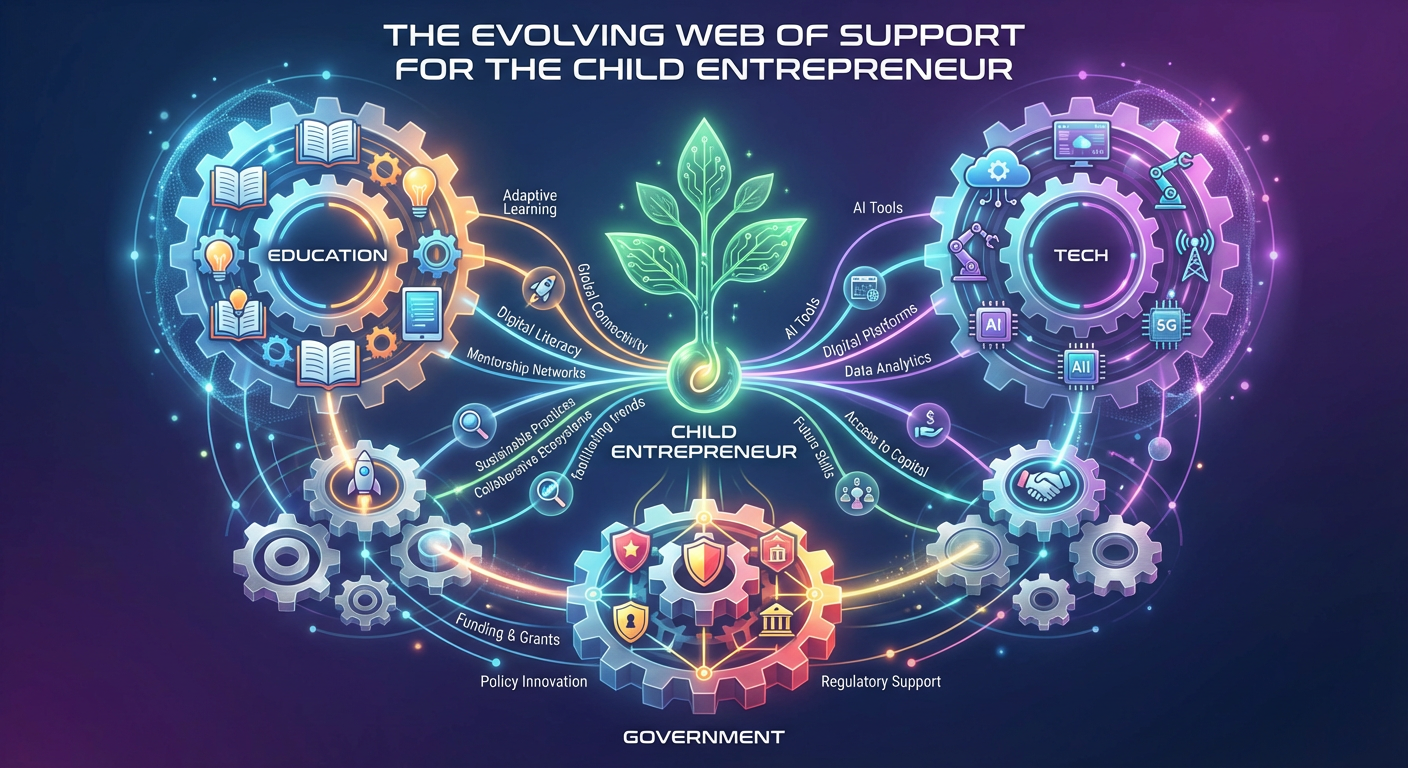
6. Evolving Support Systems and Facilitating Trends
The landscape of youth entrepreneurship, once largely an informal and unorganized pursuit, is rapidly transforming into a dynamic and increasingly structured ecosystem. This evolution is driven by a confluence of factors, including a demonstrable surge in entrepreneurial interest among young people, a growing recognition by governments and educational institutions of the benefits of early entrepreneurial exposure, and the transformative power of technology and social media. The inherent entrepreneurial spirit of the next generation, particularly Gen Z, is being met with a burgeoning network of support systems designed to nurture their ambitions and bridge the significant gap between aspiration and realization. This section delves into the multifaceted support structures emerging globally, from dedicated educational programs and governmental policies to the indispensable role of mentorship and the ubiquitous influence of digital platforms, all of which are collectively lowering barriers and empowering a new wave of young innovators.
The enthusiasm for entrepreneurship among youth is undeniable and sustained. Surveys indicate that roughly 60–66% of teens express interest in starting a business rather than pursuing a traditional job, a sentiment that has remained consistently high even through periods of economic uncertainty, such as the pandemic [1][2]. More than half of Gen Z (54% in the U.S., aged 12-27) aspire to be entrepreneurs, aspiring to launch their own companies [3]. Globally, approximately 40% of young people would prefer self-employment over being an employee, signaling a generational preference for autonomy and business ownership [4]. However, this high interest currently translates into a relatively small proportion of young people actually launching businesses. For instance, in the EU, only 5% of youth aged 18-30 were actively involved in starting a venture between 2018-2022, and merely 4% were operating new businesses [5]. In OECD countries, the startup rate for youth was only 9% [6]. This discrepancy between high ambition and low implementation underscores the critical need for robust support systems that can equip young individuals with the necessary resources, knowledge, and confidence to transform their ideas into viable enterprises. The evolution of these support systems is therefore not just beneficial but essential for unlocking the full entrepreneurial potential of the youth.
The Expansion of Youth Entrepreneurship Education
One of the most significant facilitating trends is the rapid expansion of dedicated entrepreneurship education for children and teenagers. This sector, often referred to as the “kidpreneur” education industry, is experiencing exponential growth, reflecting a global investment in fostering entrepreneurial learning from an early age. The market for business education aimed at children and teens is valued at $5.5 billion in 2024 and is projected to nearly triple to $18.2 billion by 2032, demonstrating a remarkable compound annual growth rate (CAGR) of 16.1% [10]. This surge encompasses a wide array of offerings, including startup camps, incubators, specialized educational products, and online platforms, all designed to make entrepreneurial concepts accessible and engaging for under-18s.
Governments, educational institutions, and non-profit organizations worldwide are increasingly integrating entrepreneurship into youth development strategies. In the European Union, virtually all countries now provide youth-focused entrepreneurship training, with 24 out of 27 EU countries offering dedicated training courses and 22 having specific mentoring or coaching schemes for young entrepreneurs [9][19]. This policy push over the last decade highlights a broad recognition of youth entrepreneurship as a vital economic driver. Moreover, about 70% of EU states actively run targeted campaigns to promote entrepreneurship to young people, further embedding this mindset into the cultural consciousness [20].
Non-profit organizations play a pivotal role in this educational expansion, reaching millions of young individuals with practical, hands-on programs. Junior Achievement (JA), for instance, reached approximately 10.8 million students globally in 2022 through its entrepreneurship and financial literacy programs [21]. Another prominent example is Lemonade Day, a program that has engaged over 1 million youth since 2007 in the practical experience of running lemonade stands. Participants in Lemonade Day average $168 in profit, with 79% saving a portion of their earnings and 20% even opening their own bank accounts [11][12]. These programs not only teach critical business skills but also instill financial literacy and social responsibility, as demonstrated by the 73% of participants who donate a portion of their profits to charitable causes [12]. The direct correlation between such experiential learning and positive outcomes in financial management and community engagement underscores the profound impact of these educational initiatives.
Government Initiatives and Policy Support
The growing recognition of youth entrepreneurship’s potential has spurred governments globally to implement supportive policies and initiatives designed to foster a more conducive environment for young founders. These interventions aim to alleviate common barriers, such as a lack of capital and regulatory hurdles, which often disproportionately affect youth-led ventures.
Many governments are integrating youth entrepreneurship into broader national and regional strategies. In the EU, most countries have woven youth entrepreneurship objectives into their national youth or skills strategies [22]. Specific schemes have also been launched; for example, Hungary’s national Youth Entrepreneurship Programme has supported over 6,500 young individuals with essential training and grants in recent years [23]. Such programs provide not only financial assistance but also foundational business knowledge, equipping young entrepreneurs with the tools they need to succeed.
Beyond direct support programs, there is a developing trend towards legislative adjustments that ease the path for young entrepreneurs. The emergence of “lemonade stand laws” across various U.S. states is a prime example. These laws aim to remove burdensome permit requirements and legal restrictions that have historically stifled children’s small-scale entrepreneurial activities. By streamlining regulatory processes for minor-run businesses, these policies send a clear signal of official encouragement and normalize casual entrepreneurship at an early age. This positive policy trend lowers practical barriers, allowing young individuals to learn through doing without facing disproportionate bureaucratic obstacles. Such governmental efforts are crucial in creating an ecosystem where entrepreneurial aspirations can more readily translate into action, further driving job creation and innovation (even if youth-owned businesses currently employ a relatively small number of others, approximately 350,000 across the EU in 2022 [13], this figure represents significant untapped potential).
The Critical Role of Mentorship and Role Models
While education can provide theoretical knowledge, the practical guidance and inspiration derived from mentorship are proving to be game-changers for young entrepreneurs. Mentorship acts as a crucial bridge over the “experience and know-how deficits” that aspiring young founders often face [18].
Surveys reveal that a significant proportion of teens recognize the value of guidance from experienced professionals. When asked what they would need to start a business, 34% cited the desire for a business-owner role model, and 51% stated a need for more information on how to succeed [8]. These figures clearly indicate that direct guidance and inspirational figures are high on the list of requirements for aspiring young entrepreneurs.
Organizations like Youth Business International (YBI) exemplify the impact of structured mentorship programs. In 2022, YBI’s global network supported over 123,000 young people in developing entrepreneurial skills, leading to nearly 15,000 young individuals successfully starting new businesses [24]. These statistics highlight the tangible outcomes when young talent is paired with experienced mentors who can offer practical advice, share insights, provide networking opportunities, and instill confidence.
Beyond formal programs, the rise of successful young founders who are celebrated in media functions as an equally powerful form of mentorship. High-profile “kidpreneurs” featured on television shows, news articles, and social media platforms—such as Mikaila Ulmer of Me & the Bees Lemonade [27][28], Moziah “Mo” Bridges of Mo’s Bows [30][31], and Alina Morse of Zolli Candy [32]—provide relatable peer role models. Their stories inspire others by demonstrating that age is not a barrier to achieving significant business success. These narratives make youth entrepreneurship feel more accessible and achievable, showing aspiring young individuals that their dreams are within reach, often with the right guidance and support. The influence of these success stories creates a positive feedback loop, encouraging more youth to explore entrepreneurial paths and seek out their own mentors.
The Impact of Technology and Social Media
The digital revolution has profoundly reshaped the landscape for youth entrepreneurship, dramatically lowering traditional barriers to entry and expanding global reach. Today’s tech-savvy kids, often referred to as digital natives, wield powerful tools that were unimaginable to previous generations of aspiring entrepreneurs. This technological accessibility is a key facilitating trend, enabling young individuals to launch and scale businesses with unprecedented ease and minimal upfront investment.
Online platforms have become the default launchpad for many young ventures. E-commerce websites, social media channels, and mobile applications allow young entrepreneurs to create businesses from the comfort of their homes. This democratizes entrepreneurship, moving beyond the physical limitations and overhead costs associated with traditional brick-and-mortar operations. A middle-schooler with a laptop and an idea can now establish a legitimate company, a phenomenon that has only recently become possible at scale.
Social media, in particular, offers direct and cost-effective avenues for marketing and sales. Young entrepreneurs leverage platforms like Instagram, TikTok, and YouTube to build brands, connect with target audiences, and drive sales globally. Teen influencers can monetize their content, turning personal brands into businesses that can generate millions in revenue [25]. This capability to engage directly with consumers without intermediaries reduces marketing budgets and accelerates growth. Moreover, the prevalence of online side gigs and businesses among Gen Z is a testament to this trend; by 2024, nearly half of Gen Z workers engaged in such activities alongside their school or jobs, reflecting a new norm of entrepreneurial activity [14].
Financial technology also plays a crucial role. Payment processors and student-friendly business platforms, some specifically tailored for minors with parental oversight, simplify transactions and financial management. This ease of doing business digitally alleviates one of the primary barriers cited by young entrepreneurs: lack of capital [8][17]. The ability to accept payments online, manage inventory, and track sales without requiring significant administrative overhead empowers young founders to focus on product development and customer engagement.
The cumulative effect of these technological advancements is a significantly more inclusive entrepreneurial ecosystem. It nurtures innovation by allowing ideas to be prototyped and tested rapidly, often with a global audience from the outset. This digital democratization not only fosters immediate business growth but also nurtures a generation of adaptable and digitally literate entrepreneurs who are well-prepared for the future of work.
The table below summarizes key data points related to the evolving support systems and facilitating trends:
| Category | Data Point | Source |
|---|---|---|
| Youth Interest | 60–66% of teens interested in starting a business over traditional jobs. | Junior Achievement USA, CNBC [1][2] |
| Gen Z Aspiration | 54% of U.S. Gen Z (ages 12-27) want to start their own company. | Fox Business (Square Report) [3] |
| Global Youth Preference | ~40% of youth globally prefer self-employment. | OECD [4] |
| EU Youth Startup Rate | 5% of youth (18-30) in EU actively starting a venture (2018-2022). | OECD [5] |
| Youth Entrepreneurship Education Market | Projected to grow from $5.5B (2024) to $18.2B (2032). | LinkedIn [10] |
| EU Training Programs | 24 of 27 EU countries offer youth entrepreneurship training. | OECD [9] |
| EU Mentoring Schemes | 22 of 27 EU countries have youth-specific mentoring/coaching schemes. | OECD [9] |
| Lemonade Day Impact | Kids average $168 profit; 79% save; 73% donate to charity. | Lemonade Day [11][12] |
| Mentorship Impact (YBI) | 123,000+ youth trained, nearly 15,000 new businesses started in 2022. | Youth Business International [24] |
| Gen Z Side Gigs | Nearly half of Gen Z workers have an online side gig or business. | Fortune [14] |
| Youth Job Creation (EU) | Youth-owned businesses supported ~350,000 jobs in EU (2022). | OECD [13] |
Cultural Normalization of Kid Entrepreneurs
Beyond structured programs and technological tools, a profound cultural shift is occurring, increasingly normalizing and celebrating youth entrepreneurship. What was once a niche activity or the domain of a few exceptional individuals is now becoming an accepted and even aspirational path for many young people. This cultural acceptance is critical in creating an environment where more kids feel empowered and supported to pursue their entrepreneurial dreams.
Signs of this normalization are widespread. Schools increasingly host “market days” where students can showcase and sell products they have created, turning entrepreneurial endeavors into an integrated part of the educational experience. Youth startup pitch competitions are proliferating at local, regional, and even global levels, providing platforms for young innovators to develop ideas, gain feedback, and secure seed funding. Media outlets, once focused primarily on adult business figures, now regularly feature stories of successful young CEOs, inventors, and brand builders. These high-profile “kidpreneurs” become cultural icons, demonstrating that innovative ideas and business acumen are not exclusive to adults.
Even toy companies are responding to this trend, selling “startup kits” for children, which further embeds entrepreneurial concepts into childhood play. This mainstreaming of entrepreneurship means that young people are exposed to the idea of starting a business at a much earlier age, perceiving it as a viable and respected career option, akin to traditional professions like sports or music that have long been celebrated among youth. As entrepreneurship gains visibility and prestige, it fosters a positive feedback loop, encouraging greater participation and challenging preconceived notions about who can be an entrepreneur. This cultural momentum is a powerful force, creating an ecosystem where youth-led ventures are not just tolerated but actively encouraged and celebrated, ultimately paving the way for a more dynamic and innovative future business landscape.
Conclusion to Evolving Support Systems and Facilitating Trends
The evolving support systems and facilitating trends discussed in this section paint a picture of a rapidly maturing ecosystem for youth entrepreneurship. From dedicated educational programs and progressive government policies to the critical role of mentorship and the transformative power of digital technologies, a comprehensive framework is emerging to nurture the entrepreneurial spirit of the next generation. The remarkable growth in the children’s business education market, the proliferation of youth-focused training and mentoring schemes across the EU, and the pervasive influence of social media all contribute to lowering barriers and enabling more young people to convert their aspirations into tangible ventures. While challenges remain, particularly in closing the gap between high interest and actual business creation, the increasing normalization of kid entrepreneurs and the celebration of their successes are fostering a culture where innovation and self-reliance are highly valued. These trends suggest a future where youth entrepreneurship is not an anomaly but a significant and increasingly powerful force in the global economy, shaping not just market dynamics but also the very nature of work and social impact.
The next section of this report will delve deeper into the specific skills and mindset benefits that early entrepreneurial exposure provides for kids, further underscoring the long-term value of these evolving support systems.
7. Inspiring Success Stories of Kid Entrepreneurs
The narrative surrounding entrepreneurship often conjures images of seasoned venture capitalists, established CEOs, or tech luminaries with decades of experience. However, a burgeoning wave of young innovators is reshaping this perception, proving that age is merely a number when it comes to groundbreaking ideas and business acumen. These “kidpreneurs” are not just dabbling in small-scale ventures; they are building significant companies, generating substantial revenue, and often, integrating powerful social missions into their business models. Their stories serve as powerful examples that childhood curiosity and an inherent desire to solve problems can, with the right support, scale into ventures with remarkable societal impact, blending the pursuit of profit with purpose. The widespread interest in entrepreneurship among today’s youth underscores this shift. Surveys reveal that a significant majority of teens, approximately 60–66% in the U.S., express interest in starting a business rather than pursuing a traditional job, a sentiment that has remained robust even through times of economic uncertainty and global pandemics [1][2]. This entrepreneurial inclination extends to Generation Z (ages 12–27), with 54% in the U.S. aspiring to start their own companies [3]. Globally, about 40% of young people prefer self-employment over being an employee, highlighting a generational push for autonomy and business ownership [4]. While the actual conversion rate from interest to active startup participation remains lower—just 5% of youth (18–30) in the EU were actively launching businesses between 2018–2022, and 4% were running new ones [5]—the sheer volume of aspiration signals a fertile ground for future innovation. The “missing entrepreneur” gap, representing the estimated 812,000 additional young entrepreneurs in the EU and 3.6 million in OECD countries if youth started businesses at the same rate as prime-age adults, highlights an immense untapped potential waiting to be unleashed through supportive ecosystems [6]. The success stories detailed in this section are not mere anomalies but rather emblematic of this generational shift. They illuminate how early exposure to business principles, coupled with passion and perseverance, can lead to ventures that not only thrive commercially but also address real-world challenges, inspire peers, and even influence established industries.
The Phenomenon of Early Entrepreneurship: From Idea to Impact
The journey from a nascent idea to a successful enterprise is challenging for any entrepreneur, but even more so for children navigating educational commitments, legal restrictions, and limited resources. Yet, the young entrepreneurs highlighted here have demonstrated extraordinary resilience and creativity. Their ventures span diverse sectors, from food and fashion to logistics, showcasing the universal applicability of entrepreneurial thinking. What unites these stories is often a keen observation of a gap in the market, a personal passion, or a desire to solve a problem that impacts their own lives or communities. One of the defining characteristics of modern youth entrepreneurship is the blending of profit with purpose. Over 80% of Gen Z business owners describe their ventures as mission-driven [10]. This generation, often called digital natives, leverages online platforms, social media, and mobile technology to build and scale businesses, often alongside their academic pursuits. By 2024, nearly half of Gen Z workers engaged in an online side gig or business, underscoring this new norm of entrepreneurial activity [11]. This digital fluency, combined with a strong sense of social responsibility, imbues their ventures with a unique blend of innovation and impact.
Case Studies: Young Founders Who Shaped Industries and Communities
The following examples illustrate the remarkable achievements of young founders who have transformed childhood ideas into significant ventures, often achieving scale and impact typically associated with much older, more experienced entrepreneurs.
Mikaila Ulmer: Me & the Bees Lemonade (USA)
The story of Mikaila Ulmer, founder of Me & the Bees Lemonade, is a powerful testament to how a personal experience and a social mission can converge to create a successful, purpose-driven business. Her journey began at the tender age of four, when she was stung by two bees in one week [9]. Initially fearful, her parents encouraged her to research bees, leading her to discover their vital role in the ecosystem and the existential threats they face. This newfound understanding sparked a passion in Mikaila to help save the bees. Around the same time, Mikaila received her great-grandmother’s 1940s flaxseed lemonade recipe, which became the foundation for her business. She started selling “BeeSweet Lemonade” (later renamed Me & the Bees Lemonade) at a youth business fair and local events, donating a portion of her earnings to organizations dedicated to saving honeybees. Her commitment to this social mission, combined with a unique product, quickly distinguished her venture. The pivotal moment arrived when Mikaila, at just nine years old, appeared on ABC’s _Shark Tank_. Although she initially sought a $60,000 investment for 10% equity, she ultimately secured a $60,000 investment from Daymond John, who also committed to mentoring her [8]. This exposure catapulted her business into the national spotlight. In 2015, her product secured a significant distribution deal with Whole Foods, marking a major milestone for the young CEO. By 2019, Mikaila’s Me & the Bees Lemonade was bottled and distributed in over 1,000 stores across 40 states [9]. The company also expanded its product line to include honey-infused lemonades and natural lip balms. Mikaila’s success is not solely measured by sales figures. Her business strategy intrinsically weaves profit with an impactful social cause. A significant portion of Me & the Bees Lemonade’s profits is consistently donated to bee conservation efforts, demonstrating how a youth-led business can be both commercially viable and deeply committed to environmental stewardship [9]. Mikaila has also become a sought-after motivational speaker, inspiring countless other children and adults to embrace entrepreneurial thinking and “bee-lieving” in their ideas. Her story highlights:
- The power of integrating a strong social mission directly into the business model.
- How a simple, relatable product (lemonade) can achieve national distribution with the right support and vision.
- The crucial role of mentorship and strategic partnerships in scaling a youth-led venture.
Moziah “Mo” Bridges: Mo’s Bows (USA)
Moziah “Mo” Bridges’ entrepreneurial journey began out of a personal style preference rather than a social cause, though his impact has extended far beyond fashion. At age nine, living in Memphis, Mo struggled to find bow ties that suited his vibrant personality and made him feel confident [14]. With the help of his grandmother, a retired seamstress, he began making his own distinctive bow ties from colorful fabric scraps. What started as a personal quest for “jazzy accessories” quickly evolved into Mo’s Bows, a handmade bow tie business. Mo’s unique designs and charming entrepreneurial spirit soon caught the attention of local media, eventually leading him to the national stage. At 12 years old, he appeared on _Shark Tank_ seeking an investment for his growing business [16]. While he didn’t secure a traditional investment deal from the sharks, one of the show’s most prominent investors, Daymond John, recognized Mo’s potential and offered to mentor him [16]. This mentorship proved invaluable, providing Mo with strategic guidance, industry connections, and business insights that accelerated his growth. Under Daymond John’s tutelage, Mo’s Bows steadily expanded its reach. By his early teens, Mo had achieved over $100,000 in sales, and his unique bow ties were being featured in prestigious retail outlets like Neiman Marcus [17]. The monumental breakthrough came in 2017 when, at 15, Mo signed a seven-figure licensing deal with the National Basketball Association (NBA) [18]. This partnership granted him the rights to produce bow ties featuring the logos of all NBA teams, connecting Mo’s Bows to the league’s vast merchandise market, estimated at $6 billion annually [19]. This deal significantly amplified his company’s profile and distribution network. By 2020, Mo’s net worth from his business was reportedly over $2 million [20]. He has diversified his product line to include neckties and other men’s accessories, all while navigating the demands of school. Mo’s story exemplifies:
- The power of identifying a personal need and creatively solving it.
- The transformative impact of mentorship and strategic partnerships, even without direct financial investment.
- How early exposure and media attention can be leveraged to build a powerful brand.
- That a child’s unique perspective and authentic voice can be a significant marketing asset.
Alina Morse: Zolli Candy (USA)
Alina Morse’s entrepreneurial journey fundamentally disrupted an unsuspecting industry: candy. At the age of seven, an innocent question sparked her multi-million-dollar idea. After being offered a sugary lollipop at a bank, Alina, who was beginning to understand the negative effects of sugar on dental health, asked her father, “Why can’t we make a healthy lollipop?” [21]. This seemingly simple question became the catalyst for Zolli Candy. Undeterred by her young age, Alina, with her father’s support, embarked on a mission to create a sugar-free candy that was actually good for teeth. This involved extensive research and collaboration with food scientists to develop a formula using xylitol and other tooth-friendly ingredients. By age nine in 2014, Alina launched her flagship product, Zollipops, which were sugar-free lollipops designed to help neutralize acid and strengthen tooth enamel. The process also involved navigating complex regulatory approvals from organizations like the FDA. Zollipops quickly resonated with health-conscious consumers and parents. By 2018, Alina’s company was generating over $6 million in sales, and she had expanded the brand to include a full line of Zolli-branded candies, such as taffy and gummies [22]. In 2019, by age 14, Zolli Candy had sold a staggering 60 million pieces of candy, with products available in over 25,000 stores, including major retailers like Walmart and Walgreens [23][24]. That same year, Alina made history as the youngest person ever to be featured on Inc. Magazine’s Inc. 5000 list of fastest-growing private companies, boasting an impressive three-year growth rate of 696% [25]. Beyond commercial success, Alina also embedded a strong philanthropic component into her business. Her “Million Smiles” program donates millions of Zollipops to schools and organizations to promote oral health, funded by setting aside 10% of her company’s profits for community giving [26]. Alina’s journey highlights:
- The potential for children to identify market gaps and innovate in established industries.
- The importance of parental support and professional collaboration (e.g., food scientists) in bringing complex products to market.
- The ability to balance significant business growth with a strong commitment to social good and community health.
- The discipline required to manage a thriving business while also excelling in school.
Tilak Mehta: Papers N Parcels (India)
Tilak Mehta’s story illustrates how a common everyday problem can inspire a sophisticated business solution, even for a 13-year-old in a bustling metropolis like Mumbai. In 2018, Tilak faced a predicament: he needed some papers delivered across the city quickly but found existing courier services inadequate for immediate, intra-city needs [27]. This personal frustration sparked the idea for Papers N Parcels (PNP), a hyperlocal courier service designed for rapid delivery. What makes Tilak’s venture particularly remarkable is the complexity of his business model and his ability to enlist adult expertise. He developed a plan for a mobile app-based platform to connect customers with a network of delivery personnel. Crucially, he recognized the value of leveraging Mumbai’s iconic dabbawalas – the city’s legendary lunchbox deliverymen – for last-mile logistics [27]. This strategic partnership allowed PNP to tap into an established and highly efficient delivery network, known for its precision and reliability. Tilak’s entrepreneurial drive led him to successfully pitch his idea to a family friend, a seasoned banker, whom he convinced to join PNP as its CEO [27]. This collaboration provided the young founder with the professional management and experience necessary to scale his ambitious vision. Within its first year, Papers N Parcels boasted a team of over 200 employees and integrated more than 300 dabbawalas into its service [28]. The startup completed tens of thousands of deliveries and set an aggressive goal to capture 20% of Mumbai’s intra-city delivery market by 2020, projecting revenues of ₹100 crore (approximately $14 million USD) [29][30]. While the current status of these ambitious targets is not fully detailed, Tilak’s venture garnered immense media attention as one of the world’s first tech-enabled courier services founded by a 13-year-old. He received several awards for youthful entrepreneurship, inspiring other young people in India to pursue startup dreams. Tilak Mehta’s case highlights:
- The ability of young entrepreneurs to identify complex logistical problems and devise innovative, tech-enabled solutions.
- The strategic foresight to leverage existing, informal networks (like the dabbawalas) for last-mile delivery efficiency.
- The critical importance of attracting experienced adult leadership and mentorship to complement youthful vision.
- The potential for youth entrepreneurship to create jobs and contribute significantly to the local economy, particularly in developing markets.
Key Characteristics of Successful Kid Entrepreneurs
These inspiring stories share several common threads that contribute to their remarkable success:
- Problem-Solving Mindset: Each entrepreneur identified a real problem or need—whether it was a preference for stylish bow ties, the difficulty of finding healthy candy, a desire to save bees, or a need for rapid urban delivery. Their businesses arose directly from their observations and desire to innovate.
- Passion and Purpose: Rather than solely focusing on profit, many young entrepreneurs, especially Gen Z, infuse their ventures with deep passion and a clear sense of purpose. This passion often acts as a powerful motivator through challenges and resonates strongly with customers. Over 80% of Gen Z entrepreneurs are mission-driven [10].
- Resourcefulness and Adaptability: Lacking traditional resources (capital, legal standing, business experience), these young founders demonstrate immense resourcefulness. They leverage family support, seek out mentors, utilize existing networks, and adapt their strategies to overcome obstacles.
- Mentorship and Support Systems: The journey of virtually every successful kidpreneur is aided by key adults—parents, teachers, and business mentors. Daymond John’s guidance for Mo Bridges [16] and Mikaila Ulmer [8], and Alina Morse’s father’s support [21], are recurring themes. Programs like Youth Business International (YBI) have helped nearly 15,000 young people start new businesses after training over 123,000 in entrepreneurial skills [12], underscoring the critical role of support networks.
- Digital Fluency: Modern kidpreneurs are digital natives. They use social media for marketing, e-commerce platforms for sales, and apps for business operations, often reaching global audiences with minimal overhead. This technological prowess lowers barriers to entry and enables rapid scaling.
- Early Exposure to Business Concepts: Many highly successful adult entrepreneurs report having engaged in small businesses as children [13]. Early experiences, such as running a lemonade stand (where kids average $168 profit and 73% donate to charity [14][15]), provide invaluable lessons in financial literacy, problem-solving, and customer interaction.
The Broader Impact of Kidpreneurship Success
The success of kid entrepreneurs extends beyond their individual ventures, creating a ripple effect across society:
- Inspiration and Role Models: These young success stories serve as powerful role models, demonstrating to peers and younger children that entrepreneurial dreams are achievable. This inspiration can significantly boost the overall youth interest in entrepreneurship, which already stands at 60-66% among teens [1][2].
- Economic Contribution: While individual youth-run businesses may start small, their cumulative economic impact can be substantial. In Europe, young self-employed individuals employed at least 350,000 other people in 2022 [7]. Fostering more youth startups can amplify this job creation, addressing youth unemployment and stimulating local economies.
- Driving Innovation: Young minds often approach problems with fresh perspectives, unburdened by conventional thinking. This leads to innovative solutions, new products, and service models that might be overlooked by more established entrepreneurs. Teen inventors and app developers are proving that age is not a prerequisite for innovation.
- Shaping Policy and Education: The growing prominence of kidpreneurs has influenced policymaking and educational curricula. Many governments now actively support youth entrepreneurship through training courses and mentoring schemes, with 24 of 27 EU countries offering such programs [9]. The booming market for children’s business education, projected to reach $18.2 billion by 2032 from $5.5 billion in 2024 [10], reflects this societal recognition.
- Redefining Work and Career Paths: These stories are contributing to a cultural normalization of entrepreneurship as a viable and desirable career path, even for the very young. This generational shift encourages more individuals to consider creating their own opportunities rather than solely seeking employment.
In conclusion, the compelling success stories of kid entrepreneurs demonstrate that the entrepreneurial spirit can ignite at any age, yielding ventures that are not only financially rewarding but also socially impactful. These young founders leverage their creativity, unique perspectives, and digital fluency to overcome traditional barriers, often with the support of mentors and enabling ecosystems. As the market for youth entrepreneurship education continues to grow and societal attitudes evolve, we can expect to see an increasing number of children and teenagers transforming their ideas into the significant businesses and impactful changes of tomorrow. The next section will further explore the evolving educational landscape and the role of specialized programs and initiatives in nurturing this entrepreneurial talent from an early age.
8. The Economic and Societal Impact of Youth-Led Businesses
The burgeoning phenomenon of youth entrepreneurship represents a dynamic and increasingly significant force in the global economy and societal development. Far from being mere childhood hobbies, businesses initiated and run by young people, often referred to as “kidpreneurs” or “youth-led ventures,” are demonstrating a tangible capacity for job creation, economic activity, and innovation. This section delves into the multifaceted impacts of these enterprises, exploring how young entrepreneurs are not only contributing directly to the financial landscape but also redefining traditional business models through a strong emphasis on social and environmental stewardship. The analysis will highlight the substantial economic footprint, the innovative spirit, and the purpose-driven ethos that characterize this generation of young business leaders. The interest in entrepreneurship among young people is remarkably high. Surveys reveal that between 60% and 66% of teenagers express a desire to start their own businesses rather than pursue conventional employment pathways [1][2]. This aspirational trend has shown consistent strength, even amidst economic uncertainties such as those presented by the pandemic, underscoring a deep-seated entrepreneurial mindset within the younger demographic [1]. More broadly, across the U.S., 54% of Gen Z individuals (ages 12–27) articulate a clear ambition to establish their own companies [3]. Globally, this preference for self-employment over traditional employment is echoed by approximately 40% of young people [4], signaling a generational shift towards prioritizing autonomy and business ownership. Despite this impressive level of interest, the actual rate of business creation among youth remains comparatively low. For instance, within the European Union, only about 5% of young people aged 18–30 were actively engaged in the process of starting a venture between 2018 and 2022, with just 4% operating newly established businesses [5]. In OECD countries, the startup rate for youth hovered around 9% [6]. This disparity between aspiration and realization points to significant barriers that hinder young individuals from translating their entrepreneurial ambitions into concrete business ventures [7]. Understanding these barriers is crucial for appreciating the potential economic and societal impact that could be unleashed with adequate support. Among the primary obstacles, a lack of capital stands out, cited by 40% of aspiring young entrepreneurs as a major impediment [8]. Additionally, many young individuals report a critical need for mentorship, comprehensive business information, and family support to successfully launch their enterprises [9]. These findings underscore the imperative for targeted interventions, including specialized funding mechanisms, entrepreneurship education, and mentorship programs, to empower young people to transform their innovative ideas into viable, impactful businesses. The sections below will elaborate on these impacts, detailing the economic contributions, the role in innovation, and the distinctive approach to social and environmental responsibility exemplified by youth-led ventures.
8.1. Economic Contributions: Job Creation and Market Activity
Youth-led businesses, while often commencing on a small scale, are increasingly recognized as significant contributors to economic vitality. Their impact extends beyond the immediate generation of revenue to encompass job creation, both directly and indirectly, and the stimulation of local and global market activity. This section explores these economic dimensions, highlighting the quantitative and qualitative aspects of their contributions.
8.1.1. Direct and Indirect Job Creation
The most tangible economic contribution of any business is its capacity to create employment, and youth-led ventures are no exception. Although the majority of young entrepreneurs initially operate as sole proprietors or with minimal teams, their collective impact on the labor market is substantial. In Europe, for instance, young self-employed individuals were responsible for employing at least 350,000 other people in 2022 [13]. This figure, though potentially underreported due to the informal nature of some youth ventures, suggests a significant capacity for future job creation, particularly if more young people are supported in initiating and scaling their businesses.
Consider the structure of job creation within youth entrepreneurship:
- Direct Employment: The young entrepreneur themselves, who might otherwise be seeking employment, becomes self-employed. As the business grows, they may hire peers, family members, or other individuals to assist with operations, production, or customer service.
- Indirect Employment: Even small youth-led businesses contribute to the broader ecosystem by purchasing supplies, utilizing services (e.g., web design, accounting, logistics), and generating demand for other economic activities. For example, a young person running an online t-shirt business might commission local artists for designs, procure blanks from a supplier, and use a local printing service, thereby indirectly supporting multiple jobs.
The “missing entrepreneurs” gap further underscores the unexploited potential for job creation. If young people in the EU were to start businesses at the same rate as prime-age adults (30–49), there could be an additional 812,000 young entrepreneurs in the EU and 3.6 million more in OECD countries [15]. Converting a fraction of this latent potential into active businesses would undoubtedly multiply the job-creating effect, offering a crucial strategy for addressing youth unemployment and fostering more dynamic labor markets.
8.1.2. Stimulation of Economic Activity
Beyond direct job creation, youth-led businesses inject energy and capital into various sectors of the economy. They participate in supply chains, generate sales, and contribute to the overall circulation of money. Many young entrepreneurs are digital natives, adept at leveraging e-commerce platforms, social media, and mobile technologies to reach broad customer bases from an early age [13]. This early adoption of modern business tools allows them to:
- Access Global Markets: Digital platforms enable young entrepreneurs to sell products and services beyond their immediate geographical location, tapping into national and international consumer bases. This expands the market for their offerings and brings new flows of capital into local economies.
- Drive Innovation in Micro-Markets: By identifying niche needs or gaps in the market that larger companies might overlook, young entrepreneurs create new mini-economies. For instance, Alina Morse’s Zolli Candy emerged from her desire for a healthy lollipop, creating a new segment within the confectionery market [25].
- Increase Consumer Choice and Competition: The entry of youth-led businesses, particularly those leveraging online channels, increases the diversity of products and services available to consumers, fostering healthy competition.
The economic impact can be quantified even at the micro-level. Programs like Lemonade Day report that participants, on average, earn $168 in profit from their stands [12]. While individual ventures may be small, the aggregate effect of thousands or millions of such activities contributes meaningfully to economic circulation and local economies. The booming market for business education for children, projected to triple from $5.5 billion in 2024 to $18.2 billion by 2032 [11], further demonstrates the growing economic ecosystem around youth entrepreneurship. This growth reflects not only increased investment in entrepreneurial learning but also a recognition of its potential to generate future economic value.
8.2. Innovation and Reimagining Business Models
Youth entrepreneurs are not merely replicating existing business models; they are often at the forefront of innovation, introducing novel products, services, and operational approaches. This section examines how young people contribute to innovation and how their unique perspective, often influenced by digital native tendencies and a strong sense of purpose, is reshaping contemporary business practices.
8.2.1. Driving Product and Service Innovation
Young entrepreneurs frequently identify unmet needs or overlooked opportunities, leading to the creation of innovative products and services. Their proximity to emerging trends and their openness to new technologies make them natural innovators.
Examples of youth-driven innovation include:
- Problem-Solving through Personal Experience: Many youth-led businesses originate from a personal problem or passion. Alina Morse’s Zolli Candy, for example, was born from her observation that there were no healthy lollipop options, leading her to develop a sugar-free alternative that was also beneficial for oral health [26]. Similarly, Tilak Mehta’s Papers N Parcels stemmed from his own frustration with slow parcel delivery in Mumbai, prompting him to create a new logistics solution [29].
- Tech-Savvy Solutions: As digital natives, young entrepreneurs are adept at leveraging technology to innovate. They are comfortable building e-commerce stores, developing apps, or using social media to connect with customers and streamline operations. This technological fluency allows them to bring fresh, digitally-driven solutions to market more rapidly than older generations might.
- Niche Market Development: Young entrepreneurs often excel at identifying and catering to specific niche markets. Moziah Bridges, at age nine, started Mo’s Bows because he couldn’t find “jazzy accessories” for kids [27]. His focus on distinctive, handmade bow ties filled a unique gap in children’s fashion.
These examples illustrate that innovation among youth is not limited to high-tech sectors but can extend to traditional industries where a fresh perspective can lead to disruptive ideas and new market opportunities.
8.2.2. Redefining Business Models with Digital Tools
The current generation of young entrepreneurs, especially Gen Z, are fundamentally redefining how businesses operate, primarily through their innate understanding and utilization of digital platforms. By 2024, nearly half of Gen Z workers were engaged in an online side gig or business, showcasing a new norm of entrepreneurial activity integrated with their studies or jobs [17].
Key aspects of this redefinition include:
- E-commerce and Social Media Integration: Young entrepreneurs utilize platforms like Instagram, TikTok, Etsy, and Shopify as primary channels for marketing, sales, and customer engagement. This allows them to bypass traditional retail barriers and achieve global reach with minimal overhead [13].
- Side Hustle Culture: The prevalence of online side gigs among Gen Z represents a shift towards modular and flexible business models. These ventures often run parallel to formal education or employment, demonstrating an agile approach to income generation and business development [17].
- Direct-to-Consumer (DTC) Approaches: Digital tools empower young founders to build direct relationships with their customers, fostering brand loyalty and enabling rapid feedback loops that inform product development and adaptation.
- Lean Operations: The ease of access to digital tools enables youth-led businesses to operate with very lean structures, often from home or co-working spaces, reducing the need for significant physical infrastructure and initial capital investment. This flexibility allows for greater experimentation and lower risk.
This generational shift towards technologically integrated, flexible, and often purpose-driven entrepreneurship is set to drive long-term trends in the global business landscape [13]. Their comfort with digital tools and platforms means they can create scalable businesses from an early age, influencing how commerce is conducted in the future.
8.3. Social and Environmental Conscience: Blending Profit with Purpose
A distinctive characteristic of contemporary youth entrepreneurship is the strong emphasis on purpose alongside profit. Today’s young entrepreneurs are not solely driven by financial gain; they often integrate social and environmental objectives into the core of their business models, reflecting a broader societal shift towards conscious consumerism and responsible business practices.
8.3.1. Mission-Driven Ventures and Social Impact
The research indicates that over 80% of Gen Z business owners classify their ventures as mission-driven [16]. This statistic highlights a fundamental difference in motivation compared to previous generations, where profit maximization was often the sole or primary driver. For young entrepreneurs, their businesses frequently serve as platforms for addressing issues they care deeply about.
Key aspects of this mission-driven approach include:
- Solving Community Problems: Many young entrepreneurs identify social or environmental problems within their communities and leverage their businesses to find solutions. The “Million Smiles” program by Alina Morse, which donates 10% of Zolli Candy’s profits to promote oral health in schools, is a prime example of a business directly addressing a public health concern [28].
- Advocacy and Awareness: Some youth-led businesses are founded explicitly to raise awareness or advocate for social causes. Mikaila Ulmer’s “Me & the Bees Lemonade” was directly inspired by her fear of bees and evolved into a mission to educate about pollinator conservation, with a portion of profits dedicated to saving bees [26]. Her business effectively transformed a personal fear into a powerful force for environmental good.
- Ethical Production and Sourcing: Young entrepreneurs are often more attuned to ethical considerations in their supply chains and production processes. They may prioritize fair trade, sustainable sourcing, or environmentally friendly manufacturing methods, appealing to a growing segment of conscious consumers.
This blend of commerce and conscience fosters a new generation of businesses that are inherently more resilient, as their “why” resonates deeply with both their founders and their target markets. It transforms entrepreneurial activity into a tool for positive change, extending its impact beyond mere economic metrics.
8.3.2. Community Engagement and Philanthropy
Beyond their core mission, youth-led businesses often engage in direct philanthropic activities and foster a sense of community responsibility. This is demonstrated empirically in programs promoting youth entrepreneurship.
- Charitable Giving: Data from programs like Lemonade Day show that 73% of young participants donate a portion of their profits to community causes [12]. This early exposure to philanthropy instills a lifelong habit of giving back.
- Local Impact: Even small local businesses can have a notable impact on their immediate communities. A young entrepreneur selling handmade goods at a local market might contribute to the vibrancy of that market, support local events through donations, or source materials from local artisans, reinforcing local economic ecosystems.
- Inspiring Others: The very act of a young person starting a business, especially one with a social mission, can inspire peers and adults alike. Success stories like Mikaila Ulmer, who became a sought-after speaker encouraging others to “bee-lieve” in their ideas, create a ripple effect, motivating more youth to pursue purpose-driven ventures [26].
The table below summarizes the contrasting motivations of youth (Gen Z) entrepreneurs against traditional entrepreneurial drivers:
| Aspect | Traditional Entrepreneurial Driver | Youth (Gen Z) Entrepreneurial Driver |
|---|---|---|
| Primary Goal | Profit Maximization, Wealth Accumulation | Problem-Solving, Purpose & Profit, Impact Creation |
| Business Model Focus | Efficiency, Market Share, Competitive Advantage | Sustainability, Social Responsibility, Community Value |
| Key Resource Leverage | Capital, Tangible Assets, Established Networks | Digital Fluency, Social Media, Personal Values, Creativity |
| Risk Perception | Calculated Financial Risks | Balanced against potential positive impact; lower personal financial risk due to ‘side hustle’ nature |
| Innovation Style | Disruptive, Market-Entry Dominance | Niche, Tech-enabled, Social/Environmental Solutions |
This intrinsic motivation towards social and environmental good positions youth-led businesses not just as economic engines, but as crucial agents of change, shaping a future where business success is increasingly measured by both financial returns and positive societal impact.
8.4. Bridging the Gap: Untapped Potential and Support Systems
Despite the evident potential and widespread interest in youth entrepreneurship, a significant gap persists between ambition and actual business creation. Addressing this gap requires a robust ecosystem of support, encompassing education, funding, mentorship, and policy initiatives.
8.4.1. The “Missing Entrepreneurs” Phenomenon
As highlighted earlier, there is a substantial number of young individuals with entrepreneurial aspirations who do not ultimately launch businesses. This “missing entrepreneurs” phenomenon represents a considerable loss of potential economic activity, innovation, and social impact. The primary reasons for this attrition include:
- Lack of Capital: A staggering 40% of young aspiring entrepreneurs in the EU cite insufficient financing as their main roadblock [8]. Limited access to loans, grants, or investment due to age, lack of credit history, or collateral actively stifles promising ventures.
- Knowledge and Mentorship Gaps: Over half of teenagers report needing more information on how to succeed in business and desire mentorship from experienced entrepreneurs [9]. Without guidance, many young founders struggle with basic business concepts and strategic planning.
- Fear of Failure: Psychological barriers, such as the fear of failure or the perception of entrepreneurship as “too risky,” deter nearly 30% of teens [20]. This is exacerbated in cultures that stigmatize business failure rather than viewing it as a learning opportunity.
- Legal and Regulatory Hurdles: Age restrictions on business registration, contract signing, and even selling products can create significant logistical challenges that necessitate adult involvement, adding complexity and potential delays.
Bridging this gap means converting more of the 54%+ of interested Gen Z individuals into active entrepreneurs, a move that could significantly boost job creation and innovation [18].
8.4.2. Expanding Support Systems and Policy Trends
Recognizing this untapped potential, governments, educational institutions, and non-profit organizations globally are intensifying their efforts to support youth entrepreneurship.
- Entrepreneurship Education Programs: There has been an explosion of structured programs designed to equip young people with business skills. Junior Achievement (JA) reached approximately 10.8 million students worldwide in 2022 with its programs [21]. Non-profits like Lemonade Day have engaged over 1 million youth in running small businesses since 2007 [22]. The market for business education for children and teens is booming, projected to reach $18.2 billion by 2032 [11], reflecting significant investment in early entrepreneurial skill development.
- Government Initiatives: Many EU countries now offer dedicated entrepreneurship training for youth (24 out of 27), and 22 have youth-specific mentoring schemes [10]. Initiatives like Hungary’s national Youth Entrepreneurship Programme have supported thousands of young people with training and grants [24]. Simplification of regulations, such as “lemonade stand laws” in various US states, also removes bureaucratic hurdles [24].
- Mentorship and Role Models: Mentorship is a game-changer. Organizations like Youth Business International (YBI) have helped nearly 15,000 young people launch businesses after training over 123,000 in entrepreneurial skills in 2022 [23]. Visible success stories of “kidpreneurs” in media serve as powerful inspiration and role models, making the entrepreneurial path seem more achievable.
- Technological Democratization: Digital tools (e-commerce platforms, social media, payment processors) have dramatically lowered the entry barrier for young entrepreneurs, allowing them to start and scale businesses from anywhere with minimal upfront costs [13]. This technological enablement has democratized entrepreneurship for minors to an unprecedented degree.
These converging support systems and policy trends are crucial for nurturing the entrepreneurial spirit in young people. By providing accessible education, targeted funding, robust mentorship, and a supportive regulatory environment, society can empower more young individuals to transition from aspiring entrepreneurs to active economic and social contributors. Investing in youth entrepreneurship today is an investment in a more innovative, dynamic, and socially conscious economy of tomorrow.
8.5. Notable Success Stories Exemplifying Impact
The tangible impact of youth-led businesses is best illustrated through the achievements of specific young entrepreneurs who have turned innovative ideas into successful ventures with significant economic and social ripples.
- Mikaila Ulmer (USA) – Me & the Bees Lemonade: Mikaila began her venture at age 4, driven by a desire to help save bees. Starting with her great-grandmother’s flaxseed lemonade recipe, she evolved her “BeeSweet Lemonade” (now Me & the Bees Lemonade) into a mission-driven business. Her appearance on *Shark Tank* at age 9 secured a $60,000 investment [26]. By 2019, her lemonade was sold in over 1,000 stores across 40 states [9]. Mikaila’s story demonstrates how a simple childhood idea, infused with a strong social mission, can scale into a national brand, making a direct impact on environmental conservation and inspiring thousands of other young people to “bee-lieve” in their ideas [26]. She exemplifies blending profit with purpose, showing that businesses can be powerful platforms for social change.
- Moziah “Mo” Bridges (USA) – Mo’s Bows: At age 9, Mo started sewing bow ties from his grandmother’s fabric scraps because he couldn’t find “jazzy accessories” for himself [27]. After pitching on *Shark Tank* at age 12, he garnered mentorship from Daymond John, which proved instrumental. By his early teens, Mo’s Bows had achieved over $100,000 in sales and his products were featured in Neiman Marcus [27]. A pivotal moment came at age 15, when he secured a seven-figure licensing deal with the NBA to produce team-branded bow ties [27], tapping into the league’s estimated $6 billion merchandise market [27]. Mo’s journey highlights the critical role of mentorship and media exposure in transforming a hobby into a formidable enterprise. It also shows how a young entrepreneur’s unique perspective can fill a market void and achieve significant commercial success.
- Alina Morse (USA) – Zolli Candy: Inspired at age 7 by the idea of a healthy lollipop, Alina launched Zollipops at age 9. Her company, Zolli Candy, created sugar-free lollipops and other candies beneficial for oral health [25]. By 2018, her company generated over $6 million in sales, and by age 14, she had sold 60 million pieces of candy, with products in over 25,000 stores including major retailers [25]. Alina became the youngest person ever to rank on the *Inc. 5000* list for fastest-growing private companies [25]. Her “Million Smiles” program donates 10% of profits to promote oral health education [28]. Alina’s success underscores that even established industries can be innovated by young minds, and that balancing a thriving business with a social mission is achievable with dedication and support.
- Tilak Mehta (India) – Papers N Parcels: At 13, Tilak founded Papers N Parcels (PNP) in Mumbai after experiencing the inefficiency of city logistics personally. He developed a hyperlocal courier service using a mobile app, innovatively partnering with Mumbai’s famed dabbawalas (lunchbox delivery men) for last-mile delivery [29]. Within its first year, PNP employed over 200 people and worked with 300+ dabbawalas. Tilak aimed to capture 20% of Mumbai’s intra-city delivery market and projected ₹100 crore (~$14 million) in revenue by 2020 [29]. His story demonstrates how young entrepreneurs in emerging markets can identify local problems and devise innovative, scalable solutions, even mobilizing experienced professionals and existing workforces to execute their vision. He exemplifies how youth can be significant job creators and innovators, bringing fresh approaches to complex operational challenges.
These examples illustrate that youth-led businesses are not hypothetical constructs but real, impactful entities. They create jobs, generate revenue, drive innovation, and often weave social and environmental purpose into their commercial fabric. Their success challenges traditional notions of who can be an entrepreneur and highlights the profound economic and societal contributions of empowering young individuals to pursue their business dreams. The significant economic and societal impact of youth-led businesses, from job creation to redefining business models with a conscience, underscores the importance of fostering entrepreneurial spirit in the younger generation. The next section will delve into the critical role of education and skill development in nurturing this potential, examining how formal and informal learning environments are preparing kids for the entrepreneurial landscape.
9. Frequently Asked Questions
The concept of youth entrepreneurship often sparks a myriad of questions, ranging from its practical feasibility for children to its long-term implications for their development. This section aims to address these common inquiries, drawing upon extensive research to provide comprehensive answers. Understanding the landscape of youth entrepreneurship requires delving into the aspirations of young individuals, the tangible skills they acquire, the crucial role of external support, and the enduring benefits that extend far beyond financial gain. Despite a strong and growing interest among young people in starting their own ventures, there remains a notable gap between ambition and actual business creation, largely due to a range of identifiable barriers. By exploring these facets, we can gain a clearer picture of what entrepreneurship for kids truly entails and its potential to shape the next generation of innovators and leaders.
Is Youth Entrepreneurship a Realistic Endeavor for Kids Today?
The question of feasibility is paramount when considering entrepreneurship for children. While the image of a child running a large corporation might seem far-fetched, the reality of youth entrepreneurship encompasses a wide spectrum of activities, many of which are highly realistic and beneficial. Modern entrepreneurship for youth is less about building multi-million dollar empires overnight and more about fostering critical skills, independent thinking, and a proactive mindset through hands-on experience.
Strong Interest Among Young People: Research consistently shows a robust and sustained interest in entrepreneurship among today’s youth. Surveys indicate that a significant majority of teens express a desire to start a business rather than pursue traditional employment. For instance, roughly 60–66% of teenagers are interested in becoming entrepreneurs, a figure that has remained consistent even through challenging periods like the recent pandemic[1][2]. In the U.S., 60% of teenagers surveyed in December 2021 stated they were more interested in starting a business someday than working a traditional job[2]. This ambition extends across generations, with more than half of Gen Z (54% of those aged 12–27 in the U.S.) aspiring to start their own companies[3]. Globally, approximately 40% of youth would prefer self-employment over being an employee, underscoring a worldwide shift towards autonomy and business ownership among the younger demographic[4]. This strong underlying interest forms a fertile ground for youth entrepreneurial activities.
Bridging the Ambition-Action Gap: Despite this overwhelming interest, the actual number of young people actively launching businesses remains relatively low. For example, in the EU, only 5% of youth (18–30) were in the process of starting a venture between 2018–2022, and merely 4% were already operating new businesses[5]. In OECD countries, the startup rate for youth was slightly higher at 9% for those involved in startups and 5% for those running new businesses[6]. This disparity highlights a significant “missing entrepreneurs” gap; if youth started businesses at the same rate as prime-age adults (30-49), there would be an estimated 812,000 additional young entrepreneurs in the EU and 3.6 million more in OECD countries[7]. The existence of this gap suggests that while the aspiration is high, practical barriers often prevent young people from transforming their ideas into reality.
Age-Appropriate Ventures: Youth entrepreneurship is not confined to developing complex tech startups, although some remarkable examples exist. More commonly, it involves age-appropriate ventures, such as lemonade stands (a classic entry point, as seen with Lemonade Day participants who averaged $168 profit)[12], handmade crafts sold online, tutoring services, lawn mowing, dog walking, or creating digital content. These smaller-scale businesses provide valuable real-world learning experiences without requiring the extensive capital or legal complexities of adult enterprises. The rise of e-commerce, social media, and mobile technology has significantly lowered the barriers to entry, enabling “kidpreneurs” to global markets from their homes[23].
Growing Support Ecosystem: Critically, the ecosystem supporting youth entrepreneurship is expanding rapidly. Governments, schools, and non-profit organizations worldwide are investing heavily in entrepreneurship education and support programs for kids. Virtually all EU countries now provide youth-focused entrepreneurship training, and 22 out of 27 have dedicated coaching and mentoring schemes[10]. The market for business education targeting children and teens is booming, valued at $5.5 billion in 2024 and projected to nearly triple to $18.2 billion by 2032[11]. This surge in structured programs and resources makes youth entrepreneurship increasingly realistic and accessible.
In essence, while the leap from aspiration to execution is challenging, the growing interest, the accessibility of micro-ventures, and an expanding support infrastructure affirm that youth entrepreneurship is a realistic and increasingly common path for children and teenagers today.
What Skills Do Kids Learn from Entrepreneurship?
Beyond the potential for financial gain, youth entrepreneurship is a powerful vehicle for developing a wide array of practical, cognitive, and socio-emotional skills that are crucial for success in all aspects of life. These skills are often not explicitly taught in traditional academic settings but are organically acquired through the hands-on process of ideation, creation, and commerce.
1. Financial Literacy and Money Management: Running a business, even a small one, forces children to grapple with fundamental financial concepts. They learn about costs (materials, marketing), revenue (sales), profit, and loss. Programs like Lemonade Day exemplify this, where participants averaged $168 in profit, and notably, 79% saved a portion of their earnings, with 20% even opening their own bank accounts[13]. This direct experience instills habits of saving, budgeting, and understanding value—lessons far more impactful than theoretical classroom instruction.
2. Problem-Solving and Critical Thinking: Every entrepreneurial venture is a series of challenges to be overcome. From identifying a market need to sourcing materials, setting prices, attracting customers, and handling unexpected issues (e.g., a competitor, bad weather, a faulty product), kids are constantly engaged in problem-solving. This fosters critical thinking as they analyze situations, brainstorm solutions, and evaluate outcomes. It teaches them to adapt and innovate in real-time.
3. Resilience and Grit: Entrepreneurship is rarely a smooth path. Kids will inevitably face rejections, setbacks, and failures—a product that doesn’t sell, a customer complaint, or an idea that falls flat. These experiences, while sometimes disheartening, build resilience. They learn to dust themselves off, analyze what went wrong, and try a different approach. This “fail forward” mentality is a core entrepreneurial trait and a vital life skill for navigating future challenges, both personal and professional.
4. Communication and Interpersonal Skills: Pitching an idea, interacting with customers, negotiating prices, or collaborating with peers requires effective communication. Young entrepreneurs develop confidence in expressing their ideas, listening to feedback, and persuading others. For example, even a simple lemonade stand requires polite interaction, clear explanations of the product, and handling transactions, all of which refine interpersonal skills.
5. Creativity and Innovation: At its heart, entrepreneurship is about creating something new or improving upon an existing idea. Kids are encouraged to think outside the box, whether it’s designing a unique product, finding a novel way to market it, or identifying an unmet need. Alina Morse, for instance, created Zolli Candy because she questioned “why can’t we make a healthy lollipop?” This creative impulse is central to entrepreneurial success[30].
6. Leadership and Teamwork: While some ventures are solitary, many involve collaboration. Young entrepreneurs learn to delegate tasks, motivate their “team” (siblings, friends), and manage responsibilities. This provides practical experience in leadership, accountability, and the dynamics of working within a group towards a common goal.
7. Time Management and Organization: Balancing school, hobbies, and a budding business demands strong organizational skills and effective time management. Kids learn to prioritize tasks, set deadlines, and manage their resources efficiently, which are invaluable skills for academic success and future careers.
8. Social Responsibility and Empathy: Many young entrepreneurs choose to integrate a social mission into their businesses. Mikaila Ulmer’s “Me & the Bees Lemonade” is a prime example, donating a portion of profits to bee conservation[26]. The Lemonade Day program also reported that 73% of participants donated part of their profits to community causes[13]. This teaches children the powerful concept of “purpose-driven” business and the importance of contributing positively to their communities, fostering empathy and social awareness.
These skill sets collectively empower children to become more adaptable, proactive, and capable individuals, regardless of whether they choose an entrepreneurial career path later in life.
What Role Should Parents Play in Youth Entrepreneurship?
Parental involvement is often a cornerstone of successful youth entrepreneurship, acting as a crucial support system. However, the nature and extent of this involvement require a delicate balance to foster independence rather than dependency.
Facilitators and Guides, Not Managers: The primary role of parents should be to facilitate, guide, and educate, rather than to micromanage or take over the business. This means providing resources, answering questions, offering advice, and connecting their children with mentors or educational programs. For example, Alina Morse’s father worked with food scientists and handled FDA approvals, allowing Alina to focus on the product vision[30]. This type of support is essential for navigating the complexities minors often face.
Emotional Support and Encouragement: The entrepreneurial journey can be fraught with challenges and setbacks. Parents play a vital role in offering emotional support, celebrating small victories, and encouraging perseverance through difficulties. This emotional safety net empowers children to take risks and learn from failures without fear of harsh judgment.
Providing Practical Resources (Within Reason): This might include helping with initial startup capital (e.g., funding a lemonade stand’s supplies), transport to suppliers or markets, or access to tools and technology. However, it’s important to encourage children to earn or raise a portion of their capital, instilling a sense of ownership and the value of money.
Navigating Legal and Administrative Hurdles: Minors face legal limitations regarding contracts, business registration, and financial accounts. Parents often need to step in to handle these administrative tasks or lend their name to formal agreements. Tilak Mehta, at 13, convinced a seasoned banker (a family friend) to become CEO of his logistics startup, Papers N Parcels, illustrating the need for adult expertise in scaling complex ventures[28].
Mentorship and Role Modeling: Parents who are entrepreneurs themselves can serve as invaluable role models. For those who aren’t, they can help connect their children with experienced business owners. Interestingly, 34% of teens surveyed indicated they would want a business-owner role model to help them start a business[9], and 47% specifically cited family support as a necessary factor[9]. This highlights the desire for guidance and personal connections.
Balancing Business with Other Responsibilities: Parents must ensure that entrepreneurial pursuits do not overshadow academic responsibilities, social development, or general well-being. Alina Morse, for instance, famously completed homework between business meetings, a balance that required careful management and parental oversight[30].
The table below summarizes key aspects of parental involvement:
| Type of Involvement | Description | Example from Research |
|---|---|---|
| Facilitation & Guidance | Offering advice, resources, and direction without taking over tasks. | Alina Morse’s father helping with FDA approvals for Zolli Candy[30]. |
| Emotional Support | Encouraging perseverance, celebrating successes, and helping process failures. | General need for parental support cited by 47% of teens[9]. |
| Practical Resources | Providing initial capital, transportation, or access to tools. | Funding for supplies for a lemonade stand venture. |
| Navigating Legalities | Handling formal business registrations, contracts, or financial accounts for minors. | Tilak Mehta bringing an adult CEO into Papers N Parcels at 13[28]. |
| Mentorship Connection | Helping children find and connect with experienced entrepreneurs. | Daymond John mentoring Mo Bridges after his Shark Tank appearance[27]. |
| Promoting Balance | Ensuring entrepreneurial activities don’t overtake school or other duties. | Alina Morse doing homework between business meetings[30]. |
Ideally, parents empower their children to lead their ventures while providing the necessary scaffolding to overcome age-related barriers and learn from the experience.
What are the Long-Term Benefits of Youth Entrepreneurship?
The benefits of youth entrepreneurship extend far beyond the immediate gains of a successful project or a few dollars earned. These early experiences often lay a foundation for significant long-term advantages, shaping children into more capable and civic-minded adults.
1. Enhanced Career Prospects and Employability: Whether a child becomes a lifelong entrepreneur or pursues a traditional career, the skills gained are highly valued in the modern workforce. Creativity, problem-solving, initiative, communication, and resilience are precisely the “soft skills” employers increasingly seek. Individuals with entrepreneurial backgrounds often become “intrapreneurs” within larger organizations, driving innovation and growth from within. Many successful adult entrepreneurs trace their roots to childhood ventures, indicating that early exposure can serve as a powerful training ground for future leaders and innovators.
2. Economic Impact and Job Creation: While individual youth-run businesses may start small, their cumulative effect can be substantial. In Europe, young self-employed individuals employed at least 350,000 other people in 2022[14], demonstrating their potential as job creators. Fostering more youth startups could significantly multiply this effect, helping to address youth unemployment and stimulate local economies. As young entrepreneurs scale their ventures, they contribute directly to economic growth and market dynamism, as seen with Mikaila Ulmer’s “Me & the Bees Lemonade” scaling to over 1,000 stores in 40 states[26], or Alina Morse’s Zolli Candy selling 60 million pieces and reaching $10 million in annual retail sales by 2019[25].
3. Development of a Purpose-Driven Mindset: Gen Z, in particular, is redefining entrepreneurship, blending profit with purpose. Over 80% of Gen Z business owners describe their ventures as mission-driven[15]. This focus on social and environmental impact from a young age creates a generation of leaders who view business as a tool for positive change. Mikaila Ulmer’s commitment to bee conservation and Alina Morse’s “Million Smiles” program (donating 10% of profits to oral health initiatives) are powerful examples of how early entrepreneurship can instill a strong sense of social responsibility and the desire to make a difference[26][30].
4. Increased Self-Efficacy and Confidence: The experience of turning an idea into a tangible product or service, seeing it succeed, and earning money through one’s own efforts is incredibly empowering. It builds a strong sense of self-efficacy—the belief in one’s ability to succeed in specific situations or accomplish a task. This confidence extends beyond business, impacting academic performance, social interactions, and overall mental well-being.
5. Cultural Shift Towards Innovation: As youth entrepreneurship becomes more normalized and celebrated, it fosters a culture of innovation within society. Young people grow up understanding that they can be creators and problem-solvers, not just consumers. This cultural shift is visible in the booming “kidpreneur” education market, projected to grow from $5.5 billion in 2024 to $18.2 billion by 2032[11], signifying a societal investment in cultivating this mindset. Such an environment encourages bolder thinking and a greater willingness to challenge the status quo.
6. Adaptability in a Changing World: The modern economy is characterized by rapid change and uncertainty. Entrepreneurial skills—such as adaptability, flexibility, and a willingness to learn continuously—are becoming indispensable. Early exposure to entrepreneurship equips children with the tools to navigate these dynamic environments, empowering them to create their own opportunities rather than solely relying on existing ones.
The journey of Moziah “Mo” Bridges, who started Mo’s Bows at age 9, secured mentorship from Daymond John, and eventually a seven-figure licensing deal with the NBA, underscores the long-term trajectory and influence early entrepreneurial experiences can have[27]. These stories, alongside the collective impact of thousands of smaller ventures, build a compelling case for the enduring value of fostering entrepreneurship in children.
Conclusion
In conclusion, the inquiry into what youth entrepreneurship entails reveals a multi-faceted and highly beneficial domain. It is a realistic, albeit challenging, endeavor for children, buoyed by their innate curiosity, a robust interest in self-employment, and a rapidly expanding support infrastructure. The skills acquired—from financial literacy and problem-solving to resilience, creativity, and leadership—are indispensable for success in the 21st century. Parents play a pivotal role as guides, facilitators, and emotional anchors, helping young entrepreneurs navigate the complexities of launching and running a business without stifling their independence. The long-term benefits are profound, extending to enhanced career prospects, significant economic contributions through job creation, and the cultivation of a generation driven by purpose and innovation. The rise of “kidpreneurs” marks not just a trend but a fundamental shift in how society views and nurtures the entrepreneurial spirit in its youngest members. This comprehensive understanding sets the stage for further exploration into the specific entrepreneurial opportunities and educational avenues available for children, which will be the focus of the next section.
References
- Survey: The “New Normal” Hasn’t Dampened Teens’ Interest in Becoming Entrepreneurs | Take Your Child to Work Day and Beyond
- 60% of teens want to launch businesses instead of working regular jobs
- 54% of Gen Zers want to become entrepreneurs, survey finds | Fox Business
- Youth self-employment and entrepreneurship activities: The Missing Entrepreneurs 2023 | OECD
- Youth self-employment and entrepreneurship activities: The Missing Entrepreneurs 2023 | OECD
- Youth self-employment and entrepreneurship activities: The Missing Entrepreneurs 2023 | OECD
- Youth self-employment and entrepreneurship activities: The Missing Entrepreneurs 2023 | OECD
- Survey: The “New Normal” Hasn’t Dampened Teens’ Interest in Becoming Entrepreneurs | Take Your Child to Work Day and Beyond
- Youth self-employment and entrepreneurship activities: The Missing Entrepreneurs 2023 | OECD
- Business Education for Children or Teens Market Share by Region 2026: Latin America | Asia-Pacific | Europe, the Middle East and Africa | North Americ
- Top 10 Lemonade Day Facts | Lemonade Day
- Top 10 Lemonade Day Facts | Lemonade Day
- Youth self-employment and entrepreneurship activities: The Missing Entrepreneurs 2023 | OECD
- Why Gen Z is Redefining Entrepreneurship – Intuit Blog
- Most Gen Z workers have side hustles and it could change how bosses manage them | Fortune
- Survey: The “New Normal” Hasn’t Dampened Teens’ Interest in Becoming Entrepreneurs | Take Your Child to Work Day and Beyond
- 60% of teens want to launch businesses instead of working regular jobs
- 54% of Gen Zers want to become entrepreneurs, survey finds | Fox Business
- FOCUS Fast Facts – Issue2-21
- Youth self-employment and entrepreneurship activities: The Missing Entrepreneurs 2023 | OECD
- Youth self-employment and entrepreneurship activities: The Missing Entrepreneurs 2023 | OECD
- Youth self-employment and entrepreneurship activities: The Missing Entrepreneurs 2023 | OECD
- Youth self-employment and entrepreneurship activities: The Missing Entrepreneurs 2023 | OECD
- Youth self-employment and entrepreneurship activities: The Missing Entrepreneurs 2023 | OECD
- Youth self-employment and entrepreneurship activities: The Missing Entrepreneurs 2023 | OECD
- Survey: The “New Normal” Hasn’t Dampened Teens’ Interest in Becoming Entrepreneurs | Take Your Child to Work Day and Beyond
- Youth self-employment and entrepreneurship activities: The Missing Entrepreneurs 2023 | OECD
- Youth self-employment and entrepreneurship activities: The Missing Entrepreneurs 2023 | OECD
- Business Education for Children or Teens Market Share by Region 2026: Latin America | Asia-Pacific | Europe, the Middle East and Africa | North Americ
- Top 10 Lemonade Day Facts | Lemonade Day
- Top 10 Lemonade Day Facts | Lemonade Day
- Youth self-employment and entrepreneurship activities: The Missing Entrepreneurs 2023 | OECD
- Youth self-employment and entrepreneurship activities: The Missing Entrepreneurs 2023 | OECD
- Youth self-employment and entrepreneurship activities: The Missing Entrepreneurs 2023 | OECD
- Survey: The “New Normal” Hasn’t Dampened Teens’ Interest in Becoming Entrepreneurs | Take Your Child to Work Day and Beyond
- Youth self-employment and entrepreneurship activities: The Missing Entrepreneurs 2023 | OECD
- 60% of teens want to launch businesses instead of working regular jobs
- Youth self-employment and entrepreneurship activities: The Missing Entrepreneurs 2023 | OECD
- Youth self-employment and entrepreneurship activities: The Missing Entrepreneurs 2023 | OECD
- Survey: The “New Normal” Hasn’t Dampened Teens’ Interest in Becoming Entrepreneurs | Take Your Child to Work Day and Beyond
- Survey: The “New Normal” Hasn’t Dampened Teens’ Interest in Becoming Entrepreneurs | Take Your Child to Work Day and Beyond
- Top 10 Lemonade Day Facts | Lemonade Day
- 60% of teens want to launch businesses instead of working regular jobs
- Impact Report 2022 – Youth Business International
- Top 10 Lemonade Day Facts | Lemonade Day
- Youth self-employment and entrepreneurship activities: The Missing Entrepreneurs 2023 | OECD
- Youth self-employment and entrepreneurship activities: The Missing Entrepreneurs 2023 | OECD
- YBI’s Network supported 123k people with entrepreneurship skills
- Forget babysitting, ‘ultra high earning’ teens are making 5+ figures influencing | Fortune
- Halloween Lift’s Teen’s Healthy Candy Company to 60 Million in Sales
- Halloween Lift’s Teen’s Healthy Candy Company to 60 Million in Sales
- Insights from a 13-year-old CEO who triumphed on ‘Shark Tank’
- Get Your Lemonade, Here! And Business Tips from Mikaila Ulmer – Wharton Global Youth Program
- Logistics firm founded by 13-year-old boy targets Rs 100 crore revenue | Logistics firm founded by 13-year-old boy targets Rs 100 crore revenue
- Logistics firm founded by 13-year-old boy targets Rs 100 crore revenue | Logistics firm founded by 13-year-old boy targets Rs 100 crore revenue
- Memphis Teen Behind Mo’s Bows Inks Seven-Figure NBA Deal
- Memphis Teen Behind Mo’s Bows Inks Seven-Figure NBA Deal
- Mo’s Bows Shark Tank Update – Shark Tank Season 5
- Insights from a 13-year-old CEO who triumphed on ‘Shark Tank’
- Get Your Lemonade, Here! And Business Tips from Mikaila Ulmer – Wharton Global Youth Program
- Get Your Lemonade, Here! And Business Tips from Mikaila Ulmer – Wharton Global Youth Program
- Get Your Lemonade, Here! And Business Tips from Mikaila Ulmer – Wharton Global Youth Program
- Mo’s Bows Shark Tank Update – Shark Tank Season 5
- Mo’s Bows Shark Tank Update – Shark Tank Season 5
- Mo’s Bows Shark Tank Update – Shark Tank Season 5
- Memphis Teen Behind Mo’s Bows Inks Seven-Figure NBA Deal
- Memphis Teen Behind Mo’s Bows Inks Seven-Figure NBA Deal
- Mo’s Bows Shark Tank Update – Shark Tank Season 5
- Mo’s Bows Shark Tank Update – Shark Tank Season 5
- Memphis Teen Behind Mo’s Bows Inks Seven-Figure NBA Deal
- At Just 13 Years Old, She Earned $6 Million with a Sugar-Free Lollipop – Zollicandy
- Halloween Lift’s Teen’s Healthy Candy Company to 60 Million in Sales
- Halloween Lift’s Teen’s Healthy Candy Company to 60 Million in Sales
- Halloween Lift’s Teen’s Healthy Candy Company to 60 Million in Sales
- Halloween Lift’s Teen’s Healthy Candy Company to 60 Million in Sales
- Halloween Lift’s Teen’s Healthy Candy Company to 60 Million in Sales
- Halloween Lift’s Teen’s Healthy Candy Company to 60 Million in Sales
- Logistics firm founded by 13-year-old boy targets Rs 100 crore revenue | Logistics firm founded by 13-year-old boy targets Rs 100 crore revenue
- Logistics firm founded by 13-year-old boy targets Rs 100 crore revenue | Logistics firm founded by 13-year-old boy targets Rs 100 crore revenue
- Logistics firm founded by 13-year-old boy targets Rs 100 crore revenue | Logistics firm founded by 13-year-old boy targets Rs 100 crore revenue
- Logistics firm founded by 13-year-old boy targets Rs 100 crore revenue | Logistics firm founded by 13-year-old boy targets Rs 100 crore revenue
- Logistics firm founded by 13-year-old boy targets Rs 100 crore revenue | Logistics firm founded by 13-year-old boy targets Rs 100 crore revenue
- Survey: The “New Normal” Hasn’t Dampened Teens’ Interest in Becoming Entrepreneurs | Take Your Child to Work Day and Beyond
- Survey: The “New Normal” Hasn’t Dampened Teens’ Interest in Becoming Entrepreneurs | Take Your Child to Work Day and Beyond
- 60% of teens want to launch businesses instead of working regular jobs
- 60% of teens want to launch businesses instead of working regular jobs
- 54% of Gen Zers want to become entrepreneurs, survey finds | Fox Business
- 54% of Gen Zers want to become entrepreneurs, survey finds | Fox Business
- Youth self-employment and entrepreneurship activities: The Missing Entrepreneurs 2023 | OECD
- Youth self-employment and entrepreneurship activities: The Missing Entrepreneurs 2023 | OECD
- YBI’s Network supported 123k people with entrepreneurship skills
- Top 10 Lemonade Day Facts | Lemonade Day
- Top 10 Lemonade Day Facts | Lemonade Day
- Memphis Teen Behind Mo’s Bows Inks Seven-Figure NBA Deal
- Memphis Teen Behind Mo’s Bows Inks Seven-Figure NBA Deal
- Halloween Lift’s Teen’s Healthy Candy Company to 60 Million in Sales
- Halloween Lift’s Teen’s Healthy Candy Company to 60 Million in Sales
- Get Your Lemonade, Here! And Business Tips from Mikaila Ulmer – Wharton Global Youth Program
- Get Your Lemonade, Here! And Business Tips from Mikaila Ulmer – Wharton Global Youth Program
- Why Gen Z is Redefining Entrepreneurship – Intuit Blog
- Most Gen Z workers have side hustles and it could change how bosses manage them | Fortune
- FOCUS Fast Facts – Issue2-21