The Role of Financial Literacy and Early Investment in Scaling Youth-Led Ventures
The global economic landscape is undergoing a profound transformation, driven in part by a burgeoning entrepreneurial spirit among young people. This shift presents both immense opportunities and significant challenges for the next generation of business leaders. This comprehensive research report delves into the critical factors influencing the success and scaling of youth-led ventures, with a particular focus on the intertwined roles of financial literacy and early investment. We examine the current surge in youth entrepreneurship, underscore the pervasive financial literacy gap, highlight the critical hurdles related to early-stage funding, and propose holistic solutions encompassing education, mentorship, and access to capital to nurture this vital economic engine.
Our findings reveal a landscape characterized by unprecedented enthusiasm among young individuals to forge their own paths, fueled by a desire for autonomy and innovation. However, this ambition is frequently met with a significant deficit in foundational financial knowledge and systemic barriers to accessing crucial startup capital. These twin challenges often predicate the early stagnation or failure of promising youth-led enterprises. This report distills the most impactful data points and insights, presenting a clear picture of the current state, the underlying problems, and the strategic interventions required to effectively transition youth-led ventures from compelling concepts to sustainable, cash-flow-positive entities capable of driving economic growth and job creation.
Key Takeaways
- Nearly three-quarters of Gen Z aspire to entrepreneurship, fueled by both ambition and necessity.
- A vast financial literacy gap persists: only 7% of 18–25-year-olds are financially literate.
- Financially savvy founders are 22% more likely to secure funding, highlighting investor preference.
- 38% of startup failures are due to running out of cash or failing to secure new capital.
- Many young entrepreneurs bootstrap using personal savings, limiting growth and increasing risk.
- 82% of small businesses fail due to cash flow problems, stressing the importance of financial acumen.
- Education and mentorship are crucial interventions, with 67% of young entrepreneurs citing insufficient financial knowledge.
1. Executive Summary
The global economic landscape is undergoing a profound transformation, driven in part by a burgeoning entrepreneurial spirit among young people. This shift presents both immense opportunities and significant challenges for the next generation of business leaders. This Executive Summary provides a high-level overview of the key findings from our comprehensive research into the factors influencing the success and scaling of youth-led ventures, with a particular focus on the intertwined roles of financial literacy and early investment. We delve into the current surge in youth entrepreneurship, underscore the pervasive financial literacy gap, highlight the critical hurdles related to early-stage funding, and propose holistic solutions encompassing education, mentorship, and access to capital to nurture this vital economic engine.
Our findings reveal a landscape characterized by unprecedented enthusiasm among young individuals to forge their own paths, fueled by both a desire for autonomy and innovation, and in many regions, the stark reality of high youth unemployment. However, this ambition is frequently met with a significant deficit in foundational financial knowledge and systemic barriers to accessing crucial startup capital. These twin challenges often predicate the early stagnation or failure of promising youth-led enterprises. This section distills the most impactful data points and insights, presenting a clear picture of the current state, the underlying problems, and the strategic interventions required to effectively transition youth-led ventures from compelling concepts to sustainable, cash-flow-positive entities capable of driving economic growth and job creation.
Youth Entrepreneurial Drive: A Global Phenomenon Fueled by Ambition and Necessity
The contemporary youth demographic, specifically Generation Z (16–24-year-olds), demonstrates an extraordinary inclination towards entrepreneurship, marking a significant departure from previous generations. Research indicates that nearly three-quarters, or 73%, of Gen Z express a desire to start their own businesses[9]. This figure reflects a dramatic surge in entrepreneurial aspiration, manifesting as a global boom in youth-led ventures. This trend is not monolithic; its drivers are multifaceted, stemming from both intrinsic ambition and extrinsic necessity.
Drivers of Youth Entrepreneurship
- Ambition and Innovation: In developed economies, young entrepreneurs are often motivated by the pursuit of financial independence, the desire for flexible working arrangements, and the technological opportunities that lower traditional barriers to entry. They leverage digital platforms, social media, and e-commerce to launch ventures with minimal upfront costs, such as mobile applications, online stores, or content creation channels[9]. This digital fluency enables them to translate innovative ideas into commercial realities, often from their own homes.
- Necessity in High Unemployment Regions: Conversely, in many emerging economies, entrepreneurship emerges as a critical pathway to economic engagement rather than merely a choice. Global youth unemployment, while having reached a 15-year low at 13% in 2023[3], still significantly exceeds adult unemployment rates. In certain countries, this disparity is even more pronounced; for example, South Africa reported a staggering 44.3% youth unemployment rate for individuals aged 15–34 in 2023[2]. Such high rates compel many young people to become “forced entrepreneurs,” creating their own income streams out of a need for survival. These necessity-driven ventures, though often starting with minimal resources, are vital for local livelihoods and contribute to job creation within their communities.
- Technological Empowering Lower Barriers to Entry: The digital age has significantly reduced the capital and infrastructural prerequisites for starting a business. Young individuals, being digital natives, are adept at utilizing online tools and platforms. This technological accessibility fosters an environment where an innovative idea can be launched globally with comparatively little overhead, contributing to the upward trend of youth entrepreneurship even amidst economic uncertainty.
Challenges Amidst Optimism
Despite this significant momentum, young founders encounter substantial hurdles that temper the optimistic outlook. A primary concern is the prevalent lack of experience and a corresponding fear of failure. Approximately 75% of Gen Z individuals aspiring to entrepreneurship voice concerns that their inexperience could jeopardize their ventures[1]. Many also admit to lacking the fundamental knowledge required to navigate regulatory landscapes, construct viable business plans, or effectively manage cash flow[1]. Furthermore, limited professional networks and a perceived lack of credibility can make it challenging for young CEOs to attract customers or investors. This implies that while the youth startup boom is robust, it is accompanied by a significant learning curve that necessitates robust support systems to ensure its sustainability beyond the initial spark of an idea.
The Critical Financial Literacy Gap: A Barrier to Scaling
A central finding of this research is the vast and pervasive financial literacy gap among youth, which poses a significant impediment to the sustained growth and scaling of their entrepreneurial ventures. While youth entrepreneurial ambition is surging, the foundational financial knowledge required to translate that ambition into a stable business is often lacking.
Prevalence of Financial Illiteracy Among Youth
Global statistics paint a stark picture: only about one-third (33%) of adults worldwide are considered financially literate[5]. Worryingly, this rate plummets dramatically among young adults. Expert research by Professor Annamaria Lusardi indicates that a mere 7% of individuals aged 18–25 globally possess “sufficient” financial literacy[10]. This exceedingly low proficiency rate means that the vast majority of young entrepreneurs embark on their business journeys with minimal understanding of core financial principles, often relying on trial-and-error, which can be a costly educational approach for a nascent business.
The downstream effects of this literacy gap are profound. A 2025 survey revealed that over two-thirds (67%) of Gen Z aspiring entrepreneurs expressly state they lack adequate financial knowledge to effectively run a business[1]. This self-identified deficit underscores a critical vulnerability, as these young individuals are precisely the demographic actively engaging in or considering launching startups.
Consequences of Poor Financial Management
The lack of financial acumen directly correlates with business failure rates. Data consistently shows that poor financial management is a primary driver of startup demise:
- Cash Flow Problems: An estimated 82% of small businesses fail due to cash flow problems[7]. This statistic highlights that businesses often collapse not because they are unprofitable in principle, but because they are unable to manage their liquidity effectively.
- Running Out of Capital: A study analyzing over 110 startup post-mortems identified “running out of cash/failing to raise new capital” as the leading cause of startup failure, cited by 38% of companies. This reason surpassed even “no market need” (35%)[6], emphasizing that even a viable idea cannot survive without proper financial stewardship.
Common financial missteps among young entrepreneurs include overestimating early revenues, underestimating operational expenses, failing to differentiate between personal and business finances, and neglecting robust record-keeping. The lack of basic budgeting skills means initial profits might be mismanaged rather than reinvested strategically for growth, leading to volatile “feast-and-famine” cycles.
Investor Confidence and Financial Savvy
Financial literacy is not just about survival; it’s also a significant factor in attracting funding. Investors and lenders exhibit a clear preference for founders who demonstrate financial competence. A 2023 study found that businesses with strong financial literacy practices were 22% more likely to secure funding from banks or investors[2]. This is because founders capable of presenting solid financial plans, credible projections, and a clear understanding of their unit economics instill confidence in potential backers. Conversely, “weak financials” or sloppy business plans are frequently cited as red flags that deter investment, regardless of the innovation inherent in the business concept. Financial literacy, therefore, translates directly into fundraising readiness and a stronger position for securing the capital needed for scaling.
The Critical Hurdle of Early Investment and the Youth Funding Gap
For any startup, the journey from concept to cash flow is heavily dependent on a judicious injection of capital at the right time. For youth-led ventures, securing this early investment represents a particularly significant and frequently insurmountable hurdle, often exacerbated by the financial literacy gap.
The Significance of Early-Stage Capital
Early investment is the lifeblood that allows a fledgling idea to transform into a functional business. It funds crucial activities such as product development, team hiring, market validation, and initial marketing campaigns, sustaining operations until sufficient revenue is generated. Research indicates that access to finance in the early startup stages “results in better entrepreneurial outcomes” for young founders, leading to improved survival rates and faster growth[4]. This initial capital provides a critical “runway,” allowing entrepreneurs the time to iterate their business model and achieve product-market fit without succumbing to immediate cash pressures.
The Persistent Funding Gap for Young Entrepreneurs
Despite the evident need, young founders face systemic challenges in accessing capital compared to their older counterparts:
- Traditional Lender Hesitancy: Banks and conventional financial institutions are often reluctant to provide loans to young entrepreneurs due to limited credit history, insufficient collateral, and perceived inexperience. In Europe, only about 33% of young entrepreneurs successfully obtained bank financing, a rate roughly half that of older business owners[4]. This “credit gap” means that many viable youth ventures are severely undercapitalized, struggling to scale or even survive.
- Investor Risk Perception: Venture Capital firms may also view very young CEOs as higher risk, particularly in the absence of robust business plans and demonstrated financial acumen. This makes the initial capital raise particularly challenging for those who are simultaneously learning the ropes of financial management.
- Self-Identified Barrier: The lack of capital is not merely an external observation but a keenly felt reality for young entrepreneurs themselves. Nearly one-third (31%) of Gen Z entrepreneurs cite insufficient financial resources as their biggest deterrent to starting or growing their business[1]. This makes it the most commonly self-reported barrier, even over market competition.
The Necessity of Bootstrapping and Its Limitations
Faced with these barriers, many young entrepreneurs are forced to bootstrap their ventures using personal funds. Approximately 19% of Gen Z entrepreneurs have resorted to personal savings or taking on personal debt to sustain their businesses[1]. While bootstrapping can foster financial discipline, lean operations, and a strong sense of ownership, it also presents significant drawbacks:
- Limited Growth Potential: Relying solely on personal funds severely restricts a venture’s capacity for rapid growth, as capital availability dictates the pace of expansion, marketing, and talent acquisition.
- Increased Personal Risk: Blurring the lines between personal and business finances, a common outcome of bootstrapping, exposes founders to greater personal financial risk if the business struggles. Mismanagement or unforeseen setbacks can have devastating consequences for both the business and the entrepreneur’s personal financial well-being.
Emerging Solutions and Investor Readiness
To address this critical funding gap, an evolving ecosystem of alternative financing and support mechanisms is emerging. Youth-focused incubators, startup competitions providing seed funding, and crowdfunding platforms specifically target young innovators. These platforms often combine modest investment with invaluable mentorship. For example, Youth Business International (YBI) supported 18,014 young people in starting new businesses in 2021, and strengthened over 38,000 existing youth-led businesses through training and mentoring programs[11]. These initiatives collectively demonstrate that targeted programs can effectively bridge the funding chasm, enabling thousands of young entrepreneurs to move from mere ideas to operational businesses.
Furthermore, building “investor readiness” is paramount. Young entrepreneurs who invest time in comprehensive market research, developing a Minimum Viable Product (MVP), and preparing robust financial projections significantly increase their attractiveness to investors. Financial pitch training and business plan competitions are vital in helping young founders translate their raw ideas into structured business cases capable of securing that crucial first capital injection. When successful, this early influx of funds, often coupled with mentorship, can dramatically accelerate a venture’s trajectory.
Bridging the Skills Gap: Education, Mentorship, and Ecosystem Support
The challenges faced by youth-led ventures, particularly those related to financial literacy and access to capital, highlight the urgent need for comprehensive interventions. Education, targeted training, and robust mentorship pipelines are proving to be the most effective strategies for empowering young entrepreneurs to navigate complex business landscapes and achieve sustainable growth.
Embedding Financial Literacy in Educational Systems
A fundamental solution involves integrating personal and business financial education into formal academic curricula at earlier stages. Calls for schools and universities to include modules on budgeting, investing, and the foundational aspects of entrepreneurship are gaining traction. The rationale is clear: equipping young individuals with financial literacy before they enter the workforce or launch a business significantly enhances their preparedness. Alumni of youth entrepreneurship programs, such as Junior Achievement or BizWorld (which notably impacted Bella Lin of GuineaLoft[12]), often exhibit superior budgeting and business planning skills, which directly translate into more successful ventures later in life.
Impactful Training and Startup Programs
Numerous global initiatives are designed to provide young entrepreneurs with the necessary skills and resources. The Youth Business International (YBI) network, for instance, supported over 10,000 young entrepreneurs across seven countries through integrated programs offering training, mentoring, and financial services[11]. In 2021 alone, YBI’s efforts led to the creation of over 18,000 new youth-led businesses and the strengthening of approximately 38,000 existing ones[11]. Similar bootcamps and workshops focused on cash-flow management, marketing, and loan readiness are offered by financial institutions and fintech companies. These programs are instrumental in demystifying business finance and building confidence and competence among young founders.
The Indispensable Role of Mentorship
Mentorship is consistently cited as a transformative factor for young entrepreneurs. A staggering 68% of youth entrepreneurs express a strong desire for guidance from experienced business or finance experts[1]. Mentors, who can range from seasoned executives to local business owners, offer invaluable practical advice on complex challenges such as pricing strategies, negotiation tactics, and operational efficiencies that theory alone cannot provide. Beyond practical guidance, mentors offer networking opportunities and crucial emotional support through the often tumultuous journey of startup life. For young founders lacking established professional networks, mentorship provides a vital bridge to the broader business community.
Targeting Underrepresented Youth for Inclusive Growth
Recognizing that certain youth demographics face even greater barriers, initiatives are increasingly tailoring support programs for underrepresented groups, including young women, minorities, and individuals from low-income backgrounds. These programs often combine financial literacy training with confidence-building and pitching skills to address inherent biases. Microfinance initiatives in emerging markets, exemplified by the Tony Elumelu Foundation’s support for Eliab Mayengo of Orca-Pod Holdings[15], provide small loans alongside coaching, demonstrating that inclusive support amplifies economic impact by fostering job creation and innovation in underserved markets. The core principle is that talent is universal, but opportunity is not, and targeted interventions can effectively close this gap.
Cultivating an Enabling Entrepreneurial Ecosystem
Ultimately, the successful scaling of youth-led ventures requires a multi-stakeholder ecosystem approach. Policymakers can contribute by simplifying business registration processes, offering startup grants, and providing tax incentives. Educational institutions can partner with industry to establish innovation labs and seed funds. Even large corporations are engaging through mentorship programs. The most effective ecosystems integrate knowledge acquisition (business and financial skills), practical experience (internships, mini-company projects), and access to vital resources (funding, networks). As these interconnected elements mature, the pathway from a young person’s entrepreneurial idea to a thriving, cash-flow-generating enterprise becomes significantly smoother, yielding benefits for both individual entrepreneurs and the broader economy.
Mastering Cash Flow: The Linchpin for Young Ventures’ Stability and Scale
For any startup, but particularly for nascent youth-led ventures, the ability to effectively manage cash flow is not merely a best practice; it is the fundamental determinant of survival and the primary prerequisite for scaling. The adage “cash flow is king” resonates profoundly within the context of young businesses, which often begin undercapitalized and operate with lean margins.
The Primacy of Cash Flow for Startups
Achieving and maintaining positive cash flow—where money entering the business consistently exceeds money leaving it—is the ultimate goal for moving from a concept to a sustainable operation. Many young founders, driven by innovative ideas, tend to prioritize product development or sales growth, often overlooking the intricate dance of cash inflows and outflows. However, even a growing business can quickly face insolvency if its cash reserves are depleted due to mismatches in payment timing. For example, a promising e-commerce venture might generate significant sales but stumble if it must pay suppliers for inventory before receiving payments from customers. Equipping young entrepreneurs with the skills to forecast cash flow, monitor their “burn rate” (monthly operating expenses), and maintain adequate cash reserves is crucial for preventing such common pitfalls and ensuring long-term viability.
Common Cash Management Pitfalls for Youth-Led Businesses
Youth-led startups frequently fall prey to several identifiable cash management errors due to inexperience or a lack of formal financial training:
- Overestimation of Revenue and Underestimation of Expenses: New entrepreneurs often project optimistic revenue figures and overlook various indirect or unexpected costs, leading to cash shortages when sales ramp up slower than anticipated or unforeseen expenses arise.
- Commingling Personal and Business Funds: A widespread issue, particularly among bootstrapped ventures, is the failure to maintain a strict separation between personal and business finances. This can lead to business funds being siphoned off for personal needs, or personal savings being improperly used to prop up a struggling business, creating instability and blurring financial accountability. A survey by the SA Institute of Business Accountants noted significant struggles among young South African entrepreneurs with keeping personal spending separate from business funds[2].
- Inadequate Record-Keeping: Without meticulous tracking of income and expenses, young founders may lose visibility into their financial health, overlooking overdue invoices, impending tax obligations, or large annual expenses until it’s too late.
These issues underscore the absolute necessity of financial discipline from the outset. As one study notes, “82% of business failures are attributable to poor cash-flow management”[7], an alarming statistic that underscores how critical this skillset is.
Practical Strategies for Healthy Cash Flow
To mitigate these risks and foster resilient growth, several practical strategies are recommended for first-time entrepreneurs:
- Establish a Cash Buffer: Maintaining a reserve of cash is vital to absorb unexpected costs, cover payment delays from clients, or withstand temporary downturns.
- Prompt Invoicing and Payment Terms Enforcement: Young founders must be proactive in invoicing clients promptly and diligently following up on outstanding payments. Delays in accounts receivable are a leading cause of cash flow squeezes.
- Strategic Expense Management: Where possible, negotiate payment terms with suppliers, stagger large expenditures, or explore credit options that align with incoming revenue cycles.
- Regular Financial Monitoring: Consistent tracking of key financial metrics—including cash balance, accounts receivable, accounts payable, and gross margins—is non-negotiable. Modern accounting software and budgeting applications can simplify this process, making sophisticated financial tracking accessible even to novice entrepreneurs.
By proactively utilizing such tools and adhering to these disciplines, young founders can implement robust financial controls, keeping their cash flow under constant surveillance and management.
Budgeting, Reinvestment, and Agile Pivoting
Budgeting, while seemingly basic, forces entrepreneurs to meticulously plan resource allocation, revealing the financial sustainability of their business model. Youth ventures that effectively budget tend to make more prudent spending decisions, resisting the temptation for non-essential expenditures until their financial position allows. The habit of systematically reinvesting initial profits back into the business—for example, allocating a percentage of sales to marketing or inventory—is crucial for sustained, cash-flow-positive growth. Conversely, undisciplined spending can lead to unstable cycles that hinder long-term success.
Moreover, the inherent agility of young entrepreneurs can be a powerful asset when combined with cash flow awareness. Savvy founders closely monitor their “cash runway”—the duration for which their current funds can sustain operations—using it as a vital trigger to implement strategic pivots or cost reductions. If, for instance, an app’s user growth is too slow to cover expenses, understanding the cash runway can prompt a timely pivot to a new market segment or a revised pricing model before funds are completely exhausted. This discipline to adapt quickly in response to financial realities is often what differentiates businesses that scale from those that fail prematurely. By mastering cash flow, young entrepreneurs transform their ventures from mere ideas into financially robust entities ready for expansion.
Notable Case Studies: Illustrating the Impact of Financial Literacy and Early Investment
Concrete examples illustrate how the interplay of financial literacy, early investment, and strategic decision-making can propel youth-led ventures from nascent concepts to significant enterprises.
Stripe (USA/Ireland): From Teenage Developers to Fintech Giant
Founded by brothers John and Patrick Collison, aged 19 and 21 respectively, Stripe is a prime example of early financial acumen combined with strategic investment. Their prior experience selling their first startup, Auctomatic, for $5 million in 2008 (while John was still in high school) provided initial capital and demonstrated early entrepreneurial prowess[14]. Participation in Y Combinator’s accelerator program further provided crucial seed capital and mentorship. Stripe’s online payments platform flourished due to their meticulous attention to unit economics and impressive financial competence, even at a young age. This capability attracted major investors early on, such as Sequoia Capital and Andreessen Horowitz, fueling explosive growth. By 2022, Stripe reached a valuation of $95 billion, becoming a global fintech leader[14]. The Collisons’ story highlights how financial savviness and access to early, strategic funding can scale an innovative idea globally.
OYO Rooms (India): Teenage Vision to Hospitality Unicorn
Ritesh Agarwal’s journey with OYO Rooms showcases the transformative power of early investment and dedicated learning. Dropping out of college at 17, Agarwal started OYO as a budget hotel marketplace. In 2013, a $100,000 Thiel Fellowship grant provided not just capital but invaluable exposure to Silicon Valley mentors, where he honed his financial literacy and pitching skills[13]. By 2015, at 21, Agarwal secured a $100 million Series B round, impressing investors with his data-driven approach to standardizing affordable hotels[13]. Further rounds, including a $1 billion raise in 2018 (valuing OYO at $5 billion), allowed rapid scaling across India and internationally[13]. OYO’s trajectory demonstrates how a young founder, equipped with early backing and mentorship, can swiftly convert a localized idea into a multi-billion-dollar enterprise by mastering capital deployment and strategic growth.
GuineaLoft (USA): Teenage Entrepreneur’s Six-Figure Success
Bella Lin, a 17-year-old, illustrates the impact of disciplined financial management starting with minimal capital. In 2022, using just $2,000 of her savings, she launched GuineaLoft, focused on improved guinea pig cages, on Amazon[12]. She leveraged skills gained from a youth entrepreneurship program, meticulously reinvesting profits into inventory and marketing. This financial discipline yielded remarkable results: in 2023, GuineaLoft sold approximately 11,000 units, generating $409,000 in revenue[12]. By 2024, monthly sales doubled to $71,000[12]. Bella’s story underscores that even without large external investments, a teen entrepreneur with a strong grasp of budgeting, careful management of unit costs, and strategic use of online platforms can build a thriving, cash-flow-positive venture.
Orca-Pod Holdings (Uganda): Scaling an Industrial Vision with Seed Capital
Eliab Mayengo, the founder of Orca-Pod Holdings, an industrial brick-making venture in Uganda, demonstrates the powerful multiplier effect of modest seed capital paired with financial training in an emerging market context. Having started making bricks at age 12 to pay school fees, Mayengo struggled with finance for years. In 2018, his selection for the Tony Elumelu Foundation entrepreneurship program provided a critical turning point: a seed grant, coupled with essential financial training and mentorship. This intervention led to dramatic growth: Orca-Pod’s workforce expanded from 20 to 45 employees, and annual revenue surged from UGX 145 million to UGX 201 million (a 39% increase) within a year[15]. Mayengo utilized the funds to build an eco-friendly kiln and expand production. His case epitomizes how targeted early investment and financial literacy support can transform a micro-operation into a scalable enterprise addressing critical community needs, proving the profound impact of providing “Money, Mentorship, and Markets” to promising young entrepreneurs.
Conclusion: A Path Forward
The landscape of youth entrepreneurship is vibrant and brimming with potential, yet it is critically constrained by widespread financial illiteracy and significant barriers to early-stage capital. The data unequivocally demonstrates that while Gen Z’s entrepreneurial ambition is at an all-time high, the fundamental skills and resources necessary to convert these aspirations into sustainable, scalable businesses are often lacking. The devastating impact of cash flow problems and inadequate funding on startup survival underscores that financial discipline and access to capital are not secondary concerns but existential requirements.
However, the research also illuminates a clear path forward. Strategic interventions focused on enhancing financial literacy, providing targeted entrepreneurship education, fostering robust mentorship networks, and creating more accessible early-stage funding mechanisms can dramatically improve outcomes for youth-led ventures. By investing in these foundational elements, we can transform a generation of ambitious, digitally-native individuals into a powerful force of job creators and economic innovators. The success stories, from billion-dollar fintech to local manufacturing, serve as compelling evidence that with the right support system, youth-led concepts can indeed transition effectively from innovative ideas to flourishing, cash-flow-positive enterprises.
The subsequent sections of this report will delve deeper into each of these critical areas, providing a detailed analysis of the financial literacy gap, the dynamics of early investment, and proposed frameworks for comprehensive support ecosystems.

2. The Rise of Youth Entrepreneurship: Ambition Meets Necessity
The global landscape is witnessing a profound shift in entrepreneurial demographics, with young people increasingly emerging as the driving force behind new ventures. This surge in youth-led businesses is not merely a fleeting trend but rather a robust phenomenon fueled by a complex interplay of personal ambition, technological advancements, and pressing economic necessities. For a generation often portrayed as digital natives, the barriers to entry in establishing a business have diminished significantly, empowering individuals to transform ideas into viable enterprises with unprecedented ease. However, while the excitement surrounding youth entrepreneurship is palpable, this burgeoning movement is not without its inherent challenges, particularly in securing crucial early-stage investment and navigating the often-complex world of financial management. This section delves into the multifaceted factors contributing to this global surge, examining both the opportunities technology presents and the common pitfalls young founders encounter as they strive to translate their concepts into sustainable cash flow.
The Evolution of Youth Entrepreneurial Drive: A Global Phenomenon
A significant generational paradigm shift is currently unfolding, characterized by a burgeoning entrepreneurial spirit among younger demographics. This is particularly evident within Generation Z (individuals aged 16–24), where nearly three-quarters, specifically 73%, express a strong desire to initiate their own businesses, according to a 2025 survey15. This ambition rate stands notably higher than that observed among older generations, signaling a pronounced and widespread global boom in youth-led ventures. This phenomenon is not monolithic; it is underpinned by diverse motivations that range from the pursuit of independent career paths and the desire for financial autonomy to a proactive response to challenging economic environments15. The drivers of this youth entrepreneurial boom can be broadly categorized into two primary forces: opportunity and necessity. In developed nations, many Gen Z individuals perceive entrepreneurship as a conduit for innovation, a platform to realize passion projects, and a means to achieve flexible working arrangements that traditional employment structures often cannot provide15. These “opportunity entrepreneurs” are leveraging technological fluency and access to digital tools to craft businesses that align with their personal values and aspirations. They are often driven by a desire to innovate, challenge existing paradigms, and build enterprises that reflect a more modern, flexible, and purpose-driven approach to work. The appeal of being one’s own boss, setting one’s own hours, and directly seeing the impact of one’s efforts resonates deeply with a generation that values autonomy and creativity. Conversely, in many emerging economies, entrepreneurship often arises from necessity. Persistent high youth unemployment rates globally serve as a powerful impetus for young people to create their own income streams, transforming job-seekers into job creators12. The International Labour Organization (ILO) reported that global youth unemployment stood at 13% in 202310. While this represents a 15-year low, it remains significantly higher than the overall adult unemployment rate, underscoring the severe challenges young people face in securing traditional employment. In certain regions, this figure escalates to critical levels. For instance, in South Africa, the youth jobless rate (for ages 15–34) reached a staggering 44.3% in 202311. Such extreme conditions compel a substantial segment of the youth population to become “forced entrepreneurs,” establishing small businesses primarily to ensure their livelihoods and contribute to their families’ economic well-being11. These necessity-driven ventures, though often initiated with minimal capital and resources, play a crucial role in local economies and highlight the sheer resilience and adaptability of young individuals confronting adverse circumstances. In such contexts, financial literacy and access to startup capital are not merely advantages but rather indispensable lifelines, enabling young founders to build businesses that sustain themselves and potentially create employment opportunities for others in their communities. The proliferation of technology has played an instrumental role in lowering the barriers to entry for aspiring young entrepreneurs. Digital natives, growing up immersed in the internet and social media, are adept at harnessing online platforms, e-commerce marketplaces (such as Amazon, Etsy), and social media channels (like Instagram, TikTok) to launch and grow businesses with considerably less upfront investment than was traditionally required. The capability to set up an online store, develop a mobile application, or build a robust social media presence from a bedroom has democratized entrepreneurship. This technological enablement reduces the need for physical storefronts, large inventories, or extensive capital for marketing campaigns, thereby making entrepreneurial endeavors more accessible to individuals with limited financial resources. This reduction in overhead and operational complexities partly explains why youth entrepreneurship continues its upward trajectory, even amidst periods of economic uncertainty and instability. The ability to reach a global customer base from virtually anywhere has fundamentally reshaped the entrepreneurial landscape, fostering a more inclusive and dynamic environment for young innovators.
Common Challenges Faced by Young Founders
Despite the palpable enthusiasm and the undeniable advantages offered by technology, the path of youth entrepreneurship is fraught with significant challenges. These hurdles can temper even the most optimistic outlooks and often contribute to the high failure rates observed among new ventures. One of the most frequently cited concerns among young aspiring entrepreneurs is a perceived lack of experience and a corresponding fear of failure. A survey revealed that 75% of Gen Z individuals hoping to start businesses are anxious that their inexperience could ultimately lead to their venture’s downfall13. This sentiment is not unfounded, as many young founders confess to lacking fundamental knowledge concerning business operations, such as navigating complex regulatory frameworks, drafting comprehensive business plans, or proficiently managing cash flow during the nascent stages of their enterprises13. The formal educational system often does not adequately prepare students for the practical realities of launching and scaling a business, leaving many to learn through trial and error—a costly and often perilous method in the competitive startup world. Furthermore, young founders often contend with limited professional networks and a lack of established credibility. For a 20-year-old CEO, securing initial customers, attracting pivotal investment, or forging strategic partnerships can be significantly more challenging compared to an older, more experienced entrepreneur with a track record and an extensive professional network. Traditional lenders and investors may view younger entrepreneurs as higher risk due to their limited business history, leading to difficulties in accessing capital. This is compounded by the fact that young individuals may not have had the opportunity to build the social capital and industry connections that are often crucial for business success. These factors highlight that while the initial spark of youth entrepreneurship is vital, sustained growth necessitates robust support systems that extend beyond initial enthusiasm. The “youth startup boom,” therefore, brings with it a substantial learning curve, underscoring the critical need for targeted education, mentorship, and financial interventions to help these ventures not only launch but also thrive and scale.
The Critical Role of Financial Literacy in Startup Success
While passion and innovative ideas are foundational, the financial acumen of a founder often proves to be the ultimate differentiator between a transient project and a sustainable, growing business. Mastering the fundamentals of finance—encompassing budgeting, accurate bookkeeping, strategic pricing, and prudent credit management—is emerging as a paramount success factor for youth-led ventures. Startups spearheaded by financially literate founders demonstrably possess a clear competitive advantage. A study conducted in Africa, for instance, revealed that businesses led by entrepreneurs with strong financial literacy practices were 22% more likely to successfully secure funding from banks or other investors12. This heightened probability of attracting capital is largely due to the ability of financially savvy founders to present robust business cases, backed by detailed financial projections and a clear understanding of their venture’s economic health. Such competence enables them to allocate resources more efficiently, avoid the pitfalls of crippling debt, and strategically price their products or services for optimal profitability. Despite its critical importance, a widespread deficiency in financial literacy persists among young entrepreneurs. This knowledge gap places many at a significant disadvantage from the outset. Global research indicates alarming statistics regarding financial proficiency among young adults: merely 7% of individuals aged 18–25 are classified as possessing “sufficient” financial literacy8,10. This exceedingly low proficiency rate suggests that the vast majority of young founders commence their entrepreneurial journeys with minimal understanding of core financial principles. Many educational systems fail to adequately incorporate practical financial education, meaning young individuals often reach adulthood without fundamental knowledge regarding interest rates, effective cash flow management strategies, or the complexities of business taxation. This deficit frequently leads to foundational errors, such as underestimating operational costs, conflating revenue with actual profit, or overlooking critical financial deadlines, such as tax filings or loan repayments. Such errors, though seemingly minor, can rapidly escalate into existential threats for a nascent business. The repercussions of poor financial management are starkly evident in the high failure rates attributable to monetary mismanagement. Indeed, running out of cash or failing to secure new capital ranks as the foremost reason for startup failure, accounting for 38% of cases according to an analysis of over 110 startup post-mortems5. This figure even surpasses “no market need” (35%) as a leading cause of demise, underscoring that even a viable business idea can falter without adequate financial scaffolding. Broader analyses of small business failures provide an even more sobering statistic: an estimated 82% of small businesses ultimately fail due to issues stemming from poor cash flow management6. Common scenarios that precipitate such failures include excessive spending on non-essential items, neglecting to maintain adequate emergency reserves, inaccurate product pricing, or a failure to collect accounts receivable in a timely manner. These issues underscore that “cash flow is king” and that young entrepreneurs who lack fundamental budgeting and cash management skills may belatedly discover that their otherwise brilliant concept is unsustainable without a robust financial foundation. Furthermore, financial literacy significantly bolsters a young founder’s credibility with investors and strategic partners. An entrepreneur capable of articulating detailed financial projections, conducting thorough break-even analyses, and demonstrating a clear understanding of unit economics commands respect, irrespective of their age. Lenders and venture capitalists frequently identify “weak financials” or poorly constructed business plans as significant red flags when evaluating youth-led startups. Conversely, founders who present data-driven financial plans and exhibit a nuanced comprehension of financial risks are considerably more likely to gain the trust—and critically, the capital—they require. Essentially, financial literacy transforms a promising concept into a fundable business by unequivocally demonstrating its viability and the founder’s competence. A foundational lesson for all nascent entrepreneurs, yet one frequently overlooked by young individuals, is the imperative to maintain strict separation between personal and business finances. Many young founders, often out of convenience or a lack of formal training, commingle their personal funds with their business accounts. Financial literacy inoculates against this by instilling the discipline required to establish proper bookkeeping practices and separate banking accounts. This delineation is crucial not only for accurate tax reporting but also for genuinely assessing the business’s performance. Financial experts advocate for founders to pay themselves a predetermined salary rather than irregularly drawing from business coffers6. Young business owners who internalize this principle maintain transparent records and foster greater accountability. In essence, financially literate founders treat their startup as a distinct, independent entity from its inception, rather than as a mere extension of their personal wallet.
Early Investment: Fueling Growth at the Critical Stage
For any startup to successfully transition from an abstract concept to a fully operational, sustainable enterprise, early investment often serves as the indispensable catalyst. The initial influx of capital, whether sourced from personal savings, friends, and family, angel investors, or specialized seed funds, is crucial for myriad foundational activities. This includes hiring essential team members, developing prototypes, launching critical marketing campaigns, and covering operational overhead during the pre-revenue or early revenue phases. Research emphatically demonstrates that when young entrepreneurs secure funding during these seed stages, their ventures achieve markedly superior outcomes, exhibiting higher rates of survival and accelerated growth9. This early capital provides a vital “runway” that allows founders the necessary time and resources to iterate on their business model, gather market feedback, and ultimately achieve product-market fit, thereby mitigating the risk of premature failure due to immediate cash flow pressures. Despite the unequivocal importance of early investment, young founders frequently encounter significant obstacles in raising capital compared to their older, more experienced counterparts. Traditional banking institutions often exhibit reluctance to extend loans to young entrepreneurs who typically possess limited credit histories or lack substantial collateral. Similarly, venture capital firms may perceive very young CEOs as inherently higher risk due to their perceived inexperience in navigating complex business landscapes. Data from the European market, for example, illustrates this disparity starkly: youth entrepreneurs are approximately half as likely to secure a bank loan or a line of credit compared to older business owners9. Specifically, only about 33% of young entrepreneurs in Europe managed to obtain bank financing for their ventures9. This substantial “financing gap” often results in under-capitalized youth ventures that are compelled to operate on shoestring budgets, which can severely stunt their growth potential or force founders to abandon their promising ventures once personal funds are exhausted. Given these formidable external funding barriers, it is unsurprising that a significant proportion of young entrepreneurs must resort to self-financing (bootstrapping) during their startup’s initial phase. A Canadian survey found that 19% of Gen Z entrepreneurs had withdrawn from personal savings or incurred personal debt to sustain their businesses4. While bootstrapping can cultivate a culture of creativity, resourcefulness, and lean operations—as evidenced by success stories like Spanx or Mailchimp, which scaled without external venture capital—it inherently entails slower growth trajectories and exposes founders to greater personal financial risk. Young founders with limited personal savings capacities can quickly reach a critical juncture where they lack the capital to scale production, invest in vital marketing initiatives, or even afford themselves a living wage, thereby making external capital indispensable for meaningful expansion. The funding landscape, however, is continuously evolving, with an increasing array of alternative financing options emerging to specifically target young innovators. Mentorship-driven accelerators, competitive startup competitions, and democratized crowdfunding platforms have surfaced as crucial mechanisms to bridge this funding gap. Accelerators, for instance, often furnish a modest seed investment (e.g., $25,000) coupled with intensive mentorship in exchange for an equity stake. This model proved pivotal for the Collison brothers, then 19 and 21, in launching Stripe and subsequently attracting larger investors20. Crowdfunding, conversely, empowers young creators to pre-sell products or services to a broader audience, thereby funding development and production. Additionally, various governmental grants and philanthropic foundation programs, such as the Tony Elumelu Foundation in Africa, specifically award seed capital to youth-led startups. While each of these options presents its own set of advantages and disadvantages, collectively they represent an expanding ecosystem of innovative early financing solutions designed to nurture concepts through their nascent stages when traditional banks or venture capitalists might be reluctant to commit. This ecosystem is vital for fostering a new generation of entrepreneurs who might otherwise be excluded from the traditional financial system. A fundamental aspect of overcoming funding challenges is building “investor readiness.” The difficulty young startups face in securing funding is not solely attributable to a lack of investor appetite; often, the ventures themselves are not adequately prepared for external investment. Early investment is considerably more attainable when founders undertake diligent preparatory work, including conducting thorough market research, developing a minimum viable product (MVP), and, crucially, preparing robust financial projections. Young entrepreneurs who dedicate concerted effort to these preliminary steps are able to approach funders with more than just enthusiasm; they can present compelling business cases underpinned by realistic unit economics and a clear, data-driven pathway to profitability. Initiatives focused on financial pitch training and business plan competitions are instrumental in bridging this gap, helping to transform raw ideas into structured, financially sound proposals capable of attracting that pivotal initial capital injection. When successful, this infusion of funds (often accompanied by invaluable mentorship) can dramatically accelerate a venture’s trajectory, propelling it toward its scaling goals.
Bridging the Skills Gap: Education and Mentorship for Young Founders
Addressing the fundamental challenges faced by emerging young entrepreneurs necessitates a focus on comprehensive education and robust mentorship programs. To tackle the root cause of financial illiteracy, many experts advocate for the earlier and broader integration of financial education into formal curricula. There is a growing movement to embed personal finance and basic business finance principles within high school and college coursework. This proactive approach aims to equip students with essential knowledge concerning budgeting, principles of investing, and the foundational elements of entrepreneurship before they even contemplate launching a business. The rationale is clear: if young people graduate possessing a solid grasp of financial literacy, they will be significantly better equipped to manage their personal finances, let alone successfully operate a business. Real-world evidence already supports this, with alumni of youth entrepreneurship programs, such as Junior Achievement or BizWorld, often exhibiting enhanced budgeting and business planning proficiencies, which translate into more successful startup ventures in their twenties. Globally, numerous initiatives are demonstrating remarkable success in empowering young individuals with the requisite skills and resources to thrive in the business world. The Youth Business International (YBI) network, for instance, in a recent program, supported over 10,000 young entrepreneurs across seven countries through a combination of training, comprehensive mentoring, and access to financial services11. Similarly, prominent financial institutions like TD Bank and innovative fintech companies are actively hosting bootcamps and workshops tailored for young entrepreneurs, focusing on practical skills such as cash flow management, effective marketing strategies, and loan readiness preparation. These programs yield tangible benefits: YBI reports that in a single year, tens of thousands of youth-led businesses were either successfully launched or significantly strengthened as a direct result of its extensive programs14. By demystifying the complexities of business finance and supplying expert coaching, such initiatives instil significant confidence and competence in young founders, enabling them to navigate the entrepreneurial journey more effectively. The role of one-on-one mentorship is consistently highlighted by successful young entrepreneurs as a pivotal game-changer. A seasoned mentor, whether a retired executive, an experienced founder, or a local business owner, can provide invaluable guidance through challenges that textbooks alone cannot adequately address, such as nuanced pricing strategies, intricate negotiation tactics, or navigating complex industry dynamics. The demand for such personalized guidance is clear: approximately 68% of young entrepreneurs express a strong desire for mentorship from successful business or finance experts3. Organizations like SCORE in the United States actively facilitate these vital matches, pairing volunteer mentors with budding business owners. The right mentor not only furnishes expert advice but also provides crucial networking connections and essential emotional support, which are invaluable during the often tumultuous trajectory of startup life. For young individuals who may lack established professional networks, mentorship serves as a vital bridge to the broader business community, offering insights and opportunities that might otherwise be inaccessible. It is also crucial to acknowledge that within the broad demographic of young people, certain groups face compounded barriers. Young women, ethnic minorities, and individuals from low-income backgrounds frequently experience even greater difficulties in accessing capital, training, and robust professional networks. Recognizing this disparity, many programs are progressively tailoring their support to be more inclusive and targeted. For example, some incubators specifically focus on fostering young female founders, integrating financial literacy training with confidence-building workshops and pitching skills to counteract inherent gender biases in entrepreneurship. Similarly, microfinance initiatives in various countries provide small loans coupled with essential coaching to rural youth or those lacking conventional collateral. Early results from these inclusive approaches indicate that when support is equitable and accessible, a more diverse cohort of young entrepreneurs can flourish. This, in turn, amplifies the broader economic impact through increased job creation and innovation within previously underserved markets. The underlying principle is profound: while talent is universally distributed, opportunity is not. Bridging this opportunity gap through targeted education and mentorship unleashes entrepreneurial potential in segments of society that have historically been marginalized. Ultimately, fostering the successful scaling of youth-led ventures necessitates a comprehensive ecosystem approach. Policymakers have a critical role to play by advocating for the integration of entrepreneurship courses into educational frameworks, simplifying burdensome business registration processes for first-time founders, and offering targeted startup grants or tax incentives specifically for youth-owned businesses. Educational institutions, including schools and universities, are increasingly forging partnerships with industry to establish innovative labs and seed funds to support student startups. Even large corporations are contributing through mentorship initiatives, such as Google’s “Startup School,” which provides free training resources. The most effective programs seamlessly integrate theoretical knowledge (encompassing financial and core business skills), practical, hands-on experience (through projects or internships), and direct access to vital resources (including funding and professional networks). As these interconnected ecosystem elements solidify, the pathway from a young person’s initial idea to a cash-flow-positive, thriving enterprise becomes considerably smoother. The return on investment is twofold: individual young people gain sustainable livelihoods and enhanced confidence, while national and global economies benefit from a dynamic new generation of innovators and job creators.
Mastering Cash Flow: The Linchpin of Young Venture Sustainability
The journey from concept to a cash-flow-positive business represents the defining challenge for virtually every new venture, a challenge often magnified for youth-led startups that typically commence operations with limited capital. The adage “cash flow is king” encapsulates a fundamental truth: a business’s survival hinges on consistently having more cash inflows than outflows each month. While many young founders, driven by enthusiasm, prioritize revenue generation and rapid growth, overlooking the intricate timing and management of cash flows can lead even a seemingly prosperous business to collapse. For instance, a small e-commerce venture, despite enjoying robust sales, can face severe financial distress if payments for inventory are due significantly before customer payments are received. Equipping young entrepreneurs with the skills to effectively create cash flow forecasts, diligently monitor their “burn rate” (monthly operating expenses), and maintain adequate cash reserves can literally determine whether their venture scales successfully or shutters prematurely. Youth-led businesses frequently fall prey to several common cash management pitfalls. One prevalent error is to optimistically overestimate early revenues while simultaneously underestimating operational expenses. This often results in a severe cash crunch when actual sales grow more slowly than anticipated or costs are higher than planned. Another critical misstep is the failure to maintain a strict separation between personal and business finances; a founder might inadvertently withdraw funds for personal needs, thereby inadvertently undercapitalizing the business, or vice-versa. A survey conducted by the SA Institute of Business Accountants highlighted that many young South African entrepreneurs grapple with preventing personal spending from encroaching upon business capital11. Furthermore, without meticulous record-keeping, young business owners may fail to track overdue client invoices or neglect to anticipate significant upcoming annual expenses such as taxes or insurance premiums. These issues vividly underscore why disciplined cash flow management is not merely beneficial but absolutely crucial from the nascent stages of any entrepreneurial endeavor. To cultivate healthy cash flow, financial advisors recommend several practical strategies tailored for first-time entrepreneurs. These include: (a) establishing and maintaining a robust cash buffer, as even a modest reserve can absorb unexpected costs or mitigate delays in payments; (b) issuing invoices promptly and rigorously enforcing payment terms, as delayed collections are a primary cause of cash flow constriction; (c) strategically staggering expenses whenever feasible, for instance, by negotiating payment plans or credit terms with suppliers that align with the business’s revenue cycle; and (d) diligently monitoring key financial metrics on a monthly basis, such as cash balance, accounts receivable, accounts payable, and gross margins. Contemporary young entrepreneurs benefit from a plethora of user-friendly applications and software tools, ranging from robust platforms like QuickBooks to free budgeting apps, which can automate and streamline the tracking of these metrics. By proactively leveraging these digital tools, even a 19-year-old founder can implement sophisticated financial controls that maintain optimal cash flow, ensuring operational stability and paving the way for sustainable growth. The ability to budget effectively, though seemingly basic, is a skill frequently lacking among new entrepreneurs. The process of creating a comprehensive budget compels founders to meticulously plan how every dollar will be allocated, inherently revealing whether their business model is financially sustainable. Youth ventures that embrace rigorous budgeting practices tend to make more judicious decisions, such as deferring impulse expenditures on non-essential items (e.g., lavish offices, premium equipment) until they are genuinely affordable and justifiable. Adhering to a budget instills critical spending discipline and ensures that initial profits are strategically reinvested into growth initiatives rather than being indiscriminately consumed. For example, a young fashion brand owner might consistently budget a specific percentage of sales to be reinvested into marketing campaigns and inventory replenishment. Founders who adopt this systematic approach can accelerate growth while maintaining a positive cash flow. In contrast, those who spend freely during periods of increased sales often find themselves caught in a cycle of “feast and famine,” characterized by intermittent financial instability and heightened stress. Therefore, cultivating fundamental budgeting skills and the habit of reinvesting profits are hallmarks of youth-led ventures that successfully achieve scale. An inherent advantage many young entrepreneurs possess is their innate agility and willingness to iterate rapidly. This flexibility allows them to quickly pivot their business model when an initial approach proves ineffective. This agility is most potent when directly informed by cash flow signals. Astute young founders meticulously track their “cash runway” – the duration until their funds are completely depleted – and utilize this metric as a critical trigger to initiate strategic pivots or implement cost-reduction measures proactively. For instance, if a mobile application exhibits sluggish user growth and its revenue fails to cover operational expenses, a timely pivot might involve targeting a new market segment or refining the pricing model *before* the business runs out of cash. Experienced mentors frequently coach young entrepreneurs on how to interpret early financial warning signs, enabling them to make informed, timely adjustments. By treating cash as the lifeblood of their operation, young entrepreneurs learn to rapidly innovate, identify lucrative revenue streams, or aggressively reduce their burn rate to avoid financial suffocation. The discipline to adapt and pivot in direct response to their cash flow reality often distinguishes businesses that endure beyond their first year from those that falter.
Success Stories: Young Founders Leveraging Financial Savvy and Early Investment
Several compelling examples underscore the transformative power of financial literacy and early investment in scaling youth-led ventures across diverse sectors and geographies. These cases illustrate that age is less a barrier and more a factor in how resources and knowledge are effectively leveraged. One of the most prominent examples is Stripe, founded by brothers John and Patrick Collison from the USA and Ireland. In 2010, when they created Stripe, they were just 19 and 21 years old, respectively20. Their entrepreneurial journey began even earlier; as teenagers, they had already successfully sold their first startup, Auctomatic, for \$5 million in 200820. This early exit, combined with their participation in Y Combinator’s accelerator program, provided them with crucial seed capital and invaluable mentorship. Stripe’s innovative online payments platform rapidly gained traction, eventually achieving a staggering valuation of \$95 billion by 202221, establishing itself as one of the world’s leading fintech companies. The Collisons’ success is a testament to their exceptional financial acumen from a young age; they maintained stringent control over unit economics, particularly how Stripe charged developers small, accumulative fees, and consistently impressed investors with their technical prowess and financial competence. This strong credibility enabled them to attract significant early investment, which was instrumental in fueling Stripe’s explosive global growth. Another inspiring narrative comes from India with OYO Rooms, founded by Ritesh Agarwal. His story epitomizes how targeted early investment and a commitment to learning can propel a youth-led venture to unicorn status. Agarwal dropped out of college at 17 to launch OYO, a marketplace focused on standardizing budget hotel experiences22. In 2013, he received a pivotal \$100,000 Thiel Fellowship grant, which not only provided capital but also exposed him to the mentorship and financial literacy principles prevalent in Silicon Valley22. By the age of 21 in 2015, Agarwal had successfully secured a \$100 million venture capital round led by SoftBank and other prominent investors23. These investors were reportedly impressed by his data-driven strategy for standardizing and aggregating low-cost accommodations. OYO’s network expanded rapidly across India and beyond. By 2018, at just 24 years old, Agarwal raised an additional \$1 billion, valuing OYO at \$5 billion and making it India’s second most valuable startup at the time24. The key takeaway from OYO’s journey is the transformative effect of early mentorship and funding; the Thiel Fellowship provided not just capital but also crucial financial education, enabling Agarwal to effectively manage investor funds and pitch his vision. This substantial early investment allowed him to rapidly scale operations and technology, demonstrating how a young founder can transition from an innovative idea to a multi-billion-dollar enterprise within just a few years, given the right financial backing and strategic know-how. On a different scale, Bella Lin, a 17-year-old from the USA, transformed a teenage side hustle into a six-figure business with GuineaLoft. In 2022, Lin identified an unmet need for improved guinea pig cages and, leveraging skills acquired from a youth entrepreneurship program, invested a modest \$2,000 of her personal savings to launch GuineaLoft on Amazon25. Her careful financial management and strategic reinvestment of profits into inventory and marketing yielded remarkable results. In 2023, her small pet products company sold approximately 11,000 units, generating an impressive \$409,000 in revenue26. By 2024, GuineaLoft’s monthly sales averaged \$71,000, doubling the previous year’s figures, 27 prompting Lin to consider deferring college to focus on business expansion. Lin’s story powerfully illustrates how early financial literacy and discipline can lead to significant cash flow success. She meticulously controlled overhead, tracked unit costs, and utilized insights from a finance mentor to optimize her Amazon listings. Her ability to manage both her academic studies and a thriving business underscores the immense potential of teen entrepreneurs who grasp budgeting and effective online marketing, enabling them to build successful ventures with minimal external capital. It also highlights the direct impact of early educational interventions, such as those provided by BizWorld, which directly contributed to her real-world business achievements. Finally, Eliab Mayengo from Uganda, founder of Orca-Pod Holdings, exemplifies scaling with seed capital and targeted skills development in an emerging market. Mayengo’s entrepreneurial spirit was evident from age 12, when he made clay bricks to fund his own education. As a young engineer, he founded Orca-Pod to industrialize brick-making, aiming to provide affordable housing materials. Despite his vision, Mayengo struggled with limited access to finance until 2018, when he was selected for the Tony Elumelu Foundation entrepreneurship program. This program provided him with a crucial seed grant, alongside invaluable financial training and mentorship. The impact was profound: within a year, Orca-Pod’s workforce expanded from 20 to 45 employees, and its annual revenue surged from UGX 145 million to UGX 201 million, representing approximately a 39% increase28. Mayengo strategically utilized these funds to construct an eco-friendly kiln and extend production into new districts. This case study powerfully demonstrates that even a modest early investment, when combined with essential financial literacy support, can dramatically accelerate a youth-led manufacturing business. Mayengo learned to meticulously segregate business finances, maintain accurate records, and craft a compelling case for securing additional capital. His journey illustrates the potent multiplier effect of providing promising young entrepreneurs with the “three M’s”: Money, Mentorship, and Markets. With this combination, he transformed a micro-operation into a scalable enterprise that not only grew his business but also addressed a critical local housing need, offering a replicable model for youth entrepreneurship in emerging economies. These diverse examples—from high-tech fintech unicorns to essential manufacturing and bespoke e-commerce—collectively underscore that financial understanding and timely access to capital are not just desirable but absolutely indispensable for young founders to navigate the complexities of entrepreneurship, overcome challenges, and ultimately achieve scalable, sustainable success. Next, we will explore the nuances of the financial literacy gap among young entrepreneurs, examining its consequences and potential solutions.
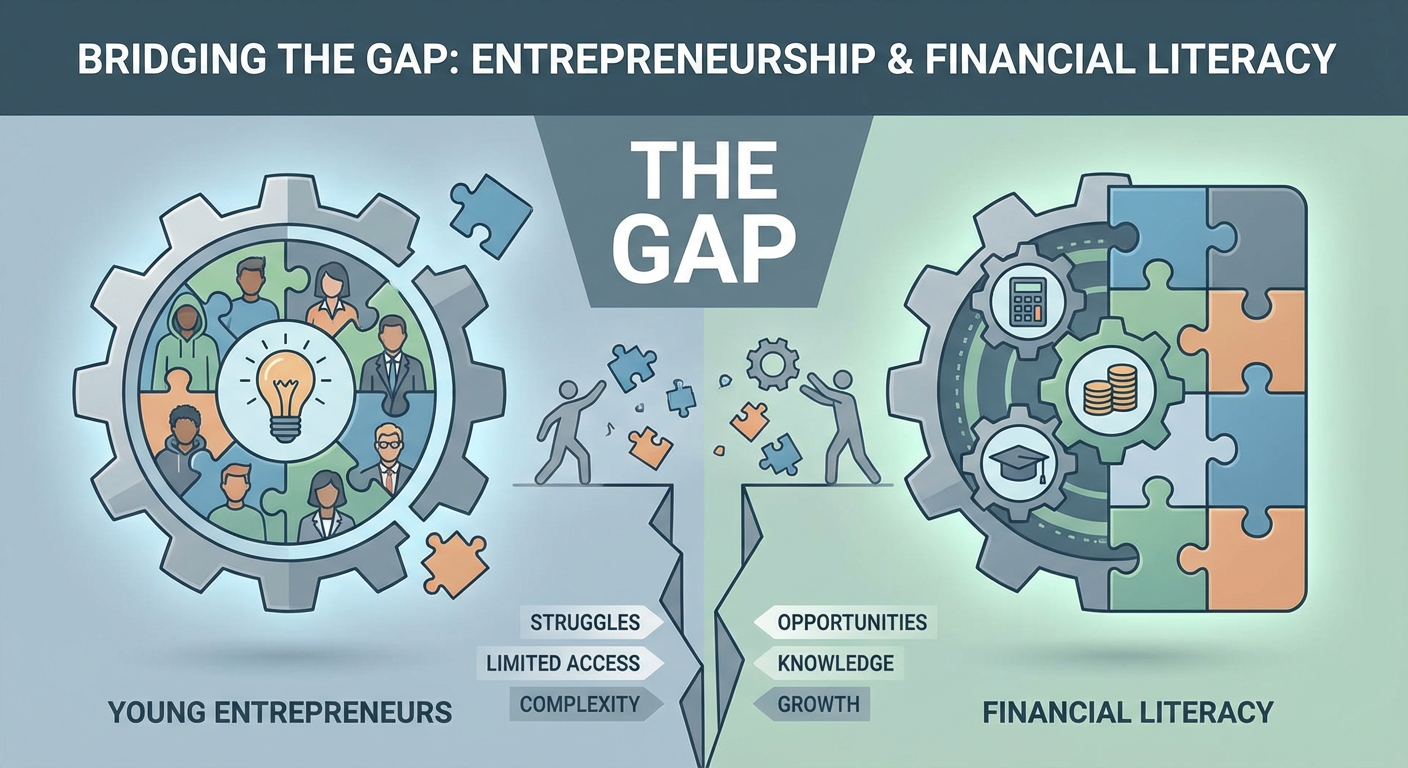
3. The Pervasive Financial Literacy Gap Among Young Entrepreneurs
The global landscape of youth entrepreneurship is experiencing an unprecedented surge in activity and interest. Nearly three-quarters of Generation Z (16–24-year-olds) express a desire to start their own businesses, a significantly higher proportion compared to older generations, signaling a worldwide boom in youth-led ventures[1]. This entrepreneurial drive is fueled by a dualistic force: both intrinsic ambition, reflecting a desire for independence, flexibility, and the pursuit of passion projects, and extrinsic necessity, often driven by high youth unemployment rates that compel young individuals to create their own economic opportunities[17]. For example, while the global youth unemployment rate stood at 13% in 2023 (the lowest in 15 years), it still far outstrips adult unemployment rates, with regions like South Africa facing a staggering 44.3% youth jobless rate for ages 15–34, transforming many into “necessity entrepreneurs”[11][18]. Technology has further lowered barriers to entry, enabling digital natives to launch businesses on online platforms with minimal upfront capital[17]. However, beneath this wave of entrepreneurial zeal lies a critical, often unaddressed Achilles’ heel: a pervasive financial literacy gap. While young entrepreneurs may possess innovative ideas and digital prowess, their foundational understanding of business finance is alarmingly low. This deficit profoundly impacts every stage of their venture, from initial planning and day-to-day cash management to securing external funding and preparing for long-term growth. The consequences of this gap are stark and contribute significantly to the high failure rates observed among startups and small businesses globally. This section will delve into the extent of this financial literacy gap among young entrepreneurs, analyze its multifaceted impact on their ventures, and underscore the critical need for targeted interventions.
3.1 The Alarming State of Financial Literacy Among Young Adults
Financial literacy is the ability to understand and effectively use various financial skills, including personal financial management, budgeting, and investing. For entrepreneurs, this extends to business-specific concepts like cash flow, profit and loss, balance sheets, and funding strategies. Despite its undeniable importance, proficiency in these areas is conspicuously absent among the younger demographic.
3.1.1 Global Financial Illiteracy Rates and Youth Disadvantage
Data reveals a troubling global trend:
- Only about one-third of adults worldwide are financially literate, meaning a staggering 3.5 billion people lack a basic understanding of financial concepts[3][8]. This includes men (35%) and women (30%) globally, but the rates are even lower in emerging economies, often falling below 25%[8].
- Alarmingly, among the crucial 18–25 age group, the proficiency rate for financial literacy is “shockingly low” – with only around 7% deemed sufficiently financially literate in global assessments[10][6]. This indicates that the vast majority of young founders enter the entrepreneurial arena with minimal financial skills, relying heavily on trial-and-error, an approach fraught with peril for a burgeoning business.
- A survey of Gen Z aspiring entrepreneurs underscored this self-awareness, finding that 67% admit they lack sufficient financial knowledge to confidently run a business[13][2]. This statistic highlights not only the objective gap in knowledge but also the subjective feeling of unpreparedness among young individuals embarking on entrepreneurial journeys.
This widespread lack of financial education means that many young entrepreneurs are ill-equipped to handle the complex financial demands of running a business. They often lack formal training in financial management, budgeting, accounting practices, or understanding capital structures, leaving them vulnerable to critical errors.
| Demographic | Financial Literacy Rate | Source |
|---|---|---|
| Adults Worldwide | ~33% | S&P Global FinLit Survey (2015)[3][8] |
| 18–25 Year Olds | ~7% | Prof. Annamaria Lusardi (2022)[6][10] |
| Gen Z Aspiring Entrepreneurs (self-reported lack of know-how) | 67% | TD Bank Group Survey (2025)[13][2] |
Table 1: Financial Literacy Rates Across Demographics
3.2 Impact on Business Planning and Financial Management
The financial literacy gap has tangible and detrimental consequences for the operational health and strategic direction of youth-led ventures. Without a solid financial foundation, business planning becomes speculative, cash management perilous, and overall financial discipline elusive.
3.2.1 Deficient Business Planning and Budgeting
A lack of financial understanding often translates into underdeveloped or unrealistic business plans. Young entrepreneurs may struggle with:
- Accurate Cost Estimation: Underestimating startup costs, operational expenses, and the time needed to reach profitability. This leads to early cash depletion and the inability to sustain operations.
- Pricing Strategies: Inability to correctly price products or services to cover costs, achieve desired profit margins, and remain competitive. Pricing too low can hinder sustainability, while pricing too high can deter customers.
- Financial Projections: Producing credible financial forecasts, including revenue projections, profit and loss statements, and cash flow statements, which are crucial for both internal decision-making and external funding acquisition.
These deficiencies mean that many young founders launch their businesses without a clear financial roadmap, making them reactive rather than proactive in their management.
3.2.2 Precipitous Cash Management and Its Consequences
Cash flow is widely acknowledged as the lifeblood of any business, and poor management of it is a primary driver of business failure.
- An estimated 82% of small businesses fail due to cash flow problems, underscoring that liquidity, not just profitability, is paramount for survival[7][21].
- Common cash management pitfalls include:
- Commingling Funds: A fundamental error where personal and business finances are not strictly separated. This makes accurate business performance tracking impossible and can lead to personal financial instability if the business struggles, or business instability if personal needs drain company funds[23]. Nearly 1 in 5 Gen Z entrepreneurs resort to personal savings or debt to sustain their businesses, blurring this critical line[14].
- Lack of Expense Tracking: Inadequate record-keeping means entrepreneurs often don’t know where their money is going, leading to uncontrolled spending or missed opportunities for cost optimization.
- Poor Receivables Management: Failing to issue invoices promptly or follow up on overdue payments can severely impact a business’s cash inflow, even if sales are strong.
- Insufficient Cash Reserves: Without accurate financial forecasting, businesses often lack the necessary buffer to navigate unexpected expenses, seasonal dips, or delayed payments, leading to a “feast-and-famine” cycle[24].
These operational deficiencies highlight why basic financial discipline—such as budgeting, bookkeeping, and prudent financial controls—is essential. Young leaders who master these are far more likely to achieve positive cash flow and ensure the longevity of their venture.
3.3 Debt Management and Funding Readiness
The financial literacy gap also profoundly impacts young entrepreneurs’ ability to access and manage capital, which is a significant hurdle for scaling their ventures.
3.3.1 Challenges in Securing Funding
Securing early-stage funding is a critical hurdle for all startups, but young entrepreneurs face particular disadvantages:
- Credit Gap: Young founders are often perceived as higher risk by traditional lenders. They may lack extensive credit histories, collateral, or proven business track records. Consequently, youth-led businesses are about half as likely to obtain credit as those led by older entrepreneurs[9][22]. In Europe, for instance, only 33% of young entrepreneurs secured bank financing for their ventures[9][22].
- Investor Skepticism: Venture capitalists and angel investors, while seeking innovative ideas, also prioritize founders who demonstrate strong financial acumen. A 2023 study found that businesses with strong financial literacy practices were 22% more likely to secure funding from banks or investors[4][12]. Financially savvy founders can present watertight financial plans, articulate their unit economics, and demonstrate a clear path to profitability, inspiring confidence in potential funders[4][12]. Conversely, “weak financials” or sloppy plans are often cited as major red flags[19].
- Self-Reported Barriers: Nearly one-third (31%) of Gen Z entrepreneurs identify a lack of capital as their biggest deterrent to starting or growing their business, making it the most common self-reported barrier[15].
This funding disparity means that many viable youth ventures struggle to scale, often stalling before they can achieve their full potential.
3.3.2 Managing Debt and External Capital
Even when young entrepreneurs manage to secure funding, a lack of financial literacy can undermine effective debt management and capital utilization.
- Understanding Loan Terms: Without adequate knowledge, young founders may not fully comprehend interest rates, repayment schedules, collateral requirements, or covenants associated with loans, potentially leading to default or cash flow strains.
- Equity Dilution: For ventures seeking equity investment, understanding valuation, equity dilution, and investor expectations is crucial. Inexperience can lead to unfavorable terms that cost the founders too much ownership in the long run.
- Strategic Capital Allocation: Knowing how to strategically deploy capital—whether it’s early-stage seed funding or debt—for maximum impact on growth and sustainability is a key skill. Without this, capital can be misallocated to non-essential expenditures rather than critical growth drivers.
The ability to build credible financial models and effectively communicate their business’s financial viability is a direct consequence of financial literacy and is often the missing link between a promising idea and a fundable enterprise.
3.4 Consequences: Startup Failures and Missed Opportunities
The ripple effects of the financial literacy gap extend directly to startup mortality rates and the stifling of innovation and economic growth.
3.4.1 The Top Killer of Startups: Running Out of Cash
The most devastating consequence of poor financial management among young entrepreneurs is business failure.
- An analysis of over 110 startup post-mortems revealed that “ran out of cash or failed to raise new capital” was the leading reason for startup failure, cited by 38% of businesses[5][20]. This statistic surpasses even “no market need” (35%) as the primary cause, underscoring the dominance of financial mismanagement in startup demise.
- The intertwined issue of cash flow problems leading to failure is highlighted by the U.S. Bank study, which attributed 82% of small business failures to poor cash-flow management[7][21].
These figures are not merely statistics; they represent countless young entrepreneurs whose innovative ideas, hard work, and dreams are cut short not by a lack of vision or creativity, but by the inability to manage the financial realities of their ventures.
3.4.2 Erosion of Growth Potential and Economic Impact
Beyond outright failure, the financial literacy gap hinders the growth potential of many youth-led ventures, translating into broader economic underperformance.
- Under-capitalized businesses face slower growth trajectories. Without sufficient and strategically managed funds, they cannot invest in necessary infrastructure, marketing, talent acquisition, or product development, preventing them from scaling effectively.
- The bootstrapping approach, while fostering discipline, can limit a startup’s ability to capitalize on market opportunities quickly. While 19% of young founders resort to personal savings or debt, this often means sacrificing speed and scale for survival[14].
- Where youth entrepreneurship is driven by necessity (e.g., in high youth unemployment regions like South Africa, where one report indicated a 44.3% youth jobless rate)[11][18], the failure of these ventures can plunge individuals and their families back into economic precarity, undermining the potential for entrepreneurship to act as a lifeline and a engine for job creation.
The inability of young entrepreneurs to navigate complex financial landscapes represents a significant lost opportunity for innovation, job creation, and economic development in both developed and emerging markets.
3.5 Bridging the Gap: The Imperative for Financial Education and Mentorship
Recognizing the severity of this issue, there is a growing consensus on the critical role of targeted interventions to equip young entrepreneurs with essential financial skills.
3.5.1 Formal Education and Skill-Building Programs
The foundational solution lies in integrating financial literacy into educational curricula, starting from earlier stages.
- Experts advocate for embedding personal finance and basic business finance principles into high school and college programs. Such education would empower young people with a fundamental understanding of budgeting, investing, and the business lifecycle before they even contemplate launching a venture[25].
- Specialized entrepreneurship programs and bootcamps are proving highly effective. Organizations like Youth Business International (YBI) have supported over 10,000 young entrepreneurs with training, mentoring, and financial services, significantly improving business survival and growth rates[26]. In 2021 alone, YBI programs helped 18,014 young people start new businesses and strengthened approximately 38,000 others through training and mentorship[16].
- These programs focus on practical skills, such as creating cash flow forecasts, developing viable pricing strategies, understanding tax obligations, and navigating various funding options.
3.5.2 The Indispensable Role of Mentorship
Beyond formal education, personalized guidance from experienced professionals is invaluable for young entrepreneurs.
- A significant 68% of young entrepreneurs express a strong desire for mentorship from successful business or finance experts[13][27]. This high demand underscores the perceived value of practical advice and emotional support from seasoned professionals.
- Mentors can offer insights into real-world financial challenges, help refine business models, provide networking opportunities, and guide founders through critical financial decisions that textbooks cannot fully address.
- Case studies like Bella Lin’s GuineaLoft business demonstrate this impact: at 17, she leveraged skills from a youth entrepreneurship program and finance mentorship to grow her Amazon side hustle into a business grossing $409,000 in revenue, showcasing how early education and mentorship can translate directly into cash flow success[28][29][30].
Combining tailored financial education with access to experienced mentors creates a powerful support system that can dramatically improve the prospects of youth-led ventures.
| Intervention | Description | Impact/Statistic |
|---|---|---|
| Formal Financial & Entrepreneurship Education | Courses in high schools, universities, and specialized bootcamps covering personal and business finance, budgeting, etc. | Develops foundational knowledge; improves business planning and operational efficiency among alumni. |
| Mentorship Programs | Pairing young entrepreneurs with experienced business or finance professionals. | 68% of youth entrepreneurs desire mentorship[13][27]; provides practical guidance, networking, and emotional support. |
| Startup Programs/Incubators | Initiatives offering training, seed funding, and advisory services. | YBI supported 18,014 new businesses and strengthened 38,000+ existing ones in 2021[16]. |
Table 2: Key Interventions to Bridge the Financial Literacy Gap The pervasive financial literacy gap among young entrepreneurs is a critical barrier to their success and the overall economic benefits that youth-led ventures can provide. While the entrepreneurial spirit is strong, the absence of fundamental financial knowledge, coupled with a challenging funding landscape, places many young businesses on a precarious footing. Addressing this gap through comprehensive education and robust mentorship programs is not merely an educational imperative but an economic one, essential for cultivating a resilient, innovative, and financially secure new generation of job creators. This detailed examination of the financial literacy gap sets the stage for understanding how early investment can serve as a catalyst when combined with enhanced financial acumen. The next section will explore the pivotal role of early investment in propelling youth-led ventures from concept to cash flow, analyzing its various forms, impact, and the strategies for young entrepreneurs to become investment-ready.

4. The Critical Role of Early Investment in Scaling Youth Ventures
The burgeoning enthusiasm for entrepreneurship among young people globally presents an unprecedented opportunity for economic growth, innovation, and job creation. Nearly three-quarters (73%) of 16-24-year-olds express a desire to start their own businesses, a significantly higher rate than older generations, signaling a profound generational shift towards self-employment and startup culture[9]. This surge is driven by a combination of ambition, the desire for financial independence and flexible work, and, in many regions, by necessity due to high youth unemployment rates[10]. For instance, while global youth unemployment in 2023 was 13% (a 15-year low), it remains double the overall unemployment rate, pushing millions of young people towards entrepreneurship as an alternative path to income[3]. In countries like South Africa, where the youth unemployment rate reaches a staggering 44.3% for ages 15-34, young individuals are often “forced entrepreneurs” creating businesses out of sheer need for survival[11]. Despite this remarkable entrepreneurial drive and the lower barriers to entry facilitated by technology (e.g., e-commerce, social media platforms)[10], young founders face significant hurdles in transforming their nascent ideas into scalable, cash-flow-positive enterprises. Foremost among these challenges is the critical issue of early-stage capital. Access to finance is not merely a beneficial factor but a crucial catalyst that can determine the survival and growth trajectory of a youth-led startup. As detailed in a 2023 study, a staggering 38% of startup failures are attributed to running out of cash or failing to secure new capital, making liquidity the single biggest killer of new ventures[6]. This section delves into the profound importance of early investment in enabling youth-led ventures to scale, the inherent difficulties young founders encounter in accessing traditional financing, their common reliance on bootstrapping, and the strategies and alternative funding options available to foster investor readiness.
4.1 The Impetus of Early-Stage Capital: A Growth Engine for Youth Ventures
Early-stage capital serves as the lifeblood for youth-led ventures, providing the necessary resources to transition from concept to market-ready product or service. This initial funding, whether in the form of seed investment, starter loans, or grants, enables crucial activities such as hiring key personnel, developing prototypes, launching essential marketing campaigns, and covering operational overhead during the pre-revenue or early-revenue phases. Research unequivocally demonstrates that when young entrepreneurs gain access to finance in these formative stages, their ventures exhibit “better entrepreneurial outcomes,” including improved survival rates and accelerated growth trajectories[4]. This infusion of capital offers a vital runway, allowing young founders to iterate their business models, experiment with market strategies, and achieve product-market fit without constant, crippling pressure from immediate cash shortages. The multiplier effect of early capital extends beyond mere financial injection. It also confers credibility, signaling to potential partners, customers, and subsequent investors that the venture has been vetted and deemed viable by initial backers. This early validation is particularly valuable for young founders who may initially lack extensive professional networks or industry experience. With capital secured, they gain the breathing room necessary to refine their offerings, build a demonstrable track record, and cultivate the maturity needed to attract larger investment rounds. Without this foundational support, many promising youth-led enterprises risk being stifled prematurely, succumbing to the omnipresent threat of cash starvation before they ever have the chance to blossom. The story of Stripe, founded by brothers John and Patrick Collison when they were just 19 and 21, vividly illustrates the power of early investment coupled with financial acumen. Their previous entrepreneurial success (selling their first startup, Auctomatic, for \$5 million) and their participation in Y Combinator’s accelerator provided them with crucial seed capital and mentorship[14]. This early backing allowed them to meticulously build Stripe’s online payments platform, focusing on unit economics and demonstrating financial competence that impressed investors. The result was rapid scaling to a \$95 billion valuation, showcasing how early strategic investment fueled by savvy financial management can lead to explosive growth[14].
4.2 The Funding Chasm: Challenges in Securing Traditional Financing for Young Founders
Despite the critical need for early investment, young entrepreneurs disproportionately struggle to secure traditional financing compared to their older counterparts. This disparity creates a significant “funding gap” that acts as a major impediment to the scaling of youth-led ventures. Traditional financial institutions, such as commercial banks, are often averse to lending to young founders due to several factors:
- Lack of Credit History and Collateral: Many young entrepreneurs possess limited or no personal credit history, and their nascent businesses often lack substantial assets that can serve as collateral. This makes them appear high-risk from a conventional lending perspective.
- Perceived Inexperience: Venture capital firms and angel investors, while more risk-tolerant than banks, may perceive very young CEOs as lacking the necessary business acumen, management experience, or industry networks to successfully scale a company.
- Formal Requirements: The stringent documentation, business plans, and financial projections typically required by traditional lenders can be daunting for young founders who may lack formal financial training or professional guidance in preparing such materials.
Empirical data underscores this challenge. For example, in Europe, young entrepreneurs were found to be approximately half as likely to obtain bank financing compared to more seasoned business owners[4]. Specifically, only about 33% of young entrepreneurs in Europe secured bank loans for their businesses[4]. This stark “credit gap” means that even viable youth ventures, brimming with innovative ideas and potential, often find themselves under-capitalized. This undertow of insufficient funding can severely stunt a startup’s growth, forcing young founders to make difficult choices, such as prematurely scaling back operations or abandoning their ventures when personal funds inevitably run dry. The impact of this funding barrier is clearly reflected in the self-reported challenges of young entrepreneurs. A survey revealed that 31% of Gen Z entrepreneurs cite insufficient financial resources as their biggest deterrent to starting or growing a business[13]. This makes lack of capital the most common self-reported barrier, even outweighing concerns like market competition, highlighting its pervasive influence on the youth entrepreneurial landscape[13].
4.3 Bootstrapping: A Necessity, Not Always a Choice
In the face of formidable external funding barriers, a significant proportion of young entrepreneurs resort to bootstrapping – self-financing their ventures, often through personal savings or even personal debt. A Canadian survey indicated that 19% of Gen Z entrepreneurs had used personal savings or personal debt to sustain their businesses[14]. While bootstrapping can be a powerful discipline, fostering creativity, resourcefulness, and lean operations, it is frequently a response to necessity rather than a strategic choice for many young founders. Success stories like Spanx or Mailchimp, which grew into substantial enterprises without external venture capital, often laud the virtues of bootstrapping. It ensures founders maintain full ownership and control, instills a deep understanding of every dollar spent, and forces a focus on revenue generation from day one. However, for most young entrepreneurs, particularly those from socioeconomically disadvantaged backgrounds, bootstrapping comes with significant drawbacks:
- Slowed Growth: Relying solely on internal funds or modest initial capital often means a slower pace of growth. The ability to invest in critical areas like marketing, advanced technology, or talent acquisition is severely constrained.
- Increased Personal Financial Risk: Commingling personal and business finances, a common outcome of bootstrapping for young founders, significantly elevates personal financial risk. If the business struggles, personal savings can be decimated, and personal debt can accumulate, leading to severe financial distress. A 2023 study by the SA Institute of Business Accountants noted that many young South African entrepreneurs struggle with keeping personal spending from eating into business funds, highlighting this critical issue[33].
- Limited Runway: Without external capital, the financial runway for experimentation and market penetration is often very short. Young founders with limited savings may quickly encounter a wall, unable to scale production, invest in necessary infrastructure, or even pay themselves a living wage, without an external capital injection.
- Burnout: The relentless pressure to generate revenue and manage all aspects of the business while juggling personal financial precarity can lead to significant stress and burnout, diminishing the founder’s ability to focus on strategic growth.
While bootstrapping can build resilience and financial discipline, it often limits a venture’s potential for rapid scaling, especially in competitive markets that demand quick execution and substantial investment in technology or market penetration.
4.4 Alternative Funding Options and Strategies for Bridging the Gap
The landscape of startup funding is evolving, with a growing array of alternative options specifically targeting young innovators and seeking to mitigate the traditional challenges they face. These options, often coupled with mentorship and training, are crucial for bridging the funding gap.
4.4.1 Youth-Focused Incubators and Accelerators
Programs like Y Combinator, TechStars, and numerous regional incubators offer a combination of seed funding, intensive mentorship, and networking opportunities in exchange for equity. For example, Y Combinator provided the early spark for the Collison brothers’ Stripe, enabling them to attract larger investors later[14]. These programs are particularly valuable for young founders as they provide not just capital but also structured guidance on business development, financial management, and investor relations.
4.4.2 Startup Competitions and Grants
Many organizations, foundations, and corporations run startup competitions that award grants and non-dilutive funding to promising young ventures. The Tony Elumelu Foundation’s entrepreneurship program, for instance, provided Eliab Mayengo of Orca-Pod Holdings (Uganda) with a seed grant, financial training, and mentorship. This support dramatically boosted Orca-Pod’s workforce from 20 to 45 employees and increased annual revenue by approximately 39% (from UGX 145 million to UGX 201 million) within a year[15]. Such grants are particularly impactful as they provide capital without diluting the founder’s ownership. Ritesh Agarwal of OYO Rooms also benefited from a \$100,000 Thiel Fellowship grant, which not only provided capital but also exposed him to Silicon Valley mentors, dramatically accelerating his learning curve and investment readiness[13].
4.4.3 Crowdfunding Platforms
Platforms like Kickstarter, Indiegogo, and GoFundMe enable young entrepreneurs to raise capital directly from a large number of individuals, often pre-selling products or services to fund development. This not only provides capital but also validates market demand and helps build a community of early adopters. It democratizes access to capital, allowing creators to bypass traditional gatekeepers.
4.4.4 Microfinance Initiatives
In developing nations and for marginalized youth groups, microfinance institutions offer small loans tailored to entrepreneurs with limited collateral or credit history. These initiatives often combine financial services with business training and mentorship, empowering individuals to start and grow small businesses that would otherwise be unable to access formal credit.
4.4.5 Government Programs and Angel Networks
Many governments offer specific grants, loans, or tax incentives for youth-led businesses. Additionally, growing networks of angel investors are specifically interested in supporting promising young talent, often providing not just capital but also their wealth of experience and connections.
4.5 Building Investor Readiness: More Than Just a Good Idea
Securing early investment requires more than just a brilliant concept; it demands “investor readiness” – the ability to present a compelling, data-backed case for funding. Youth entrepreneurs often struggle here, not necessarily due to a lack of intrinsic talent, but due to a deficit in formal financial literacy and business planning skills. The research highlights a significant gap: only about 7% of 18-25-year-olds are considered financially literate[10], and 67% of Gen Z aspiring entrepreneurs confess they lack sufficient financial knowledge to run a business[2]. This deficiency hinders their ability to articulate a clear financial strategy, manage cash flow effectively, or accurately project future performance – all critical components for attracting investment. To build investor readiness, young founders must strategically focus on several key areas:
- Developing a Comprehensive Business Plan: This document should clearly articulate the problem being solved, the unique value proposition, target market, competitive analysis, operational plan, management team, and, critically, detailed financial projections (revenue forecasts, expense budgets, cash flow statements, break-even analysis).
- Demonstrating Product-Market Fit: Investors are more likely to fund ventures that have already validated some market interest. This might involve building a Minimum Viable Product (MVP), conducting market research, securing initial customers, or generating early revenue.
- Mastering Financial Literacy: This is arguably the most crucial step. Founders with strong financial literacy can create “watertight financial master sheets,” conduct thorough market investigations, and present compelling proposals to potential funders[12]. A 2023 study found that businesses with strong financial literacy practices were 22% more likely to secure funding from banks or investors, underscoring the direct correlation between financial know-how and fundraising success[12]. Financial literacy enables founders to:
- Understand Unit Economics: Clearly articulate the costs and revenues associated with each unit of product or service, demonstrating a pathway to profitability.
- Manage Cash Flow Proactively: Create cash flow forecasts, monitor burn rates, and ensure sufficient liquidity, addressing the primary reason for startup failure (38% of startups fail due to running out of cash)[6].
- Separate Personal and Business Finances: This fundamental practice is often overlooked by young founders bootstrapping their ventures. Proper segregation is vital for accurate financial reporting and avoiding stability risks[14].
- Cultivating Mentorship: A significant 68% of young entrepreneurs highly value mentorship from experienced advisors[3]. Mentors can provide invaluable guidance on navigating business finances, refining pitches, and connecting with potential investors, effectively bridging the experience gap.
- Networking and Pitching Skills: Engaging with the entrepreneurial ecosystem through pitch events, industry conferences, and networking sessions allows young founders to hone their storytelling and presentation skills, which are essential for attracting investment.
An excellent example of building investor readiness and leveraging mentorship is provided by Bella Lin, the 17-year-old founder of GuineaLoft. Starting with just \$2,000 of her savings, she grew her guinea pig accessories business to \$409,000 in revenue in 2023 by meticulously managing her finances, reinvesting profits, and optimizing her Amazon listings with insights from a financial mentor. Her success demonstrates that a teen entrepreneur who understands budgeting and online marketing can build a thriving venture with minimal outside capital, showcasing the tangible benefits of early educational interventions and financial discipline[12].
4.6 Mastering Cash Flow: The Ultimate Determinant of Survival and Scale
At the core of investor readiness and sustainable growth lies the ability to master cash flow management. For any startup, but especially for under-capitalized youth-led ventures, “cash flow is king.” This truism implies that a consistent positive flow of money into the business, exceeding outflows, is paramount for survival. Many young founders, driven by passion for their product or service, often prioritize growth and sales without fully appreciating the mechanics of cash. However, as an oft-cited U.S. Bank study found, a staggering 82% of small business failures are attributable to poor cash-flow management problems[7]. This means that 8 out of 10 businesses collapse not due to a lack of profit or market demand, but due to liquidity issues, highlighting the critical importance of financial discipline.
| Common Cash Flow Pitfalls for Youth Ventures | Impact |
|---|---|
| Overestimating early revenues and underestimating expenses | Leads to cash crunch when sales ramp up slower than expected. |
| Not separating personal and business finances | Blurs financial lines, leading to underfunded business or personal financial instability. |
| Poor record-keeping (e.g., untracked invoices, forgotten expenses) | Prevents accurate financial analysis and timely decision-making. |
| Delaying invoicing or failing to enforce payment terms | Extends the cash conversion cycle, tying up valuable operating capital. |
| Overspending on non-essentials or impulse purchases | Depletes cash reserves Rtoo quickly, shortening the runway. |
Young leaders who master budgeting, bookkeeping, and prudent financial controls are far more likely to achieve positive cash flow and, consequently, long-term viability. Conversely, poor financial management practices, such as commingling funds, insufficient expense tracking, or lacking clear payment terms, put startups on a fast track to insolvency. Practical strategies for young founders to cultivate healthy cash flow include: * **Maintaining a Cash Buffer:** Even a small reserve can absorb unexpected costs or delays in customer payments, preventing a crisis. * **Prompt Invoicing and Follow-Up:** Young entrepreneurs must be proactive in billing clients and diligently following up on overdue payments. Delayed receivables can severely strain liquidity. * **Staggering Expenses:** Negotiating payment terms with suppliers that align with the business’s revenue cycle can significantly ease cash flow pressure. * **Consistent Monitoring of Key Metrics:** Regularly tracking cash balance, accounts receivable, accounts payable, and gross margins provides an early warning system for potential issues. The proliferation of user-friendly accounting software and budgeting apps makes this more accessible than ever for young entrepreneurs. * **Learning to Budget and Reinvest:** Developing a realistic budget forces prioritization and disciplined spending. Reinvesting profits back into the business, rather than immediate personal gratification, is key to sustainable growth. This systematic approach ensures that initial profits accelerate growth while maintaining a cash-flow positive position. * **Agile Pivoting:** Savvy young founders monitor their cash runway and use this crucial metric as a trigger for strategic pivots or cost-cutting measures *before* funds are exhausted. The ability to adapt quickly in response to cash flow realities is a hallmark of successful scaling. By treating cash as oxygen, young entrepreneurs learn to iterate rapidly, seek diverse revenue streams, and optimize their burn rate to prevent premature financial suffocation.
4.7 The Multiplier Effect: Combining Funding with Financial Literacy and Mentorship
The most impactful interventions for scaling youth-led ventures combine early investment with robust financial literacy training and mentorship. This integrated approach addresses the multifaceted challenges young founders face, not just providing capital but also equipping them with the knowledge and guidance to deploy it effectively. Programs globally, such as those implemented by Youth Business International (YBI), demonstrate the efficacy of this combined approach. In one year, YBI supported over 18,000 young people in starting new businesses and strengthened approximately 38,000 existing youth-led ventures through training and mentoring[15]. Initiatives like the Tony Elumelu Foundation’s program, which provided Eliab Mayengo’s Orca-Pod Holdings with a seed grant plus financial training and mentorship, illustrate how even modest early investment, when coupled with financial literacy support, can dramatically accelerate a youth-led manufacturing business[15]. This ecosystem also includes efforts to embed financial literacy into mainstream education, with experts advocating for its integration into high school and college curricula. Graduates who are financially literate are demonstrably better prepared to manage their personal finances and run successful ventures. Mentorship, valued by 68% of youth entrepreneurs[3], offers bespoke advice, professional networks, and vital emotional support, filling in knowledge gaps that formal education alone cannot cover. Ultimately, fostering an enabling ecosystem where young entrepreneurs have access to:
- **Money:** Through grants, seed investment, and alternative financing options.
- **Mentorship:** From seasoned business and financial experts.
- **Markets:** With support for market access and business development.
transforms raw talent into scalable enterprises. This comprehensive support empowers a new generation of founders to not only achieve financial independence but also to become significant contributors to economic growth and job creation, turning visionary concepts into tangible cash flow.
The transition from a promising idea to a profitable, scalable business is inherently challenging, and for young entrepreneurs, this journey is further complicated by unique barriers to accessing capital. However, with targeted early investment, coupled with robust financial literacy education and strategic mentorship, these hurdles can be overcome. The next section will delve deeper into the specific impacts of financial literacy on youth-led ventures, exploring its importance beyond just securing initial funding and examining how it underpins sustainable operations and strategic decision-making.

5. Mastering Cash Flow: A Foundation for Startup Longevity
For any nascent business, irrespective of its visionary concept or market potential, the ultimate arbiter of survival and growth is its ability to generate and manage cash flow. This reality is particularly acute for youth-led ventures, which often operate with limited initial capital, experience significant barriers to traditional funding, and are helmed by founders who, despite their ambition, frequently lack formal financial training. As the prevailing wisdom asserts, “cash flow is king”[34], and a robust understanding and meticulous management of this financial lifeblood are not merely advantageous but absolutely paramount for a startup’s longevity and potential to scale. This section delves into the critical role of cash flow management in youth-led enterprises, exploring common pitfalls, strategic approaches, and the foundational importance of financial literacy in transforming promising concepts into thriving, cash-flow-positive businesses. The entrepreneurial drive among young people is undeniably surging, with nearly three-quarters of Gen Z (16–24-year-olds) expressing a desire to start their own business[1]. This enthusiasm is fueled by a blend of ambition, a desire for independence, and increasingly, necessity, particularly in regions burdened by high youth unemployment rates, such as South Africa’s staggering 44.3%[11]. However, this entrepreneurial boom unfolds against a backdrop of a significant financial literacy gap, with only about one-third of adults worldwide deemed financially literate[2], and a shockingly low proficiency rate of just ~7% among 18–25-year-olds[3]. This fundamental disconnect between entrepreneurial aspiration and financial acumen creates a precarious environment for many young ventures. The consequences of this financial literacy gap are stark and frequently fatal. Research indicates that “ran out of cash/failed to raise capital” was the leading cause of startup failure, cited by 38% of ventures in an analysis of 110+ startup post-mortems[4]. This statistic surpasses even “no market need” as the primary reason for business collapse, underscoring that a brilliant idea, if unfunded or poorly managed, is not enough. Furthermore, an often-cited U.S. Bank study found that an astonishing 82% of small business failures are directly attributable to poor cash flow management[5]. These figures paint a clear picture: effective cash flow management is the single most critical factor for a startup’s survival. Without it, innovative ideas and tireless effort can dissolve into insolvency. For youth-led ventures, where access to external funding is already a hurdle—with young founders only half as likely to secure bank financing compared to older business owners[6]—mastering cash flow becomes an even more urgent imperative. ### The Lifeblood of Business: Understanding Cash Flow Cash flow represents the movement of money into and out of a business. Positive cash flow means more money is entering the business than leaving it, indicating a healthy and solvent operation. Negative cash flow, conversely, means more money is leaving than entering, leading to a liquidity crisis that can quickly spiral into business failure, regardless of how profitable the business might appear on paper. Many young entrepreneurs intuitively focus on sales and revenue, mistaking them for cash flow, or conflating profit with cash. However, as the research clearly demonstrates, this distinction is critical. A business can be profitable on paper but still run out of cash if its customers pay slowly, or if it has significant upfront expenses that drain its reserves. For example, a youth-led e-commerce business might secure substantial orders, generating impressive revenue. However, if it must pay its suppliers for inventory immediately while waiting 30-60 days for customer payments to clear, it can face a severe cash crunch, potentially leading to bankruptcy before it ever realizes its profits. The paramount importance of cash flow is further highlighted by the fact that investors are keenly aware of its significance. A 2023 study found that businesses with strong financial literacy practices were 22% more likely to secure funding from banks or investors[7]. This increased probability stems directly from the confidence investors gain when founders can present solid financial plans, demonstrate clear understanding of their cash inflows and outflows, and manage their finances wisely. Financially savvy founders can articulate their burn rate (the rate at which a company is losing money), their cash runway (how long the company can operate before running out of money), and how they plan to achieve positive cash flow. This ability is a powerful signal of competence and lower risk to potential funders, helping to bridge the substantial funding gap that currently challenges young entrepreneurs[6]. ### Common Pitfalls in Cash Management for Youth-Led Ventures Despite the critical importance of cash flow, many young entrepreneurs, often lacking formal financial training, fall prey to a series of common pitfalls that can derail their ventures. These challenges are often amplified by the limited resources and bootstrap nature of many youth-led startups.
| Cash Management Pitfall | Description & Impact | Relevant Data/Insights |
|---|---|---|
| Lack of Financial Literacy | Inability to understand basic financial concepts like budgeting, bookkeeping, and cash flow forecasting. This leads to uninformed decisions and reactive crisis management. | Only 7% of 18–25-year-olds are financially literate[3]; 67% of Gen Z lack business finance know-how[14]. |
| Confusing Personal & Business Finances | Commingling personal savings/debt with business funds, making it impossible to accurately track business performance or maintain financial discipline. | 19% of young founders rely on personal savings/debt[12], blurring lines and increasing risk. Many young South African entrepreneurs struggle with keeping personal spending from eating into business funds[35]. |
| Poor Budgeting & Forecasting | Overestimating revenues and underestimating expenses, leading to unrealistic expectations and financial shortages when reality sets in. Lack of a budget means no clear spending plan. | Contributes to the 82% of business failures attributed to poor cash flow management[5]. |
| Inadequate Record-Keeping | Failure to track income and expenses meticulously, resulting in an unclear picture of financial health, missed invoices, and potential tax issues. | Weak financial practices hinder funding readiness; businesses with strong financial literacy are 22% more likely to secure funding[7]. |
| Delayed Invoicing & Collection | Hesitancy to send invoices promptly or enforce payment terms, leading to extended accounts receivable and tying up crucial working capital. | A significant contributor to cash flow squeezes. |
| Overspending on Non-Essentials | Impulse purchases or investments in unnecessary luxuries (e.g., fancy offices, excessive marketing) before the business has generated stable positive cash flow. | Indicates a lack of financial discipline that a budget could prevent. |
| Not Maintaining a Cash Buffer | Operating with minimal reserves, leaving the business vulnerable to unexpected expenses, revenue delays, or economic downturns. | Amplifies the risk of running out of cash, which causes 38% of startup failures[4]. |
The inability to separate personal and business finances is a particularly pervasive issue among young entrepreneurs. While nearly 1 in 5 Gen Z entrepreneurs resort to personal savings or debt to sustain their business[12]—a testament to their commitment—this practice can dangerously blur the lines. This is not merely a matter of accounting best practices; it fundamentally distorts the perception of the business’s financial health, making it difficult to assess true profitability and sustainability. As experts highlight, young South African entrepreneurs, for instance, frequently struggle with preventing personal spending from eroding business funds[35]. This commingling of funds can lead to a situation where a technically viable business is prematurely shut down because the founder’s personal finances are depleted, or conversely, personal debt accumulates due to business struggles. Financially literate founders, in contrast, establish clear boundaries from day one, treating their startup as a distinct financial entity. ### Practical Strategies for Maintaining Healthy Cash Flow For youth-led ventures, adopting proactive and disciplined cash flow management strategies is not a luxury but a necessity. These strategies, when consistently applied, can significantly enhance a startup’s chances of survival and provide the stable foundation required for scaling. 1. **Develop a Detailed Cash Flow Forecast:** This is more than just a budget; it’s a dynamic projection of all expected cash inflows and outflows over a specific period (e.g., 3, 6, or 12 months). It helps founders anticipate cash shortages before they occur. Youth entrepreneurs should meticulously list all anticipated revenue streams (e.g., sales, service fees) and all expenses (e.g., rent, salaries, inventory, marketing). Being conservative with revenue estimates and liberal with expense estimates is a prudent approach. This forecasting reveals the startup’s “cash runway”—how many months the business can operate before running out of funds. 2. **Strict Budgeting and Cost Control:** Implementing and adhering to a rigorous budget is fundamental. This forces young founders to make intentional decisions about how every dollar is spent. It helps differentiate between essential operating costs and discretionary expenses. Startups should prioritize spending on activities directly generating revenue or critical for product development, deferring non-essential expenditures until the business achieves stable positive cash flow. Learning to “stick to a budget” instills spending discipline and ensures that initial profits are channeled back into strategic growth, rather than being prematurely consumed by overhead or luxury. The experience of Bella Lin, founder of GuineaLoft, demonstrates this principle: she started with just $2,000 of her savings and meticulously reinvested profits, allowing her business to gross $409,000 in revenue in 2023[24]. 3. **Optimize Invoicing and Collections:** Prompt invoicing and consistent follow-up on outstanding payments are crucial. Young entrepreneurs should establish clear payment terms (e.g., Net 30, upfront payment for services) and communicate them effectively to clients. Implementing automated invoicing systems and sending friendly reminders for overdue payments can significantly reduce the time it takes for cash to enter the business. Delaying cash collection is a primary contributor to cash flow shortages, even for successful businesses. 4. **Manage Accounts Payable Strategically:** While collecting quickly, businesses can also manage their outgoing payments strategically. Negotiating favorable payment terms with suppliers—such as extending credit periods or agreeing on staggered payments—can help align cash outflows with inflows. However, this must be balanced with maintaining good relationships with vendors. 5. **Build a Cash Reserve (Emergency Fund):** Even a small cash buffer can provide a vital safety net for unexpected costs, delays in customer payments, or unforeseen market fluctuations. Financial advisors often recommend maintaining at least 3-6 months of operating expenses in reserve. This fund provides peace of mind and prevents minor hitches from escalating into existential threats. 6. **Monitor Key Financial Metrics Regularly:** Consistent tracking of vital signs like cash balance, accounts receivable (money owed to the business), accounts payable (money the business owes), and gross margins is non-negotiable. Modern accounting software and apps (e.g., QuickBooks, Xero, or even simpler budgeting apps) can automate much of this tracking, making it accessible even for founders without extensive financial training. Regular review (at least monthly) allows young entrepreneurs to detect trends, identify potential problems, and take corrective action proactively. 7. **Separate Personal and Business Finances:** This basic but critical step cannot be overstated. Establishing dedicated business bank accounts, and ideally, separate credit cards, ensures clarity and professional record-keeping. The entrepreneur should pay themselves a consistent salary, rather than withdrawing funds whenever needed, further reinforcing this separation and providing a clear understanding of the business’s financial viability independent of personal funds. By embracing these practical strategies, young founders can move beyond the anxiety of constant cash shortages to a more predictable and controlled financial environment, laying the groundwork for sustainable growth. ### The Power of Reinvestment and Agile Pivoting Beyond just maintaining solvency, effective cash flow management informs two critical aspects of startup scaling: strategic reinvestment and agile pivoting. #### Reinvestment for Growth For youth-led ventures, especially those bootstrapping due to limited access to external capital, the intelligent reinvestment of initial profits is often the primary engine of growth. Rather than immediately drawing large salaries or expanding into unnecessary expenditures, financially disciplined entrepreneurs channel early earnings back into the business in ways that accelerate its development. This might include: * **Increased Inventory:** For product-based businesses, greater inventory allows for higher sales volumes and better economies of scale. * **Marketing and Sales Initiatives:** Investing in targeted campaigns to acquire more customers. * **Technology Upgrades:** Enhancing product features, improving operational efficiency, or scaling infrastructure. * **Hiring Key Talent:** Bringing on employees that can handle increased workload or bring specialized skills. The ability to systematically budget and reinvest ensures that the venture has the necessary resources to scale operations, expand its market reach, or enhance its product/service offering. This systematic approach differentiates a casual side hustle from a serious business with long-term potential. Without a clear cash flow picture, founders risk making arbitrary spending decisions that hamper growth or worse, drain the business ‘ account. #### Agile Pivoting Based on Financial Signals One of the inherent advantages of youth-led startups is their agility and willingness to iterate. When armed with accurate cash flow data, this agility becomes a strategic tool. Savvy young founders continuously monitor their cash runway and use financial signals as triggers for strategic adjustments or “pivots.” * **Reading the Warning Signs:** If cash flow forecasts indicate a shorter runway than desired, or if key metrics like customer acquisition cost begin to erode profitability, these are critical warning signs. * **Informing Strategic Decisions:** Instead of waiting until cash runs dry, founders can use this financial intelligence to make proactive decisions: * **Cost Reductions:** Implementing immediate cuts to non-essential expenses. * **Revenue Acceleration:** Intensifying sales efforts, adjusting pricing models, or introducing new offerings. * **Market Pivot:** If a particular market segment is not yielding expected returns, the cash flow data can inform a pivot to a more lucrative target audience or product. * **Business Model Adjustment:** If the current business model is proving unsustainable, robust financial data provides the evidence needed to explore alternative revenue generation or delivery models. The discipline to pivot or adjust in response to cash flow reality is a hallmark of businesses that achieve long-term success. It demonstrates a data-driven approach to decision-making, where the entrepreneur treats cash like oxygen and takes proactive measures to ensure the business continues to breathe. This disciplined flexibility is crucial for survival in the volatile startup landscape, particularly for young entrepreneurs who are often learning on the job. ### The Role of Education and Mentorship The significant financial literacy gap among young entrepreneurs underscores the critical need for targeted interventions. Only 7% of 18-25 year olds have “sufficient” financial literacy[3], and 67% of Gen Z aspiring entrepreneurs confess they lack sufficient financial knowledge to run a business[14]. These figures clearly indicate that expecting young founders to navigate complex financial landscapes alone is largely unrealistic. Formal education and mentorship programs are proving to be powerful tools in bridging this gap: * **Financial Literacy Education:** Integrating personal and business finance into school curricula is a long-term solution. Teaching concepts like budgeting, investing, and the basics of business finance from an early age can equip future entrepreneurs with essential skills. Programs like those offered by Junior Achievement or BizWorld, which 17-year-old GuineaLoft founder Bella Lin attended, demonstrate how early educational interventions directly translate into real-world business achievements[25]. * **Startup Programs and Bootcamps:** Organizations like Youth Business International (YBI) have supported thousands of young entrepreneurs with training, mentoring, and financial services[13]. These programs often demystify business finance, offering practical guidance on cash flow management, marketing, and investor readiness. The success stories emphasize how such initiatives significantly improve young founders’ confidence and competence. * **Mentorship:** The demand for mentorship is high, with about 68% of young entrepreneurs valuing guidance from successful business or finance experts[15]. A seasoned mentor can provide invaluable real-world insights, guide young founders through complex financial decisions, and offer critical feedback on financial plans. Mentors often help young entrepreneurs understand the nuances of cash flow, such as negotiating payment terms, managing inventory costs, or interpreting financial statements, which are often not explicitly taught in formal settings. The story of Ritesh Agarwal, founder of OYO Rooms, highlights the transformative impact of mentorship: his Thiel Fellowship not only provided seed capital but also allowed him to learn from Silicon Valley mentors about financial literacy, which was pivotal in his journey to becoming a hospitality unicorn[23]. By combining foundational financial education with practical, real-world mentorship, youth-led ventures are better positioned to master cash flow from concept to positive returns. ### Notable Examples: Cash Flow Management in Action Examining successful youth-led ventures provides tangible proof of the principles discussed: * **Stripe (USA/Ireland) – John and Patrick Collison:** These brothers founded Stripe at ages 19 and 21, building it into a \$95 billion fintech giant[21], [22]. Their journey demonstrates exceptional financial savvy from a young age. Having already sold a previous startup as teenagers, they utilized early capital and Y Combinator’s accelerator program effectively. They maintained tight control over unit economics, focusing on the small fees charged per transaction that collectively amounted to massive revenue. Their ability to present strong financial plans impressed investors, proving that financial competence, irrespective of age, is a powerful fundraising tool. * **OYO Rooms (India) – Ritesh Agarwal:** Ritesh Agarwal’s story is a compelling example of how early investment and a commitment to learning financial principles can lead to explosive growth. At 17, he dropped out of college, received a \$100,000 Thiel Fellowship grant, and actively engaged with mentors in Silicon Valley to learn about financial management[23]. This early backing and financial education enabled him to secure significant VC rounds, including a \$1 billion round at age 24, valuing OYO at \$5 billion[23]. His data-driven approach to standardizing budget hotels, coupled with the ability to manage large investments, showcases the transformative potential of robust financial literacy. * **GuineaLoft (USA) – Bella Lin:** At just 17, Bella Lin turned a $2,000 investment of her savings into GuineaLoft, an Amazon-based business that grossed $409,000 in revenue in 2023 by selling guinea pig products[24]. Her success is a micro-cosmic illustration of masterful cash flow management. She kept overhead low, reinvested profits strategically, and leveraged skills acquired from a youth entrepreneurship program to meticulously track costs and optimize her online listings. Bella’s story highlights how a young entrepreneur, equipped with financial discipline and a budget, can build a thriving, cash-flow-positive venture with minimal external capital, enabling her to contemplate deferring college to expand her rapidly growing enterprise[25]. * **Orca-Pod Holdings (Uganda) – Eliab Mayengo:** Eliab Mayengo, a young engineer in Uganda, exemplifies the multiplier effect of targeted support. Struggling to industrialize his brick-making venture, he received a seed grant, financial training, and mentorship through the Tony Elumelu Foundation. This modest intervention led to a dramatic 39% increase in annual revenue and nearly doubled his workforce within a year[26]. Eliab learned to segregate business finances and make a strong case for additional capital, scaling his micro-operation into a sustainable enterprise. This case powerfully illustrates that even in challenging environments, combining “Money, Mentorship, and Markets” with youth ambition can unlock significant economic impact. These examples, ranging from global unicorns to local success stories, consistently demonstrate that mastering cash flow is not a theoretical exercise but a practical, daily discipline that directly correlates with a venture’s ability to survive, grow, and achieve its full potential. ### Conclusion Mastering cash flow is not merely an accounting exercise; it is the fundamental foundation upon which any sustainable and scalable business is built. For youth-led ventures, where passion and innovation often outpace financial experience and access to capital, this mastery takes on heightened importance. The alarming statistics regarding startup failures due to cash starvation and the widespread financial literacy gap among young entrepreneurs underscore the urgency of addressing this critical area. By understanding the flow of money, diligently budgeting, strategically reinvesting, and being agile in response to financial signals, young founders can navigate the precarious early stages of entrepreneurship. Furthermore, educational programs and mentorship initiatives play an indispensable role in equipping the next generation of entrepreneurs with the financial acumen necessary to turn their concepts into cash-flow-positive, enduring enterprises. As the global economy increasingly relies on the dynamism of youth-led innovation, fostering this financial discipline will be key to unlocking the full potential of these emerging ventures. Moving forward, the discussion will transition from the internal financial management of ventures to the broader landscape of external funding. The next section will explore the diverse funding avenues available to youth-led startups, examining the challenges they face in accessing capital and innovative models designed to support their growth. —

6. Bridging the Skills Gap: Education, Mentorship, and Ecosystem Support
The surging entrepreneurial spirit among global youth, with nearly three-quarters of Gen Z (16–24-year-olds) expressing a desire to start their own businesses, marks a significant generational shift towards self-employment and startup culture[1]. This ambition, however, is frequently tempered by substantial practical challenges, particularly a pervasive lack of financial literacy and limited access to critical support structures[2]. While the allure of innovation and independent wealth creation drives many young individuals, the reality of navigating complex business landscapes underscores a profound skills gap that must be addressed to ensure their ventures not only launch but also thrive and scale. This section delves into the multifaceted role of targeted education, comprehensive mentorship, and supportive entrepreneurial ecosystems in overcoming these barriers, with a particular focus on embedding financial literacy, providing dedicated training, and fostering inclusive support for all aspiring young entrepreneurs.
The Pervasive Financial Literacy Deficit Among Young Entrepreneurs
Despite the widespread enthusiasm for entrepreneurship, a critical vulnerability among young founders is their limited understanding of financial principles. This financial literacy gap poses a significant impediment to the sustainable growth and scaling of youth-led ventures. Data reveals a stark reality: only approximately one-third of adults worldwide possess basic financial literacy, and this figure plummets to a mere 7% among 18–25-year-olds who are deemed financially literate[3][4]. This exceedingly low proficiency rate suggests that the vast majority of young entrepreneurs embark on their ventures with minimal formal financial training, often resorting to learning through costly trial-and-error experiences. A 2025 survey further illuminates this challenge, indicating that over two-thirds (67%) of Gen Z aspiring entrepreneurs feel they lack sufficient financial knowledge to effectively run a business[5]. This significant gap directly impacts fundamental business planning, cash management strategies, and overall funding readiness. The implications stretch across various aspects of a startup’s lifecycle:
- Business Planning: Without a solid grasp of financial concepts, young founders struggle to develop realistic financial projections, conduct break-even analyses, or articulate a clear path to profitability. This deficiency weakens business plans, making them less compelling to potential investors or lenders.
- Cash Management: The U.S. Bank study, frequently cited in business circles, highlights that an alarming 82% of small business failures are attributable to poor cash flow management[6]. For young entrepreneurs, underestimating costs, confusing revenue with profit, or failing to track expenses diligently are common missteps that can quickly lead to insolvency. Running out of cash is, in fact, the single biggest cause of startup failure, accounting for 38% of cases[7].
- Funding Readiness: Lenders and venture capitalists are inherently risk-averse, favoring founders who can present watertight financial plans and demonstrate prudent money management. A 2023 study found that businesses with strong financial literacy practices were 22% more likely to secure funding from banks or investors[8]. Conversely, young founders with weak financials or sloppy plans often face significant hurdles in accessing capital. For example, in Europe, only about 33% of young entrepreneurs obtained bank financing, roughly half the rate of older business owners, largely due to perceived higher risk and lack of established credit history or financial acumen[9].
Table 1: Financial Literacy Statistics Among Youth and Adults
| Category | Statistic | Source |
|---|---|---|
| Adults Worldwide Financially Literate | ~33% | S&P Global FinLit Survey[3] |
| 18-25 Year-Olds Proficiently Financially Literate | ~7% | LGT Interview with Prof. Annamaria Lusardi[4] |
| Gen Z Lacking Sufficient Financial Knowledge for Business | 67% | TD Bank Group Survey[5] |
| Startups Failing Due to Lack of Cash/Funding | 38% | CB Insights Research[7] |
| Small Businesses Failing Due to Poor Cash Flow Management | 82% | U.S. Bank Study (cited by Karen Woller)[6] |
| Youth-Led Ventures More Likely to Secure Funding with Financial Literacy | 22% | IOL (Feleg & Asongu 2023 Study)[8] |
This widespread deficit underscores an urgent need for proactive interventions that embed financial education into relevant curricula and provide practical training to aspiring young entrepreneurs. Without these foundational skills, a significant portion of burgeoning youth-led ventures will remain undercapitalized, struggle with basic operations, and ultimately fail before they have the chance to scale.
The Indispensable Role of Dedicated Training Programs
To counteract the prevalent financial literacy gap and equip young entrepreneurs with the necessary skills, dedicated training programs have emerged as invaluable interventions. These programs go beyond theoretical knowledge, offering practical and actionable guidance on critical business aspects, particularly financial management. They play a pivotal role in bridging the gap between entrepreneurial ambition and operational competence.
Curriculum Development and Targeted Skill Building
Effective training programs are characterized by curricula specifically designed to address the unique challenges faced by young founders. Key areas of focus typically include:
- Budgeting and Financial Planning: Teaching young entrepreneurs how to create realistic budgets, forecast expenses and revenues, and develop sound financial plans is fundamental. This includes understanding fixed vs. variable costs, setting appropriate pricing strategies, and planning for profitability.
- Cash Flow Management: Given that a staggering 82% of small businesses fail due to cash flow problems[6], training programs emphasize best practices in managing liquidity. This involves practical lessons on invoice timing, managing accounts receivable and payable, maintaining sufficient cash reserves, and monitoring burn rates. The example of small e-commerce ventures needing to manage inventory payments versus customer receivables illustrates the crucial importance of these skills.
- Bookkeeping and Record Keeping: Many young entrepreneurs initially neglect meticulous record-keeping, often blurring the lines between personal and business finances. Training programs introduce fundamental accounting principles, the importance of separating accounts, and the use of modern accounting software to maintain accurate financial records for tax purposes and performance tracking.
- Funding Readiness and Investment Pitches: A significant hurdle for youth-led ventures is accessing capital, with 31% citing lack of capital as their top barrier[10]. Training programs equip founders with the skills to prepare compelling financial presentations, including detailed projections, break-even analyses, and unit economics. This “investor readiness” is crucial, as financially savvy founders are 22% more likely to secure funding[8].
- Risk Management: Understanding financial risks, such as debt management, market fluctuations, and unforeseen expenses, is critical. Programs teach young entrepreneurs how to identify potential risks, create contingency plans, and make informed financial decisions to mitigate adverse impacts.
Impact and Success Stories of Entrepreneurship Programs
The positive impact of these programs is evident in numerous global initiatives. Organizations like Youth Business International (YBI) demonstrate the power of combining training with other support mechanisms. In 2021 alone, YBI’s global network provided entrepreneurship support to over 141,000 young people. Crucially, this support led to the launch of over 18,000 new youth businesses and strengthened approximately 38,000 existing ones through training and mentoring programs[11]. These figures demonstrate that targeted interventions effectively enable young entrepreneurs to transition from ideation to operational success. For instance, the Tony Elumelu Foundation (TEF) entrepreneurship program exemplifies the multiplier effect of combining seed capital with financial training and mentorship. Eliab Mayengo, a young Ugandan engineer, faced significant financial hurdles in industrializing brick-making for his company, Orca-Pod. After receiving a small seed grant, coupled with intensive financial training and mentorship from TEF, his business experienced dramatic growth. Within a year, Orca-Pod’s workforce expanded from 20 to 45 employees, and annual revenue surged by approximately 39%, from UGX 145 million to UGX 201 million. This success enabled Eliab to build an eco-friendly kiln and expand production, illustrating how modest early investment linked with skill development can transform a small operation into a scalable enterprise[12]. Similarly, Bella Lin, the 17-year-old founder of GuineaLoft, showcased how early financial education translates into tangible business success. Leveraging skills acquired from a youth entrepreneurship program, she meticulously managed her initial \$2,000 investment and reinvested profits from her Amazon-based guinea pig product business. GuineaLoft subsequently grossed \$409,000 in revenue in 2023, selling around 11,000 units, and by 2024, was averaging \$71,000 in monthly sales[14][15]. Her story highlights that a teen entrepreneur, armed with budgeting skills and business acumen cultivated through educational programs, can achieve significant cash flow success with minimal external capital, by keeping overhead low, tracking unit costs, and optimizing marketing. These examples underscore that dedicated training programs, especially those that integrate practical financial management and entrepreneurial skills, are not merely beneficial but essential for fostering a robust generation of successful youth-led ventures.
The Invaluable Role of Mentorship
Beyond formal education and structured training programs, the guidance and wisdom of experienced mentors represent another critical pillar in the development and scaling of youth-led ventures. Mentorship provides personalized support, practical advice, and vital network connections that are often inaccessible to young, inexperienced entrepreneurs. The demand for such guidance is overwhelmingly high, with approximately 68% of young entrepreneurs expressing a strong desire for mentorship from successful business or finance experts[16].
Benefits of Mentorship
Mentors offer a wealth of advantages that significantly enhance a young founder’s chances of success:
- Practical Guidance: Seasoned mentors can demystify complex business challenges, from navigating legal structures and regulatory requirements to developing effective pricing strategies and negotiating contracts. They provide real-world insights that cannot be fully replicated in a classroom setting, helping young entrepreneurs avoid common pitfalls and make more informed decisions.
- Financial Acumen: Many mentors, especially those with backgrounds in finance or business operations, can directly address the financial literacy gap. They can coach young founders on interpreting financial statements, making sound investment decisions, managing debt, and understanding investor expectations. This direct financial coaching is often highly valued by young entrepreneurs.
- Network Access: Mentors open doors to crucial professional networks, introducing young entrepreneurs to potential investors, collaborators, suppliers, and customers. For those lacking established connections, this access can be transformative, providing credibility and fostering growth opportunities.
- Emotional Support and Confidence Building: Entrepreneurship is a challenging journey, often fraught with self-doubt and setbacks. Mentors serve as a sounding board, offering encouragement, perspective, and emotional support. Their belief in a young founder’s vision can significantly boost confidence and resilience during difficult times.
- Strategic Vision and Long-Term Planning: Beyond day-to-day operations, mentors help young entrepreneurs develop a broader strategic vision for their ventures. They can guide on market positioning, scaling strategies, and long-term sustainability, helping founders think beyond immediate challenges toward future growth.
Mentorship Models and Success Stories
Various models facilitate mentorship, from formal programs connecting experienced professionals with nascent entrepreneurs to informal relationships developed through industry events or networking. Organizations like SCORE in the US, for instance, connect volunteer mentors with new business owners, offering free advice and resources. The success of companies like Stripe and OYO Rooms notably features the impact of early mentorship. John and Patrick Collison, founders of Stripe, benefited significantly from their early participation in Y Combinator, an accelerator program that provided not only seed capital but also intensive mentorship from seasoned entrepreneurs and investors[18]. This guidance helped them refine their business model and present a compelling case to subsequent investors, propelling Stripe to a \$95 billion valuation. Similarly, Ritesh Agarwal, who founded OYO Rooms at 17, gained invaluable insights and financial literacy through the Thiel Fellowship grant. This program exposed him to Silicon Valley mentors who guided his approach to standardizing budget hotels and managing investor funds. His ability to articulate a data-driven strategy, refined through this mentorship, eventually attracted \$100 million in venture capital by age 21 and an additional \$1 billion by age 24[20][22]. These examples underscore that mentorship is not just a passive advisory role; it is an active partnership that provides crucial intellectual capital, emotional fortitude, and strategic direction. For young founders, who often lack the breadth of experience and network of their older counterparts, mentors serve as an irreplaceable resource, transforming promising ideas into sustainable, scalable businesses. The high demand for mentorship among young entrepreneurs signifies its perceived value and highlights its central role in bridging critical skill and experience gaps.
Fostering an Inclusive Entrepreneurial Ecosystem
While education and mentorship are vital, their impact is magnified when supported by a broader, inclusive entrepreneurial ecosystem. Such an ecosystem encompasses governmental policies, institutional support, funding mechanisms, and community networks that collectively create an environment where youth-led ventures can flourish, especially those from underrepresented backgrounds.
Addressing Specific Needs of Underrepresented Youth
Within the diverse demographic of young entrepreneurs, certain groups face compounded barriers. Young women, individuals from minority communities, and those from low-income backgrounds frequently encounter additional hurdles, including limited access to capital, mentorship, and relevant training. An inclusive ecosystem actively strives to dismantle these barriers:
- Targeted Programs: Recognising these disparities, many programs are now specifically designed for underrepresented youth. For example:
- Incubators and accelerators focusing on young female founders, integrating financial literacy with confidence-building and pitching skills to overcome gender biases in entrepreneurship.
- Microfinance initiatives in various countries providing small loans coupled with coaching to rural youth or those lacking collateral, enabling them to start and grow small businesses.
- Policy-Level Interventions: Governments play a crucial role in creating an enabling environment. This includes:
- Introducing comprehensive entrepreneurship courses in educational curricula, starting from high school.
- Simplifying business registration processes for first-time entrepreneurs, reducing bureaucratic hurdles that can deter young founders.
- Offering startup grants, seed funding programs, or tax incentives specifically tailored for youth-led businesses.
Components of a Supportive Ecosystem
An effective entrepreneurial ecosystem for youth is built on several interconnected components:
- Pervasive Financial Education: This involves embedding personal finance and basic business finance principles into mainstream education from an early age. If young people graduate with a solid understanding of budgeting, investing, and business finance, they are significantly better prepared to manage their personal finances and launch successful ventures. Initiatives like Junior Achievement or BizWorld have shown that participants often exhibit stronger budgeting and business planning skills, which directly translate into more successful startups.
- Accessible Funding Mechanisms: Addressing the “funding gap” for youth-led startups is paramount. Traditional banks often hesitate to lend to young entrepreneurs due to perceived lack of credit history or collateral. The ecosystem needs to foster alternative and accessible funding sources:
- Youth-focused incubators and accelerators: These programs typically offer small seed investments in exchange for equity, combined with intensive mentorship and resources (e.g., Y Combinator).
- Crowdfunding platforms: Enabling young creators to pre-sell products or generate community funding for development costs.
- Government grants and foundation programs: Such as the Tony Elumelu Foundation, which provides seed capital and training to promising young entrepreneurs, particularly in emerging markets[12].
- Microfinance institutions: Crucial in regions where formal financial services are scarce, offering small loans and financial literacy training to entrepreneurs with limited collateral.
- Strong Mentorship Networks: As previously discussed, structured mentorship programs that connect young entrepreneurs with seasoned professionals are critical. These networks provide not only advice but also practical business connections and emotional support. The demand for such support is high, with 68% of young entrepreneurs valuing mentorship from experts[16].
- Physical and Virtual Support Infrastructure: This includes co-working spaces, innovation labs, and online platforms that offer resources, training content, and networking opportunities. Universities are increasingly partnering with industry to establish such hubs for student startups. Large corporations also contribute through mentorship initiatives, like Google’s “Startup School,” which offers free training content.
- Simplified Regulatory Environment: Reducing the bureaucratic burden for new businesses, especially micro and small enterprises run by youth, can significantly lower entry barriers and allow founders to focus more on innovation and growth rather than administrative complexities.
Table 2: Key Components of an Inclusive Entrepreneurial Ecosystem | Component | Description | Impact on Youth Ventures | |—|—|—| | **Pervasive Financial Education** | Early integration of personal and business finance into curricula. | Builds foundational knowledge, improves decision-making, prepares for investment. | | **Accessible Funding Mechanisms** | Seed grants, crowdfunding, microfinance, incubators. | Overcomes capital access barriers, provides runway, reduces reliance on personal funds. | | **Strong Mentorship Networks** | Formal and informal connections to experienced business professionals. | Offers practical advice, network access, emotional support, strategic guidance. | | **Inclusive Support Programs** | Tailored initiatives for underrepresented groups (women, minorities, low-income). | Ensures equitable access to opportunities, fosters diverse entrepreneurship, maximises societal impact. | | **Support Infrastructure** | Co-working spaces, innovation labs, online resources. | Provides physical/virtual resources, fosters collaboration, knowledge sharing. | | **Simplified Regulations** | Streamlined business registration and compliance. | Reduces administrative burden, lowers entry barriers, encourages formalisation. | By strategically developing and integrating these ecosystem elements, the pathway from a young person’s innovative idea to a thriving, cash-flow-generating enterprise becomes significantly smoother. The return on investment is two-fold: individual youth gain sustainable livelihoods and enhanced confidence, while national and global economies benefit from a dynamic new generation of job creators, innovators, and problem-solvers. This comprehensive support system is essential for truly scaling youth-led ventures, moving beyond mere survival to impactful growth.
Transition to Next Section
The comprehensive approach to bridging the skills gap through education, mentorship, and ecosystem support is demonstrably effective in empowering young entrepreneurs and enhancing the viability of their ventures. However, even with robust skills and support, the ability to translate innovation into sustainable financial success hinges on adept early investment and rigorous cash flow management. The next section will delve deeper into the critical interplay of early-stage funding and sophisticated financial controls, particularly how these elements enable youth-led ventures to navigate the treacherous initial phases of growth and achieve long-term scale.
References:
- Econostrum. “Young Entrepreneurs Surge: 73% of 16-24-Year-Olds Want to Start Their Own Business” (Mar 21, 2025).[1]
- TD Bank Group. “Canada’s Future Economic Engine: TD Survey Finds 3 in 4 Gen Zs Want to Run Their Own Business” (Oct 1, 2025).[2]
- S&P Global FinLit Survey – Global Financial Literacy Excellence Center (2015). (as summarized by FA Solutions).[3]
- LGT. “Interview – Why Young People Are Financially Illiterate (Lusardi)” (July 2022).[4]
- TD Bank Group. “Canada’s Future Economic Engine: TD Survey Finds 3 in 4 Gen Zs Want to Run Their Own Business” (Oct 1, 2025).[5]
- Woller, Karen. LinkedIn Post (2023). (citing U.S. Bank Study).[6]
- CB Insights Research. “Why Startups Fail: Top 12 Reasons” (2021–2023).[7]
- IOL. “Beyond the Hustle: Financial Literacy Fuels SA’s Youth-Led Economic Engine” (Sept 11, 2025). (citing Feleg & Asongu 2023 study).[8]
- Youth Business International/Standard Chartered Foundation. “Financial Health for Young Entrepreneurs – Learning Product” (2023).[9]
- TD Bank Group. “Canada’s Future Economic Engine: TD Survey Finds 3 in 4 Gen Zs Want to Run Their Own Business” (Oct 1, 2025).[10]
- Youth Business International. “Impact Report 2021 – Empowering Young Entrepreneurs” (2022).[11]
- Tony Elumelu Foundation. “Secret Lives of Seed Recipients – TEF Entrepreneurship Programme” (2023).[12]
- CNBC Make It. “Teen used savings to start lucrative Amazon side hustle – GuineaLoft” (Jan 5, 2024).[13]
- CNBC Make It. “Teen used savings to start lucrative Amazon side hustle – GuineaLoft” (Jan 5, 2024).[14]
- BizWorld.org. “From BizWorld YES! to \$409K in Revenue: Bella Lin’s Entrepreneurial Journey” (Dec 16, 2024).[15]
- TD Bank Group. “Canada’s Future Economic Engine: TD Survey Finds 3 in 4 Gen Zs Want to Run Their Own Business” (Oct 1, 2025).[16]
- Forbes. “The Collison Brothers Built Stripe Into A \$95 Billion Unicorn With Eye-Popping Financials. Inside Their Plan To Stay On Top” (May 26, 2022).[17]
- Forbes. “The Collison Brothers Built Stripe Into A \$95 Billion Unicorn With Eye-Popping Financials. Inside Their Plan To Stay On Top” (May 26, 2022).[18]
- Firstpost. “OYO raises \$1 billion: How 24-year-old Ritesh Agarwal built India’s second-most valuable startup” (Sept 2018).[19]
- Firstpost. “OYO raises \$1 billion: How 24-year-old Ritesh Agarwal built India’s second-most valuable startup” (Sept 2018).[20]
- Firstpost. “OYO raises \$1 billion: How 24-year-old Ritesh Agarwal built India’s second-most valuable startup” (Sept 2018).[21]
- Firstpost. “OYO raises \$1 billion: How 24-year-old Ritesh Agarwal built India’s second-most valuable startup” (Sept 2018).[22]
- TD Bank Group. “Canada’s Future Economic Engine: TD Survey Finds 3 in 4 Gen Zs Want to Run Their Own Business” (Oct 1, 2025).[23]
7. Success Stories and Case Studies: Lessons from Youth-Led Ventures
The landscape of global entrepreneurship is being rapidly reshaped by a new generation of founders. Empowered by digital connectivity and driven by a potent mix of ambition and necessity, nearly three-quarters of Gen Z (aged 16–24) express a desire to start their own businesses, a rate significantly higher than older generations[9]. This surge in youth-led ventures, however, often meets formidable challenges, particularly concerning financial literacy and access to early-stage capital. While 7% of young adults are deemed financially literate[10], and 67% admit to lacking sufficient financial knowledge to operate a business[1], the businesses they helm face the stark reality that 38% of startups fail due to running out of cash or an inability to raise new capital, making cash flow the primary startup killer[6]. Despite these daunting statistics, a select group of young entrepreneurs has managed to defy the odds, scaling their ventures from nascent ideas into formidable enterprises. Their journeys offer invaluable insights into the critical roles of financial acumen, strategic early investment, and impactful mentorship. This section delves into the compelling narratives of several such successful youth-led ventures, including global powerhouses like Stripe and OYO Rooms, and promising upstarts like GuineaLoft and Orca-Pod Holdings. By meticulously examining their paths, we aim to extract concrete lessons and actionable strategies that illuminate how financial literacy and the judicious deployment of capital, often under the guidance of experienced mentors, can transform entrepreneurial dreams into sustainable cash flow and significant impact. These stories not only inspire but also provide a practical blueprint for aspiring young founders navigating the complex journey from concept to cash flow.
7.1. The Critical Role of Financial Acumen in Scaling Ventures
Financial literacy is not merely an advantageous trait for young entrepreneurs; it is, as evidenced by numerous success stories, a fundamental prerequisite for scaling a business. The global average for adult financial literacy hovers around one-third[5], plummeting to a mere 7% among 18–25-year-olds who possess “sufficient” financial knowledge[4]. This pervasive financial literacy gap often translates into significant hurdles for youth-led startups, yet those who master financial principles demonstrably outperform their peers. A 2023 study highlighted that businesses led by financially literate entrepreneurs were 22% more likely to secure funding from banks or investors[2]. This statistic is particularly poignant given that 31% of Gen Z entrepreneurs cite insufficient financial resources as their biggest deterrent to growth[13], and youth-led businesses are half as likely to obtain credit compared to those led by older entrepreneurs[8]. The successful ventures analyzed in this section consistently demonstrate a profound understanding and application of financial principles, often cultivated through early exposure, formal training, or critical mentorship. This acumen spans a range of activities, from meticulous cash flow management and prudent resource allocation to effective investor relations and strategic financial planning.
7.1.1. Stripe: Precision in Unit Economics and Investor Relations
Stripe, co-founded by brothers John and Patrick Collison when they were just 19 and 21 respectively, stands as a testament to how deep financial acumen, combined with technical prowess, can catapult a youth-led startup to a multi-billion-dollar valuation. The Collisons weren’t novice entrepreneurs; they had successfully sold their first startup, Auctomatic, for \$5 million in 2008 when John was still in high school[14]. This early experience undoubtedly honed their business instincts and provided them with initial capital. With Stripe, their financial savvy manifested in several critical ways:
- Mastery of Unit Economics: Stripe’s business model revolved around charging small fees for processing online payments. The Collison brothers possessed a granular understanding of these unit economics, which allowed them to build a highly scalable and profitable model. They understood that even a small percentage fee, applied to millions of transactions, could generate substantial revenue. This financial precision was key to demonstrating their business’s long-term viability and attractiveness to investors.
- Credibility with Investors: Despite their young age, the Collisons presented a compelling and financially sound case to potential investors. Their ability to articulate clear financial projections, burn rates, and pathways to profitability, coupled with a proven track record, instilled confidence. This financial credibility was instrumental in attracting significant early funding. Participating in Y Combinator’s accelerator program also provided invaluable mentorship and exposure to the investor ecosystem, likely further refining their pitch and financial presentation skills. Forbes noted that they “kept tight control of unit economics… and impressed investors with their technical and financial competence at a very young age”[14].
- Strategic Capital Deployment: The substantial early investments, including a \$95 billion valuation by 2022[14], were not simply hoarded; they were strategically deployed to build out the payment infrastructure, hire top talent, and expand operations globally. This judicious use of capital was rooted in a clear financial strategy focused on long-term growth and market dominance.
The Collisons’ ability to translate a complex technical solution into clear, digestible financial terms was a significant differentiator, proving that age is less of a barrier when financial competence is evident.
7.1.2. GuineaLoft: Disciplined Budgeting and Reinvestment
Bella Lin’s GuineaLoft offers a powerful example of how disciplined financial management can lead to remarkable success, even on a smaller scale and at a very young age. At 17, Lin launched GuineaLoft on Amazon with a modest \$2,000 of her personal savings, focused on improving guinea pig cages[12]. Her journey strikingly demonstrates how foundational financial literacy translates directly into early cash flow success. Key financial lessons from GuineaLoft include:
- Scrupulous Reinvestment of Profits: Rather than drawing out profits for personal use, Lin made a conscious decision to reinvest nearly all earnings back into the business. This strategy allowed her to expand inventory – a critical factor for an e-commerce business seeking to meet growing demand – and invest in marketing. This lean approach to early growth, fueled by internal cash generation, minimized the need for external financing and risk.
- Meticulous Cost Tracking and Optimization: Lin’s success was not just about revenue but also about managing her costs effectively. She meticulously tracked unit costs, likely using the insights gained from her participation in a youth entrepreneurship program and advice from a finance mentor. This enabled her to optimize her Amazon listings and pricing strategies to maintain healthy margins. In 2023, her company sold circa 11,000 units and grossed \$409,000 in revenue, averaging \$71,000 in sales per month by 2024[12], a clear indicator of effective financial steering.
- Low Overhead and Lean Operations: GuineaLoft started as an Amazon-based side hustle, keeping overhead costs minimal. This approach is a classic example of capital-efficient bootstrapping, where every dollar earned is maximized for business growth rather than being consumed by fixed costs.
Bella Lin’s case underscores that high-level finance degrees are not always necessary; rather, the practical application of budgeting, cost control, and strategic reinvestment can drive significant growth and profitability, even for a teenage founder.
7.2. The Impact of Early Investment: Catalyzing Growth
Early-stage funding is a double-edged sword for youth entrepreneurs. While it can be the catalyst that transforms a nascent idea into a scalable venture, accessing it remains a significant hurdle. About 38% of startup failures are attributed to running out of cash or failing to raise new capital[6]. Young founders face a credit gap; they are about half as likely to secure bank financing as older entrepreneurs, with only 33% of young European entrepreneurs obtaining bank loans[8]. Consequently, nearly 1 in 5 Gen Z entrepreneurs resort to personal savings or debt to sustain their businesses[14]. Yet, as the following case studies illustrate, when early investment is secured, it has a profound multiplier effect on entrepreneurial outcomes, providing the necessary fuel for rapid expansion, technological development, and market penetration.
7.2.1. OYO Rooms: Thiel Fellowship to Unicorn Status
Ritesh Agarwal, the founder of OYO Rooms, transformed his idea for a budget hotel marketplace into India’s second most valuable startup (at one point) by leveraging a crucial early investment and the mentorship that accompanied it. Agarwal dropped out of college at 17 to pursue his vision[12]. His trajectory was dramatically altered by two pivotal early investments:
- The \$100,000 Thiel Fellowship Grant (2013): This grant was more than just capital; it was an endorsement of his vision and provided him access to a network of Silicon Valley mentors[13]. The fellowship not only offered financial support but also implicitly provided education in investor relations, pitching, and strategic thinking – aspects of financial literacy that are paramount for growth. This capital allowed OYO to develop its initial platform and standardize budget hotel experiences.
- \$100 Million VC Round (2015): At just 21 years old, Agarwal secured a significant \$100 million Series B funding round, led by SoftBank, among others[13]. This substantial investment was a game-changer, enabling OYO to rapidly scale its operations across India and internationally. Investors were convinced by his data-driven approach to standardizing low-cost hospitality. The injection of capital meant OYO could invest heavily in technology, acquire new properties, and build a robust operational infrastructure without being constrained by cash flow issues.
By 2018, at age 24, Agarwal had raised an additional \$1 billion, valuing OYO at \$5 billion[13]. This meteoric rise underscores how strategic early funding, carefully managed by a visionary young founder, can unlock exponential growth. The Thiel Fellowship was the initial spark, but the subsequent venture capital allowed OYO to transition from a startup to a global hospitality chain, demonstrating the “multiplier effect” of early capital described in the research[9].
7.2.2. Orca-Pod Holdings: Seed Capital for Industrialization
Eliab Mayengo’s Orca-Pod Holdings in Uganda exemplifies how even modest seed capital, combined with financial training, can significantly accelerate a youth-led manufacturing business, particularly in emerging markets. Mayengo, who began making clay bricks at age 12 to pay school fees, founded Orca-Pod to industrialize brick-making for affordable housing materials[15]. His challenge was typical of many young entrepreneurs in developing regions: a viable business idea hampered by a severe lack of finance. The turning point came in 2018 when he was selected for the Tony Elumelu Foundation (TEF) entrepreneurship program.
- Small Seed Grant & Training: The TEF program provided Mayengo with a seed grant, crucially coupled with financial training and mentorship. This integrated support system addressed both the capital gap and the financial literacy deficit often faced by cash-strapped entrepreneurs. Eliab learned to separate business finances from personal funds, improve bookkeeping, and articulate a stronger business case for growth.
- Dramatic Growth in Workforce and Revenue: The impact of this early investment and training was profound. Within a year, Orca-Pod’s workforce grew from 20 to 45 employees, and annual revenue surged from UGX 145 million to UGX 201 million, a 39% increase[15].
- Strategic Expansion: Mayengo used the funds to build an eco-friendly kiln, significantly improving production efficiency and environmental sustainability. This investment in infrastructure, made possible by the seed capital, allowed him to expand production capacity and reach new districts.
Orca-Pod’s story highlights that early investment doesn’t always have to be venture capital-scale. Even targeted seed funds, when accompanied by financial education and mentorship, can provide the critical impetus for a young entrepreneur to formalize, professionalize, and scale their operations, transforming a micro-enterprise into a substantial job creator with a tangible social impact. This case is a powerful illustration of the “3 M’s” – Money, Mentorship, and Markets – working in concert.
7.3. The Power of Mentorship and Ecosystem Support
Beyond raw ambition and access to capital, mentorship and a supportive entrepreneurial ecosystem play an indispensable role in shaping the success trajectories of youth-led ventures. The research underscores this demand, with around 68% of young entrepreneurs expressing a desire for mentorship from experienced business or finance experts[3]. This guidance often helps bridge critical knowledge gaps, provides emotional support during challenging times, and opens doors to invaluable networks.
7.3.1. Stripe: Y Combinator’s Catalytic Ecosystem
While the Collison brothers were inherently talented, their participation in the Y Combinator accelerator program was a pivotal factor in Stripe’s early success. Y Combinator provided:
- Structured Mentorship: The program connected them with seasoned entrepreneurs and investors who offered strategic advice, helped refine their business model, and prepared them for subsequent funding rounds. This formal mentorship was crucial in navigating the early complexities of the tech startup world.
- Initial Seed Capital: Y Combinator’s standard model includes a modest seed investment. This capital, combined with the credibility of being a YC alumnus, made it significantly easier for Stripe to attract follow-on investment from top-tier venture capitalists.
- Networking Opportunities: The YC ecosystem provided access to a network of fellow founders, potential employees, and crucial early customers who could provide feedback and evangelize the platform. This accelerated market validation and helped build an early user base.
The combination of early capital and intensive mentorship within a supportive ecosystem accelerated Stripe’s development, allowing the young founders to rapidly iterate, gain traction, and scale their vision.
7.3.2. OYO Rooms: Silicon Valley Mentorship and Thiel Network
Ritesh Agarwal’s journey with OYO Rooms also emphasizes the transformative power of mentorship. The \$100,000 Thiel Fellowship was not just a financial grant; it was an entry pass into a world of experienced mentors in Silicon Valley[13]. This exposure provided Agarwal with:
- Strategic Guidance: Mentors helped him refine OYO’s business model, moving beyond a simple listing service to a full-fledged hotel chain that standardized amenities and services in budget accommodations.
- Investor Readiness: Learning from Silicon Valley experts equipped Agarwal with the skills needed to effectively pitch his vision to sophisticated investors, manage their expectations, and steward large sums of capital responsibly. This mentorship was crucial in making OYO attractive for subsequent venture funding rounds.
- Validation and Credibility: Being a Thiel Fellow provided a stamp of approval and instant credibility, helping a young Indian entrepreneur gain trust in the global investment community.
Without the strategic advice and network gained through the Thiel Fellowship, it is unlikely Agarwal could have navigated the incredibly complex and competitive hospitality market or attracted the scale of investment OYO eventually received.
7.3.3. GuineaLoft: Educational Programs and Direct Financial Advising
Bella Lin’s GuineaLoft case illustrates how formal educational programs and direct financial advising can empower young entrepreneurs. Lin credited skills learned from a youth entrepreneurship program with her success, emphasizing how she used insights from a finance mentor to optimize her Amazon listings[12].
- Structured Entrepreneurship Education: Programs like BizWorld, which Lin attended, often demystify business concepts, including financial planning, marketing, and operations, in an accessible way for young people. These programs act as incubators for financial literacy and entrepreneurial thinking.
- Practical Financial Mentorship: Having a finance mentor to guide her on specifics like unit costs, inventory management, and profit optimization for an Amazon-based business was critical. This direct, practical guidance allowed her to avoid common pitfalls and make data-driven decisions that fueled her rapid growth and strong cash flow.
Lin’s story is a compelling argument for scaling youth entrepreneurship education and mentorship initiatives. These early interventions provide fundamental skills and critical guidance that can transform a side hustle into a six-figure business, proving that targeted support is highly effective.
7.3.4. Orca-Pod Holdings: Integrated Training and Network Access
Eliab Mayengo’s experience with the Tony Elumelu Foundation (TEF) demonstrates the power of integrated support for young entrepreneurs in emerging markets. The TEF program combined:
- Entrepreneurial Training: This training covered essential business skills, including financial management, which enabled Eliab to improve his bookkeeping and business planning.
- Mentorship: Mentors provided guidance tailored to the local market context and manufacturing sector, helping him navigate operational challenges and expand strategically.
- Network and Market Access: The TEF program connects entrepreneurs to a broader network, potentially opening doors to new markets and partnerships that would be inaccessible to an isolated startup.
This holistic approach was crucial for Orca-Pod’s growth, showing that in environments with limited resources, a comprehensive support system is more impactful than isolated funding or training alone. The TEF program served as a vital bridge, turning a promising individual into a successful leader.
7.4. The Symbiotic Relationship: Financial Literacy, Early Investment, and Mentorship
The success stories of Stripe, OYO Rooms, GuineaLoft, and Orca-Pod Holdings collectively illustrate a powerful symbiotic relationship among financial literacy, early investment, and mentorship. These elements do not act in isolation but rather amplify each other’s impact.
| Venture | Youthful Age (Founding/Early Growth) | Key Financial Acumen Exhibited | Impact of Early Investment | Role of Mentorship/Ecosystem Support | Key Takeaway for Scaling |
|---|---|---|---|---|---|
| Stripe | John (19), Patrick (21) | Mastery of unit economics, credible financial projections, strategic capital deployment. | Seed capital (Auctomatic exit, Y Combinator) fueled infrastructure build, attracted major VC. | Y Combinator acceleration, experienced tech mentors. | Financial proficiency + early capital = explosive tech scaling. |
| OYO Rooms | Ritesh (17-24) | Data-driven approach to standardizing hotels, investor relations. | Thiel Fellowship (\$100k) validated idea; subsequent \$100M+ VC rounds enabled rapid global expansion. | Silicon Valley mentors via Thiel Fellowship, VC firm guidance. | Mentored capital deployment enables rapid concept-to-unicorn growth. |
| GuineaLoft | Bella (17) | Disciplined budgeting, meticulous cost tracking, aggressive profit reinvestment. | Minimal personal savings (\$2k), generated cash flow internally. | Youth entrepreneurship program, direct finance mentor insight for Amazon optimization. | Financial discipline + specific guidance = strong cash flow from minimal capital. |
| Orca-Pod Holdings | Eliab (Engineer) | Improved bookkeeping, segregated finances, stronger business case for funding. | TEF seed grant enabled eco-kiln construction, workforce growth (39% revenue increase). | Tony Elumelu Foundation training & mentorship. | Structured support + seed capital = transforming local micro-ops into scalable businesses. |
Each of these stories illustrates that while youth entrepreneurial drive is surging (with 73% of 16-24-year-olds desiring to start a business)[9], this ambition must be underpinned by a solid understanding of financial principles. This financial literacy makes ventures “investor-ready,” as evidenced by the 22% higher likelihood of securing funding for financially literate entrepreneurs[2]. Early investment, whether a modest seed grant or substantial venture capital, acts as the vital oxygen, enabling young founders to move beyond bootstrapping (a necessity for 19% of young entrepreneurs who use personal funds)[14] and embark on meaningful scaling. Finally, mentorship provides the navigational chart and experienced guidance, especially when only 7% of young adults are financially literate[4], helping to steer young founders through uncharted waters of cash flow management, market entry, and strategic decision-making. The narratives highlight that without adequate financial understanding, early investments can be squandered, and without external capital, even the most astute young founders may struggle to achieve escape velocity. Furthermore, without mentorship, the journey can be fraught with avoidable errors and missed opportunities. The convergence of these three factors creates a powerful synergy that maximizes the potential for youth-led ventures to not only survive but also to thrive and scale successfully from concept to positive cash flow states. These success stories serve as compelling blueprints, demonstrating that with the right support mechanisms in place, the immense entrepreneurial potential of the youth generation can be fully unleashed, driving innovation, economic growth, and job creation across diverse sectors and geographies. The successes highlighted here also underscore a stark contrast with the general challenges faced by young entrepreneurs who, as noted, often struggle with a severe financial literacy gap and difficulties in accessing early-stage funding. The pathways of Stripe, OYO Rooms, GuineaLoft, and Orca-Pod Holdings are therefore not just inspiring anecdotes but critical learning opportunities demonstrating how targeted interventions and a holistic approach can bridge these systemic gaps and foster a new era of youth entrepreneurship. The following section will delve deeper into the actionable recommendations and policy implications derived from these success stories and the broader research findings, proposing concrete strategies to empower the next wave of young business leaders.
8. Recommendations for Supporting Youth-Led Ventures
The surging entrepreneurial spirit among global youth, coupled with significant challenges related to financial literacy and access to capital, underscores an urgent need for concerted, strategic interventions. As nearly three-quarters of Gen Z (16–24-year-olds) express a desire to start their own businesses[9], this generational drive represents an unparalleled opportunity for economic growth, innovation, and job creation. However, this ambition is frequently hampered by a vast financial literacy gap, where only about one-third of adults worldwide are financially literate[5], and a stark 7% proficiency rate among 18–25-year-olds[10]. This deficit directly impacts their ability to secure funding, with businesses led by financially savvy founders being 22% more likely to attract investment[2]. Moreover, early-stage funding remains a critical hurdle, as 38% of startup failures are attributed to running out of cash or failing to raise new capital[6], a challenge exacerbated for young entrepreneurs who are often half as likely to obtain bank financing as their older counterparts[4]. This section moves beyond problem identification to propose concrete, actionable recommendations. These recommendations are designed for a diverse set of stakeholders including policymakers, educators, investors, and support organizations. The aim is to forge a path toward a more supportive ecosystem where young entrepreneurs are not only empowered with enhanced financial literacy, but also benefit from improved access to capital and effective mentorship programs. By addressing these foundational gaps, we can significantly increase the success rates of youth-led ventures, translating their immense potential into tangible economic and social benefits. The global economic landscape, characterized by a 13% youth unemployment rate in 2023[3], reaching as high as 44.3% in some regions like South Africa[2], highlights that youth entrepreneurship is often driven by necessity. Therefore, strengthening this segment is not merely about fostering innovation but also about providing vital pathways to livelihood and economic independence. The recommendations are structured to create a comprehensive support system, ensuring that the next generation of business leaders can navigate the complexities of entrepreneurship from concept to sustainable cash flow.
8.1. Enhancing Financial Literacy Education
The foundation of successful entrepreneurship, regardless of age, rests heavily on sound financial understanding. With a mere 7% of young adults (18–25) demonstrating “sufficient” financial literacy[10], and 67% of Gen Z aspiring entrepreneurs admitting they lack the financial knowledge to run a business[1], the imperative to bolster financial education is undeniable. This goes beyond personal budgeting to encompass core business finance principles necessary for sustainable venture growth.
8.1.1. Integrate Practical Financial Literacy into K-12 and Higher Education Curricula
The current educational system often falls short in preparing young individuals for the financial realities of either personal life or business. To rectify this, educational institutions, supported by policymakers, must embed comprehensive and practical financial literacy training across all levels of schooling.
- Early Introduction (K-12): Financial concepts should be introduced at an early age, starting with basic principles like saving, spending, and the value of money. As students progress, modules should evolve to cover personal budgeting, understanding debt, interest rates, and the fundamentals of investing. This foundational understanding can be integrated into existing subjects like mathematics, social studies, or economics, making it relevant and accessible. Practical tools such as simulation games or mini-enterprise projects where students manage fictional budgets can foster early understanding.
- Dedicated Entrepreneurship and Business Finance Courses (High School/College): At the high school level, offering dedicated courses on entrepreneurship that include substantial modules on business finance is crucial. These courses should cover topics such as:
- Basic Accounting: Understanding profit and loss statements, balance sheets, and cash flow statements.
- Budgeting and Forecasting: Creating detailed business budgets, revenue projections, and expense management plans.
- Pricing Strategies: How to price products/services for profitability and market competitiveness.
- Sources of Capital: Exploring various funding options (bootstrapping, loans, equity, grants) and their implications.
- Taxation and Compliance: Basic understanding of business taxes, legal structures, and regulatory obligations.
- Risk Management: Identifying and mitigating financial risks.
- Real-World Application: Education should not be purely theoretical. Incorporating case studies of successful and failed youth-led ventures, inviting young entrepreneurs to share their financial journeys, and facilitating internships or apprenticeships with small businesses can provide invaluable practical exposure. Programs like Junior Achievement and BizWorld, which Bella Lin from GuineaLoft attended, have proven effective in translating academic knowledge into real-world business achievements[12].
8.1.2. Develop Accessible Digital Learning Tools and Resources
Given that Gen Z are digital natives, leveraging technology for financial education is paramount.
- Interactive Platforms and Apps: Create or support the development of interactive online platforms, mobile applications, and gamified content that make learning financial concepts engaging and self-paced. These tools can offer modules on specific financial skills, such as bookkeeping, cash flow management, or investment readiness.
- Open-Access Curricula and Templates: Make high-quality financial literacy curricula, business plan templates, and financial projection models freely available online. These resources should be designed to be user-friendly, catering to individuals with varying levels of prior financial knowledge.
- Webinars and Online Workshops: Regular webinars and online workshops, perhaps offered by financial institutions or business mentors, can provide live instruction and opportunities for Q&A, reducing geographical barriers to education.
8.2. Improving Access to Capital
The “funding gap” is a significant impediment for young entrepreneurs, with 38% of startup failures attributed to running out of cash[6] and young founders being half as likely to obtain bank financing[4]. Overcoming this requires innovative and youth-centric financial mechanisms layered with support.
8.2.1. Establish Youth-Focused Seed Funds and Microloan Programs
Traditional lenders often find it challenging to finance young entrepreneurs due to a lack of collateral, credit history, or perceived inexperience. Tailored financial products are essential.
- Dedicated Seed Funds: Governments, private investors (angel networks, venture capitalists), and corporate social responsibility initiatives should establish dedicated seed funds specifically for youth-led ventures. These funds should have flexible lending/investment criteria that prioritize potential, innovative ideas, and robust business plans over extensive track records. Examples like the Thiel Fellowship that supported Ritesh Agarwal of OYO Rooms[13], or the Tony Elumelu Foundation’s grants for African entrepreneurs like Eliab Mayengo of Orca-Pod Holdings[15], demonstrate how even modest early capital can have a dramatic impact.
- Microloan and Unsecured Loan Programs: Financial institutions should develop specialized microloan programs with lower interest rates and less stringent collateral requirements for young entrepreneurs. These could be backed by government guarantees to mitigate risk for lenders. Such programs could focus on character-based lending, assessing the entrepreneur’s commitment, business model viability, and mentorship engagement as key factors.
- “Friends and Family” Catalysts: Create matching grant programs that incentivize “friends and family” investments. For every dollar raised from personal networks, a program could match it with a small grant, amplifying early capital and encouraging community support.
8.2.2. Foster Alternative Financing Mechanisms
Beyond traditional loans and equity, a diverse portfolio of funding avenues must be cultivated.
- Crowdfunding Platforms: Promote and possibly subsidize access to crowdfunding platforms tailored for young entrepreneurs. These platforms can help validate product-market fit early, build a customer base, and alleviate reliance on traditional financing. Educational resources should guide young founders on how to successfully structure and market their crowdfunding campaigns.
- Startup Competitions and Grants: Expand the number and scope of entrepreneurship competitions that offer grants and non-dilutive funding, coupled with mentorship. These competitions not only provide capital but also crucial publicity and networking opportunities.
- Incubator/Accelerator Programs with Seed Investment: Support and expand incubators and accelerators that offer a combination of seed investment, structured mentorship, and business development resources. Stripe’s journey, fueled by Y Combinator’s accelerator, illustrates the power of such integrated support systems[14]. These programs often provide critical “smart money” that comes with expert guidance.
8.2.3. Enhance Investor Readiness Training
Investors often favor financially savvy founders; ventures with strong financial literacy were 22% more likely to secure funding[2]. Therefore, preparing young entrepreneurs for investor engagement is crucial.
- Pitch Deck and Financial Modeling Workshops: Offer workshops focused on creating compelling pitch decks, developing realistic financial projections, and understanding valuation models. These trainings should equip young founders to articulate their business’s financial viability, unit economics, and growth potential in a language investors understand.
- Legal and Governance Guidance: Provide guidance on legal aspects of fundraising, including intellectual property, company registration, and understanding term sheets, to ensure young entrepreneurs are well-informed and protected when engaging with investors.
- Matching Services: Establish platforms or events that directly connect investor-ready youth-led ventures with potential angel investors, VCs, and grant-making organizations.
8.3. Establishing Robust Mentorship and Support Networks
The desire for mentorship is strong among young entrepreneurs; 68% value guidance from successful business or finance experts[1]. Mentorship provides invaluable experiential learning that formal education cannot fully replicate.
8.3.1. Develop Structured Mentorship Programs
Effective mentorship goes beyond occasional advice; it involves sustained, structured guidance.
- Mentor-Mentee Matching Platforms: Create national or regional platforms that facilitate matching experienced entrepreneurs, retired executives, and financial professionals with young founders. These platforms should utilize detailed profiles and AI-driven matching to ensure compatibility based on industry, business stage, and specific needs.
- Group Mentoring and Peer-to-Peer Networks: Supplement one-on-one mentorship with group sessions and peer networks where young entrepreneurs can share challenges and solutions among themselves. This fosters a sense of community and collective problem-solving.
- Corporate Mentorship Initiatives: Encourage corporations to establish employee volunteer programs where skilled professionals (e.g., finance managers, marketing specialists) can mentor youth entrepreneurs during working hours or as part of CSR initiatives.
8.3.2. Provide Accessible Business Advisory Services
Beyond mentorship, young entrepreneurs need access to professional advisory services that might otherwise be unaffordable.
- Free or Subsidized Legal and Accounting Clinics: Partner with law firms and accounting firms to offer pro bono or heavily subsidized legal and accounting clinics specifically for youth-led startups. This can help with critical tasks like business registration, tax compliance, contract review, and intellectual property protection.
- Business Development Resources: Offer access to low-cost or free services such as market research tools, business plan review, and digital marketing consultation. Governments and business associations can facilitate this by creating resource hubs.
- Small Business Development Centers (SBDCs): Expand the reach and youth-focus of existing small business development centers, ensuring they are equipped with specialists who understand the unique needs and challenges of young entrepreneurs.
8.3.3. Tailored Support for Necessity-Driven Entrepreneurs
In regions facing high youth unemployment, such as South Africa where the rate is 44.3%[2], entrepreneurship is often a path of necessity. Support for these individuals requires a nuanced approach.
- Basic Business Starter Kits: Provide practical “startup kits” that combine a microloan with basic financial management software licenses, legal templates, and access to a mentor, especially for those starting with minimal resources.
- Community-Based Training: Deliver financial literacy and business skills training in local communities, using accessible language and culturally relevant examples. These programs should address basic needs, such as separating personal and business finances, which is a common challenge for young entrepreneurs in South Africa[2].
- Market Access Programs: Connect necessity entrepreneurs with local and regional markets through cooperatives, incubators focused on specific sectors (e.g., agriculture, crafts), or platforms that help them formalize and scale their informal ventures.
8.4. Fostering an Enabling Regulatory and Policy Environment
Policymakers have a critical role in creating a climate where youth-led ventures can thrive without unnecessary bureaucratic hurdles.
8.4.1. Streamline Business Registration and Compliance
Complex and costly bureaucratic processes can deter young entrepreneurs.
- Simplified Registration: Introduce simplified, low-cost (or free) business registration processes for young entrepreneurs, possibly offering a “youth startup” legal status with reduced initial compliance burdens.
- “Startup Sandboxes”: Create regulatory sandboxes that allow youth-led businesses to test innovative business models or products in a controlled environment, free from some traditional regulations initially, whilst ensuring consumer protection.
- Tax Incentives: Implement tax holidays or reduced tax rates for youth-led startups for their first few years of operation, freeing up capital for reinvestment and growth.
8.4.2. Promote Public-Private Partnerships
Collaboration between government, private sector, and non-profit organizations is key to creating a comprehensive support system.
- Joint Funding Initiatives: Establish co-funding mechanisms where government grants are matched by private sector investment, leveraging public funds to attract more private capital into youth entrepreneurship.
- Shared Resource Platforms: Create public-private platforms that pool resources (mentors, training materials, funding opportunities) into a single, easily accessible hub for young entrepreneurs.
- Advocacy and Awareness Campaigns: Launch joint campaigns to raise awareness about the importance of youth entrepreneurship and financial literacy, destigmatizing failure, and celebrating youth success stories to inspire others.
8.4.3. Monitor and Evaluate Program Effectiveness
To ensure resources are optimally allocated, it is essential to continuously assess the impact of these initiatives.
- Data Collection and Reporting: Implement robust data collection mechanisms to track the number of youth-led ventures supported, funding secured, job creation, and overall business survival rates. This data should be disaggregated by demographics (gender, region, industry) to identify specific needs and gaps.
- Regular Program Evaluation: Conduct periodic evaluations of all support programs to assess their effectiveness, identify best practices, and make necessary adjustments. Feedback from young entrepreneurs themselves should be integral to this process.
- Research and Development: Fund ongoing research into youth entrepreneurship trends, barriers, and successful intervention models to continuously refine strategies and policies.
8.5. Conclusion and Transition
The journey from concept to cash flow for youth-led ventures is fraught with challenges, yet illuminated by immense potential. By implementing these comprehensive recommendations — focusing on embedding financial literacy in education, democratizing access to capital, building robust mentorship networks, and creating a supportive policy environment — we can collectively empower the next generation of entrepreneurs. The 18,000+ youth businesses launched with support from organizations like Youth Business International in a single year, alongside tens of thousands of others strengthened through similar interventions[14], are concrete proof that targeted programs work. These success stories not only foster individual economic independence but also contribute significantly to national economies by creating jobs, stimulating innovation, and building resilient communities, particularly in contexts of high youth unemployment. The following section will delve into specific case studies and best practices from around the globe, providing actionable models and insights for implementing the recommended strategies. These examples will serve to illustrate the tangible impacts of such supportive ecosystems, offering a blueprint for future initiatives.
9. Frequently Asked Questions
The entrepreneurial landscape for young individuals is vibrant and dynamic, characterized by an unprecedented surge in interest and ambition among Gen Z to launch their own ventures. However, this promising trend is met with significant challenges, particularly concerning financial literacy and access to capital. As the comprehensive analysis throughout this report has highlighted, addressing these hurdles is paramount to fostering sustainable growth and ensuring the success of youth-led businesses. This section aims to distill the core findings and thematic discussions into a clear, question-and-answer format, providing accessible insights for aspiring young entrepreneurs, policymakers, educators, and potential investors. By tackling common queries head-on, we seek to clarify the intricate relationship between entrepreneurial drive, financial acumen, early investment, and robust support systems that collectively pave the way from concept to cash flow for the next generation of business leaders.
What is driving the current boom in youth entrepreneurship?
The rise in youth entrepreneurship is a multifaceted phenomenon driven by both ambition and necessity, particularly among Gen Z (16–24-year-olds). Research indicates that nearly three-quarters of this demographic express a desire to start their own businesses [1], a rate significantly higher than older generations. This profound generational shift can be attributed to several interacting factors:
- Desire for Autonomy and Flexibility: Gen Z often prioritize work-life balance, self-direction, and the freedom to pursue passion projects. Entrepreneurship offers an avenue to escape traditional corporate structures, setting their own hours and dictating their creative vision. The allure of being one’s own boss, unconstrained by hierarchical limitations, is a powerful motivator for this generation.
- Technological Empowerment: As digital natives, young entrepreneurs are uniquely positioned to leverage technology to their advantage. The proliferation of e-commerce platforms, social media marketing tools, and online collaboration software has drastically lowered the barrier to entry for launching a business. Concepts can be tested, products marketed, and sales conducted globally with minimal upfront capital. This technological fluency enables rapid iteration and scalability, making entrepreneurship more accessible than ever before.
- High Youth Unemployment: While ambition is a significant driver in developed regions, necessity plays a more pronounced role in many emerging economies. High youth unemployment rates globally, which stood at 13% in 2023 (even at a 15-year low) [9], push many young individuals towards entrepreneurship as a means of generating income and creating their own opportunities. In some countries, such as South Africa, the youth jobless rate reaches an alarming 44.3% [11], effectively turning many young people into “forced entrepreneurs” who start businesses out of sheer survival. These necessity-driven ventures, while often starting with limited resources, are vital for economic resilience and job creation.
- Inspiration and Role Models: The success stories of young founders like Mark Zuckerberg, Evan Spiegel, or even more recent examples within their own communities, provide tangible proof that age is not a barrier to significant business achievement. This visibility fosters a culture where entrepreneurship is seen as a viable and aspirational career path.
- Access to Information and Education: The internet has democratized access to business knowledge, online courses, and entrepreneurial communities. Young individuals can learn about business planning, marketing strategies, and financial management more readily, albeit often informally, which fuels their confidence to embark on entrepreneurial journeys.
Despite these motivations and enabling factors, young entrepreneurs face considerable hurdles, including a prevalent lack of experience and fear of failure. A significant 75% of Gen Z business hopefuls express concern that their inexperience could lead to their venture’s downfall [17]. Additionally, navigating complex regulations, developing robust business plans, and effectively managing cash flow are common initial struggles [18]. Furthermore, limited professional networks and perceived lack of credibility can make it challenging for young founders to secure customers or attract investors, underscoring the need for strong support systems beyond the initial entrepreneurial spark.
Why is financial literacy so crucial for young entrepreneurs, and what is its current status among them?
Financial literacy is not merely an advantage for young entrepreneurs; it is a fundamental prerequisite for their ventures’ survival and scalability. It empowers founders to make informed decisions, manage resources effectively, and navigate the complex financial landscape of business. Without it, even compelling ideas are susceptible to collapse.
Importance of Financial Literacy:
- Informed Decision-Making: Financially literate founders can accurately assess market opportunities, set competitive pricing strategies that ensure profitability, and understand the implications of various financial structures (e.g., debt vs. equity). This knowledge informs strategic planning and operational efficiency.
- Resource Allocation: Understanding financial statements, budgeting, and forecasting allows young entrepreneurs to allocate scarce resources wisely, prioritizing essential expenditures and avoiding costly mistakes. This resourcefulness is particularly critical during the early, under-capitalized stages of a startup.
- Risk Management: Financial literacy equips entrepreneurs to identify, assess, and mitigate financial risks. This includes understanding cash flow projections, managing debt, and building contingency plans to buffer against unforeseen challenges, thereby enhancing business resilience.
- Credibility with Stakeholders: The ability to present clear, comprehensive financial plans, articulate unit economics, and discuss break-even points instills confidence in investors, lenders, and partners. A 2023 study found that businesses with strong financial literacy practices were 22% more likely to secure funding from banks or investors [19]. Funders are more inclined to back founders who demonstrate a solid grasp of their business’s financial health and potential returns.
- Operational Sustainability: Mastery of concepts like cash flow management, budgeting, and bookkeeping directly correlates with a venture’s long-term viability. An estimated 82% of small businesses fail due to cash flow problems [7], and 38% of startup failures are attributed to running out of cash or failing to raise new capital [5]. These stark statistics highlight that strong financial management is the number one defense against business failure.
- Separation of Personal and Business Finances: A common pitfall for young entrepreneurs is commingling personal and business funds. Financial literacy instills the discipline to maintain separate accounts and proper bookkeeping, which is vital for accurate performance measurement, tax compliance, and overall financial stability [23].
Current Status of Financial Literacy Among Youth:
Despite its critical importance, the financial literacy landscape among young individuals is alarmingly bleak:
| Demographic | Financial Literacy Rate | Source |
|---|---|---|
| Adults Worldwide | ~33% | S&P Global FinLit Survey [6] |
| 18–25-year-olds (proficient) | ~7% | Prof. Annamaria Lusardi [3] |
| Gen Z aspiring entrepreneurs who lack sufficient financial knowledge | ~67% | TD Bank Group Survey [2] |
As the table illustrates, global surveys reveal that only about one-third of adults worldwide are financially literate [6]. This figure plummets dramatically among younger demographics, with a mere 7% of 18–25-year-olds demonstrating proficient financial literacy [3]. Compounding this, a significant 67% of Gen Z aspiring entrepreneurs explicitly state that they lack sufficient financial knowledge to effectively run a business [14]. This substantial gap in financial understanding means that most young founders embark on their entrepreneurial journey with minimal formal training, often resorting to learning through trial and error, which can be costly and lead to preventable failures.
What challenges do young entrepreneurs face in accessing early-stage funding, and why is this funding so critical?
Early-stage funding is the lifeblood of any startup, enabling the transformation of an idea into a tangible business. For young entrepreneurs, however, securing this initial capital is often a formidable barrier, hindering their ability to scale and sometimes leading to premature failure.
Challenges in Accessing Funding:
- Lack of Credit History and Collateral: Traditional financial institutions, such as banks, often require a proven credit history or substantial collateral, which most young founders, by virtue of their age, do not possess. This makes them appear high-risk to conventional lenders. In Europe, for example, only 33% of young entrepreneurs managed to secure bank financing, a rate roughly half that of older business owners [4]. This highlights a significant youth credit gap.
- Perceived Inexperience: Venture capitalists and angel investors may view young CEOs as lacking the necessary experience or gravitas, leading to skepticism about their ability to manage and grow a business effectively. While youth can bring fresh perspectives, it can also be a bias in the investment community.
- Insufficient Investor Readiness: Many young entrepreneurs, due to their limited financial literacy and business planning experience, struggle to articulate viable financial projections, conduct thorough market research, or present a compelling business case to potential investors. This lack of “investor readiness” further complicates fundraising efforts.
- Limited Networks: Access to capital is often facilitated by strong professional networks. Young founders may not have the established connections that can introduce them to potential investors, leading to a narrower pool of funding opportunities.
- Lack of Capital as a Top Barrier: Nearly one-third (31%) of Gen Z entrepreneurs cite insufficient financial resources as their biggest deterrent to starting or growing their business [13]. This makes lack of capital the most common self-reported impediment, overshadowing concerns like market competition.
Criticality of Early Investment:
Despite these challenges, early investment is intensely critical for several reasons:
- Catalyst for Growth: Initial capital provides the necessary runway to hire key personnel, develop prototypes, launch marketing campaigns, cover operational overheads, and iterate on the business model until revenue streams stabilize. Research clearly indicates that access to finance in the early startup stages “results in better entrepreneurial outcomes” for young founders, leading to higher survival and growth rates [10].
- Mitigating “Cash Starvation”: Running out of cash is the single biggest “startup killer.” An analysis of over 110 startup post-mortems revealed that “ran out of cash/failed to raise capital” was the top reason for failure, cited by 38% of startups [5]. Early funds provide the crucial liquidity buffer to overcome initial operational hurdles and unexpected expenses.
- Reducing Reliance on Personal Funds: Lacking external funding, many young founders resort to bootstrapping. Approximately 19% of Gen Z entrepreneurs have used personal savings or taken on personal debt to sustain their businesses [15]. While bootstrapping can foster discipline, it significantly limits growth potential and blurs the lines between personal and business finances, increasing personal financial risk if the venture struggles. Early investment helps mitigate this reliance and allows for a clearer separation of finances.
- Building Credibility: Securing early investment, even small amounts from angel investors or grants, can lend significant credibility to a young venture. It signals validation from external parties, attracting more attention from potential customers, partners, and future investors.
- Breathing Room for Innovation: Early capital provides the financial stability needed for founders to focus on product development, market testing, and strategic planning without the constant pressure of immediate financial survival. This allows for more experimentation and innovation, which are crucial for disruptive startups.
The gap in early funding often leads to under-capitalized youth ventures that struggle to scale, stagnate, or are forced to shut down before reaching their full potential. Therefore, developing alternative funding mechanisms and improving investor readiness among young entrepreneurs are vital steps to unlock the economic potential of this demographic.
What role do education and mentorship play in the success of youth-led ventures?
Education and mentorship are indispensable pillars supporting the journey of young entrepreneurs from nascent ideas to thriving enterprises. They directly address the critical gaps in financial literacy and practical experience that often impede youth-led ventures.
Importance of Education:
- Bridging the Financial Literacy Gap: Formal education in business and finance, ideally integrated into school curricula, can equip young people with foundational knowledge before they even consider entrepreneurship. As noted, only 7% of 18–25-year-olds are financially literate [10]. Addressing this widespread deficiency through structured programs on budgeting, cash flow management, taxation, and investment principles is a proactive step. Educational initiatives help demystify complex financial concepts and prevent common mistakes that lead to business failure.
- Developing Entrepreneurial Skills: Beyond financial literacy, entrepreneurship education imparts essential skills such as business planning, marketing, sales, legal considerations, and strategic thinking. Programs run by organizations like Youth Business International (YBI) have demonstrably helped thousands of young people start and strengthen businesses [16]. For example, in 2021 alone, YBI helped over 18,000 young people launch new businesses and strengthened approximately 38,000 others through training and mentoring [16].
- Fostering Business Acumen: Education helps young founders understand fundamental business concepts, enabling them to make data-driven decisions rather than relying solely on intuition. This includes understanding market dynamics, competitive analysis, and customer acquisition costs.
The Transformative Power of Mentorship:
- Practical Guidance and Experience Transfer: Mentors provide invaluable real-world insights and guidance that classroom learning cannot fully replicate. They can advise on challenging situations like pricing strategies, negotiation tactics, managing operational complexities, and navigating regulatory hurdles. This direct transfer of experience is crucial for young founders who often lack practical business exposure.
- Building Confidence and Reducing Fear: The entrepreneurial journey is fraught with uncertainties. Mentors offer emotional support, encouragement, and a sounding board for ideas, which helps young entrepreneurs overcome their fear of failure and inexperience, a concern cited by 75% of Gen Z business hopefuls [17].
- Networking Opportunities: Mentors often have extensive professional networks and can introduce young founders to critical contacts—potential investors, partners, suppliers, or customers—that would otherwise be inaccessible. These connections can significantly accelerate a venture’s growth trajectory.
- Tailored Advice: Unlike standardized curricula, mentorship provides personalized advice tailored to the specific challenges and opportunities of an individual’s business. This bespoke guidance is highly effective in problem-solving and strategic development.
- High Demand for Mentorship: The demand for such guidance is significant, with approximately 68% of young entrepreneurs expressing a high value for mentorship from experienced business or finance experts [14]. This underscores the perceived gap and the strong desire for external support.
Integrated Support Systems:
The most effective interventions for young entrepreneurs combine both educational programs and structured mentorship. Examples include:
- Incubators and Accelerators: These programs typically offer a blend of workshops, structured curricula on business development and finance, and dedicated mentorship, often culminating in pitching opportunities to investors.
- University Entrepreneurship Centers: Many academic institutions now house centers that provide educational resources, co-working spaces, and mentor networks for student startups.
- Government and NGO Initiatives: Organizations like the Tony Elumelu Foundation provide seed grants coupled with intensive financial training and mentorship, demonstrating a dramatic impact on growth and employment for young entrepreneurs in Africa [15].
By investing in robust educational frameworks and fostering mentorship ecosystems, society can significantly enhance the capabilities and success rates of young entrepreneurs, converting their latent potential into tangible economic contributions.
How can young entrepreneurs effectively manage cash flow to prevent business failure?
Effective cash flow management is arguably the most critical financial discipline for any new venture, especially for youth-led businesses that often operate with limited capital. As an estimated 82% of small businesses fail due to cash flow problems [8], mastering this aspect can be the difference between survival and collapse.
Key Principles and Strategies for Youth Entrepreneurs:
- Understand the Difference Between Profit and Cash Flow: A business can be profitable on paper but still run out of cash if payments are delayed. Young entrepreneurs must grasp that cash flow is about the actual movement of money in and out of the business, not just recorded earnings.
- Develop a Detailed Cash Flow Forecast:
- Project Inflows: Estimate all expected cash receipts (sales, loans, grants) on a monthly or even weekly basis. Be realistic, not overly optimistic.
- Project Outflows: Account for all anticipated expenses (rent, salaries, inventory, marketing, loan repayments, taxes). Categorize them as fixed (e.g., rent) and variable (e.g., raw materials).
- Monitor Burn Rate and Runway: Regularly calculate how much cash your business is spending each month (burn rate) and how long your current cash reserves will last (runway). This critical metric provides an early warning system.
- Implement Strict Budgeting:
- Create and adhere to a detailed budget. This forces a planned allocation of funds and prevents impulsive spending on non-essentials.
- Prioritize essential spending. Young entrepreneurs should focus their limited resources on core activities that generate revenue or support critical operations.
- Regularly review the budget against actual spending and adjust as necessary.
- Separate Personal and Business Finances: This is a foundational rule. Commingling funds can obscure the true financial health of the business, lead to misallocation of resources, and complicate tax reporting. As anecdotal evidence from South Africa shows, many young entrepreneurs struggle with “keeping personal spending from eating into business funds” [24]. Establishing separate bank accounts and financial records from day one is imperative.
- Optimize Accounts Receivable:
- Invoice Promptly and Clearly: Send invoices immediately upon delivery of goods or services. Ensure all payment terms, due dates, and payment methods are explicitly stated.
- Follow Up Diligently: Don’t hesitate to remind clients before and after payment deadlines. Delayed receivables directly impact cash flow.
- Consider Deposits or Upfront Payments: For larger projects or new clients, request a deposit or partial upfront payment to cover initial costs.
- Manage Accounts Payable Proactively:
- Negotiate Payment Terms: Seek extended payment terms with suppliers and vendors without incurring penalties. Align payment cycles with projected cash inflows where possible.
- Stagger Payments: If feasible, spread out large payments to avoid significant cash drains in one period.
- Avoid Late Payment Fees: Pay bills on time to avoid unnecessary charges that erode cash.
- Maintain a Cash Buffer: Always strive to keep a reserve of cash that can cover at least 3-6 months of operating expenses. This emergency fund provides a crucial safety net for slow sales periods, unexpected costs, or delayed payments.
- Monitor Key Financial Metrics Regularly: Beyond forecasts, religiously track actual cash balances, accounts receivable, accounts payable, and gross margins. Utilize simple accounting software or apps to automate record-keeping and generate real-time reports.
- Reinvest Wisely: When profits are realized, resist the urge for excessive personal draws. Instead, strategically reinvest a portion into growth areas (e.g., marketing, inventory, new equipment) or build up the cash buffer.
- Be Prepared to Pivot: Cash flow signals can indicate when a business model is not working. If projections show dwindling cash without improvement, be agile and willing to pivot strategy, cut non-essential costs, or explore alternative revenue streams *before* the well runs dry.
By instilling this financial discipline and leveraging available tools, young entrepreneurs can build a solid foundation for sustainable growth, transforming innovative concepts into cash-flow-positive ventures.
What support systems are most effective in helping young entrepreneurs scale their businesses?
Scaling a youth-led business requires a robust ecosystem of support that goes beyond individual effort. The most effective systems coalesce around three key areas: education, funding, and mentorship.
1. Education and Skill-Building Programs:
- Formal Entrepreneurship Education: Integrating business and financial literacy into secondary and tertiary education curricula provides foundational knowledge. This prepares young individuals with an understanding of market dynamics, business planning, and basic financial management before they launch a venture. Early exposure helps to close the significant gap where only 7% of 18–25-year-olds are financially literate [10] and 67% of Gen Z aspiring entrepreneurs feel they lack sufficient financial knowledge [14].
- Specialized Training and Workshops: Programs focused on critical areas like lean startup methodologies, digital marketing, intellectual property, pitching to investors, and advanced financial modeling are vital. These hands-on workshops equip young entrepreneurs with practical skills they can immediately apply.
- Business Plan Competitions: These not only offer potential seed funding but also provide a structured environment for young founders to refine their ideas, develop comprehensive business plans, and practice vital presentation skills.
2. Access to Appropriate Funding Mechanisms:
- Seed Grants and Microfinance: Given that young entrepreneurs are often half as likely to secure traditional bank loans [4], targeted seed grants and microloans can be transformative. Organizations like the Tony Elumelu Foundation provide foundational capital combined with training, helping ventures like Orca-Pod Holdings in Uganda significantly grow their revenue and workforce [15].
- Youth-Focused Incubators and Accelerators: These programs typically offer small equity investments in exchange for intensive support, co-working space, and access to networks. Stripe’s founders, Patrick and John Collison, benefited from Y Combinator’s accelerator, which provided crucial early funding and mentorship [25].
- Crowdfunding Platforms: These offer an alternative mechanism for young entrepreneurs to raise capital from a broad base of individual investors or customers, often pre-selling products to fund development.
- Government Support and Incentives: Policymakers can introduce startup grants, tax incentives, or loan guarantee programs specifically for youth-led businesses, acknowledging their unique challenges and potential for job creation.
3. Mentorship and Advisory Networks:
- One-on-One Mentoring: Experienced mentors, often successful entrepreneurs or industry experts, provide invaluable guidance, emotional support, and strategic advice. The high demand for this, with 68% of youth entrepreneurs desiring mentorship [14], emphasizes its perceived value. Mentors can help youth navigate complex decisions, avoid common pitfalls, and gain credibility.
- Peer-to-Peer Networks: Connecting young entrepreneurs with each other creates a supportive community for sharing experiences, challenges, and solutions. This fosters collaboration and reduces feelings of isolation.
- Access to Professional Services: Support systems should also facilitate access to affordable legal, accounting, and marketing services, which are often out of reach for early-stage ventures.
4. Inclusive Approaches and Policy Support:
- Targeting Underrepresented Groups: Recognizing that certain demographics (e.g., young women, minorities, rural youth) face additional barriers, support systems should be tailored to meet their specific needs, combining financial literacy with confidence-building and networking opportunities.
- Simplifying Regulations: Governments can streamline processes for business registration, licensing, and compliance for young startups, reducing bureaucratic hurdles.
- Creating an Enabling Ecosystem: The most effective support is holistic, integrating schools, universities, industry, government, and non-profits into a coherent system that nurtures youth entrepreneurship from initial concept to sustained growth. This approach transforms a young person’s “idea to a cash-flow-generating enterprise” [18] much more smoothly.
By providing a comprehensive and integrated support structure, the journey for young entrepreneurs becomes less daunting and significantly increases their likelihood of scaling their ventures successfully. The growth of impact-focused organizations demonstrates the power of combining these support elements: Youth Business International, for instance, supported 18,014 young people in starting new businesses in 2021 alone [12], showcasing the measurable impact of collective efforts.
The insights presented in this FAQs section underscore the critical interplay between individual drive, foundational financial knowledge, timely capital, and robust external support. Understanding these dynamics is essential for nurturing the next wave of youth-led innovation. The subsequent section will delve into the policy recommendations that can further strengthen this ecosystem, translating these challenges and opportunities into actionable strategies for sustainable growth and economic impact.
References
- Young Entrepreneurs Surge: 73% of 16-24-Year-Olds Want to Start Their Own Business
- Globally only 33% of adults are financially literate – FA Solutions
- Why young people need financial education – act now | LGT
- Beyond the hustle: Financial literacy fuels SA’s youth-led economic engine
- Why startups fail: Top 12 reasons from CB Insights | Business posted on the topic | LinkedIn
- Financial health for young entrepreneurs – YBI
- Canada’s Future Economic Engine: TD Survey Finds 3 in 4 Gen Zs Want to Run Their Own Business | TD Stories
- Why 82% of small businesses fail due to cash flow | Karen Woller posted on the topic | LinkedIn
- Global Employment Trends for Youth 2024: In figures | International Labour Organization
- Beyond the hustle: Financial literacy fuels SA’s youth-led economic engine
- Canada’s Future Economic Engine: TD Survey Finds 3 in 4 Gen Zs Want to Run Their Own Business | TD Stories
- Canada’s Future Economic Engine: TD Survey Finds 3 in 4 Gen Zs Want to Run Their Own Business | TD Stories
- Young Entrepreneurs Surge: 73% of 16-24-Year-Olds Want to Start Their Own Business
- Canada’s Future Economic Engine: TD Survey Finds 3 in 4 Gen Zs Want to Run Their Own Business | TD Stories
- Canada’s Future Economic Engine: TD Survey Finds 3 in 4 Gen Zs Want to Run Their Own Business | TD Stories
- Why young people need financial education – act now | LGT
- Why startups fail: Top 12 reasons from CB Insights | Business posted on the topic | LinkedIn
- Why 82% of small businesses fail due to cash flow | Karen Woller posted on the topic | LinkedIn
- Globally only 33% of adults are financially literate – FA Solutions
- Financial health for young entrepreneurs – YBI
- Financial health for young entrepreneurs – YBI
- Financial health for young entrepreneurs – YBI
- Global Employment Trends for Youth 2024: In figures | International Labour Organization
- Beyond the hustle: Financial literacy fuels SA’s youth-led economic engine
- Beyond the hustle: Financial literacy fuels SA’s youth-led economic engine
- Canada’s Future Economic Engine: TD Survey Finds 3 in 4 Gen Zs Want to Run Their Own Business | TD Stories
- Canada’s Future Economic Engine: TD Survey Finds 3 in 4 Gen Zs Want to Run Their Own Business | TD Stories
- Impact Report 2021 – Youth Business International
- Young Entrepreneurs Surge: 73% of 16-24-Year-Olds Want to Start Their Own Business
- Global Employment Trends for Youth 2024: In figures | International Labour Organization
- Beyond the hustle: Financial literacy fuels SA’s youth-led economic engine
- Canada’s Future Economic Engine: TD Survey Finds 3 in 4 Gen Zs Want to Run Their Own Business | TD Stories
- Canada’s Future Economic Engine: TD Survey Finds 3 in 4 Gen Zs Want to Run Their Own Business | TD Stories
- Beyond the hustle: Financial literacy fuels SA’s youth-led economic engine
- Why young people need financial education – act now | LGT
- Why startups fail: Top 12 reasons from CB Insights | Business posted on the topic | LinkedIn
- Why 82% of small businesses fail due to cash flow | Karen Woller posted on the topic | LinkedIn
- Why 82% of small businesses fail due to cash flow | Karen Woller posted on the topic | LinkedIn
- Financial health for young entrepreneurs – YBI
- Financial health for young entrepreneurs – YBI
- Canada’s Future Economic Engine: TD Survey Finds 3 in 4 Gen Zs Want to Run Their Own Business | TD Stories
- Impact Report 2021 – Youth Business International
- Impact Report 2021 – Youth Business International
- Canada’s Future Economic Engine: TD Survey Finds 3 in 4 Gen Zs Want to Run Their Own Business | TD Stories
- Beyond the hustle: Financial literacy fuels SA’s youth-led economic engine
- The Collison Brothers Built Stripe Into A $95 Billion Unicorn With Eye-Popping Financials. Inside Their Plan To Stay On Top
- The Collison Brothers Built Stripe Into A $95 Billion Unicorn With Eye-Popping Financials. Inside Their Plan To Stay On Top
- OYO raises $1 billion fund: How 24-year-old Ritesh Agarwal turned his idea into India’s second most valuable start-up – Firstpost
- OYO raises $1 billion fund: How 24-year-old Ritesh Agarwal turned his idea into India’s second most valuable start-up – Firstpost
- OYO raises $1 billion fund: How 24-year-old Ritesh Agarwal turned his idea into India’s second most valuable start-up – Firstpost
- Teen used savings to start lucrative Amazon side hustle GuineaLoft
- Teen used savings to start lucrative Amazon side hustle GuineaLoft
- From BizWorld YES! to $409K in Revenue
- The Secret Lives Of Seed Recipients